Green Shakshuka

Green Shakshuka

Green Shakshuka


2 T. olive oil

1/2 medium onion, diced

4 garlic cloves, finely chopped

9 ounces brussels sprouts, shaved or finely sliced

1 zucchini, grated

1 tsp. cumin

1/2 tsp. salt

1/4 tsp. pepper

2 C. packed baby spinach

5 large eggs

1/4 cup fresh cilantro, chopped

1 large avocado, for garnish


Heat olive oil in a sauté pan on medium heat. Add the onion and cook for 2-3 minutes, or until the onion becomes translucent. Add the garlic and cook an additional minute. Add the shaved brussels sprouts and cook for 4-5 minutes, stirring frequently. When the brussels sprouts have softened, add the zucchini and spices and stir for another minute. Add the baby spinach and stir until it just starts to wilt, then turn the heat to low. Flatten the mixture with a spatula and create 5 small wells, then crack the eggs into each well. Cook until the eggs are done to your liking. You can also add a lid to steam and cook the eggs faster. Sprinkle the fresh cilantro on top and garnish with sliced avocado.

Sautéed Hedgehog Mushrooms

Sautéed Hedgehog Mushrooms

Sautéed Hedgehog Mushrooms


About 1 pound hedgehog mushrooms

1 T. butter

1 T. oil ( olive oil or vegetable oil)

Optional: 1 clove garlic (sliced)

Optional: 1 tsp. fresh thyme leaves

Sea salt, to taste

Parsley or chives (minced)


Trim and clean the mushrooms. First, cut off and discard any browned, dried, or bruised bits. Use a paper towel to brush off any dirt or, if the mushrooms are particularly dirty, give them a quick rinse under cold water and pat them thoroughly dry on paper towels. Small mushrooms can be cooked whole; larger specimens can be halved, quartered, chopped, or sliced as you like.  Heat a large frying pan over high heat. When the pan is hot, add the butter and oil. When the butter is melted, add the trimmed and clean mushrooms. Stirring frequently, cook until the mushrooms have released their liquid, that liquid has evaporated, and the mushrooms are tender and starting to brown—about 5 minutes.  If adding garlic, do it now. Cook, stirring, until the garlic is fragrant and the mushrooms are browned. This should take about 1 to 2 minutes.  If using fresh thyme, add that after the garlic. Stir to combine it with the mushrooms, about 15 seconds.  Remove from heat and sprinkle the mushrooms with salt to taste (unsalted mushrooms really won’t have the same flavor, so be generous as you sprinkle on the salt!).

Greek Meatballs in Tomato Sauce

Greek Meatballs in Tomato Sauce

Greek Meatballs in Tomato Sauce

These Greek cigar-shaped meatballs are known as soutzoukakia smyrneika. The spicing reflects the dish’s origins in Smyrna, a former Greek settlement and now the Turkish city of Izmir. Soutzoukakia often are made with beef or a combination of beef and pork, but we preferred the subtle sweetness and tender texture of all-pork meatballs. An instant thermometer is the best way to check for doneness; alternatively, cut open a meatball—if done, the center should no longer be pink. Soutzoukakia often is served with tiganites patates (potatoes fried in olive oil), but roasted potatoes, crusty bread or a rice or orzo pilaf also are delicious accompaniments.


½ cup panko breadcrumbs

1 large egg

1 pound ground pork

2 tsp. ground cumin

3 medium garlic cloves, 2 finely grated, 1 thinly sliced

¾ tsp. red pepper flakes, divided

2 T. finely chopped fresh oregano, divided

Kosher salt and ground black pepper

2 T. extra-virgin olive oil, plus more to serve

128-ounce can crushed tomatoes

½ tsp. ground cinnamon

2 tsp. honey


In a medium bowl, combine the panko, egg and ½ cup water, then mix until homogeneous. Let stand for 5 minutes to allow the panko to hydrate. Add the pork, cumin, the grated garlic, ½ tsp. pepper flakes, 1 T. oregano, 1 tsp. salt and ½ tsp. black pepper, then mix well. Divide into 12 portions (each about a scant ¼ cup), then shape each into a 2½-inch-long cigar shape. In a 12-inch nonstick skillet over medium-high, heat 2 T. of oil until shimmering. Add the meatballs and cook without disturbing until browned on the bottoms, 2 to 3 minutes. Using tongs, flip the meatballs and cook until browned on the second sides, another 2 to 3 minutes. Remove the skillet from the heat, transfer the meatballs to a paper towel–lined plate and set aside. Return the skillet to medium-high and add the sliced garlic. Cook, stirring, until fragrant and starting to brown, 1 to 2 minutes. Add the remaining ¼ tsp. pepper flakes and cook, stirring, until fragrant, about 30 seconds. Stir in the tomatoes, cinnamon, honey, ½ tsp. salt and ¼ tsp. black pepper, then bring to a simmer. Place the meatballs in the pan and return to a simmer. Cover and simmer, undisturbed, until the centers of the meatballs reach 160°F, 12 to 14 minutes. Transfer the meatballs and sauce to a serving dish. Drizzle with additional oil and sprinkle with the remaining 1 T. oregano.

Chicken Salmoriglio

Chicken Salmoriglio

Chicken Salmoriglio


1 T. grated lemon zest, plus 2 lemons halved crosswise

2 medium cloves garlic, finely grated

1 tsp. dried oregano, crumbled

kosher salt and freshly ground black pepper

5 T. extra virgin olive oil, divided

1 T. honey

3 pounds bone-in, skin-on chicken thighs, trimmed and patted dry

1 bunch watercress, trimmed, or 1 (5-ounce) container baby arugula

1 T. finely chopped fresh oregano


Heat the oven to 475 F with a rack in the lower-middle position. Grate 1 T. zest from the lemons, then halve the lemons and trim off the pointed ends so the halves sit stably with cut sides facing up; set the lemon halves aside. .In a small bowl, stir together the zest, garlic, dried oregano, 1½ tsp. salt and 1/2 tsp. pepper. Measure 1 T. of the lemon-garlic mixture into a large bowl. Stir 4 T. of oil into the remaining mixture; set aside. To the large bowl, add the remaining 1 T. oil, the honey, 2 tsp. salt and 1/2 tsp. pepper, then stir to combine. Using a sharp knife, cut parallel slashes about 1 inch apart all the way to the bone on both sides of each chicken thigh. Add the thighs to the bowl and turn to coat on all sides, rubbing the seasoning mixture into the slashes. Arrange the chicken, skin-side up, and the lemon halves, cut-sides up, on a rimmed baking sheet. Roast until the chicken is beginning to brown and the thickest part reaches 165-170 F, about 20 minutes. Leaving the chicken in the oven, turn on the broiler. Continue to cook until the chicken is deep golden-brown and the thickest part reaches about 175 F, about 5 minutes. Remove from the oven. Place the watercress on a serving platter, creating a bed for the chicken. Using tongs, place the chicken on top of the watercress. Squeeze 3 T. juice from 1 or 2 of the lemon halves, then stir the juice along with the fresh oregano into the lemon-garlic oil to make the salmoriglio. Drizzle the sauce over the chicken and serve with the remaining lemon halves for squeezing.

Sheet Pan Greek Chicken and Potatoes

Sheet Pan Greek Chicken and Potatoes

Sheet Pan Greek Chicken and Potatoes

Don’t use extra-large bone-in chicken breasts if you can help it; 12-ounce pieces work best. If unavoidable, keep in mind that bone-in breasts weighing about 1 pound each require 40 to 50 minutes of roasting.


1 tsp. dried oregano

¼ to ½ tsp. red pepper flakes

Kosher salt and ground black pepper

Four 12-ounce bone-in, skin-on chicken breasts or 3 pounds bone-in, skin-on chicken thighs, trimmed and patted dry

2 T. extra-virgin olive oil

1½ pounds medium Yukon Gold potatoes, unpeeled, cut into 1-inch-thick wedges

2 lemons, halved crosswise

8 medium garlic cloves, peeled

½ cup pitted Kalamata olives, roughly chopped

2 T. drained capers

3 T. roughly chopped fresh dill, divided


Heat the oven to 475°F with a rack in the middle position. In a large bowl, stir together the oregano, pepper flakes, 2 tsp. salt and ½ tsp. black pepper. Sprinkle 2 tsp. of the mix onto all sides of the chicken. To the remaining seasoning mix in the bowl, add the oil, potatoes, lemon halves and garlic, then toss to coat.  Place the garlic in the center of a rimmed baking sheet, then arrange the chicken, skin side up, around the garlic; this placement helps prevent the garlic from scorching during roasting. Arrange the lemons, cut sides up, and the potatoes in an even layer around the chicken. Roast until the thickest part of the breasts (if using) reaches 160°F and the thickest part of the thighs (if using) reaches 175°F, about 30 minutes. Using tongs, transfer the chicken and lemon halves to a serving platter. Push the potatoes to the edge of the baking sheet, leaving the garlic in the center. Using a fork, mash the garlic to a rough paste. Add the olives, capers and 2 T. of the dill to the baking sheet, then, using a wide metal spatula, stir and toss the ingredients, scraping up any browned bits. Transfer the potato mixture to the platter, placing it around the chicken. Sprinkle with the remaining 1 T. dill.

Italian Sweet-and-Sour Pork Chops

Italian Sweet-and-Sour Pork Chops

Italian Sweet-and-Sour Pork Chops


Don’t forget to tent the chops with foil after removing them from the pan to ensure they stay warm while you make the sauce. And don’t add the butter all at once when finishing the sauce. Incorporating one piece at a time creates a glossy, lightly thickened consistency.


Four 8-ounce bone-in center-cut pork chops, each about 1 inch thick, patted dry

Kosher salt and ground black pepper

2 T. grapeseed or other neutral oil, divided

3 medium shallots, chopped

2 T. honey

2/3 cup red wine vinegar

3 T. salted butter, cut into 6 pieces

1 cup lightly packed fresh flat-leaf parsley, chopped


Using a paring knife, make a couple vertical cuts in the silver skin that encircles the meat on each chop; try to cut through the silver skin without cutting into the meat. Season the chops on both sides with 1 tsp. salt and ½ tsp. pepper. In a 12-inch skillet over medium, heat 1 T. of oil until barely smoking. Add the chops and cook until well browned on the bottom, 3 to 5 minutes. Flip and cook until the centers reach 135°F, another 3 to 4 minutes. Transfer to a large plate and tent with foil. Return the empty pan to medium, add the shallots and cook, stirring, until browned and slightly softened, 2 to 3 minutes. Add the honey and cook, stirring, until slightly darkened, about 30 seconds. Add the vinegar and simmer over medium-high until reduced to ½ cup, about 2 minutes. Whisk in the butter 1 piece at a time, making sure it’s almost fully incorporated before adding another. If the sauce breaks, add a few drops of water while swirling the pan until the sauce is once again shiny and emulsified. Off heat, stir in half the parsley. Return the chops and any accumulated juices to the skillet and turn to coat. Season to taste, then sprinkle with the remaining parsley.

Buttery Sautéed Mushrooms with Spruce Tips and Chives

Buttery Sautéed Mushrooms with Spruce Tips and Chives

Buttery Sautéed Mushrooms with Spruce Tips and Chives

2 T. salted butter

4 C. small white button mushrooms (11oz/320gms)

¼ tsp. salt

1 T. chopped spruce tips

2 T. minced chives (or green onions)

light sprinkling of pepper


Wash the mushrooms under running water, then leave them to dry on a tea towel or paper towel until most of the moisture is off. Pat them lightly with the towel to speed the process. If your mushrooms are large, cut them in halves (or even quarters if really large). In a heavy skillet over medium heat, melt the butter until it starts to sizzle and smell nutty, just beginning to brown slightly. Tip in the mushrooms and sprinkle them with the salt. (The salt helps draw the moisture out of the mushrooms.)  Sauté the mushrooms, stirring them often, so they brown on several sides, for 8 to 10 minutes. First, the liquid will be released from the mushrooms, but keep cooking them until this liquid is cooked away and the mushrooms start to brown. Once the liquid is evaporated you will need to stir them more often.  When the mushrooms have all turned a deep golden color on several sides, sprinkle them with the chopped spruce tips and chives. Cook them for 1 minute more, stirring constantly. Remove the pan from the heat, give them a very light sprinkling of pepper (you don’t want to overpower their delicate flavor), and tip them into a small serving bowl, scraping all the lovely butter and sprucy, chivey bits into the bowl, too. Serves 4 as a side dish.

Pesto and Ricotta Filled Spinach Crepes with Pomegranate

Pesto and Ricotta Filled Spinach Crepes with Pomegranate

Pesto and Ricotta Filled Spinach Crepes with Pomegranate


For the Crepes:

1 cup milk

1 cup flour

2 eggs

2 T. Olive Oil, plus more for cooking the crepes.

1 cup frozen spinach

Pinch of salt

For the Filling:

16 oz ricotta cheese

1 jar Colavita Pesto

For the Topping:

Fresh or frozen pomegranate seeds


Add all the crepe ingredients to a blender and purée until smooth. Pour it into a bowl. Heat a crepe or frying pan over medium-low heat. Drizzle the pan with about 1 tsp. of Olive Oil. Ladle a scoop of the crepe mixture into the hot pan and swirl it around the surface of the pan, so that there is a thin, even layer. Allow it to cook for about 1-2 minutes and flip. Cook another minute. Slide the crepe from the pan onto a dish. Oil the pan again and repeat with the remaining batter. For the filling: In a small bowl, mix together the ricotta and the pesto. To assemble: Spoon the cheese and pesto mixture into the center of the crepe and fold in thirds. Garnish with pomegranate seeds and serve alongside remaining cheese.

Beef and Rice Meatballs with Lemon-Olive Oil Sauce

Beef and Rice Meatballs with Lemon-Olive Oil Sauce

Beef and Rice Meatballs with Lemon-Olive Oil Sauce


Don’t use uncooked rice, even though many recipes do. If the rice is raw, the grains won’t cook through in time. Thawed frozen, store-bought shelf-stable or home-cooked leftover long-grain rice all do nicely. Make sure it’s at room temperature so the grains are easy to mash with a fork.


1 cup cooked long-grain white rice, room temperature

2 slices hearty white sandwich bread, torn into small pieces

1 cup low-sodium beef broth, divided

4 T. finely chopped fresh dill, divided

Kosher salt and ground black pepper

1 pound 85 percent lean ground beef

1 large egg yolk

3 medium garlic cloves, finely grated

2 tsp. dried oregano, divided

5 T. extra-virgin olive oil, divided

2 T. lemon juice


In a large bowl, mash the rice with a fork until smooth and pasty. Add the bread, ¼ cup of broth, 2 T. of dill, 2 tsp. salt and 1 tsp. pepper. Using your hands, mix and mash the ingredients to a paste. Add the beef, egg yolk, half of the garlic and 1 tsp. of oregano, then mix with your hands until the mixture is homogeneous. Divide into 12 portions, form into smooth balls and place on a plate. Refrigerate, uncovered, for about 10 minutes. In a 12-inch nonstick skillet over medium-high, heat 2 T. of oil until shimmering. Add the meatballs and cook without disturbing until lightly browned on the bottoms, about 3 minutes. Carefully turn the meatballs and cook until browned on the second sides, about another 3 minutes. Add the remaining garlic and the remaining 1 tsp. oregano and cook, stirring, until fragrant, about 30 seconds. Add the remaining ¾ cup broth, then scrape up any browned bits. Bring to a simmer, then cover, reduce to medium-low and cook, gently stirring once or twice, until the centers of the meatballs reach 160°F, 5 to 7 minutes. Using tongs, transfer the meatballs to a serving dish and tent with foil. Bring the liquid in the pan to a boil over medium-high and cook, stirring occasionally, until thick enough that a spatula drawn through it leaves a trail, 2 to 3 minutes. Off heat, whisk in the remaining 3 T. olive oil and the lemon juice. Taste and season with salt and pepper. Pour the sauce over the meatballs and sprinkle with the remaining 2 T. dill.

Lombardy-Style Rice with Chicken

Lombardy-Style Rice with Chicken

Lombardy-Style Rice with Chicken

This humble dish from the Lombardy region of northern Italy is known as riso alla pitocca. With familiar flavors and a creamy consistency from the starchiness of Arborio rice, it’s pure comfort food, Italian style. Riso alla pitocca is in some ways similar to risotto, but is simpler to cook because there’s no need to add liquid in multiple additions, nor for careful or continuous stirring. We do, however, stir the rice vigorously at the end, after the grains are tender, to help create a richer, thicker, more velvety consistency. Don’t use chicken breasts, which are too lean and easily overcook. Chicken thighs are more flavorful, as well as more resistant to overcooking.


1 pound boneless, skinless chicken thighs, trimmed and cut into 1-inch pieces

Kosher salt and ground black pepper

2 ½ C. low-sodium chicken broth

2 T. extra-virgin olive oil

1 medium yellow onion, chopped

2 medium carrots, chopped

2 medium garlic cloves, thinly sliced

½ cup dry white wine

1 cup Arborio rice

¼ cup chopped fresh chives

2 T. salted butter, cut into 4 pieces

2 ounces Parmesan cheese, finely grated (1 cup)


Season the chicken with 1 tsp. salt and ½ tsp. pepper. In a 1-quart liquid measuring cup or medium microwave-safe bowl, heat the broth, covered, until simmering, 2 to 3 minutes; set aside, covered. In a large Dutch oven over medium-high, heat the oil until shimmering. Add the onion, carrots and ½ tsp. salt, then cook, stirring occasionally, until the onion is translucent, about 3 minutes. Add the garlic and cook, stirring, until fragrant, about 30 seconds. Add the wine and cook, scraping up any browned bits, until the wine has mostly evaporated, 2 to 3 minutes.  Stir in the hot broth, the rice and chicken. Bring to a simmer, then cover, reduce to low and cook until the rice is tender, about 15 minutes. Remove from the heat and quickly stir, then re-cover and let stand for 5 minutes. Add the chives, butter and about three-fourths of the cheese, then stir vigorously until the butter is melted and the rice is creamy. Taste and season with salt and pepper. Serve sprinkled with the remaining cheese.

Ricotta with Pesto Swirl Dip

Ricotta with Pesto Swirl Dip

Ricotta with Pesto Swirl Dip

Creamy ricotta with a pinwheel pattern of fresh basil pesto invites you to dive in with vegetables or Seedy Crackers. Pesto freezes well. It’s a good idea to make a big batch when basil is plentiful in summer and early fall.


2 big bunches fresh basil

4 garlic cloves

¼ C. Pine Nuts

1 oz. Parmigiano- Reggiano or Pecorino

½ C. olive oil, plus more for serving

1 lb/450 g ricotta


Assemble, prepare, and measure ingredients. Pick basil leaves from stalks and discard stalks. Poach garlic by immersing whole unpeeled cloves in a small pot of cold water; bringing to a boil over medium-high heat, draining, and repeating once. Slip off skins. Heat pine nuts in a small Salt and pepper skillet over medium heat just until golden and aromatic. Grate cheese.  In a blender or food processor, combine three-quarters of the basil leaves with poached garlic cloves, pine nuts, and olive oil. Transfer to a bowl and stir in cheese. Season with salt and pepper. Smooth ricotta in an even layer over a serving plate. Swirl in pesto to make a pinwheel pattern. Scatter remaining basil leaves over top and drizzle with some olive oil. Season with more salt and pepper.

Scallops with Prosciutto, White Beans and Tomatoes

Scallops with Prosciutto, White Beans and Tomatoes

Scallops with Prosciutto, White Beans and Tomatoes


2 lb. grape tomatoes

1 garlic clove

2 red chilis dried

6 anchovies

19 oz cannellini beans canned

1 lemon

4 T. olive oil divided

8 prosciutto slices

16 sea scallops

salt

pepper


Assemble, prepare, and measure ingredients. Halve tomatoes. Mince garlic. Crumble dried chilies. Mash anchovies with a fork. Rinse and drain beans. Juice lemon. Preheat oven to 475°F/245°C. Scatter tomatoes on a baking sheet, drizzle with 1 T. of olive oil, season with salt and pepper, and roast for 10 minutes. Push tomatoes to one side of the baking sheet and arrange prosciutto slices in a single layer on the other. Roast for a further 10 minutes to crisp prosciutto. Remove from oven and set aside. In a skillet over medium-high heat, heat 1 T. of olive oil. Add garlic, chilies, and mashed anchovies. Sauté for 1 minute, then add beans and 1/2 cup/125 mL water. Mash beans coarsely as they warm through. Remove from heat, add a drizzle of olive oil, and season with salt and pepper. Set aside.

In another skillet, heat 1 T. of olive oil. Season scallops with salt and pepper, add to skillet, and sear for 2 minutes, undisturbed, until burnished golden brown. Turn scallops over and cook for another 2 minutes. To serve, arrange tomatoes, two slices of prosciutto, and beans on each of four individual plates. Top each one with four scallops. Sprinkle with lemon juice and a little more olive oil and season with salt and pepper.

Pan-Roasted Little Tomatoes with Basil Ribbons

Pan-Roasted Little Tomatoes with Basil Ribbons

Pan-Roasted Little Tomatoes with Basil Ribbons


1 lb. grape or cherry tomatoes

1 garlic clove

Small handful basil leaves

1 T. butter

1 T. olive oil

Salt and pepper


Assemble, prepare, and measure ingredients. Halve tomatoes. Mince garlic. Stack basil leaves and slice into thin ribbons.  In a heavy-bottomed sauté pan over medium heat, melt butter with olive oil for about 2 minutes, or until a foam forms. Add tomatoes and garlic and season with salt and pepper. Stir for about 30 seconds, then turn down heat to low and cook, uncovered, for 15-20 minutes, or until tomatoes have given off most of their liquid and caramelized slightly. Transfer warm tomatoes to a serving bowl, scatter basil ribbons over top, and serve immediately with a generous spoonful of pan juices.

Poached Eggs on Spinach with Prosciutto

Poached Eggs on Spinach with Prosciutto

Poached Eggs on Spinach with Prosciutto


4 eggs

2 garlic cloves

2 T. olive oil

1 lb spinach

½ lb prosciutto slices

salt and pepper to taste


Assemble, prepare, and measure ingredients. Crack eggs into teaC. or ramekins. Thinly slice garlic. Line a plate with paper towels. Bring a small saucepan of water to a boil. Turn down heat, make a whirlpool with a wooden spoon, and gently slide in two eggs. Set a timer for 3 minutes. When eggs are poached, carefully remove them to the plate with a slotted spoon. Repeat with the other two eggs. In a skillet large enough to hold all the spinach, warm olive oil over medium heat and stir in garlic. Sauté garlic very briefly, then toss spinach in by the handful, adding more as it wilts. Once spinach has all wilted, turn off heat. Season with salt and pepper, remove to a bowl, and keep warm. In the same skillet, add some olive oil if necessary and quickly crisp prosciutto slices, about 30 seconds per side.  To serve, make a nest of spinach on each of four plates. Top with a poached egg, season with salt and pepper, and serve with a couple of prosciutto slices on the side.

Baked Savory Custard with Cheese

Baked Savory Custard with Cheese

Baked Savory Custard with Cheese

2 C. cream, half-and-half or milk

1 sprig thyme, optional

1 clove garlic, optional

3 eggs plus 2 yolks

Pinch cayenne

½ tsp. salt

½ cup grated semihard cheese, like Gruyère, Comté or Emmenthal

½ cup grated Parmesan


Put cream in a small pot with thyme and garlic, if you’re using them. Cook just until it begins to steam. Heat oven to 300 degrees and set a kettle of water to boil. Put eggs, cayenne and salt in a medium bowl and whisk or beat until blended; stir in the cheese. Remove thyme and garlic from cream, then add cream gradually to egg mixture, whisking constantly. Pour mixture into a 1-quart dish or into 4 ramekins or custard cups. Put dish or ramekins in a deep baking pan and pour boiling water in, to within about 1 inch of top of dish or ramekins. Bake until mixture is not quite set; it should jiggle a bit in middle. This will take about 30 minutes for ramekins and longer for baking dish; also, cream sets faster than milk. Serve warm, at room temperature, or cold within a few hours of baking.

Hedgehog Mushroom Risotto

Hedgehog Mushroom Risotto

Hedgehog Mushroom Risotto


1 ½ C. Hedgehog Mushrooms, cut into bite sized pieces

1 small Orange winter squash or pumpkin, peeled and cut into bite sized pieces

6 cloves Garlic

Fresh Thyme

3 C. Arborio Rice

Butter

Olive Oil

Toasted Pine Nuts


Place mushrooms in 2 C. hot water and leave to soak.  Meanwhile, Roast squash, garlic and some thyme in a 350F oven for 20-30 minutes, until fork tender and lightly browned.  Add olive oil to pan and dice 3+ cloves of the roasted garlic and add to pan over medium heat.  Add rice to pan, and toss around to toast a little.  Add a few pieces of squash and mash them to add color to the rice.  Add mushrooms to rice – reserving liquid.  Add a ladleful of the mushroom soaking water and stir the rice until liquid is almost absorbed.  Repeat until all mushroom stock has been absorbed.  Stir in a knob of butter and then the cooked squash.  Top with additional fresh thyme and serve.

Roasted Fennel, Tomatoes and White Beans

Roasted Fennel, Tomatoes and White Beans

Roasted Fennel, Tomatoes and White Beans


2 large fennel bulbs (fronds not needed but can be chopped and used to garnish, if desired)

1/3 cup extra-virgin olive oil plus more for drizzling

2 tsp. coarse kosher salt, divided

2 pints cherry tomatoes or other small tomatoes (whatever is sweetest and ripest)

2 T. chopped fresh oregano leaves, from 4-5 stems (or 2 tsp. dried oregano)

5 large garlic cloves, thinly sliced

1/4 tsp. Aleppo pepper or dried crushed red pepper flakes

1/4 tsp. freshly ground black pepper

2 15-ounce cans Cannellini beans (white kidney beans), drained

3 T. chopped flat-leaf parsley leaves or chopped fennel fronds, optional garnish


Preheat oven to 425°F. Trim the fennel so you are left with just the white bulb. Cut the bulb in half vertically, from bottom to top, and then cut each half into 1/2-inch-wide wedges, slicing through the core, which will help keep the leaves attached to the wedge. If your fennel has fronds, you can chop them up to use as a garnish. Heat oil in large ovenproof skillet over medium-high heat until very hot, about 3 minutes. Add fennel wedges, arranging them in single layer. Sprinkle with 1 tsp. of salt and cook, turning occasionally, until fennel begins to brown and soften, 10 minutes or so. Add tomatoes, oregano, garlic, red pepper, remaining tsp. of salt and black pepper. Fold together gently using a spatula. Transfer the skillet to the oven. Bake fennel and tomatoes until soft, about 20 minutes. Remove the skillet and gently mix in the drained beans; then bake for 5 minutes longer, to heat through. Divide the mixture among large shallow bowls. Drizzle each bowl with a tsp. of extra virgin olive oil, and sprinkle with coarse salt, black pepper and chopped fennel fronds or parsley. Serve warm or at room temperature.

Traditional Chimichurri

Traditional Chimichurri

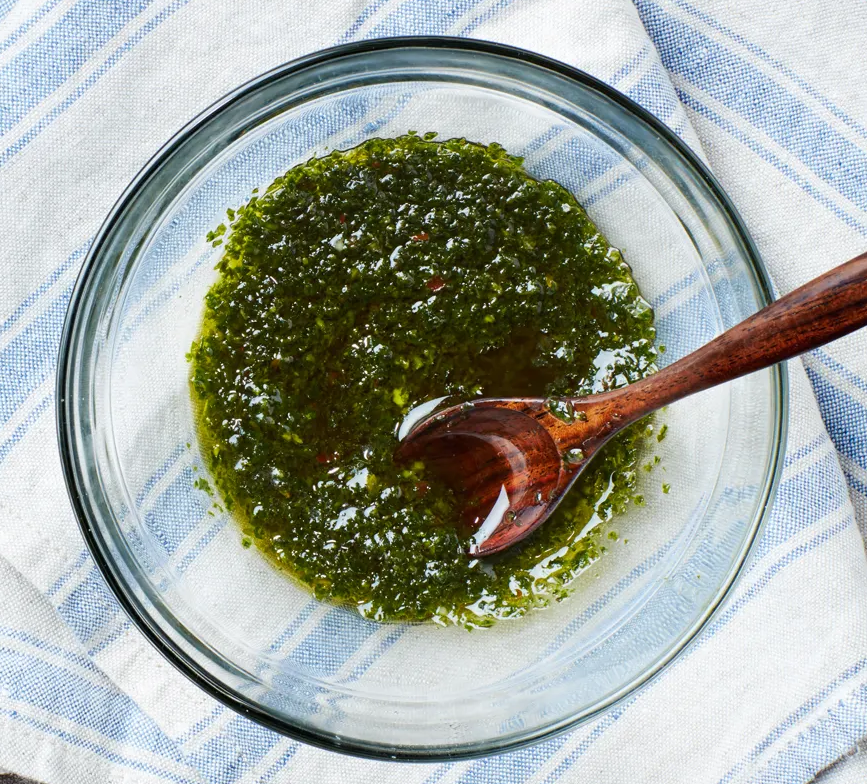
1/4 cup coarsely chopped parsley

3 tablespoons red wine vinegar

4 large garlic cloves, minced (2 1/2 tablespoons)

2 tablespoons oregano leaves

2 teaspoons crushed red pepper (or a small red chili, finely chopped)

Kosher salt and freshly ground pepper

1/2 cup extra-virgin olive oil


In a food processor, combine the parsley, vinegar, garlic, oregano and crushed red pepper. Process until smooth; season with salt and pepper. Transfer the sauce to a bowl and pour the olive oil over the mixture. Let stand for at least 20 minutes.

Asian Hot Pot of Bison Tenderloin and Homemade Udon Noodles

Asian Hot Pot of Bison Tenderloin and Homemade Udon Noodles

Asian Hot Pot of Bison Tenderloin and Homemade Udon Noodles

3 C. All Purpose Flour

1 T. Salt

1 cup Water


4 oz White Miso

32 oz Beef Broth

1 cup rehydrated mushrooms

1 tsp. grated fresh ginger

1 stalk lemon grass (bruised and chopped)

2 cloves fresh garlic (crushed)

1 bunch Cilantro stems, chopped


2 tsp. Fish sauce

4 T. soy sauce

2 T. rice wine vinegar.

2 T. mirin

1 tsp. sriracha


Pickled Diakon

Thin Sliced Jalapeno

Cleaned Cilantro Leaves

Chives or Green Onions

Thin Sliced Avocado

Poached Quail Egg

Cooked Bison Tenderloin Strips


Incorporate flour, salt and water; mix well, Kneed for 5 minutes, add to rolling salted water, cook until tender. Immediately ice bath once they are complete.


Thinly slice 2 lb. bison tenderloin and marinate in 16oz water, 1 T. Chili Oil, 2 T. Soy Sauce, 2 Garlic Cloves.


Bring ingredients (white miso to garlic) to a full simmer, add cilantro, re-season. And continue to simmer for 15 minutes. Add ingredients (fish sauce to sriracha) to broth, one at t time, stirring between. While stock is simmering, adjust seasoning.  Quickly stir fry bison to desired doneness.  Begin to add the ingredients to the soup – 2 ounces of Udon Noodles, 3 ounces of broth, 3 slices of avocado, 3 slices of jalapeno. 1 poached quail egg, 2 slices of pickled diakon, a few sprigs of cilantro, and a sprinkle of scallion. Make sure you add 2 ounces of Fully cooked Sliced Bison tenderloin to finish your Asian Hot Pot.

Fried Eggs with Spicy Spinach and Quinoa

Fried Eggs with Spicy Spinach and Quinoa

Fried Eggs with Spicy Spinach and Quinoa

1/2 cup quinoa

2 T. butter

2 T. olive oil

4 eggs

1/2 lb spinach

1 tsp. harissa paste or chili flakes

salt

pepper


Assemble and measure ingredients. Bring 1 cup/250 mL salted water to a boil in a small saucepan. Add quinoa, cover, turn down heat to low, and cook for 15–20 minutes, or until quinoa forms little “tails.” Remove from heat. If there is any remaining water, drain quinoa in a fine-mesh sieve. Set aside in saucepan or sieve, uncovered. Heat two heavy-bottomed skillets over medium heat. Melt 1 T. of butter with 1 T. of olive oil in each skillet. Turn down heat to low under one skillet. Crack eggs into it and cook very slowly, until whites are opaque and yolks are still runny, about 5 minutes. Meanwhile, add several handfuls of spinach to the other skillet and allow to wilt. Add remaining spinach, handful by handful, as space allows. When spinach has all wilted, stir in harissa paste (or chili flakes). Season with salt and pepper. To serve, divide spicy spinach among four bowls, spoon quinoa over top, and top with a fried egg. Drizzle pan juices over top and serve.

Foraged Mushroom Tart

Foraged Mushroom Tart

Foraged Mushroom Tart

1 ready-made pie crust

2 T. butter

1⁄2 cup minced onion

salt

freshly ground black pepper

4 C. sliced exotic mushrooms (lobster, hedgehog, oyster, black trumpets, baby shiitakes, etc.)

2 tsp. chopped garlic

2 C. heavy cream

3 large eggs

1 dash hot pepper sauce

1 dash Worcestershire sauce

1 cup grated white cheddar cheese

4 ounces shaved parmigiano-reggiano cheese


Preheat the oven to 350 degrees F. Place crust in a 10 inch tart pan. Prick the bottom of the crust all over with a fork. In a medium sauté pan, over medium heat, melt the butter. Add the onions. Season with salt and pepper. Sauté for 1 minute. Add the mushrooms. Season with salt and pepper. Continue to sauté for 3 to 4 minutes or until the mushrooms are wilted. Stir in the garlic and remove from the heat. Cool completely. In a mixing bowl, whisk the cream and eggs together. Season with 3/4 of a tsp. of salt, pepper, hot pepper sauce, and Worcestershire sauce. Mix well. Pour the mushroom mixture into the pastry shell. Sprinkle the cheese over the mushrooms. Pour the cream mixture over the cheese. Bake until the center sets and the top is golden, about 55 minutes. Remove from the oven and let cool for 5 minutes before slicing to serve.

Roasted Prime Rib with Sautéed Mushrooms and Creamy Horseradish Sauce

Roasted Prime Rib with Sautéed Mushrooms and Creamy Horseradish Sauce

Roasted Prime Rib with Sautéed Mushrooms and Creamy Horseradish Sauce


2 T. kosher salt, plus more to taste

3 tsp. ground black pepper

3 cloves garlic

2 medium shallots

2 T. fresh rosemary leaves

2 T. fresh thyme leaves

1/2 cup olive oil

1 ( 8lb) standing rib roast, trimmed (to multiply or divide the recipe,this translates to roughly 1 rib for every 2-3 people)


1 cup heavy cream

6 T. lemon juice

1/2 tsp. salt

1/4 tsp. paprika

1/4 tsp. cayenne pepper


2 pounds mushrooms, washed, dried, and if large, chopped

4 T. unsalted butter

2 T. olive oil

1 1/2 T. Worcestershire sauce

2 cloves garlic, finely chopped

salt and pepper, to taste

6 T. fresh parsley, chopped


MARINATE: In a food processor, place salt, pepper, garlic, shallots, rosemary, thyme, and olive oil. Pulse until combined. Place the roast bone-side down in a large pan and pour the marinade over it. Rub as much as you can into every crevasse. Cover and refrigerate 4 to 24 hours. ROAST: Remove the meat and let it come to room temperature, about 1 hour before you plan to put it into the oven. Meanwhile, preheat the oven to 550° F and place the rack in the center. Insert a meat thermometer into the thickest part of the roast. When the oven is ready, place the roast, uncovered, into the oven. Immediately reduce the oven temperature to 350. Cook until the thermometer registers 125 degrees, about 15-20 minutes per pound, or 2 1/2 hours for an 8 lb roast. Check the temperature of the meat in several other places. A range of 125-155 will give you a good variety of doneness. Cover the roast with foil and let it rest on the counter at least 15 minutes before carving. MAKE THE SAUCE : You can do this while the meat cooks. In a medium bowl, beat cream until stiff. With the mixer on, add lemon juice, salt, paprika, cayenne and horseradish. Chill until ready to serve. SAUTE THE MUSHROOMS: Heat a large skillet over high heat. Add the butter and olive oil. When the butter foams, give the pan a shake and then add the mushrooms, Worcestershire sauce, and garlic. Toss the mushrooms until brown, about 5-10 minutes. Remove from heat and season with salt and pepper to taste. Toss with parsley and then place in a serving dish. CARVE: Slice the first piece between the ribs, close to the bone. Cut the second piece half way to the next bone and so on and so on giving each person basically half of the meat between the ribs. SERVE: Top with sauteed mushrooms and whipped horseradish sauce. Garnish with fresh parsley.


Mushroom Bacon, Garlic Croutons and Poached Egg Salad

Mushroom Bacon, Garlic Croutons and Poached Egg Salad

Mushroom Bacon, Garlic Croutons and Poached Egg Salad

1 lb / 450g mushrooms, sliced about 1/4″ thick. Large brown ones are great.

salt and freshly ground pepper

1/2 tsp. paprika

1/2 tsp. sugar or a drizzle of honey or agave

1/2 tsp. garlic powder

olive oil

2 cloves garlic, sliced thin

2-3 pieces of stale bread (about 1 cup, once sliced)

4 very fresh eggs

water

white vinegar

1 head of butter or romaine lettuce, torn into bite sized pieces


Dressing


1 garlic clove or 1 tsp. shallot, minced

1.5 T. olive oil

1 T. white wine vinegar or lemon juice

1/2 tsp. mustard

salt and pepper


Preheat oven to 350F / 175C.  Toss mushrooms with a drizzle of olive oil, about 1 tsp. salt, some freshly ground pepper, paprika, sugar and garlic powder.  Line baking pan with parchment paper.  Scatter mushrooms in a single layer across pan.  Use two pans (if you have them) so the mushrooms will bake in a single layer.  Roast for 15-20 minutes, til edges are just beginning to get browned.  Flip mushrooms and bake for another 15-20 minutes, til all the water has evaporated out and mushrooms look chewy, almost like bacon. Meanwhile, cut bread into cubes, or tear by hand if using good crusty bread.  Heat about 2 Tbs olive oil over medium-high heat in skillet.  Add sliced garlic and fry 30 seconds, then add bread and quickly toss to coat lightly with oil.  Add a bit more if some pieces look dry.  Add a pinch of salt.  Fry til golden brown, stirring occasionally.  It should take 5-10 minutes.


Make dressing – combine garlic, olive oil, vinegar or lemon juice, and mustard.  Give a good whisk.  Season with salt and pepper to taste.  Bring a medium saucepan of water to a low boil.  Add about a Tbs white vinegar and a good pinch of salt.  If eggs are very fresh, omit the vinegar.  Adjust heat so water is just simmering.  Crack an egg into a small bowl.  Using a long handle, give the water a good swirl, then gently drop egg into vortex.  Cook for about 2 – 2.5 minutes, until white is just set and yolk is still runny.  Remove and drain on a paper towel, then poach remaining 3 eggs.   You can poach eggs in advance – just undercook them slightly and reheat in simmering water for about 10 seconds before serving. Toss lettuce with dressing and croutons.  Plate up with some mushrooms, a poached egg and a pinch of salt and freshly cracked pepper.

Morel and Toasted Rye Bread Soup

Morel and Toasted Rye Bread Soup

Morel and Toasted Rye Bread Soup

1 1/2 pounds fresh morels, washed, stems trimmed to 1/2 inch

1/2 pound artisanal-style rye bread loaf, unsliced

8 T. (1 stick) unsalted butter, at room temperature, cut into 8 pieces

2 tsp. caraway seeds

5 1/2 C. homemade chicken broth

1 1/2 tsp. molasses

4 tsp. kosher salt

3 T. extra virgin olive oil


Preheat the oven to 375°F. Position one rack in the top third of the oven and a second one in the bottom third. Set aside 1/2 pound morels for garnish. Closely trim the crust from the rye bread, ending up with just the brown outer pieces. Place the crusts on a baking sheet and set aside. Cut enough of the remaining bread into 1/2-inch cubes to measure 1 1/2 C.. Use any leftover bread for another dish. Melt 1 T. of the butter and toss with the cubed bread. Place on a separate baking sheet and bake for 6 to 8 minutes, or until golden brown. Set aside. Heat a small sauté pan over medium-high wheat. Add the caraway seeds and toast, stirring frequently, until they are fragrant and just starting to smoke, about 1 minute. Immediately turn out onto a clean baking sheet to cool. When cool, place the caraway seeds in the center of a 4-inch-square piece of cheesecloth. Fold in the sides and roll up tightly, making a compact package. Tie securely with kitchen string. Have ready a blender and a fine-mesh strainer set over a medium saucepan. Place the chicken broth, molasses, 2 1/2 tsp. of the salt, and the caraway bundle in a large stockpot over high heat. Place the remaining 1 pound morels in a large bowl and splash with 2 T. of the oil and 1 tsp. of the salt. Toss or stir quickly to coat the morels evenly with the oil. Arrange in a single layer on a baking sheet. When the broth reaches a simmer, place the morels and rye bread crusts in the oven and bake for 8 to 10 minutes, or until the morels are wilted and the crusts are dried out and fragrant. Meanwhile, when the broth reaches a full boil, cover the pot, turn down the heat, and hold at a simmer. When the morels and bread crusts are almost done, after about 6 minutes, turn the heat back up on the broth so that it is at a full boil when they come out of the oven. Remove the morels and bread crusts from the oven. Add the morels, along with any pan juices, to the boiling broth. When the broth returns to a boil, add the bread crusts, pushing them down into the soup to submerge them completely. Cook for 1 to 2 minutes, pushing and stirring the bread crusts into the broth. When the broth returns to a full boil, cover the pot and turn off the heat. Let sit for 2 minutes. Remove the caraway bundle, set it in a small bowl, and set aside. Place half the soup in a blender. Start at the lowest speed and blend for 1 minute. Increase the speed by one level and continue blending until the soup is smooth, 2 to 3 minutes. Do not blend on high—the mixture will become too thick. Pour the mixture through the strainer into the saucepan, pushing down with the bottom of a ladle to extract all the liquid. Discard the solids. Repeat with the remaining soup. Squeeze the caraway bundle into the soup, extracting all the liquid, then discard. Add the remaining 7 T. butter to the soup all at once, whisking continuously until the butter is melted and blended into the soup. Hold in a warm place. Toss the reserved 1/2 pound morels with the remaining 1 T. oil and the remaining 1/2 tsp. salt. Place in a single layer on a baking sheet and cook for 8 to 10 minutes, or until the morels are wilted and fragrant. While the morels are cooking bring the soup just to a boil, whisking frequently, then hold at a simmer. Divide the soup among 4 to 6 bowls and top with the morels and the reserved croutons.

Herbed Braided Breadsticks

Herbed Braided Breadsticks

Herbed Braided Breadsticks


1 – 1.25 C. all-purpose flour

1 package active dry yeast

1 T. snipped fresh rosemary, thyme, and/or oregano

¼ tsp. coarsely ground black pepper

¾ C. milk

2 T. butter or margarine

1 T. sugar

½ tsp. salt

1 C. semolina pasta flour*

1 egg white

1 T. water


In a large bowl stir together 3/4 C. of the all-purpose flour, the yeast, rosemary, and pepper. In a small saucepan heat milk, butter, sugar, and salt just until warm (120°F to 130°F) and butter almost melts. Add milk mixture to flour mixture. Beat with an electric mixer on low to medium speed for 30 seconds, scraping sides of bowl constantly. Beat on high speed for 3 minutes. Using a wooden spoon, stir in semolina flour. Let stand for 1 minute. Stir in as much of the remaining all-purpose flour as you can. Turn dough out onto a lightly floured surface. Knead in enough of the remaining all-purpose flour to make a stiff dough that is smooth and elastic (8 to 10 minutes total). Shape into a ball. Place in a lightly greased large bowl, turning once to grease surface. Cover; let rise in a warm place until nearly double in size (45 to 60 minutes).  Punch down dough. Turn out onto a lightly floured surface. Divide dough in half. Cover; let rest for 10 minutes. Line a baking sheet with foil; grease foil. Roll one dough portion into a 10×9-inch rectangle. Cut lengthwise into 24 strips. For each breadstick, pinch together ends of three strips; braid the dough strips. Pinch the other ends together. Tuck under the thin, pinched ends.** Place on the prepared baking sheet. Repeat with remaining dough portion. Cover; let rise in a warm place until nearly double in size (about 30 minutes). Preheat oven to 350°F. In a small bowl beat together egg white and the water. Lightly brush egg white mixture on breadsticks. Bake for 15 to 20 minutes or until golden. Serve warm.  *Tip: Instead of semolina flour, you can use 3/4 C. all-purpose flour plus 1/4 C. yellow cornmeal.

Five-Spiced Crispy Baked Tofu with Seared Bok Choy

Five-Spiced Crispy Baked Tofu with Seared Bok Choy

Five-Spiced Crispy Baked Tofu with Seared Bok Choy

2 T. corn starch

2 T. Shaoxing wine

1 T. dark soy sauce

1 tsp. sugar

1/2 tsp. Chinese five-spice powder

pinch black or white pepper

1/4 tsp. salt

1/4 tsp. Sichuan peppercorns ground

4 cloves garlic minced

Tofu

450 g medium firm tofu

3 medium heads bok choy quartered, leaves removed and set aside

1 T. rice vinegar

1/3 cup water

watermelon radishes or carrots (optional garnish)


Place the tofu on a plate, then place a heavy plate on top of it to press out the excess water. If necessary, you can add a book to weigh down the plate a little but take care not to crush the tofu. Press for at least an hour, draining the water from the bottom plate periodically. Combine all the marinade ingredients and set aside. Cut the tofu into strips or cubes and combine with the marinade. Let stand for at least 1 hours, or up to overnight. Preheat the oven to 500 F and cover a baking pan with a silicon baking sheet or a very generous amount of high smoke-point cooking oil (e.g. grapeseed or avocado oil). Layer the marinated tofu on the baking tray, making sure to avoid crowding the pieces together. Mix the leftover marinade with the rice vinegar and water and set aside (or refrigerate if you plan to cook the tofu ahead of time). Bake for 7-10 minutes or until the tofu is crispy and brown on the bottom (i.e. the side touching the tray). Flip the pieces and bake for an additional 3-5 minutes, or until the other side is browned and somewhat crispy. Once the tofu is finished, remove it from the oven and allow it to cool somewhat. It can be refrigerated and reheated the next day, if you like. (See note below) Heat a large, heavy-bottomed pan over medium-high heat and add 2 tsp. of oil (I used avocado, but grapeseed, vegetable, or peanut oil would all work well). Once the oil is shimmering and quite hot, add the quartered bok choy stalks to the pan, cut side down. Sear for about 1 minute, then turn and sear the other face (note that if you use small baby bok choy, you may simply want to halve them instead of quartering, in which case you’ll only need to sear one side). Remove the bok choy stalks from the heat and set aside. Add the bok choy greens to the pan and stir fry for about 15 seconds, then add the marinade and water mixture (from step 4) to the pan. Stir fry for and additional 30 seconds and set aside with the bok choy stalks. The sauce should thicken considerably thanks to the corn starch. Serve the tofu and greens over a bed of rice or noodles and garnish with some crunchy raw vegetables like carrots or watermelon radishes. Notes: In order to crisp up properly, the tofu must bake at high heat. This means that it’s quite easy to overcook (or even burn) the tofu, so make sure to keep a very close eye on it. If you have a silicon baking tray, I strongly recommend using it – even with a grapeseed or avocado oil, an oiled pan tends to smoke a little. Turn on your oven fan to help deal with it, and make sure not to use a low-smoke point oil like olive oil.

Don’t be tempted to omit the corn starch – it’s what makes the tofu crispy as it cooks, rather than just dry. Note that very well-pressed tofu can become quite the sponge for liquid, so you may want to consider doubling the liquid ingredients if you’re using a tofu press or leaving it to drain for a particularly long time.

Roast Parsnips with Pumpkin Seed Green Onion Pesto

Roast Parsnips with Pumpkin Seed Green Onion Pesto

Roast Parsnips with Pumpkin Seed Green Onion Pesto

3 lbs. (1.36 kg) of parsnips, peeled, trimmed, cut into bite sized pieces

3 T. (45 mL) of olive or vegetable oil

1/2 tsp. (2.5 mL) of sea salt

lots of freshly ground pepper


1 cup (240 mL) of pumpkin seeds

1 bunch of green onions (7 or 8 stalks)

1/4 cup (60 mL) of your very best olive oil

2 to 3 ounces (56 to 85 g) of authentic Parmesan cheese


Prepare and preheat your oven to 375°. Turn on your convection fan if you have one. Begin with the parsnips. Toss them with the oil, salt and pepper until they’re evenly seasoned. Transfer the works to a casserole dish or small roasting or baking pan. Roast, stirring occasionally, until lightly browned and delicious, about 1 hour. Meanwhile make the pesto. Measure the ingredients into your food processor and process until a smooth yet slightly chunky pesto emerges. When the parsnips are done roasting stir or toss in the pesto until evenly mixed.

Pumpkin Pie Seeds

Pumpkin Pie Seeds

Pumpkin Pie Seeds

Simmer the seeds a few days in advance and leave to soak in their brine, ready to strain and bake when the time comes (see Storage Tip).


4 C. (1 L) of water

1 cup (250 mL) of brown sugar

¼ cup (60 mL) of Sriracha or your favorite hot sauce

2 T. (30 mL) of salt

2 T. (30 mL) of ground ginger

1 T. (15 mL) of ground allspice

1 T. (15 mL) of cinnamon

1 T. (15 mL) of nutmeg

1 tsp. (5 mL) of ground cloves

4 C. (1 L) of unsalted raw pumpkin seeds


Preheat your oven to 350°F (180°C). Turn on your convection fan if you have one. Line a baking sheet with parchment paper or foil and lightly oil the paper or foil. Measure everything except the pumpkin seeds into a small saucepan and bring to a slow, steady simmer for a few minutes. Stir in the pumpkin seeds and simmer for a few minutes so they soften. Turn off the heat and rest long enough for the flavors to absorb, at least 15 minutes. Strain the seeds, reserving the reusable liquid. Spread them evenly on the prepared pan. Bake, without stirring, until lightly crisped and browned, 15 to 20 minutes. As they cool, they’ll crisp further. STORAGE TIP Room Temperature: Cool the seeds, tightly seal in a zip-top bag and store for up to 10 days.

Easy Pumpkin Pie Twists

Easy Pumpkin Pie Twists

Easy Pumpkin Pie Twists


1 tube refrigerated crescent roll dough

1/2 C. pumpkin puree

1/4 C. brown sugar

1 T. maple syrup

1 tsp. pumpkin spice

2 T. melted butter

1 T. sugar

1/2 tsp. cinnamon

whipped cream for dipping


Preheat the oven to 375F. Line a baking sheet with parchment paper. In a small bowl, mix together the pumpkin puree, brown sugar, maple syrup and pumpkin spice. Unroll crescent dough on a cutting board. Cut the dough in half so you have two identical rectangles and lay them beside each other. Evenly spread the pumpkin mixture over one of the rectangles of dough. Place the second rectangle of dough on top of the first rectangle of dough (so the pumpkin mixture is sandwiched between them). Make sure you line up all the edges. Use a pizza cutter to cut the dough into strips approximately 3/4 inch wide. Transfer the strips to the parchment lined baking sheet. Twist each strip by picking up one end and twisting it twice, then picking up the other end and twisting it another 2 or 3 times. Brush melted butter generously over each twist. Mix together the sugar and cinnamon then sprinkle evenly over each twist. Bake at 375F for 8-11 minutes until golden brown.

Casserole Queens Dill Bread

Casserole Queens Dill Bread

Casserole Queens Dill Bread

The recipe calls for a casserole dish, but we love using our cast-iron skillet. It gives the bread a more rustic feel—so homey and comforting. The incorporation of dill seed gives each wedge a delightfully herbal pop, making it a nice complement to most any meal.


Cooking spray

¼ C. (½ stick) unsalted butter

2 C. small-curd cottage cheese

½ C. whole milk

2 (¼-ounce) packages dry yeast

4 to 4½ C. all-purpose flour

¼ C. sugar

1 small onion, finely chopped

2 large eggs

4 tsp. dill seed

2 tsp. salt

½ tsp. baking soda


Spray a 9 × 13-inch casserole dish with cooking spray. In a medium saucepan set over medium heat, melt the butter. Remove the pan from the heat and stir in the cottage cheese and milk. Sprinkle the yeast over the mixture and gently stir to dissolve. Let sit for 10 minutes. In a large bowl, mix together the flour, sugar, onion, eggs, dill seed, salt, and baking soda. Add the yeast mixture to the flour mixture and mix just until incorporated. Don’t overwork. Cover the bowl with a damp towel and let the dough rise for 1 hour. Punch down the dough and transfer it to the prepared casserole dish. Cover and let rise for 40 minutes. Preheat the oven to 350°F. Uncover the dish and bake the bread for 30 to 40 minutes or until golden brown.

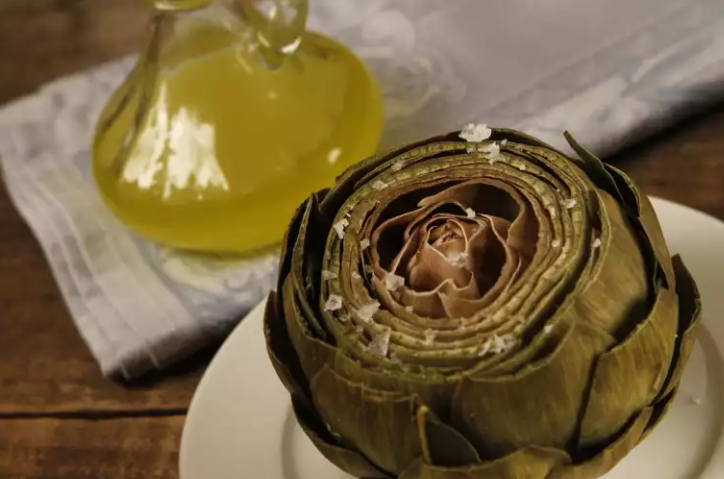
Artichoke Soufflés

Artichoke Soufflés

Artichoke Soufflés

4 Eggs

¼ tsp. hot pepper sauce

¼ C. flour

Pinch freshly ground nutmeg

1½ C. milk

1 can (14 ounces) artichoke hearts, drained and coarsely chopped

1 C. grated fontina cheese

1 C. grated cheddar cheese

½ C. chopped green onion or chives


Preheat oven to 350°F. Lightly grease eight ½-C. ramekins. Whisk together the eggs and hot pepper sauce in a large bowl until blended. Add the flour and nutmeg and mix well. Whisk in the milk, then stir in the artichoke hearts, cheeses, and green onion. Spoon the mixture into the ramekins, filling them to about ¼ inch below the rim. Set the ramekins on a baking sheet and bake until puffed and nicely browned, 45 to 50 minutes. Serve immediately.

Mini Basil Parmesan Cheesecakes with Tomato Jam

Mini Basil Parmesan Cheesecakes with Tomato Jam

Mini Basil Parmesan Cheesecakes with Tomato Jam


1 1/4 cup cracker crumbs

4 tablespoons salted butter, melted

1 egg white

16 ounces cream cheese, room temperature

1 cup shredded parmesan cheese

2 tablespoons chopped fresh basil

1 tablespoon sugar

2 large eggs, room temperature

1/8 teaspoon kosher salt

1/2 cup tomato jam

fresh basil leaves, for garnish


Preheat oven to 350 degrees. In a small bowl, combine the cracker crumbs, butter and egg white until combined. Press 1/2 tablespoon of the crumb mixture into each well of a mini cheesecake pan. (If you don’t have a cheesecake pan, you can use a muffin pan lined with cupcake liners.) Transfer to pan to the oven and bake for 10 minutes or until crisp. Remove from the oven and allow to cool for 5 minutes. Turn the heat down to 300 degrees. Add the cream cheese, parmesan, basil, sugar, eggs and salt to a blender.

Puree the ingredients until smooth. Fill each well of the pan halfway with the cheese mixture. Return the pan back to the oven and bake for 15-20 minutes, or until the edges are dry but the centers are still a little jiggly. Remove from the oven and allow to cool to room temperature. Transfer the pan to the refrigerator and chill for 8 hours or overnight. Remover the cheesecakes from the pan by running a knife around the edges and pushing up on the bottom. Transfer to a serving platter or plate. Top with tomato jam and garnish with basil. Serve immediately.

Huckleberry Hotcakes

Huckleberry Hotcakes

Huckleberry Hotcakes

3 C. flour

¾ C. rolled oats

¼ C. oat bran or 100-percent bran cereal

4 tsp. baking powder

2 tsp. baking soda

½ tsp. salt (optional)

4 eggs

4 C. buttermilk, plus more if needed

¼ C. vegetable oil

1 to 2 C. huckleberries, fresh or frozen (blueberries make a good substitute if huckleberries aren’t available)


Stir Together the flour, oats, oat bran, baking powder, baking soda, and salt in a large bowl. In another bowl, beat the eggs, then stir in the buttermilk and oil. Add the egg mixture to the flour mixture and stir gently until just blended. If the batter is too thick, stir in a little more buttermilk. HEAT A GRIDDLE or a large, heavy skillet, preferably nonstick (if not nonstick, brush lightly with oil). Stir the huckleberries into the batter. Pour ¼ C. batter onto the griddle for each pancake. Cook until bubbly on top, then flip and continue cooking until nicely browned, 2 to 3 minutes on each side. Serve with your favorite syrup or fresh fruit jam.

Roasted Rabbit with Basque Txakoli Wine Sauce

Roasted Rabbit with Basque Txakoli Wine Sauce

Roasted Rabbit with Basque Txakoli Wine Sauce


Txakoli (pronounced “chac-o-lee”) is a slightly sparkling, bright white wine produced in the Basque region of Spain that brings out the rich flavors of the rabbit in this dish. If you can’t find the traditional wine, you can substitute a semi-sparkling variety. Be careful not to overroast this dish; rabbit is a lean meat that can easily become dry. 2 large yellow onions, cut into ¼-inch slices

1 whole rabbit, cleaned, with liver and kidneys reserved

Salt

2 T. minced garlic

1 T. minced flat-leaf (Italian) parsley

5 garlic cloves, peeled

6 small red potatoes, halved

½ C. olive oil

2 T. unsalted butter

¼ C. flour

2 C. txakoli wine

1 T. black peppercorns, freshly crushed

1 C. rabbit stock or chicken stock


PREHEAT THE OVEN to 400°F. LINE THE BOTTOM of a roasting pan with the onion slices. Split the rabbit wide open and place it on the onion slices, belly up. Sprinkle with salt, half of the minced garlic, and half of the parsley. Put the garlic cloves, liver, kidneys, and potatoes around the rabbit. Drizzle ¼ C. of the oil over the entire contents of the pan. Roast in the oven for 30 minutes. REMOVE THE PAN from the oven and turn the rabbit over. Sprinkle with more salt and the remaining garlic, parsley, and oil. Return the pan to the oven and roast until golden, about 30 minutes. AFTER ROASTING, remove the rabbit body and the potatoes from the pan. Cut the rabbit into quarters and arrange on a platter with the potatoes. Cover with foil and keep warm. MEANWHILE, place the roasting pan on top of the stove over medium-high heat. Add the butter and caramelize the onions, kidneys, and liver until dark brown, 8 to 10 minutes. Add the flour, mixing well. Deglaze the pan with the wine. Season to taste with salt and add the crushed peppercorns. Add the stock and cook, stirring, for 15 minutes or until reduced by a quarter. Transfer to a food processor or food mill and purée. Adjust the seasoning if needed. Strain through a colander, then drizzle over the platter of rabbit. Serve immediately.

“Persinnamon“ Crisps

“Persinnamon“ Crisps

“Persinnamon“ Crisps

This recipe couldn’t be simpler. I enjoy adding salty-sweet fruit crisps to picnic spreads because they’re unexpected and round out a menu nicely. Bags of greasy potato chips—sure, people expect that. But a homemade persimmon chip? Not so much. This is the type of DIY recipe that is absolutely worth doing. It’s so easy: just a little slicing and a quick sprinkle of cinnamon sugar, and the oven takes it from there. I call for Fuyu persimmons here, as they are firmer and less astringent than Hachiya persimmons, and better suited to recipes like this. They’re also much more readily available. You can swap out the persimmons for apples or pears (“pearcinnamon” chips?) and proceed right along with the recipe. Makes about 4 servings


11/2 tsp. sugar

11/2 tsp. salt

3/4 tsp. ground cinnamon

4 Fuyu persimmons (not too ripe)

Juice of 1/2 lemon


Preheat the oven to 250°F [120°C] and spray two baking sheets lightly with nonstick cooking spray (or use a silicone baking mat). Combine the sugar, salt, and cinnamon in a large bowl. Remove the green leaves from the persimmons and slice them very thin (with a mandoline, if you’ve got it); no need to peel them. Try to keep the slices at a thickness of less than 1/8 in [4 mm]. Toss these slices with the salty cinnamon-sugar mixture and the lemon juice. Lay the seasoned persimmon slices on the baking sheets in a single layer. Bake for 45 minutes, flip, and continue baking until golden brown and crisped, about 30 minutes more. Transfer the persimmon chips to a wire rack to cool. Store in an airtight container at room temperature for up to 1 week.

Salad of Herbs and Flowers

Salad of Herbs and Flowers

Salad of Herbs and Flowers

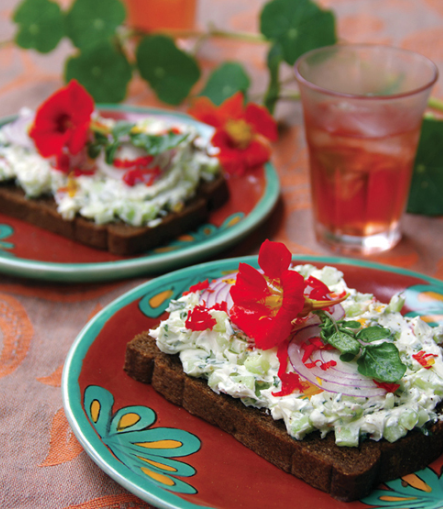
Northwest chefs are guilty of excess in many areas. The sheer abundance of good things we have to work with drives us to experiment with combinations that would be merely ridiculous in regions with a smaller variety’ of fresh local produce. Raspberries garnish grilled salmon, and in the summer when basil becomes almost ubiquitous, it is slipped into everything from salads to desserts. Somehow, in this Oz-like setting where rainbows are as regular as rain, and hundreds of acres of brilliant red and purple, tulips grow against a backdrop of majestic mountain ranges, we feel comfortable serving and eating outrageously colorful things.  So, salads are regularly filled with tiny violas, yellow and orange nasturtiums, and the occasional petals of a day lily. In spring, don’t put it past a Northwest chef to serve the petals of unsprayed tulips in a salad. They’ taste like snow peas and have the texture of the best butter lettuce. Experiment with other edible flowers in season but be sure to use only unsprayed garden flowers and avoid experimenting with blossoms that are of dubious edibility’.

6 to 8 cups mixed baby salad greens, washed and dried

2 to 3 tablespoons Fresh Raspberry and Basil Vinaigrette (recipe follows)

24 to 36 basil leaves

6 tulips (in spring) or day lilies (in summer)

18 nasturtium blossoms

18 violas. Johnny-jump-ups, or pansies

3 chive blossoms

1 cup fresh raspberries


Pick through the salad greens, removing any undesirable leaves. Pile in a large salad bowl and toss with the vinaigrette. Add the basil leaves and toss lightly to avoid bruising the basil. Arrange the petals of the tulips or day lilies on each of 6 chilled salad plates, then divide the dressed greens evenly among them. Tuck 3 whole nasturtium blossoms into each salad, scatter the petals of the violas over the greens, then pluck the petals from the chive blossoms and scatter those over as well. Finally, sprinkle each salad with a few raspberries and serve at once.


Fresh Raspberry and Basil Vinaigrette


Ordinarily a raspberry vinaigrette is made with raspberry-flavored vinegar. This dressing incorporates whole raspberries, and the pulp of the berries allows the oil and vinegar to emulsify to a creamy consistency.


1/2 cup raspberries

3 tablespoons rice vinegar

1 tablespoon sugar

2/3 cup light olive oil or vegetable oil

1 teaspoon kosher salt

1/2 teaspoon freshly ground black pepper

12 fresh basil leaves


In a blender, combine the raspberries, vinegar, sugar, oil, salt, and pepper; puree the mixture at high speed. Force the puree through a fine strainer to remove seeds. Cut the basil into fine ribbons and stir in. Use 2 to 3 tablespoons for each salad. Dressing keeps, refrigerated, for at least 1 week.

Air Fryer Garlic Shrimp

Air Fryer Garlic Shrimp

Air Fryer Garlic Shrimp


1/3 cup cornstarch

1 teaspoon garlic powder

1 teaspoon onion powder

1/2 teaspoon salt

1/2 teaspoon dried basil

1 pound large shrimp peeled, deveined, and dried

Cooking spray

1/2 cup 1 stick salted butter, melted

1 1/2 Tablespoons minced garlic

1 1/2 Tablespoons lemon juice about one lemon

Optional garnishes: Chopped parsley and lemon wedges


Preheat the air fryer to 390 degrees F (if your air fryer needs to preheat). Combine the cornstarch, garlic powder, paprika, onion powder, salt, and dried basil in a small mixing bowl. Blot the shrimp dry with a paper towel and then place the shrimp in a gallon sized bag along with the cornstarch mixture. Toss the shrimp until it is coated thoroughly. Place the shrimp in the air fryer basket in a single layer. You may need to cook in batches. Spray the shrimp generously with cooking spray. Cook at 390 degrees F for 6-8 minutes, turning halfway through. Spray the shrimp with another layer of cooking spray after they have been flipped. The shrimp should be pink and tightly curled. While the shrimp is cooking, make the garlic butter sauce by stirring together the melted butter, minced garlic, and lemon juice together. Place the shrimp in a large bowl and stir in the garlic butter until combined. You can choose to enjoy it at this stage, or you can thicken the sauce by adding the shrimp and sauce to a skillet over medium-high heat and cook for 2-3 minutes or until the sauce is thickened. This is a completely optional step. Remove from the skillet or air fryer and serve with a side of rice. Top with chopped parsley and a lemon wedge, optional.

Salmon Chermoula

Salmon Chermoula

Salmon Chermoula


4 salmon steaks

1 small onion, roughly diced

2 garlic cloves

2 heaped tbsp parsley

2 heaped tbsp cilantro leaves

1/2 tomato, peeled and roughly diced

1/2 tsp ground cumin

1/2 tsp sweet paprika

1 tsp lemon or white vinegar

A pinch of kosher salt

Freshly ground black pepper

3 tbsp extra virgin olive oil

Extra lemons to finish the fish


Mix all the ingredients in a food processor. Season the salmon steaks, or any oily fish you are using, with salt and black pepper on both sides. Coat evenly with all the chermoula and marinade for at least one hour. In a pan, heat 1 1/2 tbsp of canola oil until shimmering but not smoking. Cook over medium heat until browned and cooked to your liking, 3 to 4 minutes per side. To have a perfect crust, avoid disturbing the fish while it’s cooking. Transfer the salmon to a plate and squeeze some lemon on top.