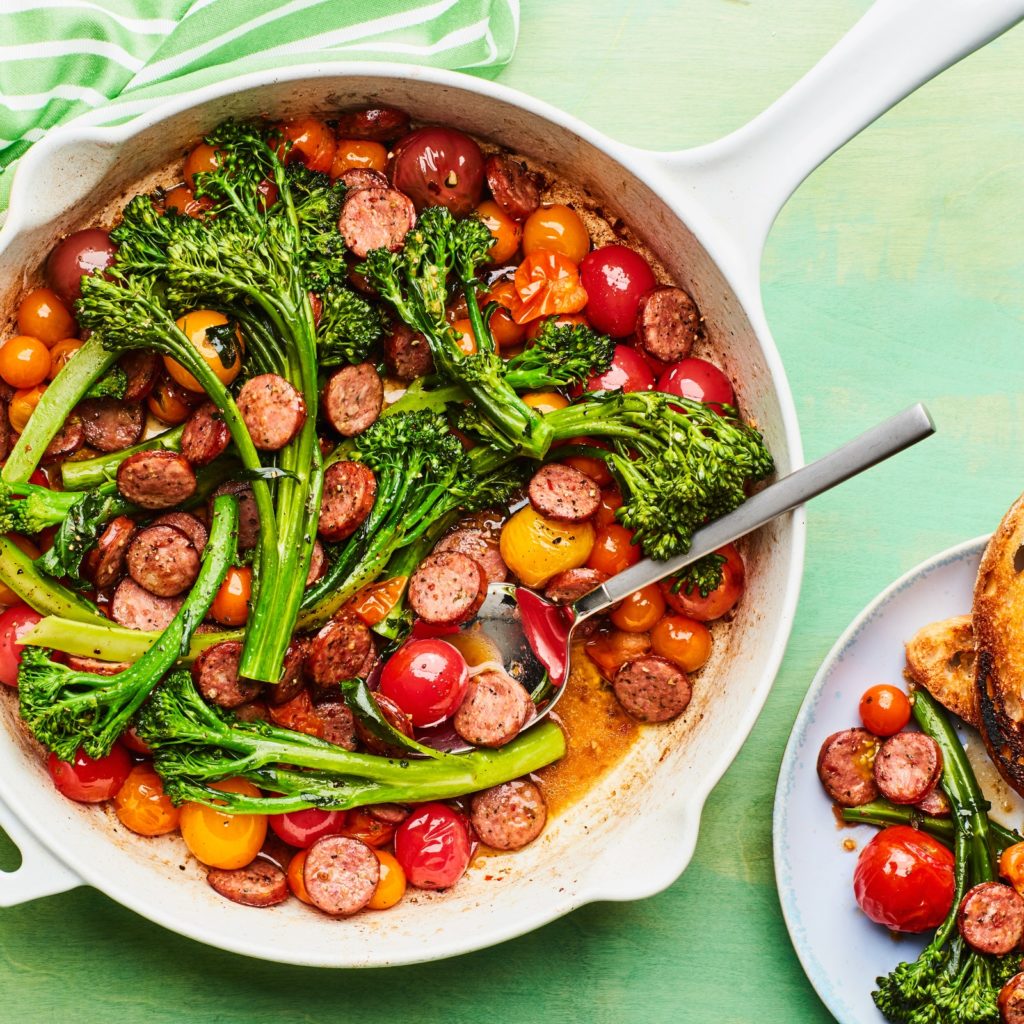
Chicken Romano

Chicken Romano

Chicken Romano

3 T. Italian-flavored dry bread crumbs

3 T. grated Pecorino-Romano cheese

1 lb. chicken cutlets

1 T. olive oil, divided

14-1/2 oz. can diced tomatoes, drained and 1/3 c. juice reserved

3 cloves garlic, pressed

2 T. Kalamata olives

1 t. balsamic vinegar

1/8 t. red pepper flakes

3 T. fresh basil, chopped


Combine bread crumbs and cheese in a shallow dish. Dredge chicken pieces in bread crumb mixture until coated on both sides. Heat oil in a large skillet over medium heat. Working in batches, add 2 chicken cutlets. Cook, turning once, for about 10 minutes, until golden on both sides and no longer pink in the center. Remove from skillet and keep warm. Add tomatoes, garlic, olives, vinegar, red pepper flakes and reserved tomato juice to skillet. Cook for 2 minutes, stirring occasionally, or until slightly thickened. Remove from heat and discard garlic. Stir in basil. To serve, spoon sauce over chicken. Serves 4.

Sauteed Salmon with Roasted Beet Thickened Yogurt Salad

Sauteed Salmon with Roasted Beet Thickened Yogurt Salad

Sautéed Salmon with Roasted Beet Thickened Yogurt Salad

1 pound whole salmon fillet
1 bunch red beets with greens
12 oz. yogurt
One clove garlic
Fresh dill, about a T. chopped
A few drops fresh lemon
Salt and pepper to taste
Canola or grapeseed oil
Cheesecloth

Heat the oven to 400 degrees.  Rinse the cheesecloth under cool water. Fold it over one and then a second so you have four layers, and then use it to line a strainer placed over a bowl. Spoon the yogurt into the cheesecloth and set aside to drain. This will take anywhere from two to six hours depending on how thick you prefer it, so it can’t hurt to refrigerate it. Roasting the beets bring out their sweetness, which is essential to this dish. I look for beets with the greens attached because it seems the fresher they are, the sweeter they are. Plus the greens make for an effortless side dish cooked up with chopped onion, seasoning, and olive oil. First, trim the greens leaving a couple inches of the stalk on the beets. Rinse the beets and poke each one with a knife so they can release steam when they roast. Place the beets in an oven-proof container like a ceramic dish or stainless steel pot with a quarter inch of water and cover tightly with a lid or foil. Pop them in the oven, and depending on size they can take anywhere from 45 minutes to 90 minutes or more. Check them in about 40 minutes. They should offer no resistance when you pierce them with a paring knife, otherwise keep roasting. Set aside and cool. This can be done a day in advance, just refrigerate the cooled beets. To assemble the dish make sure the yogurt is nice and thick. It will have lost as least half the water, and will look like soft cream cheese. Peel the beets, the skin will slip off easily with a little help from a knife, and then grate them and set aside. Take a peeled clove of garlic and mince. Add a generous pinch of salt and mash the garlic with the flat side of a chef’s knife by swiveling it back and forth. This method turns it into a paste by drawing out the juices, maximizing the garlic flavor. It’s a great technique for flavoring home-made mayonnaise. Just don’t overdo it! Add the garlic, thickened yogurt, chopped dill and a little salt and pepper to the grated beets. Mix well – it will turn a shockingly bright fuchsia. Taste and adjust the seasonings. It might need a few drops of lemon juice for balance. Then put in a clean container and refrigerate. Meanwhile, pat the salmon dry. If it’s a whole fillet, remove the pin bones with a pair of sturdy tweezers or needle nose pliers. Season the fish on both sides. Meanwhile, place a skillet over medium heat and when hot add a T. of oil. Slip the fish in skin side down and sauté. It should sound like a gentle hiss rather than sputtering and popping. After about 7-8 minutes the side of the fish will start to look cook. Flip the filet. If you want it medium rare, keep it on for 2 minutes more. If you like it cooked most of the way through, about 4 to 5 minutes. Serve on a platter or oval dish with the beet salad spooned around the salmon and garnish the salmon with chopped dill

One-Dish Speedy Couscous

One-Dish Speedy Couscous

One-Dish Speedy Couscous


12-oz. pkg. couscous, uncooked

2 c. cooked chicken, diced

1 zucchini, chopped

1 stalk celery, thinly sliced

1 carrot, peeled and grated

2 C. orange juice

1/4 C. fresh basil, chopped

2 green onions, finely chopped

1/2 tsp. salt

1/2 tsp. pepper


Combine couscous, chicken and vegetables in a large serving bowl; set aside. Bring orange juice to a boil in a saucepan over medium heat; stir into couscous mixture. Cover tightly with plastic wrap; let stand for 5 minutes. Sprinkle with remaining ingredients. Stir gently until evenly mixed. Serves 4.

Fillet of Salmon, Sautéed with Granny Smiths and Cider

Fillet of Salmon, Sautéed with Granny Smiths and Cider

Fillet of Salmon, Sautéed with Granny Smiths and Cider


4 T. (1/2 stick) butter

4 salmon fillets (6 to 8 ounces each)

1-1/2 tsp. kosher salt

2 large Granny Smith apples, sliced

1/2 C. apple cider

Freshly ground black pepper

In a large skillet over medium heat, melt 1 T. of the butter.


Sprinkle the salmon fillets with salt and lay them, skinned side up, in a single layer in the skillet. Let cook, undisturbed, for 5 minutes, or until a crisp, brown crust forms. Do not try to move the salmon too early, or the surface of the fish will tear. Remove the fillets from the pan and add the apples. Stir-fry the apple slices for a moment, arrange the salmon fillets, cooled side up, on top of the apple slices, and pour on the apple cider. Cover and cook for 5 minutes. Transfer the salmon to plates and with a slotted spoon, lift out the apple slices and place them around the salmon. Swirl the remaining 3 T. of butter into the juices left in the pan, whisking to form a smooth sauce. Season to taste with freshly ground black pepper, and pour the sauce immediately over the salmon and apples. Serve at once.

Paleo Spaghetti Pie

Paleo Spaghetti Pie

Paleo Spaghetti Pie

1 large spaghetti squash (about 600 grams)

1 pound Italian sausage

1/2 yellow onion, diced

1 cup pizza sauce (no sugar added)

1 teaspoon dried basil

salt and pepper, to taste

3 eggs, whisked

(Optional: add anything you like with pizza: veggies, basil, even cheese if you do primal)


Preheat oven to 400 degrees. Cut spaghetti squash in half lengthwise. Place spaghetti squash cut side down on a baking sheet and bake for 20-25 minutes or until the skin of the squash gives when you press on it. Then reduce oven heat to 350 degrees. Once squash is done cooking, remove threads and place in an 8×8 greased baking dish. Place a large pan over medium heat. Add Italian sausage and onion. Cook until pink no longer remains in the sausage and it is broken up into pieces. Add pizza sauce, dried basil and salt and pepper to the pan and mix well. Add sausage mixture to the 8×8 dish and mix well with spaghetti squash threads. Lastly, add whisked eggs to the baking dish and mix everything together until you can no longer see the eggs. Place in oven and bake for 1 hour or until the top of the mixture forms a slight crust that doesn’t give when you press on it in the middle of the dish. Let rest for 5 minutes before serving.

Oregon Pear and Hazelnut Salad with Oregon Blue Cheese

Oregon Pear and Hazelnut Salad with Oregon Blue Cheese

Oregon Pear and Hazelnut Salad with Oregon Blue Cheese


1 head butter lettuce

Vinaigrette

1 roasted pear, ripe, peeled, cored and chopped

1/4 C. rice vinegar

1 tbsp. granulated sugar

1/4 C. hazelnut oil

salt and pepper to taste

2 roasted pears, ripe and peeled

1 oz. hazelnuts, toasted and chopped

1/3 C. Oregon blue cheese


Wash and spin dry lettuce, breaking larger leaves into 4 inch pieces. Add pear to blender along with rice vinegar, to prevent pear from browning. Add the sugar, salt, pepper, and hazelnut oil and puree until smooth. Place the cleaned, torn lettuce in a bowl. Arrange the dressed lettuce on chilled plates. Slice each pear in half and spoon out the cores. Lay the halves on a cutting board, flat side down, and slice each half on a bias into 7 or 8 even slices. Press the sliced pear halves lightly to fan them out and carefully transfer the pear fan to the lettuce. Scatter hazelnuts and crumbled blue cheese over each salad and serve.

Sage-Seared Pork Cutlets with Apples

Sage-Seared Pork Cutlets with Apples

Sage-Seared Pork Cutlets with Apples

2 medium Fuji apples, cored, quartered, cut into 1/8-inch matchstick-size strips

1 C. apple cider

2 T. apple cider vinegar

2 1-pound pork tenderloins

4 T. canola oil, divided

24 whole fresh sage leaves, divided

1/2 C. (1 stick) butter, cut into 8 pieces


Toss apples in bowl with cider and vinegar. Cut each pork tenderloin crosswise into 6 pieces; place between 2 sheets of plastic wrap. Using meat mallet, pound to 1/3-inch thickness. Sprinkle with salt and pepper. Heat 2 T. oil in heavy large skillet over medium-high heat. Lay 6 sage leaves in bottom of skillet. Place 1 pork medallion on each sage leaf, pressing down lightly with back of spatula. Reduce heat to medium; cook until underside of pork is golden, about 3 minutes. Place 1 sage leaf on top of each pork medallion and carefully turn each piece to keep sage in place. Cook until pork is just cooked through, about 2 minutes longer. Carefully transfer pork to plate. Repeat with remaining oil, sage, and pork. Add apple mixture to skillet; cook until liquid is reduced by about half and apples are almost tender, about 5 minutes. Return pork to skillet along with any accumulated juices; cook until heated through, about 2 minutes. Using slotted spoon, transfer pork and apples to serving platter. Add butter to pan juices; stir just until melted. Season sauce with salt and pepper; pour over pork and serve.

Warm Duck and Grilled Apple Salad

Warm Duck and Grilled Apple Salad

Warm Duck and Grilled Apple Salad


1 duck leg

2 granny smith apples

1/2 sweet onion

1/4 C. calvados

1/4 C. apple cider

4 sage leaves

2 T. olive oil

salt and pepper

1/4 C. pistachios

2 C. mustard greens (try to get smaller younger ones – the 2 C. is after you have washed them and cut them into ribbons – sans stems)

2 T. unsalted butter

reduced balsamic vinegar to drizzle.


Heat the oven to 250. Heat the olive oil in a skillet, and generously salt and pepper the duck leg. Brown the leg on both sides and then remove it to a baking dish. Cut the onion into wedges, and half of one of the apples. Add those to the baking dish. Pour the duck fat from the pan over everything then add the cider and calvados. Lay the sage leaves on top and cover it all tightly with foil, and into the oven. You have probably completely destroyed your stove with fat splatters, you have some time if you’d like to clean up a bit. The duck needs to be in the oven for about 3 hours. You can also toast your pistachios in a dry pan and set them aside while you wait. Also wash your mustard greens and chop them into wide ribbons. When the duck is completely fall apart tender – you can tell when you peek, give it a little poke with a fork – remove it from the oven. Heat the butter in a griddle pan. Cut the other apple into 8 wedges, remove the seeds, then griddle them on both sides until they are just brown but not mushy – you want to keep some texture. Assembly: Lay the greens on a platter. Take the skin off the duck and then use fork to pull the meat away from the bone – avoid the tricky little bones that want to go along. Arrange the duck and apples on top of the greens. Add the onions from the duck pan, then drizzle with a couple of T. of pan drippings and balsamic vinegar and sprinkle the pistachios on top.

Harissa

Harissa

Harissa

Harissa is potent, so just a dollop adds a jolt of bright, spicy flavor to everything from soups and stews to sautéed vegetables and fried eggs. If you can’t find Aleppo pepper, substitute 3/4 tsp. paprika plus 1/2 tsp. finely chopped red pepper flakes.


6 T. extra-virgin olive oil

6 garlic cloves, minced

2 T. paprika

1 T. ground coriander

1 T. ground dried Aleppo pepper

1 tsp. ground cumin

3/4 tsp. caraway seeds

1/2 tsp. salt


Combine ingredients in bowl and microwave until bubbling and very fragrant, about 1 minute, stirring halfway through microwaving; let cool to room temperature. (Harissa can be refrigerated for up to 4 days.)

Spicy Beef and Noodles

Spicy Beef and Noodles

Spicy Beef and Noodles


1 pound boneless shell sirloin steak

Salt and pepper

1 tsp. plus 2 T. vegetable oil

4 cinnamon sticks

4 whole cloves

4 garlic cloves, sliced thin

1 (11/2-inch) piece fresh ginger, peeled and cut into thin strips

2 C. low-sodium chicken broth

2 T. soy sauce

1 tsp. red pepper flakes

4 packages instant ramen noodles, seasoning packets discarded

1 1/2 pounds flat-leaf spinach, stemmed and washed


Pat steak dry with paper towels and season with salt and pepper. Heat 1 tsp. oil in large skillet over medium-high heat until just smoking. Add steak and brown on both sides, about 3 minutes per side. Transfer steak to plate and tent with foil.    Reduce heat to medium and add remaining 2 T. oil, cinnamon, and cloves. Cook until cinnamon sticks unfurl, about 1 minute. Add garlic and ginger and cook until soft, 1 to 2 minutes. Add broth, soy sauce, and pepper flakes, scraping up any browned bits. Increase heat to high and simmer until reduced by half, about 8 minutes. Discard cinnamon and cloves. Meanwhile, bring 4 quarts water to boil in large pot. Cook noodles until almost tender, about 2!4 minutes. Stir in spinach and cook until wilted, about 30 seconds. Reserve Vi C. cooking water, drain, and return noodles and spinach to pot. Add sauce and reserved cooking water (if needed) and cook over medium-low heat until flavors meld, about 1 minute.  Divide noodles among individual bowls. Slice meat against grain and serve over noodles.

Ginger Pork Spring Rolls

Ginger Pork Spring Rolls

Ginger Pork Spring Rolls


1/4 C. hoisin sauce

1/4 C. soy sauce

2 T. Asian chili-garlic sauce (or to taste; optional)

1/4 C. water

1 (16oz) bag coleslaw mix

1/2 C. chopped fresh cilantro

6 scallions/green onions, white parts minced; green parts sliced thin

1 T. vegetable oil

1 pound ground pork

3 T. freshly grated ginger

12 (9 inch) rice paper wrappers


Combine the hoisin, soy, and chili garlic sauces and water in a small bowl. In another bowl, combine the coleslaw, cilantro and scallion greens; set aside.  Heat oil in a large skillet over medium high heat until just smoking. Add pork and 1/3 C. of the hoisin sauce mixture. (The remaining hoisin sauce will be used as a condiment for dipping.) Cook the pork until no longer pink, about 5 minutes. Stir in the ginger and scallion whites and cook until fragrant. Place this pork mixture into the bowl with the coleslaw, cilantro and scallion greens. Toss to combine.  Spread a clean, damp kitchen towel on the counter. Soak a rice paper wrapper in a shallow bowl of warm water, about 10 seconds, and spread out on towel. Arrange 1/2 C. of filling on each wrapper, leaving a 2 inch border on the bottom. Fold in sides and roll up tightly like a burrito. Repeat with remaining wrappers and filling. Serve with the remaining hoisin sauce mixture for dipping.

Thin-Cut Pork Chops with Caper-Raisin Sauce

Thin-Cut Pork Chops with Caper-Raisin Sauce

Thin-Cut Pork Chops with Caper-Raisin Sauce


Cooking the chops while the sauce simmers means this stovetop dinner takes only minutes to make. Though an unlikely pairing, briny capers and sweet raisins lend a balanced flavor to the mild pork chops, and using browned butter and Dijon mustard in the sauce further enhances its complex flavor. We prefer golden raisins here because black raisins make the sauce murky.


4 T. unsalted butter, cut into 4 pieces

3/4 C. low-sodium chicken broth

1/3 C. drained capers, chopped

1/3 C. golden raisins, chopped

2 T. Dijon mustard

8 bone-in rib pork chops (4 to 6 ounces each), 1/4 to 1/2 inch thick, sides slit

Salt and pepper

2 T. vegetable oil


Melt butter in saucepan over medium-low heat, swirling pan occasionally, until nutty brown and fragrant, about 5 minutes. Add broth, capers, and raisins and simmer until raisins are plump, about 5 minutes. Whisk in mustard. Cover and keep warm. Meanwhile, pat chops dry with paper towels and season with salt and pepper. Heat 1 T. oil in large skillet over medium-high heat until just smoking. Add 4 chops and cook until golden brown and meat registers 145 degrees, 2 to 3 minutes per side. Transfer to platter and tent with foil. Repeat with remaining oil and chops. Spoon sauce over chops. Serve.

Pork Chops in Lemon-Caper Sauce

Pork Chops in Lemon-Caper Sauce

Pork Chops in Lemon-Caper Sauce


4 bone-in pork chops (about 8 ounces each)

Kosher salt and freshly cracked black pepper, to taste

½ tsp. dried thyme leaves

2 T. olive oil

4 T. unsalted butter

1 very small shallot, minced (about 1 T.)

2 garlic cloves, minced (about 1 tsp.)

2 tsp. all-purpose flour

1 C. dry white wine

1 ½ C. chicken stock, homemade or low-sodium, if store-bought

2 T. drained capers

2 T. minced fresh parsley, plus more for garnish

1 tsp. freshly grated lemon zest, plus 2 T. juice

Hot sauce (optional)


Dry the chops with paper towels, and season aggressively with salt, pepper, and the thyme. Swirl the olive oil into a large skillet, and heat over medium until the oil begins to shimmer. Add chops and cook until well browned on each side and cooked through, about 5 minutes per side. Transfer chops to a plate and cover to keep warm. Drain the fat from the skillet, then melt 2 T. of butter in it over medium heat until sizzling. Add the shallot and garlic, and sauté until the aromatics soften, reducing the heat if necessary, about 1 minute. Sprinkle in the flour, and cook, stirring, for 2 minutes. Whisk in the wine and chicken stock, raise heat to high and bring the liquid to a boil, scraping up the browned bits on the bottom of the pan. Reduce heat to medium-high and cook, uncovered, until the liquid is reduced by half, 7 to 10 minutes. Stir in the capers, parsley, lemon zest and juice and hot sauce to taste (if you’re using it), and simmer for 1 to 2 minutes. Stir in the remaining 2 T. of butter until it’s melted, and the sauce looks smooth. Nestle the pork chops into the sauce and allow them to warm up for a couple of minutes, then serve, pouring sauce over each pork chop to taste. Garnish with more fresh parsley.

Thin-Cut Pork Chops with Creamed Spinach

Thin-Cut Pork Chops with Creamed Spinach

Thin-Cut Pork Chops with Creamed Spinach


8 bone-in rib pork chops (4 to 6 ounces each), 1/4 to 1/8 inch thick, sides slit

Salt and pepper

3 T. vegetable oil

1 (10-ounce) bag curly-leaf spinach, stemmed and torn into bite-sized pieces

1 T. unsalted butter

2 garlic cloves, minced

2 tsp. all-purpose flour

1/2 C. heavy cream

1/2 C. low-sodium chicken broth


Pat chops dry with paper towels and season with salt and pepper. Heat 1 T. oil in large skillet over medium-high heat until just smoking. Add 4 chops and cook until golden brown and meat registers 145 degrees, 2 to 3 minutes per side. Transfer to platter and tent with foil. Repeat with additional T. oil and remaining chops. Reduce heat to medium, add remaining oil to empty skillet, and heat until shimmering. Add spinach and cook until wilted, 1 to 2 minutes. Transfer spinach to colander and drain, pressing with spatula to release any extra liquid. Melt butter in empty skillet. Add garlic and cook until fragrant, about 30 seconds. Stir in flour and cook for 1 minute. Whisk in cream, broth, and any accumulated pork juices and simmer until thickened, about 3 minutes. Stir in spinach and season with salt and pepper. Top chops with creamed spinach. Serve.  Note: To prevent your pork chops from curling in a hot pan, cut two slits, about 2 inches apart, into one side of each chop (this method works for both boneless and bone-in chops). A flat chop will develop a better crust and taste better.

Quick Beef Carbonnade

Quick Beef Carbonnade

Quick Beef Carbonnade


This recipe is inspired by the slow-cooked, thick Belgian stew that melds hearty beef with the soft sweetness of sliced onions in a lightly thickened broth laced with the malty flavor of beer. We are able to achieve the same long-cooked flavor in a short time by using quick-cooking seared skirt steaks rather than chunks of stew meat that require braising. Incorporating rich-tasting caramelized onions, deglazing the pan with beer, and cooking the tomato paste with the garlic and flour further deepens the flavor. Belgian ales such as Chimay are the most authentic choice, but Newcastle Brown Ale or O’Doul’s Amber also work well. Serve over egg noodles.


3 T. vegetable oil

4 onions, halved and sliced thin

salt

pepper

2 skirt steaks (about 12 oz. each)

2 T. all-purpose flour

1 T. tomato paste

3 garlic cloves, minced

2 C. low sodium chicken broth

1 C. beer


Heat 2 T. oil in saucepan over medium heat until shimmering.  Add in onions, 1/2 tsp. salt, and 1/4 tsp. pepper; cook, stirring occasionally, until deep brown and caramelized, about 15 minutes. Meanwhile, pat steaks dry with paper towels and season with salt and pepper. Heat remaining oil in large skillet over med-high heat until just smoking. Cook steaks until well browned, 3-5 minutes per side. Transfer to cutting board and tent with foil. Add flour, tomato paste, and garlic to empty skillet and cook until beginning to brown, 1-2 minutes. Slowly stir in broth and beer, scraping up any browned bits and cook until slightly thickened, about 15 minutes. Stir in caramelized onions. Slice steak thin against the grain, add to skillet, and cook until heated through, about 2 minutes. Season with salt and pepper; serve.


Simple Side Parsleyed Egg Noodle:  Cook 8 ounces egg noodles in salted boiling water, drain, and toss with 2 T. butter and 1 T. chopped fresh parsley. Season with salt and pepper. Serves 4.

Creamy Salad Dressing, Three Ways

Creamy Salad Dressing, Three Ways

Creamy Salad Dressing, Three Ways


A big salad packed with protein and topped with a homemade creamy salad dressing makes for a satisfying meal. Surprisingly, most creamy dressings share the same base ingredients with just a few changes in seasonings. These versatile dressing recipes can also be used as dips for fresh vegetables, and the Cilantro-Lime Dressing is perfect for drizzling over tacos


1 C. mayonnaise

½ C. sour cream

½ C. milk

2 T. lemon juice

1 tsp. kosher salt

¼ tsp. freshly ground black pepper


RANCH DRESSING

1½ tsp. dried dill

¼ tsp. paprika

1 garlic clove, minced


CREAMY GARLIC DRESSING

2 tsp. Dijon mustard

1 tsp. unseasoned rice vinegar

1 tsp. granulated sugar

2 garlic cloves, minced


CILANTRO-LIME DRESSING

Juice and zest of 1 lime

¼ tsp. ground cumin

¼ C. fresh cilantro, minced

1 garlic clove, minced


In a bowl, whisk together all of the base dressing ingredients until well combined. Stir in the additional ingredients for the specific dressing you’re making.  Riff: Make ranch recipe and add ½ C. blue cheese crumbles

So This is Christmas Cocktail

So This is Christmas Cocktail

So This is Christmas Cocktail


1/2 ounce Rosemary Simple Syrup (see below)

1/2 ounce pomegranate juice

1 tsp. pomegranate seeds

Champagne, for topping glass

Rosemary sprig, for garnish


Rosemary Simple Syrup:

1/2 C. water

1/2 C. sugar

1 cinnamon stick

1 star anise

2 cardamom pods

2 small fresh rosemary sprigs


In a champagne flute or highball glass, combine the rosemary syrup, pomegranate juice, and pomegranate seeds. Top off the glass with champagne and add a rosemary sprig for garnish.


Rosemary Simple Syrup: Combine ingredients in a small saucepan over medium heat, stirring until the sugar dissolves. Strain, transfer to a lidded jar and refrigerate; the syrup will keep for up to 2 weeks.


Calories: 297kcal | Carbohydrates: 63g | Protein: 5g | Fat: 3g | Sodium: 11mg | Fiber: 11g | Sugar: 48g


Pantry Friendly Simple Vinaigrette

Pantry Friendly Simple Vinaigrette

Pantry Friendly Simple Vinaigrette


Homemade vinaigrettes taste so much better than bottled! This versatile salad dressing can be made quickly with ingredients you likely have in your pantry. Fresh herbs also make a lovely addition if you happen to have any on hand. Try this vinaigrette over a salad of greens and other vegetables or as a dressing for a pasta salad.  Use leftover to marinate chicken or beef.


½ C. Vinegar (apple cider, rice wine, red wine, balsamic, etc.)

3 ½ T. Liquid Sweetener (honey, agave, maple syrup)

¼ C. Lemon Juice

4 cloves Garlic, minced

¾ tsp. Italian Seasoning

½ tsp. each dried Dill, Salt and Pepper

¾ C. Oil (Olive, Avocado, Canola)


1n a bowl, whisk together the vinegar, sweetener, lemon juice, garlic, Italian seasoning, dill, salt, and pepper. Slowly whisk in the oil to emulsify and combine. Alternatively, shake all the ingredients together in a jar with a tight-fitting lid. 1 prefer this method because the jar doubles as a storage vessel. Shake or whisk again before serving.  Keep for up to 2 weeks in the fridge.  Riff: Use rice wine vinegar, Lime instead of Lemon, omit dill and Italian seasoning and add ¼ C. chopped cilantro.  Riff: Use Red Wine Vinegar, add 1/3 C. crumbled feta cheese and 2T. parsley instead of recipe herbs.

Wild Mushroom and Chestnut Stuffing

Wild Mushroom and Chestnut Stuffing

Wild Mushroom and Chestnut Stuffing

For a 20-25 pound turkey


6 C. Brioche, Cut into ½ Cubes

6 Challah Bread or Pane Di Me, Cut into ½ Cubes

8 T. Unsalted Butter

6 Large Garlic Cloves, Minced

½ Cup Finely Chopped Shallots

1 Cup Finely Chopped Onion

1 Cup Finely Chopped Celery

4  Pounds Mix Fresh Wild Mushrooms, Cleaned, Trimmed and Sliced

1 oz. Dried Porcini Mushrooms, reconstituted in 1 C. Water, Drained, Finely Chopped, Liquid Reserved

2 Tsp. Coarse Sea Salt

1 Tsp. Freshly Ground Black Pepper

1 Cup Finely Chopped Flat Leaf Parsley

2 C. Roasted Chestnuts, Coarsely Chopped

8 Large Eggs

1 Cup Heavy Cream

1 Cup Homemade Chicken Stock or Canned Low Sodium Chicken Broth

½  Cup of the Reserved Porcini Liquid, Strained Through Cheesecloth to Remove Sand

1T. Dried Rubbed Sage


Preheat oven to 225°F. Divide the bread cubes between two rimmed half-sheet pans in 1 layer on each pan. Bake for 20 minutes, stirring the cubes half way through the baking time. Turn oven off and allow bread cubes to dry in oven for at least an hour. Remove from oven and place in a large bowl. At this point you can cover the bread cubes in the bowl with foil. The bread cubes can sit overnight on the counter. Melt the butter over medium high heat and in a large heavy skillet, sauté the garlic, shallots, onion and celery, stirring occasionally, until vegetables begin to soften, about 5 minutes. Add mushrooms, salt, and pepper and cook until liquid mushrooms give off has almost evaporated, about 15 minutes. Add parsley and chestnuts and cook, stirring about 2 minutes. Remove from heat and cool slightly. Whisk together, eggs, chicken stock, reserved porcini liquid, cream and sage in a large bowl. Stir in mushrooms and bread cubes until coated with the liquid. Gently fold the ingredients together. Cool completely and refrigerate overnight. Loosely stuff the cavity and neck of the turkey just before putting the turkey in the oven. Place the rest of the stuffing in a ceramic 9″ x 13″ baking dish. Cover the dish with foil and bake the stuffing in a 350ºF pre-heated oven for 45 minutes. Remove the foil and bake until a slight crust forms on top and is cooked all the way through, about 20 minutes longer.

Prickly Pear Pavlova

Prickly Pear Pavlova

Prickly Pear Pavlova

Prickly Pear Curd


1 1/2 pounds prickly pear fruit (approximately 6)

1 cup granulated sugar

4 large egg yolks (reserve egg whites for meringues)

2 large eggs

1/8 tsp. kosher salt

1 tsp. finely grated lime zest

2 T. fresh lime juice

1 T. unsalted butter, cut into 2 pieces


Cut the prickly pears in half. Using a spoon, scoop out the flesh and seeds into a medium nonreactive saucepan. Stir in 1/2 cup of the granulated sugar. Place over low heat. As the sugar starts to dissolve, press the fruit with a potato masher to release its juices. Cook until the mixture begins to simmer and the sugar is completely dissolved, about 5 minutes. Strain through a fine-mesh strainer, pressing gently on the solids to extract all the juices. Discard the solids. You should have 3/4 to 1 cup juice. Fill a medium saucepan with 2 inches of water and place over low heat. Bring to a simmer. Whisk together the egg yolks, whole eggs, remaining 1/2 cup granulated sugar, and salt in a bowl large enough to rest inside the saucepan without touching the water. Whisk in the prickly pear liquid, lime zest, and lime juice. Stir in the butter with a wooden spoon. Place the bowl over the simmering water. Cook, stirring frequently, until the mixture is thickened and smooth, about 10 minutes. Strain the prickly pear curd through a fine-mesh strainer into a medium bowl. Press plastic wrap directly onto the surface of the curd and refrigerate until completely chilled, 4 hours or overnight.  Note:  Use a wooden spoon rather than a whisk to stir the curd. A whisk will prevent it from thickening properly


for the meringues


2 tsp. cornstarch

3/4 cup superfine sugar

Reserved 4 large egg whites, at room temperature

1 tsp. white vinegar

1 tsp. pure vanilla extract


Position a rack in the center of the oven. Preheat the oven to 200°F. Line a large baking sheet with parchment paper or a silicone mat and spray with nonstick vegetable cooking spray. Combine the cornstarch with 2 tsp. of the superfine sugar in a small bowl. Set aside.  Place the egg whites in the bowl of a standing mixer fitted with the whip attachment. Beat the egg whites on high until they become frothy. Begin adding the remaining superfine sugar, 2 T. at a time, beating for 45 seconds between additions. The last addition will be the cornstarch-sugar mixture. Turn the mixer to low and beat in the vinegar and vanilla. Raise the mixer speed to high and beat for 1 more minute. The mixture should hold a very stiff peak. Divide the meringue mixture into 8 mounds, spaced evenly apart, on the prepared baking sheet. Spread each mound into a 4-inch circle with a slight indentation in the center. The back of a soup spoon works well for this. Bake for 1 1/2 to 2 hours, or until the meringues are dry to the touch. Place on a wire rack to cool. They will crisp up further as they cool. Use immediately or store in an airtight container at room temperature for up to 4 days.


for the pavlova


1 cup heavy cream

1 T. granulated sugar

1/8 tsp. kosher salt

4 blood oranges, peeled and segments separated Zest from 2 limes


Combine the cream, sugar, and salt in the bowl of a standing mixer fitted with the whisk attachment. Whip the mixture just until it forms soft peaks. Divide the whipped cream among the meringues, spreading just to the edges. Divide the prickly pear curd among the meringues. Arrange the blood orange segments over the curd and sprinkle with the lime zest. Serve immediately.

Mushroom and Ricotta Bruschetta

Mushroom and Ricotta Bruschetta

Mushroom and Ricotta Bruschetta

1 cup ricotta cheese

1 egg

1 lemon, zested

½ tsp. salt

1 pinch freshly ground black pepper, or to taste

1 pinch red pepper flakes, or to taste

4 slices French bread, toasted

1 T. olive oil

1 T. butter

1 T. olive oil

16 large white mushrooms, sliced

¼ cup green onions, chopped

¼ cup Marsala wine

½ cup chicken broth

2 tsp. lemon juice

2 T. chopped Italian parsley

1 T. butter

salt and freshly ground black pepper to taste


Preheat oven to 425 degrees F (220 degrees C). Mix ricotta, egg, lemon zest, 1/2 tsp. salt, black pepper, and red pepper flakes in a bowl until smooth. Place toasted bread slices on a baking sheet. Sprinkle with 1 T. olive oil and evenly divide ricotta mixture atop 4 bread slices. Bake in the preheated oven until cheese is browned, about 12 minutes. Heat butter and 1 T. olive oil in a large skillet over medium-high heat; cook and stir mushrooms in mixture until browned, 5 to 6 minutes. Add green onions; cook and stir until softened, 2 to 3 minutes. Stir marsala wine into mixture and cook until reduced by half, about 1 minute.  Reduce heat to medium-low. Add chicken stock and lemon juice to skillet; cook until liquid has evaporated. Reduce heat to low. Stir in parsley and butter. Season with salt and black pepper to taste.  Spoon mushroom mixture equally atop 4 slices of ricotta-topped bread slices.

Morel Mushroom French Onion Soup

Morel Mushroom French Onion Soup

Morel Mushroom French Onion Soup

5 sweet onions

1/4 cup olive oil

5 sprigs of thyme, picked from the stem and chopped

3 cloves of garlic, chopped

1 pound morels (or other type of mushroom), chopped roughly

1 bottle red cooking wine

4 C. vegetable stock

Salt

10 1/2-inch-thick slices of rye bread, toasted

8 ounces comté cheese, grated


Cut the onions in half, stem to root, and slice crosswise into thin slices. Add the oil to a large pot set over medium-high heat and sauté the onions until well caramelized, stirring and scraping the bottom of the pan, taking care not to burn them (about 15 minutes). Add the thyme, garlic, and mushrooms to the pot, stirring to incorporate. Sauté and cover until moisture from the mushrooms is released (about 15 minutes). Add wine and bring to a boil. Add the vegetable stock and again bring to a boil, reducing to a simmer and cooking for 15 minutes. Add salt to taste. Heat oven to broil. Ladle the soup into four high-walled ceramic bowls and place a toasted slice of rye bread on top, with a heavy handful of comté cheese. Put the bowl on a sheet tray in the oven and broil until cheese is melted and bubbling. Serve hot, making sure not to burn the roof of your mouth.

Luang Prabang Salad – Nyam Salat

Luang Prabang Salad – Nyam Salat

Luang Prabang Salad – Nyam Salat


3 Large Hard Boiled Eggs (do not over cook)

1 Clove Garlic – roasted

1/2 – 1 1/2 tsp. Sea Salt (aka “A Lao pinch of salt”)

1 T. Canola Oil

2 T. Water

2-3 T. Lemon Juice

1 T. Palm Sugar

1/2 tsp. Sugar

Fish Sauce to taste


2 Cups Romain Lettuce Hearts ChoppedLPSalad02

1 Handful tender Pea Shoots, or even better, tender watercress

2 Scallions – Green parts only, sliced thin

3 T. cilantro chopped fine

3 T. mint chopped fine (optional)

Cherry Tomatoes

Cucumber


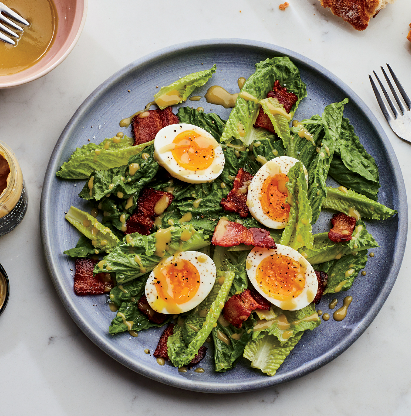
Slice eggs in half lengthwise, remove yolks, and slice whites thinly. Place eggs yolks, garlic, palm sugar, and salt in a mortar and pound into a paste. Add oil, lemon juice, water, and fish sauce (if desired) and combine. TasLPSalad05te, and adjust flavors, and thin out with additional water if desired. Combine pea shoots, cilantro, and scallions. Place Romain lettuce in a layer in the middle of serving plate; mound pea shoot mixture on top of lettuce. Arrange cucumber slices and tomato on plate.  Pour dressing over salad before serving. To add a nice touch to the salad; top with crumbled pork rinds.

Lemony Hearts of Palm Salad

Lemony Hearts of Palm Salad

Lemony Hearts of Palm Salad


¼ C. slivered Red Onion

2 C. sliced Hearts of Palm

1 C. sliced Celery

Chopped Parsley, as desired

3 T. Lemon Juice

3 T. EVOO

Salt & Pepper, to taste

Arugula


Soak 1/4 C. sliced red onion in cold water, 10 minutes; drain. Toss with 2 C. sliced hearts of palm, 1 C. sliced celery and some chopped parsley. Add 3 T. each lemon juice and olive oil. Season with salt and pepper. Serve over arugula drizzled with olive oil.

Chef Rachana Edamame Salad

Chef Rachana Edamame Salad

Chef Rachana Edamame Salad


½ head Green Cabbage (about 1 pound), outer leaves removed

2 T. Salt

12 oz. frozen shelled Edamame

1/3 C. Apple Cider Vinegar

1/3 C. fresh Lemon Juice

1/3 C. EVOO

1 ½ tsp. Pepper

1 T. dried Mint

1 ½ tsp. Cumin

1 tsp. Coriander

½ tsp. Cardamom

1 tsp. ginger

1 tsp. Garlic Powder

½ tsp. Cinnamon

2 C. diced Plum Tomatoes

2 C> diced Cucumber

2 T. chopped fresh Cilantro


Core the cabbage and slice into thin strips. You should end up with about 4 C. of shredded cabbage. Fill a medium pot with water and bring it to a boil over high heat. Add 1 T. of the salt to the water and bring it to a boil again. Add the edamame to the pot and boil until the beans are al dente but still bright green, about 8 minutes. Drain and rinse with cool water. Place the cider vinegar, lemon juice, olive oil, remaining 1 T. of salt, and the pepper in a large mixing bowl and whisk until emulsified. Whisk in the dried mint, cumin, coriander, cardamom, ginger, garlic powder, and cinnamon until fully incorporated. Add the cabbage, edamame, tomatoes, cucumber, and cilantro to the bowl and carefully fold to coat with the dressing. Serve immediately.

Sumac Salad

Sumac Salad

Sumac Salad


2 C. diced tomatoes

2 C. diced cucumbers

½ C. diced red onion

½ C. ground sumac

½ C. finely chopped fresh flat-leaf parsley leaves

½ C. extra virgin olive oil

2 tsp. kosher salt

¼ C. fresh lemon juice

¼ C. distilled white vinegar

1 T. pomegranate molasses


Place tomatoes, cucumbers, onion, ¼ C. of sumac, and parsley in medium mixing bowl.  Place the olive oil, salt, lemon juice, vinegar, pomegranate molasses, if using, and remaining ¼ C. of sumac in a small mixing bowl and whisk to combine. Pour the dressing over the vegetables and gently fold until the salad is thoroughly coated. Serve.

Cachapas – Fresh Corncakes with Cheese

Cachapas – Fresh Corncakes with Cheese

Cachapas – Fresh Corncakes with Cheese


3 C. corn kernels (from fresh ears or thawed frozen)

1/4 C. masa harina (available on the international aisle of most grocers)

salt & pepper

1/2 C. shredded queso mano or mozzarella

vegetable oil, for frying


Grind the corn kernels to a smooth pulp, along with the salt and pepper. Add in the masa harina. Note: You can use a food processor or a blender for this step. If you use a blender, you’ll need a tamper or long spoon to push the corn into the blade (not while the blender is running, of course!). Once the mixture is smooth, preheat a griddle or large frying pan over medium heat. Add on some oil, then spoon the batter onto the pan. With the back of your spoon, press the batter into a rough circle. Cook the cachapas for 3-5 minutes. Flip and cook for 3-5 more minutes, pressing the mixture flat if desired. Sprinkle with mozarella and let melt. If necessary, keep warm in the oven until all cachapas are cooked. Fold in half and enjoy!

Nepalese Vegetable Momos

Nepalese Vegetable Momos

Nepalese Vegetable Momos


1.5 C. all-purpose flour maida

1 T. cooking oil

Salt as per taste

1/2 C. water or as required to knead a smooth elastic dough

Ingredients for the momos stuffing

2/3 C. cabbage finely chopped

2/3 C. carrot finely chopped

1/2 C. capsicum finely chopped

1/2 C. onion finely chopped

2 T. spring onion finely chopped

1 tsp. grated ginger

1 tsp. grated garlic

1 T. vinegar

1 tsp. black pepper powder

Salt as per taste

1 tsp. any cooking oil of your choice


Mix all the ingredients of dough and knead to make a smooth dough. Cover it with a wet cloth and keep aside. In a pan heat oil, add ginger, garlic, and onion. Sauté for around 30 seconds and then add all the remaining vegetables. Add salt, pepper, vinegar and stir fry till the moisture evaporates. Switch off the gas and keep the stuffing aside till it reaches room temperature. Make same sized, small balls of dough. Keep them covered under a wet cloth. Take one dough ball at a time; flatten it by pressing between your palms. Dust with some dry flour and roll it into a thin disc with the help of a rolling board and pin. Now put around 3/4 T. stuffing in the middle of a disc. Lift the edges from all sides and start pleating to bring them to the center. Pinch them together to join at the center. Make momos from the remaining balls in a similar way. Now grease the surface of your steamer’s plate. Place the momos on it and steam for around 20 minutes or till they become translucent. Serve hot with momos chutney! Or savory dipping sauce.


Savory Dipping Sauce


1 C. distilled white vinegar

1 C. sugar

¼ C. soy sauce

1 C. ketchup

1 tsp. cornstarch


Place the vinegar, sugar, soy sauce, and ketchup in a small pot over medium heat. Bring to a boil, stirring, until the sugar is dissolved, about 5 minutes. 2 Combine the cornstarch and 1 T. of water in a small bowl and whisk together with a fork. Stir into the sauce, then bring the sauce to a boil over high heat and boil until thickened, about 1 minute. Serve alongside the momos. Any extra sauce can be refrigerated in an airtight container for up to a week. Bring to room temperature before serving.


Yield: 12 dumplings

1 dumpling

Calories: 80

Fat: 2g

Fiber: 1g

Slow Cooker Prosciutto Eggs with Kale

Slow Cooker Prosciutto Eggs with Kale

Slow Cooker Prosciutto Eggs with Kale


4 C. Kale, coarsely chopped

1 ½ C. Marinara Sauce

2 slices Prosciutto, chopped

4 large eggs


Put the kale in the slow cooker. Spoon the marinara sauce over the top, then scatter in the prosciutto. Crack the eggs and carefully place them over the marinara sauce mixture, spacing them evenly apart. Cover the slow cooker and cook on the high setting for 1 to 11/2 hours, until the kale softens and the egg whites are cooked through but the yolks are still soft. Serve immediately.


4 servings

Calories: 222

Fat: 8g

Fiber: 1g

Slowcooker Branzino with Olives, Goji Berries and Mint Salad

Slowcooker Branzino with Olives, Goji Berries and Mint Salad

Slowcooker Branzino with Olives, Goji Berries and Mint Salad


8 skin-on branzino fillets, 4 oz each

6 T. extra-virgin olive oil

4 T. pitted black olives

1 tsp. dried oregano

2 T. red wine vinegar or balsamic vinegar

¼ tsp. salt

¼ tsp. freshly ground black pepper

10 oz watercress or baby kale

1 C. packed, fresh mint leaves

¼ C. dried goji berries or ¼ C. dried cherries


Place 4 branzino fillets in the bottom of the slow cooker. Drizzle with 1 T. oil and sprinkle with 2 T. olives and oregano. Top with remaining fillets and drizzle with 1 T. oil and the remaining 2 T. olives. Cover slow cooker and cook on low until fish flakes when pressed with a fork, 1–1½ hours.  While the branzino cooks, prepare the salad. In a bowl, whisk together remaining 4 T. olive oil, vinegar, salt, and black pepper. Add watercress, mint, and goji berries, and toss until greens are evenly coated. Divide salad between four plates and top each with 2 branzino fillets. Serve immediately.


4 servings

Calories: 249

Fat: 14g

Fiber: 1g

Crispy Bacon Kale and Shrimp with Lemon Butter Pan Sauce

Crispy Bacon Kale and Shrimp with Lemon Butter Pan Sauce

Crispy Bacon Kale and Shrimp with Lemon Butter Pan Sauce


4 slices center-cut bacon, chopped

8 C. packed chopped curly kale (1 bunch)

salt and pepper

1 T. extra virgin olive oil

1lb jumbo peeled and de-veined raw shrimp

1 C. chicken broth

2 T. butter

1/2 lemon (will only need a squeeze of it – not the whole thing)


Preheat oven to 400 degrees then line a baking sheet with foil and set aside. Add bacon to a large skillet over medium heat then sauté until starting to crisp and turn golden brown. Add the kale, season with salt and pepper, and then toss with tongs to coat in the bacon grease (may need to add half the kale, let it wilt a bit, then add the other half.) Sauté until slightly wilted, 2-3 minutes, then pour onto prepared baking sheet and roast until kale is crisp, 7-9 minutes. Meanwhile, pat shrimp dry with paper towels then season both sides with salt and pepper. Heat oil in skillet over medium-high heat then add shrimp in batches as to not overcrowd the skillet. Sauté shrimp for 1-2 minutes a side then remove to a plate. Turn heat up to high then add chicken broth, butter, and a generous squeeze of lemon to the skillet (don’t need the entire half or it will be a touch too sour.) Season with salt and pepper then boil until reduced and slightly thickened, 4-5 minutes. Plate kale and bacon then top with shrimp and lemon butter pan sauce. Serve with mashed potatoes, cooked rice, or parmesan grits.

One Pot Garlic Shrimp Pasta

One Pot Garlic Shrimp Pasta

One Pot Garlic Shrimp Pasta


8 oz linguine

1 T. olive oil

4 T. of light butter

4 cloves garlic, minced

1 tsp. crushed red pepper

1¼ lb. large shrimp

Salt and pepper to taste

1 tsp. dried oregano

4 C. baby spinach

¼ C. Parmesan

2 T. parsley, chopped

1 T. lemon juice


In a large pot, boil water and add pasta. Cook (stirring frequently) until al dente. Drain and set aside pasta. In the same pan, heat 1 T. of olive oil and 1 T. of butter. Add garlic and crushed red pepper, cook until fragrant. Toss in shrimp, salt and pepper to taste, and stir until shrimp start to turn pink, but are not fully cooked. Add oregano and spinach, cook until wilted. Return cooked pasta to the pot, add remaining butter, parmesan, and parsley. Stir until well mixed and the butter is melted. When the shrimp are cooked, add lemon juice, mix once more, then serve while hot.

Lemongrass Rice

Lemongrass Rice

Lemongrass Rice


1 C. basmati rice

handful of lemongrass stalks obtained from 1 to 2 lemon grass stems

1.75 C. to 2 of water

salt (optional)

a few drops of sesame oil (optional)


Clean wash and soak the rice in water for 15 to 20 mins. Then drain the rice and keep aside. Rinse the lemongrass stem first. Chop the lemon grass stem. In a pressure cooker add the rice and lemongrass stalks. Add water, salt and sesame oil. Pressure cook for 2 to 3 whistles on a low to medium flame. I have kept the rice grains slightly sticky as that’s how we like this rice with thai curries. If you want separate grains then cook for 2 whistles. When the pressure settles on its own, remove the lid. Fluff and discard the lemongrass stalks before serving. Serve the aromatic lemongrass rice hot with your choice of any thai vegetable dish or stir fried dish.

Shrimp Scampi Spaghetti Squash

Shrimp Scampi Spaghetti Squash

Shrimp Scampi Spaghetti Squash


1 1/4 pounds large shrimp, peeled and deveined

1 1/2 tsp. smoked paprika

Kosher salt and freshly ground black pepper

2 T. unsalted butter

1 T. olive oil

3 cloves garlic, minced

1 shallot, minced

3 C. baby spinach

1/2 C. fresh basil leaves, chiffonade

1 T. freshly squeezed lemon juice

2 T. freshly grated Parmesan


1 (2-3 pounds) spaghetti squash

2 T. olive oil

Kosher salt and freshly ground black pepper, to taste


Preheat oven to 375 degrees F. Lightly oil a baking sheet or coat with nonstick spray. Cut the squash in half lengthwise from stem to tail and scrape out the seeds. Drizzle with olive oil and season with salt and pepper, to taste. Place squash, cut side down, onto the prepared baking dish. Place into oven and roast until tender, about 35-45 minutes. Remove from oven and let rest until cool enough to handle. Using a fork, scrape the flesh to create long strands. Season shrimp with paprika, salt and pepper, to taste. Melt butter in a large skillet over medium high heat. Add shrimp, garlic and shallot. Cook, stirring occasionally, until pink, about 2-3 minutes; set aside and keep warm. Add squash and spinach to the skillet. Cook, stirring occasionally, until the squash is heated through, and the spinach has wilted, about 2-3 minutes. Stir in basil and lemon juice, season with salt and pepper, to taste. Serve immediately, topped with shrimp and garnished with Parmesan, if desired.

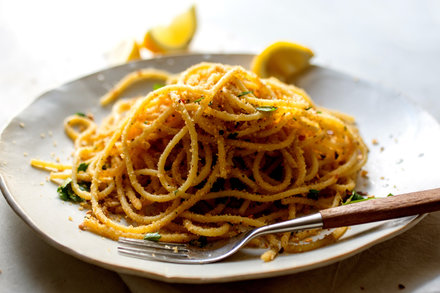
Leek Top Cacio e Pepe

Leek Top Cacio e Pepe

Leek Top Cacio e Pepe

1 leek top, split in half (see here) and cut into 6-inch lengths

6 ounces bucatini or spaghetti

3 T. extra virgin olive oil

2 tsp. freshly ground black pepper

1 C. grated Grana Padano or Parmigiano Reggiano cheese


Fill a large pot with salted water (use 2 or 3 three-finger pinches of salt – it should taste like the sea) and bring it to a boil over medium-high heat. Meanwhile, stack a couple of leek lengths on top of one another and make narrow cuts down the length of them, like you’re turning them into linguini. Once you get the hang of this, you can make your stack a little higher. Don’t stress out about it too much; they won’t all look perfect – it’s fine. When the water is boiling, add the pasta and give it a stir. Take note of the instructions on the package; you’ll be subtracting 2 minutes from the cooking time. One minute before the pasta is done (so 3 minutes before the time on the package), add the shredded leek tops. Drain the pasta and leek tops, reserving 1 C. of the cooking water. Return the empty pot to the same burner and turn the heat to medium. Add the olive oil and pepper to the pot; let it sit until it smells fragrant, 30 seconds to 1 minute. Add the drained pasta and leek tops to the pot, and using tongs, toss everything around to coat. Add ¼ C. of the reserved pasta water to the pot, sprinkle on about half of the cheese (you’ll end up with cheese clumps if you dump it all in one pile), and, using the tongs, toss to coat and melt the cheese. Repeat this step with another ¼ C. pasta water and the rest of the cheese. You should now have a silky sauce coating all of the pasta and leek tops (the tops might require a little more tong action to distribute them evenly). If not, add a little more pasta water and toss everything again, then serve and eat immediately.

Roasted Swiss-Chard Stems with Creamy Sesame Dressing

Roasted Swiss-Chard Stems with Creamy Sesame Dressing

Roasted Swiss-Chard Stems with Creamy Sesame Dressing


2 tbs. sesame seeds, toasted

2 tsp. rice vinegar

1/2 tsp. mirin (or ½ tsp. white wine with a pinch of sugar)

1/2 tsp. toasted sesame oil

1½ tsp. tamari or soy sauce

2 tbs. mayonnaise

1½ tsp. full-fat, plain Greek yogurt

Stems from 1 large bunch Swiss chard, leaves reserved for another use

1 tbs. extra-virgin olive oil

Freshly ground black pepper, to taste


Preheat the oven to 425 degrees F. Crush the toasted sesame seeds with a spice grinder or a mortar and pestle. In a small bowl, whisk together the sesame seeds, rice vinegar, mirin, sesame oil, tamari or soy sauce, mayonnaise, and yogurt. Set aside. Cut the chard stems into 5- to 6-inch lengths. Place them on a baking sheet and drizzle them with olive oil. Gently toss to coat, spread them into a single layer, and lightly sprinkle with pepper. Roast the stems until the centers are tender when pierced with a knife, the edges are starting to char, and any lingering leaf pieces crisp up, about seven to 10 minutes. Divide the roasted stems among plates and drizzle with the sesame dressing. Store any extra stems and dressing separately in the refrigerator for up to five days.

Garlic Parmesan Zucchini Casserole

Garlic Parmesan Zucchini Casserole

Garlic Parmesan Zucchini Casserole


4 C. grated zucchini I used about 3.5 medium zucchinis

½ tsp. salt

½ C. finely diced onion I like to use frozen diced onion as a shortcut

1 T. minced garlic

2 eggs

½ C. grated Parmesan cheese plus an additional 2 T.

1 C. shredded mozzarella cheese

½ C. shredded cheddar cheese

½ C. Panko breadcrumbs

2 T. melted butter


Preheat oven to 375 degrees F. Spray a small baking dish with cooking spray and set aside (I used a dish that was 8-in x 5-in, but an 8-inch square pan will also work). Place zucchini in a colander, sprinkle with salt, and allow to sit for about 10 minutes (this will help draw out some of the water from the zucchini). After 10 minutes, squeeze out moisture from the zucchini. TIP: In order to make sure that I get most of the water out of the zucchini (and avoid a runny casserole), I like wrap the zucchini in a dish towel. Squeeze it and wring it out multiple times while it’s in the towel. In the prepared dish, combine zucchini, onion, garlic, eggs, ½ C. Parmesan cheese, mozzarella cheese, and cheddar cheese. I like to use my hands to make sure that it’s all completely combined, and then gently press the mixture evenly into the prepared dish. Bake uncovered for 20 minutes. Meanwhile, in a small bowl, pour melted butter over breadcrumbs and 2 T. of Parmesan cheese. Stir until completely combined. After 20 minutes, remove zucchini from the oven. Sprinkle buttered breadcrumbs over the zucchini and return the dish to the oven. Continue baking for about 5-10 more minutes, or until the top is golden brown and crispy.

Vanilla Vodka Lemonade

Vanilla Vodka Lemonade

Vanilla Vodka Lemonade


1 1/3 C. Sugar

1 C. Water

8 Lemons

1 C. (or more) Vanilla Vodka

1 L Bottle Club Soda

5 large Sprigs Fresh Mint, more for garnishing glasses


First you will need to make a simple syrup mixture: place the water and sugar in a small pan and cook over medium-high heat, stirring constantly, until the sugar is completely dissolved—about 5-10 minutes. Remove from the heat and chill. Now cut all of the lemons in half and juice them over a bowl large enough to hold all the juice. Mix the juice with the simple syrup mixture and vanilla vodka in large pitcher (or 2 carafes). Slowly pour in the club soda—you may not want to use all of the soda so taste it after you’ve added about 2/3 of the soda . You can also add more vanilla vodka if you want it a little more boozy and vanilla-y. Add the mint sprigs to the pitchers. Pour the lemonade drink over a glass of ice and add a sprig of mint. Salut!

Ricotta Gnocchi with Parsley Pesto

Ricotta Gnocchi with Parsley Pesto

Ricotta Gnocchi with Parsley Pesto

1 pound fresh ricotta, about 2 C., drained well

Salt and pepper

3 or 4 T. grated Parmesan, plus more for serving

2 eggs, beaten

¼ to ½ cup all-purpose flour, as needed

Fine semolina flour or rice flour, for dusting

3 C. flat-leaf parsley leaves and tender stems

1 small garlic clove, minced

½ cup extra-virgin olive oil

3 T. unsalted butter

¼ cup toasted pistachios, roughly chopped for garnish


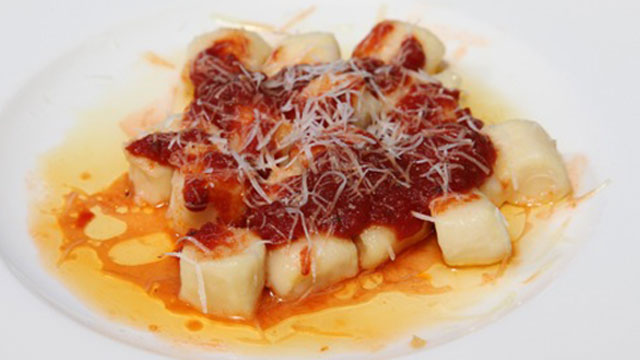
Put ricotta in a large mixing bowl and season generously with salt and pepper. Whisk in Parmesan and taste. The mixture should be well seasoned. Add eggs and mix well, then sprinkle in 1/4 cup flour and stir with a wooden spoon to incorporate. You should have a soft, rather sticky dough. Dump dough onto a clean work surface. Add a little more flour if necessary and pat very lightly to form a soft mass. Test the dough: Bring a saucepan of well-salted water to a boil. Take 1 T. of dough and drop into water. Dough should sink to the bottom, then rise to the surface. Let simmer 1 minute, then remove and taste. If the dumpling keeps its shape, continue to Step 3. If it falls apart, add a little more flour to the dough, but carefully: If you add too much, the gnocchi will be stodgy. Dust dough lightly with semolina, then cut it into 4 equal parts. Dust work surface with semolina. With your hands flat, gently roll each piece into a rope about 3/4-inch in diameter and 12 inches long. Keep sprinkling semolina on dough to keep it from sticking to the counter or your hands. Using scissors or a sharp, thin-bladed knife, cut each log into 12 pieces. Dust bottom of a baking sheet with semolina. Transfer gnocchi with a spatula to baking sheet, leaving space between them so they are not touching. Refrigerate, uncovered, for 1 hour (or leave in a cool room). To make the parsley pesto, put parsley, garlic, olive oil and butter in the work bowl of a food processor. Pulse briefly, then blend to a rough purée. Taste and season with salt and pepper. You should have about 1 cup pesto, more than you need for this recipe. Leftover pesto can be refrigerated for up to 3 days, or frozen for up to a month. Place a large pot of well-salted water over high heat and bring to a boil. Add gnocchi, working in batches, if necessary. When they bob to the surface, let them cook for about 2 minutes and lift them from the pot with a slotted spoon or spider, transferring gnocchi to a large, wide skillet. Add 4 to 6 T. pesto and 1/2 cup pasta cooking water to skillet and swirl pan to coat gnocchi. Serve gnocchi in warmed individual shallow soup bowls or a deep, wide platter. Sprinkle with chopped pistachios and dust with Parmesan. Pass more grated Parmesan separately.

Mushroom, Grape & Blue Cheese Tartines

Mushroom, Grape & Blue Cheese Tartines

Mushroom, Grape & Blue Cheese Tartines

Don’t slice the endive in advance because the cut surfaces will oxidize and discolor. Wait until the tartines are under the broiler before slicing, and toss with the vinegar right away, as the acid slightly slows discoloration.


10- to 12-ounce baguette, halved crosswise and split in half lengthwise

4 T. extra-virgin olive oil, divided

1 medium garlic clove, peeled and halved

10 ounces cremini mushrooms, trimmed and thinly sliced

1 cup small seedless red grapes

1 T. plus 2 tsp. white balsamic vinegar, divided

Kosher salt and ground black pepper

2 ounces cream blue cheese, crumbled (½ cup)

1 medium head endive


Heat the broiler with a rack about 6 inches from the element. Pull out some of the interior crumb from each piece of baguette, slightly hollowing out the centers and creating boat shapes. Place the bread cut side up on a rimmed baking sheet. Brush with 3 T. of the oil, then rub with the cut sides of the garlic clove; discard the garlic. In a medium bowl, toss together the mushrooms, grapes, the 1 T. vinegar, the remaining 1 T. oil and ½ tsp. each salt and pepper. Divide the mixture evenly among the baguettes; reserve the bowl. Broil until the edges of the bread are toasted, the grapes begin to burst and the mushrooms begin to brown, about 4 minutes. Meanwhile, trim the endive and thinly slice it on the diagonal. In the reserved bowl, toss the endive with the remaining 2 tsp. vinegar; set aside. Remove the baking sheet from the oven and sprinkle the tartines with the cheese, dividing it evenly. Continue to broil until the cheese is melted, about 1 minute. Remove from the oven, then top with the endive.