Rhubarb Vanilla Bean Jelly

Rhubarb Vanilla Bean Jelly

Rhubarb Vanilla Bean Jelly

2 and 1/2 pounds rhubarb washed, trimmed, and sliced

1/2 C. water

7 C. granulated sugar

2 T. lemon juice

seeds of 1 vanilla bean

2 pouches 3 ounces each of liquid pectin


Puree the rhubarb in your Vitamix blender or food processor, along with the water to get it started. You may need to do this in 2 batches. Put the rhubarb puree into a clean jelly or nut bag, and let it hang over a large bowl to allow the juice to drip out. Don’t press or squeeze the bag aggressively or the pulp may come through and this will make your jelly cloudy. I do squeeze it a little bit, though, to move it along. It can help to have a jelly strainer, which is made for this purpose. You want to end up with 3 1/2 C. liquid. Put the rhubarb juice in a large stainless steel pot or saucepan. Stir in the sugar, the lemon juice, and the vanilla bean seeds. Bring the mixture to a boil, stirring almost constantly. Once the mixture has reached a full rolling boil, let it fully boil for 3 minutes. It may foam up so stay right by it. Stirring is ok. After 3 minutes, stir in the pectin, and bring it back to a full, rolling boil. Boil 1 minute. Again it may foam up so be careful. Take the jelly off the heat and skim off any foam that is on the surface. Fill your sterilized jars to within 1/4 inch of the top. If you care canning: Wipe down the rims of the jars to remove any spilled jelly, then attach the lids and screw them, but don’t over-tighten. Process for 10 minutes in a boiling-water canner. If you aren’t canning: Let cool and then cap and refrigerate.

Peach Butter

Peach Butter

Peach Butter

4 lb. fresh peaches, (about 10 good sized peaches)

1/2 C. sugar

1/2 C. water, (if your peaches are juicy omit the water)

2 T. fresh lemon juice


Peel and rough chop the peaches. Add the peaches to a heavy pot along with the water and sugar. Heat on medium, stirring to dissolve the sugar. When the mixture comes to a boil, lower the heat slightly and cook for about 20 minutes until the peaches are completely tender. Stir occasionally. Add the lemon juice to the peaches, and then, working in batches, puree the fruit until it is completely smooth. Don’t rush this step, let the processor or blender run long enough to get all of the lumps. At this point I strain the puree through a mesh strainer just to make sure it is completely smooth. Push it firmly with the back of a spoon to get all the puree through. Discard any lumps. If your puree is smooth enough, you can skip this step (use the vitamix). Put the puree back into the (rinsed out) pan and bring back up to a boil. Lower the heat and cook gently until it is greatly reduced and thickened. This will take about 25-30 minutes or so, depending on the size of your pan. Stir very frequently during this step so the fruit doesn’t scorch. I like to use a splatter screen because it does splatter. TIP: The longer you cook the peach puree, the thicker the butter will be. You know it’s ready when it starts to darken slightly, and your stirring starts to leave trails in the mixture. Test it by dipping a spoon in, and then run your finger down the spoon, if the butter doesn’t fill in the strip, it’s ready. Ladle the hot peach butter into a clean jar or jars and let cool before capping and refrigerating. The peach butter will thicken as it cools. Consume within a couple of weeks. If you would like to can this recipe: Follow safe canning practices and ladle hot peach mixture into sterilized jars, leaving 1/4-inch headspace. Wipe jar rims. Close lids to fingertip-tight. Place jars in boiling-water canner and process jars 10 minutes, adjusting for altitude. Turn off heat; remove lid, and let jars stand 5 minutes. Remove jars and cool.

Canning Strawberry Lemonade Concentrate

Canning Strawberry Lemonade Concentrate

Canning Strawberry Lemonade Concentrate

Makes 6-8 pints or 3 quarts of canned concentrate


6 C. strawberries, cleaned and hulled

4 C. freshly squeezed lemon juice

6 C. sugar


In a food processor, blender or bullet puree strawberry in batches.   Transfer strawberry puree to a stainless-steel saucepan over medium-high heat. DO NOT BOIL. Add lemon juice and sugar and stir to combine. Using a thermometer heat to 190 degrees Fahrenheit, stirring occasionally. Because this recipe has sugar it will get to temperature rather quickly so keep your eye on the thermometer. Remove from heat.  Ladle mixture into jars leaving 1/4-inch headspace. Wipe rims, add hot lids, and tighten rings just finger tight. Process in water bath canner at a boil for 15 minutes. To reconstitute, mix one-part concentrate with one part water, tonic water or ginger ale. Adjust concentrate to suit your taste.  You can use bottled lemon juice for this recipe as well!  If you do not want to process this concentrate in canning jars, freeze the concentrate in 1 to 2 C. portions.

Vanilla Pear Sauce

Vanilla Pear Sauce

Vanilla Pear Sauce

15-20 pears, unpeeled, sliced and cored

1/2 to 1 C. white sugar

1 T. lemon juice

1 tsp. high quality cinnamon or 1 cinnamon stick

2 vanilla bean, split and scraped


Place pears in large stock pot or french dutch oven over medium heat. Do not peal pears, the skin has a lot of flavor and nutrition you don’t want to miss out on. Don’t be afraid to fill the pan up to the top, they will cook down to about half their original size. Split the vanilla beans lengthwise with a sharp knife and put the whole thing in the pears and stir. Once the pears start to cook down, add the rest of the ingredients until everything comes to a boil. Reduce heat to low and put the lid on the pan. Simmer for 30 to 60 minutes until pears are very soft. Remove vanilla beans and discard. Drain most of the liquid into a C. (so you have some to thin out the sauce or so you can drink it, it’s very tasty). While still warm, mash the pears for a chunky consistency or blend in the blender for a smooth consistency (I prefer smooth). Place in clean canning jars and process in a water bath canner. These make great gifts and add a special flare to any meal.

Zucchini “Pineapple”

Zucchini “Pineapple”

Zucchini “Pineapple”

You need to peel your zucchini.  I cut mine up in smaller sizes as it’s much easier to handle. Now, take out all the seeds.  A melon baller is easy to use for this.  Then cut up your zucchini into the size you want.  If you want to have “crushed pineapple” then just grate it up.   In a large pot add 46 oz. canned unsweetened pineapple juice, 1 1/2 C. bottled lemon juice and 3 C. of sugar.  Then add your zucchini. Bring it to a boil and then simmer for 20 minutes. Fill your hot, clean pint size jars with the zucchini and liquid.  Leave 1/2 inch headspace.  Adjust your lids and process in a water bath for 15 mins. Remove and wait for the ping sound.


The recipe actually calls for you to use 4 quarts of zucchini but I only used the one large one so I had extra liquid left over and I only got 4 pints of zucchini pineapple.  If you use the 4 quarts of zucchini you should get 8-9 pints. If you are like me and don’t use all the zucchini you will be left with at least 1/2 the liquid and you can make jelly from it by adding pectin to it.

Fermented Cherry Tomato Bombs

Fermented Cherry Tomato Bombs

Fermented Cherry Tomato Bombs

4 C. under ripe cherry tomatoes

1 sprig fresh parsley

2 stems fresh basil

4 cloves garlic, peeled

1/4 teaspoon peppercorns

1/4 teaspoon coriander seeds

1/4 teaspoon mustard seeds

4 C. unchlorinated water

3 T. kosher, pickling, or sea salt, do not use iodized table salt


Put the peppercorns, coriander seeds, and mustard seeds into the bottom of a quart-sized jar, then layer in the tomatoes, parsley, basil, and garlic. Mix together the water and salt to make a brine, and pour over the tomatoes, making sure to cover them completely. Use a weight to keep the tomatoes under the brine, and cover the jar with a towel. Put in a cool and dark corner to ferment for 6-8 days. Taste them along the way. When the tomatoes are finished fermenting they will burst with a champagne like effervescence in your mouth. Cover with a lid and store in the fridge. They are best after 1 to 2 weeks. Notes: These cherry bombs will continue to gain effervescence even under refrigeration. The pressure is not in the jar, but in the tomatoes themselves! Refrigerate for up to 6 months.

Pear Jam with Honey

Pear Jam with Honey

Pear Jam with Honey

1/2 C. water

1/2 tsp. calcium powder


4 C. pears, peeled, cored and mashed

3/4 C. honey

1/4 C. lemon or lime juice

3 tsp. pectin powder

4 tsp. calcium water


Mix water and calcium powder together. Store in a sealed jar in the refrigerator and shake before each use. Will keep for a few months sealed tightly.


Peel and core pears. Mash using a potato masher or large fork. Stir mashed fruit, lemon or lime juice and calcium water into a medium sized pot. In a separate bowl, mix together the pectin powder and honey. Bring fruit mixture to a boil and add the honey-pectin mixture. Stir for 1-2 minutes and then return to a boil. Once boiling, remove from heat Sanitize jars, lids and rings. Fill jars to 1/4″ of top, clean rims and carefully attach lid and twist rings on. Put filled jars into a boiling pot of water and process for 10 minutes.

Add an extra minute for every 1000 ft above sea level. Remove from water and let cool. Lids should be “sucked” down.

Tomato-Basil Jam

Tomato-Basil Jam

Tomato-Basil Jam

2 ½ pounds ripe tomatoes, peeled

¼ cup lemon juice

3 tablespoons snipped fresh basil

3 cups sugar

1 1.75 ounce package powdered fruit pectin for lower-sugar recipes or 3 tablespoons powdered fruit pectin for low- or no-sugar recipes


Seed, core, and finely chop tomatoes. Measure 3 1/2 cups chopped tomatoes; place in a 6- to 8-quart stainless-steel, enamel, or nonstick heavy pot. Bring to boiling, stirring occasionally; reduce heat. Simmer, covered, for 10 minutes. Measure 3 1/3 cups tomatoes; return to pot. Stir in lemon juice and basil. In a small bowl combine 1/4 cup of the sugar and the pectin; stir into tomato mixture. Bring to a full rolling boil, stirring constantly. Stir in the remaining 2 3/4 cups sugar. Return to a full rolling boil, stirring constantly. Boil hard for 1 minute, stirring constantly. Remove from heat and quickly skim off foam with a metal spoon. Ladle hot jam into hot sterilized half-pint canning jars, leaving a 1/4-inch headspace. Wipe jar rims; adjust lids and screw bands. Process filled jars in a boiling-water canner for 5 minutes (start timing when water returns to boiling). Remove jars from canner; cool on wire racks. Makes 5 half-pints.

Blueberry Lemon Basil Jam

Blueberry Lemon Basil Jam

Blueberry Lemon Basil Jam

3 pounds of blueberries, stems removed

1 1/2 C. of sugar

2 T. of lemon juice

Zest of 2 lemons

3/4 C. of water

10 basil leaves

1 T. of powdered pectin


To start, stick a small plate into your refrigerator to chill. This is used to test the jam constancy later on. In a great big bowl, you’re going to mix up the blueberries with the sugar, lemon juice and lemon zest. Allow to sit for a bit. While it’s sitting, get your jars together and start preparing them. Prepare your jars for canning – I use a ball canning kit so I just followed the directions on the insert. I used two mason jars and 2 old small jelly jars I’d been saving for the photos. (seen in photo) Four Mason jars should work sufficiently for you. Depending on your canning equipment on hand, you might need to purchase a canning kit to properly prepare your jars for canning. In a small piece of cheese cloth, lay the basil leaves on top and smash, and slice them up a bit so they release their full flavor. Tie the cheesecloth closed with some kitchen twine or string. In a medium pot on medium heat on the stove, add the blueberry mixture and the basil cheesecloth package with the water. Heat the mixture to a boil. Once the mixture is boiling, mash the berries up so they are no longer chunky. You can use whatever you want to mash them, I just used the back of a spoon. You want the mixture to be much smoother. Don’t hesitate to smash that bag of basil down into the blueberry either, just to get some more of that flavor in. Boil the entire mixture for about 20 minutes or so. Be sure and stir it up frequently so it doesn’t stick and it’s evenly cooked. At the end of 20 minutes, use a spoon to skim off the foam that collects on top. Remove as much as you can. It all has to go. Reduce your heat to a low simmer (make sure it’s still bubbling) and continue skimming off the foam and stirring often until the jam thickens. If you don’t stir often enough, and the jam begins to thicken, you will burn the jam. To get to the properly thickened stage, it took me to about the 45 minute mark but can take more than an hour to accomplish. Stir in the pectin at this point and stir well. You can now test the jam with the plate we put in the refrigerator. Grab the plate and plop a small spoonful onto the plate and then stick it back into the refrigerator for about a minute. Remove and tilt the plate a bit to the side. If the jam runs, it’s not ready. It should stay right where it is. If it’s not ready, continue cooking and stirring and add a little more pectin if needed, but often if you just give it a bit more time it will thicken and gel. When the jam is finally ready, remove the cheesecloth filled with the basil with a slotted spoon. You can throw this all away. Using a ladle with a spout, ladle the jam into your jam jars leaving about a 1/4 inch of room between the jam and the top of the jar. Screw on the lids (be careful jars are VERY hot). Submerge them in rapidly boiling water for an additional 5 minutes. When they are done, remove them from the water and listen for the audible sound which will let you know they are sealed. It’s a weird kind of pop sound with a little metal ring to it and sometimes isn’t very loud. Allow the jam to sit for at least 24 hours before using.

Canning Mandarin Oranges

Canning Mandarin Oranges

Canning Mandarin Oranges

Clean your jars, rings and lids. A dishwasher works great for this. I usually put them in a pot of boiling water and then place them in the oven on the lowest temperature while I prepare my fruit. Peel your mandarins. Remove as much of the white pith as possible. These little Kishu Mandarins took no work at all to remove the pith, but their smaller than golf ball size did involve a lot of peeling. Pull apart the segments. You can actually leave them whole if you prefer, but since I will mostly be using them for salads I decided it would be easier to separate them before the canning process. Pack sterilized jars with Mandarin segments, leaving about 1/2 space at the top of the jar. Prepare your syrup solution. It is up to you whether you want a light or thick syrup and adjust the amount of sugar accordingly. The sugar does not actually preserve the mandarins. Preservation is achieved through the canning process and water bath technique. You could just add hot water to the jars if you wanted no added sugar. I went with a 2:1 ratio of water to sugar. I found I used about 1/2 C. of solution for each pint of mandarins. I combined 6 C. of water with 3 C. of sugar. Place the solution over medium high heat stirring to dissolve the sugar. Bring solution to a boil and immediately pour over packed jars of fruit. Slide a knife down the edge of each jar to release any air bubbles. I found an offset spatula worked great for this step.  Place lids and rings on jars. Place jars in a boiling water bath and boil for 15 minutes. You will need to adjust the time if you are living above 6,000 feet. Ensure the jars are sealed. Any unsealed jars should go directly into the fridge. Sealed jars can be stored in a cool dark place for up to 9 months.

Pickled Dandelion Capers

Pickled Dandelion Capers

Pickled Dandelion Capers

2 C. dandelion buds (tiny, just barely produced, no flower inside yet, pick primary bed, then under are secondaries.

2/3 C. vinegar

1/3 C. water

1 tsp. salt

Bring the water, vinegar and salt to a boil and stir to dissolve the salt.  Pack the capers into mason jars, and pour the brine over the top. Cap and store in the refrigerator or process in a water bath canner for 10 minutes, leaving 1/2 inch of headspace.

Wildflower Violet Popcorn

Wildflower Violet Popcorn

Wildflower Violet Popcorn

1 C. Popcorn in 1/4 C. increments

1/4 C. Butter

1/4 C. Coconut Oil

Sea Salt

Fresh edible flowers OR sugared violets or other sugared flowers


Gather fresh, edible flowers.  Be sure you know what you’re foraging – some wild blooms are NOT edible.  You may also use sugared violets or other sugared flowers in your violet popcorn. If using fresh flowers, gently shake off any dust or debris.  If you must rinse them, place them in a salad spinner to get them as dry as possible.  Place them on a towel or dehydrator rack to dry completely.  You may also place your blooms in the refrigerator for a bit, if you can’t use them right away.  Work quickly, though – blooms like violets will begin to curl up and fade rather quickly. Using an air popper, pop up fresh popcorn in 1/4 C. increments. OR, follow the manufacturer’s instructions for your air popper.  As the popper is popping, slowly melt the butter and coconut oil on the stove top. Once the popcorn is popped, add melted fats a few T. at a time to the popcorn bowl as you sprinkle with sea salt and stir gently. Repeat this process, adding fat, salt and stirring until all the melted fats are gone. Allow to cool completely. Gently toss in fresh edible flowers or sugared violets.


Calendula

Cornflowers

Cosmos

Dianthus

Field Daisies

Johnny jumps-ups (violas)

Pansies

Pineapple Sage Blossoms

Red Bud blossoms

Rose Petals

Sweet William

Violets.

Toasted Sesame Ahi Salad

Toasted Sesame Ahi Salad

Toasted Sesame Ahi Salad

2 pieces Ahi Tuna

1/3 C. toasted sesame seeds

1 T. olive oil

2 C. baby spinach


1 mango diced

1 roma tomato diced

1/4 C. red onion diced

1/4 C. cilantro chopped

1 key lime juiced

1 tsp. jalapeno optional


Take your tuna, and pat it dry Dump your toasted sesame seeds onto a plate, and press the tuna piece into it to coat the exterior, flip over and do it to the other side Heat olive oil in a sauté pan, and when hot, sear ahi on both sides in pan (2-3 minutes per side) middle should be pink still. Mix salsa ingredients together, squeezing lime juice over the top. Serve ahi over a bed of spinach, topped with mango salsa

Blubarb Jam

Blubarb Jam

Blubarb Jam

4 1⁄2 C. rhubarb, chopped

2 1⁄2 C. fresh blueberries

3⁄4 C. water

1 T. lemon juice

4 & 1/2 C. of sugar

1 box of low-sugar or no-sugar pectin


8 jam jars for canning (8 oz size)

8 canning lids


Sterilize your canning jars, and canning lids. Drain on clean dishtowels and set aside. Fill canning pot with water and bring to a gentle boil; keep over heat throughout prep so it is ready when needed. Wash berries. Measure out blueberries in a bowl. Mush them so they get quite juicy but there are still chunks remaining (mushing releases the pectin needed to make jam). In a separate bowl, mix 1 box of pectin with M C. of the sugar. Measure out remaining sugar in another bowl. Boil rhubarb and water over high heat, cover and simmer for 5 minutes over medium heat. Add the mushed blueberries, lemon juice, and pectin and mix together. Bring to a boil then add sugar. Stir and bring back to a vigorous boil again, while stirring continuously. Boil hard while continuing to stir for 1 minute (and 1 minute only—if you want jam that will set, this is serious, people). Remove from heat, stir and ladle hot jam into sterilized jars, securing lids tightly. Place jam jars in your canning pot with gently boiling water and boil for 5 minutes (again, keep your time on this—too long may make your jam runny). Remove jam and allow to cool. Check lid seals once cooled—any tops that pop back when pressed should be refrigerated.

Vanilla Vodka Lemonade

Vanilla Vodka Lemonade

Vanilla Vodka Lemonade

1 & 1/3 C. sugar

1 C. water

8 lemons

1+ C. vanilla vodka

1 liter bottle of club soda

5 large sprigs of fresh mint & more for garnish


First you will need to make a simple syrup mixture: place the water and sugar in a small pan and cook over medium-high heat, stirring constantly, until the sugar is completely dissolved—about 5-10 minutes. Remove from the heat and chill. Now cut all of the lemons in half and juice them over a bowl large enough to hold all the juice. Mix the juice with the simple syrup mixture and vanilla vodka in large pitcher (or 2 carafes). Slowly pour in the club soda—you may not want to use all of the soda so taste it after you’ve added about 2/3 of the soda . You can also add more vanilla vodka if you want it a little more boozy and vanilla-y. Add the mint sprigs to the pitchers. Pour the lemonade drink over a glass of ice and add a sprig of mint. Salut!

Orange Creamsicle Cocktail

Orange Creamsicle Cocktail

Orange Creamsicle Cocktail


4 oz orange juice (or more to taste)

2 oz vanilla infused vodka

Ice

Fresh orange rounds for garnish (optional)

Blender (optional)


Fill a tall glass with ice. Pour in vanilla infused vodka, top with orange juice. Stir. Serve with fresh orange rounds for garnish. Optionally, you may blend the ingredients with ice to make a slushy/daiquiri-type drink!

Pineapple Peel and Core Lemonade with Mint

Pineapple Peel and Core Lemonade with Mint

Pineapple Peel and Core Lemonade with Mint


Peel and core from 1 pineapple

3 generously sized mint sprigs

1 C. freshly squeezed lemon juice

1 C. simple syrup


Place the pineapple core and pieces of peel in a medium size pot with 4 C. of water.  Bring to a boil over medium-high heat.  Lower the heat and simmer, covered, for 25 minutes. Remove the pot from the heat, add the mint sprigs, and let the mixture steep, covered, for 25 minutes. Strain the mixture into a pitcher or serving vessel and discard the pineapple core, peel, and mint sprigs. Add the lemon juice to the pineapple-infused water, stir, and slowly start adding simple syrup, tasting as you go, until the lemonade is sweetened to your liking. Refrigerate until chilled. This lemonade is at its best the day it is made, but can be kept for a few days in the refrigerator. Stir before serving. Any remaining simple syrup can be stored in an airtight container in the fridge for a couple of weeks.

Sautéed Fiddlehead Ferns

Sautéed Fiddlehead Ferns

Sautéed Fiddlehead Ferns

Fiddlehead Ferns

2 cloves of garlic, sliced

4 scallions, white and light green part sliced

Juice of half a lemon

Salt and pepper to taste

Parmesan cheese, to taste

Olive oil for the pan


To prep your fiddleheads, cut the touch stems off, including any brown parts. Run them under cold water in a colander, then place them in a bowl of water and swirl around. Dry them on paper towels. Heat the olive oil in the pan over medium heat. Add the garlic and sauté until fragrant, about 2 minutes. Add the scallions and the fiddleheads, cover, and cook for 4 minutes. Uncover, stir, and continue to cook for another 4 minutes. Remove from heat and sprinkle with salt and pepper to taste. Squirt the juice of half a lemon on top. Spoon onto plates and serve with a grating of parmesan cheese over the top.

Pan-Fried Lemongrass Chicken

Pan-Fried Lemongrass Chicken

Pan-Fried Lemongrass Chicken


5 pieces of chicken thighs, boneless

2 stalks lemongrass, finely chopped (approximately 1 cup)

5 cloves of garlic

2 tablespoons soy sauce

1 teaspoon sesame oil

1 teaspoon sugar

1 teaspoon ground black pepper

½ teaspoon cayenne pepper (optional)

1 tablespoon vegetable oil

chopped cilantro (optional, for garnish)


In a ziploc bag, combine chicken, chopped lemongrass, garlic, soy sauce, sesame oil, sugar and pepper. [Note: To make things easy, I chopped up the lemongrass in a food processor.] Add cayenne pepper if you want this to be spicy. Seal and shake ziploc bag to evenly disperse marinade with the chicken. Place in refrigerator for at least 1 hour, but preferably for 2 hours. Heat vegetable oil over medium heat. Place chicken on the pan and cook for 7 minutes per side, or until each side is nicely browned and the internal temperature of the thighs is 165ËšF (75ËšC). Slice into strips and serve over a bowl of steamed white rice sprinkled with sesame seeds. Garnish with chopped cilantro.  Notes: Make sure to marinate the chicken. The key to this recipe, and the key to achieving tender, juicy chicken thighs every single time is the lemongrass marinade. You need to make sure that the chicken sits in the marinade for at least 1 hour (personally, I prefer 2 hours). So yes, although this is the perfect weeknight meal because it takes less than 25 minutes to prep and cook, you do need to think ahead about the time you need to allow the chicken to marinate.  When preparing lemongrass, only use the middle part of the stalk where the flavor is (the green part). Discard about 1 inch from the bottom and two inches from the top (there’s no flavor in these parts).

Berry-Basil Limeade Jam

Berry-Basil Limeade Jam

Berry-Basil Limeade Jam

8 C. fresh strawberries, hulled

1 package (1-3/4 ounces) powdered fruit pectin

1/3 C. lime juice

1 tsp. butter

7 C. sugar

1/4 C. minced fresh basil

4 tsp. grated lime zest


Rinse nine 1-C. plastic or freezer-safe containers and lids with boiling water. Dry thoroughly. In a small bowl, thoroughly crush strawberries, 1 C. at a time, to measure exactly 5 C.; transfer to a 6-qt. stockpot. Stir in pectin, lime juice and butter. Bring to a full rolling boil over high heat, stirring constantly. Stir in sugar; return to a full rolling boil. Boil and stir 1 minute. Immediately stir in basil and lime zest. Immediately fill all containers to within 1/2 in. of tops. Wipe off top edges of containers; immediately cover with lids. Let stand at room temperature 24 hours. Jam is now ready to use. Refrigerate up to 3 weeks or freeze up to 12 months. Thaw frozen jam in refrigerator before serving. Yield: 8-1/2 C..

Broccoli & Lemon Pate

Broccoli & Lemon Pate

2 Tablespoon (600 g) medium heads broccoli, stems and florets sliced

2 Tablespoon (180 g) small leeks, sliced, washed well

2 Tablespoon zested, juiced

6 Tablespoon fresh thyme leaves, leaves only

2 Tablespoon cloves, peeled

1 teaspoon sea salt, optional

½ teaspoon ground black pepper

¼ cup (60 ml) extra virgin olive oil, optional

Preheat oven to 350°F (180°C).


Place the broccoli and leeks into a large bowl. Zest the lemon over the vegetables, then cut the lemon in halve and squeeze the juice onto the vegetables. Add the fresh thyme leaves, garlic clove, salt, pepper and drizzle the olive oil over the vegetables, tossing well to combine. Place mixture onto a parchment-lined baking sheet and cover tray tightly with aluminum foil. Bake for 30-45 minutes or until vegetables are very soft. Place the vegetable mixture into the Vitamix container and secure the lid. Start the blender on its lowest speed and increase to Variable 3. Blend for 30-45 seconds, using the tamper to press ingredients toward the blades.

Potato Salad with Avocado and Garlic Scapes

Potato Salad with Avocado and Garlic Scapes

Potato Salad with Avocado and Garlic Scapes


10-12 new white potatoes, cut into large bite-sized pieces

2 T. rice vinegar

1/2 medium purple onion, finely chopped

6-8 garlic scapes, thinly chopped

1/2 tsp. salt

1 ripe avocado, mashed

1/3 cup mayo

1/2 tsp. mustard powder

1 T. lime or lemon juice

1 T. fresh cilantro, chopped

fresh ground pepper to taste


Cut potatoes and boil in water for about 20 minutes, or until just tender. Drain and place in a large bowl. Add vinegar, onion, garlic scapes & salt. Mix gently. Chill until cooled. In a medium bowl, mash avocado. Add mayo, mustard powder & lime juice. Stir. Add to potatoes. Top with cilantro & black pepper.

Seared Mushrooms with Garlic and Thyme

Seared Mushrooms with Garlic and Thyme

Seared Mushrooms with Garlic and Thyme


2 T. olive oil

12 ounces mushrooms (such as maitake, oyster, and/or king trumpet), cut into large pieces

Kosher salt, freshly ground pepper

4 T. unsalted butter, cut into pieces

2 sprigs thyme

2 garlic cloves, crushed


Heat oil in a large skillet over medium-high until just beginning to smoke. Arrange mushrooms in skillet in a single layer and cook, undisturbed, until bottom side is golden brown, about 3 minutes. Season with salt and pepper, toss mushrooms, and continue to cook, tossing often and reducing heat as needed to avoid scorching, until golden brown all over, about 5 minutes more.  Reduce heat to medium and add butter, thyme sprigs, and garlic to skillet. Tip skillet toward you so butter pools at bottom edge. Spoon foaming butter over mushrooms until butter smells nutty, about 4 minutes. Remove mushrooms from skillet with a slotted spoon.

Kombu Chicken Soup with Carrots and Mushrooms

Kombu Chicken Soup with Carrots and Mushrooms

Kombu Chicken Soup with Carrots and Mushrooms


10 ounces mature spinach (about 1 bunch), trimmed

3 6×4-inch pieces dried kombu

6 cups homemade or store-bought low-sodium chicken bone broth

1 cup bonito flakes

2 T. mirin

2 T. soy sauce

Kosher salt

2 boneless, skinless chicken breasts, halved lengthwise, thinly sliced crosswise

1 medium carrot, peeled, cut into 2-inch matchsticks

4 ounces shiitake mushrooms, stemmed, thinly sliced

Toasted sesame seeds (for serving)


Heat ¼ cup water in a large skillet over medium. Once you see steam, add spinach to water and cook, tossing often, until spinach begins to wilt, about 2 minutes (work in batches if necessary). Transfer to a colander and let cool. Squeeze spinach to remove excess water, then coarsely chop; set aside. Bring kombu and stock to a simmer in a large saucepan over low heat. Remove from heat and let sit 10 minutes. Return to a simmer and add bonito flakes. Remove from heat and let sit 2 minutes. Strain kombu mixture through a fine-mesh sieve into a large bowl. Wipe out saucepan and return broth to saucepan. Add mirin and soy sauce; season with salt. Bring to a simmer over medium heat, then add chicken, carrots, and mushrooms. Cook until chicken is cooked through and mushrooms and carrots are just tender, 4–6 minutes. Divide spinach among bowls and ladle in soup. Sprinkle sesame seeds over.

French Carrot Salad

French Carrot Salad

French Carrot Salad


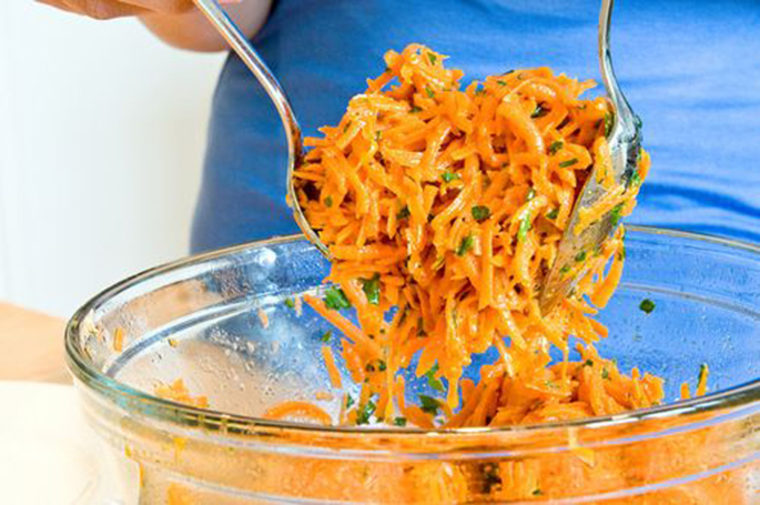
In a medium bowl, whisk together 3 T. extra-virgin olive oil, 3 T. fresh lemon juice, 1 tsp. light honey, and ½ tsp. ground cumin. Season with salt. Add 1 lb. carrots, grated on the large holes of a box grater or in a food processor, fitted with a grating attachment, and toss to coat, adjusting the dressing to taste. Stir in ½ cup coarsely chopped flat-leaf parsley or cilantro and set aside to marinate for at least 30 minutes and up to 2 hours before serving.

A method for Vegetable Soup

A method for Vegetable Soup

Caramelized Zucchini Soup with Rosemary and Walnuts


Step 1. The vegetable. This can be whatever you have on hand, including a mixture of different things. Great options are zucchini, winter squash, sweet potato, leeks, corn, spinach, peppers, parsnip, turnip, eggplant, cauliflower, broccoli, tomatoes, beets, onions…

Step 2. The caramelization. This step primes the vegetable to release as much flavor as possible in the soup. For most vegetables, just cut them into manageable chunks (not too small), toss them with olive oil in a roasting pan and put them in a 375-degree oven for as long as they need to get a bit crusty and caramelized. Things like eggplant, peppers, tomatoes, winter squash and sweet potato can be roasted in their skins (peppers, tomatoes and eggplant can even be charred under the broiler if you like) and then peeled before proceeding. I also toss several *unpeeled* cloves of garlic in the pan with the vegetables. When the veggies are nicely caramelized, put them into a heavy-bottomed pot on the stove. Don’t forget to peel the garlic.

Step 3. The stock. Cover the vegetables with the stock so that they’re covered by about a 1/2 inch of liquid.

Step 4. The herbs and spices. Fresh or dried – it’s your choice. There are the usual suspects, such as basil, thyme and curry, and untraditional ones, which are only limited by your imagination. Try chipotle chiles, or even chocolate! Toss in as many as you like and let everything simmer until the vegetables are starting to get soft.


Step 5. The enhancement. Here is where you can really get creative. Nuts are fantastic here, they add thickness and character without overpowering the other flavors. Walnuts, almonds, pecans, hazelnuts, cashews – lightly toast a handful and add them to the soup. Let them simmer with everything else for at least 10-15 minutes. Peanut or other nut butters are also great, as are grated or crumbled cheeses – though I add these just before the final step so they don’t get stringy. Parmesan, smoked mozzarella, cheddar, pepper jack, feta, goat… Something else I’ve been experimenting with lately is booze: brandy, port, marsala, vermouth, sherry… Like the cheese, add a glug or two just before the end.

Step 6. The enrichment. This brings it all together, gives the soup some richness and thickens it up. Traditional is of course cream, but there are other possibilities: cream cheese, yogurt, coconut milk, butter… The only thing to remember here is that some of these don’t take too well to boiling, so heat the soup gently after this step.

Step 7. The emulsion. If you have a hand blender, this step will be a cinch. If you only have a normal blender, carefully pour the hot liquid into it and cover the top tightly with a towel before you turn it on. Trust me on this one – if you don’t keep that lid down with all your strength, you will have new decor on your kitchen walls!

Step 8. The final tweak. Check to make sure the balance of salt is to your liking; think about also whether a pinch of sugar or a squeeze of lemon would enhance the flavors. Correct the seasoning, heat for another couple of minutes, and serve to hungry people in big steaming bowls.

Some of my favorite combinations:

zucchini with rosemary and walnuts
sweet potato with curry, cashews and coconut milk
corn, yellow pepper and basil
cauliflower, almond and parmesan
eggplant with cumin, cilantro and lemon
butternut squash with sage, pecans and browned butter
broccoli, thyme and blue cheese
roasted red pepper with cilantro, feta and lime
mushroom (try a mixture of fresh+dried) with marsala and hazelnuts

Air Fryer Steak Fajitas

Air Fryer Steak Fajitas

Air Fryer Steak Fajitas


1 lb steak (skirt, flank, ribeye)

1/2 green pepper sliced

1/2 red pepper sliced

1/2 onion sliced

3 tbsp fajita seasoning

8 tortillas

shredded cheese

salsa

sour cream

1-2 avocados sliced


Let the meat come to room temperature. Slice meat against the bias into bite size thin strips. Heavily sprinkle steak strips & veggies with fajita seasoning – toss to coat. Place steak & veggies in air fryer basket and spritz with olive oil. Air Fry at 375 for 6 minutes. Open the air-fryer basket and using tongs – toss steak & veggies – sprinkle with a little more seasoning. Air Fry for an additional 6 minutes. You can temp check your steak with a meat thermometer – the best steak is medium rare when the meat reaches 135-140 degrees. Serve those air fryer fajitas with warm corn or flour tortillas and all the fixins!

Air Fryer Boiled Eggs

Air Fryer Boiled Eggs

Air Fryer Boiled Eggs


6 eggs


Set six eggs in the air fryer basket


Soft boiled – air fry at 250 for 11 minutes

Medium boiled – air fry at 250 for 14 minutes

Hard boiled – air fry at 250 for 17 minutes


Once the eggs are done, transfer them to an ice bath so they can cool off.

Garlic Mustard Roulade

Garlic Mustard Roulade

Garlic Mustard Roulade


1 pound garlic mustard greens, flower stalks, and flowers

1/2 tsp. ground nutmeg

1/2 tsp. sea salt

1 tsp. smoked paprika

2 tsp. granulated garlic

1/2 tsp ground black pepper

4 egg yolks

4 egg whites

2c. shredded mozzarella cheese


Heat oven to 425° F. Prepare a sheet pan with parchment paper. In a large pot of boiling water, blanch the garlic mustard greens for 1 minute. Shock the greens in ice water to stop the cooking process, and squeeze as much water from them as possible. Add the cooked greens to a food processor. Add the nutmeg, salt, smoked paprika, granulated garlic, black pepper and egg yolks. Pulse until the garlic mustard greens are finely chopped.  In a mixer, whip the egg whites until stiff peaks form. With a spatula, fold 1/3 of the egg whites into the greens mixture, mixing until no more whites are seen. Then gently fold in the remaining egg whites, until the mixture is uniform. Spread the garlic mustard and egg mixture evenly on the parchment paper covered sheet pan, leaving an inch of exposed paper around the entire edge. Bake until the egg is set, about 12-15 minutes.. Loosen the roulade from the parchment paper. Sprinkle the top with whatever you are using as a filling, or just cheese. Starting with the wider side, roll the roulade up like a jelly roll, ending seam side down. Bake an additional 10 minutes to melt the cheese and warm the filling.

Wood Sorrel Cream Tarts

Wood Sorrel Cream Tarts

Wood Sorrel Cream Tarts


2 cups of wood sorrel

1 cup of sugar

1/2 cup of sour cream

1/2 cup of full-fat Greek yogurt

1 cup of graham cracker crumbs

1/4 cup of butter

1/2 tsp. ground cardamom

1/2 tsp. salt

Directions


Remove stems from your wood sorrel leaves. Place in a food processor with sugar, then blend thoroughly. Remove sugar and place in a bowl with sour cream & yogurt. (Save about 2 tablespoons of sugar for garnish) ​Line a sieve with cheesecloth and put in your mixture. Place the sieve in the fridge overnight -with a bowl underneath – to drain.


​Crust: ​Preheat oven to 350 F. ​Melt butter on low heat. Mix melted butter, ground cardamom into graham cracker crumbs. Blend well. ​Press firmly into mini-cupcakes tins to form tarts. Bake for 20 minutes. Cool.

Tart Assembly: Remove your drained wood sorrel cream from the sieve. Dollop about a tablespoon in each tart shell. Sprinkle with wood sorrel sugar. Ready to serve!

Hippie Hotcakes (Serves 2-4)

Hippie Hotcakes (Serves 2-4)

Hippie Hotcakes (Serves 2-4)


1/2 cup steel cut oats

1/2 cup quinoa, washed and rinsed three times (until water runs clear)

1/2 cup plain yogurt (non or full fat is fine)

1 cup water

2-3 tablespoons evaporated cane juice sugar

1/4 teaspoon fine grain sea salt

1/2 teaspoon cinnamon

1/2 teaspoon freshly grated nutmeg

3 eggs

1 teaspoon baking powder

2 tablespoons coconut


Put the steel cut oats, quinoa, water and yogurt in a blender, cover and refrigerate overnight. In the morning add the remaining ingredients. Cover and blend on low to incorporate, at least 1 minute. Move the setting to puree or liquefy and blend 1 minute more, until the hotcake batter is smooth.  Heat oil or butter in small skillet over medium heat. When the skillet is hot, pour in some batter until it reaches the edges, and cook for 3 or 4 minutes, until golden brown and bubbles on the surface are popped. Flip the hotcake and cook the other side for another couple of minutes, until brown and cooked through. Garnish with your topping of choice; settle in to dig in. Pantry Note: Leftover hotcakes can be cooled, kept in a plastic bag in the freezer for four to six weeks. When reheating the hotcakes, pop them in a toaster or under the broiler for a few minutes on each side.

Frugal Bones & Beans

Frugal Bones & Beans

Frugal Bones & Beans


Olive Oil

1 Onion, chopped

Leftover Bone (chop, duck, shank, whatever is on hand)

2-3 slices Bacon, raw or cooked

Splash of Vermouth or White Wine

2 C. dried Cannellini Beans or Other Large Beans, soaked overnight and drained

6-8 Sage Leaves, torn

2 T. Salt

Salt & Pepper to taste


Cover the bottom of the large stockpot with a layer of olive oil and set over medium heat.  Cook and stir onions until soft, about 5-7 minutes.  Add leftover bone and bacon.  Cook until the bottom of the stockpot is brown, by leaving over the heat and not stirring often.  You are looking for a golden caramelization in the bottom of the pan.  Deglaze with a splash of vermouth, stirring to scrape up the brown bits.  Add beans and cover with water by 1 ½ inches. Add sage and bring mixture to a boil.  Stir in salt.   Reduce heat to simmer and cook until the beans are soft and can be mashed with the back of a spoon, 1-2 hours.  Most of the water will be absorbed by this time.  Season with salt and pepper to your liking.  Garnish with fresh parsley, if desired.  You can store in fridge 3-5 days.  You can also mash and store the mash in the freezer to use later in a white bean dip (add mashed roasted garlic and a squeeze of lemon).  You can refresh leftover beans by adding a hand to warmed chicken or vegetable stock with some sautéed celery, carrot and onion.

Celery Roses with Herb Cream Cheese

Celery Roses with Herb Cream Cheese

Celery Roses with Herb Cream Cheese


6 or 8 washed and dried Ribs of Celery that have been cut all the same length.


Herb Cream Cheese


1 Tablespoon Fresh Parsley, minced

1 Tablespoon Fresh Chives, minced

1 Tablespoon Fresh Marjoram, minced

1 Teaspoon Fresh Thyme (lemon thyme if you have it)

1/2 Teaspoon Fresh Lemon Zest

1 Tablespoon Lemon Juice

1/4 Teaspoon Garlic Powder

1/8 Teaspoon Sea Salt

4 ounces of Light Cream Cheese (50% less fat), at room temperature


Mix all ingredients together until smooth. Don’t use a food processor for this or the cream cheese will turn green.


Spread cheese mixture on each rib of celery, making sure to clean the sides; do not overfill.  After you have all six ribs filled, stack them together beginning with the smaller center ribs of the celery. Press together gently so as not to squeeze out the cream cheese.  Wipe the edges clean after you have them all formed together.  The more celery ribs you add the more your “flower” will take shape. The celery stalk I used today did not have small center stalks. I think those would make a better center than what I show here so use those if you have them.  Once you get all your stalks together, lay it down on a cutting board and carefully cut into 1 inch thick slices.  Clean you knife off after each cut.  Now that I see them plated, I think it would be a good idea to rotate the celery roll after each cut.  You can see by the top flower that it kept it’s round shape, where as the lower flowers have a flat side to them.

Sticky Onion Tart with Sweet Garlic, Fresh Thyme, Bay and Buttery Puff Pastry

Sticky Onion Tart with Sweet Garlic, Fresh Thyme, Bay and Buttery Puff Pastry

Sticky Onion Tart with Sweet Garlic, Fresh Thyme, Bay and Buttery Puff Pastry


4 medium yellow onions, ends cut off and papery skins removed

1/4 cup unsalted butter

4 sprigs of fresh thyme, leaves removed 2 tablespoons Demerara sugar (or dark brown sugar)

1/4 cup cider vinegar

8 cloves garlic (or more), peeled and cut in half

11 ounce high-quality puff pastry sheet, thawed but cold

Goat cheese


Peel the onions and halve across the middle. Place the butter in a 26cm non-stick ovenproof frying pan on a medium heat. Strip in the thyme leaves and add the bay, shake the pan around and get it bubbling, then add the sugar, vinegar and 100ml of water. Place the onion halves in the pan, cut side down. Peel and halve the garlic cloves and place in the gaps, then season generously with sea salt and black pepper. Cover, turn the heat down to low and leave to steam for 10 minutes to soften the onions slightly, then remove the lid and cook until – very importantly! – the liquid starts to caramelize, gently shaking the pan occasionally to stop it from sticking. Place the pastry over the onions, using a wooden spoon to push it right into the edges of the pan. Bake for 35 minutes, or until golden brown and puffed up (it will look quite dark, but don’t worry!). Using oven gloves to protect your hands, pop a large plate over the pan and confidently but very carefully turn out. Delicious served with goat’s cheese, a simple salad and a cold beer. Tip: Shallots, leeks and spring onions all make wonderful tarts – just make sure they’re soft and caramelized before covering with pastry. Slice into wedges and add a dollop of goat cheese to eat with the tart.

Pickled Mustard Green Stems

Pickled Mustard Green Stems

Pickled Mustard Green Stems


Mustard Green Stems

Clean qt. Jar with Tight Light


In a small bowl add:

1 cup Organic Apple Cider Vinegar

1 generous Tbsp Pickling Spices

1 dried small red pepper, left whole (optional)

1 tablespoon fresh dill, chopped


Stir to blend. Slice the stems of the Mustard Greens into bite-size chunks and fill jar to about 3/4 full.  Pour over the pickling vinegar blend and add just enough water to fill jar.  Add a bit of sea salt if desired.  Place the lid on tightly and shake to distribute the spices.  Refrigerate for 2-3 days, give it a good shake once a day.  These will keep for a month or more refrigerated

Coconut Pandan Waffles

Coconut Pandan Waffles

Coconut Pandan Waffles


1.5 cups gluten free rolled oats, quick cooking 120 grams

1 can coconut milk (13.5 fluid ounces/400 ml or Thai Kitchen is 13.66 fluid ounces/403 ml)

3/4 cup tapioca flour, 85 grams

3/4 cup rice flour, 85 grams

1-3/4 teaspoon of baking powder, 7 grams

3/4 teaspoon of baking soda, 3 grams

pinch of salt

2 eggs

3/4 cup sugar, 158 grams

3 tablespoon coconut, avocado, or olive oil

1 teaspoon vanilla

1 teaspoon coconut extract

2 teaspoon pandan extract

1/2 cup shredded coconut, I prefer unsweetened (Optional)


Place rolled oats and the coconut milk in a blender and blend until smooth.  Add remaining ingredients (except the shredded coconut) and blend until smooth. Let the batter rest while the waffle iron is heating up. Stir in shredded coconut, if using. Cook batter in a waffle iron. Place the waffles on a cooling rack or serve immediately. If you put them on a plate to cool they will get soggy. These waffles are traditionally served plain while hot and crispy on the outside. These waffles are best eaten as they come off the waffle iron, or the day of.

Crunchy Pork Belly

Crunchy Pork Belly

Crunchy Pork Belly


Pork belly, skin on

1 cup water

Salt

3 pieces of lemongrass ( 3 inches each)

3-4 cloves of garlic

6-8 Kaffir leaves


Put the water, lemongrass,  garlic, Kaffir leaves into the Instant Pot/ pressure cooker.  Lightly salt the pork and place it on a trivet in the pressure cooker. Cook on high pressure for 20 minutes. Release pressure.

Pat the pork dry with paper towels.  Pierce the skin of the pork all over with a fork. Wrap the bottom of the pork with foil. Leaving the skin exposed. Place the pork in a 500F degree convection oven on broil with the fan ON until crispy and browned. About 15 to 20 minutes.

Coconut Bacon & Coconut Chips

Coconut Bacon & Coconut Chips

Coconut Bacon


2 cup coconut chips (Toasted coconut chips work well here.)

4 tsp. tamari or soy sauce

4 tsp. maple syrup

1/4 tsp. smoked paprika (or 1/2 tsp. liquid smoke and 1/4 tsp. paprika)


Mix together the tamari or soy sauce, the maple syrup, and the smoked paprika (or the liquid smoke and regular paprika) until well mixed. If you mix them in either a container with a lid or a bag, it will be easier to coat the coconut chips in the next step. Pour the coconut chips into the container with the mixed seasonings. If you are using a container with a lid or a plastic bag, it’s easy to coat all of the coconut chips by shaking them with the seasonings until fully coated. Spread the coated coconut chips over a baking sheet (or a dehydrator tray) so that they don’t overlap too much. Sweet, smoky, and salty, these seasoned coconut chips will remind you of maple sweetened bacon, but they are vegan! I’ll show you how to make coconut bacon in just a few minutes! Dry them out by using the low heat and convection setting of your oven (if you have one), or by using a dehydrator. They will get nice and crispy. If you want them to be a toasted color, you can either use toasted coconut flakes to begin with, or you can put them in the oven at a higher heat setting for a few minutes. Be very careful if you choose to do so, checking on them every minute or so, because they can burn pretty quickly at higher heat settings.

Eat as is or serve on salads or other dishes.

You can purchase coconut chips or make your own.


1 fresh coconut


Open the coconut and pry out the coconut meat.  Using a vegetable peeler, peel off the brown skin from the coconut pieces.   Rinse off and dry the white coconut pieces. Using your vegetable peeler again, peel off strips of coconut until you have finished making coconut chips with the entire coconut. Using either your oven or a dehydrator, dry the coconut chips until they are completely dried out. You can tell by trying to break them. If they are still somewhat flexible and hard to break, you should dry them out a little longer. They should easily snap in half. If you are using your oven, use the lowest heat and the convection setting if you have one. If you want toasted coconut flakes, you can continue to heat the coconut in either the dehydrator or the oven and they will start to slowly become toasted. They will first start to turn a golden yellow, followed by a darker brown color. You can quicken the process by turning up the heat a little, but be very careful! Toasted coconut flakes burn very quickly and easily. Once burnt, they don’t taste very good. Store your dried coconut chips in an airtight container. They are now ready for eating as is or seasoning however you choose.


Smoked Paprika Seasoned Coconut Chips

Matcha Lime Seasoned Coconut Chips

Sweet & Tangy Raspberry Coconut Chips

Pina Colada Coconut Chips

Citrus Herb Basque Chicken

Citrus Herb Basque Chicken

Instant Pot: Citrus Herb Basque Chicken


3 tbsp grass-fed butter, ghee or avocado oil divided

4 bone-in chicken thighs

1¼ tsp sea salt divided

1 medium yellow onion thickly sliced

4 fresh garlic cloves minced

5 fresh thyme sprigs leaves removed and stems discarded

½ lb 230 g chorizo casing removed

1/3 cup sun-dried tomatoes

½ cup pitted green olives

1/3 cup freshly squeezed orange juice

¾ cup chicken bone broth

1 handful fresh cilantro for garnish


Add 2 tablespoons (29 g) of healthy fat of choice to the Instant Pot and press “Sauté.” Once the fat has melted, add the chicken thighs, sprinkle with ½ teaspoon of sea salt and brown for about 2½ minutes per side. Remove the browned chicken to a plate and set aside. Add the remaining 1 tablespoon (14 g) of healthy fat of choice, onion, garlic, thyme leaves and the remaining ¾ teaspoon of sea salt, sautéing for 5 minutes, stirring occasionally. Add the chorizo and sauté for 5 minutes, stirring occasionally. Press the “Keep Warm/Cancel” button. Add the sun-dried tomatoes, olives, orange juice and bone broth. Give it a good stir. Add the browned chicken, making sure it’s submerged and some of the liquid is ladled over it. Place the lid on the Instant Pot, making sure the steam release valve is sealed. Press the “Poultry” setting, then increase the time using the “+” button until you reach 20 minutes. When the Instant Pot is done and beeps, press “Keep Warm/Cancel.” Using an oven mitt, “quick release”/open the steam release valve. When the steam venting stops and the silver dial drops, carefully open the lid. Serve immediately, topped with fresh cilantro.