Confit de Canard

Confit de Canard

Confit de Canard

This recipe is adapted from Cuisine de France by Paul Bocuse (Flammarion, 1992).


2 duck legs

1/2 cup coarse sea salt or kosher salt

1 cup (250 g) rendered duck fat, or more

2 cloves garlic, unpeeled

2 branches fresh thyme

1 bay leaf

1/2 cup water


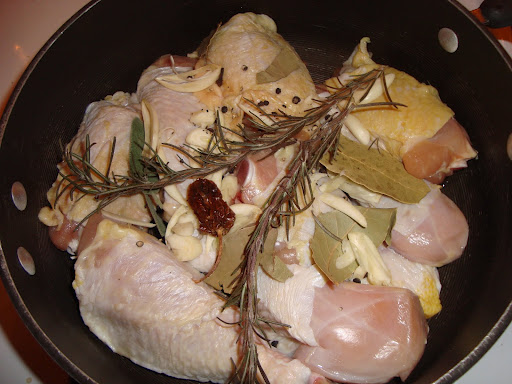
The day before you plan to cook the duck, place the legs in a bowl and cover them with the coarse salt. Refrigerate for 24 hours.  The next day, thoroughly rinse the salt off the duck under cold running water. Place on a rack to drain and pat dry with paper towels. In a large, heavy-bottomed pot or skillet, heat the duck fat, garlic, thyme, bay and water to a high simmer. Place the duck legs in the hot fat, skin side down. Turn down the heat — the fat should remain at a very low simmer throughout the cooking process. Check the duck occasionally to make sure the fat is simmering but not boiling. After an hour, turn the legs over so that they are skin side up, being very careful not to pierce the skin. Allow to cook at a low simmer for one hour more. Turn off the heat and remove the legs to a rack to drain. Strain the fat through a sieve into a bowl. Place the browned bits and garlic that remain in the sieve in a separate small bowl. Discard the thyme and bay leaf. When the duck has cooled, place it in a dish, cover with the strained duck fat and refrigerate. When the fat has cooled sufficiently, use a knife or spatula to spread it over the duck. You may continue with the recipe later in the day or leave the duck in the fridge for a day until ready to complete the cooking process. (If you are preparing your confit well ahead of time, you can preserve it in a large glass jar, sealed with the fat. In this case the fat must entirely cover the duck. It may be preserved in this way for up to 6 months, refrigerated.)  About 40 minutes before serving, preheat the oven to gas mark 7 (425 F, 220 C). Allow to preheat for 10 minutes.  Remove the duck from its dish or jar, scraping away most of the fat, and place in a baking dish, skin side down. Roast the duck in the hot oven for 15 minutes. Turn the legs over so that they are skin side up. Continue roasting for another 15 minutes, or until the skin is a crispy brown. Serve immediately, accompanied with seasonal vegetables and a hearty red wine. Serves 2. You may use the garlic cloves that you’ve set aside as garnish. The brown bits left over from cooking — known as ‘grattons’ in French — may be spread on toast and served during cocktail hour.

Winter Squash Buns

Winter Squash Buns

Winter Squash Buns

7 oz winter squash, peeled, in cubes

1 tsp chile powder

1 tsp ground paprika

1 tsp grated nutmeg

pinch of salt and freshly ground pepper

2 tbsp butter

1 package yeast (2 1/4 tsp)

2 cups all-purpose flour

8 oz aged cheese, grated (reserve a little for the garnish)

2/3 cup milk

1 handful of pumpkin seeds to garnish, briefly roasted in a pan


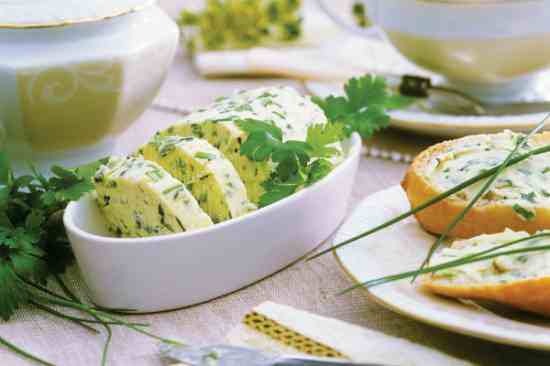
Preheat the oven to 35O°F/Gas 4. Grease a baking sheet with olive oil and arrange the winter squash on it. Sprinkle with the chili and ground paprika, nutmeg, salt, and pepper. Bake the squash until done, approx. 30 minutes. Leave to cool. Puree in a food processor and blend in the butter, yeast, flour, and cheese. Carefully add the milk; maybe you won’t need all of it, maybe a little more, depending on the squash’s moisture content. Continue to work into a pliable dough. Grease a bowl with some oil and place the dough ball in it. Cover with plastic wrap. Allow to rise for 1 hour in a warm draft-free place. Thoroughly punch down the dough again and divide into approx. 16 equal portions. Shape into balls and place on a greased cookie sheet. Loosely cover with plastic wrap and allow to rise for approx. 30 minutes. Preheat the oven to 35O°F/Gas 4, brush the buns with a little water, and sprinkle with the pumpkin seeds and reserved cheese. Bake the buns until done and golden brown, approx. 30 minutes. Serve with thyme butter.

Baked Shrimp Risotto

Baked Shrimp Risotto

Baked Shrimp Risotto

2 tablespoons extra-virgin olive oil

5 garlic cloves, sliced

1 cup arborio rice

3 1/2 cups low-sodium chicken broth

1/2 cup freshly grated Parmigiano-Reggiano cheese, plus more for garnish

20 cooked shelled large shrimp

1 tablespoon unsalted butter

1 tablespoon fresh lemon juice

Kosher salt

Pesto sauce, for serving


Preheat the oven to 400°. In an enameled medium cast-iron casserole, heat the olive oil. Add the garlic and rice and cook over moderate heat, stirring, until very fragrant, 2 minutes. Stir in the broth and bring to a boil. Cover and bake for about 20 minutes, until the rice is tender. Stir in the 1/2 cup of cheese, the shrimp, butter and lemon juice; season with salt. Serve drizzled with pesto and garnished with cheese.

Rhubarb Iced Tea

Rhubarb Iced Tea

Rhubarb Iced Tea


10 stalks rhubarb

3 1/2 cups sugar

4 tea bags Earl Grey tea

2 star anise

1 vanilla bean

extra sugar (to taste)

lots of ice cubes


Wash the rhubarb and cut the stalks into sections. Place on low heat with the sugar in 4 cups water. Simmer for 2 hours on low heat until a syrup develops. Leave to fully cool. In the meantime, bring 4 cups of water to a boil. Cut the vanilla bean open lengthwise, scrape out the seeds, and add them to the water with the bean. Also add the star anise. Lastly, add the tea bags. Brew on low heat for 10 minutes and remove the tea bags. Allow the tea to cool. Put in the refrigerator to fully cool. Before serving, first pour the rhubarb syrup into an attractive glass pitcher. Add the tea and stir. Add extra sugar to taste. Serve with lots of ice cubes.

Roasted Potatoes and Butternut Squash with Olives and Capers

Roasted Potatoes and Butternut Squash with Olives and Capers

Roasted Potatoes and Butternut Squash with Olives and Capers


1 large Yukon Gold potato, peeled and cut into 1-inch pieces

1 small butternut squash (about 2 lb./900 g), peeled, seeded, and cut into 1-inch dice (to yield

about 4 C.)

2 cloves garlic, thinly sliced

1⁄3 C. pitted small black olives, such as niçoise

2 tsp. salted capers, rinsed well

1 tsp. crushed coriander seeds

3 T. (44 ml) extra-virgin olive oil

Kosher salt and freshly ground black pepper


Position a rack in the center of the oven and heat the oven to 425°F (220°C).  In a large bowl, toss together the potato, squash, garlic, olives, capers, and coriander. Add the olive oil and mix well to combine. Season with 1/4 tsp. of salt and a few grinds of pepper. Transfer to a 9 x 12-inch baking

dish and bake in the oven, stirring occasionally, until the vegetables are tender and lightly browned, 55 minutes to 1 hour.

Heirloom Tomato and Ricotta Tart

Heirloom Tomato and Ricotta Tart

Heirloom Tomato and Ricotta Tart

Not worth making this unless you have good, home grown, lovely tomatoes. It is too simple not to use the best ingredients.

1 sheet frozen puff pastry (thawed)

1/2 C. ricotta cheese (fresh homemade is perfect here!)

5 heirloom tomatoes (it is gorgeous with multiple colors, but that’s not required)

Flaky sea salt (Maldon, for example)

Fresh thyme

Preheat oven to 400F.  Place puff pastry on a sheet of parchment paper and gently roll with a rolling pin to even out pastry. Place parchment with puff pastry on a baking sheet and evenly spread puff pastry with ricotta leaving a 1-inch perimeter of puff pastry as you go. Sprinkle ricotta with salt and fresh thyme leaves. Bake pastry for 15 minutes. While the pastry bakes, slice your tomatoes into 1/4 slices (you will need 3-4 slices of each color, depending on the size of your tomatoes). Remove pastry from oven and let cool at room temperature for about 10 minutes. Top pastry off with tomato slices and sprinkle tomatoes with salt and thyme leaves. Slice and serve.

Dried Apple Rings

Dried Apple Rings

Dried Apple Rings

6 tablets vitamin C, crushed

2 cups cold water

6 apples

Preheat the oven to 17O°F. To prepare an anti-browning ascorbic-acid bath, dissolve the crushed vitamin C tablets in the water in a large bowl. Peel and core the apples and cut into V4-inch slices. Add the apple slices to the acid bath as you cut them. Soak for 10 minutes. Pat the slices dry and arrange them on a metal screen or cake cooling rack and place the rack in the oven. Prop open the oven door with a wooden spoon handle to enable moisture to escape. Dry the apples in the oven until leathery, 3 to 4 hours. The slices are fully dry when you can squeeze a handful and they don’t stick together. Cool the apple slices, and then condition them by transferring to a covered container and letting sit for 1 week. This allows the dried fruit to redistribute any trapped moisture. If you notice moisture on the sides of the container, repeat the drying process for another hour or so. Fully dried apple rings keep in an airtight container for up to 1 year.

Fennel and Onion Jam

Fennel and Onion Jam

Fennel and Onion Jam

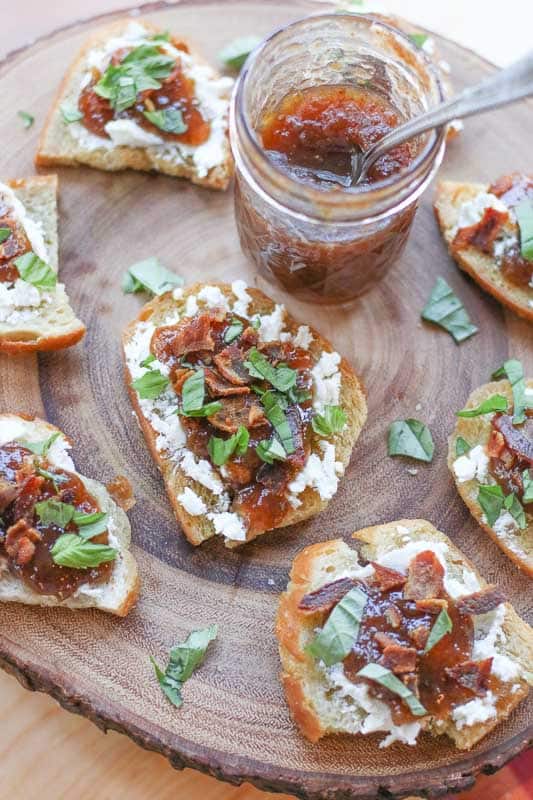
Try on a toasted baguette with goat cheese.


2 Tbsp olive oil

2 bulbs fennel, thinly sliced

1/2 tsp kosher salt

1/4 tsp coarse black pepper

3 cloves garlic, mined

1/2 cup melted sautéed onions

1/4 dry white wine


Heat a large pot over medium high heat. Add oil, fennel salt and pepper to the pot. Cook for 15 minutes stirring often so that fennel doesn’t burn. Once fennel is soft and very tender add garlic. Cook for one more minute until garlic is fragrant. Pour in wine and cook until all the liquid evaporates. Turn off heat and place jam in an airtight container in the fridge for up to two weeks.

Basil Strawberry Lemon Granita

Basil Strawberry Lemon Granita

Basil Strawberry Lemon Granita

1 C. Sugar

1 handful fresh Basil Leaves

1 C. Water

4 C. fresh Strawberries, hulled and sliced

Juice and Finely Grated Zest of 2 Lemons

Lemon Slices, for Garnish


Combine sugar and basil leaves with the water in a medium saucepan.  Heat over medium heat, stirring occasionally, until sugar is completely dissolved.  Remove heat and let cool.  When cool, strain and discard basil leaves.  Combine berries, lemon juice and zest in a blender or food processor.  Pulse until smooth. Pour cooled simple syrup into the blended fruit and blend well.  Fill 10 8ounce jars ¾ full with mixture.  Cover loosely and place in the freezer for 50 minutes.  Scrape down the edges of the jars with a fork and stir the scrapings into the centers.  Return the jars to the freezer for 90 minutes and scrape them down again.  Freeze additional 5 hours until frozen through.  When you are ready to serve the granita, use a fork to stir the granita mixture one more time.  Serve ice cold, garnished with lemon slices.

Honey Lemon Apple Jam 

Honey Lemon Apple Jam 

Honey Lemon Apple Jam

12 cups chopped apples

2 cups lemons juice (I used a combination of freshly squeezed Meyer lemon juice and bottled)

2 cups honey

3 cups sugar

1 envelope of liquid pectin (can be omitted if you use a few firm, green apples)

zest of three lemons

Prepare your canning pot, as well as seven pint jars, lids and rings. Combine the chopped apples and lemon juice in a large, heavy-bottomed pot (an enameled Dutch oven works well here) and cook over medium-low heat, stirring frequently, until the apples have broken down. When you’ve got a nice, chunky applesauce, add the honey and sugar and stir to incorporate. Bring the fruit to a boil and cook for at least five minutes at a roll (watch out though, it will bubble and depending on the size of your pot, can get a little splashy). Add pectin and boil for a few minutes more, to active the pectin. When it seems nice and jammy, turn off the heat and stir in the lemon zest. Fill jars, wipe rims (this jam is sticky, so you may need to add a bit of white vinegar to your towel, to help ensure a clean rim), apply lids and screw on bands. Process in a boiling water canner for ten minutes (if you are above 1,000 feet in altitude, adjust your processing time accordingly). Eat on toast, spoon on muffins or use to glaze roasted chicken pieces.

Vegetable Spiral Tart

Vegetable Spiral Tart

Vegetable Spiral Tart

Tart Crust

2 1/3 cups all purpose flour

3/4 tsp kosher salt

16 tbs butter (chilled and cut into 1/2″ pieces)

1/2 cup water (very cold)

Vegetable Filling

2 cups heavy whipping cream

1 1/4 cup parmesan (finely grated, 1/4 cup reserved)

2 tbs kosher salt

1/2 tsp pepper (ground)

1/4 tsp nutmeg (grated)

1/4 tsp chili powder

3 tbs extra virgin olive oil

3-4 purple carrots (medium)

2 russet potato (large)

2 green zucchini (medium)

2 sweet potato (large)


Sprinkle the cold water on top and pulse again just until the dough comes together into a ball, but it won’t be completely smooth yet. You should still see small bits of butter. Place a piece of plastic wrap on your working surface and turn the dough out onto it. Fold the plastic over and press the dough into a 1-inch thick disc. Make sure it is wrapped completely and refrigerate the disc of dough for 2 hours (or overnight). When chilled, place the disk of dough on a lightly floured surface and roll out until 1/8 inch thick, periodically lifting and rotating to make sure it isn’t sticking to your surface (dust your surface as needed). Carefully transfer the dough to your tart pan, easing it in without stretching the sides, and gently press into place. Trim with a sharp knife even with the rim of your pan. Chill until firm to touch, 30 min – 1 hour. At this point it can be frozen (well- wrapped) for 2 weeks if needed. No thawing necessary if you freeze it! Preheat the oven to 375 F. Line the tart shell with parchment paper and fill with pie weights (or dried beans). To partially bake, bake until the surface looks dry and pale, about 25 minutes. Remove from the oven and remove the paper and weights. Return to the oven a bake for 5 minutes longer.


Tart Crust


To make the dough in a food processor, put your flour and salt in the food processor and sprinkle on your cold butter pieces. Cover and pulse several times until the butter is cut into pea size pieces.


Vegetable Filling


As your tart shell is being partially baked, prep the vegetables by shaving them into thin ribbons. A mandolin would work but I find a vegetable peeler even easier and faster – and you get even finer shavings, which cuts down on the cooking time of the tart. For the potatoes and sweet potatoes, I recommend cutting them in quarters, length-wise. All the vegetables should roughly be around the same width so when they’re laid upright in the tart, you can visibly see all the pretty, colorful layers. In a large mixing bowl, combine cream, parmesan, salt, pepper, nutmeg and chili pepper. Whisk until combined. Toss the vegetable ribbons into the cream mixture until they’re all coated. Take a ribbon (I like to use zucchini here) since it’s so flexible. Roll it into a tight spiral and place it on the center of the partially baked tart shell. Take another vegetable and wrap it around the center spiral. Continue working outwards, alternating vegetables. The cream actually makes the vegetables stick to each other so it’s not as hard as it looks! Once you’ve reached the edge of the tart shell, brush the top of the tart with olive oil and sprinkle with a good sprinkling of finely grated parmesan cheese. Bake at 350 °F for 50 to 60 minutes, until vegetables are soft and cooked through. Cool in tart pan for 10 minutes, then slice and serve.


Baking time will greatly depend on how thin your vegetables are. Using a good quality, sharp Y-peeler is preferred over a mandolin, and much safer and faster to use. If you use a mandolin, I recommend covering the tart with foil to bake for 20 minutes and then removing the foil and bake uncovered for another 45 minutes. In the spring and summer,  you can replace the root vegetables with different varieties of squash and eggplant. I would just decrease the baking time.

Crunchy Chicken Fingers

Crunchy Chicken Fingers

Crunchy Chicken Fingers

Salt and Pepper

¼ C. Flour

1 Chicken Breast Fillet, about ¼ lb., cut into 6 strips

1 small Egg, lightly beaten

1 2/3 C. Cornflakes, crushed with rolling pin

2 T. Vegetable Oil


Lightly season the flour and put into a plastic bag.  Add chicken pieces and shake until coated.  Dip the chicken fingers in beaten egg, and then roll in corn flakes.  Heat oil in frying pan, add chicken and sauté for about 6 minutes on each side, until crunchy on the outside and cooked through.


From First Meals

Not Carbonara Brussels

Not Carbonara Brussels

Not Carbonara Brussels


Sea salt

2 1/4 pounds (1 kg) Brussels sprouts, cleaned and halved

5 1/4 ounces (150 g) bacon, diced

2 small cloves garlic, minced

1 cup (250 ml) heavy cream

1/2 cup (50 g) grated Parmesan cheese

Freshly ground black pepper

1 small bunch fresh parsley, chopped


Bring a large saucepan of salted water to a boil. Add the Brussels sprouts and cook them for 10 minutes. Drain, rinse with cold water, and let stand to drain.  Fry the bacon in a skillet. Add the garlic at the last moment and fry for 2 minutes. Combine with the Brussels sprouts. Mix the cream and cheese and season with pepper. Set everything aside until ready to serve. Heat the cream mixture in a skillet. Stir in the Brussels sprouts mixture and cook to heat through. Sprinkle with the parsley and serve.

Braised Lamb or Goat with Juniper Berries, Fennel and Sage

Braised Lamb or Goat with Juniper Berries, Fennel and Sage

Braised Lamb or Goat with Juniper Berries, Fennel and Sage

1-1/2 C. dry red wine

2 pounds lamb stew meat (or try goat—see Kitchen Notes)

salt and freshly ground black pepper

olive oil

1 medium red onion, thinly sliced (about 2-1/2 to 3 C.)

4 cloves garlic, minced

1/2 C. finely chopped celery (about 1 rib)

2 T. chopped fresh sage

10 juniper berries, finely crushed with a mortar and pestle

1/2 tsp. fennel seeds, crushed with a mortar and pestle

2 T. tomato paste

water

2 bay leaves

juice of 1/2 lemon

2 T. chopped Italian parsley


Preheat oven to 350ºF. Bring wine to boil in a saucepan. Reduce heat and simmer until wine is reduced to 3/4 C., about 7 to 10 minutes (if you overdo the reduction, just add unreduced wine to bring it up to 3/4 C.). Set aside. Meanwhile, pat lamb chunks dry with paper towels and season with salt and pepper. Heat a Dutch oven or other heavy oven-safe pot over medium-high heat. Add 2 T. olive oil to pot; when it begins to shimmer, brown lamb chunks on all sides, working in batches. Transfer browned lamb to plate. You may need to drizzle in a little more oil between batches.  Reduce heat to medium and sauté onions with a little salt (again, you may need to add a little oil) until just softened, 5 to 7 minutes, stirring occasionally. Add garlic, celery, sage and crushed juniper berries and fennel seeds and cook for another 5 to 7 minutes. Add wine, 3/4 C. of water, tomato paste and bay leaves and stir, scraping up browned bits. Return lamb and any accumulated juices to the pot and bring to boil. If necessary, add a little more water, but don’t make it too soupy. Remove from heat, cover with lid and place in oven. Braise for about 1-1/2 hours, until meat is almost tender. Finish cooking on the stovetop over low heat for about 1/2 hour. If sauce is too liquid, leave the lid slightly ajar so it will reduce. Conversely, if it gets too dry, add water, a little at a time. Remove from heat. Stir in lemon juice and transfer to individual plates or a serving dish. Top with chopped parsley.  Note: Lamb? Goat? Yes. You know how every country but the United States calls soccer football? Same deal with eating goat and lamb—it seems everyone but us does it, with gusto. In fact, 70 percent of the red meat consumed in the world is goat meat. So what does everyone else know that we don’t? Maybe it’s that goat is lighter and healthier than beef, with a slightly sweet flavor.

Cheddar and Thyme Scones

Cheddar and Thyme Scones

Cheddar and Thyme Scones

2 C. flour

1 T. baking powder

1 tsp. dried thyme

1/2 tsp. salt

black pepper

1 T. sugar

5 oz shredded cheddar

1/2 C. unsalted butter, cold and cubed

1 small onion, finely chopped

1 large egg

1/2 C. heavy cream


for the tomato jam:


2 lb roma (plum) tomatoes, cored and roughly chopped

1/2 C. sugar

1 tsp. kosher salt

a pinch of crushed red pepper

black pepper

1 tsp. lemon juice


Preheat the oven to 400ºf and line two baking sheets with parchment. in a food processor, combine the flour, baking powder, thyme, salt, a few turns of pepper, and the sugar. add the cheese, reserving 1/2 C. for the topping, and butter to the food processor and pulse until the butter is pea-sized. add the mixture to a large bowl and mix in the onion. in a small bowl, whisk together the egg and heavy cream. add this to the dry mixture and mix to combine.  urn the dough onto a surface (you may need to give it a few kneads to bring those last few crumbs in) and pat it out into a square that is 1 inch thick. cut the large square into 9 smaller squares and place the scones on the baking sheets spaced 2 inches apart. top each with salt, pepper, and a bit of the reserved cheese. bake the scones until they’re lightly browned, beginning checking for doneness at 15 minutes. remove from the oven and serve warm with tomato jam (recipe follows).


for the tomato jam: In a saucepan, combine the tomatoes, sugar, salt, crushed red pepper, and a few turns of black pepper. set over medium heat and cook uncovered, stirring occasionally, until most of the liquid has cooked off, 1 to 1 1/2 hours. press through a fine-mesh sieve to remove the tomato skins. stir in the lemon juice. let cool and store in the refrigerator until ready to use.

Herbed Marmalade Marinade

Herbed Marmalade Marinade

Herbed Marmalade Marinade

Use as a salad dressing, vegetable marinade and sandwich spread, as a marinade for chicken thighs and zucchini that are destined for the grill, and for chopped salads.

2/3 C. extra-virgin olive oil

3 T. red wine vinegar

3 T. freshly squeezed lemon juice

2 T. lemon or orange marmalade

2 garlic cloves, minced

1 T. dried basil

1 T. dried oregano

1 T. dried thyme

2 tsp. dry mustard

1 tsp. fine sea salt

1/4 tsp. freshly ground black pepper

In a blender, combine the olive oil, vinegar, lemon juice, marmalade, garlic cloves, basil, oregano, thyme, mustard, salt and pepper. Blend until just incorporated and pour into a mason jar for storage. It will keep in the refrigerator for up to 1 month.

Mushroom Risotto with Lemon and Thyme

Mushroom Risotto with Lemon and Thyme

Mushroom Risotto with Lemon and Thyme

1/4 C. extra virgin olive oil Here’s our favorite organic olive oil.

4 cloves garlic chopped

2 C. Carnaroli rice

3/4 pound mixed mushrooms sliced thin

1 C. dry white wine

6 C. Chicken and Mushroom Broth  or Homemade Chicken Broth

1 T. fresh thyme leaves

1 T. finely grated lemon zest

2 tsp. fine sea salt

1/4 C. heavy cream


Warm the olive oil in an enameled cast iron braising dish over medium heat. Stir in the garlic and saute it until fragrant, about three minutes. Stir in the rice, making sure each grain is well-coated with the olive oil, and sauté it until the tips of each grain of rice turn translucent. Turn up the heat to medium-high. Stir in the mushrooms, and pour in wine. Stir the rice and mushrooms gently, but continuously until the rice absorbs the wine. Add the broth a half C. at a time, stirring continuously, and waiting for the rice to absorb the broth before adding more. When the rice is tender and has fully absorbed the broth, yielding a gorgeous creamy texture, turn off the heat, stir in the thyme, lemon zest, salt and heavy cream. Serve warm.

Apple-Thyme Pork Chops with Hard Cider au Jus

Apple-Thyme Pork Chops with Hard Cider au Jus

Apple-Thyme Pork Chops with Hard Cider au Jus

1/4 cup (30 g) flour

1/2 tsp. granulated garlic powder

2 tsp. (4 g) lemon thyme, divided

Salt and pepper

2 T. (28 g) butter

2 T. (30 ml) olive oil

2 (2-in [5-cm])-thick bone-in pork chops

1 apple, peeled and diced

1/2 cup (76 g) onion, chopped

1 clove garlic, peeled and minced

3/4 cup (180 ml) hard cider of choice

Preheat your oven to 35O°F (176°C). In a shallow bowl, whisk together the flour, garlic powder. 1 teaspoon (2 g) of the lemon thyme, salt and pepper. Set this aside. Heat your cast-iron skillet over medium heat, adding in the butter and olive oil. While that heats, take the two pork chops and pat them dry with paper towels to remove any excess moisture. Season the chops with salt and pepper as well. Never be afraid to season! Dredge the seasoned pork chops in the flour mixture and tap them gently to remove any excess flour. Place them into the heated skillet and fry until dark golden brown, about 3 to 4 minutes on each side. Monitor them occasionally to ensure they are not burning. Once they are golden brown, remove them from the pan and set them aside on a plate. Next, add the diced apple and onion to the skillet, and allow them to begin to deglaze the pan and sweat. Stir them occasionally until the apples begin to soften and the onions begin to turn translucent. 7 to 9 minutes. Add the minced garlic and remaining lemon thyme to the pan. Pour in the hard cider to complete the deglazing of the pan. Nestle the pork chops back into the pan alongside the apples and onions and place them into the oven for 20 to 25 minutes, or until the center of the pork chops reaches 145°F (63°C). Remove from the oven and allow the pork chops to rest for at least 5 minutes before serving. Don’t forget to finish drinking your hard cider!

Rosemary and Goat Cheese Stuffed Chicken with Wild Mushroom Sauce

Rosemary and Goat Cheese Stuffed Chicken with Wild Mushroom Sauce

Rosemary and Goat Cheese Stuffed Chicken with Wild Mushroom Sauce

1 whole chicken

4 ounces goat cheese, room temperature

1 tablespoon chopped fresh rosemary leaves

2 tablespoons extra-virgin olive oil, plus more for sauteing

Salt and freshly ground black pepper


Wild Mushroom Sauce:


1 tablespoon butter, plus 1 tablespoon

1/4 cup chopped shallots

4 ounces morel mushrooms, cleaned and sliced in half lengthwise (substitute 1 ounce dried morels, rehydrated)

4 ounces black trumpet mushrooms, cut into 1 1/2-inch pieces

3/4 cup chicken stock or broth

2 tablespoons chopped chives


Preheat the oven to 450 degrees F. Remove the backbone and wings from the chicken. Press the chicken open like a book. Carefully remove the bones from the chicken leaving the whole chicken intact with the skin. You can ask your butcher to do this for you. In a small bowl, combine the goat cheese, rosemary, and olive oil. Season with salt and pepper and mash together with the back of a fork. Turn the chicken over so the skin side is up. Gently loosen the skin by inserting your fingers underneath it to make a pocket. Stuff the rosemary goat cheese under the skin evenly over the breasts and legs. Tuck the skin back over the chicken. Season both sides of the chicken well with salt and pepper. Drizzle a little olive oil over the chicken and rub well. Heat a large, ovenproof sauté pan over high heat. When the pan is hot, add enough olive oil to coat the bottom of the pan. When the oil is hot and begins to shimmer when swirled, add the chicken, skin side down. Cook the chicken until the skin side is a deep golden brown, about 8 to 10 minutes. Carefully turn the chicken over and transfer to the oven. Roast for 10 minutes, or until the chicken is cooked through and the juices run clear. Remove the chicken from the pan and keep warm. Remove all but 2 tablespoons of the fat from the pan and return to the heat. Add 1 tablespoon of the butter and the shallots and sauté for 2 minutes, scraping the bottom of the pan with a wooden spoon to loosen the browned bits. Add the mushrooms and season with salt and pepper. Sauté for 2 minutes, or until the mushrooms begin to brown. Add the stock and bring to a simmer. Cook 5 minutes or until reduced by 1/3. Stir in the remaining tablespoon of butter and remove from the heat. Pour the sauce over the chicken and garnish with the chives. Serve immediately.

Swiss Chard with Apple-Chicken Sausage

Swiss Chard with Apple-Chicken Sausage

Swiss Chard with Apple-Chicken Sausage

1 apple

2 T. Oil

1 small yellow onion

1 bundle swiss chard

1 package of 4 apple-gouda-chicken sausages

1 tsp. apple cider vinegar

1 tsp. fresh ground pepper


Cut onion into small pieces and caramelize (in small or medium sauté pan) on medium-low for at least 30 minutes.  While onions caramelize, cut apple into same size pieces as onion, set aside. Two choices for the sausage preparation: one, leave sausages whole and place in sauté pan with apple pieces, pepper and cook on medium until sausages are nicely browned on the outside. Remove from heat and slice thickly. Set aside. Option two, slice sausages before you cook them. Add them to the pan with apples and pepper and allow to brown on all sides. In option one, the cheese will stay inside the sausage and when sliced after cooking will retain its flavor. The sausage, however, will have less crunchy bits and overall less texture. Option two, your cheese will melt out and coat some of the apple pieces and will lose much of its essence. But your sausage will have crunchy cheesy bits and have a stronger apple profile. Your choice. Cut ends off of swiss chard and then into ribbons. Add to onions and add apple cider vinegar. Turn heat to medium and cover. After two minutes stir, cover again. Wait another 3-5 minutes and turn off heat. Add salt to taste. Mix together sausage and a swiss chard in large bowl.


Serving Options:


Add another tsp. of pepper

Serve with biscuits or some toasted rye bread

Add a poached egg on top for a breakfast feel

Add either roasted walnuts or pepitas

Heirloom Tomato Tartlets with Whipped Herbed Ricotta

Heirloom Tomato Tartlets with Whipped Herbed Ricotta

Heirloom Tomato Tartlets with Whipped Herbed Ricotta

2/3 cup almond flour

4 tbsp grass-fed butter, softened

1/8 tsp sea salt

1 cup heirloom cherry tomatoes, halved

1/2 tsp olive oil

1/2 tsp balsamic vinegar

For Filling

1/2 cup Ricotta cheese

1 egg

1 tsp dried basil

1/2 tsp dried thyme

1/2 tsp minced garlic

1/8 tsp black pepper

1/8 tsp sea salt

Fresh chopped basil for serving

Instructions


Preheat oven to 350 and grease two 4 inch tartlet pans with olive oil. In a mixing bowl, combine butter and gradually stir in almond flour and sea salt. Divide dough into two balls. Press dough into prepared tartlet pans. Refrigerate. In a separate mixing bowl, combine Ricotta cheese, egg, dried basil, thyme, garlic, black pepper and sea salt. Use a spoon to whip and combine ingredients until fluffy. In a small bowl toss tomatoes in olive oil and balsamic vinegar. Divide filling between tartlet pans and spread evenly. Arrange tomatoes in top gently pressing into filling. Place tartlets onto a cookie sheet and bake 25-30 minutes or until crust edges are golden brown. Let tartlets stand at room temperature 10 minutes before slicing.


Sausage and Cheddar Stuffed Onions

Sausage and Cheddar Stuffed Onions

Sausage and Cheddar Stuffed Onions

6 medium yellow onions, trimmed, peeled, and halved pole to pole

3 tablespoons olive oil, divided

¾ teaspoon kosher salt, divided

¼ teaspoon freshly ground black pepper

12 ounces frozen sweet Italian sausage (about 3 links), defrosted, casings removed

½ cup chopped parsley leaves, plus more for serving

1 cup Panko, divided

4 ounces grated white Cheddar (about 1 cup), divided


Preheat oven to 425°F. Arrange onions, cut sides up, in a 9-by-13-inch baking dish. Drizzle with 2 tablespoons oil and season with ½ teaspoon salt and the pepper. Add ½ cup water to dish, cover tightly with foil, and roast until onions are tender when pierced with a knife, 45 to 50 minutes. Uncover and let cool slightly.  Meanwhile, combine sausage, parsley, ½ cup Panko, and half the cheese in a medium bowl, breaking up sausage as you mix.

Usha’s Hazelnut Roll

Usha’s Hazelnut Roll

Usha’s Hazelnut Roll

10 1/2 ounces all-purpose flour

2 tsp baking powder

10 Tbsp. (1 1/4 sticks) frozen unsalted butter

1/2 cup sugar

1 egg

2 Tbsp. milk, water, or cream (I used almond milk)

1/2 tsp vanilla extract


2 egg whites

1 egg yolk

6 Tbsp. water (I did not put water, the filing would be too runny)

3/4 cup sugar

4-5 drops bitter almost extract, or 3 bitter almonds (optional)

2 cups toasted hazelnuts, finely chopped or ground into rough pieces


1 egg yolk

1 tsp milk


Preheat the oven to 385 F, and line a baking sheet with parchment paper. To prepare the pastry dough, mix together the flour and baking powder, and place them in a mound on a clean surface. Cut the frozen butter first into thin slabs, then long rectangles, and finally into very small cubes, about 5 to 10 millimeters. It is easiest to do this if you coat the butter and knife with some of the flour; this prevents the knife from sticking too much. Spread the butter cubes around the periphery of the flour mound. Make a well in the center of the flour. Add the sugar, egg, milk, and vanilla extract to the well. Scramble these together using a fork, then slowly incorporate the surrounding flour, using the fork to stir it in. When the mixture becomes too thick for the fork, use a large knife to cut in the rest of the flour and butter. Continue cutting the dough together, remembering to scrape under and turn over the dough during this process. Do this for a couple of minutes, until the dough is in the form of large, crumbly lumps. Wash and flour your hands. Briefly knead the dough until it is no longer sticking strongly to the board. If the dough is wet, feel free to sprinkle on a little extra flour. Do not over-knead. You still want to see the little pieces of butter in the dough; this will produce a flaky crust. Form the dough into a ball, wrap it in plastic, and refrigerate for 15 to 30 minutes.


While the dough chills, make the hazelnut filling; Whisk together the egg whites, yolk, sugar, and bitter almond. Stir in the chopped toasted hazelnuts. After the dough has chilled, sprinkle 1 to 2 tablespoons of flour onto your work surface, to prevent the dough from sticking. Roll the dough out to form a large rectangle, about 2 feet long and 1 foot wide. Remember to scrape underneath  the dough, and flip it over a few times; sprinkle a little flour on the surface each time you do this, again to keep the dough from sticking. Spread the filling evenly over the dough, to about 1/2 inch from the edges. Roll the long side of the dough over itself, using a knife to scrape under the dough if it is sticking. Roll all of the dough to form a long log. Carefully transfer the log to the baking sheet, forming it into a half circle. Fold each end of the dough over itself, pressing it together to close. Using a knife, cut a zigzag along the top of the roll. Whisk together the egg yolk and teaspoon of milk; lightly brush this over the top of the roll. Bake for 40 to 45 minutes, until the roll is crispy and dark golden brown on top. Serve warm or cooled to room temperature.

Balsamic Onion Jam with Fig

Balsamic Onion Jam with Fig

Balsamic Onion Jam with Fig

clone tag: 5671963280667862823

This is delicious on a cheese board, on a grilled burger with some blue cheese, or in a grilled cheese sammich with a strong cheese like an aged white cheddar or Manchego


1 Tbsp. mild vegetable oil

3 sweet onions, sliced in ¼” thick crescents

1 jalapeno, sliced in thin crescents

â…“ c. white sugar

â…“ c. brown sugar

1½ c. balsamic vinegar

¼ c. cider vinegar

½ c. dried mission figs, sliced in quarters


In a large non-reactive pot on low, lightly sweat the onions and jalapenos and onion until the onions start to become translucent. Add some S&P and everything but the figs. Simmer, still on low, for an hour.

Add the figs, simmer on low for another hour-ish. When it is done, the mixture should be reduced by half, and the liquid thick and syrupy and almost evaporated. Pay lots of attention that it doesn’t scorch.  Put in a sterile jar and keep in the fridge for several weeks.

One Pot Ramen Vegetable Beef Skillet

One Pot Ramen Vegetable Beef Skillet

One Pot Ramen Vegetable Beef Skillet

1 pound ground beef

1½ C. sliced carrots

¾ C. diced onion

2 C. shredded napa cabbage

1 C. water

3 tsp. soy sauce

1 package (3 ounce) beef ramen noodles


Combine the beef, carrots and onion in a large skillet over medium heat. Cook until the meat is no longer pink and the vegetables are tender. Drain, if needed.  Add in the water, cabbage, soy sauce and half the package of the seasoning packet. Break the noodles into pieces and add to the pan. Cover and cook until the liquid is absorbed and the noodles are tender, about 10 minutes. Taste for seasoning and add more of the seasoning packet if needed.

Nettle and Sorrel Omelet

Nettle and Sorrel Omelet

Nettle and Sorrel Omelet

4 eggs

About 1 dessert spoon butter

½ large onion, finely chopped

1 clove garlic, finely chopped

Small knob of fresh horseradish, grated

A large handful of young nettle, chopped

A small handful of sorrel, chopped


Heat half the butter in a small pan. Put in the onion and garlic and sweat until soft. Add the horseradish, nettles, and sorrel, stir and take off the heat. Meanwhile crack the eggs into a bowl, season and whisk very lightly with a fork. Heat the rest of the butter in an omelet pan or small frying pan and tilt it so that the butter coats all the base and sides. When it foams (before it colors) put in the eggs. With your fork, draw the egg continuously from the outside into the center, tilting and shaking the pan as you do so, so that more liquid egg takes its place. Once it starts to firm up underneath, turn the heat down, spoon the nettle and sorrel mixture on to the left-hand side of the omelet (if you are right handed) then tilt the pan and slide it on to your plate, folding the top over with your fork as you do so. The omelet should be nice and soft in the middle. Eat immediately.

One Pot Skillet Pasta with Kielbasa

One Pot Skillet Pasta with Kielbasa

One Pot Skillet Pasta with Kielbasa

1 tsp. extra virgin olive oil

14-16 oz fully cooked smoked sausage, cut into 1/2-inch slices

1/2 C. diced onion

1 (12 oz) package Green Giant Garden Vegetable Medley

2 1/2 C. chicken broth

1/2 C. milk

8 oz dry penne pasta

Salt and pepper

1/2 C. freshly grated Parmesan cheese

Chopped parsley, for serving


Heat the olive oil in a large skillet over medium-high heat. Add the sausage and onion and cook until the sausage is browned and the onion is soft, about 3-5 minutes. Add in the frozen vegetables, chicken broth and milk. Stir in the penne pasta.  Cover and cook until the pasta is al dente, about 15 minutes.* Stir and season to taste with salt and pepper. Sprinkle the cheese over the top and stir in to melt and combine. Garnish with fresh parsley to serve.


*If there is still too much liquid in the pan, continue to cook uncovered. There should be some liquid left to make a sauce.

Canned Green Tomatoes

Canned Green Tomatoes

Canned Green Tomatoes

green tomato (as many as you want)

salt

Slice green tomatoes into pint jars. Add 1/2 tsp. salt to each jar. Cover with boiling water. Put lids on and put in water bath canner. Bring to boil and boil for 5 minutes. Remove from canner, tighten caps and cool on counter top. Can also use quart jars, adding 1 tsp. salt.

Canning Them for Frying

Slice tomatoes thick, 1/4-1/2″ thick. Pack in wide mouth quart jar with 1 tsp. canning salt.  Add 1/2 tsp. Citric Acid to each quart (or 1 T. Lemon Juice).  Fill with boiling water, leaving about a 1/2 inch headspace. Process quarts  in a boiling water bath for 40 minutes.

They will be soft when removing from the jar, but will hold up for frying.

Coat in seasoned flour, dip in egg beaten with a little milk, then coat in cornmeal.  Panfry in about 1/4″ oil until golden brown.

Gnocchetti with Savoy Cabbage and Candied Cherry Tomatoes  (Gnocchetti con Cavolo Cappuccio e Pomodorini Canditi)

Gnocchetti with Savoy Cabbage and Candied Cherry Tomatoes  (Gnocchetti con Cavolo Cappuccio e Pomodorini Canditi)

Gnocchetti with Savoy Cabbage and Candied Cherry Tomatoes  (Gnocchetti con Cavolo Cappuccio e Pomodorini Canditi)


2 lb. (900 g) russet potatoes

Kosher salt

2/3 C. (310 g) all-purpose flour

1 large egg

2 14-ounce cans (400 g) cherry tomatoes, strained

1/4 C. (59 ml) extra-virgin olive oil

1 tsp. granulated sugar

2 whole cloves

2 sprigs thyme

1 3-inch cinnamon stick

1 1-inch strip orange zest

1 1-inch strip lemon zest

1 sprig rosemary

1/4 tsp. whole black peppercorns

1 small head savoy cabbage, shredded


Put the potatoes in a large pot and cover with cold water. Bring to a boil over medium heat, salt liberally, and cook at a gentle simmer until the potatoes are extremely tender, 35 to 40 minutes. Drain the potatoes and peel them while they’re still warm. Pass through a ricer onto a clean work surface. Sprinkle the flour evenly over the potatoes and form into a well. Crack the egg into the well and gently beat with a fork. Gradually incorporate the egg into the flour. Knead the dough until smooth. Cut the dough into four even pieces. Roll each piece out into a !4-inch-thick rope, and then cut each rope with a pastry cutter or knife into !4-inch pieces. Place the gnocchetti on sheet pans lightly dusted with flour, cover, and refrigerate until ready to use. Position a rack in the center of the oven and heat the oven to 325°F (170°C). In a large bowl, toss the tomatoes with 2 T. of the oil, 1 tsp. salt, and the sugar; toss well to combine. Arrange the tomatoes in a single layer in an 8 x 8-inch baking dish. Make a bundle out of cheesecloth with the cloves, thyme, cinnamon stick, orange zest, lemon zest, rosemary, and peppercorns. Add this bundle to the pan and roast in the oven until the tomatoes are tender and beginning to caramelize, about 1 Vi hours. Remove from the oven and discard the bundle.  In a 12-inch skillet heat the remaining 2 T. oil over medium heat. Add the cabbage and a generous pinch of salt and cook, stirring often, until the cabbage wilts, about 5 minutes. Add the tomatoes and 1/4 C. of water, cover, and reduce the heat. Cook, stirring often, until the cabbage is meltingly tender, 35 to 40 minutes. Season to taste with salt. Bring a large pot of well-salted water to a boil. Drop the gnocchetti into the water and cook until they begin to rise to the surface, about 3 minutes. Transfer the gnocchetti to the cabbage with a slotted spoon or spider and toss to combine. Serve the gnocchetti in individual shallow bowls.

Apple Bacon Pinwheels

Apple Bacon Pinwheels

Apple Bacon Pinwheels

3 slices of bacon, chopped

2 tsp. chopped onion

1 medium apple, cored and chopped

1/2 tsp. thyme

Salt and pepper

1/4 C. apple cider

1 can (8 oz) Pillsbury Crescent Rolls or Crescent Recipe Creations


Preheat the oven to 350°F. Place the bacon in a skillet and cook over medium heat until crisp. Remove to a paper towel lined plate, reserving the bacon grease in the skillet. Add the onions to the grease and cook over medium heat to soften, 3-5 minutes. Add in the apples and thyme and season with salt and pepper. Add the bacon back in. Pour the apple cider over and cook until the apples have started to soften, 12-15 minutes. Remove from the heat. If using crescent rolls, unroll the dough and separate into 2 long rectangles. Pinch together the perforations to seal. If using the dough sheet, unroll into one big rectangle. Spread the apple and bacon mixture evenly over the top of the dough. Starting at the short end, roll up. Using a serrated knife, cut the roll(s) into 12 equal slices. Place on a baking sheet, cut side down. Bake until golden brown, 12-15 minutes.

Ribbon Vegetable Salad

Ribbon Vegetable Salad

Ribbon Vegetable Salad

1 medium English cucumber
2 large carrots
2 large celery ribs
2 scallions
2 tsp. seasoned rice vinegar, or to taste
1/8 tsp. Asian sesame oil

Halve cucumber lengthwise and seed. Peel and trim carrots. With a vegetable peeler cut cucumber and carrots lengthwise into thin ribbons, transferring to a bowl. Cut celery and scallions crosswise into 3-inch-long pieces. Cut pieces lengthwise into julienne strips, transferring to bowl. Add vinegar and oil and toss to combine well.

Fennel Frond Salsa Verde

Fennel Frond Salsa Verde

Fennel Frond Salsa Verde


1 or 2 cloves of garlic, peeled (number depends on your preference and the size of your cloves)

1 handful of capers, rinsed

2 whole anchovies (I prefer large salt-packed anchovies), rinsed

3 handfuls of fennel fronds, washed and dried

1 large bunch of flat-leaf parsley, leaves picked

2 tablespoons rosemary leaves

Sea salt and freshly ground black pepper

Zest of 1 lemon

8 tablespoons really good extra-virgin olive oil (approximately)

Juice of half a lemon


Finely chop the garlic, capers, and anchovies; place them in a mortar (or bowl) and pound them with the pestle until a rough paste forms (or pulse in a food processor). Finely chop the fennel fronds and herbs and add them to the mortar; pound and grind a bit more. Add a good pinch of salt, a few grinds (four or so) of black pepper, and lemon zest; pound until combined. Slowly stir in the olive oil until you achieve the right consistency. Stir in the lemon juice. Taste and adjust seasoning as necessary (I often have to balance the flavors with freshly ground black pepper, a bit more salt and a bit more lemon).


Cracker Making: A collection of Thin & Crispy Sesame (Benne) Seed Crackers

Cracker Making: A collection of Thin & Crispy Sesame (Benne) Seed Crackers

A collection of Thin & Crispy Sesame (Benne) Seed Crackers

Benne Seed Crisps


1 Cup Yellow Cornmeal

1/2 Cup All Purpose Flour, sifted

1/2 tsp Salt

1/4 tsp Baking Soda

2 T. Butter, Melted

1/3 Cup  Cream

Sesame Seeds


Preheat the oven to 350 degrees. Sift the cornmeal together with the flour, salt and baking soda into a bowl. Mix in the butter and cream. Knead the dough until it holds together (6 to 8 times) on a floured board.  Roll the dough by the teaspoonful on the floured board. Sprinkle with sesame seeds. Roll into very thin 4″ diameter rounds, leaving the edges ragged. Bake on an ungreased cookie sheet until golden (about 15 minutes). Sprinkle with salt while still warm. Store in a tightly covered container. Go well with cocktails and seafood soups.


Benne Seed Cocktail Crackers


1/2 cup of Sesame Seeds

1 cup of Unbleached White Flour

1/2 teaspoon of Baking Powder

1/2 teaspoon of Salt

1/4 cup (4 Tablespoons) of cold Butter

4 or 5 Tablespoons of Milk

1 Egg, beaten


Preheat the oven to 350 F.  Pour the sesame seeds out onto the rimmed baking pan and toast them in a single layer until they are golden–for, perhaps, 10 minutes.  Cool them completely.  If you are using a Food Processor, sift together the flour, baking powder and salt onto a sheet of waxed paper and pour the sifted mixture into the Processor.  Cut the cold butter into bits, add it to the dry ingredients and pulse until the butter is well incorporated into the dry ingredients and the mixture becomes ‘mealy-looking’.  If making the dough by hand, sift the flour, baking powder and salt directly into the mixing bowl and rub the cold bits of butter into the dry ingredients with your fingers until the mixture becomes fine-textured like cornmeal.  With the Processor turned on, add milk to the mixture, a Tablespoon at a time through the feed tube until the mixture balls and forms a dough.  (Alternatively, add milk by Tablespoons, working the mixture into a dough with one hand as you add milk with the other.)  Using either method, the dough formed by the mixture should be neither crumbly nor sticky–but in between the two and a little on the stiff side.  (The dough for the crackers in the photos required 5 Tablespoons of milk.)  If the dough has been mixed in the Processor, transfer it to a bowl.  Add the toasted sesame seeds and mix them in with your hands, roughly squeezing the dough and kneading in the seeds until they are distributed throughout the dough.  (The dough may be made up to this point a day or two in advance, wrapped and chilled.  Chilled dough will require a little time to sit at room temperature and soften before rolling out and cutting.  Sprinkle a little flour on the pastry board.  Divide the dough in half.  Roll out the first half as thinly as possible:  “a sesame seed thick.”  The dough is easy to work since it isn’t sticky and will roll out into a very thin sheet.  Cut rounds from the dough with the biscuit cutter.  Place them on an ungreased baking sheet.  In the same way, roll out the second half of the dough and cut rounds.  Gather up the scraps, re-roll them into a sheet, and cut more rounds.  Continue making crackers until all the dough is used.  Brush the rounds with beaten egg and bake them until they are golden.  A reasonable estimate is 12 – 15 minutes of baking. Cool the crackers on a rack.  Store them in an air-tight container if they aren’t used on the day of baking.


Sesame (Benne) Seed Crackers


3 large eggs

1 tablespoon olive oil

1 cup plus 1 tablespoon all-purpose flour

1/4 teaspoon salt

1/2 teaspoon baking powder

1 large pinch sugar

3/4 cup unhulled sesame seeds, toasted


Preheat oven to 350 degrees. In a medium bowl, beat together 2 eggs and oil until frothy. In another bowl, combine flour, salt, baking powder, sugar, and sesame seeds. Mix into egg mixture. Add extra flour if needed to make a stiff dough; it shouldn’t be sticky.  Roll out dough on a lightly floured board as thinly as possible. Using a 3-inch-round biscuit cutter, cut into circles. Arrange on a greased or parchment-lined baking sheet. In a small bowl, whisk together 1 egg and 1 tablespoon water to make egg wash. Brush wafers lightly with egg wash. Poke holes all over crackers with a fork, making sure the holes go all the way through. Bake for 10 minutes, or until brown around edges. Turn over, and bake until golden brown and crisp, about 4 minutes. Let cool; store in an airtight container.


Thin & Crispy Sesame Crackers


1 1/2 tsp active dry yeast (7 g; see notes)

1 3/4 cups warm water (420 ml, 105° to 115°F)

1 Tbsp diastatic malt or honey (15 ml)

1/2 oz kosher salt (15 g)

2 ½ Tbsp Asian sesame oil (40 ml)

6 oz whole wheat flour (170 g)

20 oz bread flour (568 g)

1/2 lb sesame seeds (228 g; a mixture of black and white)


In the bowl of an electric mixer, dissolve the yeast and the honey in the warm water. Let it sit for 10-15 minutes, until the yeast activates and a foam cap forms. Mix in the salt and the sesame oil. Using the dough hook attachment, incorporate the whole wheat flour and all but a handful of the bread flour. Knead until a smooth, elastic dough develops. Keep adding more flour if necessary. Incorporate the sesame seeds. Remove the bowl from the mixer, cover and place in a warm place for 1 hour to proof.

Cut the dough into 4-6 pieces. Flatten each piece with your hands or a roller to about ¼ – inch thick. Cover the dough pieces with a piece of plastic wrap and let relax for 15 minutes. Roll each piece out to #6 setting on the KitchenAid pasta roller attachment, which is about 1/64 inch or about 0.5 mm thick (see notes). Lay the rolled out dough on a large baking sheet lined with parchment paper. Cut the dough sheets into crackers of the desired size and shape. Large triangles or wedges work particularly well. Bake immediately (do not let them rise, or the crackers will be thick instead of thin and crisp) at 375°F (190°C) until deep golden brown (see notes). Rolled out to #6 they need 14-15 minutes of baking. Store in airtight containers.


Notes:  The original recipe uses fresh compressed yeast, which is not readily available to a home baker, not is it practical for a home baker. If want to us fresh yeast, you will need 3/4 oz or 20 grams for this recipe. In the original recipe the author recommends rolling the dough out to 1⁄16 inch (2 mm) thick. You may want to experiment and decide for yourself whether you like your crackers thinner or thicker. In the original recipe the author advises to bake the crackers until deep golden brown. Be sure not over-bake as they tend to taste a little bitter if baked too much. I’d recommend to experiment a little and pick the color that corresponds to the best tasting crackers to you.


Alton Brown Seedy Crisps


5 ounces whole-wheat flour

4 3/4 ounces all-purpose flour, plus additional for rolling

1/3 cup poppy seeds

1/3 cup sesame seeds

1 1/2 teaspoons table salt

1 1/2 teaspoons aluminum-free baking powder

3 tablespoons olive oil

6 1/2 ounces water


In a medium bowl whisk together both flours, poppy seeds, sesame seeds, salt, and baking powder. Add the oil and stir until combined. Add the water and stir to combine and create a dough. Turn the dough out onto a floured surface and knead 4 to 5 times. Divide the dough into 8 equal pieces, cover with a tea towel and allow to rest for 15 minutes. Preheat the oven to 450 degrees F. For a thin snacking cracker: On a lightly floured surface, roll out 1 piece of dough to 1/16-inch and place on a parchment lined baking sheet. If there is room on the sheet pan, repeat with a second piece of dough. Bake on the middle rack of the oven for 4 minutes then flip and bake for an additional 2 to 3 minutes or until golden brown. Remove from the oven and place on a cooling rack. When cool, break into desired size pieces. Repeat procedure with remaining dough . For a thicker dipping cracker: On a lightly floured surface, roll out the dough as above but to 1/8-inch thick. Bake for 6 minutes on the first side, then flip and bake another 4 to 6 minutes. For super even thickness and easy rolling: Roll out using a lightly floured pasta roller. Flatten the dough until it will pass through the first setting and go to the highest number that your pasta roller will allow without tearing the dough. Bake according to the thin cracker instructions. Note: Baking times will vary depending on exact thickness of dough and oven temperature, so watch them closely. Store in an airtight container for up to 2 weeks.

Stuffed Young Zucchini

Stuffed Young Zucchini

Stuffed Young Zucchini

4 small zucchini, 5 to 6-inches long, 1 1/2-inches thick

2 tablespoons extra-virgin olive oil

12 crimini mushrooms, chopped

1 small to medium yellow onion, chopped

3 to 4 cloves garlic, grated or chopped

Salt and freshly ground black pepper

2 vine ripe tomatoes or Roma tomatoes, seeded and chopped

2 slices white toasting bread

Softened butter

A small handful flat-leaf parsley

A few sprigs fresh tarragon or a small handful basil leaves

3/4 cup shredded Parmigiano-Reggiano

1 egg, beaten


Heat the oven to 425 degrees F. Halve 4 of the small zucchini lengthwise and scoop out the seeds and soft center flesh with a spoon to produce a set of shallow shells to hold the stuffing. Reserve the center flesh. Arrange the small hulls in a baking dish. Drizzle with a little extra-virgin olive oil and season with salt and pepper, to taste. Chop the reserved zucchini flesh and set aside. Heat the remaining extra-virgin olive oil in a skillet over medium-high heat and sauté the mushrooms, onions and garlic for 5 minutes. Add in the reserved zucchini and tomatoes, season with salt and pepper, to taste and heat through for 1 minute, then remove from the heat. While the veggies cook, toast the bread in a toaster, then spread liberally with butter and tear into pieces. Add the bread to a food processor along with the parsley and tarragon or basil, and pulse into herb crumbs. Fold the herb crumbs into the veggies along with 1/2 cup Parmesan and the egg. Mound the zucchini stuffing in to the shells and roast for 15 minutes. Remove from the oven, sprinkle the tops with remaining cheese and broil for 2 to 3 minutes to brown.

Caramelized Garlic Tart

Caramelized Garlic Tart

Caramelized Garlic Tart

13 ounces puff pastry (all butter)

3 medium heads garlic (cloves separated and peeled)

1 tsp. olive oil

1 tsp. balsamic vinegar

1 C. water

3/4 tsp. caster sugar

1 tsp. rosemary (chopped)

1 tsp. thyme (chopped, plus a few whole sprigs to finish)

4 1/4 ounces goat cheese (soft and creamy)

4 1/4 ounces goat cheese (hard and mature)

2 eggs

1/2 C. heavy cream

1/2 C. crème fraîche

salt to taste

black pepper to taste


Preheat the oven to 170C/350F. Roll out the puff pastry and line the tart pan with it. Refrigerate for 10 minutes. Pop the tart pan into the oven with dried beans used as weights – this is important because you don’t want the puff pastry to puff up so much that there isn’t any room for the filling. Bake for 20 minutes. Remove the beans and then cook for an additional 10 minutes until golden. Once done, set aside to cool.  Remove from the oven and leave to one side. While the tart case is cooking, place the garlic cloves in a small saucepan. Cover with cold water and bring to a gentle simmer, cook for 3 minutes then drain through a colander or sieve. Wipe the saucepan dry then add the cloves and olive oil and fry on a high heat for 2 minutes and no more. Add the balsamic vinegar, water and bring to the boil.  Simmer gently for 10 minutes. After 10 minutes add the sugar, rosemary, chopped thyme and ¼ tsp. salt and continue to cook on a medium heat for a further 10 minutes, or until most of the liquid has evaporated and the garlic cloves are coated in a dark caramel syrup. Set aside. To assemble the tart: break both goat’s cheeses into pieces and scatter in the pastry case and spoon over the garlic and any syrup. Whisk together the eggs, creams, ½ tsp. salt and some black pepper in a jug. Pour over the garlic and cheeses making sure that you can still see both on the surface. Reduce the oven temperature to 160°C/Gas Mark 3 and bake for 35-45 minutes, or until the tart filling has set and the top is golden brown. Remove from the oven and leave to cool a little then take out of tin, lay a few sprigs of thyme on top and serve warm Serve with a crisp salad. If eating later the tart does reheat very well.

Pan-Roasted Miso Brussels Sprouts and Shiitake Mushrooms

Pan-Roasted Miso Brussels Sprouts and Shiitake Mushrooms

Pan-Roasted Miso Brussels Sprouts and Shiitake Mushrooms

2 pounds Brussels sprouts

1 pound shiitake mushrooms

2 tsp. grapeseed oil or other neutral flavored oil for high-heat cooking, you may need more

¼ C. shiro (white) miso

2 tsp. rice vinegar

1 tsp. maple syrup

1 small garlic clove, very finely minced,

salt to taste

optional: crushed red pepper or togarashi (Japanese chili spice)


Wash Brussels sprouts and peel off any wilted or browned outer leaves. Trim the base of each Brussels sprout, then cut into quarters length-wise. Wash shiitake mushrooms, trim off stems (save stems for vegetable stock or other use later). Cut shiitake mushrooms into roughly the same size as the Brussels sprouts quarters. For small/baby shiitakes, cut caps into halves; for larger shiitake mushrooms, cut caps like you would a pizza, into quarters.  Heat grapeseed oil in large pan over medium heat. When hot, add the Brussels sprouts, turning the quarters so one of the cut sides faces down. Allow to cook until starting to brown, about 3 minutes, then turn each Brussels sprout so the other cut side is down. Allow to cook for another 3 minutes. While the Brussels sprouts are cooking on their first side, whisk together the miso, rice vinegar, maple syrup, and minced garlic in a small bowl. Set aside. Turn the heat under the pan to medium-high. Add the shiitake mushrooms to the pan with the Brussels sprouts. Cook while stirring so the shiitake mushrooms do not stick to the pan. Once the shiitake mushrooms are browned and the Brussels sprouts are just starting to char, remove the pan from the heat. Pour in about half the miso mixture and stir to coat the Brussels sprouts and shiitake mushrooms. Taste a Brussels sprout. Add more miso mixture if necessary. Season with salt to taste. Miso is salty so you may not need any salt. Transfer Brussels sprouts and shiitake mushrooms to large shallow serving bowl (or serve straight from skillet). If you are using chili pepper or togarashi for heat, sprinkle over Brussels sprouts and shiitake mushrooms. Serve immediately. Leftovers will keep in a tightly sealed container in the refrigerator for about 2 days.

One Pot Skillet Turkey Pot Pie

One Pot Skillet Turkey Pot Pie

One Pot Skillet Turkey Pot Pie

1 tsp. vegetable oil

1 medium red bell pepper, thinly sliced

1 medium white or yellow onion, thinly sliced

8 oz button mushrooms, sliced

2 tsp. tomato paste

20 oz ground turkey (preferably dark meat)

1/2 to 1 tsp. chili powder*

1 can (14.5 oz) diced tomatoes

1 C. all-purpose flour

1 tsp. baking powder

1/4 tsp. baking soda

1/4 tsp. salt

3 tsp. unsalted butter

1/3 C. buttermilk

6 oz (1 1/2 C.) grated cheddar cheese


Preheat the oven to 425ºF. In a large, heavy, ovenproof skillet over medium-high heat, heat the oil. Add the bell pepper, onion and mushrooms and cook until softened, about 8-10 minutes. Season with salt and pepper. Add the tomato paste and cook for a minute or two until fragrant. Add the turkey and chili powder and cook, breaking up the turkey, until the turkey is browned and cooked, about 3-5 minutes. Add the tomatoes (undrained) and cook until some of the liquid has evaporated, about 3 minutes. Season with salt and pepper, then remove from the heat. Meanwhile, in a bowl, whisk together the flour, baking powder, baking soda and salt. Cut the butter into the flour mixture using a pastry cutter or a fork. Stir in the buttermilk and the cheese just until moistened. Divide the mixture into 9 equal pieces and form into 9 biscuits. Place over the turkey mixture. Bake in the preheated oven until the biscuits are golden brown, about 20 minutes.


Ham and Cheddar Lunch Box Muffins

Ham and Cheddar Lunch Box Muffins

Ham and Cheddar Lunch Box Muffins

1 1/2 cups all-purpose flour
1/2 cup stone-ground yellow cornmeal
2 teaspoons baking powder
1 teaspoon garlic powder
1/2 teaspoon baking soda
1/2 teaspoon salt
1 1/4 cups buttermilk
2 large eggs
7 tablespoons unsalted butter, melted and cooled, divided
1 cup shredded sharp cheddar cheese
8 ounces thick-cut deli ham (1/2-inch thick), diced
3 tablespoons finely chopped chives, divided
Freshly ground black pepper

Arrange a rack in the middle of the oven and heat to 375°F. Line a standard 12-well muffin pan with papers liners or coat the wells with cooking spray. Whisk together the flour, cornmeal, baking powder, garlic powder, baking soda, and salt in a large bowl. Whisk the buttermilk, eggs, and 5 tablespoons of the butter in a medium bowl until combined. Pour the wet ingredients into the dry and mix with a wooden spoon or rubber spatula until just combined. Some lumps are fine. Fold in the cheese, all but 1/2 cup of the ham, and 2 tablespoons of the chives. Spoon the batter into the muffin wells, filling each about 3/4 full. Top the muffins with the reserved ham, sprinkle with the remaining chives, and sprinkle with pepper. Top each muffin with 1/2 teaspoon of the remaining melted butter. Bake until the tops just begin to brown, and a toothpick inserted in the center of a muffin comes out clean, 20 to 25 minutes. Cool the muffins in the pan for about 5 minutes, then transfer to a cooling rack to cool completely. RECIPE NOTES: Storage: Leftovers can be stored in an airtight container in the refrigerator for up to 4 days, or in the freezer for 3 months. Eat cold or reheat in the toaster oven for a few minutes before serving.