Browsed by
Tag: PNW

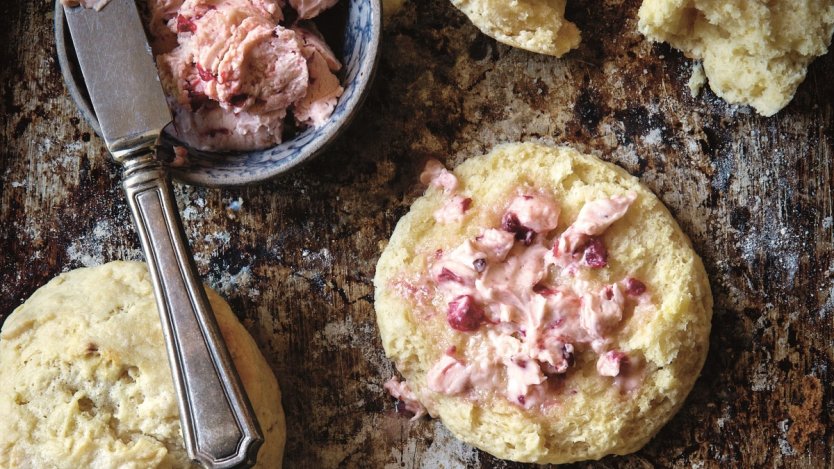
Red Fife Honey Scones with Strawberry Butter
Red Fife Honey Scones with Strawberry Butter

Red Fife Honey Scones with Strawberry Butter


3 C. Red Fife flour

2 heaping tsp. baking powder

1/4 C. granulated sugar

1/2 C. unsalted butter, chilled but not hard

1 1/4 C. buttermilk

1 egg, whisked

Strawberry butter

1 C. unsalted butter, room temperature 1/4 C. pure maple syrup

1 tsp pink peppercorns

4-5 strawberries, washed, dried, and diced


Red Fife wheat is the key to the earthy robust and nutty flavor of these scones. They are less “biscuit” and more “soda bread” in texture (although still flaky), and the nuttiness of the scone offsets the naturally sweet strawberry butter. The perfect addition to a summer afternoon tea after picking up a pint of local strawberries from the market.  Preheat the oven to 400°F. Line a baking sheet with parchment paper. To make the scones, in a medium-size bowl, whisk together the flour and baking powder. Using a pastry blender or two knives, cut in the butter until the mixture resembles coarse oatmeal. Make a well in the flour mixture and pour in the buttermilk and egg. Using a wooden spoon or spatula, mix together until fully combined, scraping up any dry bits from the bottom of the bowl. You will have a soft dough. Turn the dough out onto a well-floured work surface and roll into a large disc about 1 inch thick. Using a large glass or cookie cutter, cut 3-inch diameter circles in the dough. Transfer to the prepared baking sheet and bake for 12-15 minutes. While the scones are baking, prepare the butter. Place the butter in a bowl and, using hand-held beaters, beat it until it’s very soft and fluffy and almost doubled in volume, 3-4 minutes. Scrape down the bowl, pour in the maple syrup, and beat until combined. Gently crush the pink peppercorns, add them to the butter, and beat well. You’ll see specks of peppercorns evenly distributed throughout. Ensure the strawberries are very dry and then add them to the mixture. Beat on low speed until fully and evenly incorporated. The butter will be soft, fluffy, and beautifully pink, with some pieces of strawberries showing through. Remove the scones from the oven, transfer to a wire rack, and let cool for 3-5 minutes, just until cool enough to handle but still warm. Place on a serving platter and serve with strawberry butter on the side. The scones will keep in an airtight container in the fridge for up to 4 days. The butter will keep in an airtight container in the fridge for up to 3 days or in the freezer for up to 1 month.

Maple BBQ Salmon with Brown Butter Couscous

Maple BBQ Salmon with Brown Butter Couscous

Maple BBQ Salmon with Brown Butter Couscous


2 pounds salmon filets

1 T. brown (or maple!) sugar

1 tsp. garlic powder

1 tsp. smoked paprika

½ tsp. salt

½ tsp. freshly ground black pepper

¼ tsp. cumin

2 to 3 T. maple syrup


1 T. unsalted butter

1 C. uncooked pearl couscous

1 ¼ C. chicken or vegetable stock or water

pinch of salt

2 T. unsalted butter

1 garlic clove, minced


Preheat the oven to 400 degrees F. Place the salmon on a baking sheet. In a small bowl, whisk together the sugar, garlic powder, paprika, salt, pepper and cumin. Sprinkle it all over the salmon filets. Drizzle each filet with the maple syrup and use a spoon to kind of “spread” it all over the filet. Roast for 10 to 15 minutes, until the salmon just flakes with a fork. If desired, you can brush with a little more maple syrup when it comes out of the oven. Top with chopped chives. Serve immediately with brown butter couscous! Heat a large saucepan over medium heat and add the butter. Stir in the couscous until coated, then cook for 2 to 3 minutes, stirring, until the couscous is slightly toasty. Add in the stock and salt and bring the mixture to a boil. Once boiling, reduce to a simmer and cover. Cook for 15 minutes, or until the liquid is absorbed. While the couscous is cooking, heat a small saucepan over medium heat and add the butter. Cook, whisking often, until brown bits appear on the bottom of the pan. Remove the butter from the heat and stir in the garlic cloves. Once the couscous is finished, drizzle with the garlic brown butter. Toss and serve.

Pipe with Northwest Morels, Pancetta, Walnuts, Ricotta, and Saffron

Pipe with Northwest Morels, Pancetta, Walnuts, Ricotta, and Saffron

Pipe with Northwest Morels, Pancetta, Walnuts, Ricotta, and Saffron


5 T. extra virgin olive oil

1 small shallot, finely chopped

2 cloves garlic, gently crushed

2 ounces pancetta, cut into 1/2-inch cubes

1/6 C. walnuts

8 ounces fresh morels, halved lengthwise

1 T. finely chopped Italian parsley

1/4 tsp. saffron threads, soaked in1/3 C. boiling water for 30 minutes

Kosher salt and freshly ground black pepper

12 ounces pipe pasta

1/2 C. fresh ricotta

1/2 C. grated Parmigiano-Reggiano


Mushrooms need to be cleaned right before using them. The general rule is to handle them as little as possible, since they are delicate gifts from nature. Shake the mushrooms to get rid of loose dirt. Use a mushroom brush or damp cloth to remove soil residue. Soak morels in cold water for 2 to 3 minutes, rinse, and repeat twice (or more if necessary), then dry with a clean kitchen towel or paper towel. Uncleaned mushrooms will keep in the refrigerator for a few days in a paper bag with some holes poked in it.  In a large pan over medium heat, warm the olive oil. Add the shallot and garlic and sauté for 2 minutes, stirring to avoid burning. Add the pancetta and walnuts, and cook for 2 minutes, stirring with a wooden spoon. Add the morels and continue cooking for 1 minute. Add the parsley, saffron water, salt and pepper to taste, and continue cooking for another 2 minutes. Turn off the heat but leave the pan on the burner. Meanwhile, in a large pot of boiling salted water, cook the pipe until al dente, drain, and transfer to the pan. Energetically stir in the ricotta, making sure the pasta is blended. Add two-thirds of the Parmigiano, and stir to combine. Plate in four bowls. Finish with additional walnuts, the remaining Parmigiano. and a drizzle of oil.

Pappardelle with Spicy Sausage and Mixed Wild Mushrooms

Pappardelle with Spicy Sausage and Mixed Wild Mushrooms

Pappardelle with Spicy Sausage and Mixed Wild Mushrooms


1 T. olive oil

9 ounces best-quality spicy sausage, casing removed

1 onion, finely chopped

1 clove garlic, minced

1 pound mixed wild mushrooms, such as chanterelles, oyster, and shiitake, trimmed and torn

2 T. fresh thyme, leaves

1 to 2 small dried red chiles, crumbled

Coarse salt and freshly ground pepper

Fresh Pappardelle

3 to 4 T. unsalted butter

½ C. loosely packed flat-leaf parsley, chopped

½ C. freshly grated Parmesan cheese


In a large skillet, heat oil over medium-high heat; add sausage, onion, and garlic, breaking up sausage with a spoon. Cook until onions are golden, about 7 minutes. Add mushrooms, thyme, and chiles; cook, stirring frequently, until mushrooms release their liquid and it evaporates, 10 to 12 minutes. Remove from heat; season with salt and pepper. Meanwhile, bring a large pot of water to a boil; add salt and pappardelle. Cook until al dente, 3 to 5 minutes. Reserve a 1/2 C. cooking liquid; drain pasta. Return to pot. Add butter to mushroom mixture along with some of the cooking liquid to loosen, if necessary. Return mushroom mixture to pot; toss to combine. Transfer to a large serving platter. Garnish with parsley and cheese; serve immediately.

Overnight Vancouver Island Oats with Bumbleberry Compote

Overnight Vancouver Island Oats with Bumbleberry Compote

Overnight Island Oats with Bumbleberry Compote
 

Oats

2 cups local rolled oats

1/4 cup packed brown sugar, plus 2 tsp brown sugar, divided

2 T. ground flax seeds

2 T. chia seeds

1 1/2 tsp. ground nutmeg, divided

1 tsp. ground allspice

1/2 tsp. ground cinnamon

4 cups milk (almond, soy, or 2%)


Bumbleberry Compote

1 T. cornstarch

2 T. cold water

1 cup frozen forest berries (blackberries, black currants, salal berries, blueberries)

2 T. lemon juice


In a large bowl, mix together the oats, 1/4 cup of the sugar, the flax and chia seeds, 1 tsp of the nutmeg, the allspice, and the cinnamon. Place 1/2 cup of this mixture in each of four 2-cup mason jars or similar sealable glass jars. Add 1 cup of milk to each jar and mix with a spoon to combine. Seal the jars and put in the fridge to soak for at least 12 hours, or up to 3 days.

In a small saucepan, whisk together the remaining 2 tsp sugar, the remaining 1/2 tsp nutmeg, and the cornstarch with the cold water until the mixture is completely lump-free. Fold in the frozen berries, drizzle the lemon juice overtop, and place over medium heat, covered, to allow the berries to thaw, 2-3 minutes, stirring once or twice. Remove the lid and increase the heat to medium-high. Watch the berries carefully, stirring occasionally, as they come to a boil. Boil for 1 minute then remove from the heat. Serve immediately or allow to cool. This will keep in airtight container in refrigerator for up to 3 months. To serve, remove the lid from the jar of oats and top with a dollop of the jam. You can also add a dollop of yogurt.


Servings: 4
Serving Size: 1 jar with compote

Calories: 333
Fat: 9 g
Fiber: 10 g
Protein: 8 g

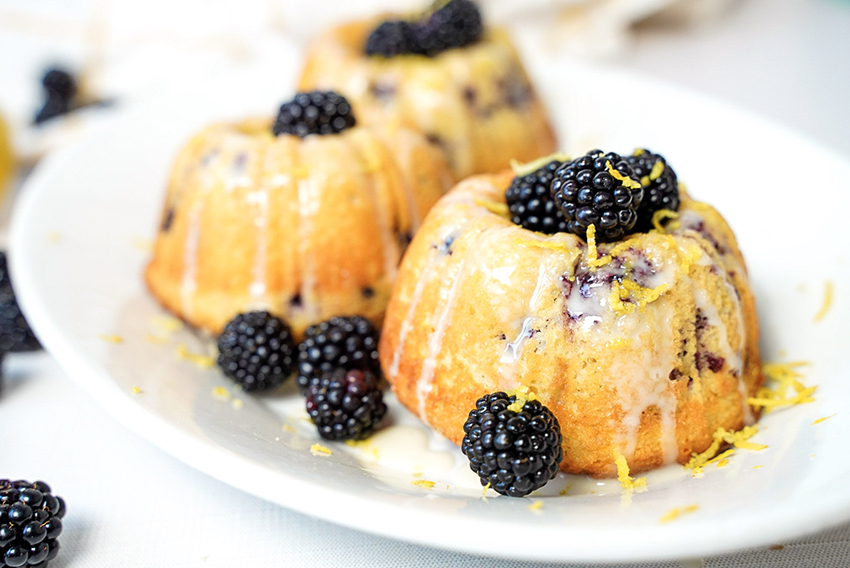
Mini Oregon Berry Bundt Cake with Lemon Glaze Recipe

Mini Oregon Berry Bundt Cake with Lemon Glaze Recipe

Mini Oregon Berry Bundt Cake with Lemon Glaze Recipe


1 cup frozen Oregon blackberries

1 ½ cup all-purpose flour

1 cup sugar

½ cup of yogurt (we used plain, but greek or coconut yogurt would work great too)

½ cup olive oil (vegetable oil also works)

3 eggs

2 tsp. baking powder

Zest of 1 ½ lemons (½ for the topping)

Pinch of salt

Lemon glaze


1 cup powdered sugar

5 tsp. lemon juice

4 tsp. milk

Oregon Berry Bundt Cake Recipe:


Preheat oven to 350°F. Spray bundt cake pans with butter. Whisk the flour, baking powder, and salt together. In a separate bowl place the sugar and lemon zest together and whisk. Whisk the yogurt in the sugar bowl. Once the yogurt is incorporated whisk the eggs in one by one. Whisk in the dry ingredients with the wet bowl until the mix is smooth. Lightly dust the blackberries in flour and fold them into the batter. Fill the mini bundt cake pans ½ full. Bake in the oven for 30-40 minutes (test with a toothpick to make sure batter doesn’t stick). Cool for 20 minutes prior to topping with lemon glaze. Lemon glaze steps: Put all ingredients in a small bowl. Whisk until smooth and you get your desired thickness


Servings: 8
Serving Size: 1/8 of recipe (about 1 mini bundt cake)

Calories: 405
Fat: 16 g
Fiber: 2 g
Protein: 6 g

Hazelnut-Crusted Chevre with Blackberry” Sage Compote

Hazelnut-Crusted Chevre with Blackberry” Sage Compote

Hazelnut-Crusted Chevre with Blackberry” Sage Compote


Compote

2 cups blackberries, fresh or frozen

1/2 cup granulated sugar

1/4 cup finely chopped sage leaves


2 cups chevre

2 cups all-purpose flour

3 eggs, lightly beaten

2 cups finely chopped hazelnuts

Vegetable oil spray


To make the compote, in a heavy-bottomed saucepan over medium heat, cook the blackberries and sugar with the sage until the sugar has dissolved and the fruit is just starting to break down—approximately 15 minutes. The compote should be syrupy and still chunky. To prepare the chevre, separate it into eight evenly sized portions. Using your hands, form each one into a 1-inch-thick disc. Cover with plastic wrap and refrigerate for at least 1 hour, or up to overnight. Preheat the oven to 400°F. Line a baking sheet with parchment paper. Set up a dredging station: place the flour, eggs, and hazelnuts in separate shallow bowls. Take the chevre from the fridge and, working with one piece at a time, dip each disc in the flour, coating fully and shaking off any excess; dip in the egg, coating fully and shaking off the excess; and finally, set them on top of the hazelnuts, pressing down slightly to coat. Turn them over to coat the other side as well. Place the hazelnut-crusted chevre discs on the prepared baking sheet and spray them lightly with vegetable oil. Flip them over and spray the other side. Bake for 5 minutes, turn over, and bake for another 5 minutes. Serve hot or cold with the compote on the side. You can store the compote in an airtight container in the fridge for up to 1 week. The cooked chevre discs can be stored in an airtight container in the fridge for up to a week. Reheat them at 375°F for 10-12 minutes before eating.

Blueberry Lemon Thyme Breakfast Waffles

Blueberry Lemon Thyme Breakfast Waffles

Blueberry Lemon Thyme Breakfast Waffles


Blueberry Lemon Thyme Syrup


2 cups fresh blueberries

4 sprigs lemon thyme

1/4 cup granulated sugar

2 T. cornstarch

1/2 cup water


Waffles

4 eggs, separated

2 1/2 cups milk (2% or whole)

3/4 cup salted butter, melted

2 cups all-purpose flour

1/4 cup granulated sugar

2 tsp. baking powder

Whipped cream, for serving


Time-consuming? Yes. Many components? Yes. Worth the trouble? Definitely. When blueberries come into season, these are one of the first things on the menu at my house, and we all crave them for weeks afterwards. To get the crispiness on the outside and the light-as-air texture on the inside, fold the whipped egg whites very gently into the batter. (Note: You’ll need a waffle iron for this recipe.)


To make the syrup, rinse and stem the berries. Place them in a small saucepan and add the thyme. In a small bowl, whisk together the sugar and cornstarch until no lumps remain, pour in the water, and whisk until thick. Pour this over the berries and place the pan over medium heat. Bring to a rolling boil for 1 minute, stirring constantly, then remove from the heat. Allow to cool to almost room temperature, then discard the thyme. To make the waffles, using a stand mixer fitted with the whisk attachment, whip the egg whites to soft peaks. Set aside. In a large measuring jug, whisk together the milk and butter. Whisk in the egg yolks in a single addition. In a mixing bowl, whisk together the flour, sugar, and baking powder. Make a well in the center of the dry ingredients, pour in the milk mixture, and whisk to form a thick batter. Gently fold in the egg whites to combine. The batter will be slightly lumpy. Follow the instructions for your waffle iron. You want the waffles to be a deep golden brown. Serve the waffles fresh from the iron with a dollop of whipped cream and a spoonful of blueberry lemon thyme syrup. The waffle batter will keep in an airtight container in the fridge for up to 2 days. It’s best if you use it straight from the fridge, rather than letting it come to room temperature. If it separates, give it a few good folds with a spatula before using it. The syrup will keep in an airtight container in the fridge for up to 2 weeks.


Servings: 8
Serving Size: 1 waffle with about 1/4 C. syrup

Calories: 417
Fat: 22 g
Fiber: 2 g
Protein: 9 g

Gigli with Olympic Peninsula Stinging Nettles

Gigli with Olympic Peninsula Stinging Nettles

Gigli with Olympic Peninsula Stinging Nettles


3 to 4 ounces young stinging nettles

1/2 cup raw walnuts

1/2 cup extra-virgin olive oil

1/2 cup grated Parmigiano-Reggiano

Kosher salt and freshly ground black pepper

12 ounces gigli pasta

1/3 cup grated ricotta salata

2 T. Calabrian chili oil

8 to 10 edible spring flowers


Bring a large pot of salted water to a boil. In the meantime, put on gloves and clean the nettles, removing the stems and keeping just the leaves. Rinse the leaves, then blanch them in the boiling water for less than a minute. Cool them down under cold water or in an ice bath.  When the nettles are cool, drain them, making sure to remove the excess water. In a food processor on low speed, blend the nettles, walnuts, olive oil. and Parmigiano. until the pesto is creamy but not liquefied (it should still have some texture). Season with salt and pepper to taste. Meanwhile, in a large pot of boiling salted water, cook the gigli until al dente and drain. In a medium pan over medium heat, quickly sauté the pasta and pesto for a minute, adding pasta water as necessary to bind the ingredients. Plate in four bowls. Finish with the ricotta salata, a drizzle of Calabrian chili oil, and a couple of edible flowers. Enjoy the spring season on a plate.

Aged Cheddar, Smoked Ham, and Apple Galette

Aged Cheddar, Smoked Ham, and Apple Galette

Aged Cheddar, Smoked Ham, and Apple Galette

1 T. salted butter

2 T. all-purpose flour

¾ cups milk

2 T. grainy mustard

2 cups grated aged cheddar cheese

1 cup (1-inch) cubed smoked ham

2–3 large baking apples, cored, cut into ¼-inch slices (peel left on)

1 tsp. grated lemon zest

Flaked sea salt and cracked black pepper

1½ cups all-purpose flour

2 T. thyme leaves

½ tsp. fine sea salt

½ cup cold unsalted butter, cut into 1-inch cubes

5–6 T. cold water

1 large egg

1 T. milk


To make the pastry, place the flour, thyme, and salt in a food processor. Pulse once to combine. Add all the butter and pulse a few more times until the mixture is crumbly and the butter is cut down into pea-sized pieces. Add the cold water, 1 Tbsp at a time, pulsing in between to bring the dough together. Dump the dough out onto a piece of plastic wrap and form it into a disc. Wrap it tightly and refrigerate for at least 30 minutes. Preheat the oven to 425°F. Line a rimmed baking sheet with parchment paper. To make the filling, first melt the butter in a saucepan over medium heat and add the flour. Stir to combine and cook until the flour begins to brown and has a slightly nutty aroma. While whisking constantly, add the milk and continue to stir until the roux thickens. Remove from the heat and add the grainy mustard. Set aside.  In a large bowl, place the cheese, ham, apple slices, lemon zest, and a pinch of salt and pepper. Toss lightly just to combine. Place the dough on a well-floured work surface and roll it into a 12-inch circle. Transfer the dough to the prepared baking sheet. Spread the mustard roux over the middle of the pastry, leaving a 2-inch-wide border along the perimeter. Top with the cheese, ham, and apple mixture. Fold the bare edges of the dough in towards the centre to form a rustic crust. Make an egg wash by beating the egg with the milk. Brush the crust with the egg wash and bake the galette for 25–30 minutes, or until the crust is golden brown and the filling is bubbling. Remove the galette from the oven and allow to cool in the pan for 5–10 minutes before serving

Chanterelle-Apricot Jam

Chanterelle-Apricot Jam

Chanterelle-Apricot Jam


4 C. chanterelles

2½ C. fresh diced apricots

7 C. sugar

¼ C. fresh lemon juice

1 box SURE-JELL Fruit Pectin

½ tsp. butter or margarine


Sterilize (9) 8-ounce jam jars and lids in boiling water.


Finely dice the chanterelles. Reduce chanterelles in a deep pan under mediumlow heat for 15 minutes, until moisture has bubbled off and mushroom mixture is thick. Measure out 2½ C..  Combine mushrooms and apricots to measure exactly 5 C.. Add to the saucepan with sugar, lemon juice, pectin, and butter. Bring to a full rolling boil and boil for exactly 1 minute, stirring constantly. Remove from heat and skim off any foam. Ladle immediately into prepared jars, filling to within ¼ inch of tops. Wipe jar rims and threads. Cover with two-piece lids. Screw bands on tightly. Place jars on an elevated rack in a canner. Lower rack into canner. Water should cover jars by 1 to 2 inches. Cover and bring water to a gentle boil. Process for 10 minutes, adding boiling water as needed to keep the jars covered. (Add 12 minutes to the processing time for high elevation.) Remove jars and place upright on a towel to cool completely. After the jars cool, check seals by pressing the middles of lids with your finger. If lids spring back, lids are not sealed and refrigeration is necessary. Store and enjoy. This is not refrigerator jam, but it can be refrigerated to prolong shelf life and the fresh taste.  Note: If you’d like a low-sugar version, follow instructions for low-sugar SURE-JELL, making sure the mushroom-to-fruit ratio is 50/50. Or try Pomona Pectin.


Servings: 144
Serving Size: 1 T.

Calories: 41
Fat: 0 g
Fiber: 0 g
Protein: 0 g

Zucchini Butter Toasts with Hazelnuts and Herbs

Zucchini Butter Toasts with Hazelnuts and Herbs

Zucchini Butter Toasts with Hazelnuts and Herbs


2 pounds zucchini (about 4 medium)

1 teaspoon kosher salt, divided

1/4 cup raw hazelnuts

1 large shallot

1 small clove garlic

1 small lemon

1/4 cup olive oil

1/4 teaspoon freshly ground black pepper

4 thick slices sourdough or other crusty bread

Handful small fresh basil or mint leaves, for serving

Aleppo pepper or red pepper flakes, for serving

Flaky salt, for serving


Arrange a rack in the middle of the oven and heat the oven to 350°F. Grate 2 pounds zucchini on the large holes of a box grater (about 6 cups) into a colander set over a large bowl. Sprinkle with 1/2 teaspoon of the kosher salt and toss to combine. Set aside to drain for 15 minutes. Spread 1/4 cup raw hazelnuts out in an even layer on a rimmed baking sheet. Transfer to the oven and toast, stirring occasionally, until fragrant and golden-brown, 8 to 10 minutes. Meanwhile, dice 1 large shallot. Smash and peel 1 small garlic clove. Finely grate the zest of 1 small lemon. Halve the zested lemon and reserve.

When the zucchini is ready, press on it with your hands or a wooden spoon to push out some of the liquid. Transfer the zucchini to a clean kitchen towel, wrap it up, and squeeze out as much water as you can to get it as dry as possible. You should have about 3 cups. Wrap the toasted hazelnuts in a clean kitchen towel and rub vigorously to remove as much of the skins as possible (don’t worry about any skin that doesn’t easily come off). Transfer the nuts to a cutting board and coarsely chop. Heat 1/4 cup olive oil in a large, high-sided sauté pan over medium heat until shimmering. Add the shallot and cook, stirring occasionally, under softened and translucent, 2 to 3 minutes. Add the zucchini, the remaining 1/2 teaspoon kosher salt, and 1/4 teaspoon black pepper. Cook, stirring occasionally, until the zucchini cooks down, caramelizes, and softens considerably, about 15 minutes. Reduce the heat if the zucchini starts to burn. The mixture should be jammy and spreadable. Remove from the heat. Toast 4 thick bread slices, then rub one side of each slice with the garlic clove. Divide the zucchini butter between the garlic-rubbed toast and spread out evenly in a thick layer. Garnish with the hazelnuts, fresh basil or mint leaves, and a pinch or two of Aleppo pepper and flaky salt. Squeeze the juice of the reserved lemon halves over the toasts and serve.


Servings: 4
Serving Size: 1 toast

Calories: 402
Fat: 21 g
Fiber: 5 g
Protein: 12 g

Grandma Norma’s Wild Huckleberry Tart

Grandma Norma’s Wild Huckleberry Tart

Grandma Norma’s Wild Huckleberry Tart


1 cup flour

2 tablespoons sugar

½ cup chilled butter, cut into small chunks, plus additional to grease the springform pan

1 tablespoon milk (or non-dairy substitute)


2 cups huckleberries, plus 2 additional cups to top the baked tart

½ cup sugar

2 tablespoons flour

½ teaspoon ground cinnamon

1 pinch salt


Combine all ingredients in the bowl of a food processor and pulse until they come together in a ball. Wrap dough in plastic wrap and refrigerate for at least 10 minutes while you prepare the filling. Gently toss all the ingredients together in a large bowl until combined. Set aside. Preheat oven to 400°F. Line the bottom of a 9-inch springform pan with parchment paper and coat the sides of the pan lightly with butter to prevent sticking. Remove the chilled dough from the refrigerator. Working with your fingers, press the dough evenly into the bottom of the pan and up the side about 1 inch high. Pour the huckleberry filling evenly over the crust and bake for 40 minutes on the center rack of the oven. Remove the tart from the oven and immediately pour the reserved fresh huckleberries over the top. The heat from the baked filling will partially cook these berries. Place the tart on a baking rack to cool completely. Remove the tart from the springform pan and gently transfer to a serving plate. Slice into wedges and top with a scoop of vanilla bean ice cream to serve.


Servings: 8
Serving Size: 1 wedge (1/8 of tart)

Calories: 270
Fat: 12 g
Fiber: 2 g
Protein: 3 g

PNW Black Bean and Ginger Dungeness Crab

PNW Black Bean and Ginger Dungeness Crab

PNW Black Bean and Ginger Dungeness Crab


2 Dungeness crab, shell off (save shells), claws cracked and body chopped up into 2-inch pieces

2 cups cornstarch, for dusting and to make a slurry with 1 T.

3 cups peanut oil

1 1/2 T. rinsed fermented black beans, chopped

4 large slices bruised ginger

8 cloves garlic, thinly sliced

5 scallions, chopped into 2-inch pieces

1/4 cup shaoxing(cooking wine)

1 T. naturally brewed soy sauce

2 cups chicken stock

Salt and white pepper, to taste

Small pot cooked Chinese rice


In a large wok, bring peanut oil to high temperature. Dust the crab pieces with cornstarch and a little salt. Shallow fry the crab for only 1 to 2 minutes until the crab shells turn red. Drain on paper towels. Do the same with the 2 shells. Reserve oil and wipe wok clean. Add 2 T. oil back to the wok on high heat. Stir-fry the beans, ginger, garlic and scallions for 1 minute until soft. Add back the crab and deglaze with shaoxing and add soy and stock. Check for seasoning and bring to a boil. Thicken with the slurry and cook 30 more seconds. Serve immediately with the cooked shells. PLATING On a large oval, place the 2 shells down near both ends. Fill with hot rice. Mound the crab between the shells. Enjoy with your fingers. Can also serve with lemon finger bowls.

Pasta with Creamy Pumpkin Sauce and Toasted Hazelnuts

Pasta with Creamy Pumpkin Sauce and Toasted Hazelnuts

Pasta with Creamy Pumpkin Sauce and Toasted Hazelnuts


1/2 cup hazelnuts

1 pound orecchiette pasta

4 T. unsalted butter

1 medium red onion, finely diced

2 garlic cloves, minced

2 tsp. minced fresh sage

1 (15-ounce) can pumpkin puree

Kosher salt

Freshly ground black pepper

1/2 cup mascarpone cheese

1/4 cup freshly grated Parmigiano-Reggiano cheese, plus more for serving

1/4 cup snipped chives


Preheat the oven to 375°F. Spread the hazelnuts in a pie plate and toast for about 7 minutes, until golden. Let cool. Rub off most of the skins and roughly chop. In a large pot of boiling salted water, cook the pasta until al dente. Drain the pasta, reserving 1 cup of the cooking water. Meanwhile, in a medium saucepan, melt the butter. Add the onion, garlic, and sage and cook over moderately low heat until the onion is softened, about 7 minutes. Transfer the mixture to a food processor. Add the pumpkin puree and process until smooth. Season with salt and pepper. Wipe out the pasta pot. Scrape the pumpkin puree into the pot and cook over moderately low heat until hot. Mix in the mascarpone and the 1/4 cup of grated cheese. Add the pasta and the reserved cooking water and toss to coat thoroughly and heat through. Season with salt and pepper. Transfer the pasta to bowls, sprinkle the hazelnuts and chives on top, and serve right away, passing additional Parmigiano at the table.


Servings: 6
Serving Size: about 1 1/2 C.

Calories: 555
Fat: 26 g
Fiber: 6 g
Protein: 15 g

Foraged Berry Sorbet with Lemon Verbena

Foraged Berry Sorbet with Lemon Verbena
Foraged Berry Sorbet with Lemon Verbena


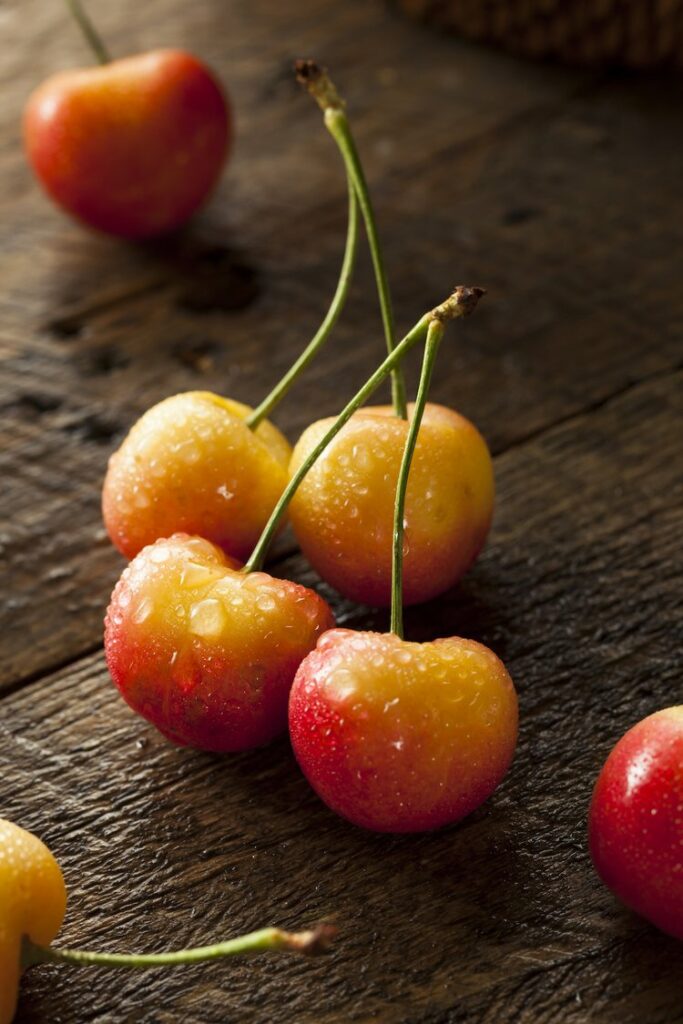
The best of summer and berry season, this foraged berry sorbet is delightfully yummy, rich in musky berries and offset with bright notes of lemon verbena! Makes about 1/2 gallon of sorbet.


8 cups mixed foraged berries I used 5 cups blackberries, 2+cups salal, and a scant cup of huckleberries and Oregon grape

2 cups organic cane sugar

2 cups water

1/2 cup lemon juice

2 sprigs of lemon verbena optional


In a large saucepan, combine berries, water, sugar and lemon juice and bring to a simmer. Simmer gently for 5 minutes and remove from heat. Add lemon verbena sprigs and allow to steep in cooling fruit base until room temperature. Remove verbena sprigs and puree fruit base until smooth. Pass through a fine-mesh sieve to remove larger seed particles if desired. Transfer fruit base to a large container and chill at least overnight. Transfer fruit base to an ice cream freezer and churn until a very thick “smoothie” consistency. Return to large tub and place in freezer until completely frozen and firm. Alternately, pour into a couple large baking dishes and place in freezer, scraping with a fork every 30 minutes until the sorbet is completely frozen and fluffy. Scoop, serve and enjoy.


Servings: 16
Serving Size: 1/2 C.

Calories: 129
Fat: 0 g
Fiber: 4 g
Protein: 1 g

Ranier Cherry Salsa

Ranier Cherry Salsa

1 1/2 cups Rainier cherries, pitted and halved

1 jalapeño, diced (remove seeds for mild salsa)

2 T. shallot, minced

1 T. sugar

1 1/2 T. champagne or sherry vinegar

1 T. olive oil

salt and pepper to taste


Try smoking cherries on the grill or charring them in a dry pan. Salsa pairs well with pork, chicken & fish.

Combine cherries, jalapeño, shallot, sugar and vinegar in a medium bowl. Add vinegar and stir to combine. Rest covered, in the refrigerator until ready to serve, at least one hour. Prior to serving, add olive oil and season with salt and pepper to taste. Salsa will keep up to one week, sealed in the refrigerator.


Servings: 7
Serving Size: 1/4 C.

Calories: 48
Fat: 2 g
Fiber: 1 g
Protein: 0 g

Smoked Salmon Bites

Smoked Salmon Bites

Smoked Salmon Bites

These Smoked Salmon Appetizers are fantastic to take to gatherings because it is fast to make loads – no fiddly assembly one by one – and it’s served at room temperature. These were a hit with my taste testers! See below the recipe for the cooking video (and Dozer cameo at the end!).

250g / 8 oz cream cheese, softened

1/2 cup sour cream

1/2 tsp garlic powder

Zest of 1 lemon (large) – more is better, adjust to taste!

1/2 tsp salt

1/4 cup dill, chopped


3 soft large wraps / tortillas (approx 23 cm / 9″ diameter) (Note 1)

350 – 480 g / 12 – 16 oz smoked salmon slices

Table butter


Mix Spread ingredients together. Spread half on a flatbread in a square shape. Top with half the smoked salmon. Spread a flatbread with butter – just thinly, like buttering a piece of bread. Place the butter side down onto the salmon. Spread remaining Spread on flatbread, again in a square shape. Top with remaining salmon. Butter 3rd wrap and place butter side down onto the salmon. Use a large flat object, like a cutting board, and press down lightly to smooth the surface and compress everything. Cover with cling wrap and refrigerate for 4 hours (up to 48 hours) so the filling sets. Using a serrated knife, trim edges to make a square. Don’t cut down – filling may squirt out, cut back and forth in a sawing motion. Chef privileges: nibble on offcuts. Cut square into 6 or 7 even strips, then each strip into squares. Serve with toothpicks, wedges of lemon and extra dill for garnish.

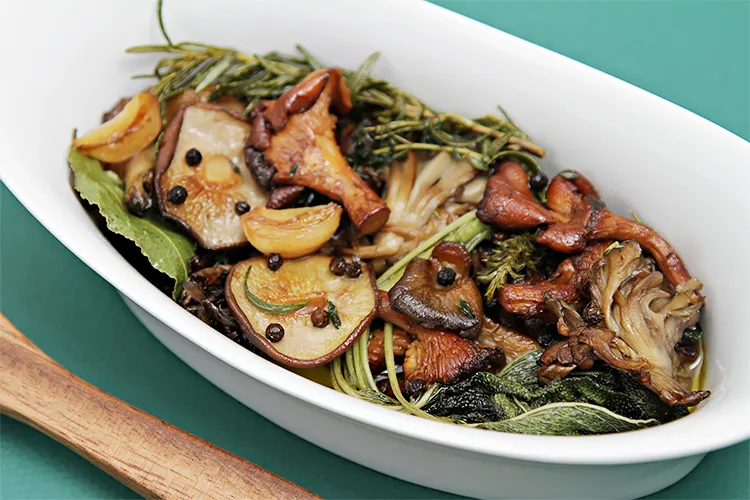
Wild Mushroom Confit with Garlic and fresh herbs

Wild Mushroom Confit with Garlic and fresh herbs

Wild Mushroom Confit with Garlic and fresh herbs


1 lb (455 g) assorted wild mushrooms (shiitake, oyster, Chanterelles, morels, black trumpet…) – medium in size

2 C. extra virgin olive oil

8 large garlic cloves – peeled and halved

12 large sage leaves

4 rosemary sprigs

6 thyme sprigs

8 winter savory sprigs

2 fresh bay leaves

2 tsp. whole black Tellicherry peppercorns

1 tsp. sea salt

1 1/2 T. aged sherry wine vinegar


Brush the mushrooms clean and trim the stems, but keep the mushrooms whole. Set aside. Heat a large non-stick skillet over medium-high heat. (I recommend a 12″ skillet.) Add 1/3 cup of oil and the mushrooms, toss carefully, and sauté undisturbed for 2 minutes until the mushrooms begin to brown. Toss again and continue to sauté until the mushrooms are golden-brown, about 4 to 5 minutes, tossing only from time to time. Add the garlic pieces and sauté for 1 minute, until the garlic is golden but not brown. Reduce heat to medium, add the balance of the oil and the herbs and peppercorns, and gently heat until the oil reaches 170ºF (80ºC) (use a thermometer). Once the oil has reached the desired temperature, continue poaching the mushrooms for 6 to 7 minutes, maintaining the temperature at 170ºF (80ºC), until the herbs are crisp and have turned a shade darker. Transfer the mushrooms, herbs and oil into a large bowl. Stir in the salt and vinegar and allow to cool to room temperature. To serve, scoop out the mushrooms with a slotted spoon and place in a serving bowl. Cook’s note: Once cooled, the mushrooms can be refrigerated in their cooking oil for up to 1 week. (Make sure they are covered with the oil.) Bring to room temperature before serving. To serve as a side dish, gently heat the mushrooms in their oil, drain, remove the herbs and peppercorns and serve warm.


Tip: Once you’ve consumed all these amazingly delicious mushrooms, don’t throw the oil away. Strain it through a fine sieve and use it to make another batch of the mushroom confit; or use it to make vinaigrettes, to drizzle over roasted or grilled vegetables, to sauté vegetables or to make sauces. It’ll bring beautiful aromas and flavors to anything you cook with it. Refrigerate the strained oil for up to 1 month.

Herb Butter Salmon and Asparagus Foil Packs

Herb Butter Salmon and Asparagus Foil Packs

Herb Butter Salmon and Asparagus Foil Packs


4 boneless skinless salmon fillets

salt and pepper to taste

1 pound asparagus – ends trimmed

1 lemon – thinly sliced, (plus additional wedges for garnish)

½ cup butter – at room temperature

3 teaspoons Italian seasoning – or Herbs de Provence, see note

3 teaspoons minced garlic

Fresh thyme or parsley, for garnish


Season salmon generously with salt and pepper on both sides. Arrange one salmon fillet and 1/4 of the asparagus in the center of one 12×12 inch piece of foil. Repeat with remaining salmon and asparagus on 3 other pieces of foil. Slide lemon slices under the salmon and asparagus.

In a small bowl mix butter, Italian seasoning, and garlic. Drop large dollops of the herb butter on top of the salmon and asparagus. Fold the foil tightly around the salmon and asparagus, being sure to seal the ends together tightly so the juices and butter doesn’t run out while cooking. Grill over medium high heat for 6-8 minutes on each side, OR bake at 400 degrees for 20 minutes, until asparagus is tender and salmon is flaky. Drizzle fresh lemon juice over the top and serve immediately.  Notes:  These foil packs can easily be made in the oven instead of on the grill. Preheat oven to 400 degrees and place foil packs directly on your oven rack (positioned in about the center of the oven) or on a sheet pan, and bake for about 15 minutes til salmon is opaque and asparagus is tender. For a little added color you can open the foil packs and broil for 1-2 minutes!


Servings: 4
Serving Size: 1 foil pack

Calories: 589
Fat: 46 g
Fiber: 3 g
Protein: 38 g

Poached Egg-Avocado Toasts

Poached Egg-Avocado Toasts

Poached Egg-Avocado Toasts


6 T. water

6 large eggs

2 avocados, halved

2 T. fresh lemon juice

2 T. fresh dill

¾ tsp. kosher salt, divided

¾ tsp. pepper, divided

6 (1-inch-thick) slices artisan bread (preferably whole grain)

¼ cup thinly sliced red onion

4 oz smoked salmon

1 cup arugula microgreens (or use baby arugula)


Preheat oven to 350°F.  Pour 1 T. water into each cup of a standard 6-cup muffin pan. Crack eggs; carefully slip into muffin cups. Bake 12 to 15 minutes or to desired doneness. Meanwhile, mash avocados in a bowl; stir in lemon juice, dill, and ½ tsp. each salt and pepper. Spread mashed avocado on bread; top with onion, salmon, and eggs. Sprinkle eggs with ¼ tsp. each salt and pepper. Top with microgreens.


Servings: 6
Serving Size: 1 toast

Calories: 295
Fat: 14 g
Fiber: 6 g
Protein: 16 g

Roasted Salmon with Tangerine Relish

Roasted Salmon with Tangerine Relish

Roasted Salmon with Tangerine Relish


1 skin-on salmon fillet (1 3/4 to 2 pounds), about 1 1/2 inches at thickest part

2 tsp. olive oil

salt and pepper


Relish

4 tangerines (or 2 medium oranges), rind and pith removed, and segments cut into 1/2 inch pieces (about 1 cup)

1 scallion, sliced thin

2 tsp. fresh lemon juice

2 tsp. olive oil

1 1/2 tsp. fresh ginger

salt and pepper


Place the tangerine pieces in a fine mesh strainer set over a medium bowl and drain for 15 minutes. Pour off all but 1 T. tangerine juice from the bowl and whisk in the scallion, lemon juice, olive oil, and ginger. Stir in the tangerine pieces and season with salt and pepper to taste; set aside. Adjust oven rack to lowest position, place rimmed baking sheet on rack, and heat oven to 500 degrees. Use sharp knife (or a serrated knife, if need be) to remove any whitish fat from belly of fillet and cut into 4 equal pieces. Make 4 or 5 shallow slashes about an inch apart along skin side of each piece, being careful not to cut into flesh. (You don’t have to serve the fish skin-on, but don’t remove the skin before cooking.) Pat salmon dry with paper towels. Rub fillets evenly with oil and season liberally with salt and pepper. Reduce oven temperature to 275 degrees and remove baking sheet. Carefully place salmon skin-side down on baking sheet. Roast until centers of thickest part of fillets are still translucent when cut into with paring knife or instant-read thermometer inserted in thickest part of fillets registers 125 degrees, 9 to 13 minutes. Transfer fillets to individual plates or platter. Top with relish and serve.

Double-Glazed Salmon with Ginger and Apple Cider for Two
Double-Glazed Salmon with Ginger and Apple Cider for Two

Double-Glazed Salmon with Ginger and Apple Cider for Two


For a quick, high-impact salmon entrée, we started by brining center-cut fillets in a salt and sugar solution and making full-flavored, glossy glaze. We built that glaze on apple cider, sharpening its flavor with tangy cider vinegar and spicy ginger and seasoning it with soy sauce. Rather than relying on lots of sugar to thicken the glaze, we stirred in a little cornstarch. We applied the glaze to fillets that we had seared on the stovetop until they were well browned and then let the fish finish cooking gently in the oven. We finished our fillets by painting on another coating of the clingy, gingery glaze just before serving


2 T. table salt for brining

2 T. sugar for brining

2 (6- to 8-ounce) skin-on salmon fillets

2 T. plus 1 tsp. apple cider

1½ T. cider vinegar

1 T. sugar

2 tsp. soy sauce

¾ tsp. cornstarch

1 (½-inch) piece ginger, peeled and lightly smashed

½ tsp. vegetable oil

1½ tsp. minced fresh parsley or chives


If apple cider is unavailable, substitute apple juice. Use the bottom of a small saucepan or skillet to smash the ginger. To ensure uniform cooking, buy a 12- to 16-ounce center-cut salmon fillet and cut it into two pieces. If your salmon is less than 1 inch thick at its thickest point, check for doneness after 10 minutes of roasting in step 3. 1 Adjust oven rack to middle position and heat oven to 300 degrees. Dissolve salt and 2 T. sugar in 1 quart cold water in large container. Submerge salmon fillets in brine and let stand at room temperature for 15 minutes. Remove fillets from brine and pat dry with paper towels. 2 Meanwhile, combine cider, vinegar, sugar, soy sauce, and cornstarch in small saucepan and stir until no lumps remain. Add ginger and bring to simmer over medium-high heat, stirring frequently. Continue to cook, stirring frequently, until thickened, about 30 seconds longer. Remove from heat and let ginger steep for at least 5 minutes. Discard ginger and transfer 1 T. glaze to small bowl. Heat oil in 10-inch ovensafe nonstick skillet over medium-high heat until just smoking. Place fillets, flesh side down, in skillet and cook until flesh side is well browned, 2 to 3 minutes. Flip fillets and reduce heat to low. Brush tops of fillets with reserved 1 T. glaze. Transfer skillet to oven and cook until centers are still translucent when checked with tip of paring knife and register 125 degrees (for medium-rare), 10 to 15 minutes. Wash and dry brush. 4 Brush remaining glaze on top and sides of each fillet and sprinkle with parsley. Transfer to platter or individual plates and serve.


Variations:


LEMONY THYME GLAZE


¼ cup lemon juice (2 lemons)

3 T. water

2 T. sugar

4 tsp. soy sauce

1 1/2 tsp. cornstarch

6 sprigs fresh thyme


Combine lemon juice, water, sugar, soy sauce, and cornstarch in small saucepan and stir until no lumps remain. Add thyme sprigs and bring to simmer over medium-high heat, stirring frequently. Continue to cook, stirring frequently, until thickened, about 1 minute longer. Remove from heat. Discard thyme sprigs just before using.


SMOKY MAPLE GLAZE


White wine or champagne vinegar can be substituted for the red wine vinegar, if desired.


1/3 cup red wine vinegar

3 T. maple syrup

4 tsp. soy sauce

1 1/2 tsp. cornstarch

1/8 tsp. liquid smoke


Combine all ingredients in small saucepan and stir until no lumps remain. Bring to simmer over medium-high heat, stirring frequently. Continue to cook, stirring frequently, until thickened, about 1 minute longer. Remove from heat.

Evergreen Holiday Mixed Drinks

Evergreen Holiday Mixed Drinks

~Spruce Tip Martini~


1 1/2 oz Verstovia Spruce Tip Vodka

1/2 oz Dry Vermouth

Flake of Sea Salt


Stir with ice, strain into glass and garnish with a lemon twist


~Salal Martinez~


1 oz Cold Tree Gin

1/2 oz  Salal Berry Liqueur

1/2 oz Sweet Vermouth

1 dash Portland Bitters Project Cacao Bitters


Stir with ice, strain into glass


~Huckleberry Gimlet~


1 oz Riverain Gin

1/2 oz Huckleberry Jam

1/2 oz Lime


Shake with ice, strain into glass


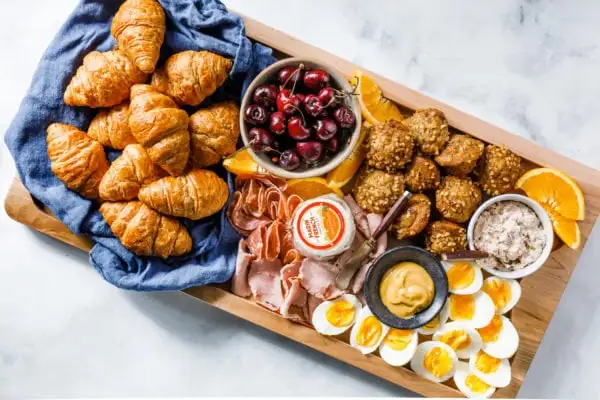
Breakfast Board

Breakfast Board

Breakfast Board


10 mini croissants

¼ C. smoked salmon dip

¼ C. honey Dijon mustard

10 soft boiled eggs

10 slices black forest ham, cut into smaller pieces

4 oz. Brie cheese

2 oz. sliced salami

10 mini banana nut muffins

2 C. black cherries

1 orange, sliced


On a 12×24″ board, fill 3 boards with cherries, mustard, and salmon dip. Arrange on one end the croissant rolls, meat, eggs, and muffins. Set down the cheese and orange slices. Serve!  Consider adding bacon, sausage or cheese. Mix and match muffins/pastry. Also, don’t hesitate to make substitutions like adding jam and butter, herbs, spinach artichoke dip, or other fruits.

Creamy Salmon Pasta with Mixed Greens

Creamy Salmon Pasta with Mixed Greens

Creamy Salmon Pasta with Mixed Greens


1 lb. pasta such as tagliatelle, fettuccine or linguine

1 shallot

1 clove garlic

1 T. butter

8oz salmon fillet, skin removed

1/2cup dry white wine

1 cup double/heavy cream

2 cups mixed greens such as spinach, arugula, watercress

½ lemon, zest and 1 T. juice

¼ tsp salt or to taste

1 T. fresh parsley, chopped


Cook the pasta in a large pot of salted boiling water according to package instructions. While the pasta is cooking remove the skin from salmon fillet, check for residual bones, remove if any found and cut into bite-sized pieces. Season with salt and pepper and sear on all sides in 1 T. of butter in a large pan until cooked all the way through. It won’t take longer than 2-3 minutes. Remove to a separate plate. To the same pan add 1 T. olive oil, chopped shallots and minced garlic and sauté over low heat for 1-2 minutes, turn the heat to medium and add white wine and let it reduce for 5-7 minutes, then add the heavy cream and mixed greens with salt, lemon zest and lemon juice. Mix to combine, then add the drained pasta to the sauce and toss to combine, top with seared salmon, chopped parsley and serve.

Grilled Wild King Salmon with Forest Mushrooms and Leek

Grilled Wild King Salmon with Forest Mushrooms and Leek

Grilled Wild King Salmon with Forest Mushrooms and Leek


4 pieces wild Salmon (6 ounces each)

1/4 C. tamari sauce

1 T. chili paste (Sambal)

1 tsp. sugar

1 1/2 pounds chanterelles or other wild mushrooms sliced 3/8″

2 leeks- crescent cut 1/8″

1/4 C. extra virgin olive oil

1/4 C. balsamic vinegar

1 C. white wine

salt & pepper to taste


Whisk together the tamari, chili paste and sugar. In a shallow baking dish marinate the salmon paves in the tamari mixture, turning till evenly coated – cover and refrigerate for 3-4 hours. Turn the fish twice during that period to marinate evenly. Preheat the oven to 400°F and fire up your barbecue grill. In a roasting pan or casserole combine the leeks, mushrooms, oil, vinegar and white wine; season to taste with salt & pepper. Place in the oven and roast for 25-30 minutes, stirring occasionally. Remove the salmon from the marinade and blot the pieces dry on some paper towels. When the mushrooms are nearly cooked (25 minutes) brush the paves evenly with olive oil and cook top side down on the hot barbecue. Turn the salmon after 2-3 minutes and cook to desired doneness; 5-7 minutes total cooking time. Serve the grilled fish with the roasted mushroom and leeks, a loaf of crusty bread and a bottle of Oregon Pinot Noir.

West Coast Salmon

West Coast Salmon

West Coast Salmon


1 (1 and 1/2 lb.) skin-on salmon fillet, cut into 4 portions

Extra-virgin olive oil

Sea salt & coarsely ground

black pepper

4 sprigs thyme, leaves only, plus extra for garnish (divided)

4 nectarines or apricots, halved

2 T. honey

Flaked sea salt

4 oz. (1/2 cup) fresh whole-milk ricotta

Sliced toasted almonds (for garnish)

Garden salad, to server


Soak cedar planks in water for at least 30 minutes and up to a day before using. Preheat the grill to medium (about 350°F). Use paper towels to pat the fish dry. Rub all over with olive oil and season both sides with salt and pepper. Sprinkle the thyme leaves over the salmon (leaving some for the nectarines and for the garnish), and press to adhere. Put the plank on the grill directly over the flames. Cover the grill and allow the plank to heat until starting to just smoke, about 2 minutes. Turn and repeat on the other side. Add the fish skin-side down, to the plank. Add the nectarines cut side up. Drizzle the nectarines with honey, sprinkle with most of the remaining thyme leaves, and a little salt. Cover the grill and cook for 7-to-12 minutes or until fish is almost opaque all the way through and flakes easily and the nectarines are caramelized and tender. (If the planks get too hot and ignite, spritz them with water from a spray bottle. Alternatively, you can grill the salmon directly on an oiled grill grate for 3-to-4 minutes per side, and roast the nectarines in a baking dish in a 400°F oven for 12 minutes.) To serve, add a couple T. of ricotta over each piece of fish, and sprinkle with the almonds. Garnish with thyme. Serve with a garden salad.

Bucatini with Dungeness Crab

Bucatini with Dungeness Crab

Bucatini with Dungeness Crab


1¼ C. Dungeness crab meat

2 T. extra virgin olive oil

1 clove garlic, crushed

Pinch chile flakes

1½ C. San Marzano tomatoes, chopped

1 pound bucatini pasta

¼ cup chopped flat leaf parsley

Zest of 1 Meyer lemon plus juice

Salt as needed


Heat the oil in a saucepan on medium heat. Gently sauté the garlic until it starts to take on a golden brown color. Then remove and discard the garlic. Add chile flakes to the pan, cooking briefly before adding the tomatoes. Cook until the sauce thickens. Reduce heat and add the crab meat (plus crab fat, if you have it). Cook bucatini in a generous amount of boiling, salted water until al dente, drain, and toss with the crab sauce. Sprinkle in the chopped parsley, add lemon zest, and toss again. Adjust seasoning with salt and lemon juice and serve.

Roasted Chestnut and Hazelnut Soup

Roasted Chestnut and Hazelnut Soup

Roasted Chestnut and Hazelnut Soup

Note: Always puncture the shells of chestnuts before cooking to prevent explosion(!). To do this carve an X into the bottom end of the shell with a paring knife, taking care not to puncture the nut inside. To roast chestnuts over a fire, place the scored nuts in a foil pie tin punched with holes, sprinkle with water, and place directly on hot coals. Shake a few times during the roasting to prevent charring. When a fire is not roaring and ready for nuts, any oven will work. Roast the nuts at 375 degrees for 20 minutes or so, until the scored corners of the skin curl back, and peel while still hot. Alternatively, to boil place the scored nuts in a saucepan and cover with either milk or cold water. Bring to a boil and simmer for 15 to 25 minutes, then peel.

1/2 lb peeled chestnuts (roasted, boiled or pre-packaged), roughly chopped

4 tablespoons unsalted butter

1/3 cup bacon or pancetta, diced

1 large yellow onion, chopped

5 ribs celery, chopped

2 carrots, peeled and chopped

2 cloves garlic, chopped

1 teaspoon dried thyme

1 cup dry white wine

6 cups rich chicken stock

1 cup hazelnuts, toasted, skinned and coarsely chopped

1 cup heavy cream

3 tablespoons Frangelico (optional)

salt and pepper, to taste


Melt the butter in a large stock pot over medium heat. Add the bacon or pancetta, onion, celery, carrots, garlic and thyme. Sauté until the vegetables begin to soften, about 10 minutes. Add the wine and stock, and stir in the chopped chestnuts. Heat to a gentle boil. Reduce the heat and simmer uncovered 45 minutes, or until everything is soft and the flavors have blended.  Remove the soup from the heat and stir in the hazelnuts, cream and Frangelico. Puree the soup in batches in a blender or in the pot with an immersion blender until it’s as smooth as you can get it. Pour into a clean pot, taste and adjust seasonings, and rewarm gently. Ladle the soup into small bowls and garnish with a dollop of crème fraîche.

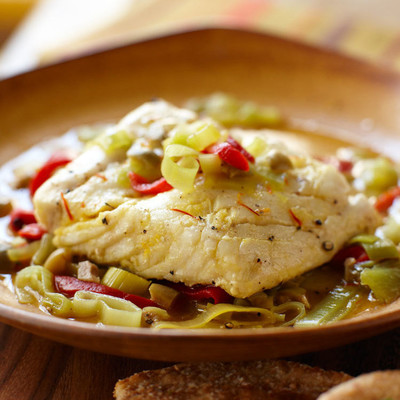
Gently Roasted Alaska Halibut with Leeks, Peppers and Olives
Gently Roasted Alaska Halibut with Leeks, Peppers and Olives
Gently Roasted Alaska Halibut with Leeks, Peppers and Olives
 

6 cups sliced leeks (about 4 large), white and light green part only

8 ounces pequillo peppers (1-1/4 cups), cut in 1/2 strips OR other type of roasted, seeded, and skinned red pepper

1/4 tsp. saffron threads

3 Tablespoons butter

4 cups chicken broth or stock

2 Tablespoons fresh lemon juice

1 cup chopped pitted green olives in brine

Kosher salt and freshly ground black pepper, as needed

3 pounds Alaska Halibut fillets, skinned, cut into 8 portions


Put the leeks, peppers, saffron, and butter in a very large sauté pan or deep pot. Pour in the chicken broth. Cook over medium-high heat until the leeks are very soft and the broth boils down to about one third of the amount you started with, about 12 to 15 minutes. Stir in the lemon juice, olives, and a good grinding of black pepper. Taste and add salt as needed, depending on the saltiness of the broth. The recipe can be made ahead up to this point. Preheat the oven to 300F. Reheat the leek mixture until it simmers. Pour two thirds of the leeks into a 9-inch X 13-inch baking dish. Season the Alaska Halibut portions with kosher salt. Arrange the halibut over the leeks and spoon the remaining leeks over the fish. Bake just until the halibut flakes apart slightly when nudged with a finger, and the interior is no longer translucent; about 35 minutes.

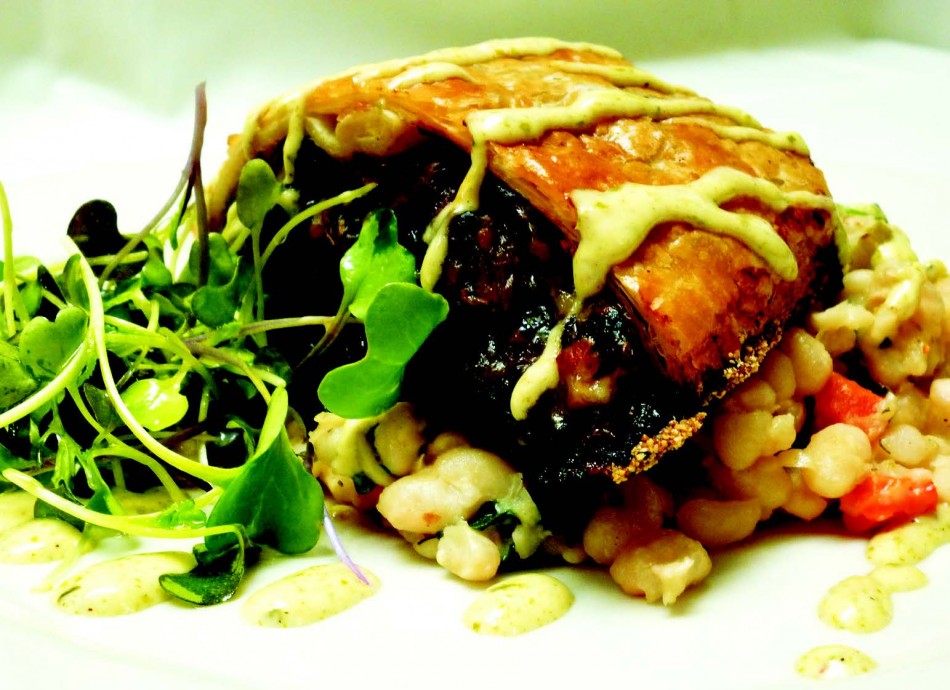
Puff Pastry Mushroom and Blue Cheese Strudel

Puff Pastry Mushroom and Blue Cheese Strudel

Puff Pastry Mushroom and Blue Cheese Strudel


1 sweet onion

¼ stick butter

1 roasted red bell pepper

3 cloves garlic (chopped)

4 cups wild mushrooms (sliced)

2 cups spinach

4 ounces Crater Lake Bleu Cheese

¼ cup sherry wine

Salt and pepper to taste

1 full sheet puff pastry


Caramelize onions in butter, set aside. Julienne roasted bell peppers, set aside. Sauté mushrooms and garlic until soft. Deglaze with sherry. Add spinach and cook until liquid is evaporated. Set aside and cool. Mix onions, peppers, mushrooms, spinach, blue cheese, salt and pepper. Lay puff pastry on cutting board, put filling in middle of puff pastry horizontally, flip bottom of puff pastry to cover top of filling and flip top of pastry to cover bottom half of puff pastry (like a burrito). Make sure ends are sealed, brush with egg wash and bake at 400° until golden brown.  Once strudel has cooled, cut horizontally and serve with whatever side you prefer (sautéed white beans, black-eyed peas).

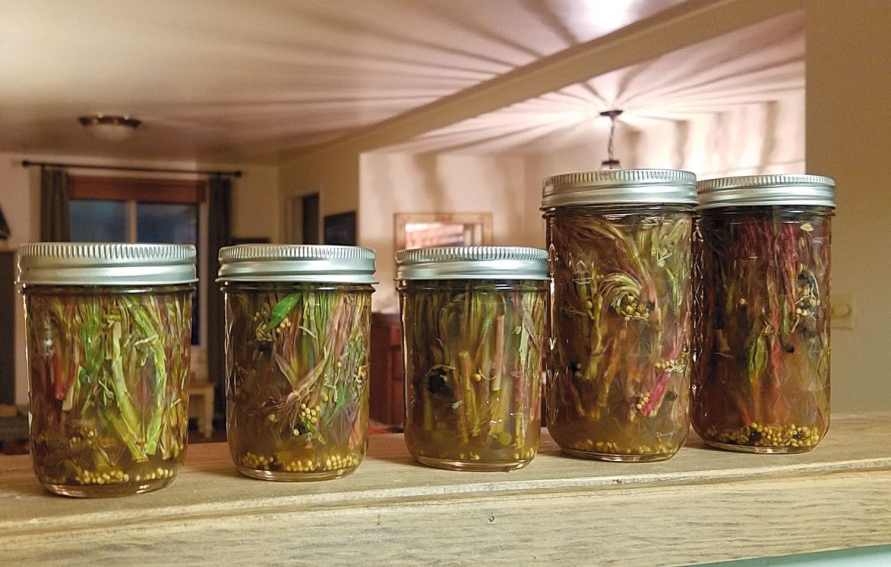
Fireweed Pickles

Fireweed Pickles

Fireweed Pickles


1 lb. fresh fireweed shoots

FOR THE BRINE:

1 T. mustard seeds

1 tsp. peppercorns

3/4 cup water

3/4 cup apple cider vinegar

1/4 cup sugar

2 T. sea salt (or canning and pickling salt)


In a saucepan, combine all brine ingredients and bring to a boil. Then remove from heat. Rinse the fireweed shoots well. Sterilize your jars, either one quart, two pint jars, or four half-pint jars. Pack your jars tightly with the fireweed shoots and cover with the brine to 1/2 inch from top of jar. As you add the brine, you might be able to fit in more fireweed. Cover and cool in the refrigerator. Serve pickles with cheese and crackers, or salmon and cream cheese, or add to a spring omelet. Store jars in the refrigerator, and use within one month for best quality.

Grilled Blue Cheese and Sorrel Sandwiches

Grilled Blue Cheese and Sorrel Sandwiches

Grilled Blue Cheese and Sorrel Sandwiches


For these sandwiches, I like to use Diamante bread from Essential Baking Co. – the salt crust and the rosemary leaves add a whole new dimension – or Macrina bakery’s potato bread, which has a particularly nice chewy, crisp texture when it’s grilled. I like to use Oregon Blue Cheese just because it’s somewhat local, but Gorgonzola or the quintessential Roquefort will make the sandwich at least as good, if not better.


4 slices rustic white bread

2 T. butter

4 ounces blue cheese

4 large leaves of sorrel

Freshly ground black pepper


Butter one side of each slice of bread and put the bread buttered-side-down on a griddle or in a skillet large enough to accommodate all four slices. Turn on the heat to medium or medium high and crumble the blue cheese over the surface of the bread. Stack the sorrel leaves with all the stems pointed in the same direction, and roll them, lengthwise, into a little bundle. Trim off the stem end and cut the bundle crosswise into -inch slices to make thin little ribbons of the leaves. (Incidentally, this is called a chiffonade.) Distribute the cut sorrel evenly over the surface of the cheese and grill the sandwiches open-faced until the cheese is melted and the buttered side of the bread is browned and crisp. Close the sandwiches and cut each one in half. Serve hot.

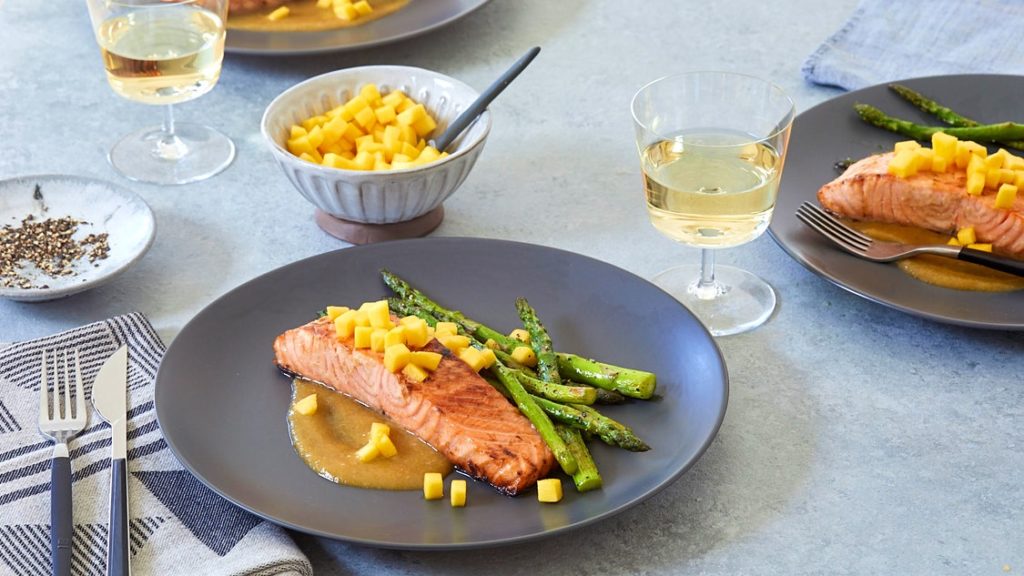
Mango Miso Salmon with Asparagus and Quick-Pickled Mango

Mango Miso Salmon with Asparagus and Quick-Pickled Mango

Mango Miso Salmon with Asparagus and Quick-Pickled Mango

3 mangoes, peeled and pitted (divided use)

1/2 cup white miso paste

1 cup plus 2 T. mirin (divided use)

3/4 cup cooking sake (divided use)

2 T. soy sauce

Four 6- to 7-ounce salmon fillets (or pieces of salmon belly), skin on

2 T. unseasoned rice wine vinegar

2 bunches asparagus, about 60 stalks total, tough ends trimmed

Olive oil

Salt and pepper

3 T. canola oil

1 T. unsalted butter


Roughly dice 2 mangoes and add them to the bowl of a food processor or blender. Puree until smooth; you should have nearly 1 cup of puree. In a medium bowl, combine miso paste, 1/2 cup mirin, 2/3 cup mango puree, 1/2 cup sake and soy sauce. Whisk until thoroughly combined and smooth. Transfer half the marinade to a separate bowl and add 2 T. mirin and remaining mango puree (you should have about 1/4 cup), stirring until smooth. Cover with plastic wrap and transfer to the refrigerator. Place the salmon in a medium-size glass dish and cover with the remaining marinade. Cover with plastic wrap, transfer to the refrigerator and let chill for 24 hours, turning once. Transfer the reserved marinade to a medium saucepot and heat over medium, uncovered. Cook until reduced enough to coat the back of a spoon, 15 to 20 minutes, stirring occasionally. Cover pan and set aside. Dice remaining mango. In a small bowl, combine 1/4 cup sake, rice wine vinegar and 1/2 cup mirin, stirring to combine. Stir in the diced mango. Let sit for 15 minutes, then drain, discarding liquid. Remove salmon from refrigerator and blot excess marinade. Place fish in a clean dish until ready to cook. Preheat the oven to 375° F. Toss the asparagus with olive oil, salt and pepper to lightly coat the stalks and place on a foil-lined sheet pan large enough to fit them all in a single layer. Transfer to the oven and roast for 10 to 15 minutes or until slightly crispy. Remove and cover with aluminum foil to keep warm. Place a cold nonstick pan on medium heat, then immediately add the canola oil and butter. As soon as the butter has melted, add the fish. Cook, skin-side down, until skin is lightly browned and easily releases from the pan, about 5 minutes. Carefully flip fillets and cook on flesh side, 3 minutes more, until lightly browned and cooked through. If all four fillets do not fit comfortably in the pan, cook two at a time, then transfer to a plate and cover with aluminum foil to keep warm while you cook the other two. While the salmon is cooking, reheat the saucepot of reserved sauce over low. Evenly distribute the asparagus among four dinner plates. Place a salmon fillet on each plate, top with 2 to 3 T. of the sauce and garnish with the diced, quick-pickled mango. Serves 4.

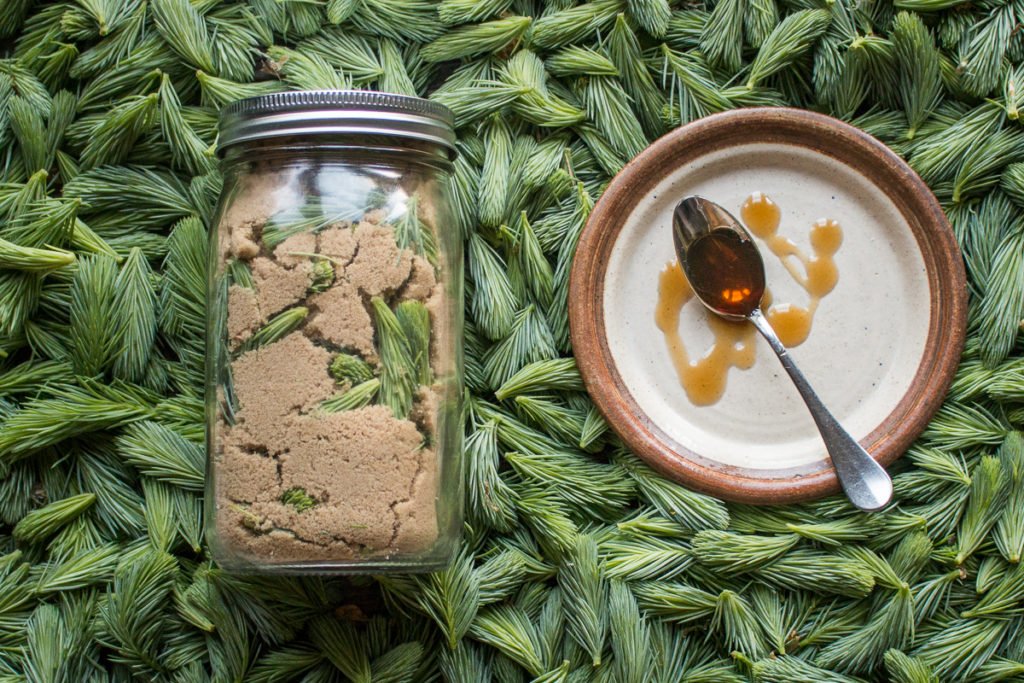
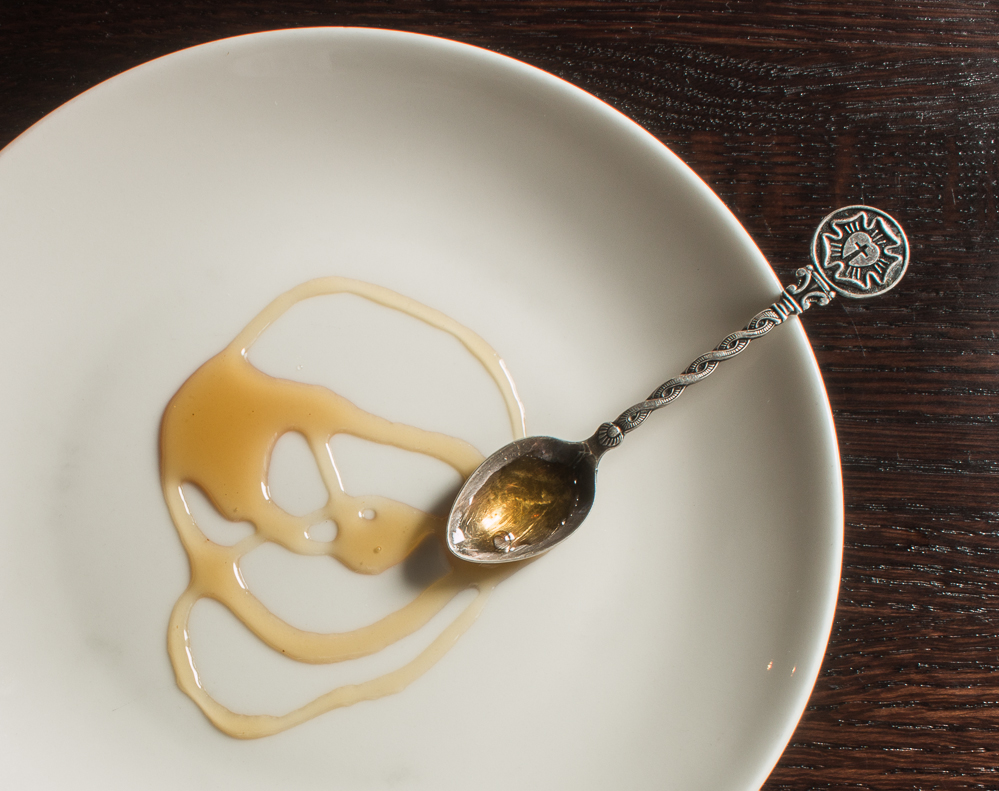
Classic Spruce Tip Syrup

Classic Spruce Tip Syrup

Classic Spruce Tip Syrup

Rich, aromatic syrup made from spruce tips and sugar aged in the sun. Yields about 2 C. of finished syrup. For large batches, note that all you’re doing is combining the spruce tips with twice their weight in sugar.


2.5 C. (8oz) Spruce tips

2 C. (16 oz) Brown or organic sugar


Combine the spruce tips and sugar and pack into a quart ja, pressing down occasionally to compact the mixture. Leave the jar out at room temperature. Some people leave them in the sun, which speeds the process. You’ll notice the volume of ingredients decrease as the spruce tips release their liquid. Keep the jar like this for 1-2 months, or for an oldschool version, bury it in the ground and dig it up the next spring. Stir the jars occasionally, pressing the tips down to keep them under the syrup with a clean spoon.

To make the syrup After the initial maceration (aging with sugar) pour and scrape the spruce-sugar slush into a pot. Bring the mixture to a boil to dissolve the sugar, strain, then bottle and store. Discard the spent tips, and thank them for their service. If for some reason, your syrup is a bit thick after cooling (over-reducing can stiffen or crystalize in the fridge) warm it back up and carefully adjust the consistency by adding a touch of water. Storing the finished syrup: Store the finished syrup in the fridge. To preserve it long term (it’s totally safe as it’s basically all sugar) pour it boiling hot into a jar nearly to the brim, turn upside down and allow to seal, or process in a water bath in mason jars. If held at room temp after opening mold may form on the top, but it can always be re-boiled and refrigerated. This is super sturdy stuff.


No rocket science here. This is a sweet syrup, perfect in place of maple syrup on pancakes or anywhere you’d use maple, but also good with other things with it’s sharp piney aroma. Here’s a few examples of how I’d it.


  • With cheese. Soft cheese, especially goat cheese, loves the piney kick of spruce syrup, maple on the other hand, might be a little bland.
  • Drizzled on crepes filled with berries and cream cheese (an old brunch dish I used to run worth revisiting).
  • With thick yogurt. I often eat a bowl of granola and thick greek yogurt for breakfast, and drizzling on some spruce syrup, along with a handful of berries makes for a great meal.
  • As a glaze for meats. Think ham, etc. A T. per 1.5 lbs or so meat like fatty ground pork can make a nice breakfast sausage too.
  • Lining flan molds. Sometimes I’ll add a drizzle of honey to the molds of a panna cotta or flan instead of caramel, and spruce syrup works just as good, it will turn into a natural sauce when the custard is unmolded.
  • Beverage sweetener. Think lemonade, drinks, etc.
  • Tossed with unsweetened, fresh fruit instead of sugar. Sometimes for dessert I might want just some fresh raspberries tossed with sugar and a dollop of whipped cream. Fresh berries tossed with spruce syrup will eventually give up some of their own juice and make a sort of natural sauce.
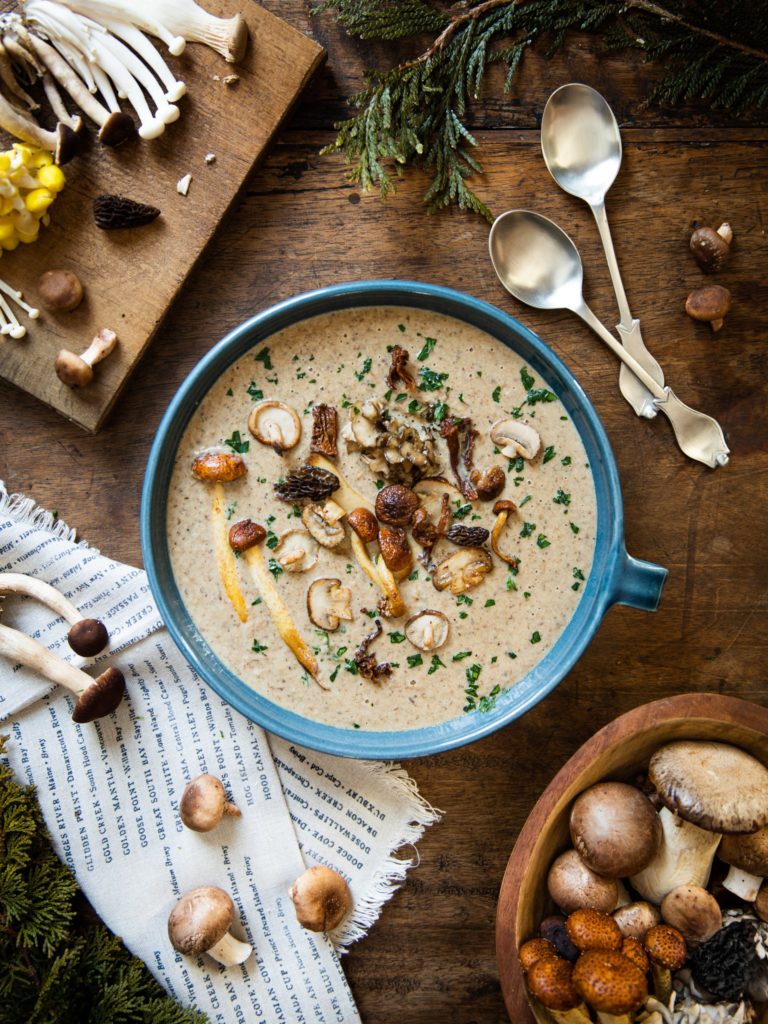
Woodsy Wild Mushroom Soup

Woodsy Wild Mushroom Soup

Woodsy Wild Mushroom Soup

1/2 cup unsalted butter

2 pounds wild mushrooms

1 ounce dried chanterelles

1 ounce dried morels

1 1/2 tsp. kosher salt

1 large yellow onion, diced

1 1/2 T. all-purpose flour

6 sprigs fresh thyme

4 cloves garlic, minced

1/2 cup dry white wine

4 C. chicken broth

1 cup water

1 cup heavy cream

Sea salt and freshly ground black pepper, to taste

1 lemon, juiced

2 T. parsley, minced

6 slices light rye bread, cut in half

Olive oil (for brushing the bread)


Melt butter in a large Dutch oven over medium-high heat. Put the dried morels and chanterelles in hot water for five minutes until rehydrated and soft. Strain the liquid and pour it into the hot butter along with half of each type of dried mushroom. Add the mushrooms (set aside a few attractive mushroom slices for garnish later) and the salt and turn the heat to high. Sear the mushrooms until they are golden brown, caramelized, and have a deep earthy smell. Reduce heat to low and add the onion and the garlic. Cook, stirring often, until the juices evaporate and the onion is translucent, about five minutes. Stir the flour into mushroom mixture and cook, stirring often, for 2 minutes to remove raw flour taste. Add the wine and deglaze the pan scraping up all the browned bits (this is where the intense woodsy flavor comes from). Tie the thyme sprigs into a small bundle with kitchen twine and add to mushroom mixture. Pour in the chicken stock and water and bring to a simmer. Cook for 1 hour and then remove the thyme bundle. Transfer the soup to a blender and puree on high speed until the mixture is thick but you can still see small pieces of the mushroom. Return the soup to the pot and stir in the cream, season with salt and black pepper, and finish with the lemon juice. In a 10″ skillet, heat 2 T. of unsalted butter over medium heat. Add the reserved mushroom slices and sear until golden brown. Brush the slices of bread with olive oil, place them on a baking tray, and bake them at 400 degrees F. until golden and the edges are crispy. Transfer the soup to a large serving bowl (or individual bowls), top with the reserved seared mushrooms, and sprinkle with the parsley. Serve immediately with the bread fresh from the oven.

Quick Caramelized Spruce Tip Syrup

Quick Caramelized Spruce Tip Syrup

Quick Caramelized Spruce Tip Syrup

This is not true mugolio, but it only takes a few minutes to make, instead of a month. Use it to flavor ice cream, panna cotta, cheesecake, a mousse, Italian meringue, there’s plenty of possibilities. One of my favorites is the way the French serve their fresh cheese-with a little drizzle on top.


4 packed C. spruce tips

2 C. sugar

2 C. water

Instructions


Grind the spruce tips and sugar in a food processor, then mix with the water, bring to a rolling boil, turn off the heat and allow to sit overnight. The next day, strain the syrup, then return it to the pan, cooking until it takes on a light amber color and the consistency resembles warm honey. Transfer the syrup to labeled, dated container and refrigerate until needed. If the syrup becomes very thick when it’s cold, thin it with a bit of cold water until it reaches your desired consistency.

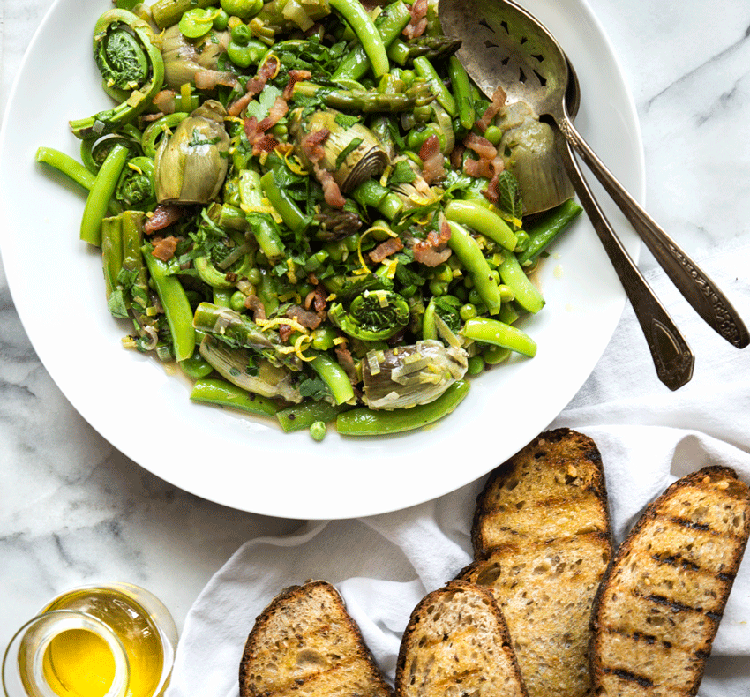
Spring Vegetable Stew

Spring Vegetable Stew

Spring Vegetable Stew

The great thing about a stew is that you don’t have to be all that exact. I’ve given measurements as a guide, but you could easily adapt this recipe to accommodate your personal preferences.


6 to 7 (12 ounces) baby artichokes

10 ounces shelled fava beans (from about 2 1/2 to 3 pounds unshelled fava beans)

8 ounces snap peas, ends trimmed

8 ounces shelled peas (from fresh or frozen)

handful of fiddlehead ferns (optional)

3 ounces pancetta or guanciale, thinly sliced

2 T. extra virgin olive oil, plus extra for drizzling over the finished dish

2 medium leeks (~ 1 heaping cup), thinly sliced (or spring onions)

1 3/4 C. vegetable stock or water

1 bunch of asparagus, chopped into 1-inch pieces

1/4 cup parsley, chopped

2 to 3 T. mint, chopped

zest and juice of half a lemon

sea salt and freshly ground pepper to taste

serve with grilled bread, rubbed with a clove of garlic, sprinkle with sea salt


To prepare the artichokes: Fill a bowl with cold water and lemon juice (the lemon prevents oxidation and blackening). Slice the tips of the artichokes cross-wise to remove their pointed tops. Peel off the tough outer leaves of the artichoke until you reach the pale, tender, lighter colored leaves. Place the artichoke in the acidulated water. Repeat with the remaining artichokes. Blanch the vegetables: Bring a large pot of lightly salted water to a boil. Reduce to a simmer. Drop in the artichokes, cook until tender, about 8 minutes. Remove with a slotted spoon and set aside. Slice the artichokes in half lengthwise. Prepare an ice water bath. Drop the fava beans into the simmering water, cook 1 minute. Remove with a slotted spoon and drop the beans into the ice water bath. Slide the fava from their thick outer covering. Set aside. Drop the snap peas and fresh peas, if using, (if frozen you don’t need to blanch) into the simmering water, cook for a minute or two. Remove with a slotted spoon and drop into the ice water bath. Drain and set aside. Last, drop the fiddleheads, if using, into the simmering water (you’ll want to blanch these last since they turn the water a brownish color) and cook for 5 minutes. Remove with a slotted spoon and drop into the ice water bath. Drain and set aside. Making the stew: In a large, high-sided pan, heat the olive oil. When hot, add the pancetta and cook until the fat is rendered. Add the leeks and sauté until soft and lightly golden, about 5 minutes. Add the blanched artichokes and stock, and simmer 5 minutes. Add the asparagus, season with a little salt and pepper, and simmer another 3-5 minutes. Add the peas, fava beans, and fiddleheads, and simmer another 3-5 minutes (all vegetables should be tender, but still have a bit of a bite). Add the lemon zest and juice and fresh herbs, and stir to combine. Taste and re-season with salt and pepper. To serve: Drizzle with a generous amount of extra virgin olive oil and serve with crusty bread.

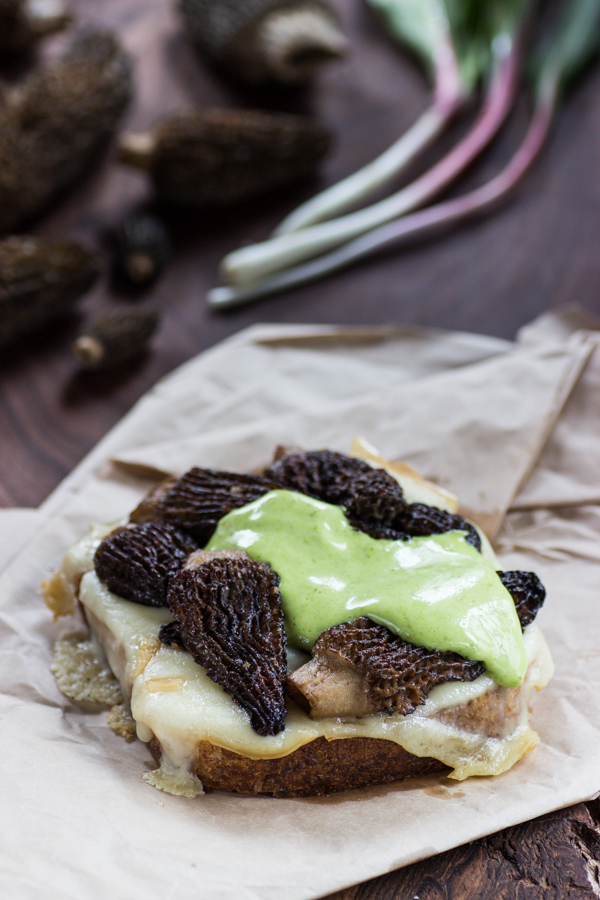
Morels And Brick Cheese on Rye, With Ramp Leaf Aioli

Morels And Brick Cheese on Rye, With Ramp Leaf Aioli

Morels And Brick Cheese on Rye, With Ramp Leaf Aioli

2 slices caraway rye bread sliced 1/2 inch

Room temperature unsalted butter as needed

1.5 ounces fresh whole morel mushrooms rinsed, cleaned, and inspected for debris on the inside.

Kosher salt and pepper

1 T. Lard other animal fat, or high heat cooking oil such as grapeseed

1.5 ounces brick cheese sliced

1 tsp. chopped fresh ramp bulbs

1 recipe ramp leaf aioli follows


Spread each side of bread with butter. Place the bread buttered side down in the cast iron pan. Arrange the cheese slices on the bread and cook on low-medium heat, until the bread is nicely toasted and the cheese is melting. In a separate pan, heat the lard or grapeseed oil until lightly smoking, add the morels and cook over medium high heat until brown and caramelized, about 4-5 minutes. Add a tsp. of butter to the pan, then add the ramps. When the morels are totally cooked, season with salt and pepper. Allow the morels to drain on a paper towel briefly to shed excess oil if needed. Place the morels on top of the cheese on one slice of bread, top each with some of the ramps from the pan, then add a T. of the ramp leaf aioli. Place the other slice of bread on top of the slice with the morels and sauce. Press the sandwich lightly to make it stick together.


Ramp Leaf Aioli


1 ounce fresh wild garlic leaves about 10 large leaves

Kosher salt and pepper to taste

1 cup mayonnaise preferably homemade

1 tsp. champagne vinegar


Bring a pot of lightly salted water to a boil. Add the wild garlic leaves and cook for 5 seconds, until just wilted. Immediately refresh the ramp leaves in an ice bath to preserve their color. Squeeze the leaves dry in a towel, then mince finely. Puree the leaves in a highspeed blender or a food processor with the mayonnaise. Afterwards, pass the sauce through the chinois or mesh strainer to remove any stringy leaf particles and give it a velvety texture (optional). Stir in the champagne vinegar, season to taste with salt and pepper and reserve until needed.