Browsed by
Category: Condiments & Extras

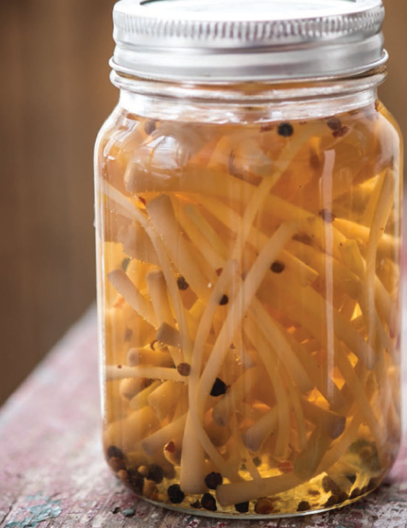
Pickled Ramp Bulbs

Pickled Ramp Bulbs

1 pound ramps
1/2 cup unseasoned rice vinegar
1/4 cup granulated sugar
1 tsp. pickling salt (or any other finely milled salt)
1/2 tsp. coriander seeds
1/2 tsp. black peppercorns
1/8 tsp. red chile flakes
1 bay leaf

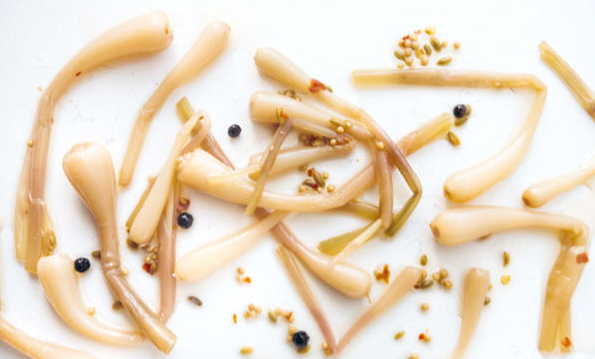
Wash the ramps well. Trim away the leafy greens and root ends. Combine the vinegar, sugar, and salt with 1/2 cup/120 ml of water in a small saucepan and bring to a boil. Place all the spices and the bay leaf in the bottom of a clean l-pint/500 ml jar and pack the trimmed ramps into the jar. Pour the brine over the ramps, leaving 1/2 inch/12 mm of headspace. Tap the jar gently to remove any air bubbles. Add more liquid to return the headspace to 1/2 inch/12 mm, if necessary. Wipe the rim and apply a clean lid and ring. Let the jar cool for at least an hour and then place in the refrigerator. Give the ramps at least a week in the pickling liquid before eating. Note: Because nothing about ramps is neat or precisely cultivated, you have to take a bit more care in their preparation. Wash them well in several changes of cold water to ensure you remove all the grit. And don’t toss the green tops! You can either sauté them and serve them as a cooked green or whirl them into an oniony pesto.

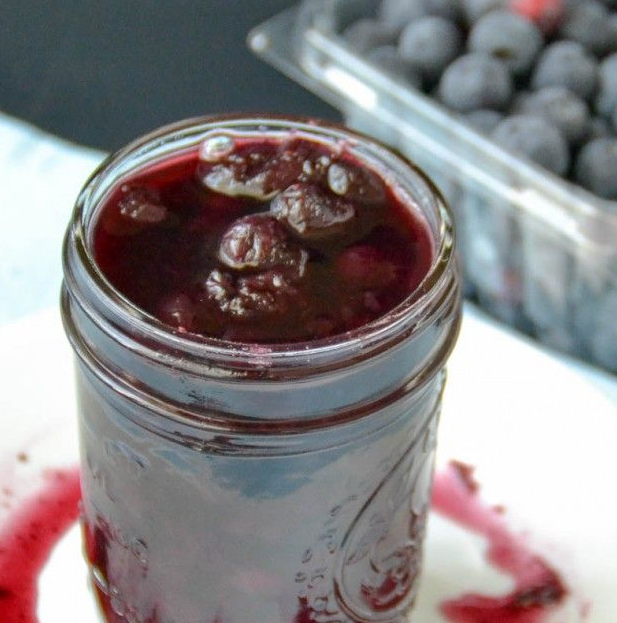
Blueberry Syrup

Blueberry Syrup

If you don’t have enough to fill the final jar, refrigerate and use within a month.

6 cups blueberries, fresh or frozen
2 T. fresh-squeezed lemon juice
l tsp. finely grated lemon zest
4-5 cups sugar, to taste
6 pint-size canning jars and lids, sterilized

Have boiling water-bath canner ready. Rinse fruit in cold water, removing any stray stems and blemished berries. Drain well. Reserve 2 cups berries. Place the rest in a food processor and pulse briefly (or mash with a potato masher). Place in a 2-quart saucepan with lemon juice and zest. Bring to a boil over high heat, reduce to a low simmer and cook 5 minutes. Press cooked berries through a fine-mesh colander using the back of a wooden spoon to push through as much pulp and juice as possible. Discard dry pulp. You should have 4 to 5 cups thick juice. Return juice to pan and add an equal amount of sugar. Bring to a boil, reduce to simmer, add 2 cups reserved whole blueberries, and cook 2 minutes. Divide syrup among prepared jars, distributing whole fruit evenly and leaving 1/2 inch of head space. Wipe any spills from lip of jars. Seal with 2-part canning lids and place in a boiling water bath that covers tops of jars by 2 inches. Boil 15 minutes. Remove jars from bath and turn upside-down for 1 minute. Turn upright and cool. Check seals. Variations: Other berries may be substituted or mixed with the blueberries. Recipe may be cut in half. You may substitute a heat-proof sweetener such as Splenda for the sugar. Syrup can also be put up in half-pint jars.

LTS Day Cheese

LTS Day Cheese

4 cups water
1 1/2 cups non-instant powdered milk
2-4 T. lemon juice or vinegar
¼ tsp. salt

Mix water and powdered milk. Place in a pan on low heat. Add slowly a little drizzle of lemon juice or vinegar, and stir gently. If using lemon juice, make sure it hasn’t expired. If it is old, it might need to be replaced for this recipe to work. Continue to gently stir while milk cooks; don’t let it come to a boil. Milk will gradually develop curds and separate from the whey, which will be almost clear. If it does not turn into curds and whey, add a little more lemon juice or vinegar. Strain and rinse the curds in cool water. Add salt.

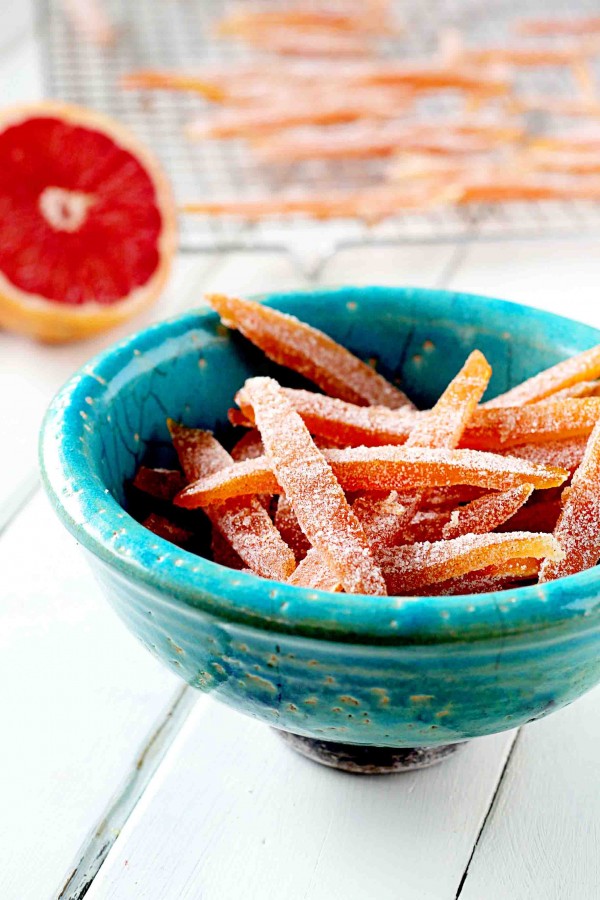
Candied Grapefruit Peels

Candied Grapefruit Peels

4 grapefruits
1 1/2 C. sugar plus 1 C. for dusting
1 1/2 C. water
1/2 T. cardamom

There are two options to get to the peel. You can slice the grapefruit in wedges and carefully cut the fruit away from the rind with a knife (easiest) or slice the grapefruits in half and juice the grapefruit (you will still have to cut the remaining membrane away from the rinds). Slice rinds into strips. Bring a large pot of water (additional to the ingredients) to boil. Add strips and boil for 10 minutes. Remove the grapefruit strips and discard water. In the same pot, combine sugar and water and bring to a boil. Once boiling, reduce heat to medium-low and simmer. Add grapefruit and simmer for 15 to 20 minutes (amount of time will depend on the size of your pot) until there is no syrup remaining. Remove the grapefruit and allow to cool and dry on a cooling rack or parchment paper for 6 to 8 hours until no longer wet; they will still be tacky. On a plate, stir to combine 1 C. sugar and cardamom. Roll the grapefruit strips through the sugar until completely coated. Shake off any access. Serve or store in an air-tight container.

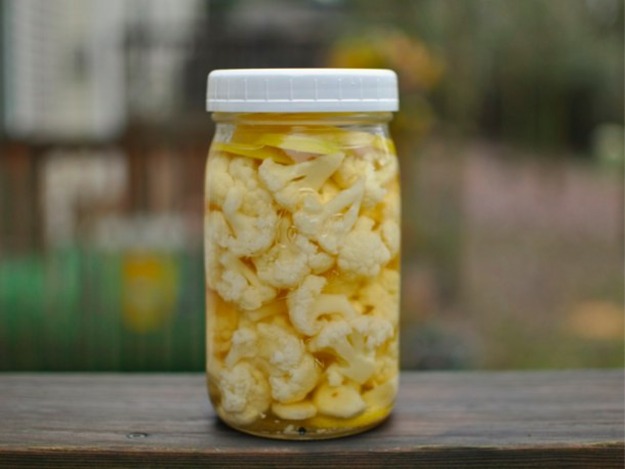
Lemony Pickled Cauliflower

Lemony Pickled Cauliflower

5 C. white vinegar, 5% acidity
3 3/4 C. filtered water
7 1/2T.pickling salt
2 lemons, sliced
2 large heads cauliflower, about 4 lb, cut into small florets

and FOR EACH JAR:
1/2 tsp. whole mustard seeds
1/2 tsp. whole cumin seeds
1/4 tsp. crushed red pepper flakes
1/4 tsp. black peppercorns

Prepare the boiling water bath. Prepare 9 pint jars (use the kind with the shoulders, i.e., not the wide-mouth pints.) Combine vinegar, water, and pickling salt. Bring this brine to a boil. Meanwhile, prep the jars: put a slice of lemon in the bottom of each jar, and then add to each jar both types of seeds, and both types of pepper. Pack the florets into the jars tightly, but do not squish or mash them. When the brine has boiled, slowly pour hot brine over the florets, leaving 1/2″ headspace. Dislodge any bubbles, then check fill level. Add brine if needed. Top each jar with a slice of lemon, tucking it under the neck of the jar. Wipe rims, and apply lids and rings. To seal jars, process in boiling water bath for 10 minutes. Note that as with all pickles, if you need more brine, you MUST use the same proportions of vinegar, water, and salt; and you MUST bring it to a boil before pouring into the jars. I’ve decided that it’s much better to make too much brine than not enough.

Bergamot-Scented Meyer Lemon Marmalade

Bergamot-Scented Meyer Lemon Marmalade

1/2 pounds (about 4 medium) Meyer lemons
4 cups water
3 1/2 cups sugar
2 T. bergamot zest, grated finely using a microplane (about 1 bergamot)

Slice off the ends of 1 lemon and place it on one of its flat ends. Using a sharp knife or vegetable peeler, remove the peel in strips about 1 inch wide. Leave behind as much white pith as possible. Repeat with the remaining lemons. Use a sharp knife and then your fingers to peel off any extra pith or remaining patches of skin. Reserve the fruit. Julienne the lemon peel very thin by stacking 3 or 4 pieces on top of one another and slicing them. Place the julienned
lemon peel in your preserving pot and set aside. Now slice the reserved fruit in half lengthwise and slice the half lengthwise again. Cut each piece crosswise to form many 1/8-inch-thick Meyer lemon triangles. Reserve the seeds as you go. Put the lemon slices in a medium-size
nonreactive bowl as you work. Once the lemon flesh is sliced, tie up the seeds in a square
of cheesecloth or scrap of white tea towel. Add them to the preserving pot with the julienned peel and cover with the water. Bring to a boil, reduce heat to low, and simmer for 5 minutes. Remove from heat and add the reserved fruit and any collected juices. Refrigerate overnight. Add the sugar and, for a less assertive bergamot flavor, the bergamot zest. (For a more assertive flavor, add it after the mixture has cooked for about 15 minutes.) Over high heat, bring to a boil that cannot be stirred down, stirring frequently. Cook until it passes the plate
test, about 18 minutes. 2 Ladle into prepared half-pint jars, leaving 1/4-inch headspace. Remove air bubbles and wipe rims. Place the lids on the jars and screw on the bands until they are fingertip tight. Process in a water-bath canner for 10 minutes, adjusting for altitude as needed. After 24 hours, check the seals. Label, date, and store out of direct sunlight without the bands for up to a year.

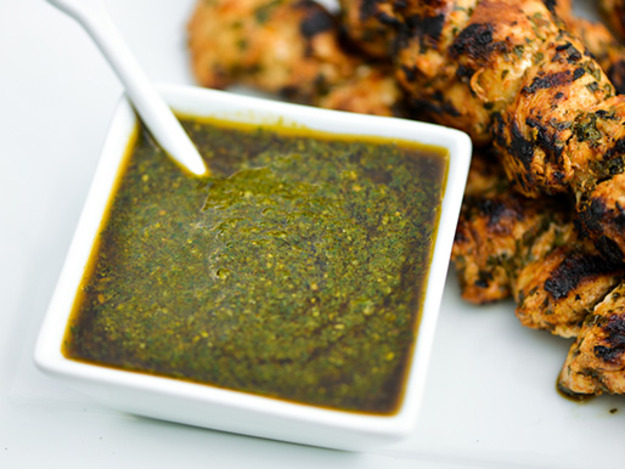
Preserved Lemon Sauce (chermoula)

Preserved Lemon Sauce (chermoula)

1/2 preserved lemon
3 T. parsley, finely chopped
3 T. cilantro, finely chopped
2 cloves garlic, or small shallot, minced
1/2 tsp. ground cumin (optional)
1 tsp. hot paprika (optional)
2 T. fresh lemon juice
2 T. olive oil
small bowl

Rinse half of a preserved lemon, then chop finely both the rind and the flesh; transfer to small bowl. Chop parsley and cilantro; mince garlic/shallot, and add to chopped lemon along with optional spices, lemon juice and olive oil Reserve part of the chermoula for dipping or serving (if desired). Spread chermoula on top of raw chicken or fish. Marinate overnight for chicken, or an hour for fish or veggies.

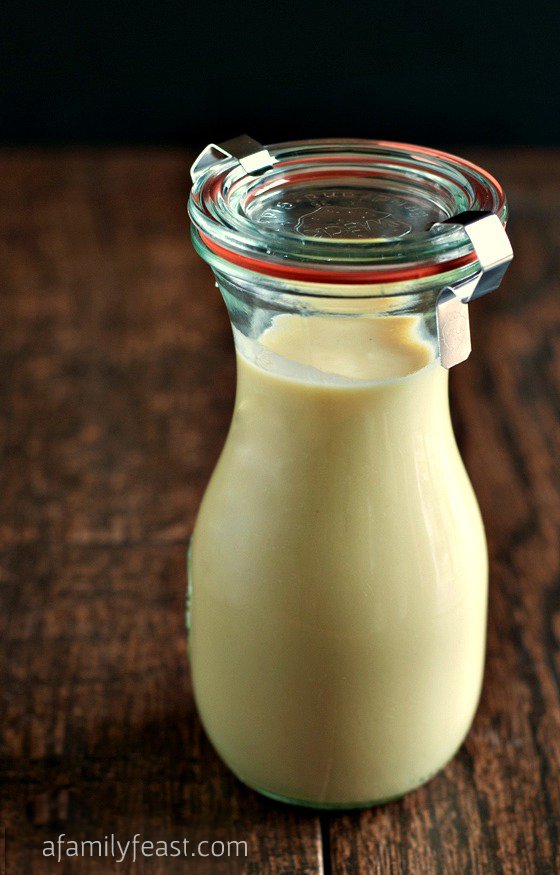
Vanilla Custard Sauce

Vanilla Custard Sauce

2 cups whole milk
5 egg yolks
â…“ cup sugar
1 teaspoon vanilla extract

Pour milk into a medium-sized sauce pan and heat to the point where the milk begins to scald. Remove from heat. In a medium bowl, beat the egg yolks with the sugar. Very slowly, drizzle about half of the milk into egg yolk mixture, stirring constantly until the eggs are tempered. Then add tempered eggs back to the rest of the scaled milk. On low to medium heat cook mixture stirring continually watching to make sure it does not get too hot. If it does, the eggs will congeal and cook. (If you have to, keep removing the pan from the heat, stirring as you go.) Continue this for about five minutes or until mixture thickens. Immediately remove from heat, then add vanilla and stir. Place a fine sieve over a bowl and pour the custard mixture through the sieve to filter out any egg bits that started to congeal. Cover the bowl with a large piece of plastic wrap, pushing the plastic down to touch the top of the custard. (This will prevent a skin from forming on the custard as it cools.) Refrigerate until completely cooled. The finished sauce can be stored in the refrigerator for up to a day and used as needed for recipes calling for custard sauce including Poached Pears in Red Wine or Apple Crisp.

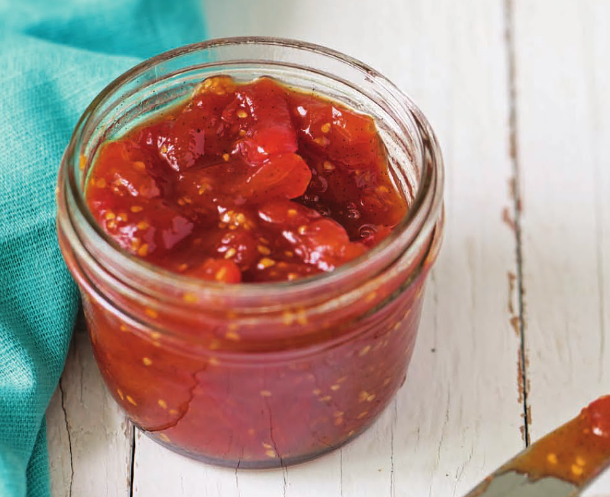
Tomato-Vanilla Jam

Tomato-Vanilla Jam

28 ounces (about 5 cups) red cherry tomatoes, halved
2 vanilla beans
1 1/2 cups sugar
2 tablespoons bottled lemon juice

Halve the cherry tomatoes and place them in a large, nonreactive bowl. Using a sharp knife, split the vanilla beans lengthwise and scrape out the seeds. Reserve the pods. Place the sugar and vanilla bean seeds in a separate, smaller nonreactive bowl. Use your hands to rub the vanilla bean seeds into the sugar until all the large clumps of vanilla are broken up. Stir the sugar and vanilla mixture gently into the cherry tomatoes along with the bottled lemon juice. Bottled lemon juice is required in this recipe to make it safe for water-bath processing. Tuck the vanilla bean pods into the fruit sugar mixture so they are submerged, cover, and refrigerate overnight. Transfer the mixture to your preserving pot using a spatula to scrape any sugar that has settled to the bottom of the pan. It is normal for the tomatoes to have let out a lot of liquid. Over high heat, bring the mixture to a boil that cannot be stirred down, stirring to help the sugar dissolve. Continue cooking the mixture on high until the jam passes
the plate test, about 15 minutes. Begin testing earlier it you see signs that the jam is almost done, and reduce the heat to medium-high if the jam shows signs of scorching, such as sticking and burning in spots. Remove from heat and discard the vanilla bean pods. Ladle into prepared half-pint jars, leaving 1/4″-inch headspace. Remove air bubbles and wipe rims. Place
the lids on the jars and screw on the bands until they’re fingertip tight. Process in a water-bath canner for 15 minutes, adjusting for altitude as needed. After 24 hours, check the seals. Label, date, and store cut of direct sunlight without the bands for up to a year.

Blueberries in Their Own Syrup

Blueberries in Their Own Syrup

5 C. Blueberries (1 ½ lb.)
1 ½ C. Sugar
2 T. Lemon Juice

Place the blueberries in a large nonreactive bowl. Take two handfuls of blueberries and smash them in your fists. The goal here is to keep most of the blueberries whole. Add the sugar and lemon juice and use a spatula to toss. Let the mixture sit on the counter for 1 hour. Refrigerate overnight.

Transfer the blueberry mixture to your preserving pot. Over high heat, cook until the bubbles begin to appear large and glassy, about 8 minutes. Remove from heat and test for doneness using the plate test. This preserve is done when you run your finger through a dollop of the cooled preserve, and it doesn’t run back together. Ladle into prepared half-pint jars, leaving 1/4-inch headspace. Remove air bubbles and wipe the rims. Place the lids on the jars and screw on the bands until they are fingertip tight. Process in a water-bath canner for 10 minutes, adjusting for altitude as needed. After 24 hours, check the seals. Label, date, and store out of direct sunlight without the bands for up to a year.

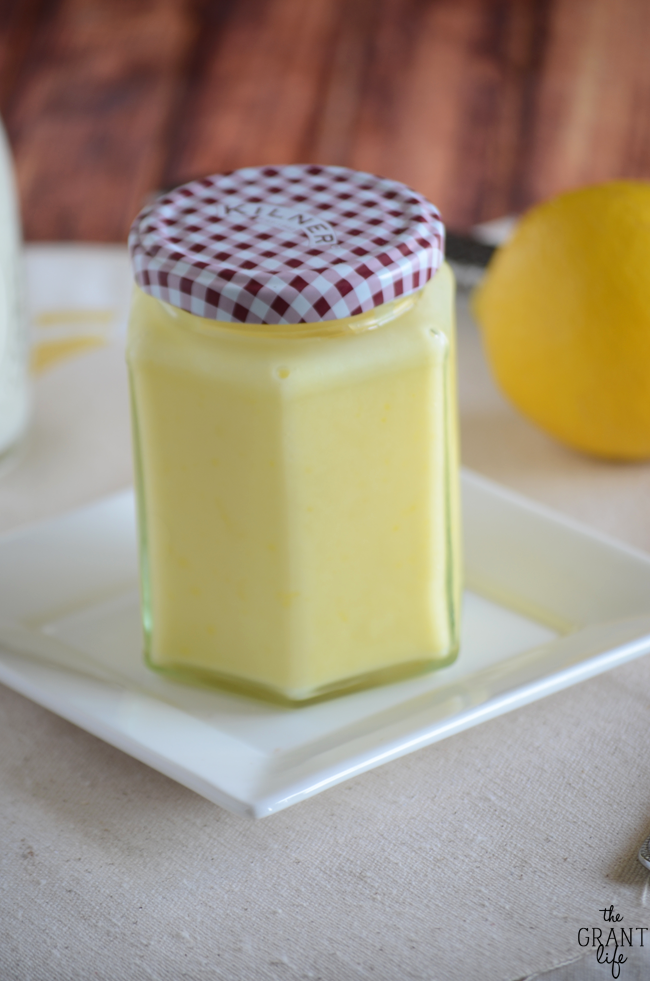
Lemon Cream

Lemon Cream

2 large eggs
½ cup of sugar
Zest of 1 small lemon
â…“ cup of lemon juice (about 3 lemons)
ice for cooling
2 tablespoons unsalted butter
½ cup heavy cream

Whip together the eggs and sugar until light and fluffy and a pale yellow. Mix in the lemon zest and the lemon juice. Make a double boiler by placing two similar sized saucepans on top of each other. The bottom pan should have a few inches of water. Bring to a boil and place the saucepan with the lemon mixture on top. Cook the lemon mixture, whisking often, until it starts to thicken and becomes pudding like. About 10 minutes. Remove from heat. Mix in the butter and place the pan/bowl in an ice bath to allow the mixture to thicken. When slightly cooled, fold in the heavy cream and whisk until smooth. Allow to cool and enjoy! Keeps for 3 days in refrigerator.

LTS Taco Seasoning Mix

LTS Taco Seasoning Mix

6 T. chili powder
6 T. Flour
1 ½ tsp. garlic powder
1 1/2 tsp. onion powder
3/4 tsp. red pepper flakes (or 1/4 tsp. cayenne pepper)
1 1/2 tsp. oregano
1 T. paprika
3 T. cumin
2 T. Kosher salt
2 T. black pepper

Put all of the ingredients in a jar or a container with a lid and shake, shake, shake. Sprinkle 2-3 T. over cooked ground beef, add ½ C. water, bring to a boil, then reduce heat and simmer, stirring often, until water has cooked away and meat is well coated.

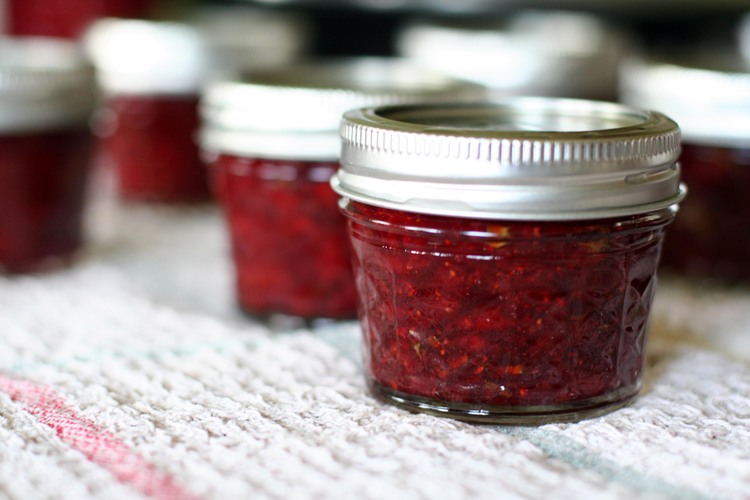
Strawberry Jam with Thai Herbs

Strawberry Jam with Thai Herbs

Makes 8 1/4 pint jars

9 C. clean strawberries diced (3 pounds)
1 1/2 C. sugar
3 tsp. fresh + strained or bottled lemon juice
2 tsp. cilantro
1.5 tsp. thai basil
1 tsp. mint (I used chocolate mint; use whatever you have)
1 tsp. lemon zest

Follow a proper recipe for water bath canning unless you know what you’re doing (e.g. sterilizing jars and lids and all that jazz.) There are tons online or you can get a book.

2. Put the strawberries and sugar into a large, ideally wide pot to aid in evaporating all that water. Bring to simmer and stir stir stir. Cook for about 5 minutes. Then pour the mixture into a colander with a bowl underneath it to catch the liquid and separate it from the fruit. Return the liquid to the pot and cook down boiling over high heat for 20 minutes until it reduces to around 1 + 1/2 C.. Something like it cuts in half. Or, if you’re like me, and fear the high heat boil, put it over medium heat and fret and worry that you might be smelling burning, letting a solid hour pass until it seems thickened enough. Put the fruit you set aside back into the pot with your thickened syrup. Add the lemon juice. Bring to a simmer. Stir frequently for about 25 minutes. If you’re lucky, and bold enough with the heat, it will somehow only take 15. You know it’s ready when a chilled plate from the freezer with a dab of jam, after being returned to the freezer for a minute, seems thickened and jam-like. If it’s sliding around post 1-minute freezer, it needs more time. In the meantime, get the boiling water ready for canning. Turn off the heat, add the herbs and lemon zest and stir it all in. Process the jam in the boiling water for 5 minutes, leaving the requisite 1/4 inch space at the top of each jar. Let rest for 12 hours. Make sure they sealed by trying to push down on each lid. But really, get some solid advice on canning if you haven’t done it before — this book is a great place to start. Canning is fun, and worth trying, and infinitely less dangerous than you might assume. Eat the jam, wondering if a single jar will make it to autumn.

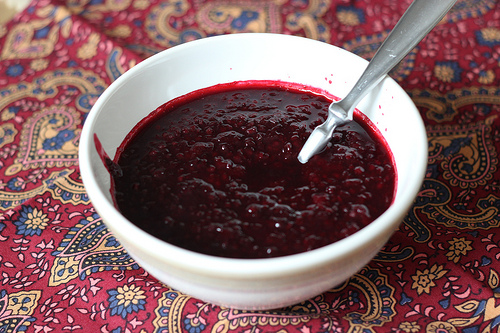
“Wojapi”: Judy’s Wild Berry Soup

“Wojapi”: Judy’s Wild Berry Soup

This soup is sometimes called Wojapi, a Lakota word that loosely translates as “all mixed up.” It’s been tested by hundreds of children and elders over the years, and is always a hit.

2 quarts of naturally sweet cherry juice, grape juice, blueberry juice, or spring water
2 C. blueberries (fresh, frozen or dried)
2 C. blackberries (fresh, frozen or dried)
1 C. huckleberries (fresh, frozen or dried)
1 C. raspberries (fresh, frozen or dried)
Also optional: Handful of blue or black elderberries 6 to 10 juniper berries

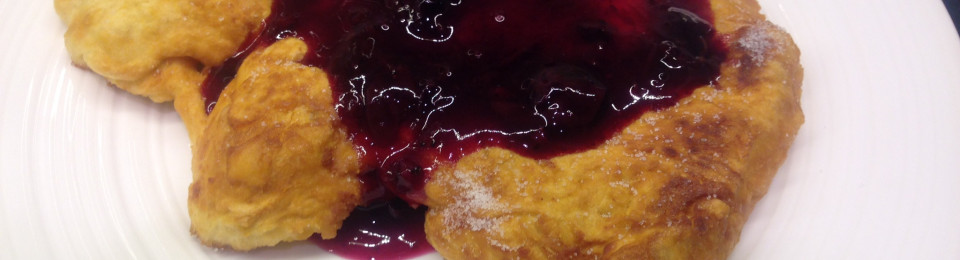
Combine all ingredients and simmer gently until berries pop and cook down. Serve hot or cold, depending on the weather. Spices like cinnamon and cloves, while not part of the traditional recipe, can be added. I like to spice the soup with Juniper berries and add pieces of dried/smoked salmon for a hardier savory meal. The pectin found in chokecherries and many berries will naturally thicken the soup. Serve over Fry Bread.

Sweet, Sour, and Spicy Pickled Melon

Sweet, Sour, and Spicy Pickled Melon

6 to 8 lb. (2 large or 3 medium) firm-ripe melons, such as cantaloupe, honeydew, canary, or a mix
2 C. granulated sugar or vanilla sugar
1 C. spring or filtered water
3/4 C. white wine vinegar
1 tsp. fine sea salt
1 tsp. crushed red pepper flakes
3 sprigs fresh mint

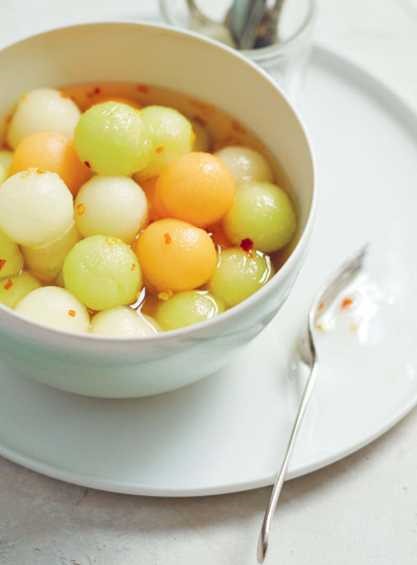
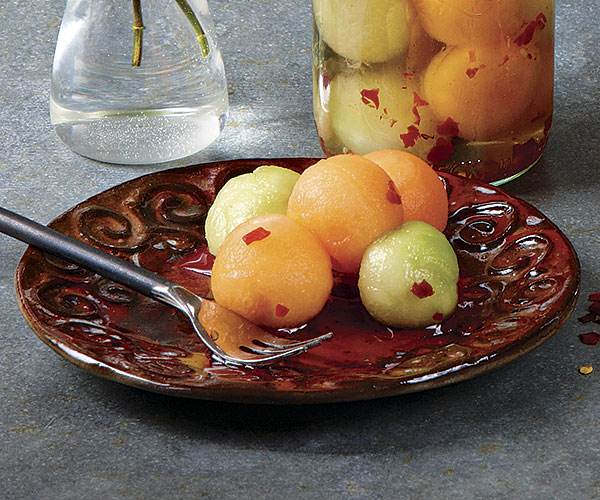
Why filtered water? Fruits pickled in agrodolce pick up all of the flavors in the brine—that’s the whole point, after all. Because water is a main component of the brine, I recommend you filter your tap water or use bottled spring water. This way, you can be sure your pickles won’t take on any off flavors from municipal water-treatment chemicals, such as chlorine, or naturally occurring minerals in well water, like sulfur. Run 3 pint-size mason jars and their lids through the hottest dishwasher cycle to sanitize. Run 3 pint-size mason jars and their lids through the hottest dishwasher cycle to sanitize. Halve and seed the melons. Using a melon baller, carve out about 6 C. melon balls, and place them in a bowl. Reserve any leftover melon for another use. Combine the sugar, water, vinegar, salt, and pepper flakes in a small saucepan. Bring to a boil over medium-high heat, stirring to dissolve the sugar and salt completely. While the brine is heating, pack the melon balls into the jars as tightly as you can without crushing them. Pour the hot brine into the jars, leaving a 1/2-inch headspace and making sure the melon balls are completely submerged. Insert 1 mint sprig into each jar, pushing down along the side of the jar with the handle of a spoon to submerge in the brine. Cool to room temperature. Screw the lids on tightly, and let the melon cure in the refrigerator for 4 days before serving. The melon will keep in the refrigerator for up to 1 month, though it will continue to soften over time.

Variations: The recipe calls for curing the pickles in the refrigerator, but if you’d rather make them shelf-stable until they’re open, you can process the melon in a hot-water bath. Though they will soften over time, the pickles will keep for up to 6 months at room temperature. Simply follow instructions for hot-water canning, processing the jars for 25 minutes.

Tomato Jam

Tomato Jam

Makes 3 Pint Jars or 6 Half-Pint Jars or 12 – 4 oz. Jars

5 pounds tomatoes, cored and finely chopped
1 C. sugar** (see note below)
½ C. freshly squeezed lime juice
2 tsp. grated peeled fresh ginger
1 tsp. ground cinnamon
½ tsp. ground cloves
1 tsp. sea salt
1/2 tsp. red pepper flakes** (see note below)

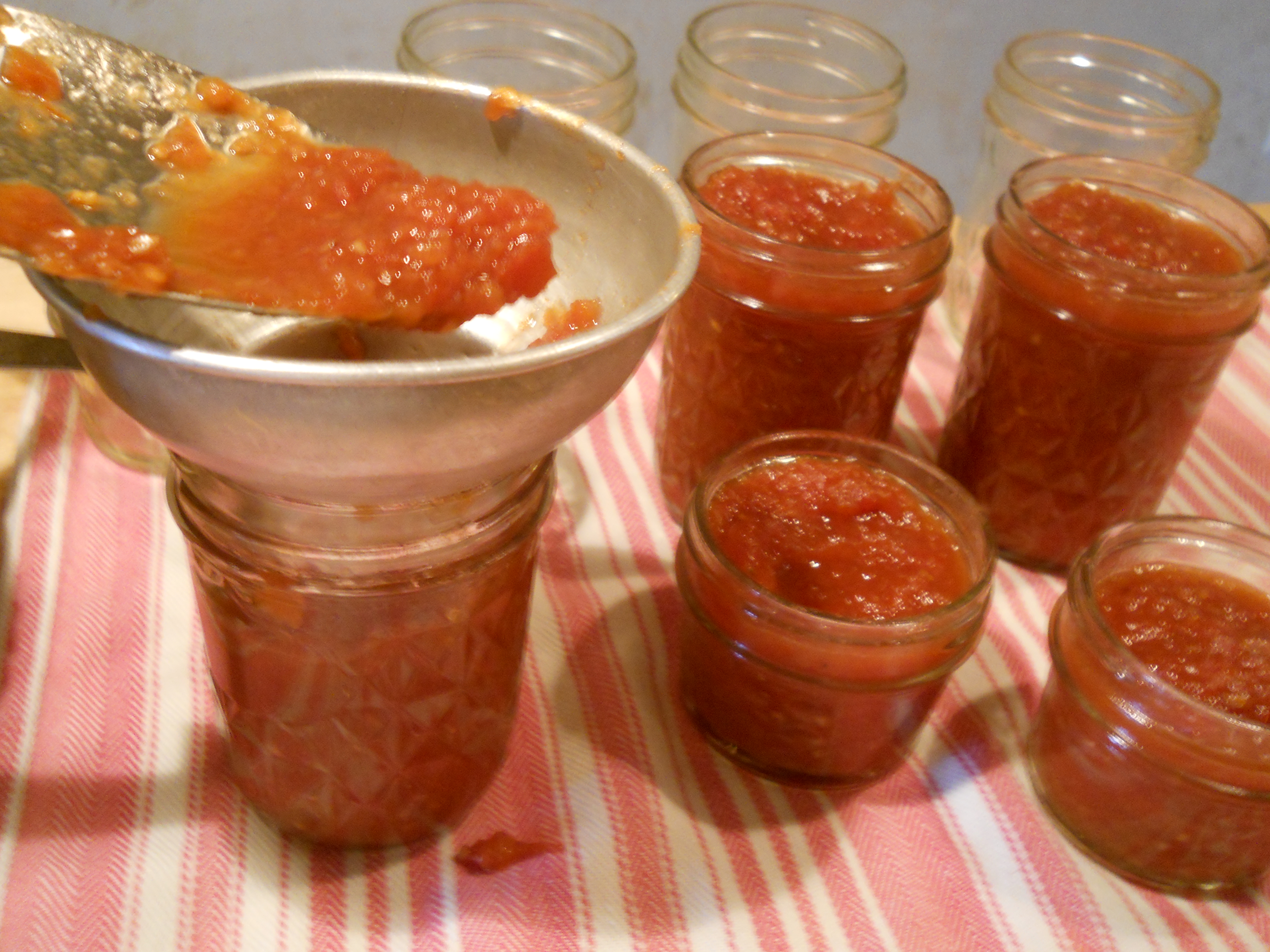
Prepare water bath and jars. After water reaches boiling point, keep on low heat until needed. Place lids in a small saucepan, cover with water and place on very low heat. Tomatoes 032Combine all ingredients in a non-reactive pot. Bring to a boil over high heat, then reduce to low. Simmer the jam, stirring regularly, until it reduces to a consistency similar to jam. If you wish to test it, drop a tsp. onto a saucer. When cooled, the jam should stay in a mound. If it runs down the saucer when titled, it needs more cooking. This will take between 1 1/2 to 2 hours. When jam has cooked down sufficiently, remove pot from the heat and ladle jam into the prepared jars, leaving 1/4 inch headspace. Wipe the rims, apply the lids and rings, and process in a water bath for 20 minutes.

I used organic raw sugar in this recipe. I use less sugar than Marisa does in her recipe since I like to more tangy. It is shelf stable, however, because of the added acid. Marisa suggests 3 ½ C. but I find 1 C. gives it just the savory-ness I like.
I used ½ tsp. red pepper flakes which gives it a bit of heat but not over the top. Adjust to your taste preferences, as is true for all spices.

Violet Jelly

Violet Jelly

2 C. tightly packed violet flowers (no stems)
2 C. boiling water
1/4 C. bottled lemon juice
1 1/2 C. white sugar (again, white is essential to retain the violet color)
4 tsp. pectin

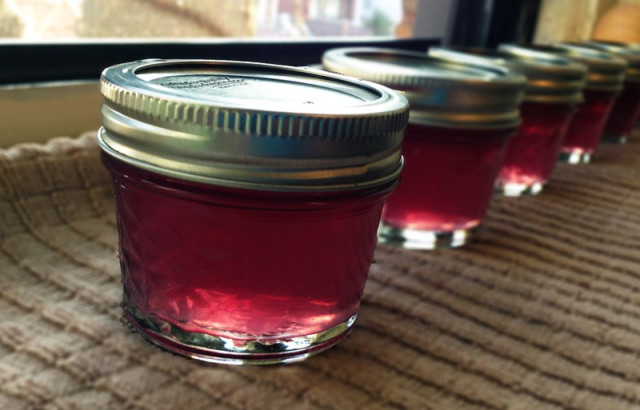
Rinse and drain flowers and place in a small stainless steel saucepan or heat-proof glass bowl. Pour over boiling water, cover and let steep for 24 hours. Strain the liquid through a fine mesh sieve into a medium saucepan, using a wooden spoon (or very clean hands) to squeeze out as much liquid as possible. Add lemon juice and gently heat over medium low heat until warm. In a small bowl, whisk sugar and pectin until well incorporated. Add sugar-pectin blend to violet water and whisk until completely dissolved. Turn heat up to medium high and bring mixture to a boil, stirring occasionally. You want to stay close to the pot because it does have a tendency to bubble over if left unattended. Continue cooking until mixture has thickened slightly, about 5-10 minutes, skimming off any foam as you go (there will be a lot). Jelly is ready when it passes the chilled plate test. Make sure all foam has been removed and ladle jelly into clean, hot, sterile jars, leaving 1/4 inch headspace. Wipe rims clean, center lids and screw on jar rings. Process in boiling water bath for 12 minutes. Remove jars and allow to cool for 24 hours. Press on center of lids after about 1 hour to make sure they’ve sealed. If the lid springs back, it did not seal properly and needs to be stored in the refrigerator. After 24 hours, label jars and store in pantry.

LTS Cheddar Cheese Sauce Mix

LTS Cheddar Cheese Sauce Mix

1 C. dry milk
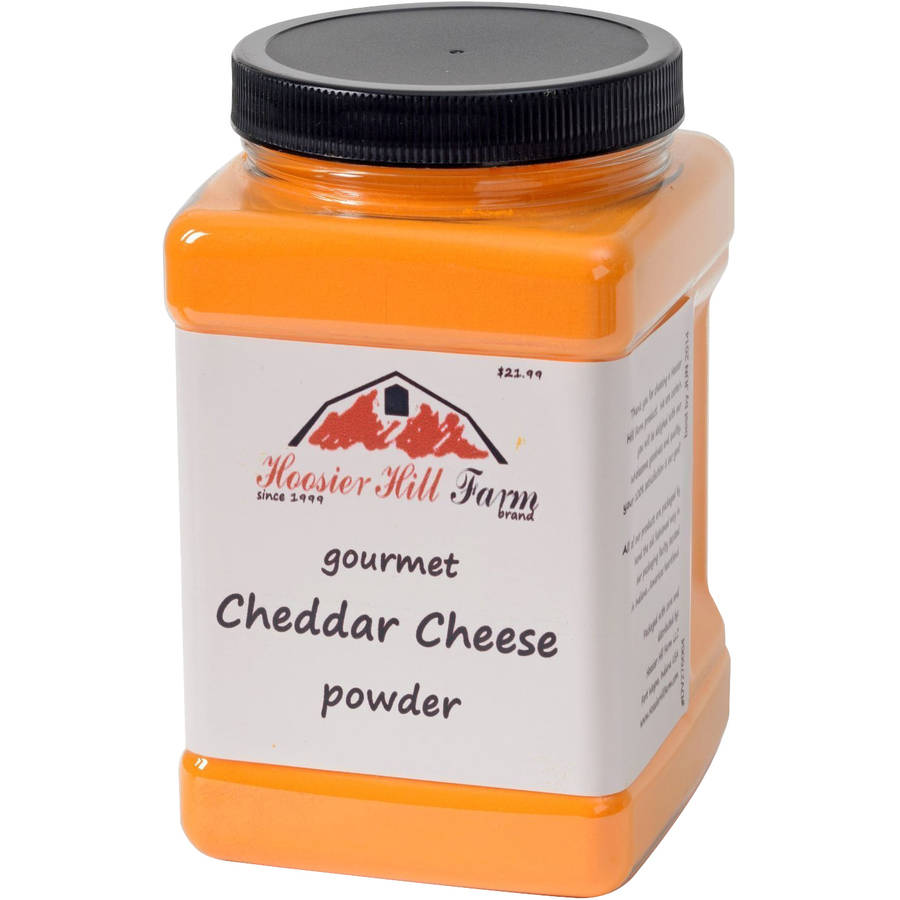
6 T. cheddar cheese powder
1⁄4 C. butter powder
1 1⁄2 tsp. dried garlic
1⁄2 tsp. onion powder (not onion salt)
1⁄2 tsp. ground black pepper

Mix all the ingredients together. Store in a tightly sealed container. Keeps for up to 4 months, keep away from heat and for best long term storage, store in your refrigerator.

To use: Each serving is about 7 T. To make s sauce combine 1 serving mix with ¼ C. water. You can cook up 4-ounces pasta, drain off all but ¼ C. water and mix the sauce in, adding a T. of oil if desired, for a homemade mac and cheese. Also, use the powder in any number of recipes calling for ‘cheese sauce powder’ for a natural version (some commercial brands contain artificial dyes).

Candied Angelica

Candied Angelica

Candied Angelica


3 -4 sprigs angelica, at least 2 years old

1 cup caster (superfine) sugar

1 T. baking soda

caster sugar, for sprinkling (optional)


Cut angelica stalks in their 2nd year. Unlike many other plants, the big stalks are better as long as they are still green (not purple or white). De-leaf, remove leaf stalks and cut into pieces of about 6 inches, and soak in cold water for about 8 hours. Boil water and plunge the stalks inches Boil until the stalks begin to soften (add about half tsp. of baking soda per pint of water to keep the vivid green color, which is associated with ‘real’ candied angelica that is found in France) It also helps to soften. Cool under running water, drain, then peel removing the long stringy parts on the outside of the stalks. Put them into a syrup made up of of 1 cup sugar, and 1 cup water: soak for 24 hours. Cook in them in the syrup and repeat once a day for four days, by which time the angelica should be translucent without losing shape. Remove the angelica stems from the pan and let them drain on a covered rack or screen until dry and glossy. You can roll the stems in caster sugar, BEFORE drying them on the rack/screen if you wish.). Store in an airtight tin or jar, and in a cool, dark place; they will last for up to 2 years in the right storage conditions. Cut the stems into appropriate lengths and use to decorate cakes, trifles, desserts, or ice cream sundaes.

Pampered Chef Cinnamon Plus

Pampered Chef Cinnamon Plus

6 tsp. ground cinnamon
1 tsp. ground allspice
1 tsp. dried orange peel
2 tsp. ground nutmeg
1 tsp. ground cloves
1/2 tsp. ground ginger

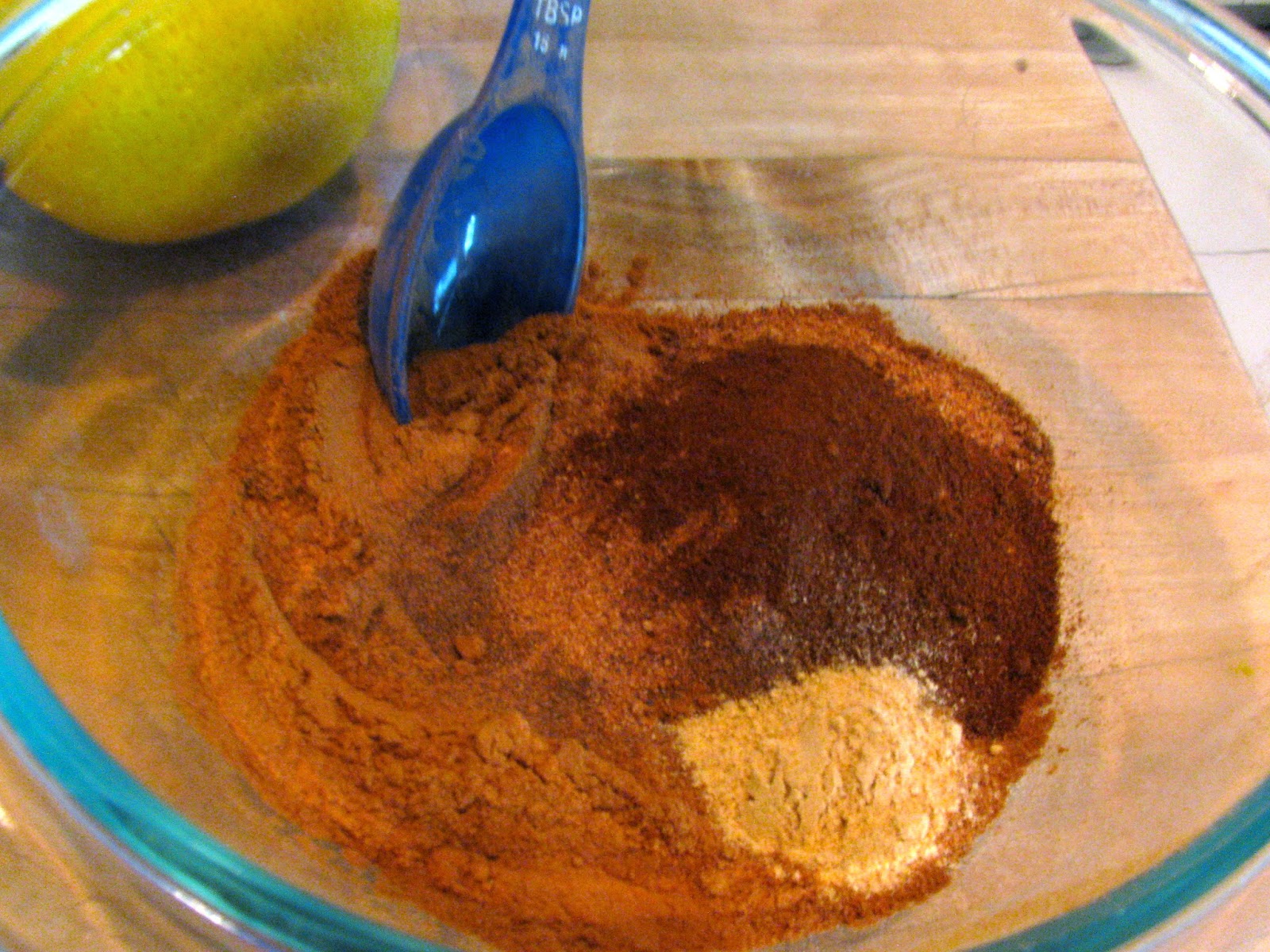
In a medium bowl, combine all ingredients. Store in an air tight container. Use this mix in recipes that call for the ingredients above. I substitute this for all my cinnamon needs. If a recipe calls for the spices add up all the measurements and just put in the same amount of this blend. It tastes great used in cinnamon and sugar for toast and in cinnamon rolls.

Infused Vinegars

Infused Vinegars

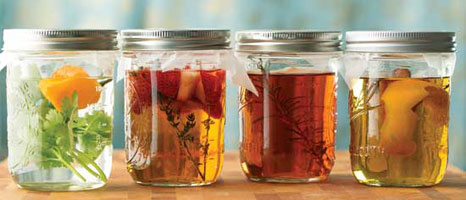
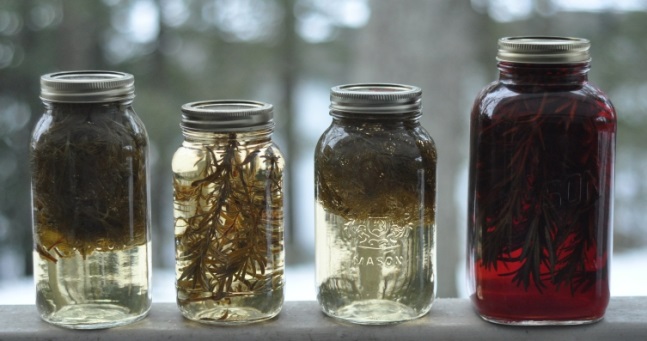
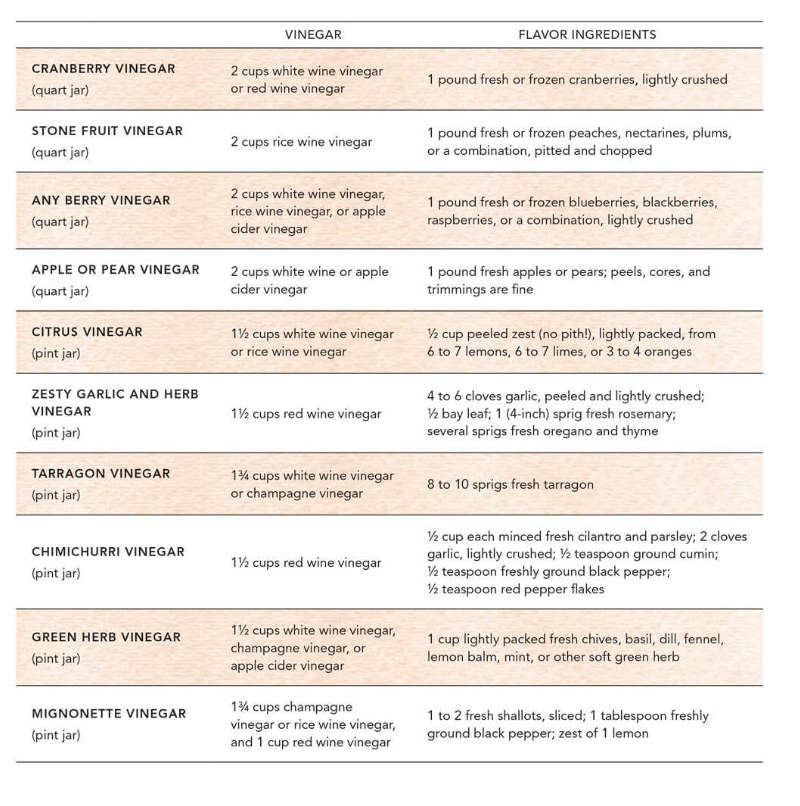
Prepare the flavoring ingredients as necessary. All fruit and herbs should be as fresh as possible, and in top condition. Discard any ingredients with signs of mold or decay. Wash and thoroughly dry your fresh ingredients.

Clean and sanitize a glass jar that will be large enough to hold the vinegar and flavor ingredients comfortably. I typically use pint or quart mason jars.

Combine the vinegar and flavor ingredients in the jar. Make sure there is enough vinegar to fully cover all the flavoring ingredients. If not, add a bit more vinegar to the jar.

Lid the jar and let the vinegar sit in a cool, dark place for 3 to 4 weeks. Taste the vinegar; when the flavor has developed to your satisfaction, it’s done!

Strain the vinegar through a fine-mesh sieve to remove any big chunks, then filter the vinegar through a strainer lined with a paper coffee filter, clean lint-free cloth, or layered paper towels.

If desired, sweeten the vinegar slightly. Many fruit vinegars taste more rounded with about 1 T. sugar added per 1 C. finished vinegar. This is totally optional.

Transfer the vinegar to sanitized dry bottles. Lid tightly and store the vinegar in a cool, dark place. It will keep for about l year.

Using a Mortar & Pestle

Using a Mortar & Pestle

If you have already bought or have been given a new mortar and pestle set, there are a couple of things you will need to do before you get down to the serious business of the alchemy of culinary potions. Just like any new utensil, the mortar and pestle should be cleaned and seasoned before use.

1. Wash in clean water without detergent and air-dry.
2. Grind roughly a small handful of white rice. Discard and repeat if necessary until the rice remains white and does not discolor. This will depend on the type of material your set is made from.
3. Add 4 cloves of garlic, 1 tsp. cumin, 1 tsp. salt, and 1 tsp. pepper. Grind and discard.
4. Wash in clean water without detergent and air-dry.

If you already have a set and missed these steps, don’t panic. It just means that whoever ate your first efforts probably ingested some stone dust, minigravel, or wood sharings. It will be long gone by now with the subject none the wiser, and it will not affect the ongoing performance of your set. Only you, your enthusiasm, and your passion can do that.
Once you are ready to start, a good rule to remember is:

Driest ingredients first.
Moist ones next.
Oily ones next.
Wet ones next.
Taste and add salt to your work if needed.

Never use soap or detergent to clean your set, as perfume particles can be absorbed and taint your food.

To sanitize stone, heat occasionally in the oven at 350°F/i8o°C for ten minutes. Make sure to leave the mortar and pestle to cool in the oven, door open, once it’s turned off. Never try and lift out a heavy, hot stone or you may do more damage than break a toe.
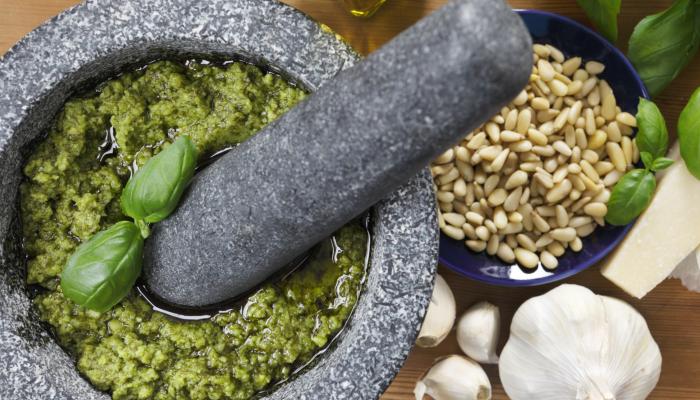
For all recipes, garlic count is peeled and in cloves, anchovy count is in preserved fillets, and flaked salt is not rock salt. Chili means fresh, deseeded, long and spicy, not short and dangerous, and sugar generally is for any natural sweetener, e.g., honey, natural cane sugar, molasses, agave nectar, date sugar, brown rice syrup, maple syrup, pomegranate molasses, but not artificial substitutes. Bread crumbs means fresh or dried, herbs means leaves and stalks except for coriander, which includes roots as well, and mint, which is leaves only. Nuts are roasted and shelled, pepper is cracked or whole, white, black, pink, or green. Cheese is grated, fruit is stoneless, spices are lightly toasted or roasted. The method of mixing is for you to decide, but try grinding dry- ingredients first, then add moist, then wet ingredients.
Mortar & Pestle Aioli

4 garlic cloves
Flaked salt
1 tsp. Dijon mustard
(An option is to add 2 tsp. quince paste at this stage.)
1 egg yolk

Slowly drizzle in 1/2 C. olive oil while mixing.

1 tsp. lemon juice
1/2 tsp. cold water

Slowly drizzle in an additional 1/2 C. olive oil.

Should be the consistency of mayonnaise. Great with pasta, meat, crudités, vegetable, salads, chicken, fish.

Mortar & Pestle Berry Sauce

Any soft seasonal berries can be crushed in the mortar. The amount depends on the size of your mortar but most will hold at least 1 punnet (pint). A few drops of balsamic vinegar or kirsch will enhance the flavor of the berries even more, and they can sit happily crushed and liquefied and steeping in your mortar for hours. Assuming you can keep everyone from tasting them, simply spoon them at the last minute over, under, or around desserts, into cocktails, or as a plate garnish around meat, chicken, or crustacean dishes. And if there are any left over, you might have to make pancakes or crispy cream waffles for breakfast.
Mortar & Pestle Bread Sauce

4 garlic cloves
1 finely chopped onion
2 bay leaves
1 tsp. green peppercorns, brine drained
Grated Nutmeg
Salt
2 C. fresh white bread crumbs
4 tsp. fresh cream
2 tsp. butter

Mix all together in the mortar and pestle and then stir and heat in a small saucepan with 2-3 tsp. melted butter. When the garlic, onion, and crumbs begin to caramelize, toast, and take on color, blend in 450 milliliters of cream. Bring slowly to a gentle rolling boil, stirring to incorporate as it heats. Check the seasoning before serving. This amazing, often neglected sauce is wonderful with all roasts and all manner of grilled and barbecued meats and fish.
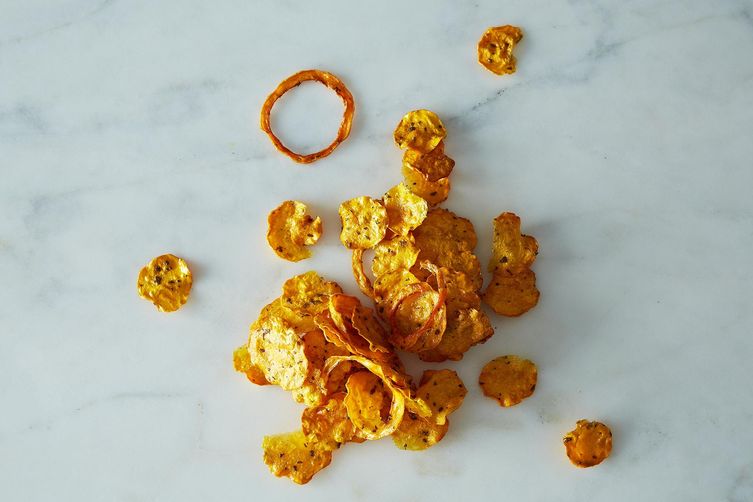
Lemon Verbena Syrup & Limeade

Lemon Verbena Syrup & Limeade

Lemon Verbena Syrup

This beautiful syrup is the perfect introduction to the allure of lemon verbena.

2 C. water
1½ C. sugar
handful fresh lemon verbena leaves

In a small saucepan, combine water and sugar. Bring to a boil, whisking occasionally to dissolve the sugar crystals. If sugar doesn’t fully dissolved by the time the syrup boils, lower the heat, continue cooking until syrup clears, and then bring back to a boil. Remove from the heat. Stir in lemon verbena leaves, cover the pan, and let steep for at least 30 minutes. When steeping is complete, remove lemon verbena leaves from the syrup and discard. Decant syrup into a glass container and store in the fridge for up to a week. You can also freeze it.
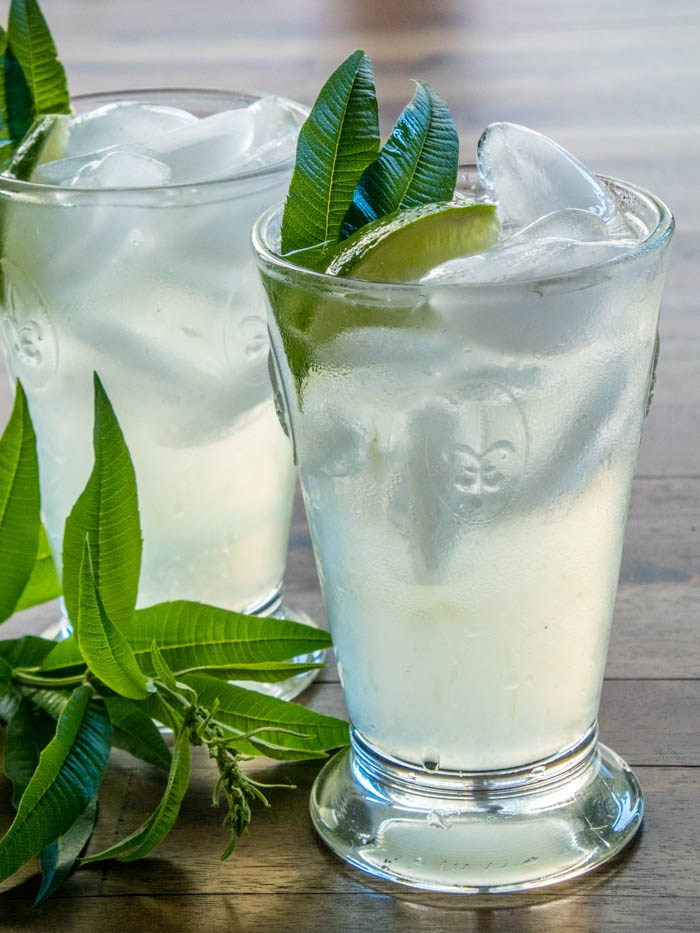
Lemon Verbena Limeade

1 C. cold water or soda water
½ C. Lemon Verbena Syrup
¼ C. fresh lime juice
ice
2 tips or 4 leaves of lemon verbena
2 wedges of lime

Fill two 12-oz. glasses with ice. In a small pitcher or 2-C. measuring C. with a pouring spout, add water, Lemon Verbena Syrup, and lime juice. Stir to combine. Divide limeade between the two glassed and garnish each with lemon verbena and a lime wedge.

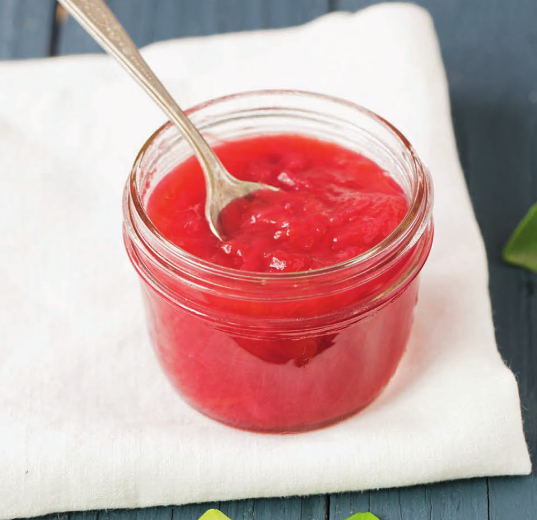
Spicy Pickled Rhubarb

Spicy Pickled Rhubarb

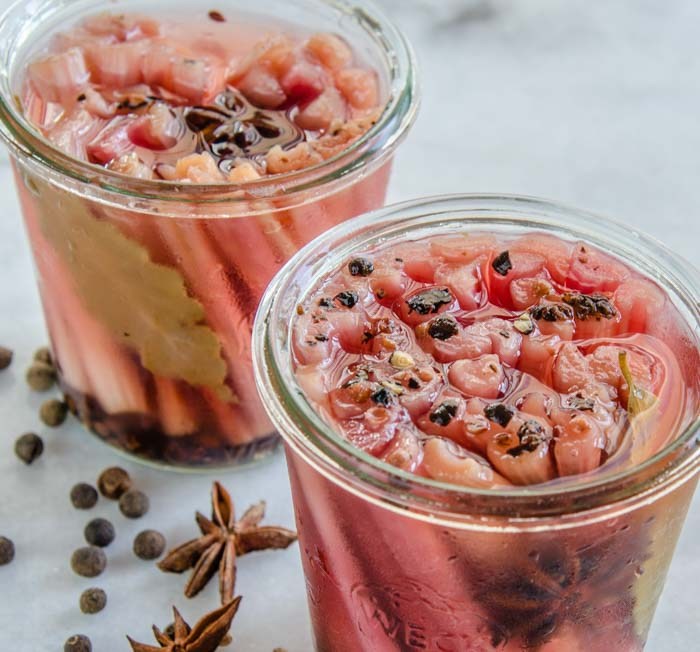
This spicy, sweet-tart pickled rhubarb is infused with the flavors and aromas of juniper, allspice, coriander, black pepper, bay leaf, and star anise. Perfect as an accompaniment to roast pork or chicken, as a topping for goat cheese-slathered crostini, or even with creamy desserts, such as panna cotta or custard.

Testing Note In testing the source recipe, I found that the amount of syrup specified fills two 1¼-C. (290 ml./9.8 fl. oz.) canning jars, rather than two 2-C. canning jars as indicated. It worked perfectly for my small Weck canning jars. Technique Note To crush spices, seal them in a Ziplock bag, and crush with a few light whacks of a mallet.

1 C. rice vinegar
1 C. water ½ C. sugar
½ tsp. fine sea salt

1 tsp. juniper berries, lightly crushed
1 tsp. allspice berries, lightly crushed
1 tsp. coriander seeds, lightly crushed
½ tsp. black peppercorns, lightly crushed
1 small dried red chile (or pinch red pepper flakes)
2 small dried bay leaves
2 star anise

12 oz., ¾-inch thick (or thinner) trimmed rhubarb stalks, cut into 3-inch lengths, or 1-inch shorter than canning jars (peel, and halve or quarter thicker stalks)

Pack prepared rhubarb snugly into two 1¼-C. canning jars. Reserve. Set a small saucepan over medium heat, and add vinegar, water, sugar, and salt. Heat below the simmer until syrup clears, 3-5 minutes. Add juniper, allspice, coriander, peppercorns, chile, bay leaf, and star anise. Bring to a boil, and simmer for 5 minutes. Remove from heat, and distribute syrup with spices between the two canning jars. Cover the jars and refrigerate for 1 to 8 weeks before serving. Serve whole or sliced or chunked. Fills two 9.8 fl. oz. canning jars (Weck 900–1/5 L Mold Jar–tall)

Butter Spread for Toast

Butter Spread for Toast

Butter Spread for Toast


2 tsp. Butter Powder

2 tsp. Water

2 tsp. Neutral Flavored Oil

Pinch of Salt


Mix water into butter powder to hydrate it. Add the oil and a pinch of salt and mix until creamy.

Pantry Stable “Roux” Base

Pantry Stable “Roux” Base

Pantry Stable “Roux” Base


2 C. Milk Powder (not instant nonfat dry milk)

1 C. Butter Powder

1 C. Flour


Whisk to combine, store in a mason jar in pantry. To make white sauce, mix ½ C. mix with 1 C. water in a small saucepan. Cook over medium heat, stirring constantly, until sauce is thickened. Replace water with pan drippings or meat stock/broth for a gravy. To replace a can of “Cream of X soup” in a recipe, mix a C. the mix with 1 ¼ C. water. Add dehydrated celery, mushroom, onion, and/or chicken bouillon to match the type of Cream soup you need. Cook over medium heat, stirring, until thickened.

No Pectin Blueberry Maple Jam

No Pectin Blueberry Maple Jam

No Pectin Blueberry Maple Jam


All of that is a very long way to say that this jam can be runny. It’s relatively low sugar, doesn’t have added pectin and adds maple syrup. All of that generally leads to a very, very loose set – but something that really tastes of its ingredients, of the area and isn’t overtly sweet. This tastes like its core ingredients – wild blueberries and maple syrup.


This is a great ingredient for baking, pancakes, ice cream, smoothies or, my favorite use, as a cheese topping for goat cheese (chevre). It’s mad-good with cheese.


Ingredients

6 C. Blueberries

3 C. Brown Sugar

1 C. Maple Syrup

1/3 C. Bottled Lemon Juice (use the bottled stuff to be sure of the acidity).


Place berries in a wide pan. Crush berries with a potato masher. Add lemon, sugar and syrup, stir well. Let rest for an hour. Bring to a simmer over medium heat. Stir frequently until jam is set – about 20 minutes after it starts boiling. Skim foam, pour into sterilized 1-C. (half-pint or 250 ml) jars and process in a hot water bath for 10 minutes. This is a magical taste of late summer and something I just simply adore.

Blueberry Maple Jam with Lemon

Blueberry Maple Jam with Lemon

Blueberry Maple Jam with Lemon


6 C. blueberries

3 C. brown sugar, lightly packed

Peels and cores (seeds included) of 3 apples

1 cinnamon stick

1 C. maple syrup

â…“ C. bottled lemon juice

1T.lemon zest, finely grated


Place the berries in a large pot, crush them lightly, and add the sugar. Stir to mix, cover, and rest for 1– 4 hours on the counter. Place the apple peels and cores and the cinnamon stick inside the cheesecloth to make a teabag. Place the teabag in a large pot with the blueberries, maple syrup, lemon juice, and lemon zest. Prepare your canning pot and rack, and sterilize your jars and lids Bring the fruit to a simmer over medium heat, skimming off any foam that appears. Cook until set, at least 20 minutes. Remove the teabag from the jam. Remove the jars from the canner and turn the heat to high. Using a funnel, pour the jam into the jars. Wipe the rims of the jars, apply the lids, and process for 10 minutes. Remove the jars and allow them to cool.

Spiced Rhubarb Chutney

Spiced Rhubarb Chutney

Spiced Rhubarb Chutney


This russet-red chutney is sweet, tart, spicy, and addictively delicious. I especially love it with Seeded Bread Crisps topped with a creamy brie or fresh chevre, or as an accompaniment to a savory cheesecake.


1 C. white balsamic vinegar

1 C. sugar

2 cinnamon sticks, broken with a mallet

2 tsp. cardamom pods, broken with a mallet

2 tsp. coarsely crushed black peppercorns

2 tsp. whole cloves

1 tsp. anise seeds

zest of 1 large orange


3 C. (14 oz.), trimmed, sliced rhubarb

½ C. plump raisins


½ tsp. vanilla


In a medium saucepan, combine vinegar and sugar, and bring to a simmer, whisking constantly to dissolve the sugar. Add the cinnamon, cardamom, peppercorns, cloves, anise seeds, and orange zest. Cover the pan tightly and macerate for at least 1 hour. Strain the liquid through a triple-mesh sieve into a clean saucepan. Discard the spent spices. Reheat the liquid and add the rhubarb and raisins. Bring to a slow simmer. Simmer slowly, stirring frequently, until the sauce thickens and the liquid reduces by half, about 10 minutes. Remove from the heat, and stir in the vanilla. Let cool, put into a storage container, cover, and refrigerate until cold.

Strawberry Lemon Lavender Honey Jam

Strawberry Lemon Lavender Honey Jam

Strawberry Lemon Lavender Honey Jam


1 lemon, zest and juice

4 C. sliced strawberries

3 T. Dutch Jell All Natural Lite pectin

12 heads of lavender, tied in a bundle.

1 1/2 C. mild honey


Put the lemon juice, lemon zest, berries, lavender, and pectin in a pot. (You can stir with the lavender bundle.) Bring to hard rolling boil. Boil for 1 minute. Remove the lavender bundle. Add honey. Bring to rolling boil and boil for 1 minute. Ladle into jars. BWB 10 minutes. Makes five 8-oz. jars. Notes: If you don’t want the odd lavender flower falling off into the jam, you can strip the flowers off and put them in a tea ball to steep in the jam as it cooks. I found it easier to just use the bundle to stir with as much as I could, then I switched to a spoon when I needed a stronger stirrer.


About the pectin: I’ve been using bulk pectin this year from my local Amish store. You can probably use 1 pkg / 3 T. Ball pectin as well or Sure-Jell. Keep in mind that strawberries often take more pectin than other fruit.

Hawaiian Jam

Hawaiian Jam

Hawaiian Jam

8 Peaches, peeled

3 lg Oranges

Pulp of 1 med. cantaloupe

1 Lemon

1 (8 1/2 oz.) can crushed Pineapple

Sugar


Chop all ingredients fine. Put oranges through food processor. Combine all with 3/4 C. sugar for every 1 C. of fruit. Mix well and let stand overnight. Next morning, gently cook mixture 1 hour, stirring frequently. Pour into hot jars and seal. Makes 8 pints.

Berry Christmas Jam

Berry Christmas Jam

Berry Christmas Jam


3 C. Fresh cranberries

1 md Seedless orange, peeled and quartered

1 pkg. (10 oz.) frozen sliced strawberries, slightly thawed

1/4 tsp. Ground cloves

1/4 tsp. Ground cinnamon

4 C. Sugar

1/2 C. Water

1 Pouch (3 oz.) liquid fruit pectin


In a food processor, combine the cranberries and orange quarters; process until coarsely chopped. Add strawberries, cloves and cinnamon; process until mixture is finely chopped. In a heavy large saucepan, combine fruit mixture, sugar and water until well blended. Stirring constantly over low heat, cook two minutes. Increase heat to high and bring mixture to a rolling boil. Stir in liquid pectin. Stirring constantly, bring to a rolling boil again and boil one minute. Remove from heat; skim off foam. Pour into heat resistant jars with lids. Makes about 3 pints of jam.

Pepper-Pear Chutney

Pepper-Pear Chutney

5 Bartlett pears, peeled and cut into 1/2-inch cubes (about 5 C.)
2 red bell peppers, seeded and finely chopped (about 1 1/2 C.)
1 lemon, seeded and finely diced
2 1/4 C. packed dark brown sugar
1 1/2 C. dried currants
1 C. apple cider vinegar
1/4 C. finely diced fresh ginger
1 garlic clove, minced
1 heaping tsp. salt
1/4 tsp. cayenne pepper

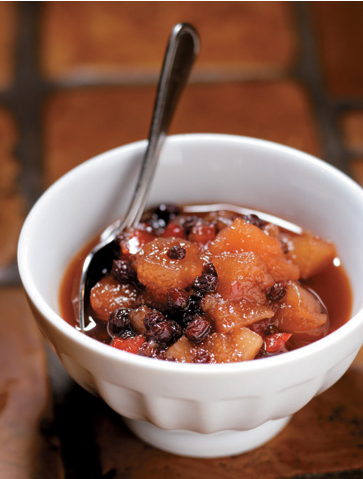
Makes about 6 C.. Combine the pears, bell peppers, lemon, sugar, currants, vinegar, ginger, garlic, salt, and cayenne in a large saucepan. Simmer uncovered over low heat, stirring frequently, until the chutney has thickened and the pears have softened but still hold their shape, about 1 hour. Transfer the chutney to an airtight container and let cool to room temperature. Stored in an airtight container in the refrigerator, the chutney will keep for 1 month.

Chiles Jalapenos en Escabeche (pickled Jalapeno Chiles)

Chiles Jalapenos en Escabeche (pickled Jalapeno Chiles)

¼ C. Canola Oil
½ lb. Carrots, peeled and sliced on the bias
1 lb. Jalapeno Chiles (do not remove seeds), sliced into strips
1 White Onion, quartered and sliced
30 cloves Garlic
6 Whole Allspice
10 Black Peppercorns
4 whole Cloves
3 sprigs Thyme
3 springs Marjoram
2 C. White Distilled Vinegar
1 C. Water
Salt, to taste

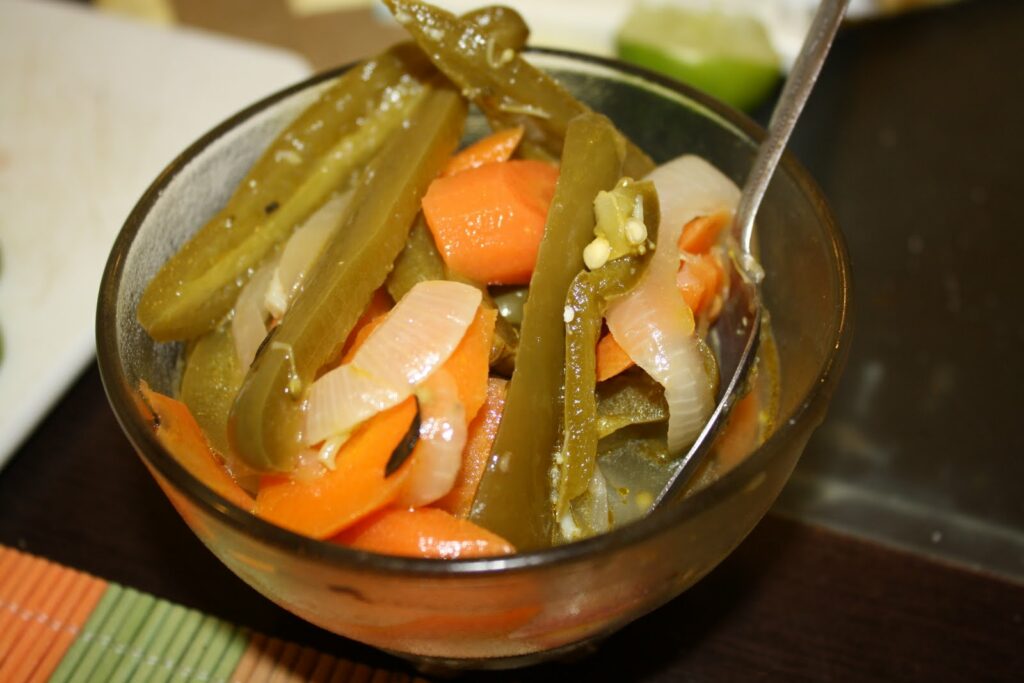
Heat the oil in a large non-reactive pot or Dutch oven. Add the carrots and sauté for 8 minutes or until soft. Add the sliced chiles and sauté for 3 minutes. Add the onion and sauté for 2 minutes. Add the remaining ingredients and bring to a simmer. Cook the escabeche on low heat for 10 minutes. Season with salt. Remove from the heat and cool. Place the escabeche in a sterilized glass container with a tight-fitting lid and refrigerate. Marinate the escabeche for at least 24 hours prior to serving. These will last up to 4 weeks in the refrigerator.

Sweet & Spicy Sauce

Sweet & Spicy Sauce

Drizzle this sweet and spicy sauce over grilled burgers, open-faced barbecue sandwiches or use as a basting sauce for grilled poultry or pork.

3/4 C. ketchup
1/2 C. orange juice
1/4 C. Worcestershire
1/4 C. raisins
1 T. minced fresh ginger
1 T. minced garlic
2 T. lime juice
1/2 tsp. cayenne

In a 1 1/2- to 2-quart pan, combine 3/4 C. ketchup, 1/2 C. orange juice, 1/4 C. Worcestershire, 1/4 C. raisins, 1 T. minced fresh ginger, 1 T. minced garlic, 2 T. lime juice, and 1/2 tsp. cayenne. Bring to a simmer over medium heat, then reduce heat so mixture barely simmers and cook, uncovered, stirring often, until sauce is thick and reduced to 1 C., 25 to 30 minutes. Whirl mixture in a blender until smooth. Serve warm or cool. Chill airtight up to 2 weeks

SpicySweet Pickled Ramps

SpicySweet Pickled Ramps

12 oz. ramps with greens (about 3 bunches)
3 C. cider vinegar (5% acidity)
2 tsp. pure kosher salt
1/2 C. sugar
2 tsp. fennel seeds
2 tsp. yellow mustard seeds
1 tsp. whole black peppercorns
1 tsp. hot pepper flakes, or more to taste

Prepare for water-bath canning: Wash the jars, keep them hot in the canning pot, and put the flat lids in a bowl. Wash the ramps well and trim off any damaged leaves. Cut the tops off so that the bulb ends will fit upright in your canning jar with 1/2 inch headspace at the top. Arrange the leafy tops into four stacks. In a saucepan, bring the vinegar, 1 C. water, the salt, sugar, and spices to a boil over high heat, stirring to dissolve the salt and sugar. Using a jar lifter, remove the hot jars from the canning pot, carefully pouring the water from each one back into the pot, and place them upright on a folded towel. Working quickly, pack the ramp bulbs into one of the hot jars. Roll up each stack of leaves and stuff two rolls into each of the other two hot jars. Ladle the hot vinegar mixture into all the jars, leaving 1/2 inch headspace. Use a chopstick to remove air bubbles around the inside of each jar. Use a damp paper towel to wipe the rims of the jars, then put a flat lid and ring on each jar, adjusting the ring so that it’s just finger-tight. Return the jars to the water in the canning pot, making sure the water covers the jars by at least 1 inch. Bring to a boil, and boil for 10 minutes to process. Remove the jars to a folded towel and do not disturb for 12 hours. After 1 hour, check that the lids have sealed by pressing down on the center of each; if it can be pushed down, it hasn’t sealed, and the jar should be reprocessed or refrigerated immediately. Label the sealed jars and store.

Basic Creole Spice Blend

Basic Creole Spice Blend

2 T. celery salt
1 T. sweet paprika
1 T. coarse sea salt
1 T. freshly ground black pepper
1 T. garlic powder
1 T. onion powder
2 tsp. cayenne pepper
½ tsp. ground allspice

Mix together all spices in a bowl. Transfer the spices to a clean container with a tight-fitting lid. Store up to six months.

Creamy Sesame Ginger Dressing

Creamy Sesame Ginger Dressing

This creamy, kicky Asian-inspired dressing is a knockout.

¼ C. vegetable oil
2 tsp. rice wine vinegar
2 tsp. C. wildflower honey
2 tsp. mayonnaise
2 tsp. sesame oil
1 tsp. peeled, minced fresh ginger
2 tsp. peeled, minced garlic
1 tsp. Korean fermented red bean paste, optional
½ tsp. fine sea salt
Freshly ground black pepper, to taste

In a small mixing bowl, whisk together all of the ingredients. Taste for balance, and add vinegar, honey, salt, and pepper to taste.

LunaCafe Umami Pesto

LunaCafe Umami Pesto

This carefully balanced umami pesto has magical powers. It enhances without diminishing other flavors, adding depth and fullness to a dish when needed. So far, I‘ve swirled generous amounts of it into carrot soup, added it to the dressing for a salmon and pasta salad, combined it with cream cheese for an appetizer spread, and spread it under the skin for a succulent roast chicken.

1½ C. shredded Parmesan
1 C. pitted Calamata olives
½ C. sun-dried tomatoes, packed in oil
½ C. roasted red bell pepper, peeled (homemade or store-bought)
4 large cloves garlic, peeled

10 tsp. best quality tomato paste (6-oz. can)
½ C. cold pressed, extra virgin olive oil

2 tsp. balsamic vinegar
2 tsp. red wine vinegar
2 tsp. powdered, dried porcini mushrooms
1 tsp. hot, smoked paprika

1½ tsp. fine sea salt, plus more to taste
freshly ground smoked black pepper, to taste (or regular black pepper)

In a processor fitted with the steel blade, add Parmesan, olives, tomato paste, sun-dried tomatoes, red bell pepper, and garlic, and pulse to chop the ingredients coarsely. Then, process to a paste. Add the tomato paste and olive oil and process to incorporate. Add the balsamic vinegar, red wine vinegar, powdered porcini mushrooms, smoked paprika, sand salt. Process to incorporate. Taste the pesto and add salt and pepper to taste, plus additional vinegar if necessary to achieve a perfect balance of savory, salty, and acidic. You will also notice a subtle sweetness, which is lent by the balsamic vinegar. To store, put into an airtight container and refrigerate. The pesto will keep for several days at least. You can also freeze it, in which case, line an edged baking sheet with foil and drop 2 tsp. blobs of pesto on the foil. Freeze and then transfer the pesto blobs to Ziploc freezer bags for continued storage.

Tropea Onion Jam

Tropea Onion Jam

1 pound (454 g) Tropea or other red onions, cut into small dice
2 C. (400 g) sugar
1 C. (237 g) Sangiovese or other sturdy red wine
1/2 to 3/4 tsp. kosher or fine sea salt
10 whole peppercorns
1 whole clove
1 bay leaf
1-inch piece vanilla bean
1/2 cinnamon stick
2 T. red wine vinegar

4-inch square of cheesecloth and a length of kitchen twine
Instant-read thermometer (optional)
2 sterilized 1/2-pint jars and 1 sterilized 4-oz. jar, and their lids
Basic water-bath canning equipment

Combine the onions, sugar, wine, and salt in a wide, heavy-bottomed saucepan. Use the cheesecloth to make a sachet for the peppercorns, clove, bay leaf, vanilla bean, and cinnamon stick and tie it up with the kitchen twine. Put the sachet in the pot with the other ingredients. Bring the onion mixture to a boil over medium heat, stirring to dissolve the sugar. Cook at a simmer, stirring often, until the jam has thickened and reaches 220 to 225°F and you can drag a path along the bottom of the pot with a silicone spatula, about 20 minutes. Stir in the vinegar and remove from the heat. 3 • Ladle the jam into jars, leaving 1/4 inch headspace. Wipe the rims with a clean, damp cloth, if necessary, and screw the lids on the jars. Process in a boiling-water bath for 10 minutes. Remove the jars and set them upright on a clean kitchen towel. Let cool to room temperature before storing in a cool, dark place for up to 1 year. Refrigerate once opened, and use within 6 months. If any jars have failed to seal properly, store them in the refrigerator and enjoy those first.