Browsed by
Tag: PNW

Fritto Misto of Ramps, Asparagus, Fiddleheads with Citrus Mint Aioli

Fritto Misto of Ramps, Asparagus, Fiddleheads with Citrus Mint Aioli
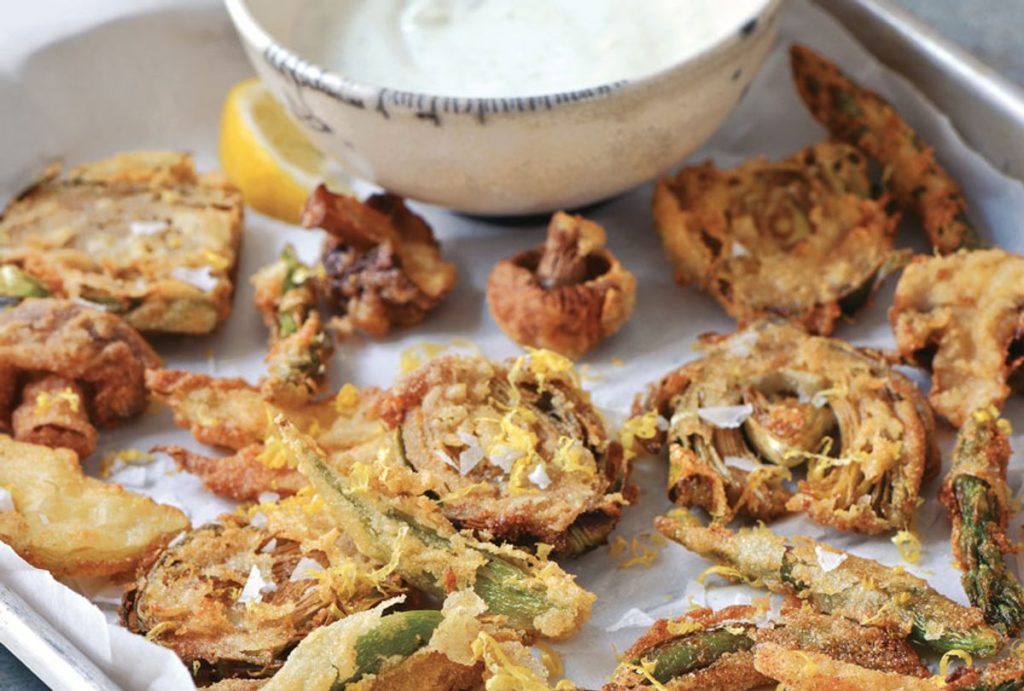
Fritto Misto of Ramps, Asparagus, Fiddleheads with Citrus Mint Aioli

4 C. canola oil

2 C. all-purpose flour

¼ cup cornstarch

1 tsp. baking soda

1 tsp. baking powder

1 tsp. salt

Zest of 1 lemon

Zest of 1 lime

½- 1 cup ice cold club soda, diluted with 2 T. lemon juice

1 ½ to 2 pounds mixed fiddleheads, ramps (or green onions) and asparagus, cleaned and dried

Maldon salt, to season

Citrus Mint Aioli, to serve (recipe follows)


Place the oil in a 6- to 8-quart pot and heat it to 375˚F. In a large bowl, sift together the all-purpose flour, cornstarch, baking soda, and baking powder. Add salt and citrus zest and mix well. Slowly add in water or club soda until the consistency is like a loose pancake batter. Once the oil has come to temperature, working with a few pieces of the vegetables at a time, dip them into the batter, coating them well and letting the excess drip off, before adding to hot oil. Working in batches, place vegetables in oil, being careful not to overcrowd the pot and fry until golden brown, 2 to 3 minutes. Using a slotted spoon, remove the vegetables and place on a paper towel-lined baking sheet. Sprinkle with maldon salt. Hold in a warm place while frying the rest of the vegetables. Be sure to bring the oil back up to temperature before adding the next batch. Serve warm with the citrus mint aioli.


Citrus Mint Aioli


2 cloves garlic, chopped

1 tsp. kosher salt

1 large egg

1 large egg yolk

¼ cup fresh mint, chopped

Juice and zest of 1 lemon

Juice and zest of 1 lime

½ cup canola oil

½ cup extra virgin olive oil


Place garlic, salt, egg and egg yolk in a blender and blend until smooth. Add mint and combine. Slowly stream in half the oil and then add citrus juice and zest and then continue to add the rest of the oil until thick and emulsified. Adjust with salt, if needed. Serve with fritto misto.
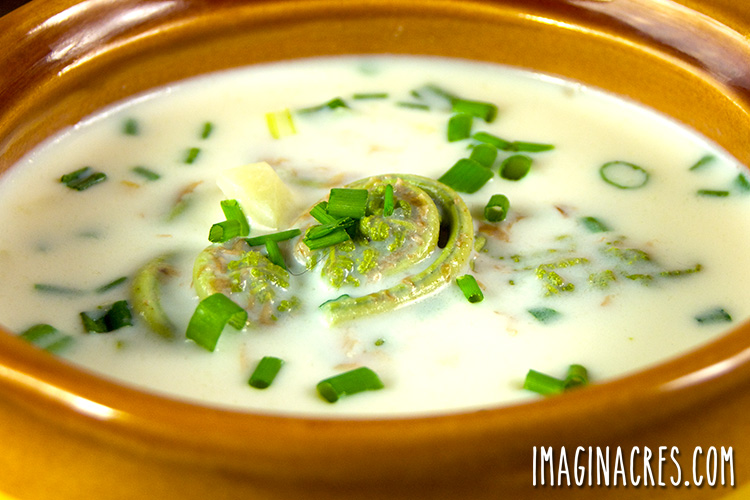
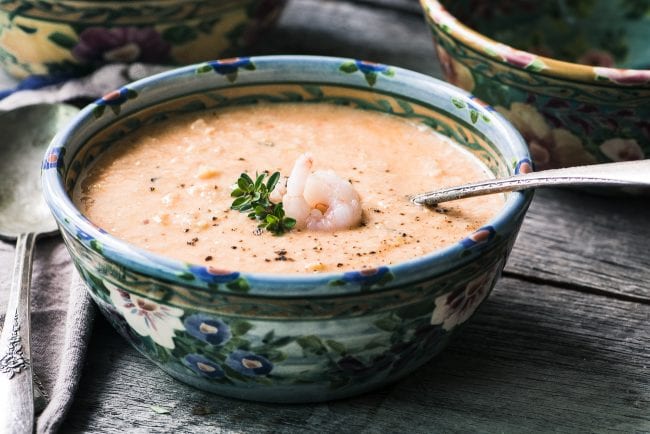
Fiddlehead & Mussel Soup

Fiddlehead & Mussel Soup

Fiddlehead & Mussel Soup

4 T. Butter

¼ C. thinly sliced Shallots

1 T. thinly Sliced Garlic

1 fresh Thyme Sprig

1 Bay Leaf

3 lb. Mussels, washed and debearded

½ C. dry White Wine

1 C. Chicken Broth


Place the butter in a large pot over medium-low heat. When the butter is melted and bubbling, add the shallots and garlic. Cook, stirring occasionally, for 3 to 4 minutes, or until the shallots and garlic are translucent. Add the thyme and bay leaf and cook for 1 more minute. Add the mussels, stirring to coat them evenly with the butter. Cook, uncovered, for 2 minutes. Add the white wine, turn up the heat to medium high, and bring to a boil. Cook for 2 minutes to bum off the alcohol, then add the chicken broth. Bring the mixture back to a boil, cover the pot, and turn down the heat to low. Steam the mussels until the shells open and the flesh is plump and full, about 5 minutes. Discard any that do not open. Drain the mussels and their cooking liquid through a colander into a large pot or bowl. You should have between 2 and 3 C. of liquid. Let the mussels cool in the colander. When the mussels are cool, remove the meat from the shells. Discard the shells and set aside the mussels in a cool place until ready to use.


4 T. (/2 stick) unsalted butter

1/4 cup thinly sliced shallots (1 large or 2 medium)

1 T. thinly sliced garlic

1 1/4 pounds ostrich fern fiddleheads, cleaned

Reserved mussels cooking liquid (above)

1 1/2 C. heavy cream

1/4 tsp. finely chopped fresh rosemary or 1/3 tsp. dried

1/8 tsp. cayenne pepper

2 tsp. fresh lemon juice

2 tsp. kosher salt

4 grinds of white pepper (1/8 tsp.)

1 T. finely minced fresh chives


Heat the butter in a large pot over low heat. When the butter is melted and bubbling, add the shallots and garlic. Cook, stirring occasionally, until the shallots and garlic are tender and translucent, about 4 minutes. Add the fiddleheads. Cook, stirring occasionally, for 2 minutes. Add the mussel cooking liquid and bring to a boil. Turn down the heat to low and simmer for 5 minutes. Stir in the cream, bring back to a boil, then turn down the heat and simmer for 5 to 6 more minutes. Remove the pot from the stove and remove the fiddleheads with a slotted spoon or strainer. Set aside /4 cup fiddleheads. Place the remaining fiddleheads in a blender and add half the soup. Puree until smooth, 3 to 4 minutes. Add the remaining soup and, starting on low, blend briefly to combine. Add the rosemary, cayenne pepper, lemon juice, salt, and white pepper and blend briefly to incorporate. Return the soup to a clean pot. Heat the soup just to a boil, whisking occasionally. Place the mussels and reserved fiddleheads in a small pot, ladle in a small amount of the soup, and place over low heat. When hot, divide the mussels and fiddleheads among 4 to 6 soup bowls and ladle in the soup. Garnish with the chives.

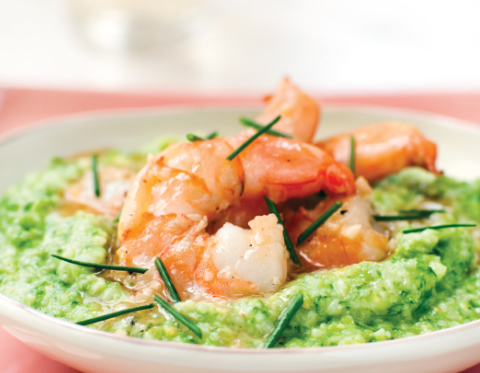
Ramp & Shrimp Grits

Ramp & Shrimp Grits

Ramp & Shrimp Grits

1 lb. Shrimp, shell on

¼ C. dry White Wine

1 Shallot, thinly sliced

1 ½ tsp. Salt

1 C. Quick-Cooking Grits

4 T. Butter

¼ tsp. Pepper

4 cloves Garlic, minced

2 tsp. Lemon Juice

½ C. Ramp Pesto

2 T. crème fraîche

2 T. fresh Chive, sliced in ½” pieces


Peel and devein the shrimp, saving the shells. Place the shrimp shells in a medium saucepan. Add the white wine, shallot, and 4 C. cold water. Bring to a boil, then turn down the heat to a bubbling simmer and cook for 20 minutes. Turn off the heat and let the shells steep in the liquid for 10 minutes. Strain the liquid into a 4-cup measuring cup and discard the shells. Add enough cold water to make 4 C. Place in a medium saucepan over medium-high heat, add 1 tsp. of the salt, and bring to a boil. Whisk in the grits, bring to a boil, then cover and cook over very low heat, stirring occasionally, for 8 to 10 minutes, or until creamy. Hold in a warm place while you cook the shrimp.  Place the butter in a large sauté pan over medium-high heat. When the butter is melted and bubbling, add the shrimp, the remaining 1/2 tsp. salt, and the pepper. Toss the shrimp in the butter and cook, stirring occasionally, until the shrimp are just pink. Add the garlic and finish cooking, another 2 to 3 minutes. Stir in the lemon juice. Stir the ramp pesto into the grits, then stir in the creme fraiche. Divide the grits among 4 to 6 bowls and top with the shrimp. Garnish with the chives.

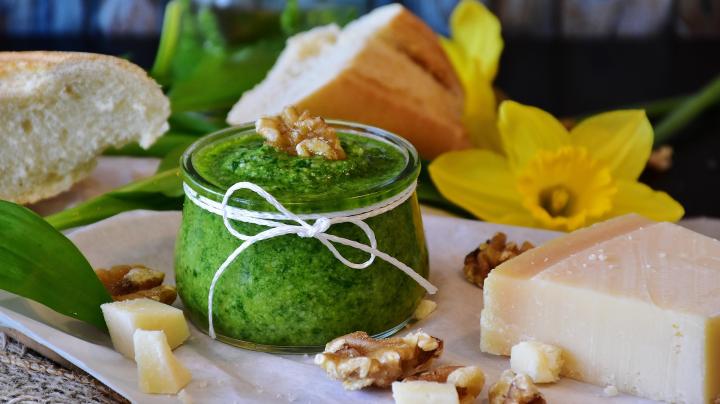
Wild Ramp Pesto

Wild Ramp Pesto

Wild Ramp Pesto

1 bunch (about 6 ounces) ramps

½ cup walnuts (toasted in a skillet for 5 minutes until golden)

½ cup grated Parmigiano-Reggiano cheese

½ tsp. kosher salt to taste

⅓ cup extra virgin olive oil (or ½ cup—you kind of have to eyeball it)

Squirt of lemon juice

½ cup flat-leaf parsley (optional)


Wash ramps throughly and cut off the leaves of the ramps. Chop the ramp leaves and walnuts just a bit and put them in your food processor. (Optional: add parsley.) Add most of the cheese (save a sprinkle for serving) plus salt. Pouring the olive oil in slowly, process contents until they combine and look, well … pesto-y. Taste for seasoning and add a good squirt of lemon juice. Served as a side with warm pita and bulgur with butternut squash and chard

Sautéed Razor Clams with Hazelnut Lemon Sauce

Sautéed Razor Clams with Hazelnut Lemon Sauce

Sautéed Razor Clams with Hazelnut Lemon Sauce


¼ C. flour

Salt and freshly ground black pepper

4 razor clams, shucked and cleaned (about 5 ounces)

2 T. olive oil

½ C. pinot gris or other dry white wine

½ tsp. freshly squeezed lemon juice

2 T. toasted, chopped hazelnuts

1 T. minced shallot

¼ C. unsalted butter, cut into pieces and chilled

1 T. minced flat-leaf (Italian) parsley

Flat-leaf (Italian) parsley sprigs, for garnish


MIX THE FLOUR with a pinch each of salt and pepper on a plate. Dredge the clams in the flour, patting to remove excess. HEAT THE OIL in a medium skillet over medium-high heat. Add the clams and sauté until golden brown, about 30 seconds on each side; do not overcook. Transfer the clams to a plate and keep warm. ADD THE WINE and lemon juice to the skillet, stirring to dissolve flavorful bits. Boil to reduce slightly, about 1 minute. Add the hazelnuts and shallot and cook for 30 seconds longer. Whisk in the cold butter until it has melted and the sauce has a rich consistency. Stir in the parsley, adding salt and pepper to taste. ARRANGE THE CLAMS on a warm serving platter or individual plates, pour the sauce over them, and garnish with sprigs of parsley. Serve immediately.

Northwest Forest Mushroom and Oregon Hazelnut Strudel

Northwest Forest Mushroom and Oregon Hazelnut Strudel

Northwest Forest Mushroom and Oregon Hazelnut Strudel

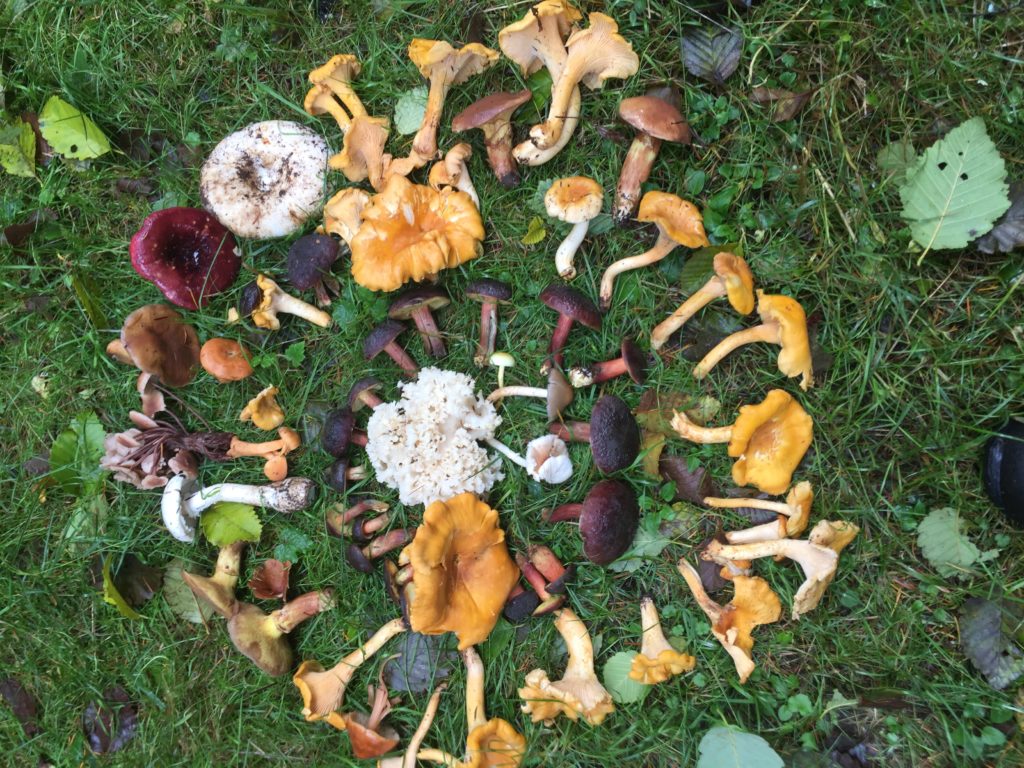
1 pound assorted forest mushrooms

2 tsp. shallots, minced

2 tsp. garlic, minced

3 T. butter

1 T. lemon juice

3 T. dry sherry

4 tsp. white wine

1 cup heavy cream

2 1/4 cup hazelnuts, toasted and coarsely chopped.

1 cup freshly grated Parmesan cheese

1/4 tsp. salt

1/4 tsp. black pepper


¾ C. lukewarm water

1 large egg. Beaten

¼ tsp. white Vinegar

2 ½ C. Bread Flour

¾ tsp. Salt

2 T. melted Butter


Prepare the strudel dough. Combine the water, egg. salt and vinegar mixing well. Place the flour in a mixing bowl, add half of the liquid and mix a few seconds. ADD remaining liquid and continue to mix until smooth, about I minute. Add the melted butter, mix until blended. Knead the dough slightly by hand to check for consistency. Coat with a drop of oil and place In a covered bowl. Allow the dough to sit at room temperature for 30 minutes before using. Combine 1/4 cup toasted hazelnuts and ¼ cup grated Parmesan cheese. Reserve this mixture to use in rolling the strudel. Mince the assorted mushrooms. Sauté the shallots and garlic in butter until lightly toasted. Add the mushrooms and lemon juice, continue to cook until the liquid from the mushrooms has evaporated.  ADD the white wine and sherry to the hot pan and stir into the mushrooms. ADD the cream, salt and pepper. Reduce the liquid by half and add the remaining cheese and hazelnuts. PLACE in a shallow pan to cool. STRETCH the strudel dough. Butter lightly with drawn butter. PLACE the cooled filling at one end of the dough and roll as per all strudel preparations, brushing each turn of dough with drawn butter and sprinkling with the reserved hazelnut/ Parmesan mixture. BAKE at 400* F for approximately 25 minutes. COOL slightly before slicing.

Bay House Creamy Onion Soup with Bay Shrimp

Bay House Creamy Onion Soup with Bay Shrimp

Bay House Creamy Onion Soup with Bay Shrimp

This soup was on the menu of The Bay House in Lincoln City for many years. It’s good any time of the year but especially good during Walla Walla sweet onion season, which coincides perfectly with the local bay shrimp season.


1/4 cup olive oil

4 pounds sweet onions, peeled and finely chopped (about 16 cups)

3 T. white basmati rice

1/4 cup white wine

2 cups clam juice

1 tsp. dried thyme

1/4 cup marsala wine

Salt and freshly ground black pepper

2 cups whipping cream

8 ounces tiny cooked shrimp

Fresh thyme leaves, for garnish


In a large pot, heat the oil over medium heat. Add the onion and sauté until caramelized (golden brown), about 25 to 35 minutes.  Stir in the rice, white wine, clam juice, dried thyme, marsala, salt and pepper. Bring to a boil, reduce heat and simmer gently for about 30 minutes or until the rice is very tender, stirring occasionally. Transfer the onion mixture, in small batches, to a food processor (no more than a third full). Carefully pulse a few times and then purée until smooth. Return to pot and stir in cream. Reheat over medium heat until hot.  To serve, place about 2 T. shrimp in each bowl and fill with hot soup. Garnish with fresh thyme leaves. Serve hot.

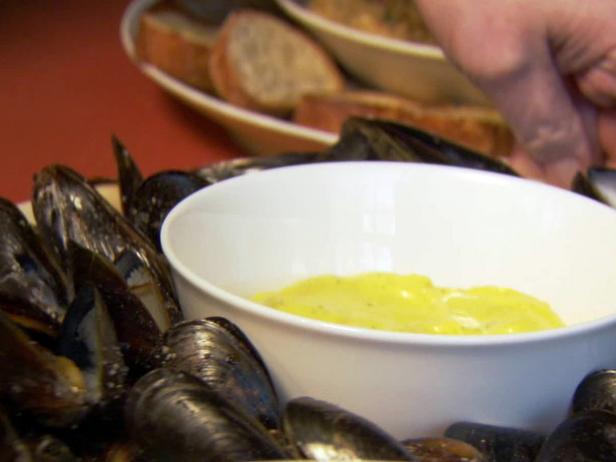
Mussels with Saffron Mayo

Mussels with Saffron Mayo


Mussels with Saffron Mayo


1/2 tsp. saffron threads

2/3 cup good mayonnaise, such as Best Food’s

1 tsp. grated lemon zest

1 T. freshly squeezed lemon juice

1 tsp. Dijon mustard

Kosher salt and freshly ground black pepper


3/4 tsp.. fleur de sel or sea salt

1 1/2 pounds mussels, cleaned

1/3 cup dry white wine


For the mayonnaise, soak the saffron in 1 T. of hot water in a small bowl for 5 minutes. Whisk in the mayonnaise, lemon zest, lemon juice, mustard, 1/2 tsp. kosher salt, and 1/4 tsp. pepper and refrigerate until ready to use. For the mussels, combine the fleur de sel and 1/2 tsp. pepper and set aside. Heat a large, dry (12-inch) cast iron skillet over high heat for 4 to 5 minutes, until very hot. Add the mussels in a single layer and cook them for one minute, until they start to open. Add the wine and continue cooking for 2 to 3 minutes, until the mussels are fully opened and just cooked. (Discard any that don’t open.) Off the heat, sprinkle the mussels generously with the salt and pepper mixture. Serve hot from the skillet with individual bowls of saffron mayonnaise for dipping.

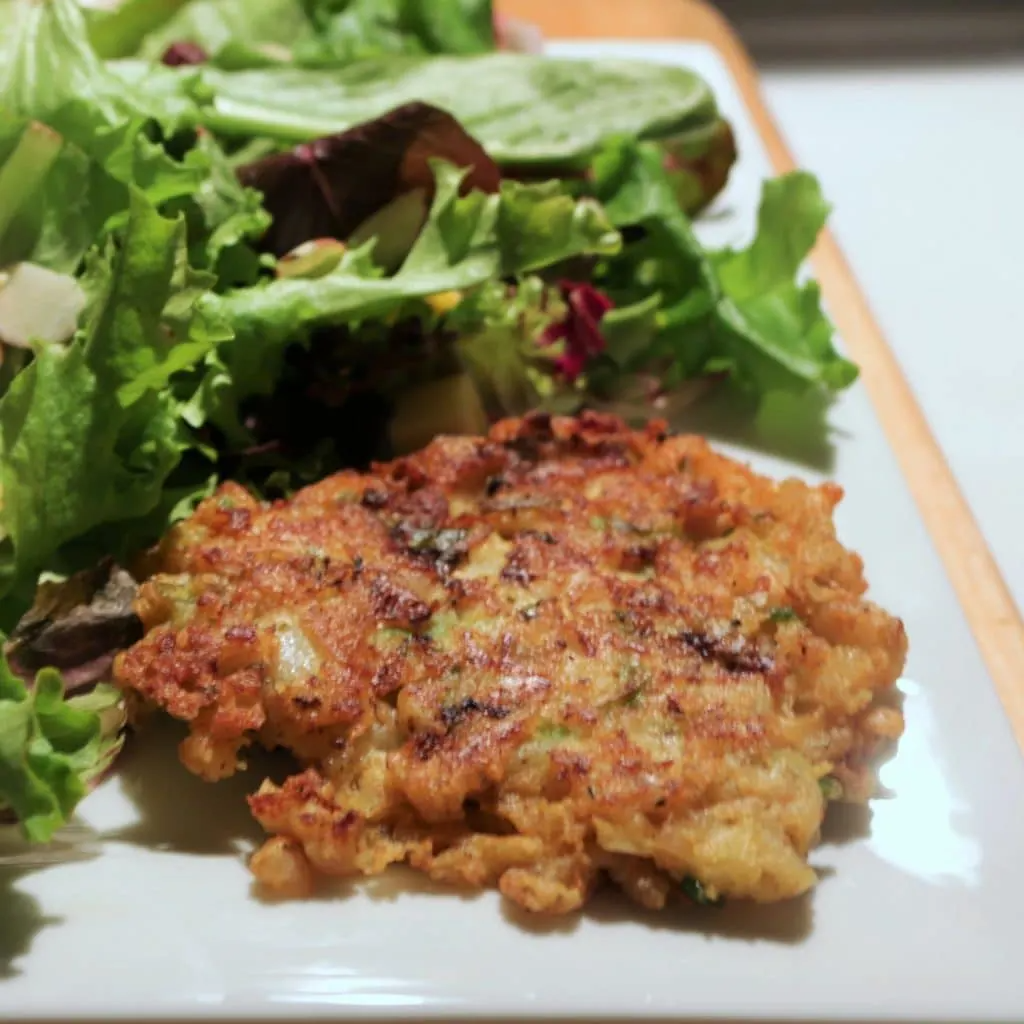
Razor Clam Fritters

Razor Clam Fritters

Razor Clam Fritters


4 Cups minced Razor Clams

1/2 Cup cooked minced bacon-undrained

8 green onions-minced

2 eggs

1/2 tsp. baking powder

1/4 tsp. garlic salt

1/8 tsp. Black pepper

1 tsp. Trader Joe’s Everyday Seasonings or equivalent

1/2 Cup All- purpose Batter Mix (Pride of the West brand)

1/2 Cup Whole Wheat Flour

1 Cup milk

1 1/2 Cups coconut oil or canola or avocado oil


Whisk together the dry ingredients in a large bowl. Add milk, eggs and seasonings to taste. Sir well until the consistency is like pancake batter. Add bacon, minced onions and clams (optional mushrooms, rolled oats, peppers, garlic shallots etc.).   Heat the coconut oil to a depth of one inch in a large skillet on medium heat. Spoon the fritter batter into the heated coconut oil and cook till golden. Flip the fritters and cook until golden.

Autumn Salad with Cider Vinaigrette and Candied Hazelnuts

Autumn Salad with Cider Vinaigrette and Candied Hazelnuts

Autumn Salad with Cider Vinaigrette and Candied Hazelnuts


Canola oil, for deep-frying

½ cup powdered sugar

1 cup hazelnuts


2 T. cider vinegar

1½ T. sherry vinegar

1½ tsp. whole grain mustard

1 tsp. Dijon mustard

½ tsp. salt

¼ cup canola oil

¼ cup extra-virgin olive oil

2 T. walnut oil

Freshly ground pepper

1 pound mixed bitter greens such as Treviso radicchio, Chioggia radicchio, dandelion greens, frisée, arugula, mizuna, and watercress

2 Fuyu persimmons

1 sweet-tart apple such as Crispin or Pink

¼ lb. fresh Goat Cheese

Salt & Pepper


TO MAKE THE CANDIED HAZELNUTS, pour the oil to a depth of 1½ inches into a heavy-bottomed saucepan and heat to 350°F. While the oil is heating, line a sheet pan with parchment paper, put the sugar in a bowl, and bring a saucepan filled with water to a boil. Add the nuts to the boiling water and blanch for 1 minute. Using a wire skimmer or a strainer, scoop out the nuts, shake off the excess water, and add the nuts to the sugar. Toss the nuts to coat them completely with the sugar. The sugar should form a light paste. Then, working in batches to avoid crowding, carefully spoon the nuts into the hot oil, spreading them out so they don’t stick together. Fry for about 2 minutes, or until golden brown. Using a slotted spoon, transfer the nuts to the prepared sheet pan, spreading them in a single layer, and let cool completely, then coarsely chop and set aside. (The nuts can be prepared up to a week in advance; store in an airtight container at room temperature.) TO MAKE THE VINAIGRETTE, in a small, wide bowl whisk together both vinegars, both mustards, and the salt. Pour in the oils in a slow, steady stream while whisking constantly, continuing to whisk until emulsified. Season with a few grinds of pepper, then taste and adjust the seasoning. Set aside. If using Treviso radicchio, core and cut crosswise into 1-inch-wide strips. If using Chioggia radicchio, core and slice thinly crosswise. If using dandelion greens, discard tough stems and tear into bite-sized pieces. Remove any tough stems from the smaller greens. Cut off the crown and a thin slice from the bottom of each persimmon, then peel them, being careful not to cut into the flesh. Cut into quarters through the stem end, cut away the core from each quarter, and then cut each quarter lengthwise into ¼-inch-thick slices. Quarter the apple, leaving the skin on, and cut away the core. Cut each quarter lengthwise into ⅛-inch-thick slices. In a large bowl, combine the greens, fruits, nuts, and goat cheese. Drizzle the vinaigrette over the top and toss to coat evenly. Season with a pinch of salt and some pepper and toss again. Mound on individual plates, making sure to distribute the fruits and nuts evenly. Serve right away.

Creamy Garlic Butter Tuscan Salmon

Creamy Garlic Butter Tuscan Salmon

Creamy Garlic Butter Tuscan Salmon


4 salmon fillets, skin off (or Trout or any white fish)

Salt and pepper, to season

2 tsp. olive oil

2 T. butter

6 cloves garlic, finely diced

1 small yellow onion, diced

1/3 cup dry white wine

5 ounces (150 g) jarred sun dried tomato strips in oil, drained of oil

1 3/4 C. half and half

Salt and pepper, to taste

3 C. baby spinach leaves

1/2 cup fresh grated Parmesan cheese, (do not include for dairy free option)

1 tsp. cornstarch mixed with 1 T. of water (optional)

1 T. fresh parsley chopped


Heat the oil in a large skillet over medium-high heat. Season the salmon filets (or fish if using) on both sides with salt and pepper, and sear in the hot pan, flesh-side down first, for 5 minutes on each side, or until cooked to your liking. Once cooked, remove from the pan and set aside. Melt the butter in the remaining juices leftover in the pan. Add in the garlic and fry until fragrant (about one minute). Fry the onion in the butter. Pour in the white wine (if using) and allow to reduce down slightly. Add the sun-dried tomatoes and fry for 1-2 minutes to release their flavors. Reduce heat to low heat, add the half and half (or heavy cream), and bring to a gentle simmer, while stirring occasionally. Season with salt and pepper to your taste. Add in the spinach leaves and allow to wilt in the sauce and add in the parmesan cheese. Allow sauce to simmer for a further minute until cheese melts through the sauce. (For a thicker sauce, add the milk/cornstarch mixture to the center of the pan, and continue to simmer while quickly stirring the mixture through until the sauce thickens.) Add the salmon back into the pan; sprinkle with the parsley and spoon the sauce over each filet. Serve over pasta, rice or steamed veg.

Smoked Salmon Bowl

Smoked Salmon Bowl

Smoked Salmon Bowl


1 C. packed baby kale

¼ tsp. olive oil

2 large eggs

⅛ tsp. sea salt

⅛ tsp. ground black pepper

2 ounces smoked salmon

¼ avocado, pitted and sliced


Preheat a nonstick pan on the stove over medium heat. Add the kale and olive oil to the pan and cook for 2 to 3 minutes, or until the kale is wilted. Season with a pinch each of salt and pepper to taste, and transfer to a serving bowl. Place the skillet back on the stove to cook the eggs. Whisk together the eggs, salt, pepper, and 1 T. of milk. Add this mixture to the pan and scramble to your desired firmness. Place the scrambled eggs in the bowl with the kale, top with smoked salmon and sliced avocado, and serve.


337 calories, 21g fat, 5g fiber

PNW Singing Scallops Steamed with Miso, Ginger and Ponzu

PNW Singing Scallops Steamed with Miso, Ginger and Ponzu

PNW Singing Scallops Steamed with Miso, Ginger and Ponzu


2 to 3 lbs. live pink scallops (or clams)

¼ C. peanut oil

1 tsp. sesame oil

¼ C. thinly sliced shallot

2 T. peeled ginger, finely chopped

2 T. finely chopped garlic

¼ C. Shaoxing Chinese rice wine or sake

1½ T. red miso

2 T. butter

¼ C. muscovado sugar

½ C. ponzu

Fresh lime juice to taste

1 bunch of cilantro


Scrub the scallops well, and soak in cold water to purge sand. Heat the oils in a large pan. Add shallot, ginger and garlic, and cook on medium heat until softened, about 5 minutes. Add rice wine or sake, and bring to a boil for about 2 minutes. Mash miso and butter together and add to the pan, along with sugar and ponzu. Simmer for a few minutes, stirring to dissolve miso. Add scallops. Cover and steam until open, about 1 to 2 minutes. (If the scallops don’t open in that time, they are likely dead and shouldn’t be eaten. Unlike clams, which can take up to 10 minutes to open, singers start to open as soon as they hit the heat.). Add lime juice and chopped cilantro to taste, or dress whole cilantro stems with a little oil and salt, and char them on a plancha or hot griddle. Serve with cilantro stems on top and grilled bread on the side.

Salmon Baked in Cream with Sweet Bay, Thyme, and Dill

Salmon Baked in Cream with Sweet Bay, Thyme, and Dill

Salmon Baked in Cream with Sweet Bay, Thyme, and Dill


4 (6-ounce) wild-caught salmon fillets

4 bay leaves

1 C. heavy cream

2 T. chopped fresh thyme leaves

2 T. chopped fresh dill


Preheat the oven to 400°F. Place the salmon fillets in a single layer in a small baking dish or gratin dish. Top each fillet with a bay leaf. Pour the heavy cream over the salmon and sprinkle with the thyme and dill. Bake until the fish flakes easily when pierced with a fork and the cream thickens, about 15 minutes. Discard the bay leaves and serve, spooning warm cream and herbs over the fish.

Baked Salmon with Sorrel and Cream

Baked Salmon with Sorrel and Cream

Baked Salmon with Sorrel and Cream


Six 7- to 8-ounce salmon fillets with skin Salt and freshly ground black pepper

12 large sorrel leaves, cut into fine ribbons

1 tsp. chopped garlic

1 C. heavy cream


Preheat the oven to 450°F. Arrange the salmon fillets, skin side down, on an ungreased baking sheet. Sprinkle lightly with salt and pepper and bake for 10 to 12 minutes, or just until congealed juices appear as white spots on the surface of the fish. While the salmon is baking, combine the sorrel, garlic, and cream in a heavy-bottomed saucepan and cook over medium-high heat until the sauce is boiling hard and slightly thickened. Remove from the heat. With a long metal spatula, lift the fillets from the baking sheet, leaving the skin behind. Transfer to warm plates, top with sorrel sauce, and serve at once.

Sauteed Salmon with Roasted Beet Thickened Yogurt Salad

Sauteed Salmon with Roasted Beet Thickened Yogurt Salad

Sautéed Salmon with Roasted Beet Thickened Yogurt Salad

1 pound whole salmon fillet
1 bunch red beets with greens
12 oz. yogurt
One clove garlic
Fresh dill, about a T. chopped
A few drops fresh lemon
Salt and pepper to taste
Canola or grapeseed oil
Cheesecloth

Heat the oven to 400 degrees. Rinse the cheesecloth under cool water. Fold it over one and then a second so you have four layers, and then use it to line a strainer placed over a bowl. Spoon the yogurt into the cheesecloth and set aside to drain. This will take anywhere from two to six hours depending on how thick you prefer it, so it can’t hurt to refrigerate it. Roasting the beets bring out their sweetness, which is essential to this dish. I look for beets with the greens attached because it seems the fresher they are, the sweeter they are. Plus the greens make for an effortless side dish cooked up with chopped onion, seasoning, and olive oil. First, trim the greens leaving a couple inches of the stalk on the beets. Rinse the beets and poke each one with a knife so they can release steam when they roast. Place the beets in an oven-proof container like a ceramic dish or stainless steel pot with a quarter inch of water and cover tightly with a lid or foil. Pop them in the oven, and depending on size they can take anywhere from 45 minutes to 90 minutes or more. Check them in about 40 minutes. They should offer no resistance when you pierce them with a paring knife, otherwise keep roasting. Set aside and cool. This can be done a day in advance, just refrigerate the cooled beets. To assemble the dish make sure the yogurt is nice and thick. It will have lost as least half the water, and will look like soft cream cheese. Peel the beets, the skin will slip off easily with a little help from a knife, and then grate them and set aside. Take a peeled clove of garlic and mince. Add a generous pinch of salt and mash the garlic with the flat side of a chef’s knife by swiveling it back and forth. This method turns it into a paste by drawing out the juices, maximizing the garlic flavor. It’s a great technique for flavoring home-made mayonnaise. Just don’t overdo it! Add the garlic, thickened yogurt, chopped dill and a little salt and pepper to the grated beets. Mix well – it will turn a shockingly bright fuchsia. Taste and adjust the seasonings. It might need a few drops of lemon juice for balance. Then put in a clean container and refrigerate. Meanwhile, pat the salmon dry. If it’s a whole fillet, remove the pin bones with a pair of sturdy tweezers or needle nose pliers. Season the fish on both sides. Meanwhile, place a skillet over medium heat and when hot add a T. of oil. Slip the fish in skin side down and sauté. It should sound like a gentle hiss rather than sputtering and popping. After about 7-8 minutes the side of the fish will start to look cook. Flip the filet. If you want it medium rare, keep it on for 2 minutes more. If you like it cooked most of the way through, about 4 to 5 minutes. Serve on a platter or oval dish with the beet salad spooned around the salmon and garnish the salmon with chopped dill

Fillet of Salmon, Sautéed with Granny Smiths and Cider

Fillet of Salmon, Sautéed with Granny Smiths and Cider

Fillet of Salmon, Sautéed with Granny Smiths and Cider


4 T. (1/2 stick) butter

4 salmon fillets (6 to 8 ounces each)

1-1/2 tsp. kosher salt

2 large Granny Smith apples, sliced

1/2 C. apple cider

Freshly ground black pepper

In a large skillet over medium heat, melt 1 T. of the butter.


Sprinkle the salmon fillets with salt and lay them, skinned side up, in a single layer in the skillet. Let cook, undisturbed, for 5 minutes, or until a crisp, brown crust forms. Do not try to move the salmon too early, or the surface of the fish will tear. Remove the fillets from the pan and add the apples. Stir-fry the apple slices for a moment, arrange the salmon fillets, cooled side up, on top of the apple slices, and pour on the apple cider. Cover and cook for 5 minutes. Transfer the salmon to plates and with a slotted spoon, lift out the apple slices and place them around the salmon. Swirl the remaining 3 T. of butter into the juices left in the pan, whisking to form a smooth sauce. Season to taste with freshly ground black pepper, and pour the sauce immediately over the salmon and apples. Serve at once.

Oregon Pear and Hazelnut Salad with Oregon Blue Cheese
Oregon Pear and Hazelnut Salad with Oregon Blue Cheese

Oregon Pear and Hazelnut Salad with Oregon Blue Cheese


1 head butter lettuce

Vinaigrette

1 roasted pear, ripe, peeled, cored and chopped

1/4 C. rice vinegar

1 tbsp. granulated sugar

1/4 C. hazelnut oil

salt and pepper to taste

2 roasted pears, ripe and peeled

1 oz. hazelnuts, toasted and chopped

1/3 C. Oregon blue cheese


Wash and spin dry lettuce, breaking larger leaves into 4 inch pieces. Add pear to blender along with rice vinegar, to prevent pear from browning. Add the sugar, salt, pepper, and hazelnut oil and puree until smooth. Place the cleaned, torn lettuce in a bowl. Arrange the dressed lettuce on chilled plates. Slice each pear in half and spoon out the cores. Lay the halves on a cutting board, flat side down, and slice each half on a bias into 7 or 8 even slices. Press the sliced pear halves lightly to fan them out and carefully transfer the pear fan to the lettuce. Scatter hazelnuts and crumbled blue cheese over each salad and serve.

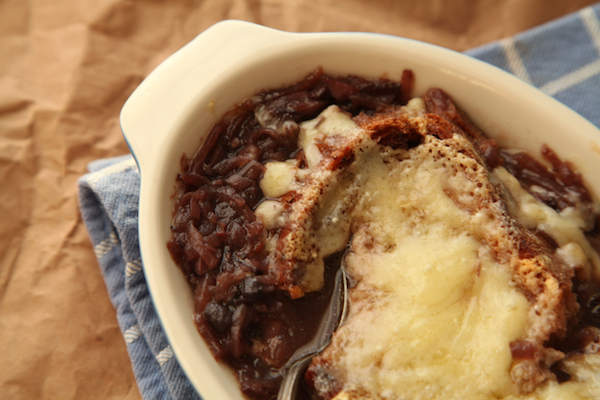
Morel Mushroom French Onion Soup

Morel Mushroom French Onion Soup

Morel Mushroom French Onion Soup

5 sweet onions

1/4 cup olive oil

5 sprigs of thyme, picked from the stem and chopped

3 cloves of garlic, chopped

1 pound morels (or other type of mushroom), chopped roughly

1 bottle red cooking wine

4 C. vegetable stock

Salt

10 1/2-inch-thick slices of rye bread, toasted

8 ounces comté cheese, grated


Cut the onions in half, stem to root, and slice crosswise into thin slices. Add the oil to a large pot set over medium-high heat and sauté the onions until well caramelized, stirring and scraping the bottom of the pan, taking care not to burn them (about 15 minutes). Add the thyme, garlic, and mushrooms to the pot, stirring to incorporate. Sauté and cover until moisture from the mushrooms is released (about 15 minutes). Add wine and bring to a boil. Add the vegetable stock and again bring to a boil, reducing to a simmer and cooking for 15 minutes. Add salt to taste. Heat oven to broil. Ladle the soup into four high-walled ceramic bowls and place a toasted slice of rye bread on top, with a heavy handful of comté cheese. Put the bowl on a sheet tray in the oven and broil until cheese is melted and bubbling. Serve hot, making sure not to burn the roof of your mouth.

Morel and Toasted Rye Bread Soup

Morel and Toasted Rye Bread Soup

Morel and Toasted Rye Bread Soup

1 1/2 pounds fresh morels, washed, stems trimmed to 1/2 inch

1/2 pound artisanal-style rye bread loaf, unsliced

8 T. (1 stick) unsalted butter, at room temperature, cut into 8 pieces

2 tsp. caraway seeds

5 1/2 C. homemade chicken broth

1 1/2 tsp. molasses

4 tsp. kosher salt

3 T. extra virgin olive oil


Preheat the oven to 375°F. Position one rack in the top third of the oven and a second one in the bottom third. Set aside 1/2 pound morels for garnish. Closely trim the crust from the rye bread, ending up with just the brown outer pieces. Place the crusts on a baking sheet and set aside. Cut enough of the remaining bread into 1/2-inch cubes to measure 1 1/2 C.. Use any leftover bread for another dish. Melt 1 T. of the butter and toss with the cubed bread. Place on a separate baking sheet and bake for 6 to 8 minutes, or until golden brown. Set aside. Heat a small sauté pan over medium-high wheat. Add the caraway seeds and toast, stirring frequently, until they are fragrant and just starting to smoke, about 1 minute. Immediately turn out onto a clean baking sheet to cool. When cool, place the caraway seeds in the center of a 4-inch-square piece of cheesecloth. Fold in the sides and roll up tightly, making a compact package. Tie securely with kitchen string. Have ready a blender and a fine-mesh strainer set over a medium saucepan. Place the chicken broth, molasses, 2 1/2 tsp. of the salt, and the caraway bundle in a large stockpot over high heat. Place the remaining 1 pound morels in a large bowl and splash with 2 T. of the oil and 1 tsp. of the salt. Toss or stir quickly to coat the morels evenly with the oil. Arrange in a single layer on a baking sheet. When the broth reaches a simmer, place the morels and rye bread crusts in the oven and bake for 8 to 10 minutes, or until the morels are wilted and the crusts are dried out and fragrant. Meanwhile, when the broth reaches a full boil, cover the pot, turn down the heat, and hold at a simmer. When the morels and bread crusts are almost done, after about 6 minutes, turn the heat back up on the broth so that it is at a full boil when they come out of the oven. Remove the morels and bread crusts from the oven. Add the morels, along with any pan juices, to the boiling broth. When the broth returns to a boil, add the bread crusts, pushing them down into the soup to submerge them completely. Cook for 1 to 2 minutes, pushing and stirring the bread crusts into the broth. When the broth returns to a full boil, cover the pot and turn off the heat. Let sit for 2 minutes. Remove the caraway bundle, set it in a small bowl, and set aside. Place half the soup in a blender. Start at the lowest speed and blend for 1 minute. Increase the speed by one level and continue blending until the soup is smooth, 2 to 3 minutes. Do not blend on high—the mixture will become too thick. Pour the mixture through the strainer into the saucepan, pushing down with the bottom of a ladle to extract all the liquid. Discard the solids. Repeat with the remaining soup. Squeeze the caraway bundle into the soup, extracting all the liquid, then discard. Add the remaining 7 T. butter to the soup all at once, whisking continuously until the butter is melted and blended into the soup. Hold in a warm place. Toss the reserved 1/2 pound morels with the remaining 1 T. oil and the remaining 1/2 tsp. salt. Place in a single layer on a baking sheet and cook for 8 to 10 minutes, or until the morels are wilted and fragrant. While the morels are cooking bring the soup just to a boil, whisking frequently, then hold at a simmer. Divide the soup among 4 to 6 bowls and top with the morels and the reserved croutons.

Huckleberry Hotcakes

Huckleberry Hotcakes

Huckleberry Hotcakes

3 C. flour

¾ C. rolled oats

¼ C. oat bran or 100-percent bran cereal

4 tsp. baking powder

2 tsp. baking soda

½ tsp. salt (optional)

4 eggs

4 C. buttermilk, plus more if needed

¼ C. vegetable oil

1 to 2 C. huckleberries, fresh or frozen (blueberries make a good substitute if huckleberries aren’t available)


Stir Together the flour, oats, oat bran, baking powder, baking soda, and salt in a large bowl. In another bowl, beat the eggs, then stir in the buttermilk and oil. Add the egg mixture to the flour mixture and stir gently until just blended. If the batter is too thick, stir in a little more buttermilk. HEAT A GRIDDLE or a large, heavy skillet, preferably nonstick (if not nonstick, brush lightly with oil). Stir the huckleberries into the batter. Pour ¼ C. batter onto the griddle for each pancake. Cook until bubbly on top, then flip and continue cooking until nicely browned, 2 to 3 minutes on each side. Serve with your favorite syrup or fresh fruit jam.

Salad of Herbs and Flowers

Salad of Herbs and Flowers

Salad of Herbs and Flowers

Northwest chefs are guilty of excess in many areas. The sheer abundance of good things we have to work with drives us to experiment with combinations that would be merely ridiculous in regions with a smaller variety’ of fresh local produce. Raspberries garnish grilled salmon, and in the summer when basil becomes almost ubiquitous, it is slipped into everything from salads to desserts. Somehow, in this Oz-like setting where rainbows are as regular as rain, and hundreds of acres of brilliant red and purple, tulips grow against a backdrop of majestic mountain ranges, we feel comfortable serving and eating outrageously colorful things. So, salads are regularly filled with tiny violas, yellow and orange nasturtiums, and the occasional petals of a day lily. In spring, don’t put it past a Northwest chef to serve the petals of unsprayed tulips in a salad. They’ taste like snow peas and have the texture of the best butter lettuce. Experiment with other edible flowers in season but be sure to use only unsprayed garden flowers and avoid experimenting with blossoms that are of dubious edibility’.

6 to 8 cups mixed baby salad greens, washed and dried

2 to 3 tablespoons Fresh Raspberry and Basil Vinaigrette (recipe follows)

24 to 36 basil leaves

6 tulips (in spring) or day lilies (in summer)

18 nasturtium blossoms

18 violas. Johnny-jump-ups, or pansies

3 chive blossoms

1 cup fresh raspberries


Pick through the salad greens, removing any undesirable leaves. Pile in a large salad bowl and toss with the vinaigrette. Add the basil leaves and toss lightly to avoid bruising the basil. Arrange the petals of the tulips or day lilies on each of 6 chilled salad plates, then divide the dressed greens evenly among them. Tuck 3 whole nasturtium blossoms into each salad, scatter the petals of the violas over the greens, then pluck the petals from the chive blossoms and scatter those over as well. Finally, sprinkle each salad with a few raspberries and serve at once.


Fresh Raspberry and Basil Vinaigrette


Ordinarily a raspberry vinaigrette is made with raspberry-flavored vinegar. This dressing incorporates whole raspberries, and the pulp of the berries allows the oil and vinegar to emulsify to a creamy consistency.


1/2 cup raspberries

3 tablespoons rice vinegar

1 tablespoon sugar

2/3 cup light olive oil or vegetable oil

1 teaspoon kosher salt

1/2 teaspoon freshly ground black pepper

12 fresh basil leaves


In a blender, combine the raspberries, vinegar, sugar, oil, salt, and pepper; puree the mixture at high speed. Force the puree through a fine strainer to remove seeds. Cut the basil into fine ribbons and stir in. Use 2 to 3 tablespoons for each salad. Dressing keeps, refrigerated, for at least 1 week.

Salmon Chermoula

Salmon Chermoula

Salmon Chermoula


4 salmon steaks

1 small onion, roughly diced

2 garlic cloves

2 heaped tbsp parsley

2 heaped tbsp cilantro leaves

1/2 tomato, peeled and roughly diced

1/2 tsp ground cumin

1/2 tsp sweet paprika

1 tsp lemon or white vinegar

A pinch of kosher salt

Freshly ground black pepper

3 tbsp extra virgin olive oil

Extra lemons to finish the fish


Mix all the ingredients in a food processor. Season the salmon steaks, or any oily fish you are using, with salt and black pepper on both sides. Coat evenly with all the chermoula and marinade for at least one hour. In a pan, heat 1 1/2 tbsp of canola oil until shimmering but not smoking. Cook over medium heat until browned and cooked to your liking, 3 to 4 minutes per side. To have a perfect crust, avoid disturbing the fish while it’s cooking. Transfer the salmon to a plate and squeeze some lemon on top.

Creamy Tuscan Salmon

Creamy Tuscan Salmon

Creamy Tuscan Salmon


3 salmon fillets

2 teaspoons olive oil

2 tablespoons butter

5 cloves garlic, finely diced

1 small yellow onion, diced

1/3 cup (80ml) vegetable broth

5 ounces (150g) jarred sun-dried tomato in oil, drained of oil

1 3/4 cups heavy cream

Salt and pepper, to taste

3 cups baby spinach leaves

1/2 cup grated Parmesan

1 tablespoon fresh parsley, chopped


To make the Tuscan salmon recipe: Heat the oil in a large skillet over medium-high heat. Season the salmon filets on both sides with salt and pepper, and sear in the hot pan, flesh-side down first, for 5 minutes on each side, or until cooked to your liking. Once salmon filets are cooked, remove from the pan and set aside.  In the same pan, melt the butter in the remaining cooking juices leftover. Add in the garlic and fry until fragrant (about one minute). Add onion and stir fry until translucent. Add the sun-dried tomatoes and fry for 1-2 minutes so they release their flavors. Finally, pour in the vegetable broth, and allow the sauce to reduce down slightly.   Reduce heat to low, add the heavy cream, and bring to a gentle simmer while stirring occasionally. Season the cream sauce with salt and pepper to your taste. Add in the baby spinach and allow to wilt in the sauce, and add in the parmesan cheese. Allow the cream sauce to simmer for a further minute until cheese melts through.  Add the grilled salmon filets back into the pan; sprinkle with the parsley, and spoon the sauce over each filet. Serve the creamy Tuscan salmon over steamed veg or cauliflower rice for Keto dieters, or rice or pasta for non-Keto. Enjoy!

Apple Baked Pork Tenderloin

Apple Baked Pork Tenderloin

Apple Baked Pork Tenderloin


3, 1 lbs. Pork Tenderloins

2 tsp. Salt

1 tsp. Black Pepper

4 C. Apple Cider

2 Bay Leaves

6 small baking Apples (I used Granny Smith)

1 stick Unsalted Butter


Preheat the oven to 425 and cut each tenderloin in half lengthwise to make 6 even 8-ounce portions. Season each tenderloin with a portion of the salt and black pepper. Place the tenderloins in a baking dish and bake in the oven for 10 minutes. While the tenderloin is baking, heat the cider and bay leaves in a saucepan and bring to a boil. Peel and core the apples but leave them whole. Add them to the boiling cider and bay leaves. Cook for 5 minutes or until the apples have been heated through but are not mushy. Add the apple cider and apples to the baking dish with the pork tenderloin. Bake until pork is cooked, about 20 minutes or 160 degree internal temperature. Set aside the pork and apples and pour the juice into a saucepan over high heat. Stir in the butter to create a smooth sauce. Cut the pork and serve with the apples and sauce. Note: One thing that can happen is the apples disintegrate while in the oven, as happened to me. In this case I just left them in while I stirred in the butter, and it added an interesting note to the sauce. Try out different types of apples for different flavor profiles with this one and enjoy.

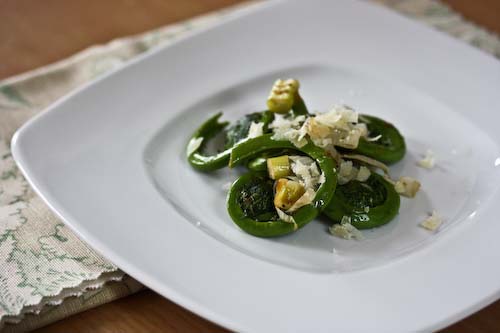
Sautéed Fiddlehead Ferns

Sautéed Fiddlehead Ferns

Sautéed Fiddlehead Ferns

Fiddlehead Ferns

2 cloves of garlic, sliced

4 scallions, white and light green part sliced

Juice of half a lemon

Salt and pepper to taste

Parmesan cheese, to taste

Olive oil for the pan


To prep your fiddleheads, cut the touch stems off, including any brown parts. Run them under cold water in a colander, then place them in a bowl of water and swirl around. Dry them on paper towels. Heat the olive oil in the pan over medium heat. Add the garlic and sauté until fragrant, about 2 minutes. Add the scallions and the fiddleheads, cover, and cook for 4 minutes. Uncover, stir, and continue to cook for another 4 minutes. Remove from heat and sprinkle with salt and pepper to taste. Squirt the juice of half a lemon on top. Spoon onto plates and serve with a grating of parmesan cheese over the top.

A method for Vegetable Soup

A method for Vegetable Soup

Caramelized Zucchini Soup with Rosemary and Walnuts


Step 1. The vegetable. This can be whatever you have on hand, including a mixture of different things. Great options are zucchini, winter squash, sweet potato, leeks, corn, spinach, peppers, parsnip, turnip, eggplant, cauliflower, broccoli, tomatoes, beets, onions…

Step 2. The caramelization. This step primes the vegetable to release as much flavor as possible in the soup. For most vegetables, just cut them into manageable chunks (not too small), toss them with olive oil in a roasting pan and put them in a 375-degree oven for as long as they need to get a bit crusty and caramelized. Things like eggplant, peppers, tomatoes, winter squash and sweet potato can be roasted in their skins (peppers, tomatoes and eggplant can even be charred under the broiler if you like) and then peeled before proceeding. I also toss several *unpeeled* cloves of garlic in the pan with the vegetables. When the veggies are nicely caramelized, put them into a heavy-bottomed pot on the stove. Don’t forget to peel the garlic.

Step 3. The stock. Cover the vegetables with the stock so that they’re covered by about a 1/2 inch of liquid.

Step 4. The herbs and spices. Fresh or dried – it’s your choice. There are the usual suspects, such as basil, thyme and curry, and untraditional ones, which are only limited by your imagination. Try chipotle chiles, or even chocolate! Toss in as many as you like and let everything simmer until the vegetables are starting to get soft.


Step 5. The enhancement. Here is where you can really get creative. Nuts are fantastic here, they add thickness and character without overpowering the other flavors. Walnuts, almonds, pecans, hazelnuts, cashews – lightly toast a handful and add them to the soup. Let them simmer with everything else for at least 10-15 minutes. Peanut or other nut butters are also great, as are grated or crumbled cheeses – though I add these just before the final step so they don’t get stringy. Parmesan, smoked mozzarella, cheddar, pepper jack, feta, goat… Something else I’ve been experimenting with lately is booze: brandy, port, marsala, vermouth, sherry… Like the cheese, add a glug or two just before the end.

Step 6. The enrichment. This brings it all together, gives the soup some richness and thickens it up. Traditional is of course cream, but there are other possibilities: cream cheese, yogurt, coconut milk, butter… The only thing to remember here is that some of these don’t take too well to boiling, so heat the soup gently after this step.

Step 7. The emulsion. If you have a hand blender, this step will be a cinch. If you only have a normal blender, carefully pour the hot liquid into it and cover the top tightly with a towel before you turn it on. Trust me on this one – if you don’t keep that lid down with all your strength, you will have new decor on your kitchen walls!

Step 8. The final tweak. Check to make sure the balance of salt is to your liking; think about also whether a pinch of sugar or a squeeze of lemon would enhance the flavors. Correct the seasoning, heat for another couple of minutes, and serve to hungry people in big steaming bowls.

Some of my favorite combinations:

zucchini with rosemary and walnuts
sweet potato with curry, cashews and coconut milk
corn, yellow pepper and basil
cauliflower, almond and parmesan
eggplant with cumin, cilantro and lemon
butternut squash with sage, pecans and browned butter
broccoli, thyme and blue cheese
roasted red pepper with cilantro, feta and lime
mushroom (try a mixture of fresh+dried) with marsala and hazelnuts

Sheet Pan Teriyaki Salmon

Sheet Pan Teriyaki Salmon

Sheet Pan Teriyaki Salmon

1.5 lb fillet of Salmon

1 C. Carrots peeled and sliced (1/4″ thick slices) (approx 6 medium sized carrots)

4 ounces French green beans

1 C. brussels sprouts halved

1 T. olive oil

Salt and pepper to taste


1 T. cornstarch

1 T. cold water

1/2 C. white sugar

1/2 C. soy sauce

1/4 C. cider vinegar

1 clove garlic minced

1/2 tsp. ground ginger

1/4 tsp. ground black pepper


Green onion

Sesame seeds toasted


Preheat oven to 400 degrees. Put all the teriyaki sauce ingredients in a heavy bottom saucepan and bring to a simmer over medium heat. Cook 4-5 minutes, letting the sauce reduce. Remove from heat and set aside. Line a baking sheet with parchment paper (optional). Arrange veggies and salmon on a tray, in one even layer. Drizzle the olive oil over the veggies, and season with salt and pepper. Use half the teriyaki sauce and pour over the salmon fillets. Bake for 18 minutes. Remove from oven. Garnish with green onion, and toasted sesame seeds and serve with the additional teriyaki sauce. Divide into 4 meal prep containers or eat immediately Enjoy!

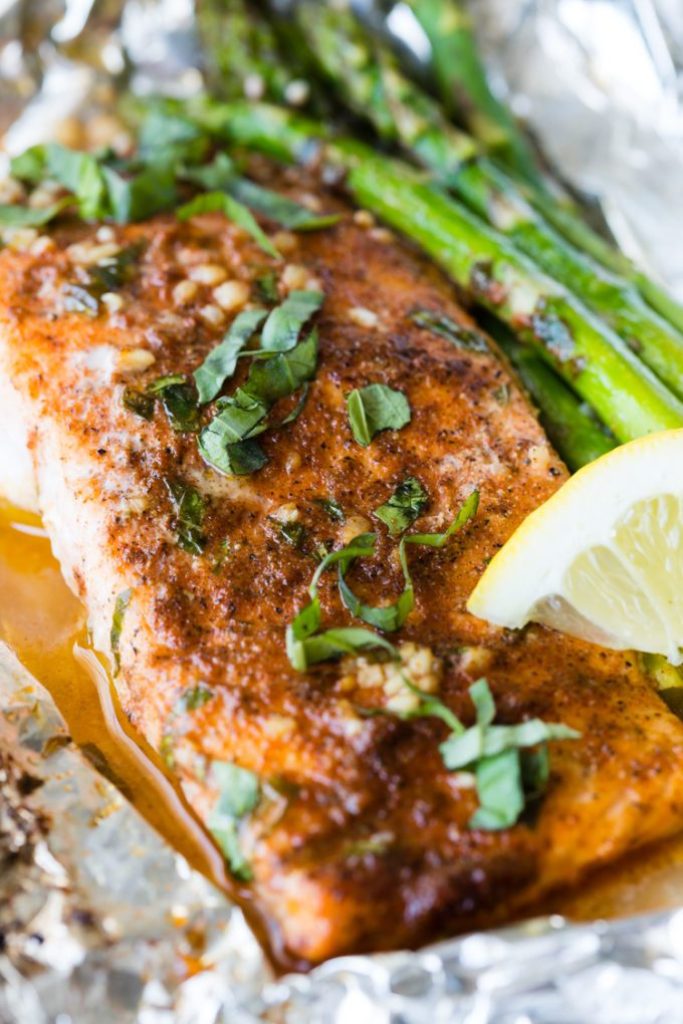
Lemon Butter Salmon & Asparagus Foil Packets

Lemon Butter Salmon & Asparagus Foil Packets

Lemon Butter Salmon & Asparagus Foil Packets

4 salmon fillets

1 lemon sliced

1 tsp. paprika

1 tsp. garlic powder

1 tsp. salt

1 tsp. black pepper

1 pound asparagus spears ends trimmed

1/2 C. butter melted

1 lemon juiced

1 T. minced garlic

2 tsp. fresh basil


Preheat oven to 400 degrees. Cut 4 sheets of foil. 12 x 18 inches, heavy duty foil. Place 2 lemon slices on each sheet of foil. Mix paprika, garlic powder, salt and pepper together, and rub it over the salmon. Place each salmon fillet in the center of the lemon slices. Divide the asparagus into 4 equal portions and arrange next to the salmon on each foil piece. In a small bowl, mix together the melted butter, lemon juice, garlic and basil. Pour the butter mixture evenly over each piece of salmon and asparagus. Wrap the salmon and asparagus in foil, and secure and seal the edges to create a packet. Bake in preheated oven for 15-20 minutes Open foil packets and enjoy, or broil for 1-2 minutes to crisp up exterior Garnish with additional lemon juice and fresh basil.

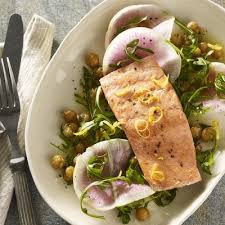
Grilled Alaska Salmon with Crisp Garlicky Chickpeas

Grilled Alaska Salmon with Crisp Garlicky Chickpeas

Grilled Alaska Salmon with Crisp Garlicky Chickpeas

Nonstick oil spray or olive oil

4 C. (2 ounces) baby arugula

4 watermelon radishes, trimmed and thinly sliced

4 (4-ounce) Alaska salmon fillets, frozen

1/2 C. extra virgin olive oil

1 (15-ounce) can chickpeas, drained, rinsed, and patted dry

2 tsp. dried oregano

2 tsp. garlic, minced

1 tsp. kosher salt

3 T. freshly squeezed lemon juice

2 tsp. lemon zest

Freshly ground pepper


Heat your grill to 400ºF. Divide washed arugula and watermelon radishes between 4 plates and set aside. Rinse seafood under cold water to remove any ice glaze and pat dry with paper towel. Tear an 18-inch-wide sheet of foil, so that it’s 4 inches longer than the fish. Spray-coat the dull side of foil and place seafood on foil, if using skin-on fillets, place skin-side down first. Brush both sides of fish with oil. Bring sides of foil together and fold over several times to seal; roll up ends to form a packet. Place packet on grill, seam-side down, and cook for 8 to 10 minutes. Remove packet from grill; open and add salt and pepper to taste. Crimp foil loosely to close and return packet to grill, seam-side up. Cook an additional 8 to 10 minutes. Remove from heat just as soon as seafood is opaque throughout. Place one salmon fillet on each plate atop the arugula. While the fish is cooking, heat the oil in a medium skillet over medium-high heat. Add the chickpeas, oregano, garlic, and salt. Cook the chickpeas, stirring occasionally, until crispy and starting to crackle, about 8 to 10 minutes. Remove from heat and use a slotted spoon to divide chickpeas among the 4 plates of salmon. Whisk lemon juice and zest into remaining oil in pan, then drizzle heaping T. or so over the salmon and arugula on each plate. Season with freshly ground pepper and additional salt if needed and serve.

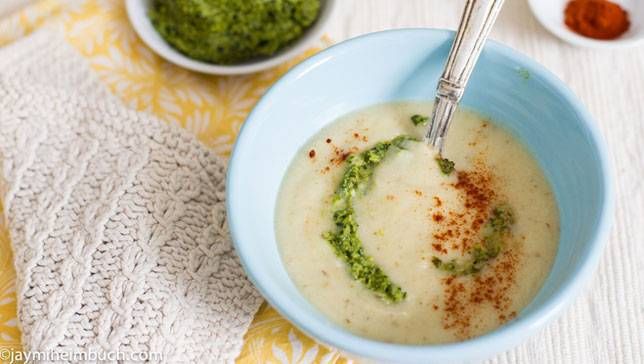
Roasted Cauliflower and Leek Soup with Dandelion Green-Hazelnut Pesto

Roasted Cauliflower and Leek Soup with Dandelion Green-Hazelnut Pesto

Roasted Cauliflower and Leek Soup with Dandelion Green-Hazelnut Pesto

1 head cauliflower, cut into florets

2 leeks, cut into rings

1 yellow onion, diced

2 cloves garlic

2 tb olive oil

1 1/2 tsp salt

1/2 tsp black pepper

1 medium russet potato, diced

3 c vegetable stock

1/2 c unsweetened coconut milk

1 tb dry thyme leaves (or 1 tsp fresh)

1 tsp paprika (optional garnish)

1/4 tsp nutmeg (optional garnish)


1/4 C. hazelnuts

1 clove garlic, minced

2 C. dandelion greens

2 T. Parmesan Cheese

1/2 tsp salt

1/3 C. olive oil


To make the pesto, place the hazelnuts in a dry skillet and toast over medium-high heat for 5 minutes, until golden. Transfer to a dry kitchen towel and rub together to remove their skins. Combine the garlic and hazelnuts in a food processor and process to a fine powder. Add the dandelion greens, Parmesan and salt and continue processing. Add the olive oil in a single stream while the machine is running until the ingredients come together into a creamy paste. The pesto may be stored in the refrigerator for up to 3 days or frozen for up to 1 month. To make the soup, preheat the oven to 375°F. Toss together the cauliflower, leek, onion, garlic, olive oil and ½ tsp. of the salt. Transfer to a baking sheet and roast for 25 minutes, until golden. Then place the roasted vegetables in a large pot. Add the potato, chicken stock, coconut milk, thyme leaves, remaining 1 tsp. salt and the pepper. Bring the liquid to a boil over medium-high heat. Reduce the heat to medium, cover and simmer for 10 minutes, until all the vegetables are tender. Purée the soup in a blender. Serve with the pesto.

Cornmeal Pancakes with Huckleberry Syrup

Cornmeal Pancakes with Huckleberry Syrup

Cornmeal Pancakes with Huckleberry Syrup


Picking huckleberries along the trails around Mt. Hood is an Oregonian rite of passage. The tiny berries pack a big flavor punch, like wild blueberries. Simmered with honey and lavender, they transform into a thick syrup with a floral yet piney aroma that perfectly captures those late-summer hikes. It’s fantastic with these fluffy7 and light hotcakes. Don’t skimp on the butter; it makes the pancakes irresistibly moist and accentuates the corn flavor. If you can’t find huckleberries or if they are out of season, substitute fresh or frozen regular or wild blueberries.


3 C. huckleberries or blueberries

1/2 C. raw honey

1/2 C. dark brown sugar, densely packed

Freshly grated zest and freshly squeezed juice of 1 lemon (about ¥» cup)

1 tsp. finely ground dried lavender buds

Pinch of ground cinnamon

Pinch of salt


1 1/4 C. buttermilk

2 large whole eggs

2 tsp. vanilla extract

1 C. finely ground cornmeal

1 C. all-purpose flour (spooned and leveled)

1/4 C. packed dark brown sugar

1 tsp. baking powder

1/2 tsp. baking soda

1/4 tsp. kosher salt

5 T. unsalted butter, melted

Vegetable oil as needed

Crispy cooked bacon for serving

Make the huckleberry-lavender syrup: In a medium saucepan over medium heat, combine all the syrup ingredients plus 1/4 C. water and bring to a simmer. Cook, mashing with a spoon, until the berries are soft and the juices have begun to thicken, 10 to 15 minutes. Remove from the heat and strain through a fine-mesh sieve into a large glass measuring cup, pressing on the solids to discharge all of the juices. Discard the solids. If the syrup seems a little thin, return to the saucepan over medium heat and simmer a few minutes more. It will also thicken as it cools. Cover to keep warm until ready to serve. Make the pancakes: In a medium bowl or large measuring cup, combine the buttermilk, eggs, and vanilla extract until well blended. In a large mixing bowl, combine the cornmeal, flour, 1/4 C. brown sugar, baking powder, baking soda, and salt. Stir the liquid ingredients into the dry ingredients until just combined. Stir in the melted butter. Let the batter rest and thicken for up to 10 minutes while you heat the griddle. Heat the oven to 25O°F and place a baking sheet on the center rack to keep the pancakes warm until ready to serve. Warm a griddle or skillet over medium heat, lightly coating it with oil if necessary and wiping off any excess. Working in batches, use a 1/4 C. measure to pour the batter for each pancake. Cook each until the bottoms are golden and the edges are beginning to look set, about 1 1/2 minutes. Turn and cook on the second side until golden, about 1 minute more. Transfer the cooked pancakes to the baking sheet in the oven to keep warm. Repeat with the remaining batter until all has been used. Serve hot with the warm huckleberry-lavender syrup and crispy bacon

Conifer Needle Shortbread

Conifer Needle Shortbread

Conifer Needle Shortbread


1½ C. butter, softened

1 C. sugar, divided

½ C. conifer needles (douglas fir, redwood, pine, etc.), finely minced

2 tsp. lemon zest

½ tsp. salt

½ tsp. vanilla

2 tsp. orange zest

1 tsp. lemon juice

3 C. flour


Gather several foot-long branch tips from any of our local native conifers. Douglas fir, redwood and various pine species are all excellent, flavorful choices. (Those without access to these trees can substitute rosemary, if desired.) Use sharp trimming scissors to cut the needles finely, directly off of the twigs. Alternatively, pulse needles (removed from branches) in a food processor, or mince finely with a sharp knife. Measure ½ C. minced needles. Combine about ½ C. of the sugar with the minced conifer needles and the lemon zest in a mortar and pestle to release the flavorful oils. If you don’t have a mortar and pestle, just combine in a small bowl and let sit until ready for use. The longer it sits, the stronger the flavor. You can also mix the sugar and conifer needles together and store them in a jar, for several weeks ahead of time, to use as flavoring for these and other baked goods. In a large mixing bowl, combine the needle mixture with the remaining sugar, butter, salt and vanilla and cream well until fluffy. Add the orange zest, lemon juice and flour, ½ C. at a time. The dough will be crumbly at first but the zest and juice help keep it together. Gather dough with your hands and roll into an oblong log. Chill for at least 1 hour in the refrigerator. When ready to bake, preheat the oven to 350° F. Remove dough from the refrigerator and slice with a sharp knife into ¼-inch-thick rounds. Place on a baking sheet lined with parchment paper and bake for about 10 minutes. Makes about 3 dozen cookies.

Morel Mushroom Scramble

Morel Mushroom Scramble

Morel Mushroom Scramble


4 T. butter

1/4 lb or more morel mushrooms, cut in half lengthwise (you can substitute oyster or sulfur shelf)

Salt and pepper to taste

6 farm fresh eggs, well beaten, with a dollop of cream or whole milk added

herbs, for garnish, if desired


Soak morels in cold salt water and then drain well. Melt butter in large skillet and sauté mushrooms for five minutes. Salt and pepper to taste. Add eggs and cook lightly, turning often, until set but still soft. Serve with fresh fruit and toast for a hearty breakfast or light dinner.

Grand Fir Dark Nougat

Grand Fir Dark Nougat

Grand Fir Dark Nougat


1 T. butter

1/2 cup of minced grand fir needles (keep a tablespoon back for garnish)

1 cup honey

2 cups roasted hazelnuts (or almonds)

pinch of thyme (fresh or dried)


In a food processor pulse Grand fir needles (or mince finely by hand) and mix into your honey. Line a small tin with aluminum foil and butter it well. Pour the honey in a saucepan. Bring to a simmer, stirring constantly, and cook at low heat for 10 minutes. Add the thyme and nuts and continue cooking for another 10 minutes, stirring constantly. When nuts begin to crackle and honey thickens to an amber brown, your nougat is ready. If you have candy thermometer you ideally you want a temperature around 266 °F or 125 °C Be warned, if you overcook the honey at too high a heat your nougat will come out hard as a rock – so keep a close watch.) To test, drop a teaspoon of honey into a glass of cold water; it should harden immediately. Remove honey from the heat and stir for 2 more minutes. Carefully pour the honey mixture into the buttered tin (it will still be very hot). Smooth the mixture with a metal spoon. When the nougat is completely cool, break it into small pieces with the back of a knife. Store in a cool place.

Crispy Stinging Nettle and Mozzarella Rolls

Crispy Stinging Nettle and Mozzarella Rolls

Crispy Stinging Nettle and Mozzarella Rolls


8 cups (2 L) stinging nettles

1 T. (15 mL) extra-virgin olive oil

salt and pepper, to taste

8 sheets phyllo pastry

2 T. (30 mL) extra-virgin olive oil (or hazelnut oil), for brushing on pastry

¼ cup (60 mL) hazelnuts, finely chopped

1 package (7 oz [200 g]) fresh mozzarella


Preheat the oven to 375°F (190°F). Bring a pot of salted water to boil and add the nettles. Cook for 1 minute, then transfer to a bowl of cold water. When cool, drain the water. Take the drained nettles and squeeze into a ball. With a chef ’s knife, chop the ball into slices and chop the slices into a rough dice. Transfer into a bowl, drizzle with olive oil, and season with salt and pepper. Place a phyllo sheet on a clean work surface. Brush it with olive oil and sprinkle one half with an eighth of the chopped hazelnuts. Fold the sheet over to make a long, narrow rectangle. Lay a thin line of chopped nettles along the left (short) side of the sheet. Cut the mozzarella into slices and cut each slice into strips. Lay a few strips of cheese over the nettles to cover. Working from the left, fold the phyllo overtop of the filling. Compress the filling to make a tight log. Roll the filling a couple of times in phyllo until a very tight log is formed. Fold over the top and bottom edges of the phyllo sheet to seal in the ends of the log. Continue rolling the filling into a tight roll. When you get to the end of the sheet, brush the edge with a little oil and fold to seal tightly. Place on a tray covered with parchment (or silicone) paper and refrigerate until needed. Repeat with remaining filling and phyllo. Brush chilled rolls with a little olive oil and place in the oven. Bake for 10– 12 minutes, or until the pastry is browned and crisp. Transfer to serving plates and serve

Crab and Pine Mushroom Cakes

Crab and Pine Mushroom Cakes

Crab and Pine Mushroom Cakes


1 lb (450 g) white fish (cod, halibut, sole)

¼ cup (60 mL) whipping cream

2 cups (500 mL) crabmeat (from a 1½ lb [680 g] crab)

1 cup (250 mL) finely diced pine mushrooms

1 tsp. (5 mL) minced garlic

1 green onion, thinly sliced

salt and pepper, to taste

1 cup (250 mL) Panko or breadcrumbs

2 T. (30 mL) canola oil


In a food processor, pulse the fish until a rough paste is formed. Add the cream and process until a smooth paste is obtained. Transfer to a mixing bowl and add the crab (without any juice), pine mushrooms, garlic, green onion, salt, and pepper. Mix until a smooth mixture is formed. The mixture should form into a ball without too much effort. If it is too wet, you can add a few breadcrumbs until a drier mixture is formed. Cook a small sample to test for seasoning and adjust if needed. Using an ice cream scoop (or ¼ cup [60 mL] measure), take a scoop of the mixture and form it into a ball with your hands. Place in the Panko or breadcrumbs and roll to coat evenly. Press the ball to form a cake and place on a tray lined with parchment (or silicon) paper. Repeat with remaining crab mixture. Heat a non-stick skillet with the oil, add the crab cakes (in batches if needed), and fry until golden brown on each side. Transfer to a warm oven and let rest while you finish cooking the remaining cakes. Serve warm with coleslaw or mayonnaise flavoured with lemon and garlic.

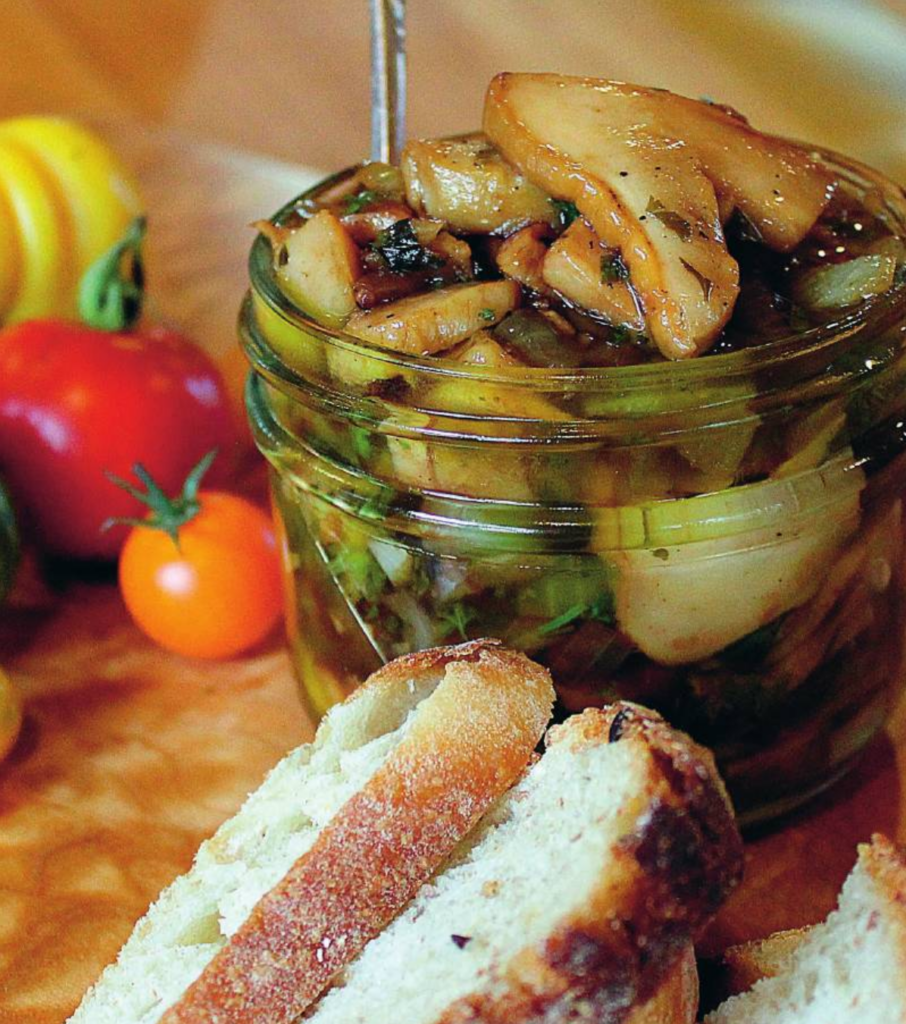
Conserva of Porcini Mushrooms, Capers and Lemon

Conserva of Porcini Mushrooms, Capers and Lemon

Conserva of Porcini Mushrooms, Capers and Lemon


¼ cup (60 mL) olive oil, divided

1 cup (250 mL) finely diced onions

1 lb (450 g) porcini mushrooms (or buttons, chanterelles, etc.)

2 T. (30 mL) minced garlic

1 cup (250 mL) stewed (and crushed) tomatoes zest and juice of 1 lemon

1 T. (15 mL) small capers

2 T. (30 mL) chopped fresh marjoram, thyme, or flat-leaf parsley

salt and pepper, to taste


This combination of fresh porcini, garlic, and lemon will transport you to the tapas bars of Spain. A great accompaniment to a tapas table, conserva is excellent with crusty bread or spooned over a piece of pan-roasted fish. In a skillet, heat about 2 tablespoons (30 mL) of the oil and then add the onions. Sauté until the onions soften and begin to brown. Add the porcini and garlic and sauté until the mushrooms lose moisture and begin to brown. Add the tomatoes, lemon zest and juice, capers, and herbs. Cook, stirring constantly until the tomato reduces to a thick paste. Add the reserved olive oil and season well with salt and pepper. Let cool and serve at room temperature over grilled bread or oysters. tapas, mezes, and pickles

Mushroom Spaetzle

Mushroom Spaetzle

Mushroom Spaetzle


1 cup (250 mL) all-purpose flour

1 T. (15 mL) morel powder (or other mushroom powder)

1 tsp. (5 mL) sea salt

½ tsp. (2 mL) ground pepper

½ tsp. (2 mL) ground nutmeg

2 large eggs

¼ cup (60 mL) milk olive oil, to coat

3 T. (45 mL) salted butter

2 T. (30 mL) minced fresh chives or sage

salt and pepper, to taste


Spaetzle is a German egg dumpling that is addictive and unusual. You can buy spaetzle makers to create a more uniform dumpling. Traditionally spaetzle is panfried in browned butter and sage to crisp up the exterior. The result is spectacular with rich reduced stock sauces and matches well with pork and duck dishes.

In a large bowl, combine the flour, morel powder, salt, pepper, and nutmeg. In another mixing bowl, whisk the eggs and milk together. Make a well in the center of the dry ingredients and pour in the egg-milk mixture. Gradually draw in the flour from the sides and combine well using your hands; the dough should be smooth and thick. Let the dough rest for 10– 15 minutes. In a large pot, bring 3 quarts (3 L) of salted water to a boil, then reduce to a simmer. To form the spaetzle, hold a large-holed colander over the simmering water and add the batter. Push the dough through the holes with a spatula or spoon. Do this in batches so you don’t overcrowd the pot. Cook for 3– 4 minutes, or until the spaetzle floats to the surface, stirring gently to prevent sticking. Dump the spaetzle into another colander and give it a light coating of oil. Transfer to a baking sheet and let cool. In a large skillet over medium heat, melt the butter and then add the spaetzle, tossing to coat. Cook the spaetzle for 1– 2 minutes to give the dumplings some colour, then sprinkle with the chopped chives or sage (or both) and season with salt and pepper before serving.

Foraged Oregon Grape and Lemon Curd

Foraged Oregon Grape and Lemon Curd

Foraged Oregon Grape and Lemon Curd


Foraged Oregon Grapes are transformed from tart and bitter to an unctuous curd suitable for eating from a spoon.

1 cup Oregon Grape puree

1/2 cup lemon juice

2 tablespoons lemon zest

1 1/2 cups raw organic cane sugar

6 eggs

8 tablespoons butter cubed


To create puree, place a heaping cup of clean Oregon Grape berries into a blender or food processor and pulse a couple times until juices start to release. Do NOT over puree. Place berry puree, lemon juice, lemon zest, sugar and eggs into a heavy bottomed saucepan. Over medium heat and whisking constantly, cook the mixture until it thickens (coats back of a spoon and whisk leaves traces in curd).

Remove from heat and pass through a fine-mesh sieve into a bowl; discard solids. Whisk butter into hot curd until well combined. Place a sheet of parchment or plastic wrap directly on top of curd and chill until cold. Serve within one week or freeze.