Browsed by
Tag: Dinner

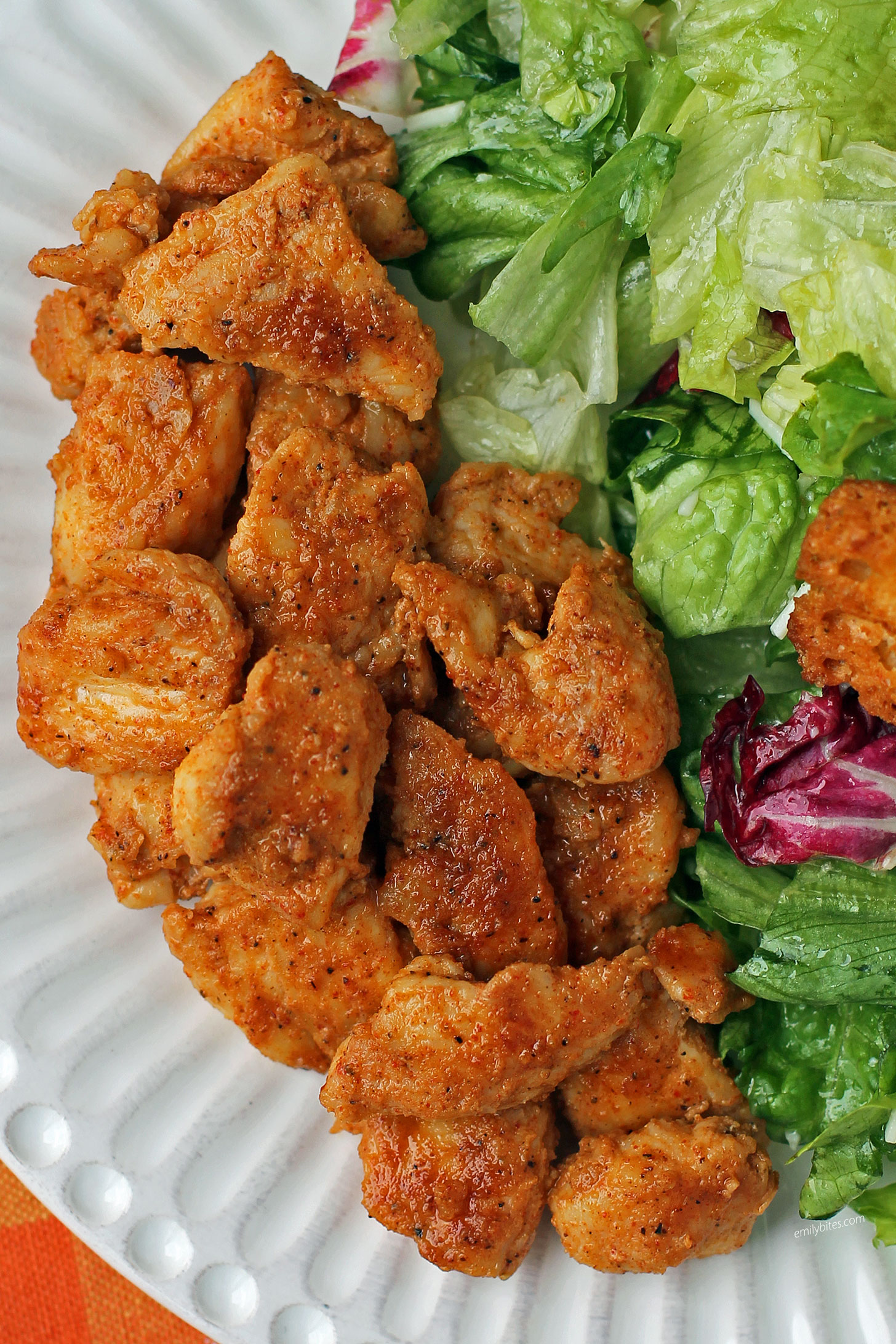
Brown Sugar Rubbed Chicken Bites

Brown Sugar Rubbed Chicken Bites

Brown Sugar Rubbed Chicken Bites


1 T. dry mustard powder, (such as Colman’s – found by the spices)

2 tsp. packed brown sugar

1 ½ tsp. paprika

½ tsp. garlic powder

½ tsp. onion powder

½ tsp. salt

¼ tsp. black pepper

⅛ tsp. cayenne pepper, (this adds a subtle kick, increase to ¼ tsp. if you want it spicier)

1 lb raw boneless, skinless chicken breast, cut into small bite-sized pieces

1 T. olive oil


In a small dish, stir together your seasoning mix: mustard powder, brown sugar, paprika, garlic powder, onion powder, salt, black pepper, and cayenne pepper. Place the chicken pieces into a mixing bowl. Add the seasoning mix to the chicken pieces. Stir the contents of the bowl until the chicken pieces are coated with the spices. Add the oil to a large sauté pan/walled skillet and bring over med-high heat. Once the oil is hot, add the chicken pieces (don’t overcrowd the pan) and stir to break them up and coat them in the oil. Cook the chicken for 6-8 minutes, stirring every couple minutes. Once the chicken is cooked through and a bit golden on the outside, remove from heat and serve.


Servings: 4
Serving Size: 1/4 of chicken bites

Calories: 181
Fat: 7 g
Fiber: 1 g
Protein: 26 g

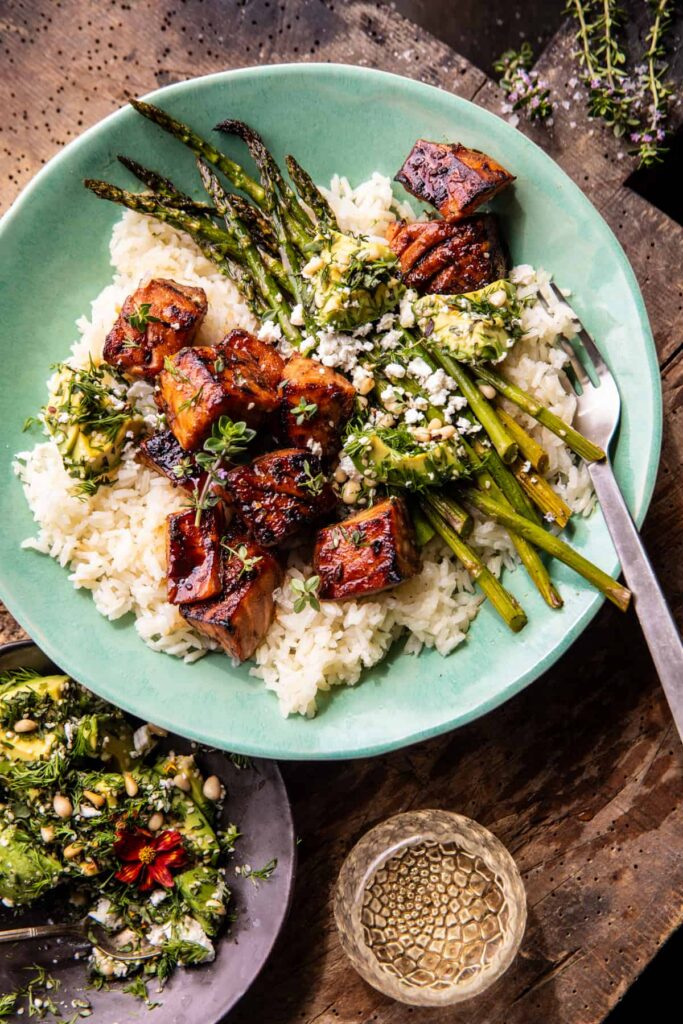
Spicy Honey Balsamic Salmon Bowls

Spicy Honey Balsamic Salmon Bowls

Spicy Honey Balsamic Salmon BowlsSpicy Honey Balsamic Salmon Bowls


1/3 C. balsamic vinegar

4 T. honey

2 T. tamari/soy sauce

2 cloves garlic, chopped

1 tsp. dried thyme

1 tsp. dried oregano

chili flakes

4 filets (4 oz.) salmon, cut into bite-size chunks

1 bunch asparagus, ends trimmed

2 T. olive oil or sesame oil

salt and black pepper

2 avocados, diced

2 T. lemon juice

2 T. toasted nuts/seeds

1/2 C. mixed herbs, chopped I use dill and basil

1/2 C. crumbled feta


Preheat the oven to 450° F. In a saucepan, combine balsamic vinegar, honey, tamari/soy sauce, garlic, thyme, oregano, and chili flakes. Set over medium heat. Bring to a boil for 3-4 minutes, until the sauce bubbles and begins to thicken. Remove from the heat. On a baking sheet, toss the salmon with half of the balsamic sauce and arrange in an even layer. Arrange the asparagus around the salmon, toss with 1 T. of oil and season with salt and pepper. Bake for 10-15 minutes or until the salmon is cooked to your liking. During the last minute, switch the oven to broil and broil until lightly caramelized. Toss the salmon with the remaining balsamic sauce. Meanwhile, combine the avocado with 1 T. of oil, lemon juice, herbs, nuts/seeds, and feta in a bowl. Season with salt. Spoon the asparagus and salmon over the bowls of rice. Top with lots of the avocado/feta salad mix. Enjoy!

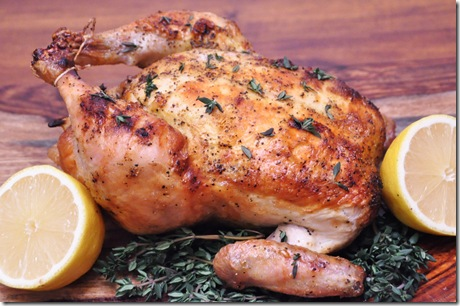
Crispy Roasted Lemon Pepper Chicken

Crispy Roasted Lemon Pepper Chicken

Crispy Roasted Lemon Pepper ChickenCrispy Roasted Lemon Pepper Chicken


1 3 1/2 to 4 lb. roasting chicken

1 1/2 T. lemon pepper

1 tsp. baking powder

1/2 lemon

3 cloves garlic

A few sprigs thyme


Place chicken breast-side down on work surface. Use tip of sharp knife to make four 1-inch incisions along back of chicken. Using fingers or handle of wooden spoon, carefully separate skin from thighs and breast. Using metal skewer, poke 15 to 20 holes in fat deposits on top of breast halves and thighs. Tuck wing tips underneath chicken. Combine lemon pepper, baking powder in small bowl. Pat chicken dry with paper towels and sprinkle all over with lemon pepper mixture. Rub in mixture with hands, coating entire surface evenly. Set chicken, breast-side up, in V-rack set on rimmed baking sheet and refrigerate, uncovered, for 12 to 24 hours. Adjust oven rack to lowest position and heat oven to 450 degrees. Using paring knife, poke 20 holes about 1 1/2 inches apart in 16- by 12-inch piece of foil. Place foil loosely in large roasting pan. Flip chicken so breast side faces down, and set V-rack in roasting pan on top of foil. Roast chicken 25 minutes. Remove roasting pan from oven. Using 2 large wads of paper towels, rotate chicken breast-side up. Continue to roast until instant-read thermometer inserted in thickest part of breast registers 135 degrees, 15 to 25 minutes. Increase oven temperature to 500 degrees. Continue to roast until skin is golden brown, crisp, and instant-read thermometer inserted in thickest part of breast registers 160 degrees and 175 degrees in thickest part of thigh, 10 to 20 minutes. Transfer chicken to cutting board and let rest, uncovered, for 20 minutes. Carve and serve immediately.

No Peek Chicken & Rice

No Peek Chicken & Rice

No Peek Chicken & Rice


2 T. olive oil

2 lbs. boneless, skinless chicken thighs

½ tsp. paprika

½ tsp. garlic powder

½ tsp. salt

¼ tsp. pepper

1 small sweet onion, diced

1 C. diced carrots

1 C. diced celery

4 cloves garlic, minced

2 tsp. fresh thyme

1 ½ C. basmati rice

3 C. chicken broth

8 oz. heavy whipping cream

½ C. shredded Parmesan cheese

½ C. shredded Gouda cheese

Kosher salt

fresh cracked pepper

Fresh parsley, chopped for garnish


Preheat the oven to 350 degrees. Prepare a 9×13 baking pan with cooking spray and set aside. Lay the chicken thighs out on a large cutting board. Combine paprika, garlic powder, ½ tsp. salt and ¼ tsp. pepper in a small bowl. Whisk together and sprinkle over both sides of the chicken. Heat olive oil in a skillet and sauté the chicken over medium high heat, for 1-2 minutes on each side. Remove from the pan (it’s okay if the chicken is not cooked completely through, it will continue cooking with the rice), and place the chicken in the 9×13 baking dish. In the same hot skillet, add the diced onion, carrots, and celery (mirepoix). Cook until the veggies are softened, for 6 minutes. Reduce heat to medium and add garlic and thyme, cooking for 1 minute. Making the sauce: Next pour in the chicken broth, heavy whipping cream, Parmesan cheese, Gouda cheese, and the basmati rice and stir. On medium-high heat cook, stirring the sauce, for about 5 minutes, then simmer for another 5-7 minutes to thicken the sauce. Pour the mixture over the chicken thighs in the 9×13 baking dish. Cover the dish with foil and bake for 40-50 minutes or until the rice is cooked and the chicken is cooked through. Remove the foil; garnish with fresh chopped parsley and enjoy! Optional to broil for 1-2 minutes after removing the foil, to brown the chicken.


Servings: 8
Serving Size: 1/8 of 9×13 pan

Calories: 461
Fat: 22 g
Fiber: 1 g
Protein: 31 g

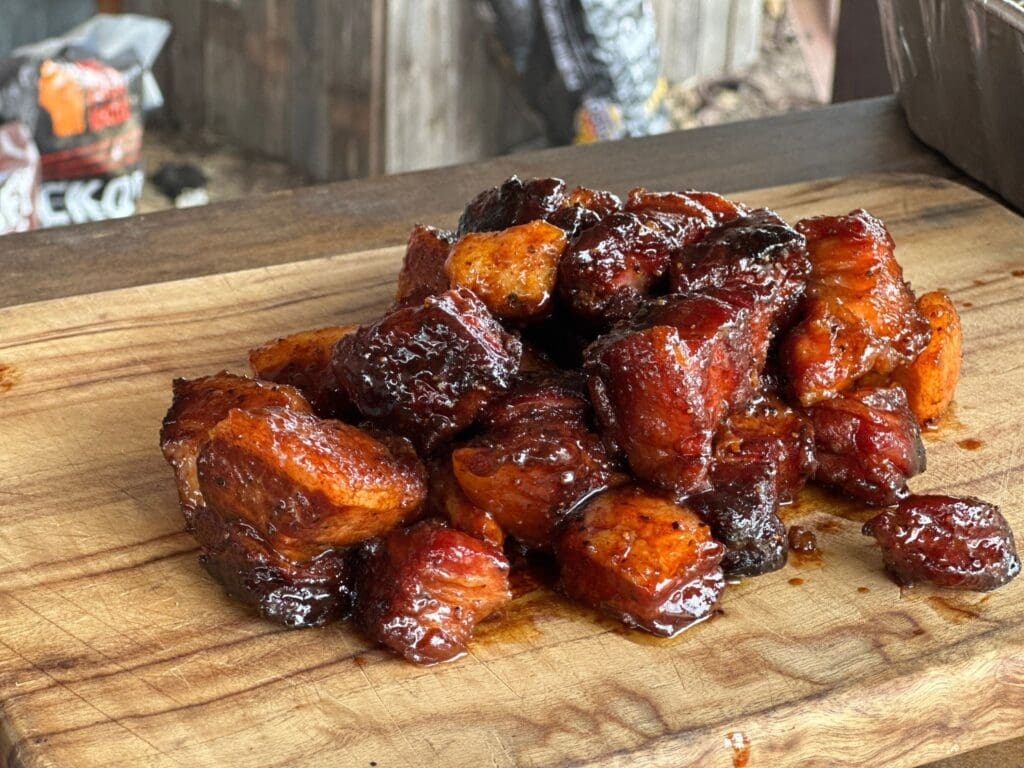
Pork Belly Burnt Ends

Pork Belly Burnt Ends

Pork Belly Burnt EndsPork Belly Burnt Ends


4 to 5 lb. pork belly skin off

1/2 C. Kent’s Rib Rub or your favorite all-purpose pork seasoning

1 T. coarse ground black pepper

⅓ C. light brown sugar plus more for sprinkling

2 sticks butter

½ C. BBQ sauce

½ C. honey

¼ C. cherry juice or 1 C. cherry preserves

3 T. hot sauce


Preheat the smoker to 250 to 275 degrees F. In a small bowl, combine the Rib Rub, black pepper and brown sugar. Cut the pork belly into 1½- inch cubes. Place the cubes in a large bowl and toss in the seasoning mixture, to generously coat. Place a wire rack in a large foil pan. Evenly spread the pork cubes on the wire rack. Cut 1 stick of butter into T. and place on top of the pork. Place the foil pan on the smoker and smoke for about 2 ½ to 3 hours, or until the internal temperature of the pork is 170 degrees F. I like to add a few chunks of hickory and cherry woods to the smoker for additional flavor. Remove the pan from the smoker and place the pork directly in the foil pan. Cut the remaining 1 stick of butter into T. and place on top of the pork. Sprinkle with additional brown sugar on top. Cover with tinfoil tightly and return to the smoker. Smoke for 1 hour. In a small bowl, whisk together the BBQ sauce, honey, cherry juice or preserves and hot sauce. Remove the tinfoil from the pan and pour the glaze over the pork belly cubes, and stir to coat. Smoke, uncovered, for 15 minutes. Remove from the heat and let cool slightly before serving.

Hawaiian Shoyu Hot Dogs Recipe

Hawaiian Shoyu Hot Dogs Recipe

Hawaiian Shoyu Hot Dogs Recipe


8 beef hot dogs

1 T.  vegetable oil

1/4 cup soy sauce

3 T.  (firmly-packed) brown sugar

Rice, cooked


Slice the hot dogs into 1/4-inch slices on the diagonal. In a medium-sized frying pan over medium-high heat, add oil and heat until warm.  Add the hot dogs and cook until they start to brown at the edges.  Next, add in the soy sauce and brown sugar; stir until sugar is dissolved.   Sauté the hot dogs in the sauce until the sauce starts to thicken and the hot dogs get a nice glazed look.  Remove from heat.  Serve the hot dogs over the cooked rice and drizzle a little of the sauce on top.

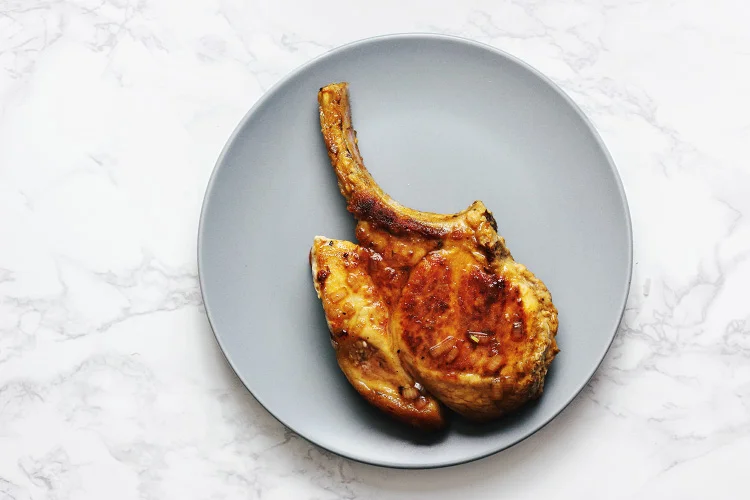
Gingery Glazed Pork Chops

Gingery Glazed Pork Chops

Gingery Glazed Pork ChopsGingery Glazed Pork Chops


1 tsp. grapeseed oil

1 T. flour

2 tsp. ground ginger

⅛ tsp. dried thyme

sea salt flakes

freshly ground black pepper

2 pork cutlets

1 small onion, finely chopped

2 T. apple cider vinegar

1 T. brown sugar


Over medium-high heat, warm the grapeseed oil, or other neutral oil of your choosing, in a thick-based pan which will accommodate the chops snuggly. Measure the flour, ground ginger and thyme onto a plate or into a plastic bag. Season well with salt and pepper and mix to combine. Pat the chops dry with paper towel and dredge on plate or in bag, shaking off the excess. When the oil is hot, fry the chops for 5 minutes a side, until golden and cooked through. Transfer to a loose foil tent. Add the chopped onion to the pan and cook, stirring, for a minute until it has softened and taken on some color. Add the apple cider vinegar and brown sugar. Continue to cook for a minute until syrupy. Return the chops to the pan, turning in the sauce until well coated and glazed. Serve immediately, spooning over the remaining pan juices.


Servings: 2
Serving Size: 1 pork cutlet with glaze

Calories: 323
Fat: 15 g
Fiber: 1 g
Protein: 31 g

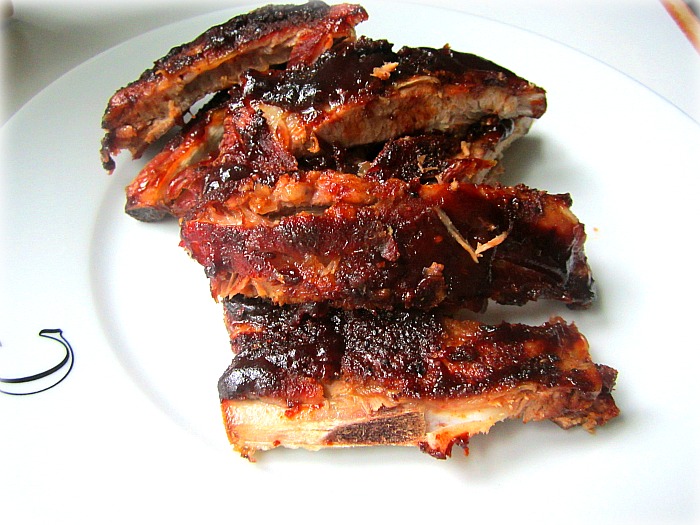
Fall off the Bone Pork Ribs

Fall off the Bone Pork Ribs

Fall off the Bone Pork RibsFall off the Bone Pork Ribs


1 T. garlic powder

1/4 C. of brown sugar

1 T. kosher salt

1 tsp. paprika

20 turns of black pepper

1 T. cumin

1 tsp. chili powder

1 tsp. oregano


I used these measurements for 2 racks of pork ribs, about 5 lb. each. Cut the ribs in half if they are too big (like mine were) to fit on the pan. Line a large baking sheet with foil and place the ribs on a rack (I used a cookie drying rack) on the lined sheet pan. Preheat oven to 250F. Rub the dry spices on top of the ribs and place in the hot oven. Bake uncovered for 2 hours. The house will start smelling great after 30 minutes. After 2 hours, depending on how wet you like your ribs, brush some BBQ sauce on top of the ribs. I used commercial BBQ sauce (STUBBS brand). Cover the entire sheet pan tightly with foil and bake for another 2 hours. The ribs will be tender and falling off the bone. They will melt in your mouth.

Sweet and Sour Roast Pork Tenderloin

Sweet and Sour Roast Pork Tenderloin

Sweet and Sour Roast Pork Tenderloin


1 (1-pound) Pork Tenderloin

1 tsp. garlic powder

1/2 tsp. salt

1/4 tsp. pepper

1 T.  vegetable oil

1/2 cup Thai sweet chili sauce (or other sweet and sour sauce)


Place a skillet or ovenproof sauté pan on the center rack in the oven then preheat the oven to 450°F. While the pan and oven heat up, trim any excess fat from the tenderloin and dry it thoroughly. Sprinkle it on all sides with the garlic powder, salt and pepper. Once the pan has been in the oven for 10 minutes, carefully remove it. Add the oil, swirling it to coat the entire bottom of the pan, then place the seasoned pork tenderloin in the pan. (If it’s too long, you can curve it slightly, but once you place it in the pan, don’t move it around because you want to get a good sear.) Return the pan to the oven and roast the pork for 10 minutes. Flip the pork once, reduce the oven to 400°F, and roast the pork for an additional 10 to 15 minutes or until it reaches an internal temperature of 145°F. Remove the pork from the oven, transfer it to a cutting board and brush it generously with the sweet chili sauce. (You can also reserve additional sauce for dipping.) Tent the pork tenderloin with foil and let it rest for 5 to 7 minutes before slicing and serving.


Servings: 4
Serving Size: about 3 oz. cooked pork plus 2 T. sauce

Calories: 249
Fat: 7 g
Fiber: 0 g
Protein: 24 g

Pollo Con Le Cipolle

Pollo Con Le Cipolle

Pollo Con Le Cipolle


6 cups Walla Walla Sweet Onions sliced very thin

3 Tablespoons extra dry virgin olive oil

Salt and black pepper

2 ½ to 3 pound chicken, cut into 6 pieces

¼ cup olive oil

½ cup flour spread on a plate

2 Tablespoons cognac or other grape brandy

2 Tablespoons chopped parsley


Choose a skillet or pan that can subsequently accommodate all the chicken pieces loosely. Put in the onion and olive oil, cover the pan and turn on the heat to low. Cook the onion slowly, until very soft, for no less than 1 hour. When the onion is soft, uncover the pan, add salt and generous grindings of pepper, turn up the heat, and sauté the onion until it becomes colored a pale nut brown. Remove from the heat. Wash the chicken pieces in cold water and pat them thoroughly dry with kitchen towels. Put the vegetable oil in a smaller skillet and turn on the heat to medium high. When the oil is hot but not smoking, turn the chicken pieces in the flour, one at a time, shake loose excess flour, and slip the chicken into the pan, as many pieces as will fit comfortably without being crowded. Cook until a fine golden crust forms on one side, then turn the pieces over and do the other side. When the chicken has formed a crust all over, transfer it with a slotted spoon or spatula to a platter, sprinkle with salt and pepper, and do another batch. When all the chicken is done, return the pan with the onion to the burner, turning the heat to medium height and keeping the pan uncovered. Add the chicken, turning it in onions 2 or 3 times. Add the brandy, turn the heat down to very low, and cover the pan. Cook for about 45 minutes, turning the chicken occasionally. The meat is done when it feels tender when is pricked with a fork.

Sheet Pan Dinner: Crispy Ramen Noodles with Glazed Tofu & Roasted Shredded Cabbage

Sheet Pan Dinner: Crispy Ramen Noodles with Glazed Tofu & Roasted Shredded Cabbage

Sheet Pan Dinner: Crispy Ramen Noodles with Glazed Tofu & Roasted Shredded Cabbage


Dried ramen noodles (at least 9 ounces) although you can use spaghetti if you can’t find ramen noodles (do NOT include any flavor packets)

2 T.s neutral oil, such as grapeseed

Kosher salt

1 14-ounce package extra-firm tofu, pressed to remove the liquid, patted dry and cut into 1/4-inch thick slices

Half a small head of cabbage, outer leaves and core removed, thinly sliced or shredded

A handful of cilantro leaves

For the marinade

4 T.s hoisin sauce

1/2 cup soy sauce

2 T.s sesame oil

2 T.s maple syrup

3 garlic cloves, minced or pressed

2 tsps sesame seeds

A good-sized (2″) knob of fresh ginger, peeled and finely minced or grated

A squirt of sriracha, or more to taste


if you like things spicy Preheat the oven to 450 degrees F. Bring a pot of water to a boil for the noodles. Make the marinade by combining all the ingredients in a small bowl and mixing well. Cook the noodles according to the package instructions then drain and toss with a splash of grapeseed or olive oil. Dip the tofu slices in the marinade on both sides and lay them on one of the baking sheets. Toss the sliced cabbage with salt and grapeseed oil until well-coated and lay it on the other half of the baking sheet the tofu slices are on. Put the tray in the oven and set a timer for 10 minutes. Meanwhile, arrange the ramen noodles on the other baking sheet. When the timer goes off, check the cabbage and tofu, stirring or flipping as needed then put it back in the oven along with tray of noodles and set a timer for 10 minutes. Check both trays and stir the noodles some to ensure that the ones on top get crispy but not burned, toss the remainder of the marinade over the noodles and bake for another 5 minutes or until the top noodles are crispy and lightly browned. Remove trays, let cool, sprinkle with sesame seeds, chopped scallions, fresh cilantro and serve.

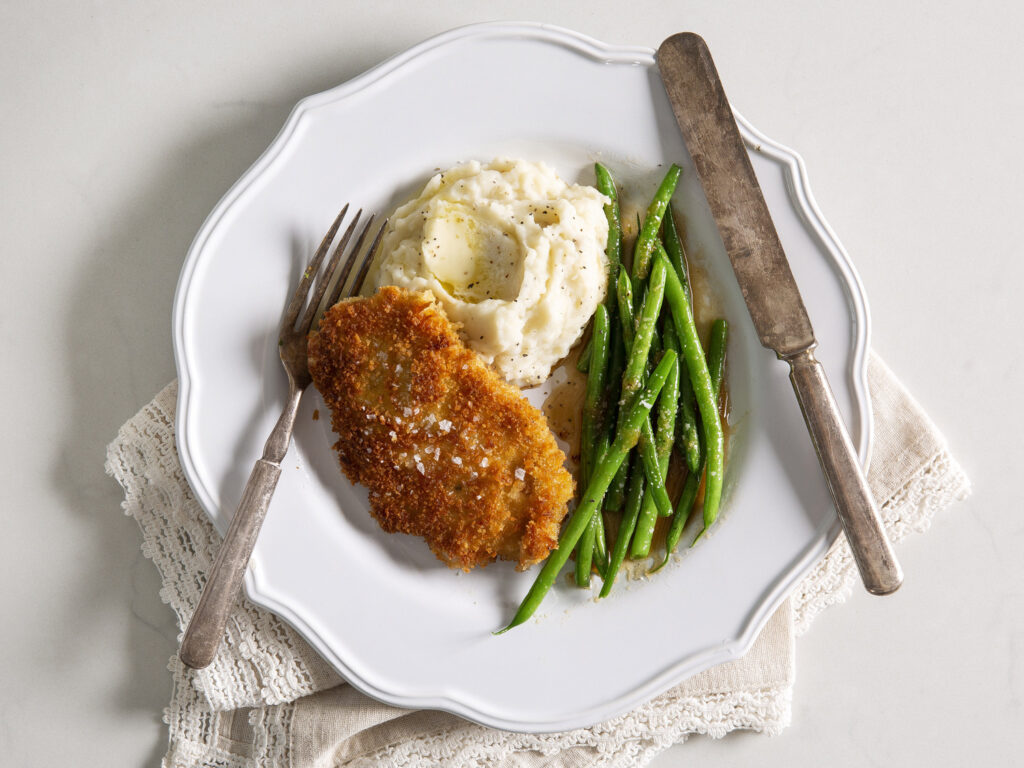
Pan-Fried Pork Chops with Mashed Potatoes and Green Beans

Pan-Fried Pork Chops with Mashed Potatoes and Green Beans

Pan-Fried Pork Chops with Mashed Potatoes and Green Beans


4 T. butter, divided

6 pork rib chops

1 1⁄4 tsp. salt, divided

1 1⁄4 tsp. pepper, divided

1⁄4 cup chopped onion

3⁄4 cup chicken broth

1 T. Dijon mustard

1⁄4 cup chopped fresh chives, divided

2 T. chopped fresh parsley, divided

2 lb Yukon gold potatoes, peeled and cubed

1⁄2 cup whole milk

1 lb fresh green beans, trimmed

2 tsp. minced garlic


For Pork Chops: Melt 1 T. butter in a large nonstick skillet over medium heat. Season pork chops evenly with 1⁄2 tsp. salt and 1⁄2 tsp. pepper. Add pork chops to skillet; cook 7 minutes per side or until done. Remove pork chops from pan, and keep warm. Add onion to pan; cook 3 minutes or until tender. Add broth. Bring to a boil, and cook 3 minutes or until reduced to about 1⁄2 cup. Stir in mustard, 1 T. chives, 1 T. parsley and 1⁄4 tsp. pepper.  For Potatoes: Place potatoes in a large saucepan; add water to cover. Bring to a boil; simmer 10 minutes or until tender. Drain. Return potatoes to pan. Add milk, 2 T. butter, 3 T. chives, 1 T. parsley, 1⁄2 tsp. salt and 1⁄4 tsp. pepper; mash.  For Green Beans: Melt remaining 1 T. butter in a large skillet over medium-high heat. Add green beans, garlic, 1⁄4 tsp. salt and 1⁄4 tsp. pepper. Sauté 5 to 7 minutes or until tender.


Servings: 6
Serving Size: 1 pork chop with sauce, about 3/4 C. potatoes, and 1/6 of the green beans

Calories: 508
Fat: 25 g
Fiber: 6 g
Protein: 38 g

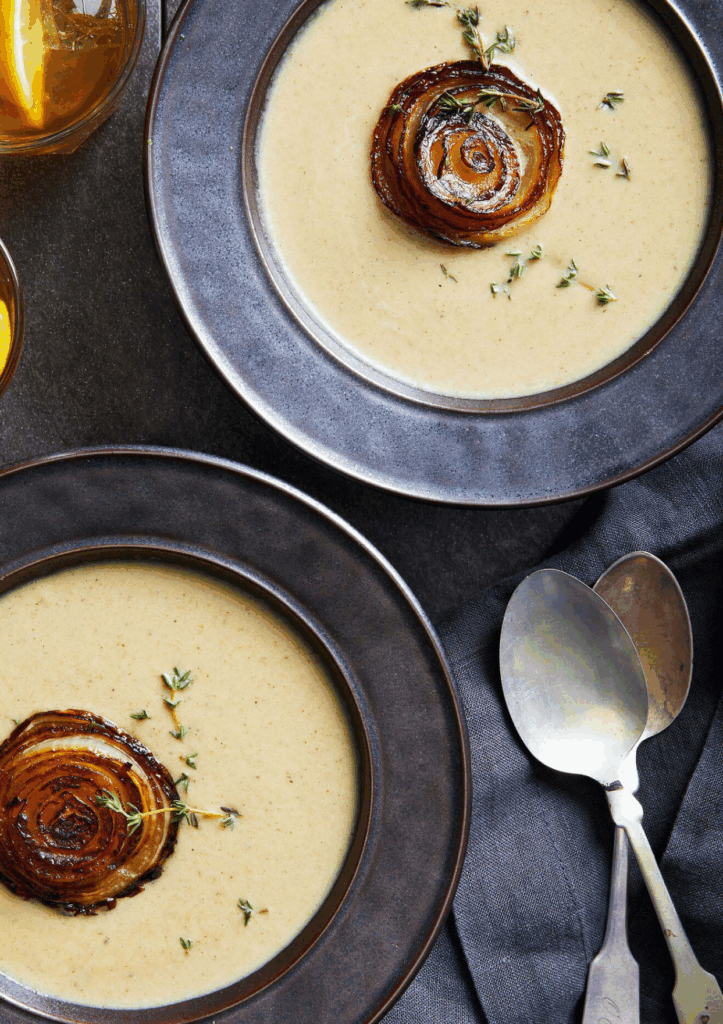
Creamy Onion Soup

Creamy Onion Soup

Creamy Onion Soup

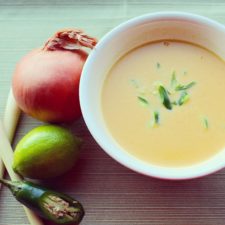
This light and creamy onion soup gets its texture from oat or almond milk. Or, if you want a more indulgent treat, you could stir in a little half-and-half at the end to enrich the soup. Either way, this oniony soup is delicious and satisfying, especially with its roasted onion rings on top.


7 large onions

2 T. olive oil

1 T. thyme leaves (or 1/2 tsp. dried), plus more for garnish

2 tsp. kosher salt, plus more for seasoning

1/2 tsp. freshly ground black pepper, plus more for seasoning

1 or 2 fresh thyme sprigs

4 cups low-sodium chicken or vegetable broth

1 tsp. unsalted butter

1 cup plain unsweetened oat or almond milk


Sauté the onions: Chop 6 of the onions (to make about 6 cups of chopped onions). Heat 1 T. of the olive oil in a large (at least 6-quart) soup pot over high heat. Add the chopped onions, the thyme leaves, 1/2 tsp. of the salt, and the pepper. Cook, stirring, until the onions begin to soften, about 10 minutes. Reduce the heat to low and continue to cook the onions until they are golden and caramelized, stirring often to prevent them from burning and sticking to the pot, adding 1 to 2 T. of water as needed. This should take 30 to 35 minutes.   Roast the onion rings: Preheat the oven to 375°F. Peel the remaining onion and cut it into four 1/2-inch rounds. Line a baking sheet with parchment paper. Brush both sides of the onion rounds with the remaining 1 T. olive oil and season generously with salt and pepper; scatter on the thyme sprigs. Roast the onion rounds until tender and golden, 30 to 35 minutes. Discard the thyme sprigs.  Make it soup: Add the broth to the pot with the onions, then add the butter and remaining 1/2 tsp. salt. Bring the soup to a boil over high heat, reduce the heat to medium, and simmer until the onions have absorbed a bit of the liquid, about 10 minutes. Add the milk and stir to incorporate, then use an immersion blender to puree until smooth (or transfer in batches to a stand blender or food processor), 30 to 45 seconds. Season to taste with more salt and pepper. Serve the soup: Divide the soup among 4 bowls, top each bowl with a roasted onion round, then garnish with the remaining thyme leaves. Serve hot.


Servings: 4
Serving Size: about 1 2/3 C.

Calories: 217
Fat: 10 g
Fiber: 5 g
Protein: 5 g

Chicken Paprikash’s Tomatoey Cousin

Chicken Paprikash’s Tomatoey Cousin

Chicken Paprikash’s Tomatoey Cousin


4 (8 ounce) skin-on bone-on chicken breasts

Salt

2 T. Canola Oil

2 Medium Yellow Onions (Thinly Sliced)

4 Large Garlic Cloves (Thinly Sliced)

1 Large Red Bell Pepper (Thinly Sliced)

3 T. Sweet Hungarian Paprika

1/2 TSP Cayenne Pepper

2 Medium Plum Tomatoes (Cored and roughly chopped)

2 C Chicken Stock

1 T. Red Wine Vinegar


Preheat the oven to 350°F. Position a rack in the center of the oven. Season the chicken breasts with salt. Heat the canola oil in an ovenproof medium sauté pan set over medium heat. When the oil begins to smoke lightly, after 2 to 3 minutes, remove the pan from the heat and add the chicken breasts, skin-side down. Return the pan to the heat and cook until the skin is browned, 5 to 8 minutes. Remove the chicken from the pan (you’ll use the pan again), transfer it to a plate, cover with foil, and keep warm. Add the onions, garlic, bell pepper, paprika, and cayenne to the pan you used to brown the chicken. Cook over medium heat until the onions are translucent, 5 to 8 minutes. Stir in the tomatoes, chicken stock, and vinegar and cook until the sauce comes together, 12 to 15 minutes. Taste for seasoning. Arrange the chicken breasts, skin-side up, in the sauce. Place the pan in the oven on the center rack and bake the chicken until the skin is golden brown and the juices run clear when the thickest part of a breast is pierced with the tip of a knife, 20 to 25 minutes. (Alternatively, an instant-read thermometer should read 165°F when inserted into the thickest part of the breast.) Remove the pan from the oven and let the chicken rest for 10 to 15 minutes in the sauce. SERVE: Taste the sauce for seasoning. Arrange the chicken breasts on a platter and serve topped with the sauce. Note:  Needed much longer cooking time for chicken


Servings: 4
Serving Size: 1 chicken breast with sauce

Calories: 458
Fat: 25 g
Fiber: 4 g
Protein: 43 g

Weeknight Chicken Cordon Bleu

Weeknight Chicken Cordon Bleu

Weeknight Chicken Cordon Bleu


6 slices of thinly sliced chicken breast

6 slices swiss chese

6 slices honey ham

3 tablespoon dijon mustard

Salt and pepper to taste

1 ½ cups panko breadcrumbs

1 ½ cups regular breadcrumbs


1 ½ tablespoon butter

1 ½ tablespoon flour

1 cup milk

½ cup chicken broth

1 ½ tablespoon Dijon mustard

½ teaspoon Worcestershire sauce

¼ cup parmesan cheese grated

½ teaspoon dried thyme

Salt and pepper


Preheat oven to 350 degrees F. With a brush or back of a spoon, smear dijon thinly on each chicken breast, covering from end to end. You can do one or both sides of each breast. Season with salt and pepper on each side of each chicken breast. On the widest end of the breast, fold up ham and cheese and place on it, then fold the other end of the breast over the ham and cheese. In a shallow dish, spread out breadcrumbs and place the folded chicken in. Cover each side well in breadcrumbs then place in an oven-safe dish. Bake for 25 to 30 minutes, or until golden brown and cooked through. While cooking begin making parmesan-dijon cream sauce. Serve with sauce.

Chicken Topped with Rosemary Stuffing

Chicken Topped with Rosemary Stuffing

Chicken Topped with Rosemary Stuffing


4 boneless, skinless chicken breast portions (each 4-6 ounces)

1 1/2 T. butter

1/2 C. finely chopped onion

1 C. finely chopped mushrooms

1 T. chopped fresh rosemary (or 1 1/2 tsp. dried)

1 T. chopped fresh parsley

Salt and pepper

2 heaping C. dried bread cubes

1/2 to 2/3 C. chicken broth, warmed

1 T. melted butter


Oil a large baking pan or line it with parchment paper. Trim excess fat off chicken breasts. Flatten the thickest parts of each breast by pounding them lightly with the heel of your hand. Lay chicken in pan.  Heat oven to 350 degrees. Melt butter in large skillet over medium flame. Stir in onion, mushrooms, parsley and rosemary. Season with salt and pepper. Cook, stirring often, until vegetables are tender, about 10 minutes. Toss in bread cubes. Stir in enough chicken broth to make a moist stuffing. Brush chicken breasts with melted butter. Cover each one with a mound of stuffing, pressing it to adhere to the chicken. Bake until stuffing has browned and chicken is cooked through, 20 to 25 minutes.

Maple BBQ Salmon with Brown Butter Couscous

Maple BBQ Salmon with Brown Butter Couscous

Maple BBQ Salmon with Brown Butter Couscous


2 pounds salmon filets

1 T. brown (or maple!) sugar

1 tsp. garlic powder

1 tsp. smoked paprika

½ tsp. salt

½ tsp. freshly ground black pepper

¼ tsp. cumin

2 to 3 T. maple syrup


1 T. unsalted butter

1 C. uncooked pearl couscous

1 ¼ C. chicken or vegetable stock or water

pinch of salt

2 T. unsalted butter

1 garlic clove, minced


Preheat the oven to 400 degrees F. Place the salmon on a baking sheet. In a small bowl, whisk together the sugar, garlic powder, paprika, salt, pepper and cumin. Sprinkle it all over the salmon filets. Drizzle each filet with the maple syrup and use a spoon to kind of “spread” it all over the filet. Roast for 10 to 15 minutes, until the salmon just flakes with a fork. If desired, you can brush with a little more maple syrup when it comes out of the oven. Top with chopped chives. Serve immediately with brown butter couscous! Heat a large saucepan over medium heat and add the butter. Stir in the couscous until coated, then cook for 2 to 3 minutes, stirring, until the couscous is slightly toasty. Add in the stock and salt and bring the mixture to a boil. Once boiling, reduce to a simmer and cover. Cook for 15 minutes, or until the liquid is absorbed. While the couscous is cooking, heat a small saucepan over medium heat and add the butter. Cook, whisking often, until brown bits appear on the bottom of the pan. Remove the butter from the heat and stir in the garlic cloves. Once the couscous is finished, drizzle with the garlic brown butter. Toss and serve.

Shrimp and Creamy Goat Cheese Grits

Shrimp and Creamy Goat Cheese Grits

Shrimp and Creamy Goat Cheese Grits


4 cups water

1 cup stone-ground grits

4 ounces goat cheese

1/4 cup parmesan cheese

2 T. unsalted butter, divided

4 slices bacon, chopped

1 pound medium shrimp (about 30), peeled

Freshly ground black pepper

10 button mushrooms, thinly sliced

1 garlic clove, finely chopped

1 large tomato, chopped

1/2 cup chicken broth

1 T. fresh lemon juice

1/2 tsp. hot sauce

4 green onions, thinly sliced


In a medium saucepan, bring water to a boil over high heat. Reduce heat to low and whisk in grits. Cook, whisking frequently, until grits are tender and creamy, 20 to 30 minutes. Whisk in goat cheese, parmesan, and 1 T. butter. Cover and keep warm. Cook bacon in a large skillet until crisp, about 10 minutes. Using a slotted spoon, transfer bacon to a paper towel-lined plate; set aside. Reserve bacon fat in skillet. Add shrimp to bacon fat and cook, turning once, until bright pink, about 2 minutes. Transfer shrimp to a plate with a slotted spoon. Lower heat to medium; add mushrooms, garlic and tomato to skillet and cook 5 minutes. Add chicken broth, and scrape bottom of skillet with a wooden spoon. Return shrimp to skillet along with lemon juice, remaining butter, and hot sauce and cook, stirring frequently, until sauce thickens, about 1 minute. Divide grits between 4 bowls; top each with shrimp mixture. Top with bacon and green onions.


Servings: 4
Serving Size: 1 bowl (1/4 of recipe)

Calories: 531
Fat: 27 g
Fiber: 3 g
Protein: 39 g

Sweet ‘N’ Tangy Flank Steak

Sweet ‘N’ Tangy Flank Steak

Sweet ‘N’ Tangy Flank Steak


1/3 C. reduced-sodium soy sauce

1/3 C. brown sugar

1/4 C. scallions, sliced

1 T. sesame oil

1 T. sesame seeds

2 tsp. chopped garlic

1 tsp. minced fresh ginger

1 flank steak (about 2 lbs)


Stir soy sauce, sugar, scallions, sesame oil, sesame seeds, garlic and ginger together in a bowl. Fold the flank steak into thirds. Place in a large resealable plastic food storage bag. Pour the soy sauce and brown sugar mixture into the bag. Seal bag and turn over to cover steak. Place in refrigerator for two hours. Heat grill or broiler. Remove steak from bag. Place marinade in small saucepan and bring to a boil. Reduce heat and simmer 5 minutes. Grill or broil steak for 5 minutes per side or until meat registers 135 degrees. Allow meat to rest for 5 minutes before slicing.


Servings: 8
Serving Size: about 3 oz. sliced steak with sauce

Calories: 240
Fat: 9 g
Fiber: 0 g
Protein: 25 g

Agave Lime Chicken

Agave Lime Chicken

Agave Lime Chicken


1/2 cup agave

1/4 cup lime juice

1-1/4 tsp. grated lime peel, divided

Salt

1 tsp. rosemary, crushed

Red hot pepper

Pepper

1/8 tsp. dried crushed

2 boneless skinless chicken breast halves (8 to 10 oz. each)

1 tsp. cornstarch

1 T. water


Combine agave, lime juice, 1 tsp. lime peel, salt, rosemary and pepper; mix well. Sprinkle chicken breasts with salt and pepper to taste. Bake at 375°F for 30 minutes; brush with agave mixture and bake 15 minutes longer or until juices run clear. Remove chicken from baking pan; pour remaining sauce into pan and deglaze. Strain mixture into small saucepan; bring mixture to boil. Combine cornstarch and water; add to strained sauce. Cook and stir until mixture comes to boil. Boil 1 minute. Stir in remaining lime peel. Slice chicken breast; pour hot sauce over slices.

Slow-Cooker Lemony Chicken and Rice with Spinach and Feta

Slow-Cooker Lemony Chicken and Rice with Spinach and Feta

Slow-Cooker Lemony Chicken and Rice with Spinach and Feta


1 small onion, peeled and finely chopped

2 T. EVOO

3 small cloves garlic, peeled and minced

2 tsp. fresh oregano or ½ tsp. dried

1 tsp. Salt, divided

½ C. Chicken Broth (half and half?)

1 ½ C. Instant White Rice

8 boneless skinless chicken thighs (small to medium in size), trimmed and any fat discarded

¼ tsp. Pepper

2 C. fresh baby spinach leaves

½ C. crumbled feta cheese

1 tsp freshly grated lemon zest

2 T. fresh lemon juice

2 T. minced Parsley


Microwave onion, oil, garlic, oregano, and 1/2 tsp. salt in bowl, stirring occasionally, until onion is softened, about 5 minutes; transfer to slow cooker. Stir in broth. Sprinkle chicken with remaining 1/2 tsp. salt and pepper and nestle into slow cooker. Cover and cook until chicken is tender, 4 to 5 hours on low. Transfer chicken to plate. Stir rice into slow cooker. Arrange chicken on top of rice, adding any accumulated juices. Cover and cook on high until rice is tender, 20 to 30 minutes. Transfer chicken to serving platter and tent loosely with aluminum foil. Gently stir spinach into slow cooker, 1 handful at a time, and let sit until wilted, about 5 minutes. Stir in lemon zest and juice, and season with salt and pepper to taste. Transfer rice to dish with chicken and sprinkle with feta and parsley. Serve.

Seared Scallops with Shaved Fennel Cucumber and Grapefruit

Seared Scallops with Shaved Fennel Cucumber and Grapefruit

Seared Scallops with Shaved Fennel Cucumber and Grapefruit


1 Ruby Red grapefruit

1 T. extra-virgin olive oil, divided

3/4 pound large sea scallops

1/2 tsp. coarse salt, divided

Freshly ground pepper

3 ounces English cucumber, thinly shaved crosswise on a mandoline (3/4 cup)

1 T. fresh lemon juice

1 T. chopped fresh chives

1 tsp. finely chopped fresh tarragon leaves

1/2 large fennel bulb (5 1/2 ounces), cut in half (root end trimmed but left intact to keep fennel together)


Finely grate enough grapefruit rind to yield 1/2 tsp. zest. Peel grapefruit with a paring knife, removing all pith. Working over a bowl, cut three-quarters of the grapefruit segments from the membranes, cut into bite-size pieces, and set aside. Squeeze juice of remaining grapefruit segments into bowl (you should have 1/3 cup juice). Heat 1 tsp. oil in a nonstick sauté pan over medium-high heat. Pat scallops dry, sprinkle with 1/4 tsp. salt, and season with pepper. Sauté scallops until deep golden brown, about 3 minutes. Flip, and continue to cook until barely opaque all the way through, about 2 minutes more. Divide scallops between 2 plates, and loosely tent with foil. Reduce heat to low and add grapefruit juice. Cook, stirring and scraping up browned bits, until reduced to 1 T., 2 to 3 minutes. Pour sauce over scallops. Combine cucumber, lemon juice, remaining 2 tsp. oil, the grapefruit zest and pieces, chives, tarragon, and remaining 1/4 tsp. salt in a bowl. Shave fennel into bowl, season with pepper, and toss gently to combine. Pile salad atop scallops.


Servings: 2
Serving Size: 1/2 of recipe (about 6 oz. scallops with salad)

Calories: 261
Fat: 8 g
Fiber: 5 g
Protein: 23 g

Moules Marinieres (Sailor-Style Mussels)

Moules Marinieres (Sailor-Style Mussels)

Moules Marinieres (Sailor-Style Mussels)


5 T. unsalted butter, divided

3 T. extra-virgin olive oil, divided, plus more for bread

3 celery stalks, thinly sliced

3 medium onions, halved and thinly sliced

4 garlic cloves, minced

2 C. local white wine or Narragansett Beer, divided

3 C. (24 ounces) bottled clam juice

1 tsp. freshly ground black pepper

1 tsp. red chili flakes

Kosher or sea salt

6 pounds mussels, scrubbed and de-bearded*

1 C. diced roasted red peppers

2 T. chopped flat-leaf parsley

1 C. thinly chopped fresh scallions (for garnish)

Fresh focaccia or baguette, sliced, brushed with olive oil and lightly toasted


Heat 4 T. butter and 1 T. olive oil in a medium saucepot over medium heat. Add celery, onions and garlic. Stir well and sweat the vegetables until the onions are soft and translucent, approximately 5 minutes. Add 1 ½ C. white wine (or beer) and reduce by half (approximately 10 minutes). Add clam juice along with pepper and red chili flakes. Bring to a boil, reduce heat and simmer 15 minutes. Taste for seasoning. In a separate large sauté pan, add 2 T. olive oil and heat over medium-high heat. When hot, add mussels and cover briefly to prevent oil from splattering, remove lid and sauté for 1–2 minutes. Add ½ C. wine (or beer) and diced red peppers. Reduce until a few T. of liquid remain. Add the prepared broth, and cover for 4–5 minutes, stirring occasionally, until all mussels are open. Add remaining 4 T. butter and chopped parsley and stir to incorporate. Divide mussels and broth among 6 warm shallow bowls, garnish with scallions and serve with plenty of toasted bread for dipping.


* Note: If mussel shells are slightly open, simply tap or press on the shell—after about 5 seconds, the shell should close. If not, the mussel is dead so discard it.

Fennel-Roasted Chicken and Winter Squash with Endive-Apple Salad

Fennel-Roasted Chicken and Winter Squash with Endive-Apple Salad

Fennel-Roasted Chicken and Winter Squash with Endive-Apple Salad


8 chicken thighs (with skin and bones)

2 T. fennel seeds, coarsely crushed (use a mortar and pestle or crush under a heavy skillet)

Kosher salt and freshly ground black pepper

1 small or 1/2 large kabocha or acorn squash (about 2 1/4 pounds), halved if whole, seeded, and cut into 1-inch-wide wedges

2 T. olive oil


3 T. cider vinegar

3 T. minced shallots

2 T. honey
(for vegan: substitute with agave nectar or pure maple syrup)

1 T. Dijon mustard

1 T. finely chopped fresh tarragon

1/4 cup extra-virgin olive oil

Kosher salt and freshly ground black pepper


6 ounces Belgian endive (about 2 heads)

5 ounces baby arugula (about 8 cups not packed)

1 Fuji or Gala apple, cored and very thinly sliced

3/4 cup walnuts, toasted and very coarsely chopped

3/4 cup coarsely crumbled blue cheese


To roast the chicken and squash: Preheat the oven to 450°F. On a large heavy baking sheet, toss the chicken with 1 T. of the fennel seeds to coat. Season with salt and pepper. Arrange the chicken pieces well apart on the baking sheet. Roast the chicken on the bottom shelf of the oven for 10 minutes. Meanwhile, on another large heavy baking sheet, toss the squash with the olive oil and the remaining 1 T. fennel seeds to coat. Season with salt and pepper. Arrange the squash in a single layer on the baking sheet. Move the chicken to the top shelf of the oven and place the squash on the bottom shelf. Roast for about 25 minutes, or until the squash is tender and the undersides are deep golden brown and the chicken shows no sign of pink when pierced at the bone with the tip of a small sharp knife.

Meanwhile, make the vinaigrette: In a medium bowl, whisk the vinegar, shallots, honey, mustard, and tarragon until blended. Whisk in the olive oil. Season to taste with salt and pepper. To assemble the salad and serve: Remove hard cores from the endive. Cut the small leaves in half lengthwise, and quarter the large leaves lengthwise. In a large bowl, toss the endive, arugula, and apple slices with about half of the vinaigrette. Divide the salad among four dinner plates. Top each with 2 chicken thighs and some squash, and sprinkle with the walnuts and blue cheese. Drizzle the remaining vinaigrette over and around the salads and serve immediately.


Servings: 4
Serving Size: 2 chicken thighs with squash and salad

Calories: 866
Fat: 62 g
Fiber: 9 g
Protein: 42 g

Crispy Prosciutto and Sage Wrapped Chicken with Creamy Pistachio Noodles

Crispy Prosciutto and Sage Wrapped Chicken with Creamy Pistachio Noodles

Crispy Prosciutto and Sage Wrapped Chicken with Creamy Pistachio Noodles


2 honeycrisp apples cored + chopped

4 chicken breasts or chicken thighs

2 cloves garlic grated

1/4 tsp. salt

1/4 tsp. pepper

1 bunch sage divided

8 slices thin prosciutto

2 T. olive oil


Creamy Pistachio Noodles


1 pound fettucinne noodles or other long cut pasta


1/3 cup shelled pistachios

2 T. butter divided

1 T. flour

1 1/4 cup milk I used 2%

1/2 cup cream

3/4 cup freshly grated parmesan cheese plus more for garnish

1/4 tsp. crushed red pepper

salt + pepper to taste


Preheat the oven to 425 degrees F. Grease 9×13 inch baking dish. Scatter the chopped apples on the bottom of the dish and toss with 1 tsp. olive oil and a pinch of salt + pepper. Season the chicken with salt and pepper and then rub with the grated garlic. Arrange 3-4 sage leaves on top of each breast and wrap with 2 slices prosciutto, overlapping slightly and tucking edges under. In a large skillet, heat 1 T. olive oil over medium-high. Add the chicken, and sear until crisp, about 3 minutes per side. Remove the chicken from the pan and place each breast in the baking dish right on top of the apples. Bake for 15 to 20 minutes, or until cooked through. While the chicken bakes make the noodles. Bring a large pot of salted water to a boil. Boil the pasta according to package directions. Drain. Add the pistachios to a food processor and process until the pistachios have become a powder. Now in the same skillet you cooked the chicken in, add 1 T. butter, once melted add the remaining sage leaves and cook 30 seconds per side. Remove from the pan and set aside. Add another T. of butter, once it’s melted and bubbly add the flour. Whisk together to create a roux and cook for 1-2 minutes until mixture gets a bit golden in color. Add the milk and cream, stir and turn down heat to low. Add the crushed red pepper and season with salt and pepper. Continue stirring until milk thickens. Add in parmesan, pistachio powder. Stir to combine and then add the pasta. Cook another minute, adding milk if the sauce seems too thick. Serve the chicken and apples over the creamy pistachio noodles. Garnish with the crispy sage and fresh parmesan.


Servings: 4
Serving Size: 1 chicken breast with apples and 1/4 of noodles

Calories: 1138
Fat: 45 g
Fiber: 7 g
Protein: 72 g

Beer-Braised Chicken Thighs with Kale and Polenta

Beer-Braised Chicken Thighs with Kale and Polenta

Beer-Braised Chicken Thighs with Kale and Polenta


4 bone-in, skin-on chicken thighs

Kosher or sea salt

Freshly ground black pepper

4 T. unsalted butter, divided

1 T. olive oil

1 medium shallot, peeled, trimmed, finely chopped

2 tsp. fresh thyme leaves, divided

1 (12-ounce) can beer, such as Narragansett Lager

2½ cups water

1 cup corn meal, such as Kenyon’s stone-ground corn meal

2 T. grated Pecorino Romano

1 bunch kale, washed, stemmed and coarsely chopped


Rinse the chicken thighs in cold water, pat them dry and season with salt and pepper. In a large sauté pan with a lid or a Dutch oven, melt 2 T. of butter over medium heat then add the oil. Place chicken into the pan, skin side down, and cook until the skin is brown, 6 to 8 minutes. Remove the chicken from the pan. Reduce the heat to medium-low, add the shallots and sauté until they’re translucent, 1 to 2 minutes, then add the thyme and beer, scraping up any browned bits from the bottom of the pan. Return the chicken thighs to the pot, skin side up, increase the heat slightly to bring the beer to a gentle simmer, then cover and cook for 35 to 40 minutes. While the chicken cooks, bring the water to a boil in a large saucepan. Gradually stir in the corn meal, stirring frequently for 15 to 20 minutes until it begins to pull away from the sides of the pan. Remove from the heat, then stir in 1 T. of butter, 1 tsp. fresh thyme and 2 T. of grated Pecorino Romano. Add the kale to the chicken, using a spoon to gently submerge it into the liquid. Once the kale has wilted and is bright green (5 to 10 minutes), remove the pan from the heat, stir in 1 T. butter and season with salt and pepper. Serve the chicken and kale over the polenta, adding some of the delicious pan sauce over each serving.

Great Northern Beans, Sauteed Spinach, Cornbread

Great Northern Beans, Sauteed Spinach, Cornbread

Great Northern Beans, Sauteed Spinach, Cornbread


2 pounds dried Great Northern beans, soaked overnight

1 ham hock

2 T. chicken or ham base/concentrate or 1 packet Goya ham concentrate

2 bay leaves

2 tsp. onion powder

2 tsp. garlic powder

2 celery stalks, sliced thin

Dash of cayenne pepper (optional, if you like a bit of heat)

1 tsp. table salt, plus more to taste

1 tsp. ground black pepper, plus more to taste

1/2 of a ham steak (for more meat in the beans), optional


Drain the water from the soaked beans and remove any funky-looking beans or rocks. Return the beans to the slow cooker and add fresh water to cover the beans by 1 or 2 inches. Add the ham hock, chicken or ham base, bay leaves, onion powder, garlic powder, celery, cayenne (if using), salt, and pepper. Most newfangled slow cookers will thoroughly cook soaked beans in 4 to 6 hours on low or 2 to 4 hours on high. I apparently need a new slow cooker, because it took my old geezer 8 hours on low to cook these until tender. Bottom line: your mileage may vary if you have an older model. If at any time you think they are taking too long on low, just switch it over to a higher setting for a while. If you are using the ham steak, add it to the slow cooker about 15 minutes before serving to heat it through. Remove the ham hock before serving. Feel free to remove the meat from the bone and add it back to the beans. Adjust the seasoning with salt and pepper and discard the bay leaves.


Sauteed Spinach


1 pound baby spinach (more if you have a larger family or want leftovers)

2 T. olive oil

3 or 4 garlic cloves, minced (or more or less, to taste)

Pinch of cayenne pepper (or skip it if you don’t like the heat!)

Table salt, to taste

2 to 3 T. heavy cream (more or less, optional but yummy)


Rinse the spinach, even if it is prerinsed, because this will help wilt it. Working in batches, toss the spinach into a dry pan over medium-high heat. Stir and toss to keep it from sticking and remove it when very wilted. Add the next batch and repeat the process until it is all finished. Set all the wilted spinach aside. In the same pan, heat the oil over medium heat. Add the garlic and cook for a minute until fragrant. Add the spinach back into the pan and toss to coat with the garlicky, oily goodness. Stir in the cayenne and salt. If feeling decadent, add a bit of heavy cream and heat until just warm.


Skillet Cornbread


1 ¼ C. Cornmeal

¾ C. Flour

1/4 cup granulated sugar

1 tsp. kosher salt

2 tsp. baking powder

1/2 tsp. baking soda

1/3 cup whole milk

1 cup buttermilk

2 eggs, lightly whisked

8 T. (1 stick) unsalted butter, melted, plus 1 T.


Preheat the oven to 425°F and place a 9-inch cast-iron skillet inside to heat while making the batter. In a large bowl, whisk the cornmeal, flour, sugar, salt, baking powder, and baking soda. Add the milk and buttermilk and stir to combine. Add the eggs and stir to combine. Whisk in the melted butter. Carefully remove the hot skillet from the oven. Reduce the oven temperature to 3 75 °F. Add the remaining T. of butter and swirl it around the pan to melt. Pour the batter evenly into the skillet and place it in the center of the oven. Bake until the center is firm and a cake tester or toothpick inserted into the center comes out clean, 20 to 25 minutes. Let cool for 10 to 15 minutes before serving.
Pan-Seared Scallops with Butternut Squash Puree

Pan-Seared Scallops with Butternut Squash Puree

Pan-Seared Scallops with Butternut Squash Puree


1 pounds large sea scallops (10 to 20 per pound)

2 pounds butternut squash

4 T. unsalted butter

¾ tsp. Curry Powder

2 T. vegetable oil

3 scallions


Remove and discard tendons from scallops, place on rimmed baking sheet lined with dish towel, and top with another towel. Blot moisture gently and let sit with towels for 10 minutes. Meanwhile, peel and seed squash, then cut into 1-inch chunks . Place squash in bowl, cover, and microwave until tender, 8 to 12 minutes, stirring halfway through cooking. Drain squash and transfer to food processor. Add 1 T. water, 1 T. butter, curry powder, and ¥2 tsp. salt and process until smooth, about 30 seconds; transfer to bowl and cover. Season scallops with salt and pepper. Heat 1 T. oil in 12-inch nonstick skillet over high heat until just smoking. Lay half of scallops in skillet in single layer and cook, without moving, until well browned, 1 1/2 to 2 minutes. Flip scallops and continue to cook until sides are firm and centers are opaque, 30 to 90 seconds; transfer to platter and tent with aluminum foil. Wipe out now-empty skillet with paper towels and repeat with remaining 1 T. oil and scallops. Thinly slice scallions. Add remaining 3 T. butter to now-empty skillet and cook over medium-low heat until melted and just starting to brown, about 30 seconds. Add scallions and cook until fragrant, about 1 minute. Season with salt and pepper to taste. Pour sauce over scallops and serve with pureed squash.


Servings: 4
Serving Size: 4 oz. scallops with about 3/4 C. puree

Calories: 330
Fat: 19 g
Fiber: 4 g
Protein: 16 g

Chicken Francese for Two

Chicken Francese for Two

Chicken Francese for Two


To make chicken Francese, cooks dip cutlets in flour and then beaten egg; shallow-fry them; and sauce them with a lemony, beurre blanc–like reduction that saturates the plush coating. Cutting and pounding each boneless, skinless breast into three ¼-inch cutlets ensured that they cooked through evenly in minutes. Briefly salting the meat seasoned it and helped it retain moisture during cooking. For a tender coating, we diluted the eggs with 1 T. of water to prevent their proteins from coagulating tightly and cooking up tough and rubbery. It was important to fry the chicken in enough oil (¼ cup for a 10-inch skillet) that it crested just above the sides of the cutlets, which prevented the coating from slipping off before it had time to set. Using a combination of vegetable and olive oils reduced cost while adding just enough of the olive oil’s grassy bitterness. We captured complex fruit flavor in the lemony butter sauce by combining juice, zest, and browned lemon slices; the latter also made for a visually striking garnish. Thickening the sauce with flour-dredged cubed butter was simpler than making a proper beurre manié (butter-flour paste), and the dredged fat added lush, silky body.


2 (6- to 8-ounce) boneless, skinless chicken breasts, trimmed

1 tsp. table salt

¼ tsp. pepper

1 lemon

2 T. unsalted butter, divided

½ cup all-purpose flour, divided

2 large eggs

1 T. water

¼ cup extra-virgin olive oil for frying

¼ cup vegetable oil for frying

1 small garlic clove, minced

3 T. dry white wine

¾ cup chicken broth

1 T. minced fresh parsley


Use a stainless-steel skillet, not cast iron, the seasoning of which can be damaged by the acidic sauce. To ensure that the sauce develops the correct flavor and consistency, transfer the liquid to a heatproof liquid measuring cup once or twice during simmering to monitor the amount. Serve the cutlets with buttered pasta, white rice, potatoes, or crusty bread and a simple steamed vegetable.

Adjust oven rack to middle position and heat oven to 200 degrees. Cut each chicken breast in half crosswise, then cut thick half in half again horizontally, creating 3 cutlets of similar thickness. Place cutlets between sheets of plastic wrap and gently pound to even ¼-inch thickness. Place cutlets in bowl and toss with salt and pepper. Set aside for 15 minutes. Grate peel from 1 end of lemon to yield ½ tsp. zest. Cut lemon in half crosswise and juice zested lemon half. Measure out 1 T. juice. Slice remaining (unzested) lemon half into two ¼-inch-thick rounds. Discard end. Cut 1½ T. butter into ½-inch cubes and transfer to small bowl. Sprinkle cubes with ½ tsp. flour and toss until cubes are fully coated and no loose flour remains in bowl; refrigerate until needed. Set wire rack in rimmed baking sheet. Spread remaining flour in shallow dish. In medium bowl, whisk eggs with water. Working with 1 cutlet at a time, dredge cutlets in flour, shaking gently to remove excess. Transfer to prepared rack. Heat olive oil and vegetable oil in 10-inch skillet over medium-high heat until shimmering. Working with 1 cutlet at a time, coat 3 cutlets with egg mixture and gently place in skillet. Reduce heat to medium and cook until golden brown on 1 side, about 2 minutes. Using tongs, flip and cook until golden brown on second side, about 2 minutes. Arrange cutlets on serving platter and place in oven. Repeat with remaining 3 cutlets. Discard oil. Gently wipe out skillet with paper towels. Return skillet to medium heat and add lemon slices and remaining 1½ tsp. butter. Cook, flipping slices occasionally, until lightly browned on both sides, about 3 minutes. Transfer lemon slices to cutting board. Add garlic to now-empty skillet and cook, stirring constantly, until fragrant, about 30 seconds. Stir in wine, scraping up any browned bits, and increase heat to medium-high. Bring to rapid simmer and cook until wine is mostly evaporated, 1 to 2 minutes. Stir in broth and continue to simmer, stirring occasionally, until liquid is reduced to ⅓ cup, 3 to 4 minutes longer. Reduce heat to low and stir in reserved lemon zest and juice. Whisk in floured butter cubes, a few at a time, until sauce is thickened to consistency of heavy cream, 1½ to 2 minutes. Off heat, stir in parsley. Season with salt and pepper to taste. Cut browned lemon slices in half and scatter over cutlets. Spoon sauce over cutlets and serve.

Chicken Meatballs in Lemon-Dill Cream Sauce with Asparagus

Chicken Meatballs in Lemon-Dill Cream Sauce with Asparagus

Chicken Meatballs in Lemon-Dill Cream Sauce with Asparagus


1 cup red onion, minced

extra-virgin olive oil

2 slices country-style bread

½ cup milk

1¾ pounds ground chicken, both dark and white meat together

2 cloves garlic, grated

pinch chili flakes

sea salt and freshly ground black pepper

½ cup minced chives

2 ounces crumbled sheep-milk feta

¾ cup chopped dill, divided

juice and zest of 1 lemon, divided

¼ cup white wine

1 shallot, minced

1 cup heavy cream

16 fat asparagus spears, ends trimmed and stalks peeled

2 T. unsalted butter


Preheat oven to 375°F. In a large skillet heat 2 T. olive oil and add the minced red onion. Sauté, stirring, until soft and translucent but not browned, 3–4 minutes. Remove from the heat and set aside to cool. In a large bowl soak the bread in the milk until absorbed, then using your hands rub the bread into crumbs. Add the chicken, ¾ tsp. salt, ½ tsp. freshly ground black pepper, chives, feta, half the dill and half the lemon zest. Add the cooled sautéed onion and use your hands to fold all the ingredients together, being careful not to overwork the meat. Place the onion skillet back on the heat and fry 1 tsp. of the meat mixture on both sides to cook it through; taste and add more salt to the meat if needed, mixing thoroughly with your hands. Using wet hands, form the mixture into 1½-inch balls and arrange on a lined baking sheet. Refrigerate at least 1 hour or up to overnight; freeze if desired and defrost before proceeding with the recipe. When ready to cook, brown the meatballs on all sides in olive oil and return to the baking sheet. Finish cooking in the oven while you make the pan sauce. Heat the same skillet you cooked the meatballs in and add the wine and shallot; deglaze the pan and reduce the wine to just a T. or so, then add the remaining lemon zest, the lemon juice and the heavy cream. Whisk to combine, season with salt and pepper and stir in the remaining dill. Keep warm. In another skillet melt the butter with 2 T. olive oil over medium-high heat and add the asparagus. Pan roast, turning and basting, until the spears are bright green and tender, about 6–8 minutes total. Season with salt and pepper and set aside to keep warm. Remove the meatballs from the oven and add to the pan sauce, rolling them around to coat. Serve with asparagus on the side, garnished with extra dill.

Crispy Marinated Pan-Fried Fish and Mango Slaw

Crispy Marinated Pan-Fried Fish and Mango Slaw

Crispy Marinated Pan-Fried Fish and Mango Slaw


2 T. store-bought tamarind paste extract or 1 (4- by 1-inch) block of tamarind pulp

1 T. spiced ginger-garlic paste

sea salt

1 tsp. Kashmiri chili powder (or any mild chili powder)

1 tsp. garam masala

1 pound firm white fish, such as haddock or halibut; skin-on is fine, but can be removed if preferred, cut into 2-inch pieces

1 mango, finely chopped

3 T. finely chopped red onion

1 T. minced mint or cilantro leaves

juice from ½ lime, plus lime wedges to serve

1 cup rice flour

½ cup neutral oil


If making fresh tamarind paste extract, place tamarind block into a medium bowl with ½ cup water. Microwave tamarind for 1 minute, then cover bowl for 5 minutes. Remove cover and let cool until warm to the touch. Massage the block with your hands to help separate pulp from fibers. Strain the tamarind mixture through a fine-mesh sieve, reserving the smooth pulp. Discard any fibers or seeds. In a medium bowl, mix spiced ginger-garlic paste, 1 tsp. salt, tamarind, chili powder and garam masala. Add fish and let marinate for 20 minutes up to 4 hours. Meanwhile, prepare the slaw. Mix together mango, red onion, herbs and lime juice in a bowl. Season with salt and set aside. Place rice flour on a plate; coat each piece of fish on all sides with rice flour, shaking off excess. Heat ½ cup oil in a large cast-iron skillet or frying pan over medium heat. Carefully add 4–5 pieces of fish at a time; don’t overcrowd the pan. Fry until browned, about 1–2 minutes per side. Transfer to a paper-towel-lined plate to drain the oil. Serve hot with mango slaw and more lime wedges on the side.

Chicken and Rice with Coconut Milk and Pistachios

Chicken and Rice with Coconut Milk and Pistachios

Chicken and Rice with Coconut Milk and Pistachios


4 boneless, skinless chicken breasts

½ cup all-purpose flour

3 T. vegetable oil

1 medium onion, minced

1 ½ tsp. garam masala, an Indian spice blend found in most supermarkets

1 ½ cups long-grain white rice

3 medium garlic cloves, minced

2 ¾ cups low-sodium chicken broth

1 (13.5-ounce) can coconut milk

1 cup frozen peas

½ cup chopped pistachios, lightly toasted

¼ cup minced fresh cilantro leaves


Pound each chicken breast between two sheets of plastic wrap to a uniform 1/2-inch thickness. Place the flour in a shallow dish and pat the chicken breasts dry with a paper towel, then season with salt and pepper. Dredge each chicken breast in the flour, shaking off excess. Heat 2 T. of oil in a 12-inch nonstick skillet over medium heat until the oil is rippling. Carefully lay the chicken breasts in the skillet and cook until lightly browned on both sides, 6 to 8 minutes. Transfer the chicken to a plate. Add the remaining 1 T. oil to the skillet and return to medium heat until rippling. Add the onion, garam masala, and 1/2 tsp. salt and cook until the onion is softened, about 5 minutes. Stir in the rice and garlic and cook until fragrant, about 30 seconds. Stir in the chicken broth and coconut milk, scraping up any browned bits. Nestle the chicken into the rice and bring to a simmer. Cover, reduce the heat to medium-low and cook until the chicken is done, about 10 minutes. Transfer the chicken to a clean plate, brushing off any rice back into the skillet. Tent the chicken loosely with foil to stay warm. Cover the skillet and continue to cook the rice over medium-low heat, stirring occasionally, until the liquid has been absorbed and the rice is tender, about 10 minutes. Off the heat, sprinkle the peas over the rice, cover, and let warm through, about 2 minutes. Add the pistachios and cilantro and gently fold into the rice. Season with salt and pepper to taste and serve with the chicken.


Servings: 4
Serving Size: 1 chicken breast with about 1 1/4 C. rice

Calories: 968
Fat: 45 g
Fiber: 5 g
Protein: 65 g

Smoked Salmon Bites

Smoked Salmon Bites

Smoked Salmon Bites

These Smoked Salmon Appetizers are fantastic to take to gatherings because it is fast to make loads – no fiddly assembly one by one – and it’s served at room temperature. These were a hit with my taste testers! See below the recipe for the cooking video (and Dozer cameo at the end!).

250g / 8 oz cream cheese, softened

1/2 cup sour cream

1/2 tsp garlic powder

Zest of 1 lemon (large) – more is better, adjust to taste!

1/2 tsp salt

1/4 cup dill, chopped


3 soft large wraps / tortillas (approx 23 cm / 9″ diameter) (Note 1)

350 – 480 g / 12 – 16 oz smoked salmon slices

Table butter


Mix Spread ingredients together. Spread half on a flatbread in a square shape. Top with half the smoked salmon. Spread a flatbread with butter – just thinly, like buttering a piece of bread. Place the butter side down onto the salmon. Spread remaining Spread on flatbread, again in a square shape. Top with remaining salmon. Butter 3rd wrap and place butter side down onto the salmon. Use a large flat object, like a cutting board, and press down lightly to smooth the surface and compress everything. Cover with cling wrap and refrigerate for 4 hours (up to 48 hours) so the filling sets. Using a serrated knife, trim edges to make a square. Don’t cut down – filling may squirt out, cut back and forth in a sawing motion. Chef privileges: nibble on offcuts. Cut square into 6 or 7 even strips, then each strip into squares. Serve with toothpicks, wedges of lemon and extra dill for garnish.

Hawaiian Chicken

Hawaiian Chicken

Hawaiian Chicken


6 (6-oz) boneless, skinless chicken breasts

½ tsp. salt

½ tsp. pepper

2 T. olive oil

1 (20-oz) can pineapple chunks in juice

½ cup packed brown sugar

3 T. low-sodium soy sauce

½ tsp. ground ginger


Pound chicken to an even thickness with the heel of your hand or a meat mallet. Sprinkle chicken with salt and pepper. Cook chicken, in batches if necessary, in hot oil 5 to 6 minutes per side or until done. Meanwhile, cook pineapple with juice, brown sugar, soy sauce, and ginger in another skillet; cook 3 to 4 minutes, stirring occasionally. Add chicken to skillet; cook 2 to 3 minutes or until sauce is thickened.


Servings: 6
Serving Size: 1 chicken breast with sauce

Calories: 375
Fat: 9 g
Fiber: 1 g
Protein: 39 g

Double-Glazed Salmon with Ginger and Apple Cider for Two

Double-Glazed Salmon with Ginger and Apple Cider for Two

Double-Glazed Salmon with Ginger and Apple Cider for Two


For a quick, high-impact salmon entrée, we started by brining center-cut fillets in a salt and sugar solution and making full-flavored, glossy glaze. We built that glaze on apple cider, sharpening its flavor with tangy cider vinegar and spicy ginger and seasoning it with soy sauce. Rather than relying on lots of sugar to thicken the glaze, we stirred in a little cornstarch. We applied the glaze to fillets that we had seared on the stovetop until they were well browned and then let the fish finish cooking gently in the oven. We finished our fillets by painting on another coating of the clingy, gingery glaze just before serving


2 T. table salt for brining

2 T. sugar for brining

2 (6- to 8-ounce) skin-on salmon fillets

2 T. plus 1 tsp. apple cider

1½ T. cider vinegar

1 T. sugar

2 tsp. soy sauce

¾ tsp. cornstarch

1 (½-inch) piece ginger, peeled and lightly smashed

½ tsp. vegetable oil

1½ tsp. minced fresh parsley or chives


If apple cider is unavailable, substitute apple juice. Use the bottom of a small saucepan or skillet to smash the ginger. To ensure uniform cooking, buy a 12- to 16-ounce center-cut salmon fillet and cut it into two pieces. If your salmon is less than 1 inch thick at its thickest point, check for doneness after 10 minutes of roasting in step 3. 1 Adjust oven rack to middle position and heat oven to 300 degrees. Dissolve salt and 2 T. sugar in 1 quart cold water in large container. Submerge salmon fillets in brine and let stand at room temperature for 15 minutes. Remove fillets from brine and pat dry with paper towels. 2 Meanwhile, combine cider, vinegar, sugar, soy sauce, and cornstarch in small saucepan and stir until no lumps remain. Add ginger and bring to simmer over medium-high heat, stirring frequently. Continue to cook, stirring frequently, until thickened, about 30 seconds longer. Remove from heat and let ginger steep for at least 5 minutes. Discard ginger and transfer 1 T. glaze to small bowl. Heat oil in 10-inch ovensafe nonstick skillet over medium-high heat until just smoking. Place fillets, flesh side down, in skillet and cook until flesh side is well browned, 2 to 3 minutes. Flip fillets and reduce heat to low. Brush tops of fillets with reserved 1 T. glaze. Transfer skillet to oven and cook until centers are still translucent when checked with tip of paring knife and register 125 degrees (for medium-rare), 10 to 15 minutes. Wash and dry brush. 4 Brush remaining glaze on top and sides of each fillet and sprinkle with parsley. Transfer to platter or individual plates and serve.


Variations:


LEMONY THYME GLAZE


¼ cup lemon juice (2 lemons)

3 T. water

2 T. sugar

4 tsp. soy sauce

1 1/2 tsp. cornstarch

6 sprigs fresh thyme


Combine lemon juice, water, sugar, soy sauce, and cornstarch in small saucepan and stir until no lumps remain. Add thyme sprigs and bring to simmer over medium-high heat, stirring frequently. Continue to cook, stirring frequently, until thickened, about 1 minute longer. Remove from heat. Discard thyme sprigs just before using.


SMOKY MAPLE GLAZE


White wine or champagne vinegar can be substituted for the red wine vinegar, if desired.


1/3 cup red wine vinegar

3 T. maple syrup

4 tsp. soy sauce

1 1/2 tsp. cornstarch

1/8 tsp. liquid smoke


Combine all ingredients in small saucepan and stir until no lumps remain. Bring to simmer over medium-high heat, stirring frequently. Continue to cook, stirring frequently, until thickened, about 1 minute longer. Remove from heat.

Pork Spareribs

Pork Spareribs

Pork Spareribs


2 slabs St. Louis style ribs

5 C. apple juice

2 T. liquid smoke

1 recipe dry rub (see recipe below)


2 T. kosher salt

2 T. brown sugar

1 T. fresh ground pepper

1 T. paprika

1 T. garlic powder

1 T. chili powder

1 tsp. dried thyme

1 tsp. dried basil

1 tsp. dried oregano

1 tsp. dried mustard

1 tsp. ground cumin

1/2 tsp. ground ginger

1/2 tsp. cayenne pepper


Preheat oven to 300 degrees. Mix all dry rub ingredients well. Rub both sides of the ribs with the dry rub. Refrigerate preferably overnight. In a roasting pan with a rack, pour the apple juice and liquid smoke. Place the ribs on the rack and cover with plastic wrap and then aluminum foil. Wrap tightly and bake for 3 to 4 hours or until extremely tender. Serve with your favorite barbecue sauce.

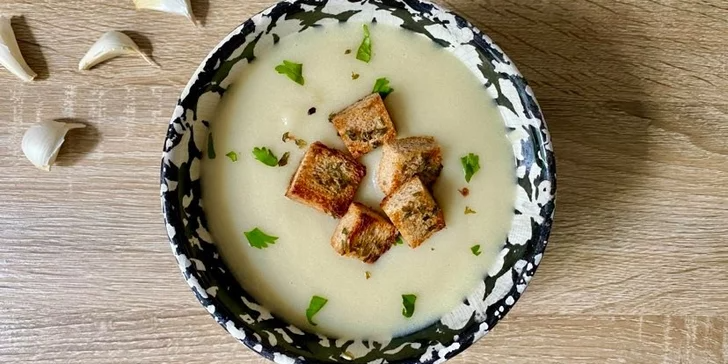
60 Clove Creamy Garlic Soup

60 Clove Creamy Garlic Soup

60 Clove Creamy Garlic Soup


6 heads garlic

Olive oil

1/2 onion, diced (yellow or white)

1 bundle of thyme

3 cups stock (chicken or vegetable)

1/2 cup shredded Parmesan cheese

1 yellow potato (such as Yukon gold)

2 cups milk of your choice (unsweetened if non-dairy)

1/4 cup dry white wine

Parsley, for garnish

Salt and pepper, to taste


Preheat the oven to 400 degrees F. Trim the tops off the heads of garlic to expose the cloves and transfer to a large piece of foil. Drizzle the heads with olive oil and salt generously. Wrap in foil and roast in the oven for 45 minutes to an hour. Transfer to the fridge until cooled completely. Peel and dice the potato. Add to a pot of salted, boiling water; boil for 8-10 minutes, or until a fork can pierce easily. Drain.

Sauté diced onions in an oiled skillet on medium heat until translucent, about 10-12 minutes. Squeeze the cooled cloves out of each head of garlic and add to a blender or food processor, then add the onion and potato and pulse until a consistent paste forms. Add one cup of milk and blend until smooth. Pour this mixture into a large pot and warm over medium-low heat on the stovetop. Stir in the remaining cup of milk and the broth. Drop in the bundle of thyme and white wine. Cook and stir until you can no longer smell the alcohol but be careful not to let the soup reach a boil. Stir in the shredded Parmesan and add salt and pepper to taste. When ready to serve, remove the bundle of thyme and plate with a drizzle of olive oil, chopped parsley, and homemade croutons.

Spicy Coconut Lemongrass Squash Soup

Spicy Coconut Lemongrass Squash Soup
Spicy Coconut Lemongrass Squash Soup


32 fl oz vegetable stock

2 lemongrass stalks, inner soft part minced

1 T. grated ginger

1 T. coconut oil

2 cloves garlic, minced

1/2 yellow onion, diced

5 cups chopped butternut squash try frozen to save time

1 jalapeno pepper, seeded and diced

1 15 oz can white beans, drained and rinsed

1 tsp. salt

1 13.5 oz can unsweetened coconut milk I used a “light” version

2 limes, zested and juiced with seeds removed

1/4 cup chopped cilantro


In a large pot, combine vegetable stock, lemongrass and ginger over medium heat. Allow to simmer while you prepare the other ingredients and execute the next step. In a soup pot, heat coconut oil over medium heat then add garlic, onion, butternut squash and jalapeno pepper. Sauté until soft, or about 10 minutes. Add the stock to the vegetable mixture, cover and bring to a boil. Turn the heat down to medium and simmer for 20 minutes. Add the beans and salt then add coconut milk, cooking for another 2 minutes until they’re incorporated and hot. Use an immersion blender to puree the beans to achieve a creamy texture. Add the lime zest and juice at the end to brighten the flavor and serve hot with cilantro and additional jalapeno if desired.


Servings: 8
Serving Size: about 1 1/4 C.

Calories: 207
Fat: 13 g
Fiber: 4 g
Protein: 5 g

Creamy Tomato Garlic Soup

Creamy Tomato Garlic Soup

Creamy Tomato Garlic Soup

4 cups crushed or diced tomatoes (do not drain)

4 T. butter, coconut oil, or bacon grease

1/2 cup chopped onion

4 cloves of garlic, minced

3 T. flour

3 cups whole milk OR half and half

3 tsp. sucanat (or substitute 2 tsp. brown sugar)

2 T. dried basil

1 1/4 tsp. sea salt

1/4 tsp. black pepper

Shredded Parmesan cheese (optional– for garnish)

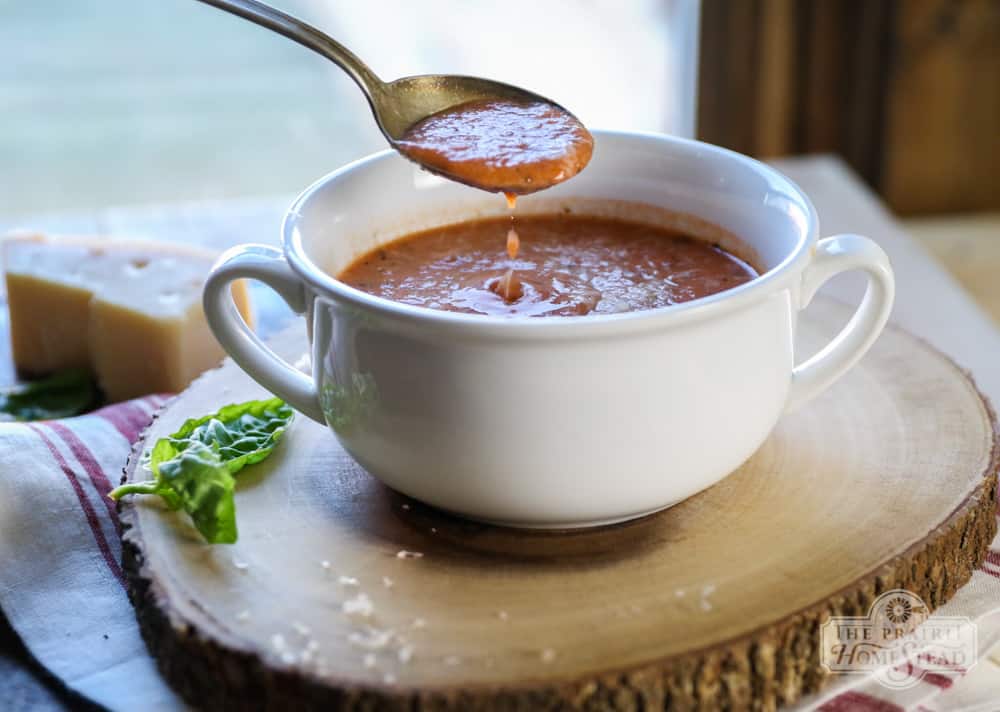
Heat your oil of choice in a large stockpot, then add the onion and garlic and sauté until tender. Stir in the flour and let it brown for about 2-3 minutes. Puree the tomatoes in a blender or food processor. (If you have a hand/immersion blender, you can skip this step. Read on for details.) Place them in a separate saucepan, and bring them to a simmer. Add in the sucanat, salt, pepper, and basil, then pour in the milk all at once. Cook and stir constantly over medium heat until it reaches a simmer and begins to thicken. Stir in the heated tomatoes and allow the flavors to meld for around 5-10 minutes, stirring occasionally. If you have a hand blender, you can puree the entire soup right in the stockpot, which will save you a messy blender/processor. (Unless you like chunky tomato soup, then just leave it as-is.) Adjust seasonings if needed, then serve with a handful of shredded Parmesan cheese on top.


Servings: 6
Serving Size: about 1 1/4 C.

Calories: 226
Fat: 12 g
Fiber: 4 g
Protein: 7 g

BBQ Chicken Quesadillas and Mexican Sour Cream Rice

BBQ Chicken Quesadillas and Mexican Sour Cream Rice

BBQ Chicken Quesadillas and Mexican Sour Cream Rice


BBQ Chicken Filling for Quesadillas


2 T. oil

1-1/2 onions (vidalia is preferred) sliced into rings

1 T. honey

2 chicken breasts, diced

1/2 C. BBQ sauce


1 C. shredded mexican cheese


4 (8-inch) flour tortillas


Heat one T. of the oil in a pan over medium high heat. Add the onions and cook until they begin to caramelize. Mix in the honey and stir until it is golden brown. Remove and set aside. Place the remaining oil in the pan and add the chicken. Cook through over a medium high heat. Stir in the BBQ sauce to evenly coat the chicken. Use chicken, onions and cheese as filling for quesadillas.


Mexican Sour Cream Rice


1 C. uncooked long grain white rice

1 (14 ounce) can chicken broth

1 C. sour cream

1 (4 ounce) can diced green chile peppers

2 C. shredded pepper Jack cheese, divided

1 1/2 C. frozen corn

1/4 C. finely chopped fresh cilantro

salt and ground black pepper to taste


In a large pot, bring the rice and chicken broth to a boil. Reduce heat to low, cover, and simmer 20 minutes. Preheat oven to 350. Lightly grease a 1-1/2 quart casserole dish. In the pot with the cooked rice, mix the sour cream, green chile peppers, 1 C. pepper Jack cheese, corn, and cilantro. Season with salt and pepper. Transfer to the prepared casserole dish, and top with remaining cheese. Bake uncovered 30 minutes in the preheated oven, until cheese is bubbly and lightly browned.


Servings: 4
Serving Size: 1 quesadilla with 1/4 of rice

Calories: 1097
Fat: 52 g
Fiber: 4 g
Protein: 57 g