One Pan Creamy Lemon Chicken

One Pan Creamy Lemon Chicken

1T. lemon pepper seasoning
1/4 C. flour
2 1/2 lb. bone-in skin-on chicken thighs, trimmed of excess fat
2T. olive oil
Creamy Sauce
1T. unsalted butter
1/2 medium white onion, chopped
5 cloves garlic, minced
2 tsp. lemon pepper seasoning
2 C. chicken stock, low sodium
2T. unsalted butter, softened
2T. flour
1/2 C. heavy cream
1/2 C. Asiago cheese, shredded
2T. lemon juice, freshly squeezed
3 green onions, chopped, only greens used
Garnish
fresh parsley, chopped
lemon slices

Mix lemon pepper with flour. Dredge the chicken thighs in this seasoning mixture. Heat 2T. olive oil on medium-high heat in a large skillet. Add chicken thighs, skin side down, and cook for about 4 minutes uncovered until browned. Don’t overcrowd the pan. Cook in batches if needed. Flip the chicken thighs over and cook for 2 minutes on the other side. Remove chicken from pan and drain excess fat from the pan. Melt 1T.of butter in the pan. Add chopped onion and cook for 3 minutes. Add minced garlic and cook, constantly stirring, for about 30 seconds. Add chicken stock and 2 tsp. lemon pepper seasoning to the skillet and bring to a boil, scraping up any dark bits on the bottom of the pan (the fond). Add the chicken back to the pan, cover, and let simmer for 40 minutes on low heat. Bring a large pot of water to a boil and cook spinach fettuccine 2 minutes less than package directions. Drain and keep warm. When tender, remove the chicken one last time (tent with foil to keep warm). Raise heat to medium. In a small bowl, mash together the softened butter and flour then add this mixture to the sauce, whisking briskly until smooth. Add heavy cream and bring to a boil, then add shredded Asiago and stir until melted. Reduce heat to simmer and keep stirring until the sauce is smooth. Remove from heat. Add 2T. freshly-squeezed lemon juice and stir in. Top with chopped green onions. Add chicken back to the skillet on top of the sauce and green onions. Simmer 3 minutes to rewarm. Serve over spinach fettuccine, top with chopped parsley and decorate with a few slices of lemon.

Welsh Rarebit with Wild Onions

Welsh Rarebit with Wild Onions

Welsh Rarebit with Wild Onions


2 T. (30 mL) butter

½ cup (125 mL) finely chopped wild onions

2 Tbsp (30 mL) flour

1 tsp (5 mL) French’s mustard powder (or 1 Tbsp [15 mL] prepared mustard)

1 cup (250 mL) milk

½ cup (125 mL) apple cider (or beer)

1 tsp. (5 mL) Worcestershire sauce

½ cup (125 mL) blue cheese (like Stilton)

½ cup (125 mL) aged white cheddar cheese

salt and pepper, to taste

4 slices good rustic bread

additional chopped wild onions, for garnish


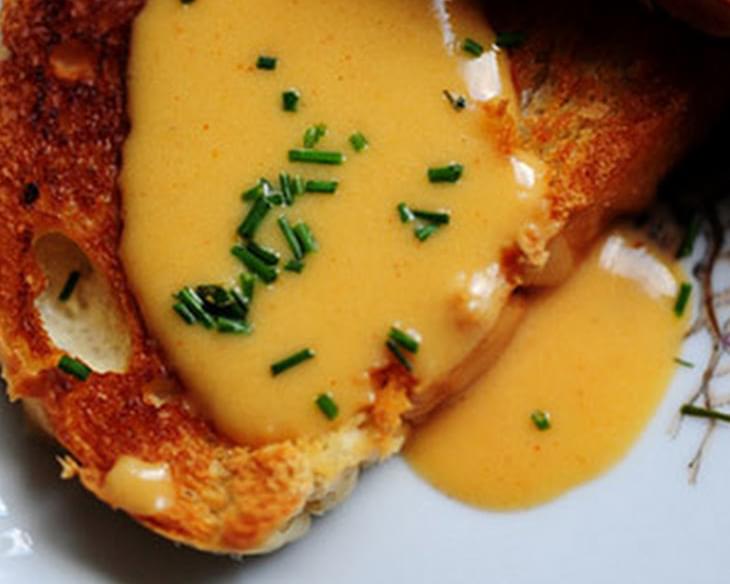
Preheat the oven to broil. In a saucepan over medium-high heat, melt the butter. Add the wild onions and sauté for 1– 2 minutes. Add the flour and mustard powder and whisk until a smooth paste is formed. Add the milk, cider, and Worcestershire sauce. Whisk until the sauce thickens. Reduce the heat to low and cook for 5 minutes, stirring occasionally. Grate the cheeses. Add to the sauce and stir until melted and the sauce has thickened. Taste and adjust seasoning with salt and pepper if necessary. Remove from the heat and allow to cool. Toast the bread lightly and place on a baking tray, top with the cooled sauce, making an even thick layer. Sprinkle with the additional raw wild onions. Place under the broiler and cook until the sauce begins to brown and the onions slightly char, about 3– 4 minutes. Serve immediately. Reserve any extra sauce; it makes a great topping for tuna or salmon melts.

Tortas de Came a la Mostaza con Queso Suizo y Chiles Toreados (Dijon Steak and Swiss Cheese Tortas with Matador Chiles)

Tortas de Came a la Mostaza con Queso Suizo y Chiles Toreados (Dijon Steak and Swiss Cheese Tortas with Matador Chiles)

Who doesn’t love a great steak sandwich? This hearty version is one of my boys’ favorites. Simple to make, it packs a punch with the Dijon and garlic marinade, the strong cheese that melts into the bread, and the spicy, bright, salty, extra-hot, lime-soaked chiles toreados and their marinade.

1/4 cup olive oil
1/4 cup soy sauce or Maggi
3 tablespoons Dijon mustard
4 garlic cloves, pressed or minced
1/4 teaspoon freshly ground black pepper or to taste
2 pounds flank steak
6 bolillos. teleras, Portuguese rolls, or small baguettes or 2 or 3 baguettes cut into 4- to 6-inch lengths, split in half
6 thick slices Swiss or Muenster cheese
Matador Chiles

In a small bowl, whisk together the oil. soy sauce, mustard, garlic, and pepper. Place the steak in a large baking dish and pour the marinade over it. Turn a few times to make sure that the meat is completely coated. Marinate for at least 30 minutes, and up to 24 hours. If marinating for more than 30 minutes, cover and refrigerate. Preheat the broiler. Place the baking dish with the meat under the broiler. 3 to 4 inches from the heat, and broil for 5 to 7 minutes per side, depending on how cooked you want it. For medium-rare, 5 minutes per side; for just over medium, the way I like it, 6 minutes on the first side and 7 minutes on the other. (Alternatively, you can grill the meat over medium-high heat on an outdoor grill or a grill pan for 5 to 6 minutes per side, depending on how well done you like it; I go for 6 minutes per side.) Transfer the meat to a cutting board, cover loosely with foil, and let rest for 5 minutes. Thinly slice the meat against the grain. Preheat the oven to 350 degrees. Place the split rolls on a baking sheet, cut side up. And place a slice of cheese on each bottom half. Bake until the bread crisps and the cheese melts, about 5 minutes. Top the cheese with the meat and let diners spoon on as much of the Matador Chiles, along with their sauce and onions, as they want (or do it for them if you know their tastes). Cover the sandwiches with the top halves of the rolls and serve, with more Matador Chiles on the side.

Baby Arugula and Sprout Salad

Baby Arugula and Sprout Salad

2 tsp. extra virgin olive oil
1 tsp. lime juice
1/2 tsp. whole grain mustard
1/2 tsp. honey, or agave syrup
1/8 tsp. salt
pepper, to taste

2 C. baby arugula
4 C. mixed sprouts
1/2 C. pumpkin seeds, toasted

In a medium bowl, whisk together olive oil, lime juice, mustard, honey, salt and pepper until an emulsion has formed and the ingredients have come together. Toss the arugula and sprouts until thoroughly combined. Pour dressing over greens, toss again then sprinkle with toasted pumpkin seeds. Serve immediately.

Rose Petal Scones

Rose Petal Scones

Rose Petal Scones


2 1/4 cup all-purpose flour

2 teaspoons granulated sugar

2 teaspoons baking powder

1/2 teaspoon baking soda

3/4 teaspoon salt

1/2 teaspoon cinnamon, ground

1/4 cup (1/2 stick) unsalted butter, chilled

1/3 cup pistacchio nuts, shelled, unsalted, and coarsely ground

1 cup heavy cream, chilled

1 tablespoon rose water*

2 tablespoons rose petals, cleaned and finely shredded (organic only – no pesticides)**


1 cup powdered sugar (confectioners’ sugar)

3 tablespoons rose water

1 tablespoon red currant jelly


Preheat oven to 425 degrees F. Lightly spray a large baking sheet with vegetable-oil cooking spray. In a large bowl, sift together flour, sugar, baking powder, salt, baking powder, baking soda, salt, and cinnamon. With a pastry blender or two knives, cut butter into flour mixture until particles are the size of small peas; stir in pistachio nuts. In a separate bowl, combine cream and rose water. Stir in the shredded rose petals. Add the rose mixture to the dry ingredients; stir until a soft dough forms. When making scones, work the dough quickly and do not over mix. Note: Scones can be cut into any shape you desire. Use a drinking glass to make circles, or cut into squares or wedges with a knife. Dip the edges of the cutter in flour to prevent the dough from sticking. Do not pat the edges of the scone down; instead leave the cuts as sharp as possible to allow the scones to rise in layers. Drop dough by the teaspoonful onto the prepared baking sheet. Bake approximately 10 to 12 minutes or until golden brown. A good check is to use an instant digital thermometer to test your scones. The temperature of the scones should be at 200 degrees F. when done. While scones are baking, prepare Icing. Remove scones from oven to a baking rack to cool slightly, then drizzle the prepared Icing over the scones while still warm. Makes 24 scones. Rose Water Icing Instructions: In a bowl, combine powdered sugar, rose water, and red current jelly until smooth. NOTE: If the icing is to thick, add another teaspoon of rose water.

Chiles Toreados (Matador Chiles)

Chiles Toreados (Matador Chiles)

Chiles toreados are jalapeno or serrano chiles that have been rolled against a work surface. The quick massage helps release their oils from the veins and seeds inside, which store the most flavor and heat. Torear means to compete in a bullfight, which gives you an indication of how fierce the result can be. Interestingly, they are common in sushi restaurants, steak houses, and taquerias specializing in meat grilled on big planchas, or griddles. They are charred in oil, then bathed in a mix of freshly squeezed lime juice and soy sauce, with some slivered or chopped white onion tossed in as well. The lime juice and soy cause them to lose some of their heat, so even though they sound like something to shy away from, I would give them a 4 out of 10 in spiciness.

(Matador Chiles)4 jalapeno or serrano chiles
3 tablespoons canola or safflower oil
1 cup thinly sliced or chopped white onion
1/4 cup plus 2 tablespoons freshly squeezed lime juice
¼ cup soy sauce or Maggi

Roll the chiles back and forth a few times under your palm on your kitchen counter. Heat the oil in a medium skillet over medium heat. Add the chiles and cook, flipping them over every 2 minutes, until deeply browned on all sides. 5 to 6 minutes. Transfer the chiles and oil to a heatproof bowl. Once the chiles are cool enough to handle, remove them from the bowl, remove the stems, and chop; discard the seeds, if desired, though I never do. Return the chopped chiles to the bowl with the oil and stir in the onion, lime juice, and soy sauce until well combined. Let sit for at least 10 minutes and serve.

Fried Eggs with Ramps, Morels and Bacon

Fried Eggs with Ramps, Morels and Bacon

Fried Eggs with Ramps, Morels and Bacon


4 ounces (100g) diced bacon

6 ounces morel mushrooms (about 3 cups; 160g), cleaned, trimmed, and cut in half lengthwise

2 tablespoons (30g) unsalted butter, divided

6 ounces ramps (about a dozen ramps; 160g), root ends trimmed, white bottoms separated from green tops

1/2 teaspoon (2.5ml) soy sauce

1 teaspoon (5ml) fresh juice from 1 lemon

1 tablespoon (15ml) canola oil

2 large eggs

Kosher salt and freshly ground black pepper

2 slices hearty buttered toast

Sliced fresh chives, to garnish


Heat bacon along with 1 tablespoon (15ml) water in a medium cast iron or stainless steel skillet over medium heat, stirring, until water evaporates, bacon fat renders, and bacon is completely crisp, about 5 minutes. Using a slotted spoon, transfer bacon to a bowl and set aside. Return skillet to medium-high heat until lightly smoking. Add morels and cook, stirring and tossing frequently, until barely starting to brown, about 2 minutes. Add 1 tablespoon (15g) butter and cook, stirring, until morels are nicely browned but not burnt, 1 to 2 minutes longer. Add ramps and cook, stirring and tossing frequently, until whites are browned and tender and greens are crisp in spots, about 2 minutes. Add 2 tablespoons (30ml) water, soy sauce, lemon juice, and remaining tablespoon butter. Remove from heat and set aside. Heat canola oil in a medium nonstick or well-seasoned cast iron skillet over medium-high heat until shimmering. Add eggs, season with salt and pepper, and cook, occasionally using a spoon to baste hot oil over the whites to help them cook, until whites are set, edges are crisp, and yolk is still runny. Place a slice of toast on each of two plates. Top each with a fried egg. Return morel/ramp mixture to high heat and stir in bacon. Cook over high heat until liquid reduces to a creamy, emulsified sauce. Season to taste with salt and pepper. Spoon morels and ramps over and around fried eggs. Sprinkle with chives and serve.

Crema de Berros con Requeson (Creamy Watercress Soup with Spiced Fresh Cheese)

Crema de Berros con Requeson (Creamy Watercress Soup with Spiced Fresh Cheese)

This style of creamy soup is common in the Yucatan Peninsula. At the Hacienda San Jose near Merida, the capital of Yucatan, I tasted one that was so delicious I asked the chef to show me how he made it. In exchange. I shared my take on a soft cheese mixture to use as a garnish. The combination is sublime! The soft, moist cheese, seasoned with jalapeno and chives, slowly blends into the watercress soup as you eat it. Your first spoonfuls of hot soup will have distinctive bites of cheese, but by the end, the cheese will have melted into the soup, so it becomes even creamier, its flavors enhanced by the jalapeno and chives. The version I tasted in Yucatan was made not with watercress but with chaya leaves, which taste like a sort of cross between watercress and baby spinach. Since chaya is practically nowhere to be found in markets north of the border, I developed my version using watercress, which I prefer because of its beautiful color. But feel free to try it with spinach. You could also make the soup with a cilantro base.

Crema de Berros con Requeson (Creamy Watercress Soup with Spiced Fresh Cheese)

Requeson: I wish there were more of this creamy, moist soft cheese to be found on this side of the border. With its slight tang and incredibly fresh feel, requeson is both a little sweet and a little salty, much like farmer’s cheese. It is perfectly balanced. In texture, it’s similar to ricotta, but ricotta is one-dimensional by comparison and a bit sweeter, without requeson’s definitive tang. You could also use queso fresco for the garnish in this recipe, but it’s a firmer, less creamy cheese. You could use fresh goat cheese as well, though it has a much stronger, more assertive, acidic flavor. But it works well with this soup because it melts like the other cheeses.

4 tablespoons (1/2 stick) unsalted butter
1 cup coarsely chopped white onion
2 cups thinly sliced leeks
1 cup thinly sliced celery
1 cup chopped peeled carrots
1 teaspoon kosher or sea salt or to taste
2 tablespoons all-purpose flour
2 cups milk
4 cups chicken broth, homemade or store-bought
4 cups watercress leaves and upper part of stems
8 ounces requeson, ricotta. queso fresco, or farmer’s cheese
2 tablespoons Mexican crema, creme fraiche, or sour cream
1 jalapeno or serrano chile, finely chopped or to taste
2 tablespoons chopped fresh chives
Freshly ground black pepper

In a large heavy pot, melt the butter over medium-high heat. Once it foams, add the onion, leeks, celery, and carrots, season with salt to taste, and cook, stirring occasionally, for 10 minutes, or until completely softened but not browned. Sprinkle the flour over the vegetables, stir together, and cook, stirring, for 2 minutes, or until the flour is no longer raw and the mixture smells toasty. Reduce the heat to low, stir in the milk, and bring to a simmer, stirring. Simmer for 5 to 6 minutes, until thick and creamy. Add the broth and watercress, bring to a low simmer, and simmer for 5 minutes. Remove from the heat. Meanwhile, in a medium bowl, mash the cheese and cream with a fork. Add the chile, chives, and salt and pepper to taste. Mix well. Keep covered in the refrigerator until ready to serve. In batches, puree the soup in a blender until completely smooth; hold a towel tightly over the blender top to prevent hot splashes. (It won’t jump quite as much if you let it cool down a little before you puree.) Return to the soup pot and stir. Taste and adjust the seasoning. Reheat gently. Ladle the hot soup into soup bowls. Place a generous dollop of the cheese mixture in the
middle of each bowl and serve.

Pine Needle Tea

Pine Needle Tea

This tea is not recommended for pregnant women and young children.

1 C. 1/2-inch-long chopped white pine needles, sheaths at base of needles removed
Juice of l lemon (optional)
Raw honey (optional)

Fill a teakettle with l quart water and bring to a boil over your campfire (see here) or the stove. When the water boils, remove it from the heat and add the pine needles. Let steep for 20 minutes. Strain the tea, discard the pine needles, and serve hot. Add lemon juice and honey to taste, if you’d like.

Barbecued Mushroom Caps with Sun-Dried Tomato and Herb Dressing

Barbecued Mushroom Caps with Sun-Dried Tomato and Herb Dressing

Barbecued Mushroom Caps with Sun-Dried Tomato and Herb Dressing


1 cup fresh

3 tbsp oil-packed sun-dried tomatoes, drained and finely chopped

1 clove garlic, pressed or minced

3 tbsp minced parsley

1 tbsp fresh basil leaves, minced

1 2 ⁄ tsp cayenne pepper (or more)

2 tbsp melted butter (optional)

12 large white mushrooms, brushed or washed and stems removed

1 egg


In a bowl, combine all the ingredients except the mushrooms and egg, and mix well. Just before grilling time, break the egg into the stuffing mixture, and combine thoroughly. Fill the mushroom caps with the stuffing, then sit them, stuffing side up, on an oiled grill over medium high heat, until the mushrooms are soft and juicy and the stuffing heated through. Serve immediately. Note: To prepare fresh breadcrumbs, leave several slices of whole-wheat bread to dry out a little for a few hours. In a food processor, process them to a fine crumb and measure required quantity. Any remaining crumbs can be frozen in an airtight bag and used at a later time.

Sopa de Queso Estilo Sonora (Sonoran Cheese Soup)

Sopa de Queso Estilo Sonora (Sonoran Cheese Soup)

The rich, fertile soil of Sonora, in northern Mexico, makes for happy cows that produce some of the country’s best milk and cheese. This mildly spicy soup, a chowder of sorts made with milk, chiles, tomatoes, potatoes, and cheese, shows off that wealth of good dairy. The cheese of choice, queso Chihuahua, is a melting cheese that is a mainstay of the region. But Oaxaca, asadero. mozzarella, or even Monterey Jack can step in as dignified substitutes. Any type of potato will work.

Sopa de Queso Estilo Sonora (Sonoran Cheese Soup)3 tablespoons canola or safflower oil
1 to 1 1/4pounds potatoes (4 medium), peeled and diced (about 3 cups)
1 1/2 cups chopped white onions
1 cup diced green bell peppers
1 ripe medium tomato, cored and diced
4 poblano chiles (about 1 pound), roasted, peeled, seeded, and cut into strips
3/4 teaspoon kosher or sea salt or to taste
4 cups chicken broth, homemade or store-bought
2 cups milk
8 ounces white melting cheese, preferably queso Chihuahua, Oaxaca, asadero. mozzarella, or Monterey Jack (see headnote), diced (about 1 1/2 cups loosely packed)

Heat the oil in a large heavy pot over medium heat. Add the potatoes and onions and cook, stirring often, until the onions are soft and translucent, 4 to 5 minutes. Add the bell pepper, tomato, poblano chiles, and salt and cook until the vegetables are softened, 4 to 5 minutes. Add the broth, bring to a simmer, and cook for 10 minutes, or until the potatoes are tender and the broth has thickened a bit. Taste and adjust the salt. Reduce the heat to medium-low and slowly add the milk, then bring to a gentle simmer. Gradually add the cheese and stir until it is completely melted. Taste again for salt. Top with a little scallion for color, if desired.

Pheasant Confit

Pheasant Confit

6 Pheasant legs
1/2 C. Kosher Salt
Zest of 1 orange
5 Cloves
5 Sprigs of fresh thyme
1 T. freshly cracked black pepper
5 Juniper berries, crushed
4 liquid C. Grape seed oil (Or Olive oil or duck fat)

Place pheasant legs snugly in baking dish. Add salt evenly on top. Add the orange zest, cloves, thyme, juniper berries, and pepper. Rub seasoning evenly into every surface of pheasant legs. Cover dish with plastic wrap and refrigerate for at least 6 hours, the longer the legs are allowed to cure the saltier they will be, and the longer they will preserve. Once the cure is finished, rinse the legs and baking dish. Return rinsed legs to baking dish and cover with the grape seed oil. Preheat oven to 200 degrees. Cook for 4 to 6 hours, or until the meat falls off of the bone. Strain and save oil for later use. Serve legs warm or room temperature on a salad

Zucchini Pepperoni Squares

Zucchini Pepperoni Squares

Zucchini Pepperoni Squares


3 cups thinly sliced zucchini

1 – 3 or 4 oz. pkg. pepperoni – thinly sliced

1 cup grated cheddar cheese

1/2 cup grated Parmesan cheese

1 large clove garlic, minced

1 medium onion, chopped

1/4 cup snipped fresh parsley (or dried is o.k.)

1 1/2 tsp. dried oregano leaves

1 tsp. seasoned salt

1/4 tsp pepper

1 1/2 cups Bisquick baking mix

6 eggs

3/4 cup vegetable oil


Cut small zucchini lengthwise into quarters and slice thinly. Combine zucchini, pepperoni, cheeses, garlic, onion, parsley, oregano, seasoned salt , pepper and Bisquick in large bowl. Beat oil and eggs together and stir into other ingredients. Spread batter in greased 9 x 13 inch pan. Sprinkle additional Parmesan cheese over top. Bake at 350 degrees about 35 – 40 minutes, until golden brown. Cut into small squares. Best eaten when slightly warm.

Trout Jerky

Trout Jerky

Any kind of homemade jerky makes a great snack for a hike or a camping trip, as it is nonperishable and provides a good dose of protein. But this trout jerky is the caviar of all jerkies. Made from freshly caught river trout, it is both sweet and salty, and has just the right chewy texture and flavor. The recipe can be made in either a dehydrator or the oven, using low heat.

One 13-oz. trout fillet, skinned
1/4 C. soy sauce
1 tsp. raw honey
1 garlic clove, crushed
1 T. lemon juice
1 tsp. freshly ground black pepper
Extra-virgin olive oil, for the oven rack

Cut the fish into i-by-6-inch strips. Make sure the slices are even so they dry at the same rate. Place in a wide shallow bowl. Combine the soy sauce, honey, garlic, lemon juice, and pepper in a small bowl. Pour the mixture over the fish slices, cover, and let marinate for 4 hours in the refrigerator. Drain and discard the liquid. To use a dehydrator, lay the fish slices flat on the dehydrator trays. Don’t let the fish slices touch. Dry at 145°F to 155°F. The jerk}’ is done when the trout is dry and chewy but not crunchy; start checking for doneness after about 4 hours. Once the strips are cooled, store them in airtight containers or vacuum seal them. They will keep for 2 to 3 months in the refrigerator. To use the oven, preheat the oven to the lowest possible setting. Wipe an oven rack with olive oil and place the marinated fish directly on the rack. Set a cookie sheet underneath to catch the drippings. Flip the pieces after about 2 hours. The drying time depends on the thickness of the fish slices; check for doneness after about 3 hours. The jerky is ready when there are no moist spots left.

Cranberry Raspberry Vanilla Punch

Cranberry Raspberry Vanilla Punch

Cranberry Raspberry Vanilla Punch


8 cups cranberry-raspberry juice

8½ cups cranberry ginger ale

1 tablespoon vanilla extract

1 pint raspberry sorbet

Frozen cranberries, for garnish


In large punch bowl, add juice, ginger ale and vanilla extract. Stir until combined.

Add frozen cranberries and scoops of frozen sorbet. Stir slightly then serve immediately.

Sopa de Palmitos con Crutones de Camote (Hearts of Palm Soup with Sweet Potato Croutons)

Sopa de Palmitos con Crutones de Camote (Hearts of Palm Soup with Sweet Potato Croutons)

This silky, delicate soup is often the most talked-about dish of the evening when I serve it. It’s a tribute to Mexico’s African heritage. For centuries we Mexicans were taught that our Mestizo heritage was the result of intermarriage between the Spanish and the indigenous people of Mexico. But the African component to our history that dates as far back as the Spanish conquest, a result of several factors, including the slave trade, migration from the Caribbean, and the Africans who came along with the Spanish as conquistadores, was long overlooked. Afro-Mexico is finally getting its due, and even has a name—The Third Root.

Sopa de Palmitos con Crutones de Camote1/4 cup canola or safflower oil
Kosher or sea salt
1/2 teaspoon ancho chile powder, chipotle chile powder, or paprika
Pinch of freshly ground black pepper
1 large sweet potato, peeled and cut into 1/2-inch dice (about 2 cups)
1 tablespoon unsalted butter
10 scallions (light green and white parts only), thinly sliced (about 1 cup)
2 garlic cloves
2 (14-ounce) cans hearts of palm, drained, rinsed, and sliced
5 cups chicken or vegetable broth, homemade or store-bought
2 tablespoons chopped chives

Preheat the oven to 450 degrees. Line a baking sheet or baking dish with parchment or foil. In a medium bowl, mix together 2 tablespoons of the oil Vi teaspoon salt, the chile powder or paprika, and pepper. Add the sweet potato and toss until thoroughly coated. Spread the sweet potatoes in a single layer on the baking sheet, taking care not to overcrowd. Roast for 20 to 25 minutes, flipping and turning them halfway through, until golden brown on the outside and soft on the inside. Remove from the heat and set aside. In a large heavy pot, heat the butter and the remaining 2 tablespoons oil over medium-low heat until the butter is melted and bubbling. Stir in the scallions and garlic and cook, stirring occasionally, until completely softened. 12 to 14 minutes. Raise the heat to medium, add the hearts of palm, and cook, stirring, for a couple of minutes, until heated through. Add the broth and 1/2 teaspoon salt, raise the heat to medium-high, and bring to a simmer. Simmer for 5 minutes. In batches, pour the soup into a blender and puree until completely smooth, holding down the lid of the blender with a towel to contain the pressure from the hot soup. Pour the soup back into the pot. stir, taste, and adjust the seasonings. Reheat if necessary before serving. Ladle the soup into individual bowls, spoon about 1/4 cup sweet potatoes into the middle of each bowl, and sprinkle the chives around the sweet potatoes.

Feta, Eggs, and Dandelion Greens

Feta, Eggs, and Dandelion Greens

Dandelion greens are very nutritious: they are high in calcium, rich in iron, and loaded with antioxidants. They are best harvested in springtime when the young greens are still tender and their flavor is mild. But blanching them in boiling w’ater first will remove some of their bitterness. Cultivated dandelions from the store are less bitter than wild ones, but in both cases it’s best to taste test them first. If you’re foraging your own, be careful not to gather them in areas that have been sprayed with pesticide.

4 C. chopped dandelion greens, thick stems removed
2 T. ghee (or butter)
1 leek, white and light green parts only, finely chopped
4 large pasture-raised eggs
1/4 C. crumbled feta cheese

Bring a large pot of water to a boil. Add the dandelion greens and blanch for 1 to 2 minutes. Drain the greens thoroughly, patting them as dry as possible with paper towels. Melt the ghee in a 10-inch sauté pan set over medium heat. Sauté the leeks in the ghee until tender, about 5 minutes. Add the dandelion greens one handful at a time. Cook each handful until wilted, then add more. When all the greens are wilted, crack the eggs into the pan on top of the greens. Top with feta cheese and cook uncovered until the whites of the eggs are set, about 5 minutes.

Claudia’s Salsa de Nopal (Cactus Salsa)

Claudia’s Salsa de Nopal (Cactus Salsa)

claudia cactus salsa2 cactus paddles, cleaned and cut into ½ inch cubes
1 cup (240 g) coarse kosher salt
2 medium Roma tomatoes, chopped
½ medium red onion, finely chopped
1 1/2 tablespoons fresh lime juice, or to taste
1 serrano chile, stemmed
Leaves from1/2 bunch fresh cilantro, chopped
1/2 teaspoon freshly ground black pepper

Place the cactus in a large bowl and add the salt. Toss until the cactus is fully covered and set aside to cure for 5 minutes; the cactus will begin to release slime. Turn it with a wooden spoon or spatula to make sure the salt reaches all of the pieces of cactus and allow to rest for an additional 2 to 3 minutes to release more slime. Remove the cactus from the bowl and place it in a strainer. Run it under cold water until all the visible salt has been removed. Taste the cactus for salt; it should be salty and have some give but should not taste raw. If it’s too salty, rinse it some more. Pat dry with a paper towel. Move the cactus to a large bowl and add the tomatoes, onion, and lime juice and toss with a spoon or spatula. Slice the chile in half lengthwise and remove the seeds and veins if you want to keep the heat down. Thinly slice each half widthwise to create half-moon slices and add them to the bowl. Add the cilantro and fold until completely incorporated. Stir in the pepper and taste. If it’s too salty, add a bit more lime juice for additional acidity.

Spam Scones

Spam Scones

2 C. all-purpose flour
2 tsp. baking powder
Pinch of salt
2 T. butter or margarine
Scant 1/3 C. SPAM, cut into 1/8” deice
About 2/3 C. Milk, plus extra for glazing

Lightly grease a baking sheet or line it with baking parchment. Sift together the flour and baking powder and salt in a bowl (I added cayenne pepper here as well). Rub in the butter or margarine, and add the SPAM (I also added grated cheese here too). Add enough milk to make a soft rolling consistency. Roll out the dough on a lightly floured board to 1.5 cm thick. Cut it into small rounds and brush the tops with the milk. Sprinkle some grated cheese on top. Place the rounds on the baking sheet and bake in a preheated oven, 425 degrees F, for 12 – 15 minutes until the scones feel firm when pressed at the sides. Serve the scones hot with butter. Alternatively, leave them to cool, then split and spread with a little butter, slices of SPAM, and tomato and cucumber.

Tangerine Pork Stir-Fry

Tangerine Pork Stir-Fry

Tangerine Pork Stir-Fry


1 pound boneless center loin chops, cut into 1/4-inch slices, trimmed

1 cup white rice, or brown rice

7 – 8 seedless tangerines*, OR 3 navel oranges, divided*

3 tablespoons soy sauce

1 tablespoon honey

1 tablespoon cornstarch

4 teaspoons canola oil

1/2 large red onion, halved and cut into 1/2-inch slices

2 teaspoons fresh cilantro, chopped (optional)


Prepare rice according to package directions. Remove from heat and let stand, covered, until ready to serve. While rice is cooking, halve and squeeze 5 or 6 tangerines or 2 oranges to yield 23 cup of juice. In a medium bowl, whisk together juice, soy sauce, honey, and cornstarch. Set aside. Remove peel off remaining 2 tangerines or 1 orange. Cut half of peel into 1/4-inch strips (discard remaining peel). Set aside. Cut fruit into bite-sized pieces. Set aside. In a large wok or skillet over medium-high heat, warm oil. Add fruit peel and stir-fry for 30 seconds. Add onion and stir-fry for 30 seconds. Add pork and stir-fry until pork is cooked through and onion is crisp-tender, 3 to 4 minutes. Add juice mixture and fruit and cook, stirring occasionally, until mixture comes to a boil and thickens, about 1 minute. Serve stir-fry ostructs you to juice the fruit.

Claudia’s Salsa Verde

Claudia’s Salsa Verde

It’s no secret that we are known for our salsas. While the most common salsas are tomato-based red salsas, there is nothing in the world quite like a tart and spicy salsa verde (green salsa). Salsa verde and tomatillo salsa are actually the same thing, as the green color comes from the green skin and flesh of the tomatillo.

This is our family’s recipe for salsa verde. I use it in a number of dishes, from braised pork (see this page) to Green Chilaquiles, or as a topping for tacos. You can adjust the heat level by reducing or increasing the number of chiles you include. But cuidado (careful)—the spiciness of the serranos and chiles de arbol may have you looking for the closest ice- cold beverage.

12 ounces (340 g) fresh tomatillosSalsa Verde
1 to 2 whole serrano chiles, stemmed
Vi medium yellow onion, peeled
2 to 3 small garlic cloves, peeled
5 to 6 whole chiles de arbol, stemmed
Salt

Peel the husks off the tomatillos and rinse them thoroughly under lukewarm water
until their skin is smooth and they are no longer tacky or sticky. Place the tomatillos, serrano chiles, and onion in a large saucepan and add enough hot water to cover. Place over medium-high heat, bring to a simmer, then reduce the heat to medium-low and simmer until the tomatillos change color and just start to soften, about 5 minutes. Remove the ingredients from the pan using a slotted spoon and place them in blender along with the garlic. Reserve the cooking liquid. Meanwhile, heat a skillet or comal (tortilla griddle) over low heat. Add the chiles de arbol, and toast for 1 to 2 minutes, turning often, until they darken in color but don’t
burn. The seeds will come out as you toast the chiles—you can use them or not depending on your heat preference. What you are looking for is a darker, almost black, red color. Keep your windows open as you toast the chiles, as the fumes can affect the strangest parts of your throat and cause cough attacks for the family … ahhh, the memories. Add the toasted chiles de arbol and seeds to the blender, pour in XA cup (60 ml) of the reserved tomatillo cooking liquid, and blend on medium-low speed until your desired consistency has been reached (see Notes). If your salsa is too thick, add more of the tomatillo cooking liquid. Pour the salsa into a bowl and season with salt, starting with about 1 teaspoon and adjusting the amount as needed to balance the tartness of your tomatillos.

The consistency of salsa verde varies depending on the dish you use it in. For Green Chilaquiles, make it a bit more on the liquidy side so your tortillas can soak up the salsa. For tacos, stick to a coarser and chunkier consistency to avoid a runny mess.

Keep in mind that chiles can vary in spice depending on the season, so you may want to
cut off the edge of one of your chiles and taste it for heat. If it’s too hot for your liking, re-
move the seeds and veins to turn the heat down. To turn up the heat, add more chiles.
Make sure not to touch your eyes after handling spicy chiles and wear gloves when
working with them to protect your hands.

Herbed Swiss Rösti (Hashbrowns) with Fried Egg

Herbed Swiss Rösti (Hashbrowns) with Fried Egg

4 large potatoes (about 2 1/2 pounds)
3 garlic cloves (or 1 small Spring garlic), minced
2 green onions, finely chopped
1/2 C. parsley leaves, roughly chopped
pastured ghee (or lard, tallow, duck fat, or coconut oil)
sea salt
black pepper
4 eggs, preferably pastured

A couple of hours, or the night before you would like to serve, bring a large pot of water to a boil. Add the potatoes and parboil until just tender, but not too soft. Remove them from the pot and allow to cool before refrigerating for a couple hours or overnight. Peel the potatoes and grate them on the large grating side of a box grater. Preheat a large sauté pan on medium heat. Melt about 1 T. ghee, making sure to coat the pan. Add the garlic and onions and stir continuously until softened, about 2 minutes. Add the potatoes, 3/4 of the parsley, and sea salt and black pepper to taste and mix gently. Pat down the potatoes until they form an even and flat round. Cook until the bottom of the rösti is well browned, and easy to peel off the pan, about 6-8 minutes. Top the pan with a large plate, turn the pan over until the rösti slides out. Add more ghee to the pan, and return the rösti, browned side up, to the pan to brown the other side, another 6-8 minutes. While the second side of the rösti is browning, preheat a large sauté pan on medium. Melt about 2 T. ghee, making sure to coat the entire pan. Crack the eggs into the pan and sprinkle with sea salt and pepper, to taste. Fry the eggs until the whites are set and the yolks are cooked to desired doneness, about 2 minutes for a soft egg. Remove the rösti from the oven, top with the rest of the parsley, and serve immediately with the eggs on top and any vegetable side dishes. If the rösti sticks to the bottom of the pan, and is difficult to flip, simply brown the bottom before broiling the top in the oven for a few minutes.

Jell-o Spritz Cookies

Jell-o Spritz Cookies

Jell-o Cookies


1½ cups butter, softened

1 cup sugar

1 3-ounce package Jell-O (any flavor)

1 egg

1 teaspoon vanilla extract

4 cups flour

1 teaspoon baking powder


Cream together the butter and sugar. Add Jell-O, egg and vanilla. Stir in the flour and baking powder. Put into cookie press to make shapes. Bake at 400 F. for 15 minutes.


Nopales con Queso Fresco (Cactus & Queso Fresco Salad)

Nopales con Queso Fresco (Cactus & Queso Fresco Salad)

Salt
1 pound (455 g) cactus paddles, cleaned (see this page) and cut into 1/2-inch (12-mm)
cubes
2 large Roma tomatoes, cubed
¼ cup (30 g) diced red onion
1/2 cup (20 g) chopped fresh cilantro leaves
½ teaspoon freshly ground black pepper
1 pound (455 g) queso fresco, cubed

Bring a large saucepan of water to boil and season it well with salt. Add the cactus, return it to a boil, then reduce the heat and simmer for 3 to 4 minutes, until the pieces darken to a slightly muted green and are cooked through. Drain and let them cool. In a large bowl, combine the cactus, tomatoes, onion, cilantro, 1 1/2 teaspoons salt, and the pepper. Gently fold in the queso fresco. Cover the bowl with plastic wrap and refrigerate for 1 hour before serving.

SPAM and Green Pea Risotto

SPAM and Green Pea Risotto

4 T. Extra Virgin Olive Oil, divided
1 12 oz. Can SPAM, diced into ½ inch squares
3 Cloves Garlic, minced
2 C. Mahatma Short Grained Valencia Rice
8 C. Chicken Stock, warmed
½ tsp. Salt
½ tsp. Fresh Cracked Pepper
1 ½ C. Frozen Green Peas
Parmesan Cheese, grated

Add two T. olive oil into a skillet over medium high heat. Add SPAM, cook for a minute or two, until browned, stir well, and cook for another few minutes; remove from pan. Next, add the remaining oil followed by the garlic; sauté 1 minute. Mix in the rice, and using a wooden spoon, mix the rice and coat the grains in oil, 2 minutes. Begin adding 1 C. stock at a time, allowing the mixture to simmer until more broth is needed; keep stirring. Continue in this manner until the rice is al dente and creamy, approximately 25 – 30 minutes. Note: Not all of the broth may be used. When the mixture is creamy and the rice is cooked, fold in the peas and cooked Spam until heated through. Remove from heat, garnish with cheese, and serve.

Pumpkin Spice Roll-Out Sugar Cookies

Pumpkin Spice Roll-Out Sugar Cookies

1 C. unsalted butter
3/4 C. light brown sugar, packed
1/2 C. turbinado sugar
3/4 tsp. baking powder
3/4 tsp. salt
2-1/2 tsp. pumpkin pie spice
1 egg
1 T. milk
3 1/4 All Purpose Flour (or 2-3/4 C. whole wheat flour)

Cream together the butter and brown sugar until light & fluffy (about 3-4 minutes on medium speed). Add in the turbinado sugar, and cream for an extra minute or so. Add the baking powder, salt, and pumpkin pie spice; mix well. Add the egg & milk; beat well. Add the flour, mixing until well-combined. The dough should be soft & not sticky. Turn out onto sheets of waxed paper & roll. Cut out shapes, and transfer to baking sheets lined with parchment paper or Silpat liners. Freeze sheets for 10 minutes. Meanwhile, preheat oven to 365°. Remove cookies from freezer and bake for 8-10 minutes, or until the edges begin to have a hint of brown. Cool cookies on baking sheet for 2-3 minutes, and then remove to a wire rack to cool completely.

Cottage Cheese Pancakes with Maple Syrup-Sweetened Berries

Cottage Cheese Pancakes with Maple Syrup-Sweetened Berries

Cottage Cheese Pancakes with Maple Syrup-Sweetened Berries


2 large eggs

1/4 cup plain Greek yogurt

1/2 teaspoon vanilla extract

1 tablespoon sugar

1/8 teaspoon salt

1/2 cup all-purpose unbleached flour

1/2 cup 2% cottage cheese


1 tablespoon canola oil


1 cup rinsed whole, sliced or mixed berries such as strawberries, blueberries or raspberries

2 tablespoons pure maple syrup


Put all the pancake ingredients in a bowl. Using an immersion blender or rotary beaters, blend for about 15 to 20 seconds. Don’t overbeat. In a non-stick skillet, heat the oil over medium heat. Cook each pancake for about 2 to 3 minutes on each side, depending on how hot your skillet is. Put the finished pancakes on a serving dish while you make the remaining pancakes. For the topping, mix the berries and maple syrup in a microwavable bowl. Warm in the microwave for 30 seconds. Pour over pancakes or set aside for self-serve.


Yield: 2 servings

Calories: 430

Fat: 14g

Fiber: 3g

Oreja de Cerdo Frita (Crispy Pigs Ears)

Oreja de Cerdo Frita (Crispy Pigs Ears)

If you are feeling adventurous and can come by pigs’ ears (you can ask your butcher to special order them for you), I truly hope you will make this recipe—not only because the texture is unlike anything you have ever had before, but because the boiling liquid is infused with a depth of spices that can be tasted in each crunchy morsel. Just think of this dish as a kind of pork crackling and you will have no problem crunching away!

2 T. Annatto Seeds
4 cloves Garlic, crushed
2 T. Mexican Oregano
Salt
2 Pigs’ Ears
Canola Oil, For Frying

Fill a large saucepan halfway with water and bring it to a boil over high heat. Reduce the heat to medium and add the annatto seeds, garlic, oregano, and 2 tablespoons salt. Place the pigs’ ears into the water and cover the pot. Reduce the heat to low and simmer for 2 hours, or until the cartilage can be pierced easily with a fork. Remove from the water to a plate and let the ears cool completely. (Don’t place them on paper towels, as the gelatinous skin will stick and you will be unable to remove the paper.) Cut the pigs’ ears into 1/8- to 1/4-inch (3- to 6-cm) -wide noodle-like strips. Fill a deep pan with l 1/2 inches (4 cm) of oil and heat it to 350°F (175°C). Line a plate with paper towels or parchment paper and have it ready. Carefully slip the pig ear strips into the oil, making sure they don’t stick to each other. Fry for 2 to 3 minutes, until completely crisp. Remove them from the oil using a slotted spoon, place on the paper towel-lined plate, and immediately season with salt. Serve immediately.

SPAM & Cabbage Stir Fry

SPAM & Cabbage Stir Fry

1 can SPAM
1/2 onion chopped
1 potato boiled or microwaved cooked, peeled and cubed (optional)
1 medium chopped ripe red tomato (optional)
1 medium cabbage sliced then chopped
1 clove garlic crushed and minced fine
1/4 C Shoyu
fresh cracked black pepper to taste
1 bay leaf ripped in half
Canola Oil

Cut SPAM into strips or diced. Slice half a round onion and chop and one medium cabbage thinly.  Chop one clove of garlic. Heat canola oil in frying pan or wok. Add SPAM & all other ingredients. Cook until cabbage is wilted. Serve over rice.

Pancakes with Warmed Maple Berries

Pancakes with Warmed Maple Berries

Pancakes with Warmed Maple Berries


Buttermilk pancakes

1 cup self-raising flour

1/4 teaspoon bicarbonate of soda

1/4 cup caster sugar

1 1/4 cup buttermilk

1 egg, whisked

1 tablespoon butter, for cooking

vanilla yoghurt, to serve

Maple berries

1 1/2 cup frozen mixed berries

1/4 cup apple juice or water

2 tablespoon maple syrup


Sift flour and soda together into a large bowl. Stir in sugar. Make a well in the centre of the flour mixture. Gradually whisk in combined buttermilk and egg until smooth. Melt 1 teaspoon butter in large frying pan on medium heat. Pour quarter cupfuls of batter into pan in batches. Cook 2 minutes until bubbles appear on surface and underside is golden. Flip and cook further 1-2 minutes, until cooked through. Transfer to a plate and cover to keep warm. Repeat with remaining mixture, melting more butter in pan as required. To make maple berries: Combine all ingredients in medium frying pan. Heat on medium, until simmering. Cook gently 3-4 minutes, stirring occasionally, until mixture has slightly thickened. Serve pancakes with warm berries and a dollop of yoghurt.

Aderezo de Citricos con Miel y Jalapeno (honey citrus jalapeno dressing)

Aderezo de Citricos con Miel y Jalapeno (honey citrus jalapeno dressing)

2 T. fresh Red Grapefruit Juice
1 T. fresh Lime Juice
1 T. fresh Orange Juice
2 tablespoons red wine vinegar
1 ½ tablespoons honey
1/4 cup (60 ml) olive oil
1 teaspoon minced shallot
1 to 2 teaspoons minced jalapeno chile
Salt

In a medium bowl, whisk together the citrus juices, vinegar, and honey until the honey dissolves, then whisk in the oil. Stir in the shallot and jalapeno and season with salt.

Spaghettini al Limone

Spaghettini al Limone

1 lb. spaghetti
1½ C. Freshly grated Parmigiano-Reggiano cheese
¾ C. fresh lemon juice
2/3 C. extra-virgin olive oil
½ tsp. Sea salt
½ tsp. Freshly ground pepper
2 tsp. grated lemon zest
2 C. slivered firmly packed basil leaves

In a large pot, cook spaghetti in salted, boiling water until al dente. Place a colander over a large serving bowl, then drain spaghetti into it (hot water will warm bowl). Pour water from bowl, wipe bowl dry, then empty spaghetti into it. Meanwhile, combine cheese and lemon juice in a small mixing bowl. Gradually beat in olive oil until mixture becomes thick and creamy and cheese “melts” into oil. Season with salt and pepper. Stir in lemon zest. Pour sauce over cooked spaghetti in serving bowl; toss thoroughly. Add basil, toss again, and serve.

Huevo en Chile Verde

Huevo en Chile Verde

Huevo en Chile Verde


1 lb tomatillos, husks removed and rinsed

2-3 jalapeno peppers, stems removed (remove the seeds if you don’t want it spicy)

1/2 cup water, plus more for cooking

1/4 cup chopped cilantro

1/4 small onion

2 cloves garlic

1 teaspoon kosher salt

1/4 teaspoon ground cumin

1 tablespoon olive oil

8 large eggs, beaten

I

Add tomatillos and jalapenos to a small pot. Add water until the tops are completely covered. Bring to a boil over high heat. Lower heat to simmer, cover, and cook for 3 more minutes until the color of the tomatillos begins to deepen. Using a slotted spoon, transfer the tomatillos and peppers to a large blender. Add 1/2 cup of water, cilantro, onion, garlic, 1 teaspoon of salt, and cumin. Blend until smooth. Heat olive oil in a large skillet over medium-high heat. Add eggs and cook for a few minutes, moving them around occasionally to scramble them, until the eggs are firm and lightly browned. Add the salsa verde, reduce heat to low, and cook for 5 more minutes. Taste and season with salt, if necessary. Serve with warm tortillas and enjoy.


When scrambling the eggs, make sure to cook them fully. They should be firm and lightly browned in spots. No soft scrambling here! This dish is often served for breakfast and lunch/dinner. It’s a great protein-packed vegetarian meal that’s typically served with a side of refried beans and some corn or flour tortillas.

Tacos Gobernador (Governor’s Tacos: Sautéed Shrimp Tacos)

Tacos Gobernador (Governor’s Tacos: Sautéed Shrimp Tacos)

claudia shrimp tacosIt’s actually named after a governor of the state of Sinaloa who once visited the city of Culiacan. A local chef invented a taco to welcome the governor, and when he asked what the taco was called, the chef named it the “governor taco.” These sautéed shrimp tacos went on to become a crowd favorite across port towns all over Mexico. This recipe calls for a sauce called Salsa Maggi. It’s like a Mexican version of soy sauce, and I use it in several recipes in the book. Start off slow and add as much or as little as you like to suit your taste.

8 (6-inch/15-cm) corn tortillas, homemade (see this page) or store-bought
8 ounces (225 g) Oaxaca cheese or Monterey Jack cheese, pulled or cut into thin strips
1 tablespoon canola oil
1 pound (455 g) small to medium shrimp, peeled and deveined
Salt and freshly ground black pepper
1 small red onion, thinly sliced
1 medium green bell pepper, cored, seeded, and thinly sliced
1/4 cup (60 ml) Maggi sauce

Preheat a griddle or comal (tortilla griddle) over medium-high heat to get it nice and hot. Reduce the heat under the griddle to low, add a couple of tortillas, and heat them for 15 to 30 seconds on each side, until soft and malleable. Add 1 ounce (28 g) of cheese to one side of each tortilla and fold the empty side over the cheese side to form a quesadilla. Press down on the quesadilla with a metal spatula for the first few seconds so the cheese sticks, then cook for 1 to 2 minutes on each side, until the cheese is completely melted and the tortillas start to get crisp. Repeat with the remaining tortillas and cheese. Heat the oil in a large skillet over high heat. Add the shrimp and season lightly with salt and pepper. Cook until just turning pink on both sides, 2 to 4 minutes, flipping the shrimp halfway through cooking. Remove the shrimp to a bowl. Add the onion and bell pepper to the pan and cook until crisp-tender, about 3 minutes, stirring often. Return the shrimp to the pan, add the Maggi sauce, and toss quickly until incorporated and the shrimp are fully cooked through. To serve, open up a crispy quesadilla and add some shrimp and vegetables. Fold it back over and serve piping hot.

Sweet & Sour Spam Stirfry

Sweet & Sour Spam Stirfry

2 T. cooking oil
1 large carrot, sliced diagonally
6 green onions, chopped
1 garlic clove, minced
1 small cucumber, cut in chunks
2/3 C. water
1 T. cornstarch
3 T. sugar
3 T. catsup
3 T. vinegar
1 tsp. ginger
1 tsp. soy sauce
1 (12 oz.) can Spam, diced into 1/2-inch cubes
1 (8 oz.) can bamboo shoots, drained

In wok or large skillet, cook oil over medium heat. Add carrot, green onion, garlic and cucumber. Cook over medium heat, stirring occasionally, until crisply tender (4 to 5 minutes). Add remaining ingredients except SPAM and bamboo shoots. Continue cooking, stirring constantly, until sauce is thickened (5 to 6 minutes). Add SPAM and bamboo shoots. Cook over medium heat until heated through (4 to 5 minutes). Serve over rice.

Martha Stewart’s Rhubarb Crisp

Martha Stewart’s Rhubarb Crisp

2 lbs rhubarb, sliced crosswise 3/4 inch thick
1 cup granulated sugar
3/4 cup all-purpose flour
1/2 cup cold unsalted butter, cut into pieces
1/2 cup packed light-brown sugar
1 cup rolled oats
1/2 teaspoon ground cinnamon
vanilla ice cream, for serving (optional)

Preheat oven to 400°. In a 9-by-13-inch baking dish, combine the rhubarb, 1 cup sugar, and 1/4 cup flour; set aside. In the bowl of a food processor, combine remaining 1/2 cup flour and the butter. Pulse until the butter pieces are the size of coarse oats. Add brown sugar, oatmeal, and cinnamon. Pulse to combine. Sprinkle over rhubarb. Bake until rhubarb is tender and topping is golden, 35 to 45 minutes. Serve warm with ice cream, if desired.

Ensalada de Quelites con Mango y Habanero “Sturdy Greens” Salad with Mango and Habanero

Ensalada de Quelites con Mango y Habanero “Sturdy Greens” Salad with Mango and Habanero

Ensalada de Quelites con Mango y Habanero

1/2 fresh habanero chile, stemmed (remove the seeds if you wish)
3 garlic cloves, peeled
The zest (colored part only) of 1/2 orange
1/4 cup fresh orange juice
1/3 cup fresh lime juice
1/2 cup olive oil
1/4 cup agave syrup or honey
Salt
1 small white or red onion, thinly sliced
4 cups sliced (about 1/2-inch is good) sturdy greens (such as kale, chard, or mustard greens—you’ll need to start with about a 1/2 pound of most greens, then pull off or cut out the stems/stalks before slicing)
2 cups (about 3 ounces) frisée leaves (if your frisée is in a head, cut out the core and tear the leaves into rough 1-inch pieces)
1 large ripe mango (I like the yellow-skin ataúlfo/honey Manila mangos best for flavor and texture), peeled, flesh cut from the pit and chopped into 1/4-inch pieces
A couple tablespoons crumbled Mexican queso fresco or other fresh cheese such as feta or goat cheese
A couple tablespoons pine nuts or slivered almonds, toasted lightly in a dry skillet over medium heat until golden and aromatic

In a small microwaveable dish, combine the habanero and garlic. Cover with water and microwave at 100 percent for 1 minute. Drain and transfer to a blender. Add the zest, juices, oil and agave or honey. Blend into a smooth dressing. Taste and season highly with salt, usually about a 1/2 teaspoon. Scoop the onion into a small bowl and stir in a little of the dressing. With all the greens in a large bowl, use your fingers to massage the kale, making it more tender by breaking up its fibers until it darkens a little, 3 to 5 minutes. Add the onions and frisée to the greens. Drizzle on about 3 tablespoons of the dressing (the leftover can be covered and refrigerated for another salad) and toss to coat the greens well. Taste and season with additional salt if you think it’s necessary. Divide the salad between 4 serving plates and spoon over each about a tablespoon of mango (the mango you don’t use is yours to snack on). Sprinkle the salads with the cheese and nuts and it’s ready to serve.

Fig Preserve Glazed Quail

Fig Preserve Glazed Quail

1 (2.25-pound) butternut squash, halved and seeded
1 T. olive oil, plus more for rub
½ tsp. salt
½ tsp. crushed red pepper
¼ tsp. ground black pepper
1 T. honey
¼ tsp. grated fresh nutmeg
â…› tsp. ground allspice
4 semi-boneless quail
Wooden skewers, soaked in water for 30 minutes
1½ to 2 C. Herbed Cauliflower Couscous (recipe follows)
Louisiana Fig Glaze (recipe follows)
Cane Vinegar Fennel (recipe follows)
Bacon Marmalade (recipe follows)

Preheat oven to 375°. Line a rimmed baking sheet with parchment paper. Drizzle flesh of squash with oil, and season with salt and peppers. Place squash, cut side down, on prepared pan. Roast until squash is tender, 45 to 60 minutes. Let stand until cool enough to handle. Scoop out flesh into the work bowl of a food processor. Add honey, nutmeg, and allspice; process until smooth. Adjust consistency with either water or olive oil, if necessary. Taste, and add additional salt and peppers, if desired. Set aside. Spray grill rack with nonflammable cooking spray. Preheat grill to medium-high heat (350° to 400°). Preheat oven to 400°. Lay quail on a cutting board, and straighten skin and limbs. (This allows for better grilling and presentation.) Pat dry with paper towels. Pin wings back at joints, and by gently tucking at joints, and skewer. Repeat with legs, crossing at the ankle and skewering to hold shape. Rub outside of quail with oil, and season with salt and pepper. Pick your presentation side (the prettier of the two sides), and place it on the grill first, making sure as much of the surface area of the bird is touching the grill as possible. Turn, and repeat procedure. Let quail stand until cool enough to handle. Fill cavities with Herbed Cauliflower Couscous. Place quail in a cast-iron skillet, and brush with Louisiana Fig Glaze. Bake until an instant-read thermometer inserted in thickest portion registers 165°. Remove from oven, and glaze again. On serving plates, add a spoonful of butternut squash and Cane Vinegar Fennel; top with a quail. Add Bacon Marmalade, and serve.

Herbed Cauliflower Couscous

3 C. chopped cauliflower florets
2 T. unsalted butter
½ tsp. salt
¼ tsp. ground black pepper
3 T. minced fresh sage leaves
1 T. minced fresh thyme leaves

1.In the work bowl of a food processor, place half of cauliflower; pulse until grainy. Set aside. Repeat with remaining cauliflower and any large pieces from first batch.
2.In large skillet, heat butter over medium-high heat; in batches, add enough cauliflower to cover bottom of skillet. Add water to coat skillet, and season with salt and pepper. Cover and cook until cauliflower is tender, 3 to 5 minutes. Drain cauliflower, and reserve in a large bowl. Repeat with remaining cauliflower. In a large bowl, combine cauliflower, sage, and thyme; toss. Serve immediately, or let stand until cool.
Louisiana Fig Glaze

1 (11.75-oz.) jar fig preserves (about 1 C.)
¼ C. rice wine vinegar
2 T. extra-virgin olive oil

In a large bowl, whisk together fig preserves, vinegar, and oil, breaking up any figs left whole or in chunks, until combined.

Cane Vinegar Fennel

¼ C. cane vinegar
1 T. cane syrup
½ shallot, minced
1 clove garlic, minced
â…› tsp. kosher salt, plus more to taste
â…› tsp. ground black pepper, plus more to taste
½ C. canola oil
½ large fennel bulb, fronds removed and reserved

In the container of a blender, combine vinegar, cane syrup, shallot, garlic, salt, and pepper; pulse to combine. With blender running on medium speed, slowly add oil, and process until emulsified. Add additional salt, if desired. Cover and refrigerate until using.
2.Cut fennel bulb in half lengthwise, and remove core. Thinly slice crosswise, and place in a bowl of ice water.
3.About 20 minutes prior to plating, pick some of the reserved fronds, and place in a large bowl. Drain fennel, and place on a paper towel-lined plate. Add fennel to fronds, and drizzle with vinaigrette; toss to dress. Taste, and adjust salt and pepper.
Bacon Marmalade

½ pound bacon, cut into ¼-inch pieces
1 large sweet yellow onion, diced
2 T. firmly packed brown sugar
2 T. apple cider vinegar

In a large skillet, heat bacon over medium heat; cook until bacon drippings have rendered. With a slotted spoon, remove bacon from pan, and reserve. Reserve 3 to 4 T. bacon drippings. Add onion, and cook until translucent. Return reserved bacon to pan. Add brown sugar and vinegar, and cook until mixture has thickened to a glaze. Serve warm. Can be made up to 7 days ahead.


Mushroom & Poblano Tacos

Mushroom & Poblano Tacos

Mushroom & Poblano Tacos


This is inspired by a dish that Mexican chef Rick Bayless makes with huitlacoche, a black fungus that grows in lobes on ears of corn. It’s a great delicacy in Mexico but not easy to get in the United States (though you can find mail order sources on the Internet). Mushrooms are a lot easier to find, and they make a delicious taco filling. Epazote is an earthy Mexican herb that you might be able to find in a Mexican market or a farmers’ market. If you can’t find it, use cilantro.


1 pound fresh poblano chiles (3 large or 4 medium)

2 tablespoons extra virgin olive oil

1 medium or large white onion, halved and thinly sliced across the grain

4 garlic cloves, minced

1 1/4 pounds mushrooms, sliced (about 6 cups)

Salt to taste

3 to 4 tablespoons chopped epazote or cilantro

12 corn tortillas

2 ounces crumbled Mexican queso fresco or feta (optional)


Roast the chiles. Light a gas burner, and place the pepper directly over the flame. As soon as one section has blackened, turn the chiles with tongs to expose another section to the flame. Continue to turn until peppers are blackened all over. Alternatively, roast under a broiler. Preheat the broiler. Cover a baking sheet with foil, and place the peppers on top. Place under the broiler until charred on one side, about three to four minutes. Turn and continue to grill, turning every three minutes or so, until uniformly charred. Place in a bowl, and cover tightly. Allow to sit until cool, then remove the charred skin. You may need to run the pepper briefly under the faucet to rinse off the final bits of charred skin. If so, pat dry with paper towels. Cut the pepper in half, remove the seeds and membranes and cut into 1/4-inch dice. Set aside. Heat the olive oil in a large, heavy skillet over medium-low heat, and add the onion. Cook, stirring, until tender and lightly colored, about 10 minutes. Add a generous pinch of salt and the garlic. Cook, stirring, until fragrant, 30 seconds to a minute. Add the mushrooms, and turn the heat up to medium-high. Cook, stirring, until they begin to soften, then season with salt. Turn the heat down to medium, and cook, stirring often, until the mushrooms are tender and moist, about eight minutes. Sir in the poblanos and epazote or cilantro, and cook, stirring, for another minute or two. Taste and adjust seasonings. Remove from the heat and keep warm. Wrap the tortillas in a heavy kitchen towel and place in a steamer basket over 1/2 inch of water. Bring to a boil, cover the pot and steam one minute. Turn off the heat, and allow to sit for 15 minutes without uncovering. Pass the tortillas, top with the mushroom mixture, sprinkle with a little cheese if desired, fold the tortillas over the filling and enjoy.