Browsed by
Tag: Italian

Scallops and Pasta with Pistachio-Parsley Pesto

Scallops and Pasta with Pistachio-Parsley Pesto

1 C. chopped fresh parsley
3 T. coarsely chopped pistachios
1 tsp. grated lemon rind
1/4 tsp. ground cumin
1/4 tsp. pepper
1/8 tsp. salt
1/8 tsp. paprika
2 T. fresh lemon juice
1 1/4 tsp. olive oil
3/4 lb. sea scallops
1/4 C. all-purpose flour
1/8 tsp. salt
2 tsp. margarine
2 C. hot cooked angel hair (about 4 oz. uncooked pasta)
Freshly ground pepper
Parsley sprigs (optional)

Place first 9 ingredients in a food processor; process until smooth, scraping sides of processor bowl occasionally. Combine scallops, flour, and 1/8 tsp. salt in large zip-top plastic bag; seal, and shake to coat. Heat margarine in nonstick skillet over medium-high heat. Add scallops; cook 3 1/2 minutes on each side or until scallops are done. Combine pesto mixture and pasta in a large bowl, tossing well. Arrange 1 C. pasta on each plate, and divide scallops evenly between plates. Sprinkle with pepper; garnish with parsley, if desired.

Yield: 2 servings
Calories: 572
Fat: 17.7g
Fiber: 5.9g

Sea Bass & Garlic Ravioli with Parsley Garlic Sauce

Sea Bass & Garlic Ravioli with Parsley Garlic Sauce

Garlic ravioli:
4 heads garlic
2 oz. olive oil
2 oz. white wine
6 oz. chicken stock
2 oz. lemon juice
1 head fennel, peeled and chopped
1 red onion, diced
5 carrots, peeled and diced
6 artichoke bottoms, cooked and diced small
8 oz. ricotta
30 pieces Ravioli pasta, store bought

Parsley and Garlic sauce:
2 heads garlic, peeled
16 oz. chicken stock
8 oz. heavy cream
8 sprigs parsley

6 (4-oz.) sea bass steaks

Preheat oven to 400 degrees F. Place all the garlic cloves on a piece of aluminum foil and drizzle with olive oil. Wrap the garlic in foil and bake in the oven for 45 minutes. Remove the garlic from the oven, and when cool enough to handle, squeeze the roasted garlic from the skins. To make the ravioli, place the white wine, chicken stock, lemon juice, fennel, red onions, and carrots in a medium pan, add salt, and simmer for 10 minutes. Add the artichokes, cover the pot, and simmer until the artichokes are tender. Once the artichokes are tender, remove the pot from heat and let the mixture cool. Remove all of the vegetables and mix with the ricotta in a large bowl. Spread out the pasta sheets onto a working surface. Using a T., spoon the vegetable mixture onto the pasta leaving approximately 2-inches between each ravioli. Top the ravioli with another layer of pasta, and using a 4-inch cookie cutter, cut out the shapes, and seal each ravioli. In a large pot with boiling water, cook the raviolis for approximately 6 minutes. To make the sauce, place the garlic and chicken stock in a pan and simmer until garlic is soft. Add the cream and reduce to a thick sauce consistency. Add the parsley to the sauce and place in a blender until sauce is smooth. In a hot skillet, sear each fillet for approximately 1 minute on each side. Season with salt and pepper. To serve, place the raviolis on the center of the plate. Top the ravioli with the seared bass and drizzle the parsley garlic sauce around the plate.

Yield: 6 servings
Calories: 691
Fat: 35.5g
Fiber: 9g

Italian Baked Eggplant

Italian Baked Eggplant

6 large slender eggplants (aubergines) (~700 g / 1lb 7 oz)

1/3C. olive oil

1 T. olive oil, extra

2 onions, finely chopped

2 garlic cloves, crushed

14oz can diced tomatoes

1 T. tomato paste

3 T. chopped fresh flat-leaf (Italian) parsley

1 T. chopped fresh oregano

1 tsp sugar

4 1/2 oz mozzarella, grated

Preheat the oven to 350 F. Cut the eggplants in half lengthways, keeping the stems attached. Score the flesh by cutting a criss-cross pattern with a harp knife, being careful not to cut through the skin. Heat half the oil in a large frying pan, add half the eggplant and cook for 2-3 minutes each side, or until the flesh is soft. Remove and repeat with the remaining oil and eggplant. Cool slightly and then scoop out the flesh, leaving a 1/8 inch border. Finely chop the flesh and reserve the shells. In the same pan, heat the extra oil and cook the onion over medium heat for 5 minutes. Add the garlic and cook for 30 seconds, then add the tomato, tomato paste, herbs, sugar, and eggplant flesh, and cook, stirring occasionally, over low heat for 8-10 minutes, or until the sauce is thick and pulpy. Salt and Pepper to taste. Arrange the eggplant shells in a lightly greased baking dish and spoon in the tomato filling. Sprinkle with the mozzarella and bake for 5-10 minutes, or until the cheese has melted. Leftover Tip:

We had a few left over, so the next day I scooped out the filling (tossing the shells) and heated it with some leftover, plain pasta I had. Topped with a touch of Parmesan cheese – and it was delicious.

Butternut Squash & Swiss Chard White Lasagna

Butternut Squash & Swiss Chard White Lasagna

1 medium to large butternut squash, sliced lengthwise and seeds removed

1/4 C. Parmesan

1 lb lasagna noodles

Olive oil

1 large bunch Swiss chard, chopped

1 medium onion, diced

15 oz ricotta cheese

1 T. olive oil

1 tsp. chopped fresh sage

1 tsp. smoked paprika

1/4 tsp. salt

1/4 tsp. white pepper

1/8 tsp. nutmeg

3 C. milk

3 T. grated Parmesan

3 T. butter

3 T. flour

2 cloves garlic, minced

salt

white pepper

Preheat oven to 400. Brush the butternut squash with the additional olive oil. Place cut side down on a parchment lined baking sheet. Bake for 30-40 minutes or until fork tender. Allow to cool slightly. Scoop out the insides. Mash. It should yield about 3 1/2 to 4 C. of squash. Set aside. Meanwhile, cook the noodles according to package instructions. Drain and arrange in a single layer on baking sheets until ready for use. For the filling: Heat the oil in a large skillet. Saute the onion until fragrant, then add the chard and sage. Saute until the chard is soft. Allow to cool slightly then combine with the ricotta, nutmeg, salt, pepper and paprika. For the sauce: In a medium pan, melt the butter. Add the flour along with a sprinkle of salt and pepper, garlic and whisk until smooth. Add the milk and whisk together until slightly thickened. Stir in Parmesan. To assemble: Preheat oven to 375. Spread some sauce on the bottom of a 9×13 inch pan. Top with noodles then layer with a layer of squash then the chard-ricotta mixture and drizzle with sauce. Repeat until the pan is full, then top with a final layer of noodle, the remaining sauce and Parmesan. Bake covered for 30-40 minutes or until bubbly. Allow to sit about 5 minutes before slicing and serving.

Chicken Piccata Pasta Toss

Chicken Piccata Pasta Toss

2 T. extra-virgin olive oil

1 1/3 pounds chicken breast tenders, cut into 1-inch pieces

Salt and pepper

1 1/2 T. butter

4 cloves garlic, chopped

2 shallots, chopped

2 T. all-purpose flour

1/2 C. white wine

1 lemon, juiced

1 C. chicken broth or stock

3 T. capers, drained

1/2 C. flat-leaf parsley, chopped

1 pound penne rigate pasta, cooked to al dente

Chopped or snipped chives, for garnish

Heat a deep nonstick skillet over medium high heat. Add a T. of extra-virgin olive oil and the chicken to the pan. Season chicken with salt and pepper. Brown chicken until lightly golden all over, about 5 to 6 minutes. Remove chicken from pan and return the skillet to the heat. Reduce heat to medium. Add another T. extra-virgin olive oil and 1 T. butter, the garlic and shallots to the skillet. Saute garlic and shallots 3 minutes. Add flour and cook 2 minutes. Whisk in wine and reduce liquid 1 minute. Whisk lemon juice and broth into sauce. Stir in capers and parsley. When the liquid comes to a bubble, add remaining 1/2 T. butter to the sauce to give it a little shine. Add chicken back to the pan and heat through, 1 to 2 minutes. Toss hot pasta with chicken and sauce and serve. Adjust salt and pepper, to your taste. Top with fresh snipped chives.

Pesto Arugula Wraps

Pesto Arugula Wraps

2 sheets lahvosh flatbread (or Substitute 4 flour tortillas (10 in. wide).)

1 C. pesto

12 ounces fresh mozzarella cheese, thinly sliced

6 C. lightly packed arugula (about 3 oz.)

Lay lahvosh on a work surface with longest sides parallel to surface edge and smooth, lighter sides up. Spread each with 1/2 C. pesto. On each sheet, place half of cheese slices on two-thirds of pesto, leaving 2 in. uncovered at top edge for sealing. Cover cheese with arugula. Starting with bottom edge, roll up each lahvosh and press to seal edge, securing with toothpicks if needed. Slice each roll into 1-in. pieces, remove toothpicks if used, and arrange on a platter. Makes about 32 pieces.

Spaghetti Carbonara with Pancetta, Leeks, and Peas

Spaghetti Carbonara with Pancetta, Leeks, and Peas

1 leek (about 8 oz.)

12 ounces dried spaghetti

8 ounces pancetta, diced (1/2 in.; see notes)

1 1/2 C. shelled fresh peas or thawed frozen petite peas

About 1/2 C. whipping cream

3 large egg yolks (see notes)

3/4 C. fresh-grated parmesan cheese

1 tsp. salt

1/4 tsp. fresh-ground pepper

1 T. chopped parsley

Trim and discard root end and tough green top from leek; peel off and discard outer layer. Cut leek in half lengthwise and hold each half under cold running water, flipping layers to separate and remove grit. Thinly slice crosswise. In a 5- to 6-quart pan over high heat, bring 4 quarts water to a boil. Add pasta and cook, stirring occasionally, until tender to bite, 8 to 10 minutes. Drain. Meanwhile, in a 12-inch frying pan or 4- to 5-quart pan over medium-high heat, stir pancetta until fat is rendered and pancetta is crisp and brown, about 8 minutes. Transfer to a paper towel-lined plate. Discard all but 2 tsp. fat from pan. Lower heat to medium and add leek to pan; stir often until limp and slightly golden, 2 to 3 minutes. Stir in peas and cook until warmed through, 2 minutes longer. Reduce heat to low. Whisk together 1/2 C. cream, egg yolks, cheese, salt, and pepper. Add hot pasta and cream mixture to pan with leek and peas; mix gently to coat. Stir in pancetta. If desired, add a little more cream to thin sauce. Pour into a large bowl and sprinkle with parsley.

Cilantro-Serrano Pesto with Grilled Chicken and Penne

Cilantro-Serrano Pesto with Grilled Chicken and Penne

1 1/2 C. fresh cilantro

1/2 C. fresh mint

1/2 C. cotija cheese

3 T. toasted pecan halves

1 tsp. kosher salt

2 garlic cloves

1 serrano chile, seeded and sliced

2 T. extravirgin olive oil

2 tsp. sherry vinegar

1/8 tsp. freshly ground black pepper

3/4 pound boneless, skinless chicken breast

Cooking spray

6 C. hot cooked penne pasta (about 3 ounces uncooked)

2 C. cherry tomatoes, halved

Place cilantro and next 6 ingredients (through chile) in a food processor; process until well blended. With processor on, slowly pour oil through food chute; process until well blended. Place pesto in a large bowl; stir in vinegar and black pepper. Heat a grill pan over medium-high heat. Coat chicken with cooking spray. Add chicken to pan; cook 5 minutes on each side or until done. Cut chicken into bite-sized pieces. Add chicken, pasta, and tomatoes to pesto; toss to combine.

Spaghetti with Anchovies and Breadcrumbs

Spaghetti with Anchovies and Breadcrumbs

Breadcrumbs:

1 ounce day-old Italian or French bread, torn into large pieces

1 T. extravirgin olive oil

1 1/2 tsp. minced garlic

1 T. minced fresh parsley

1/4 tsp. freshly ground black pepper

Pasta:

1 pound uncooked spaghetti

1 T. extravirgin olive oil

1 1/2 tsp. minced garlic

1/2 tsp. salt

1/2 to 3/4 tsp. crushed red pepper

1/4 tsp. freshly ground black pepper

3 canned anchovy fillets, minced

1/2 C. fat-free, less-sodium chicken broth

1/2 C. (2 ounces) grated fresh Parmesan cheese

Preheat oven to 450°. To prepare breadcrumbs, place bread in a food processor; pulse 10 times or until coarse crumbs measure 1 cup. Place breadcrumbs in an even layer on a jelly-roll pan; bake at 450° for 4 minutes or until lightly toasted. Heat 1 T. oil in a large nonstick skillet over medium heat. Add breadcrumbs and 1 1/2 tsp. garlic; cook 2 minutes or until breadcrumbs are lightly browned. Place breadcrumb mixture in a bowl. Add parsley and 1/4 tsp. black pepper. To prepare pasta, cook pasta according to package directions, omitting salt and fat. Drain. Heat 1 T. oil in pan over medium heat. Combine 1 1/2 tsp. garlic and next 4 ingredients (through anchovies) in a small bowl; mash with a fork. Add anchovy mixture to pan; cook 1 minute. Stir in broth; cook 1 minute. Add pasta; toss well. Add cheese; toss well. Place on a large serving platter; sprinkle with breadcrumbs. Serve immediately.

Pomegranate Lemon Panna Cotta

Pomegranate Lemon Panna Cotta

5 tbsps lemon juice

2 tsps powdered unflavored gelatin

1 cup whole milk

1 cup heavy cream

1/2 cup sugar

2 tbsps lemon peel, grated

1 cup plain non-fat yogurt

1 tsp vanilla extract

Sprinkle the powdered gelatin over the lemon juice and let sit for ten minutes until softened. Combine the milk and cream in a saucepan and heat until warm. When the gelatin is softened, stir it into the milk with the sugar and stir over low heat until dissolved. Remove from heat and stir in the lemon peel, yogurt, and vanilla extract until smooth. Pour into serving glasses (only half of 3/4 way) and refrigerate.

2 oz. water, boiling hot

1 1/2 tsp powdered unflavored gelatin

8 oz. pomegranate juice

1 tsp sugar (optional)

Stir the gelatin and hot water together until the gelatin has dissolved. Pour the pomegranate juice and sugar (if using) into the mixture and stir. When the panna cotta has firmed (depending on size of glass, but be sure not to take it out too early) pour a layer of pomegranate gelatin over each panna cotta and let set up in refrigerator.

Balsamic Chicken with Pesto Gravy & Bitter Greens

Balsamic Chicken with Pesto Gravy & Bitter Greens

2 chicken breasts

2 T. balsamic vinegar

2 T. extra-virgin olive oil (EVOO)

Salt and freshly ground black pepper

3 bunches arugula, thoroughly washed

Juice of 1/2 lemon

Parmigiano Reggiano shavings

2 T. butter

1 T. all-purpose flour

1 1/2 C. chicken stock

1/3 C. heavy cream or half-and-half

1/4 C. homemade or store-bought pesto

Heat a large skillet over high heat with a little drizzle of EVOO. Place chicken breasts between two pieces of plastic wrap. Using the bottom of a heavy pot or small sauté pan, give each chicken breast a good smack to make them even thinner. Peel back the top layer of plastic wrap and drizzle the balsamic vinegar over top and season with a little salt and pepper. Transfer the chicken to the hot sauté pan, seasoned-side down, and cook on each side for about 2 minutes. While the chicken is cooking, combine the arugula, with the juice of half a lemon, a drizzle of EVOO and a little bit of salt in a bowl. Remove chicken from the skillet and reserve on a plate while you make the sauce. To the sauté pan add butter and melt. Add flour and cook for about a minute or so. Whisk in chicken stock and cream and bring up to a simmer to thicken. Remove from heat and add the pesto to the skillet. Stir to combine. Pour pesto gravy over the chicken and then top with the arugula. With a peeler shave some Parmigiano over the greens, season with a little salt and pepper and toss to coat.

Shrimp and Bread Bowls and Olive-Pesto Dressed Tomatoes

Shrimp and Bread Bowls and Olive-Pesto Dressed Tomatoes

1 loaf semolina or chewy bread, torn into large pieces

1/2 C. extra-virgin olive oil, divided

2 tsp. anchovy paste

2 pounds large shrimp, peeled and deviened

6 cloves garlic, grated or chopped

1 tsp. crushed red pepper flakes

Salt and freshly ground black pepper

3 T. capers

1/2 C. dry white wine, eyeball it

1 C. seafood stock, clam juice or chicken stock

1 lemon, juiced

2 T. cold butter

A generous handful fresh flat-leaf parsley, chopped

1/4 C. store-bought olive tapenade

1/4 C. store-bought pesto

6 plum tomatoes, sliced

1 small red onion, thinly sliced

Preheat oven to 375 degrees F. Arrange bread on a baking sheet and toast until crusty all over, 10 minutes. Heat about 1/4 C. extra-virgin olive oil in a large skillet over medium-high to high heat. Add anchovy paste and stir. Then add the shrimp and cook 1 to 2 minutes. Add garlic, red pepper flakes, salt and pepper and capers, cook for another 3 to 4 minutes more. Add wine and reduce a minute. Add stock and heat through. Then add the lemon juice, butter and parsley and stir, cooking for another minute. Place bread into bowls and drizzle with remaining extra-virgin olive oil then top with shrimp and pan juices. Place a bowl out to collect tails. Combine the tapenade and pesto and pour over arranged slices of tomatoes and red onions. Serve with shrimp bread bowls.

Gnocchi with Spinach & Gorgonzola

Gnocchi with Spinach & Gorgonzola

2 17-ounce packages gnocchi

Salt

3/4 C. walnut halves, roughly chopped

1/4 C. extra-virgin olive oil (EVOO)

4 large cloves garlic, grated

2 10-ounce boxes frozen chopped spinach, defrosted

Freshly ground black pepper

1/2 pound gorgonzola crumbles

1 C. chicken or vegetable stock

Bring a large pot of water to a boil over high heat to cook the gnocchi. Once boiling, add some salt and the gnocchi, and cook according to package directions. Place a small skillet over medium heat with the chopped walnuts. Toast the nuts, tossing them frequently in the pan until they are golden brown and smell toasted. Remove from the heat and reserve. While the water is coming up to a boil and the nuts are toasting, place a medium-size skillet with EVOO over low heat. Grate the garlic over the pan and gently cook in the oil for a minute or two, shaking the skillet every now and then. Add the spinach and toss to combine with the oil, then season with a little bit of salt and a lot of pepper. Add the chicken stock and bring up to a bubble. Once the stock is simmering, add the gorgonzola crumbles and toss until the cheese is nice and melted. Add the gnocchi to the skillet and toss to coat. Ladle gnocchi into serving bowls, sprinkle with the toasted chopped walnuts and serve.

Strawberry Kefir Panna Cotta

Strawberry Kefir Panna Cotta

3 tablespoons water

2 teaspoons unflavored powdered gelatin

1 1/4 cups whipping cream

3 tablespoons granulated sugar

2 cups lowfat strawberry kefir or your favorite flavor

3/4 teaspoon vanilla extract

Fresh fruit and mint leaves, for garnish

Pour 3 tablespoons water into a small custard cup and sprinkle gelatin over it. Let stand until gelatin soften for about 10 minutes. Combine whipping cream and sugar in heavy medium saucepan. Stir over medium heat until sugar dissolves and mixture is hot; don’t boil it. Remove from heat; stir in gelatin mixture until completely dissolved and mixture is smooth. Cool mixture to room temperature, about 45 minutes. Stir kefir and vanilla extract into cream mixture. Pour mixture through a fine strainer into a large 4-cup measuring cup. Divide mixture among six (3/4-cup) custard cups or ramekins. Refrigerate until panna cotta is set, at least 6 hours or up to 1 day. You can eat the panna cotta right out of the ramekins or unmold them. To unmold, run a thin knife around the sides of each panna cotta. Then, one at at time, place bottom of each ramekin in a bowl that has 1-inch of hot water in it. After about 45 seconds, remove the ramekin from the bowl of water. Place a plate over the ramekin and invert. Then, while holding tightly onto the custard cup and plate together, give it one strong shake. The custard should then release and settle onto the plate. Garnish with fresh fruit and mint leaves, if you like.

Calzone Rolls with Salami, Tomato and Basil

Calzone Rolls with Salami, Tomato and Basil

4 large, crusty Keiser rolls

1 1/2 C. ricotta cheese

Salt and pepper

1/4 pound salami, chopped

1/4 C. Parmigiano-Reggiano

8 slices fresh mozzarella

8 slices vine ripe tomato

8 fresh basil leaves, torn or sliced

Heat the oven to 325 degrees F. Split the Keiser rolls favoring the bottom half a little. Scoop a little of the white soft insides out of the bottoms. Season the ricotta with a little salt and pepper. Stir the salami and grated cheese into ricotta. Fill the rolls with the ricotta and salami. Cover the ricotta with mozzarella, tomato and basil. Set covers in place and bake to heat through 10 to 12 minutes. Cut and serve.

Sundried Tomato Basil Pesto Chicken Wrap

Sundried Tomato Basil Pesto Chicken Wrap

4 Mission® Sundried Tomato Basil Wraps

4 (6 ounce) chicken breasts, boneless skinless

salt to taste

coarse ground black pepper to taste

1 T. olive oil

1 package spring mix lettuce

pesto (add to taste)

1 C. walnut halves

1 C. Gorgonzola cheese, crumbled

1 Granny Smith apple, thin slices

Season chicken breasts with salt and pepper. Broil or sauté in olive oil until done, approximately 10 minutes. Slice diagonally. Heat Mission Wraps in a hot skillet 15 seconds on each side. Keep warm.

On each wrap, place a portion of spring mix in center. Arrange chicken slices on top of lettuce. Add pesto, walnuts, cheese and apples. Fold bottom edge and roll from left to right, to leave one end open. Serve.

Lemony Alfredo-Style Fettuccini

Lemony Alfredo-Style Fettuccini

2 C. loose-pack frozen broccoli, green beans, pearl onions and red pepper (or California, oriental or Italian blend)

8 ounces dried spinach fettuccine or plain

2 ounces cream cheese, cut up

1/2 C. evaporated fat-free milk

1/4 C. grated parmesan cheese

1/2 tsp. finely shredded lemon peel

1/4 tsp. freshly ground black pepper

Dash ground nutmeg

Cook the mixed vegetables according to package directions, except omit any salt. drain and keep warm.

Cook the fettuccine according to package directions, except omit any oil or salt. drain fettuccine. return to pan. cover; keep warm. Add cooked vegetables, cream cheese, evaporated milk, parmesan cheese, lemon peel, pepper and nutmeg to pasta in pan. Heat through, tossing gently until cream cheese is melted and fettuccine is well coated. Serve immediately.

Tortellini Alfredo with Roasted Peppers

Tortellini Alfredo with Roasted Peppers

1 9-ounce package refrigerated meat- or cheese-filled tortellini

1 4-ounce jar roasted red sweet peppers

1/2 C. refrigerated light Alfredo sauce

1/2 C. shredded fresh basil

1/4 to 1/2 tsp. coarsely ground black pepper

Cook tortellini according to package directions; drain. Meanwhile, drain sweet peppers and cut into 1/2-inch-wide strips. In a large saucepan heat Alfredo sauce. Stir in cooked and drained tortellini. Reduce heat and add sweet peppers. Simmer for 5 minutes, stirring often. Before serving, stir in half of the basil. Sprinkle with the remaining basil and the black pepper.

Easy Pesto Salmon

Easy Pesto Salmon

2 cups fresh spinach leaves

1/2 cup basil leaves

1/4 cup fat-free, less-sodium chicken broth

1 tablespoon olive oil

1/4 teaspoon salt

3 garlic cloves, peeled

Cooking spray

2 (6-ounce) salmon fillets, skinned

2/3 cup hot cooked brown rice

Preheat oven to 400°. Place the first 6 ingredients in a food processor or blender, and process until smooth. Spoon 3 tablespoons pesto into bottom of an 8-inch square baking dish coated with cooking spray. Top with the salmon fillets, and spread with the remaining pesto. Bake at 400° for 20 minutes or until fish flakes easily when tested with a fork. Serve with rice.

Italian Sausage and Vegetables with Polenta

Italian Sausage and Vegetables with Polenta

1 pound Italian sausage

2 C. sliced onion

1 tsp. minced fresh garlic

2 C. sliced crimini mushrooms, cleaned

1 C. sliced zucchini

1 (28-ounce) can crushed tomatoes in tomato puree

2 tsp. dried basil

1 tsp. dried oregano

1/4 tsp. crushed red pepper flakes

1/2 tsp. salt

1 (17-ounce) package pre-cooked garlic flavored polenta, cut into 1/4-inch rounds

1 1/2 C. shredded Provolone cheese

1/4 C. freshly grated Parmesan cheese

Fresh basil leaves for garnish

Squeeze sausage out of the casings into a large heavy skillet. Over medium heat, sauté sausage, breaking up sausage into small pieces. Cook until sausage is no longer pink. Remove sausage from pan with a slotted spoon and drain well on clean paper towels. Reserve 1 T. pan drippings and discard other drippings. Reheat same large heavy skillet over medium heat and add reserved 1 T. pan drippings. Add onion and garlic and sauté until onion is soft. Add mushrooms and zucchini. Cook and stir frequently until all liquid evaporates. Stir in tomatoes, herbs, red pepper flakes and salt. Return sausage to pan and simmer for 5 minutes. Spread an even scant layer (about 2/3 C.) of sauce on bottom of an 11×7 inch baking pan. Add a single layer of sliced polenta rounds. Layer with 2 C. of sausage sauce, followed by 3/4 C. of Provolone. Finish with an additional layer of polenta rounds, all the sausage sauce and all the Provolone. Sprinkle Parmesan cheese atop. Bake, uncovered, in a preheated 350 degree F oven for 30 minutes or until bubbly. Let cool for 10 minutes before serving. Garnish each serving with fresh basil leaves.

Well Stocked Italian Pantry

Well Stocked Italian Pantry

Pantry.jpgCanned Tomatoes

High Quality Canned Fish: Tuna, Sardines, Anchovies

Semolina FLour

Bread Crumbs

Balsamic Vinegar

Basil

Caponata

Capers

Dried Porcini Mushrooms

Fava Beans

Fennel

Garlic

Giardiera

Gnocchi

Lemon

Mint

Olives

Olive Oil

Onion

Oregano

Parsley

Pasta, Various

Pine Nuts

Polenta

Red Pepper Flakes

Roasted Red Peppers

White Beans

Cheeses: Parm-Reggi, Salumi

Arborio Rice

Italian Beef Soup

Italian Beef Soup

2 quarts Brodo di Carne (meat broth)

1 C. dry, white wine

1 pound rib eye steak, sliced thin (similar to minute steaks)

1/2 tsp salt

1 tsp black pepper, freshly ground

1 clove garlic, chopped

1 T. olive oil

1 bay leaf

1/2 bunch fresh cilantro, chopped

In a large pot (3 quarts minimum) heat the olive oil over medium heat. Add the garlic and cook for 30 seconds. Add the Brodo di Carne, white wine, bay leaf, salt, and pepper and allow to gently simmer.

Slice the beef into strips 1/4″ x 2″. Add the beef to the broth and bring to a boil over medium heat.

Reduce the heat to low and simmer for 5 minutes. Remove from the heat and add the cilantro. Stir through the soup and serve immediately.

Artichoke & Red Pepper Frittata

Artichoke & Red Pepper Frittata

2 tsp. extra-virgin olive oil, divided
1 medium red bell pepper, diced
2 cloves garlic, minced
1/4 tsp. crushed red pepper
4 large eggs
1 14-oz. can artichoke hearts packed in water, rinsed and coarsely chopped
1/4 C. freshly grated Parmesan cheese
1 tsp. dried oregano
1/4 tsp. salt, or to taste
freshly ground pepper to taste

Heat 1 tsp. oil in a 10-inch nonstick skillet over medium heat. Add bell pepper and cook until tender, about 2 minutes. Add garlic and crushed red pepper; cook, stirring, for 30 seconds. Transfer to a plate. Wipe out the pan. Whisk eggs in a medium bowl. Stir in artichoke hearts, Parmesan, oregano, salt, pepper, and the bell pepper mixture. Having set a rack about 4 inches from the heat source, preheat the broiler. Brush the pan with the remaining 1 tsp. oil; heat over medium heat. Pour in the egg mixture and tilt to distribute evenly. Reduce the heat to medium-low and cook until the bottom is light golden, lifting the edges to allow uncooked egg to flow underneath, 3 to 4 minutes. Place the pan under the broiler and cook until the top is set, 1 1/2 to 2 1/2 minutes. Slide the frittata onto a platter and cut into wedges.

Yield: 2 servings

Calories: 305

Fat: 18g

Fiber: 6g

Pesto Appetizer Squares

Pesto Appetizer Squares

4 C. Original Bisquick® mix

1 C. milk

2 eggs

1/3 C. pesto

Marinara sauce

Heat oven to 375ºF. Grease rectangular pan, 13x9x2 inches. Stir together all ingredients except marinara sauce. Spread in pan. Bake 25 to 30 minutes or until golden brown. Cool slightly; cut into 2-inch squares. Serve warm with marinara sauce for dipping. Pesto Appetizer Squares are also delicious dipped in olive oil. Pour a small amount of olive oil in a saucer, and sprinkle with grated Parmesan cheese and pepper. It’s a tasty alternative to marinara.

Poppy’s Antipasto

Poppy’s Antipasto

1 lb. salami – sliced thin and cut into halves

1 – 1-1/2 lb. provolone cheese (aged and very dry) – cut into thin strips from a large block

1 large jar (16 oz.) roasted red peppers – cut into long thin slices

1 large jar (16 oz.) dill pickles – cut into long thin strips

2 cans hearts of palm – cut into long strips

2 small cans or 1 large can tuna

1 lg. onion – sliced thinly

2 cans hearts of artichoke – cut into 1/2’s or 1/4’s

1 regular can black olives, pitted

1 small jar green olives

1 small jar baby capers

Fresh parsley for garnish

Drain juices, reserving some of each in a large container. (Use lesser amounts of juice from capers and hearts of palm.) Cover a large (16 inch oval) platter with layers of each of the above ingredients in the order listed above. Cover with plastic wrap and chill until ready to serve. Use the reserved juices to make your dressing. Add a drop of olive oil and a drop of red wine vinegar. Shake vigorously. Dressing should be kept at room temperature. When ready to serve, remove antipasto from refrigerator and pour the dressing over the antipasto so that it is covered lightly. Serve the remaining dressing in a bottle or small pitcher. Serve the antipasto cold with fresh Italian or French bread.

Mozzarella en Carrozza

Mozzarella en Carrozza

1 ball fresh mozzarella

4 slices white bread, crusts trimmed

2 large eggs, beaten, or more as needed

1 1/2 tsp. minced garlic

1 heaping tsp. minced fresh flat-leaf parsley

Salt and pepper

Plain bread crumbs, as needed

Olive oil, for frying

Marinara Sauce

Cut the mozzarella into enough 1/4-inch thick slices to cover 2 slices of the bread. Reserve the remaining mozzarella for another use. Top the cheese with the remaining 2 slices of bread, to make 2 sandwiches, and press down to compact. In a bowl, whisk together the eggs, garlic, and parsley and season with salt and pepper. Put the bread crumbs on a plate. In a large skillet over medium-high heat, pour the in oil to a depth of 1/4-inch. When the oil is hot, dip each sandwich into the egg mixture, dredge in the bread crumbs, and fry, turning once, until crisp and the cheese has melted. Cut each sandwich in 1/2 and serve, while still hot, with the marinara sauce on the side for dipping.

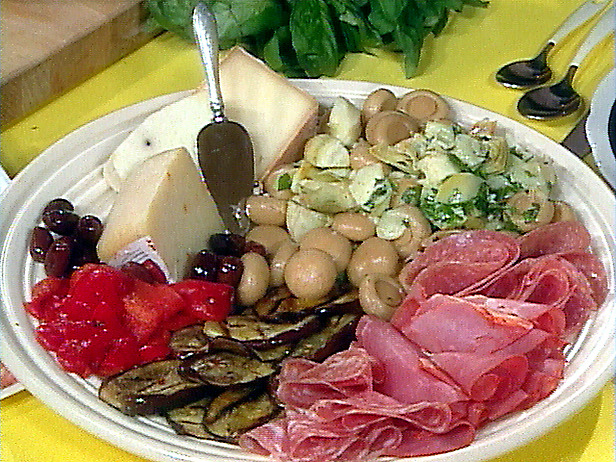
Antipasti Platter

Antipasti Platter


An antipasto come before the meal (il pasto), and its function is to prepare the stomach for the courses. So the antipasto is to be merely tasted, savored slowly in minimal amount rather than devoured. Otherwise it takes the place of the meal, becoming an epilogue instead of a prologue.

There are many different kinds of antipasti. They follow one general rule, which is that hot ones are served before a reasonably light meal, cold ones before a substantial meal. Also, they must have a certain harmony with the rest of the menu – they should bear some relationship to the dishes that follow. The visual element of antipasti dishes is important so that the appetite is stimulated in the imagination even before it is stimulated by the taste. A skillful blending of colors and garnishes is all part of the exercise: preparing a plate of antipasti is like playing with a puzzle.

Most of the recipes have one indispensable ingredient in common: extra virgin olive oil.

Just as olive trees have been constant feature of Tuscan landscape for thousands of years, so olive oil has always played leading role in Tuscan cooking. There is an old saying that wine lift the spirits and oil lift the taste, which confirm the dominant role of olive oil in the kitchens of peasant and aristocrat alike. Bruschetta and raw vegetable dip pinzimonio cannot be the same without the unmistakable taste of extra virgin olive oil!

A platter of Mediterranean-style savory bites that partners well with predinner drinks at holiday gatherings. It is an easy option for cocktail parties, open houses, and lunch buffets, too, because many of the items can be store-bought.

Start with a visit to a good deli or specialty-foods store to find ready-made items like olives; specialty nuts, such as Marcona almonds; artisanal cheeses, such as pecorino, Manchego, mozzarella, and fresh goat cheese; spreads, such as tapenade; and cured meats, including prosciutto, salami, mortadella, and coppa. Serve four to six items, and plan on 1 to 2 ounces (30 to 60 g) of each per guest. You can supplement these offerings with raw or roasted vegetables with a Mediterranean-style dipping sauce.

Assembly

Choose an attractive tray, platter, or cutting board. Or, create a dramatic presentation using a long, narrow platter, a tiered charcuterie “tower,” or several matching small plates, with a single antipasto on each. Arrange the food to create an unfussy, natural look, piling items casually and rolling or loosely folding sliced meats. Decorate with grape leaves, fresh herbs such as sage, rosemary, or thyme. Place small plates, decorative cocktail picks or salad forks, and cocktail napkins next to the antipasto assortment.

Accompaniments

Serve a basket of thinly sliced baguette rounds, slices of coarse country bread, cubes of focaccia, or crackers. You can also set out bread sticks.
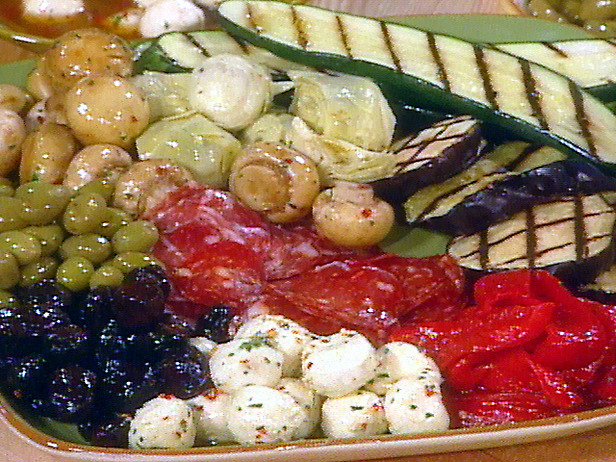
 

Traditional Antipasti Platter

Cold Cuts (charcuterie) – sliced thin:

Imported prosciutto (San Danielle is the best) or other ham such as Parma or Cappicolla

Mild salami (Columbus) or other Italian cured sausage

Imported mortadella with pistachio nuts

Mild coppa

Marinated Vegetables:

Marinated artichoke hearts

Roasted red peppers

Pepperoncini

Marinated mushrooms / Pickled Mushrooms

Cheeses:

Bocconcini

Chunks of Parmesano Reggiano or Peccorino

Asiago, Provolone, aged white cheddar and / or Italian Fontina cheese, cut in thin stripes

Breads:

Breadsticks

Focaccia, ciabatta or herb slab (variety of artisan breads)

Crostini or Bruschetta

Olives:

Combination of Storebought gourmet olives (Kalamata, Nicoise, and Colossole)

Marinated Olives

Misc:

Deviled eggs

Grilled vegetables (zucchini, eggplant, peppers, mushrooms or onions)

Figs (if in season), Melon (if in season, can wrap the prosciutto around it), Fresh Grapes

Candied Walnuts

Grilled Figs Wrapped in Proscuitto

Cheesy Pesto Stuffed Mushrooms

Cheesy Pesto Stuffed Mushrooms

14 oz. large stuffing mushrooms (approximately 16)

3/4 C. packed basil leaves

1-1/2 T. olive oil

1-1/2 T. toasted pine nuts

1 T. grated Parmesan cheese

1/2 tsp. minced garlic

2 T. chicken stock or water

1/4 C. 5% ricotta cheese

Preheat oven to 425 degrees F. Spray a baking sheet with vegetable pan spray. Wipe mushrooms clean and gently remove stems; reserve for another purpose. Put caps on baking sheet. Put basil, olive oil, pine nuts, Parmesan and garlic in food processor; process until finely chopped, scraping down sides of bowl once. Add stock through the feed tube and process until smooth. Add ricotta and process until mixed. Divide mixture evenly among mushroom caps. Bake for 10 to 15 minutes or until hot.

Bruschetta with Gorgonzola Spread & a Trio of Tapenades

Bruschetta with Gorgonzola Spread & a Trio of Tapenades

Gorgonzola Spread
1/2 C. Gorgonzola
1/4 C. cream cheese
1/4 C. half-and-half

Black Olive Tapenade
1/2 C. pitted cured black olives
2 cloves garlic
1/2 tsp. capers
1 oil- or salt-packed anchovy fillet
1 tsp. freshly squeezed lemon juice
2 tsp. olive oil

Green Olive Tapenade
1/2 C. pitted cured green olives
2 cloves garlic
1/2 tsp. capers
1 oil- or salt-packed anchovy fillet
1 tsp. freshly squeezed lemon juice
2 tsp. olive oil

Sun-Dried Tomato Tapenade
2/3 C. chopped dry-packed sundried tomatoes
2 cloves garlic
2 tsp. tomato purée
1 tsp. Capers
2 tsp. chopped fresh Basil
1/4 C. olive oil


Salt
Freshly ground black pepper

12 large slices good-quality French bread
1 tsp. olive oil
3 cloves garlic, minced

To prepare the Gorgonzola spread, place the Gorgonzola and cream cheese in the bowl of a food processor fitted with the metal blade and blend until creamy. Add the half-and-half and blend just until smooth. Set aside. To prepare the black olive tapenade, put the olives, garlic, capers, anchovy, and lemon juice in the bowl of the food processor and process until smooth. With the machine running, slowly add the olive oil through the feeder tube and process until smooth. Scrape down the sides of the bowl, place the mixture in a separate bowl, and set aside. To prepare the green olive tapenade, follow the instructions for the Black Olive Tapenade. To prepare the sundried tomato tapenade, place the tomatoes, garlic, tomato purée, capers, and basil in the bowl of the food processor and process until smooth. With the machine running, slowly add the olive oil through the feeder tube and process until smooth. Scrape down the sides of the bowl, season to taste with salt and black pepper, and set aside. To prepare the bruschetta, drizzle the bread slices with the olive oil and spread with a thin layer of the minced garlic. On a hot, well-oiled grill or under a broiler, grill the bread until crispy and brown. Remove the bread from the grill or broiler. Spread some of the Gorgonzola Spread on each slice. Spread the black olive tapenade on 4 slices. On another 4 slices, spread the green olive tapenade. Spread the remaining slices with the sundried tomato tapenade. Cut each slice into 3 triangles, place on a platter, and serve immediately.

Summer Antipasto Salad

Summer Antipasto Salad

Dressing

3 T. red wine vinegar or balsamic vinegar

2 T. olive oil

1/2 clove garlic, minced

1/8 tsp. dried basil

1/8 tsp. salt

1/8 tsp. ground black pepper

Salad

1 small bunch broccoli, cut into florets

1 medium zucchini, cut into 2″ matchsticks

1 pound shrimp, cooked

1 C. cherry tomatoes, halved

1/2 C. canned artichoke hearts, drained and quartered

1/3 C. pitted kalamata olives, pitted

4 ounces part-skim mozzarella cheese, cut into 1/2″ cubes

8 slices reduced-fat deli ham, rolled into tubes

16 slices turkey pepperoni

To make the dressing: In a small bowl whisk together the red wine or balsamic vinegar, oil, garlic, basil, salt, and black pepper. To make the salad: Bring a medium saucepan of water to a boil. Fill a large bowl with ice water and set near the stove. Working in batches, boil the broccoli and zucchini just until tender (they will turn bright green). Use a slotted spoon to transfer the vegetables to the ice water to halt the cooking process. Drain well. Place the shrimp in the center of a large platter. Arrange the broccoli, zucchini, tomatoes, artichoke hearts, olives, cheese, ham, and pepperoni in small mounds around the shrimp. Drizzle with the dressing.

Oven Risotto with Crispy Roasted Mushrooms

Oven Risotto with Crispy Roasted Mushrooms

Oven Risotto with Crispy Roasted Mushrooms

1 lb. mixed wild, shiitake, and/or crimini mushrooms, broken into pieces or sliced 1/4″ thick (about 4 cups)

3 garlic cloves, peeled, thinly sliced

6 thyme sprigs

1/4 tsp. crushed red pepper flakes

1/4 cup plus 2 Tbsp. extra-virgin olive oil, plus more for drizzling

1 3/4 tsp. (or more) kosher salt, divided

1 medium onion, finely chopped

1 cup arborio rice

1/2 tsp. freshly ground black pepper

1/2 cup dry vermouth or white wine

3 cups homemade chicken stock or low-sodium chicken broth, divided

2 oz. finely grated Parmesan (about 1 cup)

2 Tbsp. cold unsalted butter, cut into pieces

1/2 tsp. finely grated lemon zest

1/3 cup coarsely chopped parsley leaves

Lemon wedges (for serving)


Place racks in bottom third and middle of oven; preheat to 350°F. Toss mushrooms, garlic, thyme, red pepper flakes, 1/4 cup oil, and 1/2 tsp. salt on a rimmed baking sheet. Roast on bottom rack, tossing halfway through, until deeply golden brown and crisped, 25–30 minutes. Meanwhile, heat 2 Tbsp. oil in a large ovenproof Dutch oven or heavy pot over medium-high. Add onion and cook, stirring often, until softened and slightly translucent, 3–5 minutes. Stir in rice; season with pepper and 1/2 tsp. salt. Cook, stirring occasionally, until some grains are translucent, about 2 minutes. Add vermouth, bring to a simmer, and cook, stirring occasionally, until pan is almost dry, about 2 minutes. Add 2 1/2 cups stock. Bring to a simmer, then cover and bake in oven until liquid is mostly absorbed but rice is still slightly firm in the center, 16–18 minutes. Return pot to stove and heat over medium. Add remaining 1/2 cup stock and cook, stirring constantly, until rice is tender but still has some bite and sauce is creamy, about 2 minutes. Remove from heat and stir in Parmesan, butter, and lemon zest; season to taste with salt, if needed. Add a little bit of warm water, if needed, until risotto is thick but still pourable. Transfer risotto to a platter. Top with crispy mushrooms and parsley. Drizzle with oil. Serve with lemon wedges alongside.

Sweet and Sour Wild Boar

Sweet and Sour Wild Boar

Sweet and Sour Wild Boar

1/2 lb. (680 g) wild boar roast, cut into 2-inch pieces

1 bottle (750 ml) dry red wine

2 T. (30 ml) extra-virgin olive oil

1 small yellow onion, cut into fine dice

1 carrot, cut into fine dice

1 stalk celery, cut into fine dice

Kosher salt

2 fresh bay leaves

1 clove garlic, smashed

1 28-ounce (793 g) can whole plum tomatoes, chopped with their juices

1 T. granulated sugar

1 1/2 (22 ml) T. white wine vinegar


Put the boar and red wine in a 4-quart pot and bring to a boil over medium-high heat. Reduce the heat to maintain a gentle simmer and cook to remove some of the gaminess of the meat, about 15 to 20 minutes. Drain the meat and discard the wine. In an 11-inch straight-sided pan, heat the oil over medium heat. Add the onion, carrot, celery, and a pinch of salt; cook until the vegetables are tender and just beginning to brown, about 6 minutes. Add the bay leaves and garlic and cook until fragrant, 2 to 3 minutes. Add the boar plus a generous pinch of salt and cook for 2 minutes. Add the tomatoes to the pan and bring the mixture to a boil. Reduce the heat, cover partially, and cook at a very slow simmer until the meat is very tender, 2 hours. If the sauce becomes too thick, add a bit of water to it. Stir in the sugar and the vinegar and season to taste with salt. Serve on a large platter.

Basic Pasta Dough

Basic Pasta Dough

Basic Semolina Pasta Dough (Pasta Fresca)


3 C. (375 g) semolina flour

1/2 tsp. kosher salt

1-1 1/4 C. warm water


On a clean work surface, mix together the semolina flour and the salt. Make a well in the flour and add the water to the center of the well a little at a time. With a fork, gradually pull some of the flour into the water mixture and continue mixing until a soft dough begins to form. With your hands, knead the dough until it is smooth and elastic, about 8 minutes. Cover the dough with a kitchen towel and let rest for 20 minutes. Cut the dough into desired shapes.


Basic Egg Pasta Dough (Pasta Fresca All’Uovo)


2 1/4C. All Purpose Flour

4 Large Eggs, Room Temperature


Make a well in the flour and add the eggs to the center. With a fork, lightly beat the eggs, and use the fork to gradually pull in some of the flour. Mix the flour and eggs together until well combined. Knead dough until it becomes smooth and elastic. Cover the dough and let rest for 20 minutes. Cut the dough into six pieces and cover with a towel. Pass one piece at a time through a pasta machine. Starting on the widest setting, pass the dough through, then fold the dough like an envelope and pass it through the widest setting again. Repeat these steps until the dough is smooth and elastic, 8 to 10 times. Begin to lower the setting a notch on the pasta machine and pass the dough through once on each setting, finishing on the second to thinnest setting. Lay the clough out on a flat surface sprinkled lightly with flour. Let the dough dry slightly; it should still be a little tack)’ and pliable or it will not cut properly. Cut the dough into desired shapes: tagliatelle, tagliatelle, spaghetti, what have you. Or use the sheets to make stuffed pastas such as ravioli, lasagna, or cannelloni.

Ravioli with Seven Herbs & Ricotta (Ravioli Alle Sette Erbe)

Ravioli with Seven Herbs & Ricotta (Ravioli Alle Sette Erbe)

Ravioli with Seven Herbs & Ricotta (Ravioli Alle Sette Erbe)


1 1/2 (680 g) lb. ricotta

1/4 C. loosely packed basil leaves

1/4 C. roughly chopped flat-leaf parsley

1 T. roughly chopped mint

1 T. sliced chives

1 T. roughly chopped chervil

1 tsp. roughly chopped oregano

1 tsp. thyme leaves

Kosher salt

1/4 C. (59 ml) extra-virgin olive oil

1 recipe egg pasta dough

2 T. freshly grated pecorino cheese, plus more for serving


In a food processor fitted with the blade attachment, add the ricotta, the herbs, and 2 tsp. of the salt. Process until the herbs are chopped. With the motor running, gradually add the oil in a steady stream until it is incorporated, the herbs are finely chopped, and the mixture is the consistency of mayonnaise. Reserve 1/3 C. of the cheese mixture and set aside. Divide the dough into four pieces. Using a pasta machine, roll the dough out, starting with the widest setting and then going down until the dough is 1/8 inch thick. Lay out one sheet of pasta. Drop tsp. of filling down one side of the pasta sheet at 1/2-inch intervals. Fold the pasta over the filling and gently press out any air between the filling and the dough. With a fluted pastry cutter, cut the ravioli into small squares (about 1 1/2 inches) and place on a lightly floured baking sheet. Finish the remaining ravioli in the same fashion. Bring a large pot of well-salted water to a boil. Drop the ravioli into the boiling water and cook until they rise to the surface, 2 to 3 minutes. Reserve !4 C. of the pasta water, then drain the ravioli. Toss the ravioli in a bowl with the reserved cheese filling, a little of the pasta water, and the pecorino cheese. Serve immediately with more cheese if desired.

Hunter-Style Quail QUAGLIE ALLA CACCIATORA

Hunter-Style Quail QUAGLIE ALLA CACCIATORA

Hunter-Style Quail QUAGLIE ALLA CACCIATORA


8 quail (about 5 oz./141 g each)

Kosher salt and freshly ground black pepper

1/4 C. (59 ml) extra-virgin olive oil

3 ounces (85 g) sweet Italian sausage, casing removed, crumbled

1 medium yellow onion, thinly sliced

2 cloves garlic, smashed

4 fresh bay leaves

1 T. chopped flat-leaf parsley

2 tsp. rosemary

1/2 C. (118 ml) white wine

1/2 C. (118 ml) low-salt chicken broth

1/4C. chopped green olives


Season the quail generously with salt and pepper. Heat 2 T. of the oil in an 11 -inch straight-sided pan over medium-high heat. Add half of the quail and sear until golden brown all over, about 8 minutes total. Transfer to a plate and repeat with the remaining quail. Add the sausage, onion, garlic, and a pinch of salt to the pan; cook until browned and the onions are tender, 5 to 6 minutes. Add the bay leaves, parsley, and rosemary to the pan and cook until fragrant, about 1 minute. Add the white wine and scrape up any browned bits from the bottom of the pan with a wooden spoon. Bring the wine to a boil and reduce by half. Add the quail and the broth, reduce the heat, and cook, covered, at a gentle simmer until the quail is cooked through and almost falling off the bone, about 20 minutes. Add the olives and cook until the flavors have melded together, about 2 minutes. Season to taste with salt and pepper. Transfer to a platter and serve.

Individual Fig Cakes (Tortine di Fichi)

Individual Fig Cakes (Tortine di Fichi)

Individual Fig Cakes (Tortine di Fichi)


1 1/2 C. granulated sugar, plus 2 T.

3 large eggs

272 C. (300 g) all-purpose flour

1 C. (240 ml) whole milk

1 C. (240 ml) vegetable oil

3/4 tsp. baking powder

½ tsp. baking soda

½ tsp. (2 ml) vanilla extract

4 ounces (115 g) fresh figs, cut into 1/2-inch pieces


Position a rack in the center of the oven and heat the oven to 350° F (180°C). In a stand mixer fitted with the whisk attachment, add 1V2 C. of the sugar and the eggs. Beat on medium speed until thick and creamy, 3 to 4 minutes. Add the flour, milk, and oil and continue to beat until combined. Add the baking powder, soda, and vanilla and mix until the batter is smooth and thick. Meanwhile, in a small bowl toss the figs with V2 T. of sugar and let sit for a few minutes to extract the juices. With a rubber spatula, fold the figs into the batter. Portion out the batter into standard-size individual muffin liners (no pan needed) arranged on a baking sheet. Sprinkle the remaining 1V2 T. sugar over the tops of the cakes. Bake in the oven until the tops are golden brown and a toothpick inserted into the center comes out clean, 20 to 25 minutes.

Lamb Ragu with Mint

Lamb Ragu with Mint

Lamb Ragu with Mint

1 lb. rigatoni pasta

2 T. olive oil

2 shallots, chopped

1 clove garlic, minced

1 1/2 lb. ground lamb

1/2 tsp. salt

1/4 tsp. freshly ground black pepper

1 C. red wine

4 C. marinara sauce, store-bought or home made

1/2 C. fresh mint leaves, torn

1/2 C. ricotta cheese


Bring a large pot of salted water to a boil over high heat. Add the pasta and cook until tender but still firm to the bite, stirring occasionally, about 8 to 10 minutes. Drain pasta. Meanwhile, in a large skillet warm the olive oil over high heat. Add the shallots and the garlic and cook until tender, about 3 minutes. Add the ground lamb, salt, and pepper. Cook until the lamb has browned and the juices have evaporated. Add the wine, scraping up any brown bits from the bottom of the pan using a wooden spoon. Simmer until the wine has reduced by half. Add the marinara sauce and simmer over low heat until the flavors have blended, about 10 minutes. Add the mint and ricotta and stir until mixed. Add the pasta and stir to coat. Serve immediately.


Giada’s Homemade Marinara Sauce: 1/2 C. extra-virgin olive oil , 2 small onions, finely chopped , 2 garlic cloves, finely chopped , 2 stalks celery, finely chopped , 2 carrots, peeled and finely chopped , 1/2 tsp. sea salt , 1/2 tsp. freshly ground black pepper , 2 (32-ounce) cans crushed tomatoes, 2 dried bay leaves In a large casserole pot, heat the oil over a medium-high flame. Add the onions and garlic and sauté until the onions are translucent, about 10 minutes. Add the celery, carrots, and 1/2 tsp. of each salt and pepper. Sauté until all the vegetables are soft, about 10 minutes. Add the tomatoes and bay leaves, and simmer uncovered over low heat until the sauce thickens, about 1 hour. Remove and discard the bay leaf. Season the sauce with more salt and pepper, to taste. (The sauce can be made 1 day ahead. Cool, then cover and refrigerate. Rewarm over medium heat before using.)

Gnocchi Alla Romana (Semolina Gnocchi)

Gnocchi Alla Romana (Semolina Gnocchi)

Gnocchi Alla Romana (Semolina Gnocchi)

1 quart (4 C.) 2% or whole milk

1 heaping C. (175 grams) semolina flour (not fast-cooking variety)

1 tsp. kosher salt, plus more as desired

4 T. unsalted butter, divided, plus more for greasing

1 heaping C. (3.5 ounces) freshly grated Parmigiano-Reggiano cheese

freshly ground black pepper

2 large egg yolks


Heat the milk in a large saucepan over medium-high heat until tiny bubbles start to form around the edges of the pan and the liquid is just short of boiling. Reduce the heat to low and slowly add the semolina flour in a very thin steady stream with one hand as you stir the mixture steadily with a stiff large whisk. The mixture will cook for roughly 15 to 20 minutes total, or until it becomes very thick and begins to pull away from the sides of the pan. It will be very loose for the first few minutes and will thicken to the consistency of a loose pudding within about 5 minutes. Once the mixture thick enough that it becomes difficult to continue whisking, switch to a wooden spoon. Continue stirring with a wooden spoon, scraping the sides of the pan as well, until the mixture begins to form a loose-ish mass and begins to pull away from the sides (approximately 15 to 20 minutes of total cook time ). Remove from the heat. Allow the mixture to cool for a minute or two. Stir in 2/3 of the grated parmesan cheeses, 2 T. unsalted butter, and salt. Season to taste with salt and freshly ground pepper. Allowing the mixture to cool slightly will also prevent the eggs from coagulating. Add the egg yolks and mix rapidly with a wooden spoon until fully incorporated. Moisten a half sheet pan with cold water over a sink and allow the excess water to drip off the pan. Spoon the hot semolina mixture onto the moistened sheet pan, spreading it with an offset spatula into an even layer that is just under 1/2-inch thick. Let cool for 30-40 minutes. Preheat the oven to 425 degrees with a rack in the center position. Grease the bottom and sides of an oven-safe baking dish (roughly 2 quarts in capacity) with unsalted butter. Using a small biscuit cutter (roughly 2.5-inch), cut the semolina into disks, dipping the biscuit cutter into water continuously to prevent sticking. Transfer and layer the semolina rounds into the greased baking dish, overlapping the slices slightly with each row to resemble roof shingles. Distribute the top of the polenta with the remaining 2 T. butter, divided into small pieces. Sprinkle the top with the remaining grated cheese. Gnocchi alla romana can be prepped ahead up this stage and stored, covered with plastic wrap, in the refrigerator for up to 2 days. Bake uncovered at 425 for 15 to 20 minutes or until a light golden crust is formed. Allow to cool for a few minutes before serving.


Alternate Cooking: Preheat the oven to 400° F (200°C). Using a cookie cutter or the mouth of a glass that’s about 2 inches wide, cut the cooled semolina into gnocchi. Dip the cutter or glass into water between each press to prevent the dough from sticking. Place the cut gnocchi on a parchment-paper-lined baking sheet, making sure to leave at least 1/2 inch between them so that their edges can caramelize. Sprinkle 1/2 C. Parmesan and ½ C. bread crumbs on top of the semolina gnocchi. If you don’t want them thickly coated, don’t use all the cheese and crumbs. Bake until the semolina gnocchi are golden brown, slightly puffed, and crisp around the edges, 30 to 40 minutes. Serve hot.

Sauteed Peppers with Green Olives (Pepperoni con Olive Verdi)

Sauteed Peppers with Green Olives (Pepperoni con Olive Verdi)

Sautéed Peppers with Green Olives (Pepperoni con Olive Verdi)


1 T. (15 ml) extra-virgin olive oil

4 long green peppers, seeded and cut into thin strips

2 medium yellow bell peppers, seeded and cut into thin strips

1 large yellow onion, thinly sliced

3/4 C. pitted green olives

Kosher salt

1/4 C. thinly sliced basil leaves

1/2 T. (7 ml) white wine


In a large straight-sided skillet, heat the olive oil over medium heat. Add the peppers, onion, olives, and a generous pinch of salt. Cook, stirring occasionally, until the vegetables are tender but not breaking down, 10 to 12 minutes. Stir in the basil and the vinegar and cook until the flavors meld together, about 1 minute. Serve warm.

Slow-Braised Lamb Ragu with Rigatoni and Whipped Ricotta

Slow-Braised Lamb Ragu with Rigatoni and Whipped Ricotta

Slow-Braised Lamb Ragu with Rigatoni and Whipped Ricotta

1 (2-lb.) boneless lamb shoulder roast, halved (see Note)

21⁄2 tsp. kosher salt, or to taste

1 T. extra-virgin olive oil, plus more for finishing

1 large yellow onion, finely diced

1 (6-ounce) can tomato paste

1 C. dry red wine

1 (28-ounce) can whole peeled tomatoes

1⁄2 C. water

1⁄4 C. plus 2 T. fresh oregano leaves

6 cloves garlic, minced

1 tsp. red pepper flakes

11⁄2 lb. dried rigatoni

1 T. minced rosemary

1 T. red wine vinegar


1 C. whole-milk ricotta

1⁄2 C. whole milk

1⁄2 C. packed freshly grated Pecorino Romano cheese

1⁄2 tsp. freshly ground black pepper

1⁄2 tsp. kosher salt


Season the lamb on all sides with 1 tsp. of the salt. Warm a large Dutch oven over medium-high heat. Add the oil, and when you just begin to see wisps of smoke, add the lamb. Sear on all sides until a deep brown crust forms, 7 to 10 minutes. Transfer the lamb to a plate and set aside. Add the onion to the pot and cook until just softened and lightly browned, adjusting the heat as needed, about 4 minutes. Add the tomato paste and cook, stirring almost constantly, until it darkens slightly and a deep brown crust forms on the bottom of the pot, about 2 minutes. Pour in the wine and scrape up the bits from the bottom of the pot. Stir in the tomatoes, water, 1⁄4 C. of the oregano, the garlic, red pepper flakes, and remaining 1⁄2 tsp. salt. Nestle the seared lamb back into the pot and bring to a rapid simmer. Decrease the heat to maintain a gentle simmer, cover, and braise until the lamb is tender and easily shreds apart, about 2 hours. Remove the lamb from the sauce and shred it into bite-size pieces using two forks. Return the shredded lamb to the sauce. (It will be quite thick now but will be thinned with pasta water later.) Taste and adjust the seasoning. (At this point the ragù can be cooled to room temperature, then covered and refrigerated for up to 3 days before serving.) Return the ragù to a gentle simmer and keep it warm over low heat. Cook the rigatoni in boiling salted water until al dente according to the package directions. Drain, reserving 2 C. of the cooking water, and return the rigatoni to its pot. Stir some of the cooking water into the ragù to loosen it and add the remaining 2 T. oregano, the rosemary, and vinegar. Add a few ladlefuls of the ragù to the pot of rigatoni to lightly coat. Place the rigatoni pot over medium-low heat and cook, stirring often, to allow the pasta to absorb some of the sauce, about 2 minutes. To make the whipped ricotta: In a medium bowl, whisk the ricotta with the milk, cheese, pepper, and salt until it is loose and creamy, about 30 seconds. Use immediately or cover and refrigerate for up to 3 days. Serve the rigatoni in warm bowls, with a ladleful of the ragù spooned over each portion. Top with the whipped ricotta and a drizzle of oil.