Just Barely Basil Buttermilk Dressing

Just Barely Basil Buttermilk Dressing

Just Barely Basil Buttermilk Dressing


1/2 C. roughly chopped (1/2 to 1 inch) basil stems (a few errant leaves are fine, too)

1/2 C. buttermilk

1 medium-size garlic clove, grated on a Microplane or very finely minced

2 T. mayonnaise

2 T. plain Greek yogurt

Fine-grain sea salt

Freshly ground black pepper


Combine the basil stems and buttermilk in a small bowl and let steep, covered, in the refrigerator for 8 to 12 hours. Strain and discard the basil stems. Combine 1/4 C. of the infused buttermilk, the garlic, mayonnaise, Greek yogurt, a pinch of sea salt, and a few grinds of pepper in a small bowl or glass jar. Shake to combine. Season to taste and thin with extra buttermilk if desired. This dressing will keep up to 3 days in a sealed container in the refrigerator.

Air Fryer Garlic Parmesan Chicken Wings

Air Fryer Garlic Parmesan Chicken Wings

Air Fryer Garlic Parmesan Chicken Wings


12 wings

1/2 stick butter

1/2 cup freshly grated Parmesan cheese

1 tsp salt

juice from 1/2 lemon

1 tsp garlic salt

parsley


Melt together butter,  Parmesan, salt, lemon juice and garlic salt in microwavable bowl for 1 minute (cover with Glad Press ‘n Seal to keep it from splattering). Toss wings in butter sauce. Place wings into air fryer

Sprinkle with additional garlic salt. Heat in Air Fryer at 350  for 11 min. Open Air Fryer and turn all wings and rotate them in the fryer. Heat in Air Fryer at 400 for 10 min more. Sprinkle with parsley.

Garlic Fried Eggs with Kale Pesto, Toast Points, and Lemon Bacon Vinaigrette

Garlic Fried Eggs with Kale Pesto, Toast Points, and Lemon Bacon Vinaigrette

Garlic Fried Eggs with Kale Pesto, Toast Points, and Lemon Bacon Vinaigrette


2 cloves garlic, minced

2 cups kale, roughly chopped and packed

¼ cup pine nuts

¼ cup olive oil

¼ tsp. kosher salt

4 strips bacon, fried and cut in half


1 lemon, juiced (about 1 ½ to 2 oz.)

3 T. bacon fat, reserved from frying bacon

⅛ tsp. kosher salt

⅛ tsp. ground black pepper


2 T. unsalted butter

2 slices of thick cut white bread, sliced into 6 “sticks” (see photos)

1 T. olive oil


3 T. butter

1 tsp. garlic, minced

4 eggs


Combine garlic, kale and pine nuts, and salt in a food processor. Pulse until roughly combined. With food processor running, stream in olive oil. Whisk together lemon juice, bacon fat, kosher salt, and black pepper until combined. In the pan used to fry bacon, melt butter over medium heat. Add bread and toast on all sides until golden brown and crispy.  In a small frying pan, melt butter over medium heat. Fry garlic until it starts to turn golden brown, for about 4-5 minutes. Crack two of the eggs into the pan and use a small spoon to baste the eggs with the melted butter and garlic mixture. Cook until whites are firm, about 2-3 minutes. Remove eggs from pan and cook the remaining two eggs in the same method. Serve eggs with bacon and kale pesto and a drizzle of vinaigrette on top. Enjoy!

Charred Asparagus End Pesto

Charred Asparagus End Pesto

Charred Asparagus End Pesto


1/4 C. plus 1 T. extra virgin olive oil

1-to 2-inch ends cut from the bottom of 1 bunch of asparagus

1 C. loosely packed fresh shiso or basil leaves

1/1 C. pine nuts, toasted

1 garlic clove, minced

1/j C. finely grated pecorino Romano cheese

1 T. freshly squeezed lemon juice


This recipe is for the ends of middle-of-the-road asparagus: If the ends are extremely woody, they’re best saved for stock. And if the ends don’t seem very woody at all, you might just want to peel the ends of your stalks instead and save those peelings for tempura)! This is a thick pesto, meant for tossing with hot pasta or smearing on sandwiches. I also think it would make an excellent dip (maybe mixed with softened cream cheese). Thin it out with additional olive oil to use it as dressing. Shiso is a Japanese herb in the mint family; I think of it as basil’s Asian cousin (basil is also the best substitute should you not be able to find shiso). Look for shiso in the produce section of Asian grocery stores or at your local farmers market. Since it can sometimes be hard to find, I opt to grow my own supply. If you can find shiso leaves,. they’ll quickly grow roots when their stems are placed in a glass of water on a windowsill. After they do, plant them. I’ve also grown shiso from seeds procured online and from small plants found at my local farmers market – both options work well.  In a medium-size heavy skillet, heat 1 T. of the oil over medium-high heat. Add the asparagus ends to the hot pan, and let them cook, undisturbed, until the side touching the pan chars, 3 to 5 minutes. Move them around a bit to expose another side to the heat, and let them cook, undisturbed, until they are charred on all sides and can be easily pierced with a knife, another 3 to 5 minutes. Remove from the pan and let cool slightly. Using a knife, finely chop the asparagus ends. This is important: If you try to skip this step, the food processor will shred the cooked ends and you’ll have stringy pesto. Add the chopped asparagus ends, shiso, pine nuts, and garlic to a mini food processor and pulse to process all ingredients, scraping down the bowl a couple of times as needed. Then add the cheese and lemon juice and pulse a few more times. Finally, add the rest of the olive oil and process again until smooth. The pesto is at its best when used immediately, so the basil doesn’t discolor, but can be stored in an airtight container in the refrigerator or freezer.

Shredded Kale Salad with Pine Nuts, Currants, and Parmesan

Shredded Kale Salad with Pine Nuts, Currants, and Parmesan

Shredded Kale Salad with Pine Nuts, Currants, and Parmesan

2 tablespoons currants

2 tablespoons golden or white balsamic vinegar

1 tablespoon honey

5 tablespoons extra virgin olive oil

Kosher salt and freshly ground black pepper

1 bunch kale, thick stems discarded, leaves cut into 1/2-inch ribbons (about 2 quarts loosely packed ribbons)

3 tablespoons pine nuts, toasted

2 ounces Parmesan cheese shaved with a vegetable peeler


Place currants and balsamic vinegar in medium microwave-safe bowl and cook in the microwave for 30 seconds to plump up the currants. Whisk in the honey. Whisking constantly, slowly drizzle in olive oil. Season to taste with salt and pepper. In a large bowl, toss the kale and pine nuts. Add the dressing with the currants to the shredded kale, little by little, until adequately dressed. Spoon out the currants if you have dressing left over. Return salad to refrigerator for at least 20 minutes and up to overnight to soften kale leaves. Serve, topped with grated parmesan.

Raspberry Mango Salsa

Raspberry Mango Salsa

Raspberry Mango Salsa


1 pint red raspberries

Meat of 2 mangoes, cut into chunks

½ C jícama, julienned

½ C red onion, minced

2 red fresno chiles, minced

Juice of 2 limes

2 T. fresh-squeezed orange juice

1 bunch cilantro, chopped

1 tsp. brown sugar

½ tsp. mild New Mexico red chile powder

½ tsp. table salt


Mix all ingredients together, let blend for 2 hours. • This tropical salsa is an unexpected addition to grilled fish, poultry and pork.

Peach Upside Down Mini Cakes

Peach Upside Down Mini Cakes

Peach Upside Down Mini Cakes


Non-stick cooking spray

1 T. unsalted butter cold

6 tsp. light brown sugar

For cake batter:

3 fresh peaches (Note 1)

1 ½ C. (190g) all-purpose flour

1 tsp. baking powder

½ tsp. baking soda

¼ tsp. salt

2/3 C. (130g) granulated sugar

1/3 C. (90g) unsalted butter at room temperature

1 large egg at room temperature

1 tsp. pure vanilla extract

½ C. (120ml) buttermilk at room temperature (Note 2)


Preheat the oven to 350°F (177° C). Spray muffin pan with non-stick cooking spray. To prepare the topping: Cut 1 T. of butter into 12 equal parts. (TIP: cold butter is easier to cut.) Place each butter piece in 12 muffin C.. Sprinkle ½ tsp. of brown sugar into each muffin C.. Slice 1-2 peaches into thin slices. Arrange about 3 slices into the bottom of each muffin pan. To make the cake batter: Cut the remaining peaches into small cubes. You should get about 1 C. of cubed peaches. Set aside. In a small bowl, whisk together flour, baking powder, baking soda and salt. In a mixing bowl with paddle attachment, beat butter and sugar together until fluffy and creamy, about 2 minutes. Add egg and vanilla extract and beat it for another 2-3 minutes, or until well combined. The mixture should be fluffy and white. (Note: It’s totally normal for the mixture to curdle right after adding egg, but keep mixing and it’ll turn nice and fluffy!) Add half of the flour mixture into the batter, beat for 1 minute on low speed. Stir in the buttermilk and beat for another minute. Add the remaining flour mixture and beat just until combined. Don’t overmix the batter, or it’ll make tough cake. Fold in the cubed peaches. Divide the batter into 12 muffin pan C..  Bake for 25-30 minutes, or until inserted toothpick comes out clean. Cool the cakes in the pan for 5 minutes. Then carefully run a butter knife around the edges to release the cake from the sides. Now, place a wire rack over the muffin pan and carefully turn the pan upside down to remove the cakes. Place an empty baking sheet to catch any juice, if needed. Cool the cakes completely before serving.

Grilled Beef & Blue Cheese Sandwiches

Grilled Beef & Blue Cheese Sandwiches

Grilled Beef & Blue Cheese Sandwiches


2 ounces cream cheese, softened

2 ounces crumbled blue cheese

8 slices sourdough bread

3/4 pound thinly sliced deli roast beef

1/2 small red onion, thinly sliced

1/4 cup olive oil


In a small bowl, mix cream cheese and blue cheese until blended. Spread over bread slices. Layer 4 of the slices with roast beef and onion; top with remaining bread slices. Brush outsides of sandwiches with oil. In a large skillet, toast sandwiches over medium heat 4-5 minutes on each side or until golden brown.

Radish Salad

Radish Salad

Radish Salad


About 12 radishes, thinly sliced

1 T. salt

¼ tsp. freshly ground black pepper

2 T. fresh lime juice

1 T. orange juice

Ground Urfa or other mild chilies to taste (optional)

2 T. chopped mint or cilantro


Combine radishes with salt, and cover with water in a bowl. Let sit 15 minutes. Drain, and rinse. Meanwhile, stir together the pepper and fruit juices. Toss radishes with dressing and chilies. Taste. Add more salt, pepper or lime juice as needed. Garnish with herb and serve.

Dandelion Lemonade

Dandelion Lemonade

Dandelion Lemonade


1 C. Dandelion Blossoms

3 C. Water

2 Lemons, zest and Juice

¾ C. Sugar


Pull Petals off dandelion and put in a bowl with 1 C. of water overnight.  The next day, strain into a pan and add remaining ingredients.  Stir while heating until sugar dissolves.  Bring to a boil, then remove from heat and pour into a clean bottle or jar.  Refrigerate until cold, then enjoy.  (For a larger batch, use 2 quarts blossoms, 4-6 lemons, sweeten to taste, in a gallon jar. Â Dandelion blossoms steeped as tea can help relieve headaches, menstrual cramps, backaches, stomach aches and even depression.

Churro Brownies

Churro Brownies

Churro Brownies


8 T. (1 stick) unsalted butter

1 ½ C. brown sugar

2 large eggs, beaten

1 tsp. vanilla extract

1 ½ C. all-purpose flour

2 tsp. baking powder

Pinch kosher salt

2 T. fresh orange zest

¼ cup granulated sugar

1 ½ T. ground cinnamon

Flaked sea salt, for garnishing


Preheat the oven to 350°F and line with parchment paper or grease a 9-inch square-baking pan or 9-inch cast-iron skillet. On low heat, melt the butter. Remove from the heat and allow to cool, about 10 minutes. Once cool, add to the melted butter the brown sugar, eggs, and vanilla extract. In a separate bowl, whisk together the flour, baking powder, salt, and orange zest until well combined. Add to the liquid ingredients and stir until a thick batter is formed. Spread the batter into the baking pan. Stir together the sugar and cinnamon then spoon evenly over the batter. Bake uncovered for 20-25 minutes or until the edges are set. (Be sure to not overcook as the churro brownies will harden as they cool.) Lightly sprinkle with the flaked sea salt, then allow to cool for 20 minutes before slicing and serving.

Foil Barbecued Shrimp

Foil Barbecued Shrimp

Foil Barbecued Shrimp


2 pounds shrimp, shelled and deveined

1/2 cup snipped parsley

3/4 tsp. curry powder

6 T. butter

1 clove garlic, minced

1/2 tsp. salt

Dash of pepper


In a saucepan melt butter, stir in parsley, curry powder, garlic, salt and pepper. Add shrimp; stir to coat. Divide shrimp mixture equally among 6 (18 x 12−inch) pieces of heavy-duty foil. Fold foil around shrimp, sealing the edges well. Grill shrimp over hot coals about 8 minutes. Turn and grill until done, 7 to 8 minutes more. Serve in foil packages, if desired.

Cactus Pear Margarita

Cactus Pear Margarita

Cactus Pear Margarita


9 ounces white tequila

4 ounces orange-flavored liqueur (recommended: Cointreau)

4 ounces cactus pear juice, plus more for the rim

2 ounces fresh lime juice

1 1/2 cups crushed ice

Coarse salt, optional

Lime wedges, for garnish


Place tequila, orange liqueur, cactus pear juice, lime juice, and ice in a blender and blend until smooth. Carefully pour a few ounces of cactus pear juice onto a plate and a few ounces of salt onto another plate. Dip the rim of each margarita glass into the juice and then into the salt. Pour margaritas into each glass and garnish with a lime wedge.

Holiday Eggnog Cake with Apricot Filling

Holiday Eggnog Cake with Apricot Filling

holiHoliday Eggnog Cake with Apricot Filling


1 package (18.25) yellow or vanilla cake mix, plain or with pudding

1 1/4 cups eggnog

1/4 cup vegetable oil

1 tsp. vanilla extract

1/2 tsp. ground nutmeg

4 large eggs

3 T. bourbon (optional), for brushing the tops of the cake layers


1 jar (10 ounces) apricot all-fruit spread

1 T. bourbon or water

Spiced cream cheese frosting:

4 T. (1/2 stick) butter, at room temperature

4 ounces reduced-fat cream cheese, at room temperature

3 1/2 cups confectioners’ sugar, sifted

Heaping 1/4 tsp. ground nutmeg

1/4 tsp. ground cinnamon


Place rack in center of oven and preheat oven to 350 degrees. Lightly mist three 9-inch round cake pans with vegetable oil spray, then dust them with flour. Shake out the excess flour; set pans aside. Place the cake mix, eggnog, oil, vanilla, nutmeg and the eggs in a large mixing bowl. Beat with an electric mixer on low speed until the ingredients are incorporated, 30 seconds. Stop the machine and scrape down the side of the bowl with a rubber spatula. Increase mixer speed to medium and beat for two minutes longer, scraping down the side of the bowl again, if needed. The batter should look well blended. Divide the cake batter evenly among the three prepared cake pans, about 11/2 cups of batter per pan, smoothing the tops with the rubber spatula. Place the pans in the oven. If your oven is not large enough to hold three pans on the center rack, place two pans on that rack and one in the center of the rack above. Bake the cake layers until they are golden brown and the tops spring back when lightly pressed with a finger, 18 to 20 minutes. The cake layer on the higher rack may bake faster, so it for doneness first. Transfer to wire racks and let cool for 5 minutes. Run a sharp knife around the edge of each cake layer and give the pans a good shake to loosen the cakes. Invert each layer onto a wire rack, then invert it again onto another rack so that the cakes are right side up. If desired, brush the cakes with the 3 T. of bourbon, using 1 T. for each; set aside to cool, 15 minutes longer. Meanwhile, make the filling: Place the fruit spread and 1 T. of bourbon or water in a small bowl and stir until well combined.  Make the spiced cream frosting: Place the butter and cream cheese in a medium-size bowl and beat with an electric mixer on low speed until well combined, 30 seconds. Stop the machine and scrape down the side of the bowl with a rubber spatula. Add the confectioners’ sugar, nutmeg and cinnamon and beat with the mixer on low speed until the ingredients are well incorporated and the frosting has a spreading consistency, 1 to 2 minutes. To assemble cake, transfer one layer, right side up, to a cake plate. Spread half of the filling to the edge of the first layer, about 1/2 heaping cup. Place a second cake layer, right side up, on top of the first and spread the remaining filling over it. Place the third layer on top, right side up, and frost the top and side of cake, working with smooth, clean strokes. To make slicing easier, place the uncovered cake in the refrigerator until the frosting sets, 20 minutes. Store in a cake saver or loosely covered with waxed paper in the refrigerator for up to one week. Freeze the cake, wrapped in aluminum foil, for up to six months. Let thaw overnight in the refrigerator before serving.

Savory Gruyere Custard

Savory Gruyere Custard

Savory Gruyere Custard

2 oz/55 g Gruyere cheese

2 oz/55 g Parmesan or Pecorino cheese

2 C./500 mL 35% cream

1 sprig fresh thyme

1 garlic clove

3 eggs

3 egg yolks

½ tsp. Dry Mustard

Salt and pepper


Assemble, prepare, and measure ingredients. Grate both cheeses. Preheat oven to 300°F/150°C. Lightly butter four l-cup/250 mL ramekins or a 1-quart/l L baking dish. In a small saucepan, warm cream over medium-low heat with thyme and garlic until steam rises. Remove from heat and allow to infuse and cool while you make the eggs. In a mixing bowl, beat eggs and yolks with mustard (or cayenne) and salt and pepper. Stir in grated cheeses. Strain cream through a fine-mesh sieve and whisk into egg mixture. Pour custard mixture into ramekins (or baking dish) and place in a large roasting pan. Pour boiling water around dishes to come halfway up their sides. Be careful not to splash any water into the custards, as you want them to be creamy and silken, not watery. Bake for 30 -45 minutes, or until center is just set. Custards in ramekins will cook more quickly than those in a single baking dish. Remove from oven and allow to cool slightly.  To serve, place ramekins on individual plates or scoop out servings from larger baking dish.

Cheeseburger Macaroni in the Instant Pot

Cheeseburger Macaroni in the Instant Pot

Cheeseburger Macaroni in the Instant Pot


1 lb lean ground beef drain after cooking if using a fatty beef

16 oz elbow macaroni uncooked

10.5 oz can of cheddar cheese soup

3 cups broth chicken or vegetable (Recently updated from 2.5 cups to 3)

3 cups shredded cheddar cheese

2 tsp. garlic powder

2 tsp. onion powder

salt and pepper as desired

garlic pepper seasoning optional


If ground beef is frozen, pour 1 cup water into the Instant Pot, put on the lid, make sure the valve is on “seal”, and select 25 minutes on “high” manual mode. Ground beef should be fully cooked before moving forward. If starting with thawed ground beef, turn the “sauté” setting on and cook the ground beef, garlic powder, and onion powder until beef is no longer pink. Next add in broth, elbow macaroni, can of cheddar cheese soup and salt/pepper if desired. Lock lid and close the valve to “seal” and cook for 4 minutes on manual “high” setting. The pressure cooker will take about 5 minutes to seal, 4 minutes to cook and then quick release the valve to let the pressure out. Add in 2 cups of shredded cheddar and stir until melted. Divide and sprinkle on remaining shredded cheddar on to each serving, for extra cheesy goodness!  Tip: Get creative by sprinkling on seasonings like garlic pepper seasoning, hot sauce, and anything else that you love, to add more flavor! NOTES: This recipe is a basic cheeseburger macaroni recipe. You may want to add seasonings and other flavors to kick it up a notch with flavor. I wanted to keep it very basic for kids! If in doubt, add more cheese! You can never go wrong with more cheese!

Butter Lettuce Salad with Citrus Honey Vinaigrette

Butter Lettuce Salad with Citrus Honey Vinaigrette

Butter Lettuce Salad with Citrus Honey Vinaigrette


For the Dressing

2 1/2 T. lemon juice plus the zest of one lemon (zest before juicing)

2 T. lime juice plus the zest of 1 lime (zest before juicing)

1 T. honey

1 tsp. Dijon mustard

Sea salt (I recommend Maldon) or kosher salt and freshly ground black pepper

6 T. canola oil

For the Salad

3 heads butter lettuce (also called Bibb, Boston or living lettuce)

1/2 cup fresh tarragon leaves, roughly chopped


Make the Dressing: Whisk lemon juice and zest, lime juice and zest, honey, and Dijon in a small bowl. Slowly drizzle in the oil, whisking constantly, to emulsify the dressing. Season, to taste, with salt and pepper. Set aside. Make the Salad: Cut the root end off the lettuces and gently wash and dry the leaves. I like to rinse leaves separately, under the tap, and spin them dry in my salad spinner. Tear the larger leaves into smaller pieces. Pile leaves into a large bowl. Sprinkle in the tarragon and toss it gently with the lettuce. Just before serving, toss the salad with just enough dressing to coat. Serve immediately.

Pantry Pasta Spaghetti with Tuna and Lemon

Pantry Pasta Spaghetti with Tuna and Lemon

Pantry Pasta Spaghetti with Tuna and Lemon


Kosher salt

12 ounces spaghetti

1 (7-ounce) jar oil-packed tuna, drained

½ cup extra-virgin olive oil, plus more for serving

Grated zest and juice of 1 lemon (about 2 T. juice)

½ cup (packed) finely chopped fresh flat-leaf parsley leaves

¼ tsp. red pepper flakes

1 cup chopped black olives (optional)


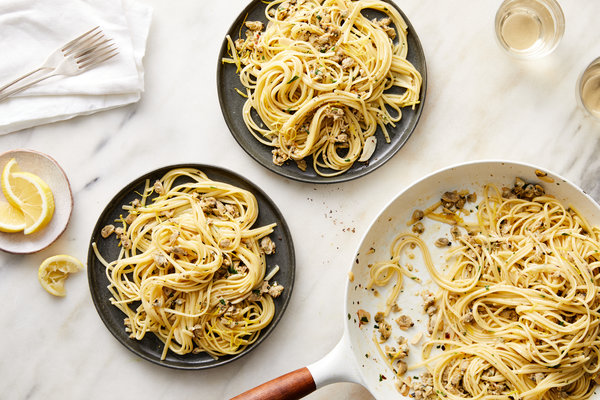
Bring a large pot of very salty water to a boil and add the spaghetti. Cook until al dente. Meanwhile, crumble the tuna into medium pieces and put it in a large bowl. Add the olive oil, lemon zest and juice, parsley, 1½ tsp. salt, red pepper flakes, and olives (if using), and stir to combine. Reserve 1 cup of the pasta cooking water, then drain the spaghetti and add it to the bowl with the tuna. Toss well, adding a splash of pasta cooking water if the mixture looks dry. Taste the spaghetti and adjust the salt (be generous with it, especially if you aren’t using the olives). Divide the spaghetti among four bowls and serve with a little more olive oil drizzled on top.

Rhubarb and Spruce Tip Galette

Rhubarb and Spruce Tip Galette

Rhubarb and Spruce Tip Gazette

pastry for a single crust pie

4 C. (550gms) rhubarb, cut in ½ inch (1cm) pieces

2/3 cup (140gms) + 1 tsp. sugar, divided

1/8 tsp. salt

¼ cup (4 T.) chopped spruce tips (*or see variations below)

3 T. cornstarch

1 T. butter

2-3 tsp. almond milk, dairy milk, or water


Preheat the oven to 375°F (190°C). Roll out the pastry dough between two sheets of parchment paper, into a 12″ (30cm) circle. (See the bottom of this post for a good tip on how to roll between paper.) Peel off the top layer of paper and discard it. Transfer the bottom layer of parchment, with the pastry circle still attached, to a baking sheet – a pizza pan works really well for this. Set the pan with the pastry crust into the fridge to chill while you make the filling. Cut the rhubarb into ½ inch (1cm) slices. Clean the brown papery husk off the spruce tips and chop the spruce tips coarsely. Place the rhubarb and spruce tips into a bowl. Add the salt, cornstarch, and sugar. Toss to combine everything well. Scrape the mixture into a pile on top of the pastry circle in the pan. The sugar and cornstarch will settle between the rhubarb chunks. Level the rhubarb chunks into a neat circle, leaving a 2 inch (5cm) border of pastry uncovered. Very carefully fold up the pastry border, pulling up on the parchment paper to help lift the pastry. Pleat the pastry and press the folds gently down onto the rhubarb filling as you go around the circle. Dot the filling with little bits of the butter. Brush the pastry border with the milk and sprinkle with the remaining 1 tsp. of sugar. Bake for 40 to 45 minutes, until the pastry is golden. Remove the galette from the oven and leave it to cool in the pan for 5 minutes. Leaking bits of filling are normal with galettes, and add to their rustic charm. If there’s a big puddle of liquid that has leaked out, try to scrape some of it up with a tsp. and drizzle it back onto the center of the galette. Gently slide the galette with the paper onto a cooling rack. Serve warm or let cool completely.  If letting the galette cool, remove it from the paper to the cooling rack. To do this, slide a thin metal spatula between the galette and the paper and run it all the way around the galette to make sure it isn’t sticking to the paper anywhere. Then slightly lift one side of the galette with the spatula and pull the parchment paper out from underneath, leaving the galette resting on the cooling rack. Leave it there until it is completely cool. This helps the bottom crust to stay crisp. Serve with a dollop of whipped cream or a scoop of ice cream, if desired.


*Rhubarb Basil Galette: replace the spruce tips with 2 T. chopped fresh basil. Another winning combination.


*Plain Rhubarb Galette: replace the spruce tips with 1 tsp. pure vanilla extract. Simple and delicious.

Spiral Pasta Salad with Marjoram Vinaigrette

Spiral Pasta Salad with Marjoram Vinaigrette

Spiral Pasta Salad with Marjoram Vinaigrette


1 package (12 ounces) spiral pasta

3 plum tomatoes, seeded and chopped

1 medium green pepper, chopped

1 small onion, thinly sliced

1 can (2-1/4 ounces) sliced ripe olives, drained


3 T. white wine vinegar

2 T. honey

1 T. minced fresh marjoram or 1 tsp. dried marjoram

1-1/2 tsp. minced fresh basil or 1/2 tsp. dried basil

1 tsp. Dijon mustard

3/4 tsp. salt

1/8 tsp. pepper

1/2 cup olive oil


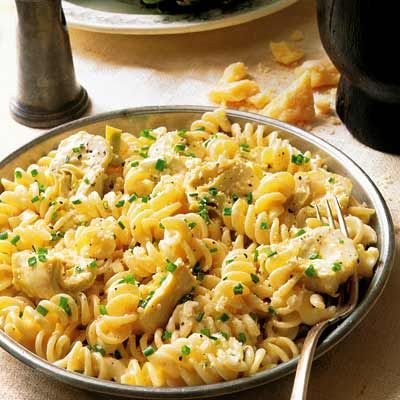
Cook pasta according to package directions; drain and rinse in cold water. In a large bowl, combine pasta, tomatoes, green pepper, onion and olives. In a small bowl, combine vinegar, honey, marjoram, basil, mustard, salt and pepper. Gradually whisk in oil. Pour over pasta mixture and toss to coat. Cover and refrigerate until serving.

Stir-fried Dandelion Greens with Duck Fat and Garlic

Stir-fried Dandelion Greens with Duck Fat and Garlic

Stir-fried Dandelion Greens with Duck Fat and Garlic

If you’ve cooked with duck fat before, you can jump into this simple recipe with gusto because you’ve experienced duck fat as the culinary gem that it is. Its unctuous and rich flavor is worth going that little bit out of your way for. Believe it or not, it’s close to olive oil on the health meter. You can buy containers of duck fat at fine grocers, or you can buy a duck, render the trimmed fat, and have a lovely duck ready to roast another night.


For the Duck-Fat-Roasted Garlic

1 cup rendered duck fat

12 garlic cloves, tough stem ends removed

Place the duck fat and garlic in a small heavy-bottomed sauté pan over low heat. Slowly bring the mixture to a simmer. The garlic will burn quickly, so keep an eye on it. If it cooks too much, it will taste bitter and unpleasant. Cook until the garlic is just turning light golden brown. Turn off the heat and let the garlic cool in the duck fat, about 30 minutes. The cloves will continue to brown as they sit in the fat.  Remove the garlic cloves from the duck fat. Store the garlic and duck fat separately in the refrigerator in covered containers for up to 1 week. Let stand at room temperature about 1 hour before using.


2 bunches dandelion greens (about 1 pound)

2 T. rendered duck fat

1/2 tsp. kosher salt

1/4 tsp. freshly ground black pepper

12 cloves duck-fat-roasted garlic (above)

Trim the tough ends from the dandelion greens and discard. Wash the greens thoroughly and drain.


Bring a large pot of salted water to a boil. Drop the greens into the boiling water and cook for 1 minute. Drain in a colander. When the greens are cool enough to handle, place them on a cutting board and cut into 2-inch ribbons. (young tender greens need not be blanched).  Heat the duck fat in a large sauté pan or cast iron skillet over medium-high heat. When the fat is hot, add the greens, stirring to coat with the fat. Add the salt, pepper, and garlic cloves. Cook, stirring frequently, until the greens are just tender, 2 to 3 minutes. Serve immediately.

Herb-Roasted Pheasant

Herb-Roasted Pheasant

Herb-Roasted Pheasant

1 pheasant

¼ bunch of rosemary, divided use

¼ bunch of sage, divided use

¼ lb white truffle butter, melted

1 bunch of escarole

10 Cipollini onions, peeled

4 cloves of garlic, thinly sliced

1/4 cup white wine, or vermouth

1 cup duck and veal demi-glace


Preheat oven to 400 degrees F. Pick all the herbs so that they are individual leaves, discard stems. Separate 1/2 of the herbs, chop finely and set aside. Using your index finger, carefully separate the pheasant skin from the breasts and thighs, being careful not to tear the skin. Piece by piece, place the whole leaf herbs evenly underneath the skin. Rub the softened truffle butter over the bird so that it forms a shell on the outside. Season well with salt and pepper. Place the bird in a pan on top of the peeled cipollini onions and roast in the oven for 10 minutes at 400 degrees, then lower the oven to 350 degrees for an additional 30 minutes. While the bird is roasting, sauté the escarole with the garlic and season with salt and pepper. You might need to add a little water to make sure the escarole is soft. Deglaze the roasting pan with the white wine or vermouth, then add the demi-glace. Reduce by half and strain, then stir in the minced herbs and season with salt and pepper to taste. Tip: Serve this dish with a side of sweet potato puree. To plate, place a dollop of the sweet potato puree just above the center of each warmed plate, then add the escarole beside it. Slice the meat off the breast of the pheasant (in three lengthwise slices for each breast) and remove the thighs. Place a thigh on each plate, then layer the sliced breast meat on top. Finish with a generous drizzle of sauce and serve with chilled white wine.

Pickled Spruce Tips

Pickled Spruce Tips

Pickled Spruce Tips

for each half-pint (250ml) jar:


6 whole black peppercorns

1 bay leaf

1 slice of fresh lemon

1 tsp. sea salt

1 heaping cup (250ml) of spruce tips


for the brine (enough for 1 jar):


¼ cup (60ml) white wine vinegar

¼ cup (60ml) filtered or distilled water


Into each very clean and well-rinsed half-pint (1 cup/250ml) jar, place 6 peppercorns, 1 bay leaf, 1 slice of lemon cut in half. and 1 tsp. salt. Hold the lemon slice and bay leaf against the side of the jar if you’d like them to show on the outside.  Clean the spruce tips of their brown husks (a bit of a sticky job) and pack them into the jars up to ½ inch (1 cm) from the tops of the jars. Pack them in quite firmly. Put the the vinegar and filtered water into a small saucepan and heat just until boiling. Pour the hot brine over the spruce tips and salt until it is also ½ inch (1cm) from the top of the jar. The spruce tips will turn from bright green to olive green as the brine hits them.  Put the new snap lids for the jars into a pot of simmering water for 5 minutes to soften them. Wipe the top rims of the jars with a clean cloth. Seal the jars with the snap lids and metal screw rings until finger tight.  Lay a clean dishcloth in the bottom of a saucepan that is taller than the jars (the dishcloth keeps the jars from bouncing around in the pot once the water is boiling.) Set the jars onto the dishcloth and fill the saucepan with hot tap water up to the bottom of the metal screw rings. Cover the saucepan with a lid and bring the water to a full boil. Once it boils, turn the heat down a bit to keep the water boiling without boiling over. Start timing for 10 minutes. Process the jars for 10 minutes, then remove them carefully, using a pot holder or jar clamp, to a clean dishtowel laid out on the counter. Leave the jars undisturbed until they are cool. The metal lids should have sealed and suctioned down. If the lids are still bowed slightly upward, then the jars haven’t sealed and should be stored in the fridge and consumed within six months (leave them to age for one month before using). The spruce tips will all have floated to the top of the jars once cool. Give each jar a shake and they will disperse evenly again.  If sealed, the pickled spruce tips will last for several years in a cool, dark place. Leave the jars for a week before using them, so the brine has had time to fully flavor the spruce tips.

Phoenician Gold Margarita

Phoenician Gold Margarita

Phoenician Gold Margarita


1 ½ ounces gold tequila

1 ounce Cointreau

½ ounce fresh squeezed lime juice

4 ounces fresh lemonade


Combine ingredients in a shaker and mix well. Salt the rim of the glass if desired and pour the drink over ice. Garnish with a lime wedge if desired.

Classic Meadow Mushroom Soup with Wild Mushroom and Herbed Ricotta Tartines

Classic Meadow Mushroom Soup with Wild Mushroom and Herbed Ricotta Tartines

Classic Meadow Mushroom Soup with Wild Mushroom and Herbed Ricotta Tartines

For a mushroom lover, the cornerstone of all recipes is a luscious mushroom soup. We regard this combo as the ultimate soup and sandwich for all the seasons of the year.  After a jackpot of a hunt in any season, this recipe can become luxurious chanterelle soup, porcini soup, or even the wildly extravagant morel soup.


1 ounce Dried Porcini Mushrooms, rinsed

4 C. Traditional Mushroom Stock plus up to one more cup to thin soup if needed

8 T., (1 stick) unsalted butter

1 large yellow onion, thinly sliced  large clove garlic, finely minced

1 medium onion, cut into ½-inch dice

2 tsp. kosher salt, or more to taste

1/8 tsp. freshly ground black pepper, or more to taste

1½ pounds meadow mushrooms (or portabello, crimini or button mushrooms), cleaned and cut into 1/8-inch slices

2 T. Madeira

1 tsp. fresh thyme leaves

½ cup heavy cream

½ tsp. fresh lemon juice


Place the porcini mushrooms in a medium saucepan with 2 C. mushroom stock. Bring to a boil, turn off the heat and let sit for 30 minutes. In a large stockpot over medium heat add 6 T. butter. When the butter is melted and bubbling, add the onion, garlic, ½ tsp. of the salt, and the pepper, stirring to coat evenly with the butter. Cook until softened. Stir in the Mediera. Cook for 3 more minutes, then stir in the porcini mushrooms and their soaking liquid. Add the remaining 2 C. mushroom stock and the thyme. Bring to a boil, then turn down the heat and simmer for 30 minutes. Turn off the heat. Add the remaining ½ tsp. salt and let sit for 5 to 10 minutes. Carefully transfer the soup to a blender and, starting on a low speed and increasing in increments, puree until very smooth. Place the soup in a saucepan and return to the stove over medium heat. Add the cream. Whisk in the remaining 2 T. butter and the lemon juice. Taste for seasoning and adjust with salt and pepper as needed. Stir in additional stock if the soup needs thinning. Divide the soup amongst 6 bowls and serve with the tartines.


For The Tartines:


1 cup ricotta

2 T. finely minced garlic, plus 1 whole garlic clove, peeled

1 tsp. finely chopped fresh thyme

2 tsp. finely chopped fresh chives

2 tsp. finely chopped flat-leafed parsley, plus

2 T. for garnish

½ tsp. finely chopped tarragon

½ tsp. finely grated lemon zest

¾ tsp. kosher salt

1/8 tsp. plus a pinch freshly ground black pepper

1 tsp. fresh lemon juice

4 T. (½ stick) unsalted butter

½ pound wild mushrooms, cleaned and cut into 1/8-inch slices

6 thick slices country bread or ciabatta (¾ inch)

Extra virgin olive oil

Fleur de sel


Place the ricotta in a small bowl. Add 1 T. of the garlic, thyme, chives, 2 tsp. of the parsley, tarragon, lemon zest, ½ tsp. salt, 1/8 tsp. of the pepper, and lemon juice. Mix well. Set aside. Heat the butter in a large sauté pan over medium-high heat. When the butter is melted and bubbling, add the mushrooms, tossing to coat evenly with the butter. Add the remaining ¼ tsp. salt and the pinch of pepper. Cook until the mushrooms have released their liquid. Continue cooking until the liquid has evaporated and the mushrooms are starting to caramelize. Add the remaining 1 T. garlic during the last few minutes of cooking. Remove from the heat and hold in a warm place. Toast the bread under a broiler or in a toaster. While the slices are still warm, rub the toasted surface with the whole garlic clove. Spread the toasts with about 2 T. of the ricotta mixture. Divide the warm mushrooms amongst the toasts. Drizzle with the oil, then finish with a sprinkling of fleur de sell and the remaining 2 T. of parsley. Tips and Techniques: The ricotta mixture can be made up to a day ahead and refrigerated. Remove from the refrigerator 1 hour before serving. Have the soup warm and the ricotta mixture ready before toasting the bread slices. They are best just out of the oven or toaster.


Substitutions and Variations


For the soup, you can substitute the “tamed” button, cremini, or portobello mushrooms for the wild meadow mushrooms. Almost any wild mushroom can be substituted in the is recipe. Use all of one kind, or mix them half wild and half cultivated. You can use chicken broth, beef broth, or canned mushroom broth for the homemade broth in the recipe. For the tartines, any wild mushroom will work beautifully.

Banana Bread Sheet Cake

Banana Bread Sheet Cake

Banana Bread Sheet Cake


3 – 4 ripe bananas (mashed about 1 1/2 cups)

2 cups sugar

3/4 cup butter (at room temp)

2 eggs

1 1/2 tsp. vanilla

3 cups flour

1 1/2 tsp. baking powder

1 1/2 tsp. baking soda

1 tsp. cinnamon

1/2 tsp. salt

1/2 cup milk

1 cup sour cream

1/2 cup mini chocolate chips


Preheat your oven to 350 degrees. Grease a 9×13 baking dish. Set aside. With a mixer, cream together the butter and sugar. Add the eggs, mixing in one at a time. Then add the vanilla and mix until smooth. In a separate large bowl mix together the flour, baking powder, baking soda, salt and cinnamon. In a separate small bowl mix together the milk and sour cream. Add 1/3 of the dry ingredients to the butter mixture, followed by 1/3 of the milk/sour cream mixture and repeat until it is all combined. To this batter add the mashed bananas and mini chocolate chips, then combine. Pour the batter into your 9×13 baking dish. Bake for 1 hour, or until a toothpick inserted into the center of the cake comes out clean. (Check your cake after 30 minutes to see how it is baking.) Cool and enjoy!

For no chew diet, break into small pieces or dip into milk before eating.

Hunan Bean Sprout Salad

Hunan Bean Sprout Salad

Hunan Bean Sprout Salad


2 T. Sesame seeds

1 pound Fresh bean sprouts thoroughly washed and drained

3 md Garlic cloves peeled and minced

2 md Scallions −− trimmed & minced

1 1″ cube ginger peeled and minced

2 T. Oriental sesame oil

1/3 cup Soy sauce

2 T. Cider vinegar

1 T. Mirin (sweet rice wine)

2 tsp. Light brown sugar

1 tsp. Spicy sesame oil or Chinese chili oil


Fresh bean sprouts are a must for this recipe from China’s Hunan province. The canned variety don’t have the requisite crispness. Keep a close eye on the toasting sesame seeds so they don’t burn.  PREHEAT OVEN TO 300F. Toast the sesame seeds by spreading them over the bottom of a pie tin. Roast for 12−to−16 minutes, stirring often, until they are golden. The seeds can be toasted in advance and stored in an airtight container. Place the bean sprouts in a large heatproof bowl and set it aside. In a medium−size skillet set over moderately low heat, stir−fry the garlic, scallions and ginger in the oil for 2 to 3 minutes, until they are limp. Add all the remaining ingredients, increase the heat to moderate, then boil the mixture, uncovered, for 1 minute to slightly reduce the liquid. Pour the boiling dressing over the bean sprouts, toss well, then cover the bowl and chill the salad for several hours. Toss again before serving.

Purslane Salad with Hot Bacon Vinaigrette and Garlic Croutons

Purslane Salad with Hot Bacon Vinaigrette and Garlic Croutons

Purslane Salad with Hot Bacon Vinaigrette and Garlic Croutons

This salad has absolutely everything going for it: flavor, price, omega-3, weeding.  With smoky bacon, garlic, and the crunch of the purslane, it’s simply scrumptious.  With the deliciousness comes the bonus of frugality.  In the late spring you’ll begin to see wild and free purslane in vacant lots, gardens and farmland.  The rampant beast that purslane can become still has small tender clusters of leaves at the tips in late May.  Harvest some of this succulent green and head right back for more tender tips as they grow back with weedy restlessness.


5 strips applewood smoked bacon

3 T. extra virgin olive oil

¾ cup cubed ciabatta-style bread (½-inch cubes)

¾ tsp. kosher salt

¼ tsp. plus a pinch freshly ground black pepper

2 medium shallots, finely minced

1 garlic clove, finely minced

1 ½ T. sherry vinegar

1 tsp. Dijon mustard

½ tsp. sugar

1 pound purslane, tips and larger leaves only (5 to 6 C. loosely packed), cleaned


Position rack in the center of the oven.  Preheat the oven to 350º.  Place the bacon in a cold sauté pan over medium heat.  Slowly cook the bacon until golden brown, 6 to 8 minutes, turning once.  Remove the bacon with tongs or a slotted spoon to a paper towel-lined baking sheet.  Take 1 tsp. of the bacon fat and put it in a small bowl.  Leave the remaining bacon fat in the pan to finish the salad.  (There should be about 2 T..) Slice the bacon strips into ¼-inch pieces. Set aside.  Whisk 1 T. of the oil into the bacon fat in the bowl.  Add the bread cubes, tossing to coat evenly with the oil and bacon fat.  Season with ¼ tsp. of the salt and the pinch of pepper.  Spread the bread in a single layer on another baking sheet and bake until crisp and golden brown, 10 to 12 minutes. Set aside to cool.  Add the remaining 2 T. oil to the bacon fat in the sauté pan and place over medium heat.  When the fat mixture is hot but not smoking, add the shallots and garlic and cook until tender and softened, 3 to 4 minutes.  Whisk in the vinegar, mustard, sugar, the remaining ¼ tsp. salt, and the remaining ¼ tsp. pepper.  When the mixture is hot and bubbling, add the purslane. Stir quickly to coat the greens evenly with the dressing and just warm them.  This should take no more than 30 seconds, or the purslane will start to lose its fresh, tender crunch.  Remove from the heat. Sprinkle with some of the bacon and croutons. Serve immediately.

Asian Coleslaw

Asian Coleslaw

Asian Coleslaw


1 medium head green cabbage

1 medium head red cabbage

3 T. sea salt

3 large carrots

1/4 cup minced scallions

1 T. toasted sesame seeds


2/3 cup unseasoned rice vinegar

1/4 cup light brown sugar

1 1/2 T. dark-roasted sesame oil


Discard the outer leaves of cabbages. Cut heads in quarters; remove and discard cores. Slice cabbage thinly or shred in a food processor. Layer the cabbage in a large bowl with the sea salt. Toss to distribute salt evenly and let cabbage sit for 1 hour to soften.  Meanwhile, peel the carrots and grate them into thin shreds.  Drain off any liquid produced by the cabbage and rinse the cabbage well in several changes of cold water to remove excess salt. Taste the cabbage; if it is still too salty, rinse it again.  Add carrots to the cabbage and mix well.  Whisk the rice vinegar, brown sugar and sesame oil together in a small bowl.  Pour the dressing over the cabbage and mix well. Let chill. Garnish with minced scallions and toasted sesame seeds before serving.

Spruce Chocolate Mousse

Spruce Chocolate Mousse

Spruce Chocolate Mousse

5 ounces unsweetened chocolate chopped

1 ounce unsalted butter

3 large eggs separated

8 ounces heavy cream

¼ cup plus 2 T. caramelized spruce syrup

1/8 tsp. salt


Whisk the egg yolks and ¼ cup of the spruce syrup over a double boiler until doubled in volume, then reserve. Combine the whites with the 2 T. of syrup and whisk in a double boiler until soft peaks form, then remove from the heat and whisk to full volume by hand. In a separate bowl, whip the cream to soft peaks and reserve. Melt the chocolate and butter in a double boiler, then mix with the egg yolk mixture. Fold ¼ of the beaten egg whites into the egg yolk-chocolate mixture until combined, then mix in the rest. Finally, gently fold in the cream until just incorporated. Put the mixture into a piping bag with a fluted tip, then pipe into dishes and chill until ready to serve. It can also be scooped with a disher or scoop dipped in hot water. Notes: Yield: roughly 4 C., enough to serve 8-10 people a small scoop. This is rich stuff.

Almond Flour Sponge Cake

Almond Flour Sponge Cake

Almond Flour Sponge Cake


Makes 2 sheet cakes (13 BY 17 BY 3⁄8 INCH), 1 sheet cake (13 BY 17 BY ¾ INCH), or 2 round cakes (9 BY 1 INCH). Butter and flour if using round pans.


1½ cups almond flour

½ cup plus 1 T. cake flour

¾ cup granulated sugar

4 eggs

6 egg whites

Pinch of cream of tartar, unless using a copper bowl

Confectioners’ sugar, if making a sheet cake


If you are making round cakes, preheat the oven to 350°F and butter and flour two 9-inch round cake pans. If you are making sheet cakes, preheat the oven to 375°F and line two 13 by 17-inch sheet pans with parchment. Combine the almond flour, cake flour, and ½ cup of the granulated sugar in a food processor. With the motor running, add the eggs, 2 at a time, until the mixture is smooth. Transfer the mixture to a bowl large enough to hold all the batter. Beat the egg whites with the cream of tartar (if using) on medium-high speed in a stand mixer fitted with the whisk attachment for about 2 minutes or with a handheld mixer for about 3 minutes, or until medium peaks form. Add the remaining granulated sugar and beat on high speed for 1 to 5 minutes longer (depending on what kind of mixer you are using), until stiff peaks form. Mix one-fourth of the egg white mixture into the almond mixture until smooth, to lighten the mixture. Using a rubber spatula, fold this mixture with the remaining egg white mixture. Transfer the batter to the cake pans or sheet pans. If you are using sheet pans, spread the batter with an offset spatula and run your thumb around the edges to make a small moat to keep the edges of the cakes from sticking to the pans. Bake round cakes for about 25 minutes, or until they bounce back to the touch. Bake sheet cakes for about 15 minutes, or until firm and they bounce back to the touch. If you are baking sheet cakes, sprinkle 2 sheets of parchment paper as large as the sheet pan with confectioners’ sugar. Run a knife around the edges of the cakes to make it easier to get them out of the sheet pans. Quickly flip out the cakes over the parchment paper as soon as they come out of the oven by placing the cakes right next to the parchment. Peel away the cooked parchment from the bottoms of the cakes. Cut the cakes into rounds or rectangles and layer them with the same fillings you’d use for a sponge cake. If you are baking round cakes, let them cool for 5 minutes in the cake pans and then turn out onto cake racks.

Classic Spruce Tip Syrup

Classic Spruce Tip Syrup

Classic Spruce Tip Syrup

Rich, aromatic syrup made from spruce tips and sugar aged in the sun. Yields about 2 C. of finished syrup. For large batches, note that all you’re doing is combining the spruce tips with twice their weight in sugar.


2.5 C. (8oz) Spruce tips

2 C. (16 oz) Brown or organic sugar


Combine the spruce tips and sugar and pack into a quart ja, pressing down occasionally to compact the mixture. Leave the jar out at room temperature. Some people leave them in the sun, which speeds the process. You’ll notice the volume of ingredients decrease as the spruce tips release their liquid. Keep the jar like this for 1-2 months, or for an oldschool version, bury it in the ground and dig it up the next spring. Stir the jars occasionally, pressing the tips down to keep them under the syrup with a clean spoon.

To make the syrup  After the initial maceration (aging with sugar) pour and scrape the spruce-sugar slush into a pot. Bring the mixture to a boil to dissolve the sugar, strain, then bottle and store. Discard the spent tips, and thank them for their service. If for some reason, your syrup is a bit thick after cooling (over-reducing can stiffen or crystalize in the fridge) warm it back up and carefully adjust the consistency by adding a touch of water. Storing the finished syrup: Store the finished syrup in the fridge. To preserve it long term (it’s totally safe as it’s basically all sugar) pour it boiling hot into a jar nearly to the brim, turn upside down and allow to seal, or process in a water bath in mason jars. If held at room temp after opening mold may form on the top, but it can always be re-boiled and refrigerated. This is super sturdy stuff.


No rocket science here. This is a sweet syrup, perfect in place of maple syrup on pancakes or anywhere you’d use maple, but also good with other things with it’s sharp piney aroma. Here’s a few examples of how I’d it.


  • With cheese. Soft cheese, especially goat cheese, loves the piney kick of spruce syrup, maple on the other hand, might be a little bland.
  • Drizzled on crepes filled with berries and cream cheese (an old brunch dish I used to run worth revisiting).
  • With thick yogurt. I often eat a bowl of granola and thick greek yogurt for breakfast, and drizzling on some spruce syrup, along with a handful of berries makes for a great meal.
  • As a glaze for meats. Think ham, etc. A T. per 1.5 lbs or so meat like fatty ground pork can make a nice breakfast sausage too.
  • Lining flan molds. Sometimes I’ll add a drizzle of honey to the molds of a panna cotta or flan instead of caramel, and spruce syrup works just as good, it will turn into a natural sauce when the custard is unmolded.
  • Beverage sweetener. Think lemonade, drinks, etc.
  • Tossed with unsweetened, fresh fruit instead of sugar. Sometimes for dessert I might want just some fresh raspberries tossed with sugar and a dollop of whipped cream. Fresh berries tossed with spruce syrup will eventually give up some of their own juice and make a sort of natural sauce.
Two Bean and Corn Salad

Two Bean and Corn Salad

Two Bean and Corn Salad


1⁄3 cup olive oil

2 T. balsamic vinegar

1 tsp. ground cumin

1 (15 1/2 ounce) can great northern beans, rinsed, drained

1 (15 1/2 ounce) can black beans, rinsed, drained

3 stalks celery, chopped

2 C. frozen corn kernels, thawed

1 medium red bell pepper, chopped

1 cup chopped red onion

1⁄3 cup chopped fresh cilantro

2 small jalapeno chiles, seeded, chopped


Whisk oil, vinegar, and cumin in large bowl to blend. Add remaining ingredients and toss to coat. Season salad with salt and pepper. Let stand at least 1 hour and up to 4 hours, tossing occasionally.

Ramps on Grits

Ramps on Grits

Ramps on Grits


1 cup stone ground white grits

3 C. water

1/2 tsp. salt

1/2 tsp. pepper

1 cup white cheddar cheese, grated

2 T. olive oil

8 ramps

1/2 cup dry white wine

2 T. unsalted butter

4 eggs

Salt and pepper, to taste


In a medium pot, bring the water and salt to a boil over high heat. Stir in the grits and pepper, reduce the heat to medium-low, and simmer for 30 minutes. Once the grits are cooked, stir in the cheese and distribute among 4 bowls. Roughly chop the white parts of the ramps. Cut the leaves crosswise into 1/8″ slivers and set aside. In a large, heavy-bottom pan set over medium-high heat, heat the olive oil. Add the ramp whites, salt, and pepper. Cook until the ramps begin to brown, stirring often, about 3 minutes. Stir in the ramp leaves and cook for about 30 seconds. Then add the white wine and immediately cover the pan with a tight-fitting lid. Remove from heat and let sit for a couple minutes to steam the ramp leaves. Distribute among the 4 bowls. Return the pan to medium-high heat. Once the pan is nice and hot, add the butter, then the eggs. Let the eggs fry for about 30 seconds–just long enough to season with salt and pepper–then cover the pan with a tight-fitting lid and remove from heat. Let sit for 3-4 minutes. Distribute the eggs among the 4 bowls and serve.

Fried Squash Blossoms with Mint and Goat Cheese

Fried Squash Blossoms with Mint and Goat Cheese

Fried Squash Blossoms with Mint and Goat Cheese


For the blossoms:


14 to 16 large zucchini squash blossoms

3/4 cup/6 ounces fresh soft goat cheese or whole-milk ricotta

1/2 cup/4 ounces mascarpone or crème fraîche

1/2 cup grated Parmesan cheese, divided

1 to 2 T. fresh chopped mint and basil, plus more for garnish

Sea salt and fresh ground black pepper, to taste


For the Batter and Frying:


1/2 cup all-purpose flour

1/2 cup cornstarch

1 tsp. baking powder

1/4 tsp. salt

1 egg, lightly beaten

About 1/2 cup chilled seltzer or other unflavored sparkling water

About 3/4 cup vegetable oil, for frying

Optional: fresh tomato sauce, for serving


Carefully open each blossom and remove stamen; set aside. Combine goat cheese (or ricotta) with mascarpone (or crème fraîche) and 1/4 cup of the Parmesan. Stir in mint and basil and season with salt and pepper. Gently stuff blossoms with cheese-herb mixture, twisting end of blossom to close. NOTE: You might have some cheese mixture leftover; if so, stir into a pasta sauce or spread on toast and eat with tomatoes. Make batter by combining flour, cornstarch, and baking powder with remaining 1/4 cup Parmesan cheese. Whisk in beaten egg and sparkling water, adding a bit at a time, until batter is well-combined and is the consistency of heavy cream or a loose pancake batter. Pour oil to about a half inch into a large (10-inch) heavy skillet and heat to about 365° (or until oil begins to shimmer but not smoke; add a bit of batter to test oil. The batter should bubble and float). Fry blossoms, in two batches, if necessary, turning over once until golden, about 2 minutes total time. Place on a paper-towel-lined cooling rack or plate. Sprinkle while hot with a bit of Parmesan or salt, such as Maldon or other finishing salt. If serving with sauce, spoon some fresh tomato sauce on bottom of plate and top with squash blossoms. Eat at once.  Notes: To prepare blossoms, gently open the blossom (they might tear, but that’s OK) and pull out stamen. Rinse gently and place in a paper towel-lined colander. Pat dry.

Spring Ragout of Artichoke Hearts, Fava Beans, Peas and Baby Turnips

Spring Ragout of Artichoke Hearts, Fava Beans, Peas and Baby Turnips

Spring Ragout of Artichoke Hearts, Fava Beans, Peas and Baby Turnips

A ragout is basically a well-seasoned stew. This one takes its flavor from the tarragon, which brings out the best in the array of seasonal vegetables.


8 cloves garlic, whole and unpeeled

2 pounds fresh fava beans in pods, shelled

Ice cubes

4 T. nonhydrogenated margarine (divided)

4 trimmed and cooked artichoke hearts, halved or quartered, depending on size (see note)

12 baby turnips, peeled

1 cup vegetable broth

1 pound English peas in pods, shelled (or 1 cup frozen, thawed)

2 tsp. coarsely chopped fresh tarragon

1 T. finely chopped Italian (flat-leaf) parsley

Salt and freshly ground black pepper (to taste)


Put the garlic in a saucepan and cover with water. Bring slowly to a boil over low-medium heat, then drain. Slip the skins off each clove and set aside in a bowl. Refill the saucepan with water and return to a boil over high heat. Drop the fava beans into the boiling water for 1 minute. Immediately drain in a colander and transfer to a bowl of ice-cold water. Then peel the beans. Reserve until needed. Melt half of the margarine in a sauté pan over a medium heat. Once it starts to froth, add the artichoke pieces, turnips and peeled garlic, and sauté until the artichoke pieces become flecked with golden-brown color. Add the vegetable broth and peas, then cook, covered, for 5 minutes. Uncover, scatter with the beans and herbs, and shake gently to mix; there should be very little liquid remaining in the pan. If it still looks too wet, increase the heat to high and continue to shake the pan. Add the reserved margarine to form a small amount of sauce. Taste for seasoning, adding salt and freshly ground pepper as needed. Serve at once.

Note: To prepare artichoke hearts, cut off and discard all but 1 inch of the stem. Peel remaining stem, rubbing cut artichoke flesh with lemon to avoid discoloring. Remove tough outer leaves (discard, or reserve for steaming and eating separately) until you get to the tender, slightly yellow leaves. Pull off the soft leaves to reveal the fuzzy choke. Using a spoon, scoop out the choke and discard, rubbing exposed flesh with more lemon. Use a paring knife to cut off any tough, dark green parts clinging to the outside of the heart. In a stainless steel or enamel-coated cast-iron Dutch oven filled with a couple of inches of water and lined with a steamer insert, steam artichoke hearts until tender, 15 to 20 minutes.

Herb-Filled Peppers on Warm Crusty Bread

Herb-Filled Peppers on Warm Crusty Bread

Herb-Filled Peppers on Warm Crusty Bread


2 large Bell Peppers, cut in half, seeds and membrane removed

5oz. Broad Beans in pods, shelled

40g Butter

2 cloves of garlic, minced

60g onion, minced

2 handfuls of Sorrel, finely chopped

½ bunch Cilantro

30g chervil

30g basil

30g chives

2 T. Olive Oil

Baguette

Parmesan

Fluer de Sel


To skin the broad beans, plunge them into lightly salted boiling water for 3 minutes, then refresh in cold water, and drain. Remove and discard the skins. Chop the beans finely and set aside. To assemble the filling, melt the butter in a sauté pan over low heat. When the butter starts to foam, add the garlic and onion and. after a few minutes the broad beans. When these ingredients have softened slightly, add the sorrel, the coriander, chervil, basil and chives, and stir to distribute the ingredients evenly. Season to taste with salt, then set aside to cool on a plate. To make the peppers easy to peel, blister their skins evenly beneath a hot grill, turning them with a skewer. Wrap them briefly in a cold damp kitchen towel, then peel them. Spoon the filling into the peppers and transfer them to a shallow roasting pan smeared with the olive oil. Bake in a preheated 200’C (400°F, Gas Mark 6) oven. When – after about 20 minutes the filling is cooked, remove the peppers from the oven and turn it off.  Cut the bread in half lengthways, then across, to make 4 rectangles about 13cm (5inches) long. Put the peppers on top and return them, in the roasting pan. to the warm oven for 30 minutes, leaving the door of the oven wide open. Just before serving, adjust the seasoning and scalier with shavings of Parmesan. Offer the peppers with a mesclun salad

Fritto Misto of Fiddleheads, Ramps and Asparagus with Meyer Lemon Aioli

Fritto Misto of Fiddleheads, Ramps and Asparagus with Meyer Lemon Aioli

Fritto Misto of Fiddleheads, Ramps and Asparagus with Meyer Lemon Aioli


1 large or 2 small garlic cloves

1 tsp. kosher salt

1 large egg

1 large egg yolk

1 cup extra-virgin olive oil

Finely grated zest of 1 Meyer lemon

2 T. fresh Meyer lemon juice

4 quarts peanut or vegetable oil

3 C. unbleached all-purpose flour

1 cup cake flour

1 large egg

2 C. buttermilk

1/2 tsp. kosher salt, plus more to taste

1/4 tsp. freshly ground black pepper

1 1/2 to 2 pounds mixed fiddleheads, ramps (or green onions) and asparagus, cleaned and patted dry


Place the oil in a 6- to 8-quart pot and heat it to 375°F. Sift together the all-purpose and cake flours and place them in a wide bowl or on a platter. Whisk together the egg, buttermilk, salt, and pepper in a large shallow bowl. While the oil is healing, prepare the vegetables, making sure that they are dry before coating. To avoid gluey fingers, use one hand for wet dipping and the other for dry. Working with a few pieces of the vegetables at a time, dip them into the buttermilk mixture, coating them well. Lift them out, letting the excess buttermilk drip off, then drop them into the flour mixture, working quickly to coat them evenly with the flour. Shake off any excess flour and lay the vegetables in a single layer on a large parchment paper-lined baking sheet. Continue until all die vegetables are coated. When the oil is hot, carefully add the vegetables to the pot but do not overcrowd. Fry until golden brown, 2 to 3 minutes. Give the vegetables a stir as they fry, turning any that are browning unevenly. Using a slotted spoon or flat strainer, remove the vegetables and place on a paper towel-lined baking sheet. Sprinkle with salt. Hold in a warm place while frying the rest of the vegetables. Be sure to bring the oil back up to temperature before adding the next batch. Serve warm with the Meyer Lemon Aioli.   Note: Coating 20-25 minutes ahead of time makes the coating adhere better when frying.


Meyer Lemon Aioli


½ C. EVOO

½ C. Olive Oil

1 lg. Garlic Clove

1 tsp. Salt

1 Egg

1 Egg Yolk

Zest from Meyer Lemon

2 T. fresh Meyer Lemon Juice


Combine the extra virgin olive oil and the pure olive oil in a measuring cup with a spout. Place the garlic and salt in the bowl of a food processor. Process until the garlic is finely minced and beginning to liquefy. Add the whole egg and egg yolk. Process for 30 seconds. With the machine running, slowly begin to drizzle in the oil. As the mixture thickens, the oil can be added a little more quickly. Add the lemon zest and lemon juice and process briefly to mix in. Taste for seasoning and adjust as needed. If the aioli is too stiff, add water in ½ tsp. increments to thin.