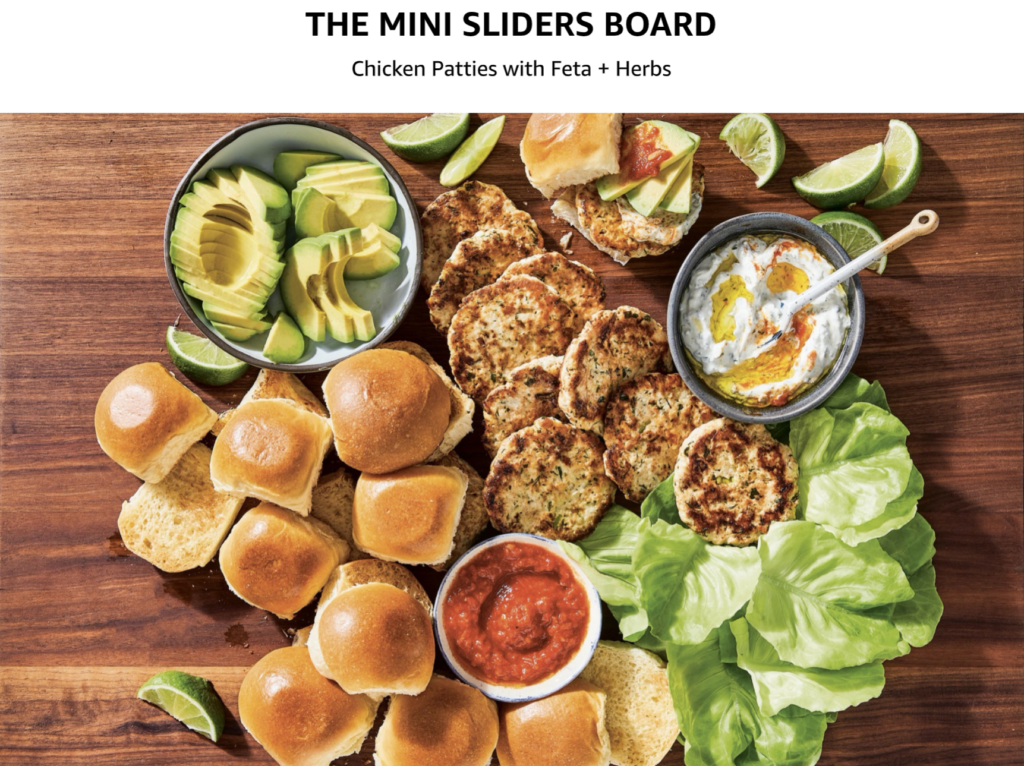
Mini Sliders Board
2 medium apples, chopped (2 cups)
2 cups cranberries
1 medium red bell pepper, chopped (1 cup)
1 small onion, finely chopped (1/4 cup)
3/4 cup packed brown sugar
1/2 cup golden raisins
1/2 cup white vinegar
1 1/2 teaspoons finely chopped gingerroot
1 clove garlic, finely chopped
16 slices (1 oz each) assorted cheeses, such as Cheddar, Colby-Monterey Jack, Monterey Jack with jalapeño peppers and Swiss
1/4 cup hazelnuts, (filberts)
Crackers
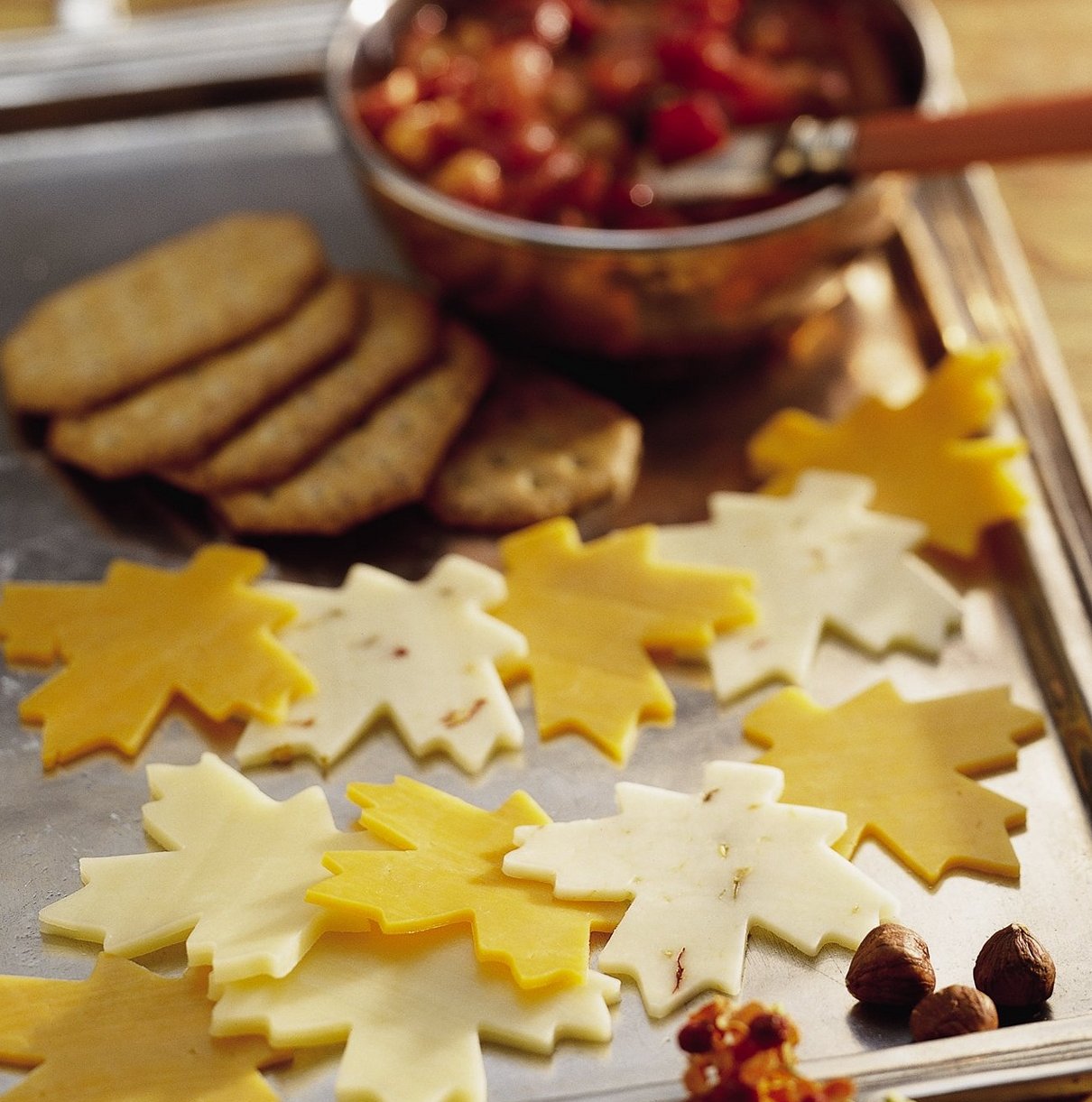
In 2-quart saucepan, mix all chutney ingredients. Heat to boiling, stirring frequently; reduce heat. Simmer uncovered about 1 hour, stirring frequently, until mixture thickens and fruit is tender. Spoon into nonaluminum container. Store in refrigerator up to 2 weeks. Cut cheese with 1-, 1 1/2- and 2-inch leaf-shaped cookie cutters. Place cheese on medium platter, overlapping leaves. Sprinkle hazelnuts on platter to look like acorns. Serve with chutney and crackers.
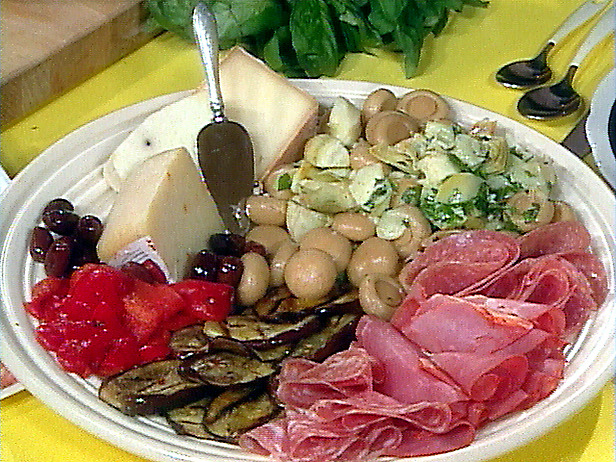
An antipasto come before the meal (il pasto), and its function is to prepare the stomach for the courses. So the antipasto is to be merely tasted, savored slowly in minimal amount rather than devoured. Otherwise it takes the place of the meal, becoming an epilogue instead of a prologue.
There are many different kinds of antipasti. They follow one general rule, which is that hot ones are served before a reasonably light meal, cold ones before a substantial meal. Also, they must have a certain harmony with the rest of the menu – they should bear some relationship to the dishes that follow. The visual element of antipasti dishes is important so that the appetite is stimulated in the imagination even before it is stimulated by the taste. A skillful blending of colors and garnishes is all part of the exercise: preparing a plate of antipasti is like playing with a puzzle.
Most of the recipes have one indispensable ingredient in common: extra virgin olive oil.
Just as olive trees have been constant feature of Tuscan landscape for thousands of years, so olive oil has always played leading role in Tuscan cooking. There is an old saying that wine lift the spirits and oil lift the taste, which confirm the dominant role of olive oil in the kitchens of peasant and aristocrat alike. Bruschetta and raw vegetable dip pinzimonio cannot be the same without the unmistakable taste of extra virgin olive oil!
Â
A platter of Mediterranean-style savory bites that partners well with predinner drinks at holiday gatherings. It is an easy option for cocktail parties, open houses, and lunch buffets, too, because many of the items can be store-bought.
Â
Start with a visit to a good deli or specialty-foods store to find ready-made items like olives; specialty nuts, such as Marcona almonds; artisanal cheeses, such as pecorino, Manchego, mozzarella, and fresh goat cheese; spreads, such as tapenade; and cured meats, including prosciutto, salami, mortadella, and coppa. Serve four to six items, and plan on 1 to 2 ounces (30 to 60 g) of each per guest. You can supplement these offerings with raw or roasted vegetables with a Mediterranean-style dipping sauce.
Assembly
Â
Choose an attractive tray, platter, or cutting board. Or, create a dramatic presentation using a long, narrow platter, a tiered charcuterie “tower,” or several matching small plates, with a single antipasto on each. Arrange the food to create an unfussy, natural look, piling items casually and rolling or loosely folding sliced meats. Decorate with grape leaves, fresh herbs such as sage, rosemary, or thyme. Place small plates, decorative cocktail picks or salad forks, and cocktail napkins next to the antipasto assortment.
Accompaniments
Â
Serve a basket of thinly sliced baguette rounds, slices of coarse country bread, cubes of focaccia, or crackers. You can also set out bread sticks.
Â
Â
Â
Â
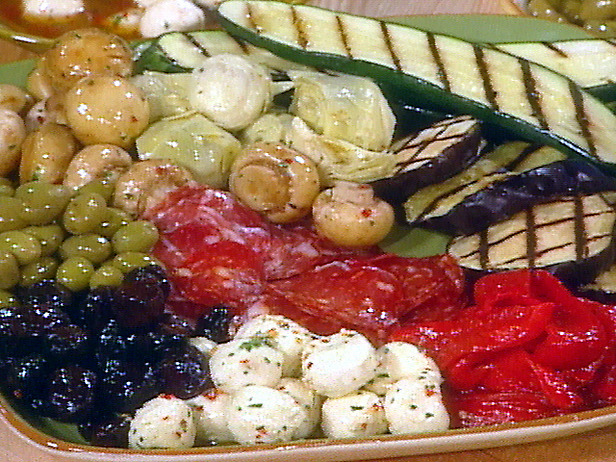
Traditional Antipasti Platter
Â
Cold Cuts (charcuterie) – sliced thin:
Â
Imported prosciutto (San Danielle is the best) or other ham such as Parma or Cappicolla
Mild salami (Columbus) or other Italian cured sausage
Imported mortadella with pistachio nuts
Mild coppa
Â
Marinated Vegetables:
Â
Marinated artichoke hearts
Roasted red peppers
Pepperoncini
Marinated mushrooms / Pickled Mushrooms
Â
Cheeses:
Â
Bocconcini
Chunks of Parmesano Reggiano or Peccorino
Asiago, Provolone, aged white cheddar and / or Italian Fontina cheese, cut in thin stripes
Â
Breads:
Â
Breadsticks
Focaccia, ciabatta or herb slab (variety of artisan breads)
Crostini or Bruschetta
Â
Olives:
Â
Combination of Storebought gourmet olives (Kalamata, Nicoise, and Colossole)
Â
Misc:
Â
Deviled eggs
Grilled vegetables (zucchini, eggplant, peppers, mushrooms or onions)
Figs (if in season), Melon (if in season, can wrap the prosciutto around it), Fresh Grapes
Candied Walnuts
Â
Grilled Figs Wrapped in Proscuitto
Â
Â
Traditionally, Le Grand Aioli is served with at least 6 accompaniments, plus hard boiled eggs.
Garlic mayonnaise with accompaniments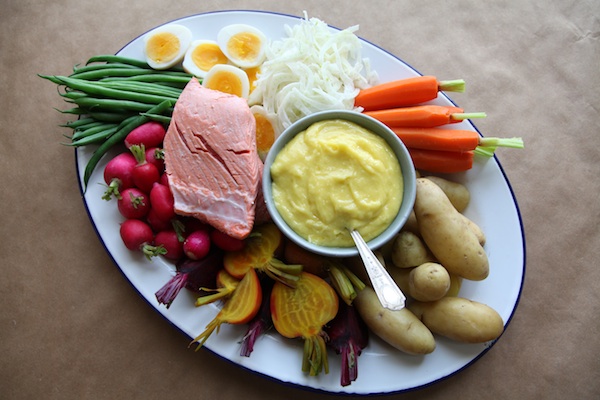
6 to 8 cloves garlic, peeled and minced
1/4 tsp. sea salt or kosher salt
2 large egg yolks
1 C. (250 ml) olive oil
1 C. (250 ml) neutral-tasting vegetable oil
1 to 2 tsp. warm water (optional)
2 large or 3 medium carrots, peeled, halved crosswise, and cut into 1/2-inch-wide sticks
12 oz. (320g) green beans, ends removed
2 pounds (900g) small new potatoes
1 1/2 to 2 pounds salt cod, soaked for 24 hours in the refrigerator, changing the water three times
6 hard-cooked eggs, peeled and halved lengthwise, each topped with an anchovy fillet and a few grinds of black pepper
1 pound (450g) cherry tomatoes
1 large or 2 small (230g) beet(s), peeled and thinly sliced
1 large or 2 small (230 to 28og) kohlrabi, peeled and thinly sliced
2 bunches radishes, trimmed
Toasted or grilled bread To make the aioli, mash the garlic with the salt in a mortar and pestle, then stir in the egg yolks. (The aioli can also be made in a blender or food processor.) Mix the oils in a measuring C. with a spout. Drop by drop, add the oil to the garlic while continuously pounding the pestle to incorporate the oil. (If using a machine, dribble the oil in slowly, in a continuous stream, while the machine is running.) Continue to stir and as the mixture begins to thicken, increase the flow of oil, stirring until all the oil is added. If the aioli is too thick, add the warm water, until it reaches the desired consistency. Cover and let sit at room temperature if you’re planning to serve it shortly. Otherwise refrigerate it. (The aioli will keep for up to 24 hours.) To make the accompaniments, bring a pot of salted water to a low boil. Blanch the carrots for 1 minute. Remove them with a slotted spoon to a baking sheet lined with a kitchen towel. Blanch the green beans in the same water for 3 minutes and remove them to drain next to the carrots. Add the potatoes to the pot and cook for 10 to 15 minutes (depending on size), just until tender—they are done when they can be pierced easily with the tip of a sharp paring knife. Drain in a colander. To cook the salt cod, put the soaked and drained fish in a pot of cold water and bring to a low boil. Let simmer for 15 to 20 minutes, or until soft. Drain and let cool to room temperature. Arrange the remaining accompaniments decoratively on a large serving platter along with the bowl of aioli and let guests help themselves. VARIATION: Though this isn’t traditional, you can substitute a whole, roasted chicken—cut into pieces and served cold—for the salt cod
Acorn Squash, Roasted
Aromatic Snails
Artichokes & Snails
Artichokes (small)
Asparagus
Baby carrots
Beets
Blue Crab Claws
Capers, Fried
Carrot
Cauliflower
Chanterelles
Cherry tomatoes
Chickpea Panisses
Crab
Croquettes
Crusty French Bread
Fennel
Fingerling / New potatoes
Fleur de sel
Fritters
Green beans
Grissini
Hard boiled eggs
Kohlrabi
Leeks
Lettuces
Mussels Steamed in Wine
Niçoise Olives
Octopus Ragout
Poached cod
Pomegranate Seeds
Radish
Romanesco cauliflower
Salt Cod
Scallions
Shrimp
Snap Pea
Snow Peas
Steamed artichokes
Steamed clams or mussels
Turnips
Wax beans
Octopus Ragout
Providing a welcome depth of flavor, this stew is divine and unexpected when paired with aioli.
8 tsp. extra-virgin olive oil
2 large yellow onions, finely chopped
6 garlic cloves, peeled and crushed
3 large tomatoes, seeded and coarsely chopped
Salt and freshly ground black pepper
5 pounds octopus, preferably small ones, cleaned but unskinned, cut into bite-size pieces (see note)
1 large bay leaf
9 tsp. cognac or marc de Provence
¾ C. dry white wine
1/3 C. parsley, roughly chopped
In a large frying pan, warm 5 tsp. oil with onions and garlic. Stirring frequently, cook over low heat until light golden, about 10 minutes. Turn heat to high and add tomatoes and salt and pepper, to taste. Sauté, tossing often, until tomato liquid has evaporated, 5-10 minutes. Meanwhile, in a large heavy sauté pan, heat remaining 3 tsp. oil. Add octopus, bay leaf and salt and pepper, to taste. Stir frequently until liquid thrown off by octopus has come to a full boil. Remove from heat and add cognac. Ignite it. Stir until the flames die down. Bring white wine to a boil in a small saucepan and add it to the octopus. Warm stew over medium heat and boil until reduced by one third, about 10 minutes. Add tomato mixture. Bring back to a boil and then reduce heat to maintain a gentle simmer. Cook uncovered and stir often until octopus is very tender but still resilient, about 50 minutes. Adjust seasoning, garnish with parsley and serve. (Can be served at room temperature.)
Note: To ensure optimum tenderness, octopus should be frozen for at least 24 hours before using and then defrosted in the refrigerator. Once thawed, cut bodies, heads and tentacles into bite-size pieces.
Artichokes and snails:
1 artichoke, 24 to 36 size, with thorns and stems
½ fresh lemon
Kosher salt and freshly ground black pepper to taste
2 tsp. extra-virgin olive oil
12 helix snails (one 7-oz. can), drained, rinsed and dried on paper towel
2 tsp. chopped garlic
1 tsp. chopped shallot
½ C. dry white wine
1 tsp. lemon juice
Cut off top 1 inch of artichoke and trim off leaves until you get down to the light green inner tender leaves. Carefully trim off outside of artichoke bottom and stem, about 1/8 to 1/4 inch. Cut artichoke in half through the stem. Rub liberally with the 1/2 lemon. Scoop out the fuzzy choke with a melon baller, but do not remove too much of the base. Put artichoke in a pot of water with enough salt so the water tastes like seawater. Squeeze juice of the 1/2 lemon into the water, along with the lemon body. Bring to a boil and cook 10 to 15 minutes until artichoke is crisp-tender (when a small knife in center comes out with a slight bit of resistance). Remove from pot and shock in ice water. Drain well. When cool, cut each half into quarters. Place a 10-inch sauté pan over high heat. When hot, add oil. When oil is hot, season snails with salt and pepper and carefully add to oil and sauté 1 minute. Add garlic and shallot and sauté, stirring, 1 minute. Add wine and 1 tsp. lemon juice and cook 2 minutes. Remove snails and reduce liquid to 1/4 C.. Add artichokes and snails back to pan, toss together and adjust seasoning with salt and pepper. Cover pan, remove from heat and keep on the side until finishing the dish.