Browsed by
Tag: PNW

Dill-Hazelnut Pesto

Dill-Hazelnut Pesto

1 1/3 C. fennel fronds
1 C. fresh dill fronds
1/4 C. roasted hazelnuts, skinned
1 garlic clove, minced
Zest of 1/2 lemon
1 tsp. lemon juice
1/4 C. hazelnut oil
2 T. extra-virgin olive oil
Salt and freshly ground black pepper

Blend the fennel, dill, hazelnuts, garlic, lemon zest, and lemon juice in the bowl of a food processor fitted with a steel blade attachment until well combined. Add the hazelnut oil, then the olive oil in a slow, steady stream with the motor running. Salt and pepper to taste. Use the pesto immediately or
transfer to an airtight container, cover with a thin layer of olive oil, and refrigerate until ready to use. Stored in the refrigerator, the pesto will keep for about l week.

Morel Mojo

Morel Mojo

Chef Scott Dolich extends morel season by pickling them into a loose, relishlike condiment he calls mojo. At the restaurant, he dips into his supply to dress up spring vegetables like asparagus or ramps or to garnish grilled meats and fish.

1 1/4 lb. morel mushrooms
1 C. apple cider vinegar
1 C. beef broth
1 C. vegetable broth
3 garlic cloves, thinly sliced
2 1/4 tsp. salt
1 bay leaf
1/2 tsp. red pepper flakes
3 tsp. EVOO

Submerge the morels in a bowl of cold water and agitate them gently to dislodge any grit. Drain them in a colander and pat dry immediately. Slice off the stems and cut the morels into bite-size pieces. Combine the morels, vinegar, beef broth, vegetable broth, garlic, salt, bay leaf, and red pepper flakes in a large pot. Cover and simmer the mixture over medium heat for 10 minutes. Remove the pan from the heat and let the morel mixture cool slightly. Discard the bay leaf. Drain the morels, reserving the brine. Puree 1 C. the morels with ½ C. the brine in the bowl of a food processor fitted with a steel blade attachment until well combined but not entirely smooth. Add the olive oil in a steady stream with the motor running until well combined. Transfer the puree to a medium bowl and fold in the remaining morels. Discard the remaining brine. Salt to taste. Transfer the relish to an airtight container to cool to room temperature. Stored in an airtight container in the refrigerator, the relish will keep for about l month. NOTE: Morels come into season in early spring and generally stick around through May.

Chinese Spice Cracker Jacks

Chinese Spice Cracker Jacks

These Cracker Jacks are very similar to the real thing, only super fresh and extra appealing–as only homemade can be. And as I never feel there are enough peanuts in the boxed version, there are three luxurious C. my favorite nuts here. The Chinese Five-Spice gives this old-fashioned treat a sophisticated new life. We can’t seem to get enough of this addictive treat. Luckily, it is very easy to make.

Note You may be tempted to use prepared Chinese Five-Spice. Don’t! It takes only a minute to make your own, and the superlative aroma and flavor are essential here. Ingredient Note: Every time I make this (all too often recently), I find myself debating whether the molasses is necessary or desired. On the one hand, it gives the crackerjacks that distinctive taste of the boxed version, which I love. On the other hand, I feel it competes ever so slightly with the Chinese Five-Spice for the starring role. MauiJim says the two are in perfect balance, but you might want to try it with and without to determine your own preference.

Popcorn & Nuts
½ C. popcorn kernels (8 C. popped corn) (unseasoned microwave popcorn will also work)
1 C. whole hazelnuts, lightly toasted and skinned
1 C. whole roasted peanuts, unsalted or lightly salted (Trader Joe’s peanuts are awesome)
1 C. whole pecans

Spices
1 tsp. LunaCafe Chinese Five-Spice
1 tsp. fine sea salt
Caramel Syrup
½ C. butter (1 stick)
1 C. dark brown sugar
½ C. light corn syrup
2 tsp. unsulfured molasses, optional
1 tsp. vanilla extract
½ tsp. baking soda

Prepare LunaCafe Chinese Five-Spice. Reserve. Coat two edged baking sheets with vegetable oil spray. Reserve. Position a rack in the middle of the oven. Heat oven to 300°F. Pop the popcorn according to your usual method or your popcorn machine’s guidelines. Remove to a very large mixing bowl. Add hazelnuts, peanuts, pecans, LunaCafe’s Chinese Five-Spice, and salt. Toss to combine and distribute the spices. Reserve. In a large saucepan, combine butter, brown sugar, corn syrup, and molasses. Over medium heat, bring to a simmer and simmer for 5 minutes, stirring occasionally. The mixture should measure 250° on a candy thermometer. Turn off heat and stir in vanilla and then baking soda. The mixture will foam up dramatically. As the foam subsides, quickly pour the caramel syrup over the popcorn and nuts. Use oiled, long cooking chopsticks to distribute the syrup. (The minimal surface area of the chopsticks prevents the caramel from getting a good hold.) Divide the crackerjack mixture evenly between the cookie sheets. Bake for 45 minutes, stirring cracker jacks every 15 minutes with oiled, long cooking chopsticks. Remove from the oven and immediately dislodge from the baking sheet with a thin metal spatula. Allow to cool completely and then separate the pieces as desired. Store in an airtight container in cool, dry location.

Seafood Fried Rice

Seafood Fried Rice

4 slices of bacon , chopped into small pieces
2 eggs, lightly whisked
4-6 C. cold, leftover brown rice
3 garlic cloves, finely minced
1 tsp. freshly grated ginger
2-4 green onions
1 C. frozen peas, corn, or combination
1 C. leftover seafood (shrimp, salmon, white fish, etc)
Fresh Limes (2-4)
Soy Sauce
Cilantro for garnish

In a large saucepan, fry the bacon over med-high heat until crispy, stirring to prevent burning. Remove from pan. Take out some of the bacon grease, leaving enough to scramble the eggs with. In the middle of the pan, quickly scramble the eggs until just cooked. Remove from the pan, Add two tsp. (or more!) of bacon grease back into the pan for the next step. Over medium high heat, add the cold rice, ginger and garlic cloves and green onions. Cook for several minutes, stirring as needed, until heated through. Add the peas and give it a stir and cook for another minute or two, or until the peas are heated through. Add the seafood, and give a quick toss and cook until just heated through. Stir the bacon and eggs back into the dish and squeeze the juice of one lime over the dish as well as about two tsp. soy sauce. Garnish with chopped cilantro If desired. Serve with extra lime wedges & soy sauce.

Cranberry, Orange & Hazelnut Conserve

Cranberry, Orange & Hazelnut Conserve

1 quart unfiltered cranberry juice
1/4 cup apple cider
1 cup sugar
1 orange, peel cut in large strips
1 T. grated ginger
2 bay leaves
1 cup toasted hazelnuts
1 T. balsamic vinegar
1 pound fresh cranberries

In a medium saucepan, combine cranberry juice, apple cider, sugar, orange peel, ginger, and bay leaves. Simmer until the mixture is reduced by half, about 20 minutes. Add the nuts, vinegar, and cranberries. Continue to cook until the cranberries burst, about 15 minutes.

Smoked Salmon Pate

Smoked Salmon Pate

6 oz. Smoked Salmon Pieces
Juice of ½ Lemon
¼ lb. Cream Cheese
½ tsp. Paprika
Pepper
Parsley, Chives, Dill, Scallions, optional

Place everything except pepper in blender or food processor. Process until smooth and creamy. Season to taste with pepper. Serve with crackers, cherry tomatoes and cucumber sticks, on or small sandwiches.

Salmon with Balsamic Onion Marmalade

Salmon with Balsamic Onion Marmalade

1 red onion (6 oz.)
2 tsp. olive oil
1/2 C. orange juice
1/4 C. balsamic vinegar
2 salmon fillets (about 6 oz. each), rinsed
Salt and pepper

Peel onion and cut into 8 wedges. Pour 1 tsp. oil into a 2- to 3-quart pan over medium-high heat. When pan is hot, add onion and cook, turning once, to lightly brown, about 5 minutes. Add orange juice and vinegar. Bring to a boil over high heat, then reduce heat, cover, and simmer until onion is very tender when pierced, about 45 minutes. Shortly before onion is done, pour remaining oil into a nonstick 10- to 12-inch frying pan over medium-high heat. When pan is hot, add salmon. Cook, turning once, until fish is opaque but still moist-looking in thickest part (cut to test), 7 to 9 minutes total. Transfer the salmon to plates and serve with onion mixture. Season with salt and pepper to taste.

Yield: 2 servings
Calories: 344
Fat: 15g
Fiber: .5g

Coastal Stew

Coastal Stew

Of course like any ciopinno or seafood stew, you can add or subtract your choice of seafood.

As needed, EVOO
6 cloves garlic, chopped
2-3 shallots, chopped
1 medium onion, diced
1 medium carrot, diced,
1 bulb fennel, diced
1 C. dry red wine
2 each 16 oz. cans diced tomatoes with juice
1 tsp. sea salt 2 tsp. dried oregano
1 tsp. cracked coriander
1 lb. razor clams, cleaned, chopped
1 inch dice 2 medium potatoes, peeled,
1 inch diced
1 lb. halibut, 2 inch pieces
2 lb. mussels and clams
1 lb. rockfish, 2 inch chunks
1 bunch fresh basil, Chiffonade, just before service

Add EVOO to bottom of preheated Dutch oven. Add next five ingredients and cook until vegetables are aromatic and still firm. Add wine, tomatoes, sea salt, oregano and coriander. Bring to simmer and add razor clams; cover and simmer 45 minutes. Add potatoes and continue cooking an additional 15 minutes. Test the clams for tenderness, and if not, continue cooking until clams are tender. Hold warm until service. At service: Gently stir in halibut and rockfish and cook for 3-5 minutes. Taste the broth and adjust seasoning with sea salt, coriander, and black pepper. Dish up into large “pasta size” bowls. Drizzle with your favorite EVOO and top with shredded basil. *Alternative: place large ladle of stew over your favorite polenta or pasta.

Razor Clam Po’ Boy with Apple Cabbage Slaw on House-made Ciabatta

Razor Clam Po’ Boy with Apple Cabbage Slaw on House-made Ciabatta


½ head of cabbage, very thinly sliced
2 red bell peppers, seeded and cut julienne
1 Granny Smith apple, grated
3 carrots, grated
1 jalapeno, very thinly sliced
¼ C. cilantro
1 C. mayonnaise
1 C. orange juice
¼ C. granulated sugar
2 T. lemon juice
Salt and freshly ground black pepper

3 Pacific razor clams, shelled, cleaned, and butterflied
1 C. all-purpose flour
Salt and freshly ground black pepper
1 C. milk
1 egg
2 C. panko crumbs
4 T. canola oil
3 pats butter

1 baguette
2 pats butter
3 T. aioli

For the Apple Slaw: Combine the cabbage, bell peppers, apple, carrots, jalapeno, and cilantro in a large mixing bowl. In a separate bowl, combine the mayonnaise, orange juice, sugar, and lemon juice. Season with salt and black pepper to taste. Dress the cabbage with this mixture, stirring to coat thoroughly. Reserve chilled. For the Razor Clams: With a tenderizing hammer, tenderize the foot of each razor clam thoroughly. Put the flour in a mixing bowl and lightly season with salt and pepper. In another bowl, whisk the milk and egg. Put the panko crumbs in a separate bowl. Dredge the razor clams in the flour, followed by the egg wash, and finish in the bread crumbs. Set a large frying pan over medium to high heat. Once the pan is hot, add enough canola oil to come up ¼-inch in the pan. When the oil shimmers, gently ease each breaded clam into the oil, being careful to drop them in away from yourself. Add 3 pats of butter to the pan and fry the clams on one side until golden brown. Using tongs, gently flip the razor clams (again, away from yourself) and cook for 30 seconds to 1 minute (until just barely golden brown). Remove the clams from the pan and drain on a paper towel-lined plate. To Assemble and Serve: Cut the baguette lengthwise and toast in a pan over medium heat with the butter. When the bread is toasted, spread both sides with aioli. Add the fried razor clams and finish with a healthy helping of apple slaw.

Rummy Rainier Cherries

Rummy Rainier Cherries

A pound or so – of Rainier cherries, pits reserved. (You can use Bing or even sour cherries)
Half strength simple syrup (For every C. sugar, add two C. water)
Dark rum (one T. for each half-pint jar you end up filling)

Pit the cherries.. Do this over the pot you’ll be cooking in, and just drop the pits into the pot along with the cherries. The pits will give the cherries a slight amaretto flavor. Add in the sugar and water, and bring to a boil for five minutes. Remove the pits, and scoop the cherries into sterilized jars. Add one T. dark rum directly to each half-pint jar, then ladle in enough syrup to cover the cherries, leaving 1/2 inch of headroom. Seal the jars with sterilized lids and rings, then process in boiling water for 10 minutes.

Faro Salad with Preserved Winter Squash and Dried Cherries

Faro Salad with Preserved Winter Squash and Dried Cherries

1 C. pearled faro, rinsed, any small stones or debris removed
1/2 tsp. fine sea salt
1 shallot, thinly sliced
3/4 C. (113 g) Oil-Preserved Butternut Squash with Mint
1/4 C. (28 g) oven-dried cherries or store-bought
2 T. extra-virgin olive oil
1 T. white balsamic vinegar
1 T. honey
Freshly ground black pepper
1/2 C. (70 g) coarsely chopped toasted hazelnuts
2 oz. (57 g) ricotta salata, diced
1 bunch arugula, for serving

Put the faro in a high-sided saucepan with water to cover by 2 inches. Add 1 tsp. the salt and bring to a boil over medium-high heat. Reduce the heat to medium-low and cook, partially covered, until the faro is tender but still a little firm and chewy (al dente), 20 to 25 minutes. Drain the faro in a colander set in the sink and transfer it to a bowl. Fold in the shallot, preserved butternut squash, and dried cherries. In a small bowl, whisk together the oil, vinegar, and honey. Spoon in a little oil or brine from the squash, if you like. Season with the remaining 1/2 tsp. salt and a little pepper and whisk again. Pour the dressing over the faro and fold until thoroughly combined. Fold in the hazelnuts and ricotta salata. Spread the arugula on a platter and spoon the faro salad on top. Serve warm or at room temperature.

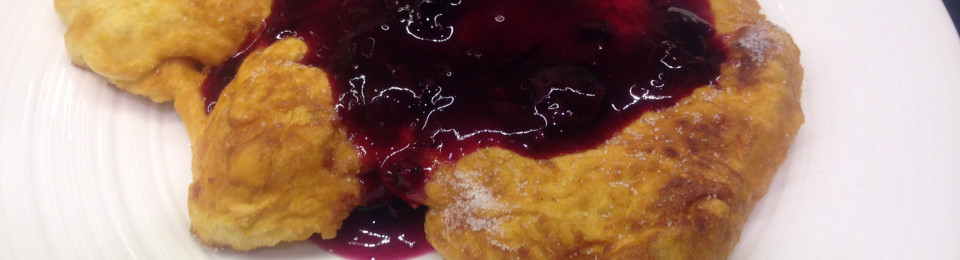
“Wojapi”: Judy’s Wild Berry Soup

“Wojapi”: Judy’s Wild Berry Soup

This soup is sometimes called Wojapi, a Lakota word that loosely translates as “all mixed up.” It’s been tested by hundreds of children and elders over the years, and is always a hit.

2 quarts of naturally sweet cherry juice, grape juice, blueberry juice, or spring water
2 C. blueberries (fresh, frozen or dried)
2 C. blackberries (fresh, frozen or dried)
1 C. huckleberries (fresh, frozen or dried)
1 C. raspberries (fresh, frozen or dried)
Also optional: Handful of blue or black elderberries 6 to 10 juniper berries

Combine all ingredients and simmer gently until berries pop and cook down. Serve hot or cold, depending on the weather. Spices like cinnamon and cloves, while not part of the traditional recipe, can be added. I like to spice the soup with Juniper berries and add pieces of dried/smoked salmon for a hardier savory meal. The pectin found in chokecherries and many berries will naturally thicken the soup. Serve over Fry Bread.

Honey Soy Glazed Duck Breast

Honey Soy Glazed Duck Breast

4 6oz. duck breasts, with skin on
Sea salt and freshly ground black pepper
Chinese five spice powder
Olive oil
1-2 T. honey
2 T. soy sauce
2 C. green beans
1/3 C. toasted hazelnuts
6-7 T. hazelnut oil
Scant cupl olive oil
6T. sherry vinegar

Score the skin of the duck breasts in a criss-cross pattern with a very sharp knife. Season the duck breast generously with salt and the five spice and rub into the skin thoroughly. Place the duck breasts, skin-side down, on a cold dry fry pan and slowly heat the pan over very low heat to render down most of the fat off the duck breast. This may take 8-10 minutes, depending on the thickness of the fat. Once the fat has rendered, turn up the heat and fry until the skin is crisp. Turn the duck breasts over and cook the other side for another 3-4 minutes. Just before the duck is ready, drizzle the honey and soy sauce over. Toss and turn the duck in the honey and soy and cook until the liquid has reduced to a syrupy glaze. Transfer the duck to a warm plate and leave to rest for 5-10 minutes. While the duck is resting, to a pan of salted boiling water add the beans and cook for no more than one minute. Meanwhile, crush the hazelnuts lightly with a pestle and mortar. Drain the beans thoroughly and pat dry with kitchen paper. Whisk the oils and sherry vinegar together with some seasoning. Toss the beans in the vinaigrette to taste. To serve, place the bean salad off center on warm plates. Slice the duck lengthways and place beside. Drizzle any remaining pan juices over and finish with a small drizzle of the vinaigrette.

Pinot Noir Braised Duck, Savoy Cabbage and Roasted Shallots

Pinot Noir Braised Duck, Savoy Cabbage and Roasted Shallots

1 large peking duck (4 – 5 lbs.)
1 yellow onion
1 large carrot
2 ribs celery
1 fennel bulb
2 oz. grapeseed oil
1 bottle pinot noir
2 C. port
2 tsp. cocoa powder
sachet with black peppercorns, star anise, juniper, clove and cinnamon stick
2 C. veal stock (optional)
4 oz. sweet butter
1 head savoy cabbage
1 lb. shallots
kosher salt and fresh ground black pepper

Cut all of the vegetables into a small dice. Cut the duck into 1/8ths (or have your butcher do it for you). In a large heavy bottom sauce pot, heat the grapeseed oil to almost smoking. Season the duck well on all sides. Carefully add the duck to the already hot oil. Brown well on all sides then remove from the pan and set aside. Pour off the rendered fat. Add back a little fresh oil and heat until almost smoking. Add the vegetables and cook for about 5 minutes. Add the cocoa and blend well with the vegetables. Add the wine and the port. Place the duck back into the pot. Add the stock and sachet and bring to a simmer. Cook at a simmer until the duck is fork tender. Remove the duck and set aside. Reduce the sauce, being careful to skim off all of the fat, and adjust the seasonings. Whisk in the butter and adjust seasonings again. Heat the duck back in the sauce. In a large sauté pan, braise the cabbage in a little oil until tender.

Meanwhile, on a sheet pan roast the shallots seasoned with salt, pepper and tossed in olive oil, in a moderate oven until tender. Covering the pan with aluminum foil helps to keep the shallots moist and controls the amount of color. To serve the duck, place the cabbage in the middle of a platter. Arrange the duck around the outside of the cabbage, being generous with the sauce. Finish with the roasted shallots scattered over the duck and cabbage.

Cook’s Illustrated Gravlax

Cook’s Illustrated Gravlax

Don’t buy a larger side of salmon; it won’t fit well in the bag. Serve sliced gravlax with lightly toasted rye bread.

3 red onions, peeled and quartered
1 C. kosher salt
3/4 C. sugar
2 C. coarsely chopped fresh dill (both stems and leaves) plus 1 C. minced fresh dill
1 tsp. pepper
1 (3- to 4-pound) whole side of salmon, skinned, excess fat and brown flesh removed, and pinbones removed
1 recipe Onion Relish and/or Cilantro Cream

Process onions in food processor until liquefied, about 4 minutes. Strain mixture through fine-mesh strainer to extract 2 C. liquid, then stir in salt and sugar until dissolved. Stir in coarsely chopped dill and pepper. Place salmon diagonally in 2-gallon zipper-lock bag and add onion mixture. Seal bag, removing any excess air, and lay fish skin side up on rimmed baking sheet. Place second baking sheet on top and set about 7 pounds of weight (such as heavy cans or bricks) on top. Refrigerate weighted fish until very firm, 12 to 18 hours. Remove salmon from bag and pat dry with paper towels, removing any dill stems. Before serving, sprinkle minced dill over top and sides of salmon and slice very thin on bias. Serve with Onion Relish and/or Cilantro Cream. (Salmon can be wrapped in parchment paper, then plastic wrap, and refrigerated for up to 1 week.)


Onion Relish

The onions are cooked slowly to bring out their sweetness while the sugar and vinegar temper the heat of the chiles, but this relish is still potent, so use sparingly.

2 tsp. olive oil
2 white onions (about 1 pound), peeled and chopped
fine
2 serrano or jalapeno chiles, seeded and minced
1 red bell pepper, stemmed, seeded, and chopped fine
1/4 C. sugar
¼ C. white wine vinegar

Heat oil in large sauté pan. Add onions; cook over medium heat until soft but not colored, 7 to 9 minutes. Stir in chiles and bell pepper; continue to cook until all vegetables have softened, about 5 minutes longer. Stir in sugar and vinegar and cook until pan is almost dry, about 5 minutes. Transfer mixture to airtight container and refrigerate until flavors meld, at least 1 hour. Bring to room temperature before serving. (Relish can be refrigerated for up to 1 week.)
Cilantro Cream

1 C. Crème Fraiche or Sour Cream
4 tsp. minced Fresh Cilantro

Combine all ingredients in a small bowl and refrigerate until ready to serve. (Up to 1 day)

Agave Brushed Salmon with Orange Watercress Salad

Agave Brushed Salmon with Orange Watercress Salad

2 6-oz. wild salmon fillets
2 tsp. agave nectar
1 navel orange
2 tsp. capers, finely chopped
1 scallion, thinly sliced
1 tsp. packed fresh mint, chopped
1 tsp. lemon zest
1 tsp. lemon juice
2 tsp. orange zest
leftover orange juice from the segmented orange (1 tbsp)
1 tsp. extra virgin olive oil
1/4 C. packed watercress

Start by segmenting the orange, and place the orange segments into a bowl along with the chopped capers, scallion, mint, lemon zest and juice, orange zest and juice, olive oil, and watercress. Season with salt and pepper, and stir it all together. That’s it. Brush the salmon on both sides with the agave, and season generously with salt and pepper. You have a couple options for cooking the salmon: 1. Grill it. The nice thing about grilling the salmon is it turns the agave into a delicately sweet crust on the salmon, as well as giving it a smoky flavor. Broil it, but you must watch it very carefully. I once was broiling the salmon, and the agave actually caught on fire (my first kitchen fire. Fortunately, it burned out very quickly). Pan sear it. However you cook it, you want the agave to caramelize a bit on the salmon, because it not only gives it fantastic flavor, but a gorgeous color. Salmon cooking times will vary with fillet thickness, but usually it only takes around 3 minutes on each side. Top the salmon with the orange watercress salad, and spoon the juices around the salmon for some beautiful plating.

Thai Coconut Green Curry Salmon

Thai Coconut Green Curry Salmon

2 6-8oz. Portions of Salmon
1 zucchini, cut in half lengthwise then sliced
2-3 thai chiles (or serrano peppers) sliced thinly
2 cloves of garlic, thinly sliced
5 Baby Bella Mushrooms, stem removed and sliced (about 2 cups)
1/2 red bell pepper, core and seeds removed and cut into 1/2 inch cubes
1 head of baby bok choy, cut into fourths
1 inch piece of Ginger, peeled and grated
4 T. of grapeseed or olive oil
13.5 oz. can of Chaokoh Coconut Milk or Thai Kitchen Coconut Milk
2 T. Thai Kitchen Green Curry Paste
1 T. Red Boat Fish Sauce
2 T. Fresh Squeezed Lime Juice
1/4 cup freshly chopped thai basil (or regular basil)
2 whole green onions, sliced and separate the top dark green slices from the bulb (whiter part) of the onion.
Montreal Steak Seasoning (or Salt and Pepper), to taste

Preheat oven to 450 degrees. Wrap a cooking sheet in foil. Place salmon, skin side down, on the foil wrapped baking sheet. Drizzle salmon with about 2 T. of grapeseed or olive oil, rub across the top of the salmon so that it is coated evenly. Season with Montreal Steak Seasoning (or salt and pepper) to taste. Before placing your salmon in the oven, make sure all of your other ingredients are chopped and are on hand ready to go. Place salmon in the oven, bake until salmon is cooked through, about 12 to 15 minutes. Meanwhile, while the salmon is baking: in a large skillet heat 2 T. of grapeseed oil or olive oil over medium-high heat. When hot, add in the garlic, thai chiles, ginger, red pepper, zucchini, mushrooms, the bok choy, and the bulb (white part) of the green onion. Sauté for about 4 minutes, or until veggies just begin to get tender. Now add in the green curry paste, stir in, and sauté for 1-2 minutes more. Turn heat down to medium-low. Add in the coconut milk, the fish sauce, the lime juice, and the rest of the green onion (save a few for garnish if you want). Cook with at a light simmer, where it is just barely bubbling (you may need to turn down to low depending on your stovetop), stirring occasionally, until the salmon is done cooking in the oven. Remove Salmon from the oven, and using a sturdy spatula, gently remove the salmon from the skin (optional, I just prefer to remove the skin-leave it on if you would like). Serve over green curry vegetables and top with freshly chopped basil and green onions.

Fried Razor Clams

Fried Razor Clams

Most people in the Pacific Northwest prefer to fry their razor clams, and there are countless variations of this simple method of cooking clams. Just take into account the numerous oils (olive, canola, sesame, peanut, etc..) to use for frying, and frying pans (cast iron, steel, non-stick, deep-fryer, etc..), also washes (egg, milk, buttermilk, etc.), and finally coatings (flour, panko, ground Ritz, cracker meal, etc..)…. the variations are just endless! The good news is there is only one issue you need to really worry about when cooking razor clams, if you over cook them they become tough! Along with any household frying pan, just make sure the oil is at it’s smoke point before adding the clams.

Here is one final tip, if you follow most recipes you’ll be eating raw clams, and that’s just bad! I’ve read hundreds of recipes, on the web and in books over the years, and all of them say cook 1 minute on each side. This might be true in a deep fat fryer, or using a cast iron pan with peanut oil, but for most set ups it just takes longer. A fried clam should not be like shoe leather, and it should not be limp (or raw), I like them when they are getting firm, but the necks are still not tough; so use a fork and test a neck if your uncertain.
1-lb Razor Clams
3-eggs mixed with 1/4 C. milk
2 C. flour
1/4 inch deep canola oil (Do not use Olive Oil, the smokepoint is too low)
tenderizer optional on necks
salt to taste
lemon slices
tartar sauce

Prepare Egg Wash: Mix eggs and milk. Prepare Clams: Dry clams to ensure the egg wash and floor adhere to them, then dunk into the wash and into floor to coat. Rest Clams: Once floored well lay clams on aluminum foil and let rest for fifteen minutes (coating will adhere to clam). Season: Season with salt while resting, and then other side while in pan cooking.
Prepare Your Pan: Add oil to pan, about 1/4 inch, heat to smoke pint, to keep oil hot don’t add to many clams at once. Cook Clams: Cook about 1 plus minutes on each side, make sure clams are not limp (to raw), or to stiff (to tough). Serve: Add lemon wedges and/or tartar sauce and enjoy!

My tartar sauce is simple. Finely diced onion and pickles, mixed with mayo and a tiny bit of pickle juice. Let it rest as long as you can in the fridge before using. Sometimes I get fancy. I’ll add in a little dill, lemon juice, celery salt, and or finely chopped capers. With clams though, I’m generally happy with just lemon. Mmm, love clams!

Rimrocker Cheese-Potato Croquettes with Chive crème fraîche

Rimrocker Cheese-Potato Croquettes with Chive crème fraîche

Chef Damon Jones dreamed up this play on a loaded baked potato after tasting a sample of Rimrocker cheese from Tumalo Farms. At the chef s Ashland restaurant, he serves the croquettes on a bed of microgreens. If you can’t find Rimrocker cheese, you can substitute a semihard cheese such as cheddar from a local dairy instead. Make this recipe the day after a holiday dinner when leftover mashed potatoes are in plentiful supply.

½ C. crème fraîche
2 T. finely chopped chives

2 tsp. unsalted butter
1/2 C. finely chopped leeks
1 1/2 C. mashed potatoes, cooled
4 oz. semihard cheese, such as Tumalo Farm’s Rimrocker cheese, coarsely grated (about 1 C.)
1/2 C. plus 2 T. plain dried breadcrumbs
Salt and freshly ground black pepper
1 egg
Extra-virgin olive oil

Make the chive crème fraîche: Whisk the crème fraîche and chives together in a small bowl until well combined. Cover and refrigerate until ready to use. Make the croquettes: Melt the butter in a medium skillet over medium-low heat and cook the leeks, stirring occasionally, until soft, about 5 minutes. Remove the pan from the heat and let cool slightly. Mix the leeks, mashed potatoes, cheese, and 2 T. the breadcrumbs together in a medium bowl with a rubber spatula until well combined. Salt and pepper to taste. Portion the potato mixture into 8 small croquettes using your hands. Lightly beat the egg in a shallow dish. Spread the remaining ½ C. bread crumbs in a separate shallow’ dish. Place the dishes next to each other and dip the potato cakes in the egg, turning once to coat both sides, and then the breadcrumbs, turning once to coat both sides. Line a plate with paper towels. Coat the bottom of a large skillet with olive oil and warm over medium heat. Add the croquettes to the skillet and, working with 4 cakes at a time, cook them over medium-high heat until golden brown, about 3 minutes per side. Transfer the cakes to the paper towel-lined plate to drain; cover the plate with foil to keep warm while you cook the remaining cakes. Divide the croquettes among four plates. Serve piping hot with a dollop of chive crème fraîche.

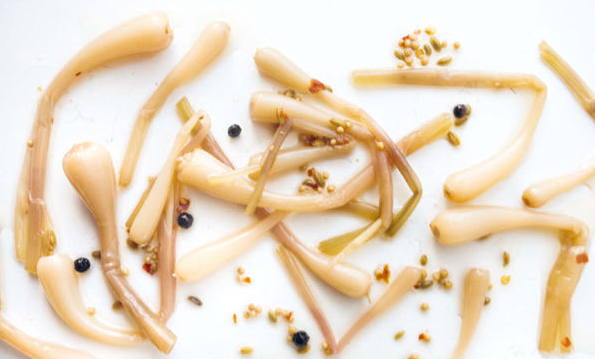
SpicySweet Pickled Ramps

SpicySweet Pickled Ramps

12 oz. ramps with greens (about 3 bunches)
3 C. cider vinegar (5% acidity)
2 tsp. pure kosher salt
1/2 C. sugar
2 tsp. fennel seeds
2 tsp. yellow mustard seeds
1 tsp. whole black peppercorns
1 tsp. hot pepper flakes, or more to taste

Prepare for water-bath canning: Wash the jars, keep them hot in the canning pot, and put the flat lids in a bowl. Wash the ramps well and trim off any damaged leaves. Cut the tops off so that the bulb ends will fit upright in your canning jar with 1/2 inch headspace at the top. Arrange the leafy tops into four stacks. In a saucepan, bring the vinegar, 1 C. water, the salt, sugar, and spices to a boil over high heat, stirring to dissolve the salt and sugar. Using a jar lifter, remove the hot jars from the canning pot, carefully pouring the water from each one back into the pot, and place them upright on a folded towel. Working quickly, pack the ramp bulbs into one of the hot jars. Roll up each stack of leaves and stuff two rolls into each of the other two hot jars. Ladle the hot vinegar mixture into all the jars, leaving 1/2 inch headspace. Use a chopstick to remove air bubbles around the inside of each jar. Use a damp paper towel to wipe the rims of the jars, then put a flat lid and ring on each jar, adjusting the ring so that it’s just finger-tight. Return the jars to the water in the canning pot, making sure the water covers the jars by at least 1 inch. Bring to a boil, and boil for 10 minutes to process. Remove the jars to a folded towel and do not disturb for 12 hours. After 1 hour, check that the lids have sealed by pressing down on the center of each; if it can be pushed down, it hasn’t sealed, and the jar should be reprocessed or refrigerated immediately. Label the sealed jars and store.

Hood Canal Manila Clams with Spicy Orange Cilantro Butter

Hood Canal Manila Clams with Spicy Orange Cilantro Butter

I know most inland folks probably never get beyond the occasional treat of clams steamed with wine and garlic, and served with melted butter. When the clams are incredibly fresh and treated with care (steamed briefly and served immediately), that is truly one of the best dishes on earth. But in the Northwest, we are blessed with an abundance of succulent, plump clams nearly year-round. So eventually, the thought occurs to the adventurous cook that there must be other great ways to prepare them. This delectable dish is the result of just such a thought.

4 pounds small manila clams (6-8 dozen), kept cold in the frig, with air to breathe
2 tsp. cold-pressed, extra virgin olive oil
1 medium onion, skinned and chopped (2 C. chopped)
2 C. dry white wine (such as a Northwest Pinot Grigio)
Spicy Orange Cilantro Butter
½ C. (1 cube) unsalted butter, cool room temperature
finely grated zest of 1 large orange
handful cilantro leaves (stems discarded)
4 large cloves garlic, peeled
½ tsp. hot, smoked Spanish paprika
½ tsp. red pepper flakes
1 tsp. fine sea salt
chopped cilantro
thin shreds of orange peel
hot, crusty French bread

No less than ½ hour and no more than 1 hour before cooking, remove the clams from the frig, scrub them under cold running water, put them in a large bowl or clean sink, and cover with cold water. Clams need at least ½ hour in the water to release any sand trapped in their shells. NOTE If you suspect that your clams may be sandy, after soaking, steam a couple of them separately to check this before proceeding with the recipe. Once in a blue moon, I run into a sandy batch of clams that require separate steaming. If this happens to you, simply rinse the steamed clams to remove the sand and then proceed with the recipe. You will of course lose the clam juice, but that is preferred to a sauce full of sand.

In the meanwhile, over medium-high heat, heat the olive oil in a large sauté pan or stovetop casserole. Add the chopped onion, and cook slowly until the onions are softened and translucent, but not browned, about 15 minutes. Add the wine and reduce by half. Remove from the heat and reserve. While the onions are cooking, make the Spicy Orange Cilantro Butter. In a processor, combine the butter, orange zest, cilantro, garlic, paprika, red pepper flakes, and salt. Pulse to finely chop and combine the ingredients. Reserve. To prepare the clams, put the pan with the sautéed onions back on the stove over medium-high heat, add the scrubbed clams, and cover. After the liquid comes to a boil, it will take about 5-7 minutes for the clams to open. As soon as most of the clam shells are open, remove from the heat. Remove any clams that did not open. NOTE Clams become tough when overcooked. Be sure to remove them from the heat as soon as most of them are open. You can also remove those clams that are open and give the remaining clams a few more minutes to see if they will open too. Quickly combine the clams with the Spicy Orange Cilantro Butter, garnish with chopped cilantro and orange peel, and serve with plenty of hot, crusty bread.

WIW: “Everything” Savory Potato Waffles with Smoked Salmon

WIW: “Everything” Savory Potato Waffles with Smoked Salmon

WIW: “Everything” Savory Potato Waffles with Smoked Salmon

1 T. sesame seeds, toasted

2 tsp. poppy seeds

1 tsp. dried minced garlic

1 tsp. dried minced onion

1/2 tsp. kosher salt


2 medium russet potatoes, peeled

3/4 C. all-purpose flour

1 tsp. baking powder

1/2 tsp. kosher salt

2 large eggs

1/2 C. whole milk

3 T. unsalted butter, melted

2 scallions, chopped


8 oz. smoked salmon

1/2 C. creme fraiche

1 T. capers

1/4 C. small dill sprigs


For the “everything” seasoning: In a small bowl, stir together the sesame seeds, poppy seeds, dried garlic, dried onion and salt. Set aside. For the waffles: Coarsely grate the potatoes on a box grater. Wrap the grated potatoes in a clean kitchen towel and squeeze out the excess moisture. Whisk the flour, baking powder, salt and 1 T. of the “everything” seasoning together in a large bowl. Add the potatoes, eggs, milk, butter and scallions; stir to combine. Preheat a waffle iron. Using 1/3 C. batter per waffle, cook the waffles for about 4 minutes (or according to manufacturer’s directions). With an offset spatula, flip the waffles and cook an additional 2 minutes, or until they’re a deep golden brown. As you go, transfer the cooked waffles to a baking sheet and keep warm in a low oven. To serve: Top the waffles with smoked salmon and a dollop of creme fraiche, sprinkle with capers and “everything” seasoning, and garnish with a dill sprig.

Gourmet Chips with Smoked Salmon

Gourmet Chips with Smoked Salmon

Gourmet Chips with Smoked Salmon10 Fingerling Potatoes, cut into 1/8” rounds
1 T. EVOO
Salt & Pepper
2 T. Chives, chopped
1 T. Horseradish
½ C. Sour Cream
1 T. Lemon Juice
2 slices Smoked Salmon, cut into 1” pieces

Preheat oven to 350. Toss potatoes in evoo and season generously with salt and pepper. Roast 20-30 minutes, flipping once, until very crispy; remove from oven and allow to cool. Combine chives, horseradish, sour cream and lemon juice. Spoon a small amount on each potato chip and top with a small piece of smoked salmon.

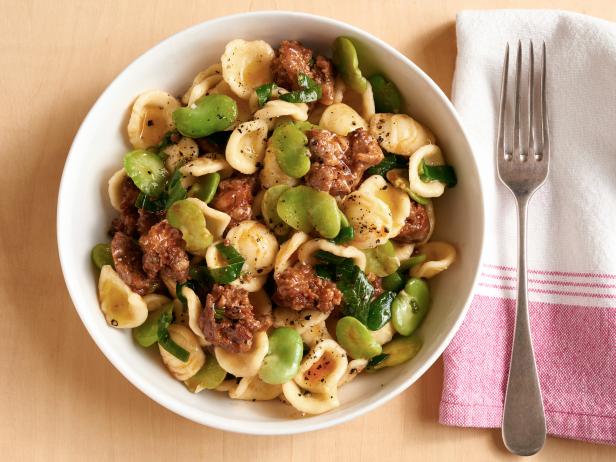
Sausage & Orecchiette with Ramps and Favas

Sausage & Orecchiette with Ramps and Favas

Orecchiette with Ramps and Favas

Kosher salt

1 pound fresh orecchiette pasta

2 tablespoons extra-virgin olive oil, plus more for drizzling

1 pound spicy Italian sausage, removed from the casings if not bulk

1 cup peeled shelled fava beans

3 cups sliced ramps, bulbs and leaves (or an equal amount of leeks and 1 garlic clove)

Freshly ground black pepper

2 cups freshly grated parmesan cheese


In a very large pot, bring 5 quarts water and 3 tablespoons salt to a boil. Add the pasta and cook until just al dente, about 1 minute less than the package directions. Occasionally give the pasta a stir so it doesn’t stick together. Scoop out and reserve 1 cup of the pasta water before draining the pasta. Meanwhile, put a large skillet over high heat. Add the olive oil and sausage and cook, breaking up the meat as it cooks, 2 to 4 minutes. Add the fava beans and ramps, season with salt and pepper and cook for 2 minutes. Add the pasta and reserved pasta water to the pan and cook for 30 seconds, stirring to blend. Remove from the heat and stir in the parmesan. Top with a good drizzle of olive oil and a sprinkling of freshly ground pepper.

ATK Perfect Omelet

ATK Perfect Omelet

4 large eggs, separated
1 tsp. unsalted butter, melted, plus 1 tsp. unsalted butter
1/4 tsp. salt
1/4 tsp. cream of tartar
¾ C. Filling
l oz. Parmesan cheese, grated (1/2 C.)

Adjust oven rack to middle position and heat oven to 375 degrees. Whisk egg yolks, melted butter, and salt together in bowl. Place egg whites in bowl of stand mixer and sprinkle cream of tartar over surface. Fit stand mixer with whisk and whip egg whites on medium-low* speed until foamy, 2 to 2 1/2 minutes. Increase speed to medium-high and whip until stiff peaks just start to form, 2 to 3 minutes. Using rubber spatula, fold egg yolk mixture into egg whites until no white streaks remain. Heat remaining 1 tsp. butter in 12-inch ovensafe nonstick skillet over medium-high heat, swirling to coat bottom of pan. When butter foams, quickly add egg mixture, spreading into even layer with spatula. Remove pan from heat and gently sprinkle filling and Parmesan evenly over top of omelet. Transfer to oven and cook until center of omelet springs back when lightly pressed, 4 1/2 minutes for slightly wet omelet and 5 minutes for dry omelet. Run spatula around edges of omelet to loosen, shaking gently to release. Slide omelet onto cutting board and let stand for 30 seconds. Using spatula, fold omelet in half. Cut omelet in half crosswise and serve immediately.

Asparagus and Smoked Salmon Filling

1 tsp. olive oil
1 shallot, sliced thin
5 oz. asparagus, trimmed and cut on bias into 1/2-inch lengths
Salt and pepper
1 oz. smoked salmon, chopped
1/2 tsp. lemon juice

Heat oil in 12-inch nonstick skillet over medium-high heat until shimmering. Add shallot and cook until softened and starting to brown, about 2 minutes. Add asparagus, pinch salt, and pepper to taste, and cook, stirring frequently, until crisp-tender, 5 to 7 minutes. Transfer asparagus mixture to bowl and stir in salmon and lemon juice.

Mushroom Filling

1 tsp. olive oil
1 shallot, sliced thin
4 oz. white or cremini mushrooms, trimmed and chopped
Salt and pepper
1 tsp. balsamic vinegar

Heat oil in 12-inch nonstick skillet over medium-high heat until shimmering. Add shallot and cook until softened, about 2 minutes. Add mushrooms and 1/3 tsp. salt and season with pepper to taste. Cook until liquid has evaporated and mushrooms begin to brown, 6 to 8 minutes. Transfer mixture to bowl and stir in vinegar.

Artichoke & Bacon Filling

2 slices bacon, cut into 1/4-inch pieces
1 shallot, sliced thin
5 oz. frozen artichoke hearts,
thawed, patted dry, and chopped
Salt and pepper
1/2 tsp. lemon juice

Cook bacon in 12-inch nonstick skillet over medium-high heat until crisp, 3 to 6 minutes. Transfer bacon to paper towel-lined plate. Pour off all but 1 tsp. fat from skillet. Add shallot and cook until softened, about 2 minutes. Add artichokes, 1/3 tsp. salt, and pepper to taste. Cook, stirring frequently, until beginning to brown, 6 to 8 minutes. Transfer artichoke mixture to bowl and stir in bacon and lemon juice.
Perfect Scrambled Eggs

Perfect Scrambled Eggs

If using extra-large eggs, reduce the number of whole eggs to seven. If using jumbo eggs, reduce the number of whole eggs to six. If you like, dress up these eggs by folding in 2 T. minced fresh parsley, chives, basil, or cilantro, or 1 T. minced fresh dill or tarragon, after reducing the heat to low.

Despite what you might think, the eggs shouldn’t be stirred constantly while they cook. Instead, fold them with a rubber spatula into a tidy (and high) pile that traps steam. More steam means more volume. So, for light, tender eggs, be gentle and use a rubber spatula.

8 large eggs plus 2 large yolks
1/4 C. half-and-half
Salt
1/4 tsp. pepper
1 tsp. unsalted butter, chilled (butter is a MUST)

Adjust oven rack to middle position and heat oven to 200 degrees. Place 4 heatproof plates on rack. Beat eggs and yolks, half-and-half, 1/4 tsp. salt, and pepper with fork until thoroughly combined and mixture is pure yellow; do not overbeat.. Melt butter in 10-inch nonstick skillet (For eight eggs, we use a 10-inch pan—crowding the eggs in the pan traps steam and ensures fluffy results. Use an 8-inch pan when cooking four eggs (or less)) over medium-high heat (butter should not brown), swirling pan to coat. Add egg mixture and, using heat-resistant rubber spatula, constantly and firmly scrape along bottom and sides of skillet until eggs begin to clump and spatula leaves trail on bottom of skillet, 1 1/2 to 2 ½ minutes. Reduce heat to low and gently but constantly fold eggs until clumped and slightly wet, 30 to 60 seconds. Immediately transfer eggs to warmed plates and season with salt to taste. Serve immediately.

Smoked Salmon Scrambled Eggs with Chive Butter

Mash 3 tsp. softened unsalted butter with 3 T. minced fresh chives. Toast 4 (l-inch-thick) slices rustic white bread, then spread with 2 tsp. chive butter. Cook eggs as directed, first melting remaining chive butter in pan. Immediately spoon eggs on top of buttered toasts, top with 3 oz. smoked salmon, and serve. Garnish with extra chives if desired. You could replace salmon with sautéed mushrooms, caramelized onions, sautéed peppers, crisp bacon,
or browned sausage rounds.

Butternut Squash Ravioli with Sage and Hazelnuts

Butternut Squash Ravioli with Sage and Hazelnuts

Butternut Squash Ravioli with Sage and Hazelnuts


2 C. butternut squash (about ¼ of a small squash), peeled and cubed

1 T. olive oil

¾ C. ricotta cheese

1 T. maple syrup

Kosher or sea salt

Freshly ground black pepper


2 C. all-purpose flour, plus more for dusting

1 tsp. kosher or sea salt

3 large eggs

1 T. olive oil


3 T. unsalted butter

1–2 tsp. minced fresh sage

2 cloves garlic, minced

¼ C. chopped hazelnuts

Parmigiano-Reggiano for serving (optional)


Preheat oven to 375℉. Toss butternut squash with olive oil and a sprinkle of salt and pepper and place on a lined baking sheet. Roast 30 minutes, or until soft. Once cooked, cool for 10 minutes then purée in a food processor, add ricotta cheese, maple syrup, plus ¾ tsp. salt and ½ tsp. black pepper. Side aside or refrigerate overnight. While the squash cooks, mix dry ingredients for the pasta dough, then add eggs and olive oil. Mix with hands to form a shaggy dough, then knead for about 10 minutes until it becomes smooth. Wrap with wax paper or plastic wrap and let rest for 30 minutes. To assemble, turn out the dough onto a clean, floured surface. Roll into a paper-thin sheet, until slightly translucent. Using a sharp knife, cut the dough into 3-inch squares and place about 2 tsp. filling in the center of each. Brush edges with water to help bind the dough, then fold the squares diagonally to form triangle raviolis. (Or use a fork to create a decorative crimp on the edges.) Place the finished pieces on a floured tray and cover with a towel. (At this point the ravioli may be frozen on the tray and then transferred to a container for future use.) To cook, bring a large pot of salted water to a boil. Carefully add a few ravioli at a time. Cook 5 minutes or until ravioli float to the surface. Just before serving, melt butter in a small saucepan, add sage, garlic and hazelnuts and sauté​ for about 1 minute. Add the cooked ravioli to the pan, toss to coat and serve hot. Serves 4.

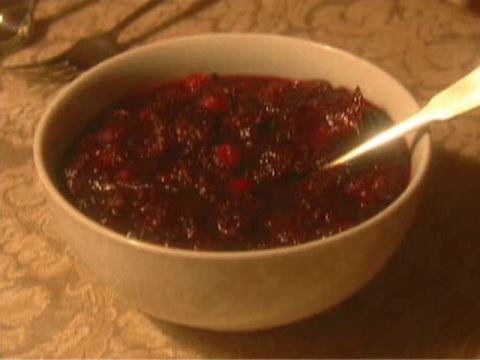
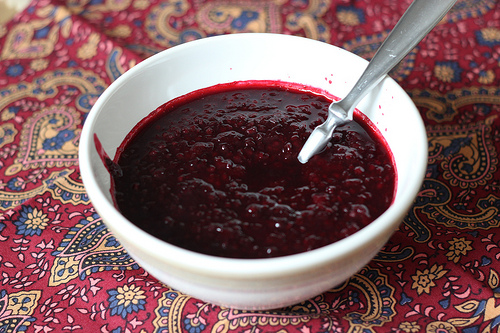
Blackberry, Blueberry and Salal Berry Ketchup

Blackberry, Blueberry and Salal Berry Ketchup

Blackberry, Blueberry and Salal Berry Ketchup


Serve this with hot smoked salmon! Pulled basque pork!    Hazelnut halibut! On french toast, pancakes and waffles! and practically EVERYTHING!


This is made with a pound of fruit. Mix and match the fruit, because all our suggestions are in the same local season. We suggest blackberries, blueberries, salal berries, huckleberries and/or even Italian plums. It freezes like alcohol, meaning it doesn’t freeze solid. for that reason, plan to use it in 6 months or less. Freeze in reusable container with a tight-fitting lid. Always cover the top of the sauce with waxed paper or parchment before covering with tight lid.


1 pound berries, one or two varieties (Blackberry, Blueberry and Salal Berry) or all blackberries

1-2 T. water

1 1/3 cups pure maple syrup, blue agave syrup, or brown sugar

1/3 cup cider vinegar

½ tsp. cinnamon

½ tsp. nutmeg

¼ tsp. cloves

½ tsp. sea salt

¼ tsp. ground pepper


Place fruit(s) and water in a large sauce pan and simmer over medium or medium low heat until it breaks up, approximately 10-15 minutes; puree through food mill or using a stick blender. To remove small seeds, strain through a sieve. Return strained fruit to stove on medium; reduce some to slightly thickened. Add maple syrup, vinegar, cinnamon, nutmeg, cloves, salt and pepper and cook for approximately 10 minutes or until ingredients have “bloomed” into a “berry” good reduction. Chill to serve.

Lemon-Buttermilk Pudding with Huckleberry Sauce

Lemon-Buttermilk Pudding with Huckleberry Sauce

Lemon-Buttermilk Pudding


2 C. granulated sugar, divided

¼ tsp. salt

½ C. all-purpose flour

¼ C. lemon juice

Finely grated zest of 3 lemons

1½ C. buttermilk

½ C. heavy cream

4 eggs, separated, plus 1 yolk

Huckleberry sauce for serving*


*HUCKLEBERRY SAUCE

4 C. cleaned huckleberries (or your favorite berries)

2 C. white sugar

1 C. water

Juice of 1 orange

Juice of 1 lemon


Preheat a convection oven to 325°. In a large bowl, stir together 1 ½ C. sugar, salt, flour, lemon juice, grated zest, buttermilk, heavy cream and 5 egg yolks until well incorporated. In a separate mixing bowl, beat the egg whites with a whisk until they hold stiff peaks. Gradually whisk in ½ C. sugar until it is completely incorporated. Fold the beaten whites into the mixture in 3 different additions, allowing the last addition to remain only partially mixed in. Don’t over mix. It should be lumpy with some of the egg whites in large visible clumps—it should look messy, soupy and lumpy—not neat and smooth! Transfer mixture to a 10- by 12- by 3-inch (12 C.) baking dish. For the water bath, place the baking dish in a larger baking pan and pour simmering water into the outside pan until it reaches ⅔ up the side. Bake for about 60 minutes, until the top turns dark golden brown and the pudding starts to set up underneath. It will always remain slightly loose when shaken. Cool completely and refrigerate until serving. To serve, scoop each serving onto a dessert plate and spoon huckleberry sauce along the side.


Huckleberry Sauce: Put all of the ingredients together in a small nonreactive saucepan. Turn on the heat and bring this to a simmer for 5 minutes. Remove the saucepan from the heat, cool slightly and purée with burr mixer or in the blender. Store in the refrigerator up to 2 weeks.

Cauliflower Gratin with Tillamook Aged Cheddar, Caramelized Onions & Applewood-Smoked Bacon

Cauliflower Gratin with Tillamook Aged Cheddar, Caramelized Onions & Applewood-Smoked Bacon

Cauliflower Gratin with Tillamook Aged Cheddar, Caramelized Onions & Applewood-Smoked Bacon


1 medium-large head white cauliflower (1 pound 2 ounces or 6 cups trimmed florets)

4 slices applewood-smoked bacon, fried or baked until crisp, drained, and crumbled

2 T. unsalted butter

1½ cups chopped onion (1 medium onion)

½ cup pale ale or dry white wine (or chicken stock and a tsp. or two of fresh lemon juice)

½ cup chicken stock

2 cloves garlic, peeled, and pressed or minced

1 tsp. chopped fresh thyme

1 tsp. chopped fresh rosemary

½ tsp. fine sea salt

freshly ground black pepper

2 T. all-purpose flour

1 cup cream

2 cloves garlic, peeled, and pressed or minced

2 ounces (about 1 cup) shredded Tillamook Reserve Extra Sharp Cheddar (or Tillamook Smoked Cheddar or other medium-firm aged cheese with good melting quality)


2 T. unsalted butter

2 cups fresh bread crumbs

1 clove garlic, peeled, and pressed or minced

¼ cup grated Parmesan


2 T. chopped Italian parsley


Bring a large pot of water to a full rolling boil and add the cauliflower. Cook for about 2 minutes, until the cauliflower has a bit of tenderness but is still decidedly crunchy. Drain into a colander set in the sink and refresh the cauliflower under cold running water until cool. Reserve. Prepare the bacon as indicated above. In a large sauté pan set over medium-low heat, melt the butter and add the onions. Cook, stirring regularly, until the onions are softened but nicely caramelized, about 20 minutes. Raise the heat to medium-high, add the wine and chicken stock, and simmer briskly until the liquid is nearly evaporated, about 10 minutes. Add the garlic, thyme, and rosemary. Toss and season to taste with salt and black pepper. Add the cooked, crumbled bacon, toss, and transfer the mixture to a lightly buttered or oiled baking dish. Put the flour into a large measuring cup with a pouring spout and add a few T. of the cream, whisking to achieve a smooth paste. Gradually add the remaining cream, whisking to dissolve the flour. Add the garlic, season the cream with salt to taste, and then pour over the cauliflower mixture. Top the gratin with the cheddar cheese. To make the breadcrumb topping, in a small sauté pan set over medium-high heat, melt the butter and add the fresh bread crumbs. Sauté, stirring, until the bread crumbs are lightly toasted. Remove from the heat and add the garlic. Remove to a small mixing bowl and combine with the parmesan. Sprinkle the bread crumb mixture over the gratin. Bake, uncovered, in the upper third of the oven at 350º for approximately 25 minutes, until the sauce has thickened and is bubbling through the top edges. The top should also be nicely browned and the cheddar melted by this time. If not, broil the top briefly to brown the top and melt the cheese. Sprinkle the top of the hot gratin with chopped parsley and serve.

Salmon with Savory Rhubarb Sauce

Salmon with Savory Rhubarb Sauce

Salmon with Savory Rhubarb Sauce


2 medium shallots (2 ounces)

1 ½ inch piece fresh ginger

1 large stalk rhubarb (about 8 ounces)

1 T. olive oil

¼ cup orange juice

½ cup white wine

3 T. honey

Pinch cayenne pepper

1/4 tsp. salt

1/8 tsp. freshly ground black pepper

Cooking spray

4 6-ounce skinless salmon fillets

1/3 cup fresh basil leaves


Peel and dice the shallots. Peel the ginger and grate it finely. Dice the rhubarb. Heat the oil in a medium saucepan over a medium-high heat. Add the shallot and cook until softened, 1 minute. Stir in the ginger and cook for 30 seconds more. Add the orange juice and wine and bring to a boil over a high heat. Cook on high until the liquid is reduced by ¾, about 4 minutes. Stir in the rhubarb, return to a boil, then reduce the heat to medium and simmer until the rhubarb loses its shape and the sauce is thickened, about 6 minutes. Stir in the honey, cayenne and 1/8 tsp. of the salt. Remove from the heat and cover to keep warm until the salmon is ready. The sauce may be made to this point up to two day ahead and stored in an airtight container in the fridge. When ready to serve, gently warm over a low heat. While the sauce is simmering, spray a grill or grill pan with cooking spray and heat over a medium high heat. Season the salmon with the remaining 1/8 tsp. salt and the pepper. Cook the salmon for 10 minutes total per inch thickness, flipping once. While the fish is cooking cut the basil leaves into ribbons. Right before serving, stir all but 2 T. of the basil into the sauce. To serve, spoon about ¼ cup of the sauce onto each plate. Top each with a salmon fillet and garnish with the remaining basil.


Makes 4 servings

Serving Size: ¼ cup sauce and 1 salmon fillet

Calories 370

Total Fat 14 g

Fiber 1 g

Seared Radicchio with Creamy Miso Vinaigrette

Seared Radicchio with Creamy Miso Vinaigrette

Seared Radicchio with Creamy Miso Vinaigrette


For the vinaigrette:

3 T. mayonnaise

1 T. Dijon mustard

2 T. rice vinegar

1 clove garlic, pressed in a garlic press

1 T. white miso

Herbs, finely chopped (I like tarragon or thyme as well as chopped chives)

1 tsp. honey (optional)


For the radicchio:

2 T. olive oil

2 smaller heads of Chioggia, Verona or Treviso radicchio

1/2 c. roasted hazelnuts, crushed


To make the vinaigrette, combine the ingredients in a small mixing bowl and whisk together. Slice the heads of radicchio in quarters, leaving the core intact so the leaves will stay together. (The cores will soften while searing and be quite lovely.) Heat the olive oil in a large frying pan and place the quartered wedges cut-side down and sear until very dark brown (don’t worry if they look blackish…that’s good). Turn and sear the other cut side, then turn onto the back and sear. Remove to a serving plate and drizzle with vinaigrette and sprinkle with crushed, roasted hazelnuts. Serve warm.

Asparagus Risotto with Sorrel Pesto and Preserved Lemon

Asparagus Risotto with Sorrel Pesto and Preserved Lemon

Asparagus Risotto with Sorrel Pesto and Preserved Lemon


For the pesto:

2 c. sorrel leaves (some peppery arugula or spinach would be fine, too)

2 c. cilantro or parsley

3 cloves garlic

1/4 c. pine nuts or filberts (aka hazelnuts)

1/2 c. olive oil

1/2 c. grated parmesan


For the risotto:

1 lb. asparagus, peeled, trimmed and cut into one-inch-long pieces, tips reserved

2 T. extra virgin olive oil

3 T. butter or margarine

1/2 onion, diced

1 T. garlic, finely chopped

2 c. arborio rice

1 c. white wine

4 c. chicken or vegetable stock

1/2 c. sorrel pesto

1/2 c. grated Parmesan cheese

1/2 c. preserved lemon, chopped (or zest of one lemon)

Salt to taste


To make the pesto, place the sorrel, cilantro, garlic and pine nuts in the bowl of a food processor. Begin processing while slowly adding the olive oil until the mixture is a smooth purée, scraping down as necessary with a spatula. Remove to a bowl and stir in the half C. of parmesan. Clean the processor, then put half of the chopped asparagus stalks in the food processor and add just enough water to make a smooth purée; set aside. Put stock in a medium saucepan over very low heat. Then, in a deep skillet or large saucepan, heat oil and butter over medium heat. When it is hot, add onion and garlic, stirring occasionally until it softens, 3 to 5 minutes. Add rice and cook, stirring occasionally, until it is glossy, about 2 to 3 minutes. Add white wine, stir, and let liquid absorb into the rice. Add warmed stock, 1/2 C. or so at a time, stirring occasionally. Each time stock has just about absorbed into the rice, add more. When you have used about half the stock, add the puréed asparagus and asparagus tips, then continue to add stock as necessary. In 5 minutes or so, begin tasting rice. You want it to be tender but with a bit of crunch; it could take as long as 30 minutes total to reach this stage. Add a half C. of the pesto, preserved lemon and parmesan and stir briskly, then remove from heat. Taste and adjust salt. (Risotto should be slightly soupy.) Serve immediately.

Salmon Piccata with Lemon Miso Sauce

Salmon Piccata with Lemon Miso Sauce

Salmon Piccata with Lemon Miso Sauce


2 T. olive oil

1 T. butter or margarine

1 T. garlic, chopped fine

1/2 c. fish or chicken stock

1/2 c. fresh lemon juice

2 T. capers

1 T. cornstarch

1 tsp. red pepper flakes

1 T. white miso (optional)

1 T. parsley, chopped fine, for garnish (optional)

1 1/2 lbs. salmon fillets


Preheat oven to 350°. In a medium saucepan, heat oil and butter over medium heat. Add garlic and very briefly sauté until it’s just warmed. Add lemon juice and stock and heat until it barely comes to a boil. Reduce heat to low, add capers and miso and stir to combine. Add a small amount of water to the cornstarch to make a thin paste. Add cornstarch to sauce while stirring and allow to thicken slightly. Place fish fillets in a 9″ by 12″ baking dish. Pour sauce over the top and roast in oven for 20-25 minutes until fish is cooked through.

DiSpirito’s Seared Salmon with Onions and Rhubarb

DiSpirito’s Seared Salmon with Onions and Rhubarb

DiSpirito’s Seared Salmon with Onions and Rhubarb


1 1/2 cups dry fino sherry

1/4 cup turbinado sugar or palm sugar (See Note)

1/2 pound rhubarb, trimmed and sliced diagonally 1/3 inch thick

3 T. unsalted butter

1 pound bulb onions or sweet white onions, thinly sliced

1/2 cup chicken stock or canned low-sodium broth

1 thyme sprig

Salt and freshly ground pepper

1 pound fava beans, shelled

Four 6-ounce salmon fillets, skin on

Vegetable oil

1 tsp. fresh lemon juice


In a medium saucepan, combine the sherry with the sugar and cook over high heat, stirring occasionally, until the sugar is dissolved. Add the rhubarb and cook until just tender, about 1 minute. Strain the rhubarb in a colander set over a bowl to catch the cooking liquid. Return the liquid to the saucepan and boil over high heat until reduced to 1/2 cup, about 8 minutes. Melt the butter in a medium saucepan. Add the onions and cook over low heat, stirring, until softened, about 1 minute. Add the chicken stock and thyme sprig and a pinch each of salt and pepper. Cover and simmer over low heat until the onions are tender, about 8 minutes. In a medium saucepan of boiling salted water, cook the fava beans for 2 minutes. Using a slotted spoon, transfer the beans to a bowl and refresh under cool running water. Peel off the tough bean skins and add the favas to the onions. Heat a cast-iron skillet. Lightly coat the salmon fillets with some vegetable oil and season with salt and pepper. Cook the salmon, skin side down, over moderately high heat until the skin is very crisp, about 4 minutes. Turn the salmon and cook over moderate heat until barely cooked through, about 4 minutes more, depending on the thickness of the fillets. To serve, discard the thyme sprig and rewarm the onions; add the lemon juice and season with salt and pepper. Bring the sherry-rhubarb liquid to a boil and add the cooked rhubarb. Spoon the rhubarb onto 4 large plates and set the onions alongside. Top with the salmon and serve at once.


Seared Wild Salmon with Minted Mango Salsa

Seared Wild Salmon with Minted Mango Salsa

Seared Wild Salmon with Minted Mango Salsa


1 medium, ripe mango, peeled and diced

1 cup diced English hothouse cucumber

2 green onions, sliced

1 medium tomato, seeds removed and diced

1 small jalapeño, seeded, finely minced, optional

1 clove garlic, fi nely minced

1 T. coarsely chopped mint

2 T. fresh lime juice

Sea salt


2 T. coconut or olive oil

4 (4- to 5-ounce) wild salmon fi llets

Freshly ground black pepper


Combine mango, cucumber, green onions, tomato, jalapeño, garlic, mint, and lime juice in a medium bowl, stirring gently to combine. Add salt to taste. Cover and set aside. If not using right away, salsa can be chilled for up to 6 hours. Season salmon fillets on both sides with salt and pepper. Heat oil in a large, heavy skillet over medium heat. Sear salmon on both sides until golden brown and flakey, about 3 minutes each side. Spoon salsa on top and serve immediately.