Reuben Danish

Reuben Danish

7222733370_414ffdf272For the Pastry:
1 teaspoon instant yeast
1 1/4 cups cold water
9 ounces (about 2 cups) medium rye flour
4 1/2 ounces (1 cup) bread flour
2 tablespoons vital wheat gluten
1 teaspoon sugar
1 teaspoon salt
16 tablespoons (2 sticks) very cold unsalted butter
Eggwash (1 egg, plus 1 tablespoon water, beaten together)
1 tablespoon caraway seeds (or more as desired)

For the Filling:
About 1 pound cooked corned beef, thinly sliced or chopped
About 2 cups sauerkraut, drained
About 1/2 cup Thousand Island dressing
About 1/2 pound Swiss cheese, grated

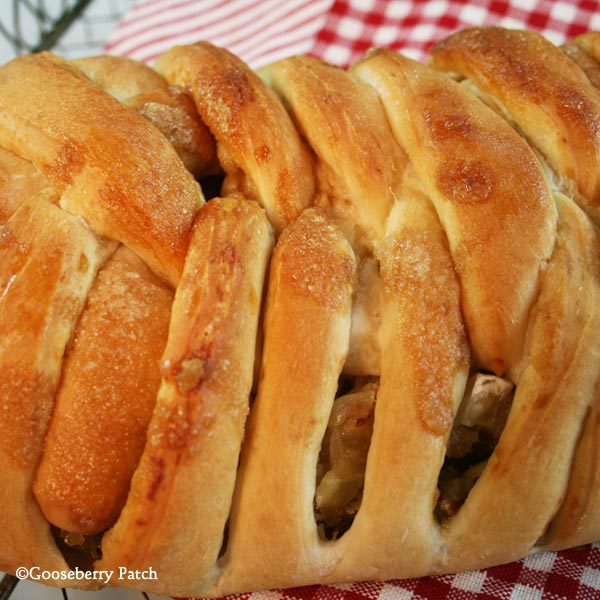
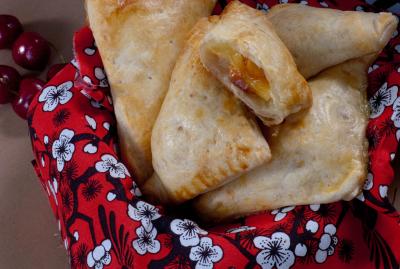
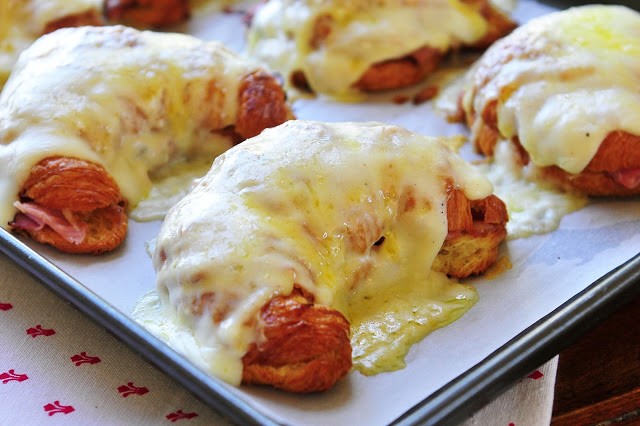
To make the Pastry: Combine the yeast and water in a medium bowl. Stir to combine. Place the rye flour, bread flour, gluten, sugar, and salt in the bowl of your food processor. Pulse several times to combine. Cut the butter into chunks and add it to the food processor. Pulse until you have pieces about the size of a garbanzo bean. It’s fine if there are some larger and smaller pieces. Add the flour/butter mixture to the yeast and water and mix gently until all the flour is moistened. Try not to break up the butter any more. At first the mixture might seem too dry, and after it is mixed it might seem too sticky. This is fine. Cover the bowl with a plastic bag or plastic wrap and refrigerate overnight. The next day, remove the bowl from the refrigerator, flour your work surface generously, and turn out the dough. Flour the top of the dough and pat it into a rough square shape. Using a rolling pin, roll the dough out into a 10- by 18-inch rectangle. Flour the dough as needed to keep it from sticking to the counter and the rolling pin. Working quickly so that the butter doesn’t melt, fold the dough in thirds like a business letter resulting in a 6- by 10-inch rectangle. Roll the dough out into an 18- by 10-inch rectangle again. Repeat the folding, roll again, and fold once more. (If the butter begins to get soft, refrigerate the dough for 10 minutes before proceeding). After the third roll and fold, fold the dough in half crosswise resulting in a roughly 6- by 5-inch rectangle. Flatten it a bit, wrap it in plastic, and put it in the refrigerator for at least one hour or up to overnight. To Assemble and Bake: Adjust two oven racks to upper and lower-middle positions and preheat the oven to 400°F. Line 2 baking sheets with parchment paper. Flour your work surface and cut the dough into 4 pieces. (If you work fast, you can leave them on the counter. Otherwise, refrigerate them until you’re ready for them.) Roll the first piece into 9- by 12-inch rectangle. Layer one quarter of the corned beef, sauerkraut, Thousand Island dressing and cheese on the sandwich (use more or less of each ingredient as desired), keeping it within the center third of the dough lengthwise and leaving about an inch uncovered at each end. If you’re a big fan of the Thousand Island dressing, I suggest being less generous on the sandwich and having some at the table to add as needed. If you use too much, you risk having a soggy sandwich. Using a sharp knife, pizza cutter, or pastry cutter, make slits about an inch apart along the long ends of the dough, up to the filling. I make the cuts at an angle, but you can make the straight. Fold one of the uncovered ends over the filling, then begin folding the strips over the filling one at a time, alternating sides and crossing them at the top. If they look a little too short to reach, don’t worry—they’ll stretch. When you get to the far end, fold the end over the filling first, before you fold the final strips over. Transfer the Danish to your prepared baking sheet, cover with plastic wrap, and continue with the other three pieces of dough. Let the Danish dough rest until it feels puffy when you touch it, about 30 minutes. Remove the plastic wrap from the dough, brush with the egg wash, and sprinkle with caraway seeds. Bake at 400 degrees until the pastry is nicely browned, about 35 minutes. Remove from the oven and transfer to a wire rack to cool slightly. Serve warm.

Really Easy Homemade Fritos

Really Easy Homemade Fritos

Fritos2/3 cup masa (corn flour)

1/4 tsp. kosher salt

1/4 tsp. chili powder

1/4 tsp. garlic powder

1/2 to 2/3 cup water

Mix ingredients by hand, starting with 1/2 cup water, adding more water if needed if dough feels is too crumbly to handle. Take half the dough, place inside a silicone baking mat or between two layers of cling wrap and roll out about 1/8″ thick. Transfer to a cutting board. Slice into 1×2″ rectangles using a pizza cutter. Repeat with remaining dough.

The Really Delicious Method: Cook at 375 for 10-15 minutes until crunchy. Sprinkle with salt, cool and serve.

The FREAKING Delicious Method: Working in batches, fry in 350 degree oil for 30 seconds. Drain and sprinkle with a tiny bit more kosher salt before serving.

Garden Phyllo Quiches

Garden Phyllo Quiches

db655050-ef78-47d3-ab38-1f3a4573b6b42 packages (10 oz. each) frozen chopped spinach, thawed and squeezed to drain

2 C. sliced fresh mushrooms (6 oz.)

2 C. milk

1 tsp. ground mustard

1/2 tsp. salt

1/4 tsp. ground nutmeg

4 eggs

8 frozen (thawed) phyllo sheets (18 x 14 inches)

4 tsp. butter or margarine, melted

1/2 C. shredded mozzarella cheese (2 oz.)


Heat oven to 350ºF. Spray 10- or 12-inch skillet with cooking spray. Cook spinach and mushrooms in skillet over medium heat, stirring occasionally, until spinach is wilted and mushrooms are tender; remove from heat.   Mix milk, mustard, salt, nutmeg and eggs; set aside.   Spray eight 6-oz. custard cups with cooking spray. Place 1 phyllo sheet on flat surface; lightly brush with butter. Top with 3 phyllo sheets, brushing each with butter. Cut phyllo into fourths. Place 1 phyllo section in each custard cups. Repeat with remaining phyllo sheets. Trim overhanging edge of phyllo 1 inch from rim of cups.   Drain spinach mixture; divide evenly among cups. Pour about 1/3 C. egg mixture into each C.. Fold edges of phyllo toward center.   Arrange custard cups in jelly roll pan, 15 1/2×10 1/2×1 inch. Bake 15 to 20 minutes or until egg mixture is set. Sprinkle with cheese. Serve immediately.   Serve these festive quiches on a drizzle of roasted red pepper puree, or accompany with chutney.


Pasta Salad with Peas and Pesto

Pasta Salad with Peas and Pesto

1 cup p2012-04-11-pasta-salad-peas-pesto-primary-thumb-625xauto-233926acked fresh basil or mint (or combination), plus more for garnish
1 large garlic clove, roughly chopped (about 2 teaspoons)
1 ounce (about 1/4 cup) freshly grated Pecorino Romano or Parmigiano Reggiano
3 tablespoons chopped toasted walnuts or pinenuts, plus more for garnish
3 tablespoons fresh lemon juice, from 1-2 lemons
1/3 cup extra virgin olive oil
Kosher salt and freshly ground black pepper

For the Salad:
1/2 pound (8 ounces) gemelli pasta, cooked, drained and cooled
8 ounces (about 1 1/2 cups) frozen green peas, thawed

To make the pesto, combine the herbs, garlic, cheese, nuts, and lemon juice in the bowl of a food processor fitted with the blade attachment. Pulse several times until finely chopped. With the machine running, slowly add the olive oil in a steady stream. Season to taste with salt and pepper, then set aside. In a large bowl, combine the pasta and peas. Add the pesto little by little until salad is adequately dressed. Season to taste with salt, pepper and more lemon juice. Garnish salad with chopped nuts and chopped herbs, if desired.

Lomo Saltado (Peruvian Stir-Fried Beef & Potatoes)

Lomo Saltado (Peruvian Stir-Fried Beef & Potatoes)

Peanut Oil for Frying
1 lb. Yellow Peruvian Potatos, cut into Batons

2 lb. Filet Mignon, cut into strips
4 T. Peanut Oil
Salt & Pepper to taste

Red Onion, quartered
4 Tomatoes, quartered
1 Aji Amarillo Pepper, seeded, veined and julienned
1 T. Roastde Garlic Paste

2 T. Sugar Cane Vinegar
4 T. Soy Sauce
2 T. Oyster Sauce
½ C. Beef Stock

2 C. cooked white rice, for serving
½ C. diced Scallions, for serving
3 T. chopped Cilantro, for serving

Heat the peanut oil in a pan or wok adequate frying. Fry the potatoes until golden brown; remove and drain on paper towels. Season the beef with salt and pepper. Heat the wok over high heat; add the peanut oil and once the oil is smoking, add the meat. Sear the meat in the flames from the fire until the meat is evenly browned; remove the meat from the wok. . Return the wok to the cook top; sear the onion, tomatoes, and ají amarillo. Season with garlic paste. Once the ingredients are seared, return the meat to the wok and cook with vinegar, soy sauce, oyster sauce, and beef stock until reduced, about one minute. Transfer to a serving platter and garnish with the cilantro and scallions. Serve with the fried potatoes and white rice.

Pepian de Pollo

Pepian de Pollo

3 pound chicken cut into pieces, or use chicken thighs, which have the most flavor
3-4 cups chicken broth
1 1/2 teaspoons salt
5 medium-sized roma tomatoes
5 medium tomatillos, husks removed
2 medium onions, skin on
4 large cloves garlic, in skins
½ cup sesame seeds
1/4 cup pepitas (shelled pumpkin seeds)
2 sticks canela (the softer, easily shredded type of stick cinnamon usually found with Mexican spices, not the hard stick cinnamon)
1/2 teaspoon red pepper flakes or to taste
1 pasilla chile
2 guajillo chiles
1 ancho chile
2 corn tortillas
1/2 teaspoon achiote powder or paste
1/4 teaspoon black pepper

pepian

Place chicken, broth and salt in a large pot and bring slowly to a boil, reduce heat and let simmer until the chicken is cooked through, but not quite fork tender (about 20-30 minutes). While the chicken is simmering, put tomatoes, tomatillos, onions and garlic on a large comal, cast-iron or nonstick skillet. Turn the heat on to medium and let the vegetables dry-roast. Turn them with tongs and let them get charred on all sides. The onion peels might start to look pretty black, but you’ll remove the outer skins anyway. This will take 15 minutes or so. When they are soft and roasted, move them on a plate where they can cool enough to handle. While the vegetables are roasting, and in another dry skillet, put the sesame seeds, pepitas, cinnamon, and red pepper flakes over low heat. Toast them, tossing, and once you can smell and see they are getting browned and toasted, remove them from the heat and pour into blender. Set the pan back on the heat and now toast the pasilla, guajillo and ancho chiles, lightly, turning them a few times. When you can smell the chiles warming, becoming fragrant (just a couple of minutes) take them off heat and turn onto a plate. Now, put the corn tortillas into the pan and again, let them toast, dry, until they are crisped. Whirl the toasted seeds and spices in the blender and pulse to a coarse powder. Take the stems off and seeds out of the dried, toasted chiles and put them into the blender along with the crisped tortilla (which you can cut or crush into pieces with your hands). Blend this mixture well, but you might need a cup or so of chicken broth from the pot to help the process along. That’s OK. Turn this finely blended mixture into a bowl and set aside. Next, trim stem ends and skins from the cooled, pan-roasted vegetables. The softened garlic will come right out of the skins. Put these into the blender and blend to a smooth sauce. Add the tomatoes and onion mixture to the the seeds and chiles mixture and mix well. (You can also put these all into the blender to further process, if there is room.) Add the achiote and pepper and whirl until smooth. Taste for salt. Now, drain the chicken stock from the pot with the cooked chicken and set aside. Then, pour in the contents of the blender, stir gently and add 2 cups of the chicken broth. Simmer the chicken until fork tender (another 15-20 minutes) in the mixture. If it gets at all pasty, add some more broth. It should be a smooth, thick sauce that coats the chicken pieces well but isn’t sticky. Serve pieces of chicken on a plate covered generously with the sauce, or serve stew style in a bowl. (If you would rather have it as stew, which is how we had it at Kacao, use enough chicken broth to give it a more stew-like consistency.) Serve with white rice and more warm, corn tortillas.

Cauliflower with Bacon

Cauliflower with Bacon


1 box frozen cauliflower

2 bacon slices, finely chopped

2 scallions, trimmed and finely chopped
Cook cauliflower according to package directions. Heat a heavy nonstick skillet over medium high heat. Cook bacon 4-5 minutes or until browned. Add scallions, cauliflower and salt and pepper to taste. Cook 2 minutes, stirring frequently until hot.


Cheese and Mushroom Stacked Quesadillas

Cheese and Mushroom Stacked Quesadillas

7quesadilla-8 flour tortillas
4 cups Queso asadero or Chihuahua,shredded
1 cup salsas or guacamole of your choice

Hongos guisados:
2 T. canola oil
1 white onion, chopped
4 jalapeño chiles, chopped
2 garlic clove, chopped
1 lb. fresh mushrooms, rinsed and sliced
1 ½ T. fresh epazote leaves, chopped
Salt to taste

For hongos guisados: Heat the oil in a sauté pan; add the onion and chiles and sauté for 4 minutes. Add the garlic and sauté for 1 additional minute; mix in the mushrooms and reduce the heat to the minimum. Cover the mixture with a lid and let the mushrooms sweat for 10 minutes or until cooked through. Add the epazote and season with salt. Place 4 tortillas on a flat surface, using half of the cheese make a thin layer on top of each tortilla. Cover with a layer of the hongos guisados and top with another even layer of the remaining cheese. Cover each quesadilla with the remaining tortillas. Heat a comal or a griddle over medium-low heat; place the sincronizadas on top, pressing down with a spatula as they cook. The tortillas should have some brown spots, and be crispy, while the filling should be warm and the cheese melted. Serve warm with the salsa of your choice.

Argentine Beef Tenderloin Empanadas (Empanadas de Lomo Cortado a Cuchillo)

Argentine Beef Tenderloin Empanadas (Empanadas de Lomo Cortado a Cuchillo)

DSC_1182Salmuera:
1 tablespoon salt
4 cups water

Dough:
3 ¼ pounds organic all-purpose flour
10 1/2 ounces melted pig fat

Filling:
2 1/4 pounds grass-fed beef tenderloin, trimmed
3 1/4 pounds white onion
1 pound butter or “cow fat”
1 tablespoon sea salt flakes
3 tablespoons Spanish sweet pimentòn
2 tablespoons cumin
2 tablespoons coarse sun-dried aji chile powder
3/4 cup boiling water
1 pound scallions (cebolla de verdeo)

For the salmuera: Add salt to water. For the dough: Place the flour in a mixer with a dough hook and pour the warm pig fat. Start in slow motion and slowly add the salmuera as much as the dough “needs” it. Once the dough is silky and smooth, you can turn it off and reserve for about an hour wrapped in film and refrigerate. Flatten the dough until it is thin enough without breaking. Cut in circles 2.5 inches in diameter. For the filling: Freeze the meat for 1 hour so it is easier to cut. With a sharp knife, cut the tenderloin and the onions brunoise, separately. Toast all the dry condiments and add them to the boiling water with the salt. Cook the onions in the butter or cow fat until transparent and add the meat. Mix with a wooden spoon for 2 minutes. Turn the burner off and add the liquid and the scallions. Stir. Chill the filling in a baking sheet to stop the cooking process. Refrigerate for 2 hours. Assemble the empanadas using the preparation as cold as possible so that the juices will stay in the mixture and be more flavorful. Place the circle of dough in the palm of your left hand, place a spoonful of the filling and close quickly making a “repulgue,” a rope-like edge. Place each empanada on a baking sheet and bake at 400 degrees until the dough is browned, about 12 minutes.

Cucumber Noodles with Asparagus and Ginger Scallion Sesame Sauce

Cucumber Noodles with Asparagus and Ginger Scallion Sesame Sauce

f419a279a8b61465e50d48944b9aa2b92 to 3 small scallions (green onions), thinly sliced
One 2 to 3 inch piece of fresh ginger, peeled and grated on a microplane or fine zester
1 tsp. toasted sesame oil
2 T. olive oil (chose one with a fairly light and neutral flavor)
1 1/2 T. coconut aminos or gluten-free tamari
1 /8th tsp. red pepper flakes , or more to taste
Pinch of sea salt, to taste
1 bunch asparagus, ends trimmed and sliced on the diagonal into 2 inch pieces
2 English hothouse cucumbers, peeled
2 T. toasted sesame seeds to garnish (optional)

In a large bowl whisk together the scallions, ginger, toasted sesame oil, olive oil, coconut aminos, red pepper flakes. Taste and add a pinch of salt if needed. Set aside while you make the asparagus and cucumber noodles. Bring a pot of salted water to a boil. Blanch the asparagus spears until crisp tender (about 2 minutes) then drain and shock in a bowl of ice water to stop the cooking and set color. Using a julienne peeler or spiralizer create long noodles from the peeled cucumbers. (If using a julienne peeler, run it lengthwise until you reach the core then turn a ¼ turn and repeat all the way around. Toss the cucumber noodles with the ginger scallion sauce, add the cooled blanched asparagus and toss gently again to combine. Sprinkle with toasted sesame seeds and serve.

Rhubarb Conserve with Ginger and Lemon

Rhubarb Conserve with Ginger and Lemon

rubarb1 lb. rhubarb, diced (about 4 C. 1/2-inch slices)

2 to 3 medium lemons

3 C. granulated sugar

1/4 C. crystallized ginger, chopped

1/3 C. slivered almonds, toasted and coarsely chopped (see note)


Place rhubarb slices in a wide, heavy 5- or 6-quart saucepan. Zest the lemons to make 3 T.; add to the pot. Squeeze 2 lemons to make 6 T. juice; add to the pot. Mix in the sugar and ginger. Let the pot stand for 3 hours or until sugar is dissolved. Wash 3 half-pint jars and fill with hot water until needed. Prepare lids as manufacturer directs. Stir rhubarb mixture thoroughly, then place pot over medium-high heat and bring the mixture to a boil, stirring often. Cook 10 to 15 minutes, stirring often, until a thermometer reads 220 degrees or the mixture passes the cold saucer test (see note). Remove from heat and stir in the nuts. Drain the jars. Ladle hot jam into 1 hot jar at a time, leaving 1/4-inch head space. Wipe the jar rim with a clean, damp cloth. Attach the lid. Fill and close the remaining jars. Cool until the lids pop, a few hours, then refrigerate for up to 2 months, or freeze for 1 year. For longer storage, process in a boiling-water canner for 10 minutes (15 minutes at 1,000 to 6,000 feet; 20 minutes above 6,000 feet). Note: To toast nuts, heat in a dry skillet over medium heat until they start to brown. Stir occasionally. Be careful not to scorch them. Note: To test for doneness use the cold saucer test. To do a test, remove pan from heat and place a spoonful of hot jam on a chilled plate. Place in freezer for 1 minute; draw finger through jam on saucer. If jam does not flow back and fill in path, it is thick enough.

Pineapple, Lime and Spinach Agua (Agua de Piña con Espinaca y Limón)

Pineapple, Lime and Spinach Agua (Agua de Piña con Espinaca y Limón)

28275_l1/2 cup pineapple, peeled and chopped
1 lime, rinsed, quartered and seeded
1/2 cup baby spinach, lightly packed
1/4 cup sugar
3 cups water
Ice cubes, as needed

Combine the pineapple, lime, skin and all, spinach and sugar in a blender with 3 cups of water. Blend until it is very smooth, and then strain through a sieve into a large pitcher. Gradually season the agua fresca to taste with more sugar and stir thoroughly, then pour the agua fresca into ice-filled glasses, and serve immediately.

Bourbon Slush

Bourbon Slush

Bourbon-Slush

6 cups water
2 cups strong tea
2 cups bourbon
1 cup sugar
One 6-ounce container frozen orange juice concentrate, thawed
One 6-ounce container frozen lemon juice concentrate, thawed
Garnish: Mint sprigs or lemon slices (optional)

Combine the water, tea, bourbon, sugar, orange and lemon juice concentrate in a large container or bowl, and mix until sugar dissolves. Pour into two gallon-size freezer bags. Freeze until an hour before serving. Place the frozen punch in a large bowl and let thaw, breaking up every 15 minutes. When punch is melted, add more ice or water as desired. Serve in punch cups. Garnish, if desired.

Strong Tea
2 cups water
1 family-size or 4 regular tea bags

Boil the water. Add the tea bag(s) and let steep until cool. Discard the tea bag(s) and set aside

Pineapple Agua Fresca

Pineapple Agua Fresca

pineapple-agua-fresca-300x2002 cups ripe pineapple, peeled and cut into chunks
1/3 cup sugar, plus more, to taste
4 cups water, divided use
1/4 cup freshly squeezed lime juice
8 spearmint leaves (optional)
Ice cubes

Blend the pineapple, sugar and mint along with 4 cups of water in a blender until it is very smooth. Strain the pineapple mixture through a sieve, smashing the solids to force out as much juice as you can, and into a large pitcher. Gradually season the agua fresca to taste with more sugar and lime juice. Chill the pitcher in the refrigerator, then stir thoroughly; add the mint sprigs, if using, and pour the agua fresca into ice-filled glasses.

Paprika Veal Shank

Paprika Veal Shank

3513012 large onions, chopped (3 cups)

1 pound Cubanelle peppers (Italian green frying peppers; 4 large), coarsely chopped

3/4 cup vegetable oil, divided

2 Turkish bay leaves or 1 California

1 (14- to 15-ounce) can plum tomatoes in juice

2 tablespoons sweet Hungarian or regular paprika (not hot)

3 1/2 cups reduced-sodium chicken broth (28 fl ounces)

8 meaty cross-cut veal shanks (osso buco; 7 to 7 1/2 pounds total), tied

2 cups dry white wine

1 (16-ounces) container sour cream

1 1/2 tablespoons all-purpose flour

Equipment: a 15-by 13-by 3-inch flameproof heavy roasting pan


Straddle roasting pan across 2 burners, then cook onions and peppers in 1/4 cup oil with bay leaves and 1 teaspoon salt over medium heat, stirring occasionally, until onions are softened, about 5 minutes. Add tomatoes with juice, breaking them up with a spoon, and cook, stirring, until liquid has evaporated, about 3 minutes. Sprinkle paprika over tomato mixture and stir just to combine, then immediately stir in broth. Remove from heat. Preheat oven to 350°F with rack in middle. Pat shanks dry and season all over with 2 teaspoon salt. Heat 1/4 cup oil in a 12-inch heavy skillet over high heat until it shimmers, then add 4 shanks and brown, turning once, about 8 minutes total. Add shanks to tomato mixture in roasting pan. Pour off fat from skillet and wipe clean. Heat remaining 1/4 cup oil and brown remaining 4 shanks in same manner, transferring to roasting pan. Pour off fat from skillet, then add wine to skillet and boil, stirring and scraping up any brown bits, 15 to 20 seconds. Pour into roasting pan. Bring to a boil, then cover tightly with heavy-duty foil and braise in oven until very tender, 2 to 2 1/2 hours (depending on size). Transfer shanks with a slotted spoon to a platter and keep warm, loosely covered with foil. Skim off any fat from braising liquid. Whisk together sour cream and flour in a medium bowl. Whisk about 1 cup hot braising liquid into sour-cream mixture, then add mixture to remaining braising liquid in roasting pan and simmer (straddled across 2 burners) over low heat, whisking occasionally, until sauce is thickened, about 5 minutes. Return shanks to sauce along with any meat juices from platter, and simmer until heated through, about 10 minutes. Discard bay leaves


Mexican Limeade (Agua de Limón)

Mexican Limeade (Agua de Limón)

2 limes, rinsed, quartered and seeded
1/4 cup sugar
3 cups water

Combine the limes, skin and all, sugar and water in a blender. Blend until very smooth, then strain through a sieve into a large pitcher. Season to taste with more sugar; stir thoroughly. Pour into ice-filled glasses.

Easy Italian Chicken Skillet

Easy Italian Chicken Skillet

4skillet boneless, skinless chicken breasts

Salt and pepper

2 tablespoons olive oil

1 small white onion, peeled and diced

5 cloves garlic, peeled and thinly sliced

2 cups (about 10 ounces) cherry or grape tomatoes, halved

1 jar (about 1 cup) roasted red peppers, drained and diced

1/2 cup roughly chopped fresh basil leaves, loosely packed

Optional topping: grated Parmesan cheese


Season chicken breasts with a generous pinch of salt and pepper on each side. Heat oil in a large sauté pan (skillet) over medium-high heat. Add chicken breasts in a single layer, and cook for 4-5 minutes on one side. Then flip and cook on the second side for an additional 4-5 minutes, or until the chicken is cooked through and no longer pink on the inside. Transfer chicken breasts to a separate plate and set aside. Add the onions to the pan with the remaining oil, and sauté for 3 minutes or until mostly cooked. Add the garlic and tomatoes to the pan, and sauté for 4-5 minutes, or until the tomatoes begin to break down. Add the roasted red peppers and half of the fresh basil, and sauté for an additional minute. Then add the chicken breasts back into the pan, and sprinkle with the remaining fresh basil. Remove from heat and serve warm, topped with fresh parmesan cheese if desired.


Pork Green Chile

Pork Green Chile

Pork-Green-Chile-Stew-flipped-resized
4 pounds pork butt or shoulder roast
1/4 cup cooking oil or lard
Salt, to taste
2 medium yellow onions, peeled and diced
4 large cloves garlic, peeled and diced
4-6 tomatillos, husks removed, washed, trimmed and diced
8 Anaheim (long green) chiles, roasted, de-veined and skinned
4 large poblano chiles, roasted, de-veined and skinned
1-2 jalapeños, seeded, diced (or to taste)
1-2 serrano chiles, diced (or to taste)
1 lime
1 -2 tablespoons freshly cut cilantro leaves, minced

Trim the pork, cutting off most of the fat, silver skin and any other gristly parts. Cut the meat into 1-inch dice. In a large saute or frying pan, pour in the oil and warm it up. Cook the diced pork in batches. This way you can spread the pieces out so they don’t touch one another. This means it will brown rather than stew. Add a little salt to each batch that you fry. After each batch of pork is lightly browned, transfer it to the pot that you are going to simmer the chile in. When you are browning the last batch, the pan may have become dry, with a lot of golden brown on the bottom. Before the last batch of meat is completely browned, add the onions, garlic and tomatillo and continue to cook, stirring. The moisture of the vegetables will help loosen up the browned bits. With a wooden stirring spoon, you also can scrape up the browned bits from the bottom of the pan and get all that flavor into your stew. When the meat and vegetables are browned and in the larger pot, dice all of the trimmed chiles into pieces roughly an inch or two wide, add to the pot. Add the diced jalapeños and serrano chiles. Stir and cover the pot. Bring to a simmer and let it simmer, covered, until the chile has cooked down and the pork is getting tender. If the chiles are very fresh, they’ll put off more liquid. If you want the dish very thick, take the lid off the top of the pot and let it reduce. When the pork is fork tender, squeeze in the juice from half of the lime and add the cilantro. Stir and taste for seasoning (salt, more lime if you like).

Red Flannel Hash

Red Flannel Hash

2 medium beets, peeled and cut in 1/2 inch dice

2 medium sweet potatoes, peeled and cut in 1/2 inch dice

2 small red potatoes, cut in 1/2 inch dice, but do not peel

1 medium yellow onion, diced

4 Tbsp butter , or olive oil, divided

1/2 lb cooked corned beef, roast beef, or pastrami, diced (I used pastrami from the deli counter)

fresh thyme

salt and pepper , to taste

parsley , for garnish


Put the beets in one saucepan and the sweet potatoes and red potatoes in another. Cover with cold water and boil over high heat until the vegetables are tender, about 15 minutes. The beets will take slightly longer than the potatoes. Drain and set aside. Melt 2 tablespoons of the butter in a skillet over medium heat. Sauté the onion for a few minutes, until translucent. Add in the remaining 2 tablespoons of butter, the beef, and vegetables. Sprinkle with fresh thyme leaves and let cook until browned on the bottom. Flip the hash and let brown on the other side. Season with salt and pepper to taste, and serve hot, garnished with chopped parsley. You can also top with a fried or poached egg.

Provencal Rabbit Stew with Olives and Capers

Provencal Rabbit Stew with Olives and Capers

bunny1 large rabbit (2-3 lb.)

2-3 T. olive oil

1/2 C. plain flour

1/2 C. smooth Dijon mustard + 2 T. extra

2 C. coarsely chopped onion

1/2 C. coarsely chopped carrot

1 C. white wine (whatever you plan to drink with the meal)

1 large sprig thyme

1 medium sprig rosemary

1 bay leaf

11/2 tsp. tomato paste

5 finely chopped garlic cloves

3-4 C. chicken stock

1 16-0z can of whole, peeled tomatoes (tomatoes only, no juice)

3/4lb brine-cured green olives (without pimentos)

1 can black olives, drained

3/4 C. capers (large, not nonpareils)

1/4 C. finely chopped/chiffonaded parsley


Preheat oven to 375F Cut rabbits into 6 pieces: hind legs (2), forelegs (2) and center-loin/spine (cut in half) or have your butcher do this for you. Brush the rabbit pieces with mustard and then dredge them lightly in flour, shaking off excess. Put a large, high-sided ovenproof pot (we used our big enameled cast-iron Le Creuset) over medium heat and add olive oil. Add rabbit and brown on both sides – 2-3 mins per side or until golden brown. Remove and set aside. Add the onions and carrots to the pot and cook over a slightly higher heat until onions have some color. Sprinkle in the leftover flour, if any remains, and stir well into onion. (Additional oil may be necessary here if pan is dry.) Deglaze pot with white wine over high heat and mix well to get all the crusty bits off. Add the thyme, rosemary and bay, extra two T. of mustard and tomato paste and garlic. Mix well. Return rabbit to pot. Add plum tomatoes, olives and capers and add enough chicken stock to cover meat and vegetables by about an inch. Bring to a boil. Cover and braise in oven for 11/2 hours or until meat has begun to pull away from bones. Return pan to stove top and reduce sauce by about half. You may also thicken sauce with flour, if desired. Check seasoning and sprinkle with the parsley. Serve. Bowls are best, we found. Enjoy!


Purslane Panzanella

Purslane Panzanella

Purslane11 lb. ripe Tomatoes

Salt

2 ½ C. Purslane, succulent leaves removed from the stems

1 Red Onion, halved and finely slived

4 T. Red Wine Vinegar, divided

1 lb. stale White Bread Loaf

4 T. flat leaf Parsley, chopped

1 handful Sweet Basil Leaves, torn

½ C + 1 T. EVOO


Cut tomatoes into small chunks and place in a colander set in the sink. Toss with a little salt and allow to rest at least 10 minutes for the juices to be drawn out. Wash and dry the purslane; set aside. Place onion slivers in a bowl of cold water with a splash of vinegar and a pinch of salt. Break the bread into large chunks and place in a large bowl just *just* enough water to cover; set aside for 10 minutes. Drain bread and using your hands, squeeze all excess water from the bread. It needs to be well squeezed, or you will have a very soggy salad! Crumble bread into a large serving bowl. Drain the onions well. Mix the purslane, tomatoes, parsley and basil into the onions. In a small bowl whisk together the remaining vinegar and the oil; season with salt and pepper. Pour dressing over the vegetables and toss well; add to bread in serving bowl and toss again until well mixed.

Eggs Piperade

Eggs Piperade

IMG_87731 tsp. Olive oil

3/4 C. chopped red bell pepper

3/4 C. chopped onion

1 Garlic clove — minced

1/2 tsp. Dried thyme

1/4 tsp. Salt

1/4 tsp. Ground red pepper (up to 1/2)

14 and 1/2 oz. Diced tomatoes, undrained

4 lg Eggs

1 T. chopped fresh parsley, optional


Heat oil in a large nonstick skillet over medium-high heat. Add bell peppers, onions and garlic; sauté 5 minutes. Add thyme, salt, ground red pepper, and tomatoes; cover, reduce heat to medium, and cook 7 minutes or until bell peppers are tender. Uncover, and cook 1 minute or until liquid almost evaporates. Gently break eggs into tomato mixture; cover, and cook 3 minutes or until set. Garnish with parsley, if desired.

Salmon & Summer Squash en Papillote

Salmon & Summer Squash en Papillote

img10l

1 zucchini, cut lengthwise into 1/8-inch slices

1 yellow neck squash, cut lengthwise into 1/8-inch slices

1/4 cup thinly sliced green onions, white and light green portions

1 1/2 tsp. fresh thyme leaves

Kosher salt and freshly ground pepper, to taste

2 salmon fillets, each about 6 oz. and 1 1/2 inches thick

1/2 lemon, cut into very thin rounds

1 T. unsalted butter, cut into cubes (optional)

In a bowl, toss together the zucchini, yellow neck squash, green onions and thyme. Season with salt and pepper. Place 2 half-sheets of parchment paper, each 12 by 16 inches, on a work surface. Place half of the vegetable mixture in the center of each sheet and top each with a salmon fillet. Season the salmon with salt and pepper, top with the lemon slices and dot with the butter. Bring the long ends of 1 parchment sheet together in the center and create a 1/2-inch fold. Make several more 1/2-inch folds to form a tight seal, then twist the ends of the packet to close completely. Place the packets on the baking tray of a Cuisinart steam oven. Position a rack in the lower rung of the steam oven. Transfer the tray to the oven. Turn the oven to the bake-steam setting at 350°F according to the manufacturer’s instructions. Steam until the salmon is just cooked through and the vegetables are tender, 12 to 15 minutes. Transfer the packets to individual plates and carefully open them. Serve the salmon and vegetables immediately. Serves 2.


Bistro Beef in Beer Stew

Bistro Beef in Beer Stew

1/4 C. all-purpose flour

1 tsp. salt

1/2 tsp. each dried thyme, marjoram leaves and black pepper

2 lb. beef stewing cubes

2 T. vegetable oil

1 C. dark flat beer

1 C. beef stock

2 T. tomato paste

1 T. each Dijon mustard and red wine vinegar

2 tsp. Worcestershire sauce

1 large onion, chopped

4 cloves garlic, minced

2 C. baby carrots

1 C. button mushrooms

1/2 C. sour cream


In a large heavy plastic bag, combine flour, salt, thyme, marjoram and pepper. In batches, add beef cubes to flour mixture and toss to coat. Transfer to a plate. In a large non-stick skillet, heat half of the oil over medium-high heat; cook beef, in batches, adding more oil as needed, for 8-10 minutes or until browned on all sides. With slotted spoon, transfer to 3.5 to 6 l (3 1/2 to 6 quartt) slow cooker. Add beef and stock to skillet and bring to a boil, stirring to scrape up any brown bits. Transfer to slow cooker. Add tomato paste, mustard, vinegar, Worcestershire sauce, onion, garlic, carrots and mushrooms to slow cooker; mix well. Cook, covered, on low for 8-10 hours or on high for 4-6 hours or until vegetables are tender and stew is bubbling. Stir in sour cream just before serving.


Yield: 6 servings

Calories: 382

Fat: 19g

Fiber:


Slow Cooker Sesame Chicken

Slow Cooker Sesame Chicken

3 lbs. skinless chicken thighs (I use about 4 chicken breasts)

1/2 cup soy sauce

2 T. sherry

1/3 cup brown sugar, packed

1/4 tsp. garlic powder

1/4 tsp. ground ginger

2 T. ketchup

2 T. toasted sesame seeds


Place chicken in a slow cooker. Combine remaining 7 ingredients in bowl. Mix well. Pour over chicken, being sure to get some sauce on every piece. Cover. Cook on low for 6-8 hours or on high for 3-4 hours. Serves 4 to 6.


Deep-Dish Skillet Pizza

Deep-Dish Skillet Pizza

skillet1 loaf frozen bread dough, thawed

1 to 2 15-oz. jars pizza sauce

1/2 lb. ground pork sausage, browned and drained

5-oz. pkg. sliced pepperoni

1/2 c. sliced mushrooms

1/2 c. green pepper, sliced

Italian seasoning to taste

1 c. shredded mozzarella cheese

1 c. shredded Cheddar cheese


Generously grease a large cast-iron skillet. Press thawed dough into the bottom and up the sides of skillet. Spread desired amount of pizza sauce over dough. Add favorite toppings, ending with cheeses on top. Bake at 425 degrees for 30 minutes. Carefully remove skillet from oven. Let stand several minutes; pizza will finish baking in the skillet. Cut into wedges to serve. Serves 4.

Veal Scaloppini with Marsala Wine

Veal Scaloppini with Marsala Wine

veal2 pounds veal scaloppini

½ cup all-purpose flour

Salt and freshly ground pepper to taste

4 tablespoons butter

1 tablespoon olive oil

¾ cup dry Marsala wine or sherry


Veal scaloppini should be cooked and served immediately. Reheating will toughen and dry the meat.  Place scaloppini between 2 pieces of waxed paper and pound until thin. When pounding meat do not use a straight up-and-down movement. Use a sliding action so meat is stretched more than flattened. Place scaloppini on aluminum foil. Coat meat lightly with flour. Sprinkle with salt and pepper. Melt 3 tablespoons of the butter with oil in a large heavy skillet over high heat. When butter foams, add veal. Cook about 1 minute on each side. Veal should be light golden outside and pink inside. Remove veal from skillet. Add remaining 1 tablespoon butter and Marsala or sherry. Deglaze skillet by stirring to dissolve meat juices attached to bottom of skillet. When wine is reduced by half, return veal to skillet. Mix gently with sauce. Place meat on a warm platter. Spoon sauce over meat. Serve immediately.


Garlic Cheese-Stuffed Pretzel Bombs

Garlic Cheese-Stuffed Pretzel Bombs

1 recipe Pretzel Bread Dough

All-purpose flour

1 egg

Garlic and herb cheese (I used a Garlic and Pesto Monterey Jack cheese from the specialty cheese section of my grocery store), cut into 1-inch cubes

1 C. baking soda

Coarse sea salt

 Garlic-Cheese-Pretzel-Bread-Bombs-2W-1024x682

Once dough has risen, heat the oven to 400F. Half fill a large pot with water and add the baking soda. Bring to a boil. Turn the risen dough onto a lightly floured board and cut into 32 pieces. Put a cube of cheese on each, and form the dough around the cheese pressing the seams very well to seal the cheese in completely. Working in batches, boil the dough balls in the poaching liquid 1 minute. Remove from the water to a greased baking sheet (make sure it’s greased or the bread will stick when it cooks). Slice a small, shallow “X” on the top of each roll with a sharp knife (be careful to not cut through to the cheese!). Add a little water to the egg to make an egg wash (~2 t). Brush dough balls with the egg wash. Sprinkle tops with sea salt. Bake 15-20 minutes at 400 or until well browned. Yields 32 bites.


Pretzel Bread

Pretzel Bread

1 C. low-fat milk

2 T. unsalted butter

2 T. light brown sugar

1 envelope rapid rise yeast

2 tsp. kosher salt

3 C. all-purpose flour

1 C. baking soda

1 egg, lightly beaten

Coarse sea salt


In a small saucepan, warm the milk and butter on low heat until ~100F. To the bowl of a stand mixer with the dough hook attachment, add the yeast and brown sugar. Turn the mixer on to start stirring. Add the salt and flour. Once combined, let the machine knead the dough for 8 minutes until dough is soft and smooth. Transfer the dough to a large bowl sprayed with cooking spray. Cover bowl with a damp towel and let the dough rise 1 hour until doubled in size. Preheat the oven to 400F. Half fill a large pot with water and add the baking soda. Bring to a boil. Turn dough onto a board and cut into desired number of pieces (i.e. 2 for loaves, 4 for burger buns, 8 for rolls). Roll each into a tight ball. Add each to the poaching liquid. Boil 1 minutes, turn, and boil another minute. Remove to a greased baking sheet (make sure it’s greased or the bread will stick when it cooks). Slice a small “X” on the top of each roll with a sharp knife. Add a little water to the egg to make an egg wash (~2 t). Brush loaves with the egg wash. Sprinkle tops with sea salt. Bake loaves 15 minutes at 400, then reduce heat to 350 and bake another 5-15 minutes, depending on the size of your loaves, until well browned. Enjoy!

Slushy Punch

Slushy Punch

1 C. Sugar

2 Ripe Medium Bananas

3 C. Unsweetened Pineapple Juice

6oz. Can Frozen Orange Juice

2 T. Lemon Juice

Lemon Lime Soda


Stir together sugar and 2 ¾ C. water until sugar dissolves. In bender combine half the pineapple juice, bananas, and the orange juice concentrate. Cover and blend until smooth. Add sugar mixture. Stir in remaining pineapple juice and lemon juice. Transfer to 13 x 9 baking pan. Freeze for several hours or until firm. To serve, let mixture stand at room temperature for 20-30 minutes. To form a slush, scrape a large spoon over the frozen mixture. Spoon into a punch bowl. Slowly pour carbonated water down the side of the bowl. Stir gently to mix.


First Tastes for Infants 6 months

First Tastes for Infants 6 months

ss_101853982First Fruit Purée

2 medium apples or pears, peeled, cored and chopped

2 tablespoons water or unsweetened apple juice (optional)

Put the chopped fruit into a heavy-bottomed saucepan and, if using apples, add the water or apple juice (ripe pears will not need any extra liquid). Cover and cook over low heat until tender (6 to 8 minutes for apples and about 4 minutes for pears). Blend the fruit to a Purée. Spoon a little into your baby’s bowl and serve lukewarm. Makes 6 portions for a 6-month-old and is suitable for freezing.


First Vegetable Purée

4 to 6 medium carrots (12 ounces), peeled and chopped

Put the carrots in a steamer set over boiling water and cook for 15 to 20 minutes or until tender. (Or put the carrots in a saucepan and add just enough boiling water to cover; cover and simmer for 15 to 20 minutes or until soft). Drain the carrots and place in a blender, adding some of the water from the bottom of the steamer or some of the cooking liquid, then Purée until very smooth. The amount of liquid you add really depends on your baby; you may need to add a little more if he finds the Purée difficult to swallow. Spoon some of the Purée into your baby’s bowl and serve lukewarm.   You can also use potatoes, sweet potatoes, butternut squash or pumpkin. The above carrot recipe for 6-month babies makes 8 portions and is suitable for freezing. Carrots make excellent weaning food, as babies like the naturally sweet taste.

Creamy Vegetable or Fruit Purée

1 tablespoon baby rice cereal

3 tablespoons your baby’s usual milk

1/4 cup vegetable or fruit Purée (use recipes above)

Mix the baby rice and milk together according to instructions on the package and stir into the vegetable or fruit Purée. Makes 1 portion for a 6-month-old and is suitable for freezing.


Fruity Baby Rice Cereal

1 T. sugar-free Baby Rice Cereal

3 T. Breast Milk or Formula

4 T. First Fruit Purée

Mix together cereal and milk according to instructions, and stir into the fruit Purée to give it a slightly creamy texture. Serve lukewarm. Pour any extra into an ice cube tray and freeze.

Simple Fruit & Vegetable Purées

Melon: Take one small wedge melon, remove seeds and cut away flesh from the skin, discarding the green flesh near the skin. Blend to a smooth puree of desired consistency. Combines well with mashed banana or avocado. (cantaloupe is the most nutritious of all melon varieties)

Peach or Nectarine: Score a cross on the base of a small ripe peach or nectarine, then submerge in boiling water for 1 minute. Skin and chop the peach flesh, then puree in blender. (vitamin C and potassium)

Dried Apricot: Simmer a handful of dried apricots in a little water about five minutes or until tender. Blend to a puree of the desired consistency with as much of the cooking liquid as needed to make a smooth pulp. Work pulp through a food mill or puree in blender and push through a sieve. Good mixed with rice cereal or pureed apples or pears. (beta carotene, iron, potassium)

Avocado: Choose a soft ripe fruit and prepare immediately before eating (avocado discolors quickly). Halve and pit one avocado and mash the flesh with a fork or puree to desired consistency with about 2 T. breast milk or formula.(potassium, vitamin b6 and E)

Cauliflower or Broccoli: Place 2 ½ C. of small cauliflower or broccoli florets in steamer and cook until tender, about 10 minutes. Drain and blend to puree. Mix with potato puree or baby rice cereal. 6 servings. (folate, potassium, vitamin C)

Zucchini: Place 2 C. trimmed and sliced zucchini in a steamer and cook until tender, about 12 minutes. Alternatively, simmer in water on stovetop about 6 minutes. Blend to puree. (beta carotene, potassium, vitamin C, magnesium – most in skin, do not peel)

Butternut Squash or Pumpkin: Peel and de-seed a 1 lb. squash or slice of pumpkin, then cut into small pieces. Cook (steam or bake) until tender and blend to a puree, adding a little cooking water if necessary. 8 servings. (beta carotene, potassium, Vitamin C and E


Antipasto Salad Kabobs

Antipasto Salad Kabobs

antipasto-kabobs2


(2) 7 oz. containers fresh small mozzarella balls

(2) 4 oz. packages prosciutto

1/2 lb. genoa salami, sliced thin

(1) 12 oz. jar roasted red peppers

(1) 6 oz. can of black olives, or use the fresh cured olives from the olive bar at your grocery store

1 bag of leaf lettuce, any kind you like


Lay out all you ingredients on a cutting board. Alternate the ingredients onto the skewers on any pattern you like, adding lettuce leaves after every few ingredients. Drizzle with balsamic vinaigrette or serve with dressing for dipping on the side.


French Toast Fingers

French Toast Fingers

4 large eggs

1 C. milk

2 tsp. vanilla extract

12 slices white bread (day-old is best) – cut into strips

Powdered sugar


In a wide, medium-sized bowl, beat the eggs, milk and vanilla together. Heat a griddle or large frying pan to medium-high heat. Spray generously with cooking spray. Dip each bread strip into the egg mixture. Cook the strips until golden-brown on both sides. Dust finished sticks with powdered sugar. Serve with a small bowl of maple syrup. Dip into syrup while still warm.

Slow Cooker Italian Meat Loaf

Slow Cooker Italian Meat Loaf

slowcookmeatloafOlive oil in a spritzer bottle, or non-stick cooking spray

2 pounds extra lean ground sirloin (or bison)

2 large eggs

1 cup (about 1 medium size) zucchini, grated and excess liquid squeezed out

1/2 cup freshly grated Parmesan cheese

1/2 cup fresh parsley, finely chopped, plus extra for garnish

4 cloves freshly minced garlic

3 Tablespoons balsamic vinegar

1 Tablespoon dried oregano

2 Tablespoons minced dry onion or onion powder

1/2 teaspoon sea or Kosher salt

1/2 teaspoon ground black pepper


1/4 cup ketchup or tomato sauce

1/4 cup shredded or 2-3 slices mozzarella cheese

2 Tablespoons fresh parsley chopped


Line a large (6 quart or larger) slow cooker with folded strips of aluminum foil in a grid pattern. Spray the foil with olive oil or non-stick cooking spray. In a large mixing bowl, combine all ingredients except for cooking spray and the topping ingredients. Mixture WILL BE loose/wet. This is expected. Carefully transfer mixture into the slow cooker and form into an oblong shaped loaf, setting it on top of the aluminum foil strips. Place lid on top of slow cooker. Cook on high power for 3 hours or low power for 6 hours. 15 minutes before the end of the cook time, turn the heat off and unplug the slow cooker. Remove the lid and spread ketchup over the top of the meatloaf. Place cheese on top of ketchup and replace the lid onto the slow cooker. Allow the meat loaf to sit for 5-10 minutes, or until the cheese has melted. To remove loaf from the slow cooker, remove lid, hold each end of the strips in each hand , and carefully lift. Transfer the loaf to serving platter and garnish with fresh parsley. Serve and enjoy!

Three Cheese Enchiladas

Three Cheese Enchiladas

2 C. Freshly Made Salsa

4 oz. Jack Cheese, grated

5 oz. Mozzarella Cheese, grated

2 oz. Queso Fresco, crumbled

4 large Flour Tortillas

¾ C. crème fraîche or Mexican Crema

Oil

Cilantro

Preheat oven to 350. Mix cheeses together in a small bowl. Place a frying pan over medium high heat and dry fry each tortilla for 6 seconds on each side Place a tortilla on a flat surface and spread a T. of salsa on it, not quite to the edges. Sprinkle a T. of the cheese over the salsa and spread with a T. of crème fraîche. Roll up each tortilla and place in a lightly oiled ovenproof baking dish with seam side down. Repeat with remaining tortillas. Spread remaining crème fraîche over the filled tortillas, cover with remaining salsa, and sprinkle with remaining cheese. Bake in upper third of oven for 20-25 minutes. Serve immediately, garnished with cilantro if desired.

Baked Flautas

Baked Flautas

flautas6 ounces Monterey Jack cheese, grated

2 tomatoes, chopped

One 15-ounce can black beans, drained and rinsed

1/2 teaspoon coarse salt

Juice of 1/2 lime

1 tablespoon safflower or other vegetable oil


Preheat the oven to 425 degrees with the racks in the upper and lower third positions. Lay out the tortillas on two rimmed baking sheets and scatter the cheese over them. Place in the oven for 1 to 2 minutes to melt the cheese. Meanwhile, toss the tomatoes, black beans, salt, and lime juice together in a bowl. Distribute the bean mixture evenly over the melted cheese and roll up the tortillas. Arrange side by side, seam side down, on one baking sheet. Brush the oil over the tops. Bake for 8 minutes, or until golden and crispy.


Avocado, Cream Cheese, and Salsa Pockets

Avocado, Cream Cheese, and Salsa Pockets

48127731c722fa4b6579ffdedf58112d1 large sheet puffed pastry, thawed

1 ripe avocado, halved and mashed

1/3 cup cream cheese

1/3 cup salsa

Salt and pepper, sprinkled to taste

1 egg, beaten

Heat oven to 400F and spray two baking sheets with cooking spray (line with foil first for even easier cleanup). Thaw puffed pastry for about 10 minutes. With a knife, slice the pastry into approximately 2-inch by 2-inch squares. (I only used one of the two pastries that came in the box, and made 9 squares, or 4 pockets. You can get 18 squares, or 9 pockets if you use the whole box). On half the squares, place a dollop of avocado, then cream cheese, then salsa. Season with salt and pepper. Use the remaining squares as the tops and place over top the filling. Seal the pockets by pressing the edges with a fork. Seal well so no filling oozes out during cooking. In a small bowl beat an egg with a fork and apply an egg wash to each of the pockets. Bake for 15 to 20 minutes, or until desired browning and puffing has occurred.

Veal Paprika with Wine

Veal Paprika with Wine

3 T. Shortening

2 lb. Boneless veal, cubed

3 T. Flour

1 C. Hot water

1/2 C. White wine

1 can Mushrooms (6 3/4 oz)

2 T. Chopped parsley

1 Onion, diced

1 tsp. Paprika

Salt

Pepper

1 C. Sour cream

Heat shortening in a heavy skillet. Add veal; brown well. Stir in flour. Add water and wine. Stir constantly until the mixture is thick and smooth. Add mushrooms, including liquid, parsley, onion, paprika, a dash of pepper and salt to taste. Cover and simmer 45 minutes to an hour. Stir frequently to prevent sticking. Heat but do not boil.

Yield: 4 servings

Calories: 487

Fat: 12g

Fiber: 4g

Upside Down Pizza

Upside Down Pizza

upside down pizza1 medium-size onion, chopped

1 sweet red pepper, cored, seeded, and chopped

1/2 lb sweet or hot Italian-style turkey sausage, casings removed

1 lb extra-lean ground beef

3/4 tsp. dried Italian herb seasoning

3/4 tsp. garlic salt

1-1/2 C. prepared tomato pasta sauce with mushrooms

1-1/2 C. shredded part-skim mozzarella cheese

2 large eggs

1 C. nonfat milk

2 tsp. olive oil

1/4 tsp. salt

1-1/4 C. all-purpose flour

2 T. shredded Parmesan cheese

Heat oven to 400 deg F. Coat 11 x 7 x 2-inch glass baking dish with cooking spray. Coat large nonstick skillet with cooking spray. Place over medium-high heat. Add onion and red pepper; cook until softened, about 5 minutes. Add turkey sausage and ground beef; cook, breaking up clumps with a wooden spoon, until meat is no longer pink, 7 to 8 minutes. Remove skillet from heat. Stir in Italian seasoning, salt, and pasta sauce. Spoon into prepared baking dish. Sprinkle with mozzarella. Whisk together eggs, milk, oil, and salt in medium-size bowl. Whisk in flour to form smooth batter. Spread batter over mixture in baking dish. Sprinkle with Parmesan. Bake for 30 minutes or until top is lightly browned. Let cool 10 minutes before cutting into 8 servings.


Yield: 8 servings

Calories: 353

Fat: 13g

Fiber: 3g


Full Moon’s Macaroni and Cheese

Full Moon’s Macaroni and Cheese

full-moons-macaroni-and-cheese-recipe-photo-420-FF1003RESTA056 slices French baguette

1 stick unsalted butter

5 1/2 C. milk

1/2 C. flour

2 tsp. salt

1/4 tsp. pepper

1/4 tsp. nutmeg

1/4 tsp. cayenne

4 1/2 C. grated sharp Cheddar cheese (18 oz.)

2 C. grated Gruyere (8 oz.)

1 1/4 C. grated Pecorino Romano (5 oz.)

1 lb. elbow or shell pasta


Heat the oven to 375 degrees. Butter a 3 1/2-quart casserole dish. Make bread crumbs from the baguette in a food processor or blender. Mix the crumbs with 2 T. of melted butter and set aside. Warm the milk over medium heat. In a separate pan, melt the remaining butter until bubbly. Whisk in the flour and cook, stirring for 1 minute. Then, still whisking, add the warm milk a bit at a time. Continue cooking, stirring constantly, until the mixture bubbles and thickens. Remove it from the heat. Stir in the salt, pepper, nutmeg, cayenne, and cheeses. Set aside. Cook the pasta until slightly underdone, then rinse it under cold water. Combine it with the cheese sauce and pour it into the buttered casserole dish. Sprinkle with the buttered bread crumbs and bake for about 30 minutes, until the mixture bubbles and the crumbs are brown. Let the dish set for 5 minutes before serving.