Home-Canned Tuna

Home-Canned Tuna

Home-canned tuna can’t be beat. You will need brand-new two-piece jar lids and a pressure canner, which reaches the high temperature needed to kill dangerous bacteria.

2 1/2 pounds boneless, skinless albacore tuna loins
3 tsp. fine sea salt

Sterilize mason jars, bands and lids by running them through the dishwasher or boiling them in water for 30 seconds. Use tongs or a jar lifter to transfer the jars, bands and lids to a clean kitchen towel on a counter, and let air-dry. Wash tuna. Trim off and discard any dark bloodlines, connective tissue and discolored flesh. Cut the meat into large pieces and pack them into the jars, cutting as needed to leaving a 1-inch space between the tuna and the lid. Sprinkle 1/2 tsp. salt into each jar. Wipe the rims clean with a paper towel moistened with vinegar. Seal jars with the lids and screw on the bands until secure but not too tight. Put the rack in the bottom of the pressure canner and place the sealed jars on top. Pour boiling water into the bottom of the canner, 2 to 3 inches high. Following the manufacturer’s instructions and OSU’s step-by-step pressure canning guide, carefully lock the top of the canner in place. Process the jars for 100 minutes at 11 pounds of pressure. Turn off the heat and allow the pressure to drop to zero, about 30 to 45 minutes. Remove the pressure gauge, wait for 2 minutes, and then lift off the top of the canner. Using tongs or a jar lifter, transfer the jars to the kitchen towel on the counter, spaced apart, and let cool for 12 hours. The lids will make a popping sound as the jars cool, indicating that they’ve created a vacuum. To test each seal, check that the lids have sucked down into a slightly dipped shape and are firmly in place. (Place any jars that don’t seal properly in the refrigerator and use within 3 to 4 days.) Store canned tuna in a cool, dark place for up to 1 year. Refrigerate after opening. Makes 6 half-pint jars

Cornmeal Bread Braid

Cornmeal Bread Braid

2 C. milk, scalded
2 eggs
2 tsp. yeast
6 tsp. sugar
1 tsp. salt
1/2 C. canola oil
1/4 C. warm water
1 C. cornmeal
7 C. flour

Scald milk by heating it in the microwave for 1-2 minutes. It’s ready as soon as tiny bubbles begin to form around the outside edges. Discard skin that may have formed on top of the milk. Pour hot milk into your mixer and stir in the sugar. Allow to cool slightly before adding the yeast. Let the yeast sit and come alive. Add salt, eggs, 1/2 C. canola oil, water, and corn meal. While mixing, add five or six C. flour. Continue adding the remaining flour just until the dough cleans the sides of the bowl and is not sticky. (I only used a total of 6 C. flour.) Knead for 10 min. Divide dough in half, then into thirds, and braid as desired. Transfer to a sprayed cookie sheet, sprinkled with cornmeal. (One recipe made two fairly large Christmas wreaths.) Let raise about an hour, until doubled in size. Bake at 350 degrees for 30-40 minutes and brush with butter before serving. The braid was soft and tender as can be on the inside with lots of corn flavor

Burrata and Roasted Asparagus and Tomato Salad

Burrata and Roasted Asparagus and Tomato Salad

Burrata and Roasted Asparagus and Tomato Salad


Burrata cheese

Tomato slices

Asparagus spears

Proscuitto

Arugula

Fresh basil leaves

French bread slices

Good quality extra-virgin olive oil

Freshly ground pepper and kosher salt


Remove burrata from container and let rest to drain. Place tomato slices and asparagus spears on a baking sheet and drizzle with extra virgin olive oil, sprinkle with freshly ground black pepper and kosher salt and roast in oven set to broil for 5 minutes or until asparagus becomes soft and tomatoes begin to brown. Thicker stalks of asparagus will take longer to roast. Remove from oven and let cool. Top French bread slices with a drizzle of olive oil and toast in oven or toaster oven. Tear pieces of French bread slices and burrata into chunks or sections. Layer in a bowl with tomato, prosciutto, arugula and fresh basil leaves and drizzle with extra virgin olive oil and season with pepper and salt.

Cherry, Orange & Rye Hand Pies

Cherry, Orange & Rye Hand Pies

Cherry, Orange & Rye Hand Pies


For the dough

1 1/4 cups all-purpose flour

1 1/4 cups rye flour

1 teaspoon kosher salt

1 teaspoon granulated sugar

2 sticks unsalted butter, cubed and freezer-cold

1 large egg

1/3 cup ice water

1/4 cup apple cider vinegar

For the filling and to finish the pies

1 1/2 cups cherry compote or preserves

1 tablespoon Contratto or other earthy orange liqueur

1/4 teaspoon freshly grated nutmeg

1/2 orange, zested

1/2 teaspoon cornstarch

1 pinch kosher salt

1 handful Demerara sugar, for sprinkling

1 large egg, beaten and mixed with 1 tablespoon water or milk for egg wash


In a glass measuring cup, combine water and vinegar together, and add a few ice cubes. To a large mixing bowl, add the all-purpose flour, rye flour, salt, and sugar and stir to combine. Using a pastry blender, cut in the butter, just until pea-sized bits remain. Add the egg and cut in to incorporate. Drizzle the vinegar-water mixture a little at a time, cutting the liquid into the dough, pausing to check and see if dough holds together when squeezed between your fingers. Use only as much liquid as is needed for the dough to come together without crumbling. Alternatively, pulse together dry ingredients in the bowl of a food processor to combine. Add the butter and pulse at intervals, until pea-sized bits form. Add the egg and pulse. Run the processor at intervals while drizzling the vinegar-water mixture, until a cohesive dough forms. As you would in the pastry blender method, test by squeezing a clump between your fingers. Divide dough evenly onto two segments of plastic or bees wrap. Use the wrap as a barrier to limit how much you handle the dough: Hold opposite ends and press to form the dough into a mass. Flatten it into a disc, wrap securely, and repeat with remaining dough. Refrigerate pastry for at least 20 minutes to allow the dough to relax. This step can be done up to 3 days in advance. In a medium bowl, combine all ingredients for the filling and stir until uniform. Remove pastry from the refrigerator 15 minutes before attempting to work it. Roll pastry to 1/8-inch thick. Use a 3-inch round cookie cutter to cut discs into the pastry, dipping the cutter into flour in between and tapping off any excess flour as you go. Combine scraps and re-roll until you’re left with no more dough (you should get about 40 rounds). Spoon tablespoons of the fruit mixture into the center of half the pastry discs (about 20). Working one at a time, wet the periphery of each un-filled disk with your index finger, then secure onto the preserve-topped base. Work from opposite sides to gently seal the entire edge, using the flat of your fingers. With a fork, crimp the edge of each hand pie, overlapping one tine as you work around the circumference. It helps to dip the tines into flour between each round so they don’t stick as you work. If the pastry drags at any point, chill for 10 minutes in the refrigerator and then continue where you left off. Chill the filled and crimped pies for 20 minutes. With a sharp paring knife, score an “X” into the center of each pie for venting. Paint each pie with eggwash and sprinkle with Demerara sugar. Freeze the pies for 4 hours and as long as overnight. When you’re ready to bake the hand pies, heat oven to 400ºF. Arrange hand pies on two parchment-lined baking sheets and bake for 30 minutes. Rotate pans and swap racks for the last 5 to 10 minutes, or until pies are deeply golden. It is okay if preserves leak—think of it as a fruit leather cook’s treat. Once the pies are baked, cool them on wire racks for 15 to 20 minutes. They’ll be ready to eat or wrap for gifting.

New Zealand Rosemary Lamb Shanks

New Zealand Rosemary Lamb Shanks

New Zealand Rosemary Lamb Shanks


1 tsp. salt

3/4 tsp. pepper

4 lamb shanks (about 20 ounces each)

1 T. butter

1/2 C. white wine

3 medium parsnips, peeled and cut into 1-inch chunks

2 large carrots, peeled and cut into 1-inch chunks

2 medium turnips, peeled and cut into 1-inch chunks

2 large tomatoes, chopped

tap here

1 large onion, chopped

4 garlic cloves, minced

2 C. beef broth

1 package (10 ounces) frozen peas, thawed

1/3 C. chopped fresh parsley

2 T. minced fresh rosemary


Rub salt and pepper over lamb. In a large skillet, heat butter over medium-high heat; brown meat. Transfer meat to a 6- or 7-qt. slow cooker. Add wine to skillet; cook and stir 1 minute to loosen brown bits. Pour over lamb. Add the parsnips, carrots, turnips, tomatoes, onion, garlic and broth. Cook, covered, on low 6-8 hours or until meat is tender. Remove lamb; keep warm. Stir in peas, parsley and rosemary; heat through. Serve lamb with vegetables.


Serving Size: ½ Shank with 1 C. Vegetables

Calories: 350

Fat: 15g

Fiber: 6g

Orange Chicken

Orange Chicken

2 large boneless skinless chicken breasts cut into ½ inch pieces
1 ½ C. flour
1 beaten egg
¼ tsp. salt
¼ tsp. pepper
Oil for frying the chicken

1½ C. water
1 small package powdered orange gelatin (not sugar free)
½ C. orange juice or juice of 1 orange
1/3 C. rice vinegar
1/2 C. brown sugar
2 tsp. soy sauce
Zest of 1 orange
½ tsp. ginger root, grated
½ tsp. garlic, minced
¼ tsp. red pepper flakes
2 tsp. corn starch
¼ C. water

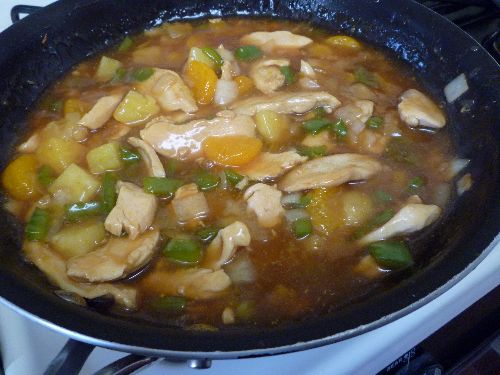
Combine flour, salt and pepper in a large bag. Dip chicken in egg mixture and shake in the flour mixture to coat. Deep fry at 375 degrees until completely cooked. A wok can be used to deep fry. In a large saucepan combine water, gelatin, orange juice, vinegar, sugar and soy sauce. Blend well over medium heat for a few minutes. Stir in zest, ginger, garlic and pepper flakes. Bring to boil. In a separate C., combine cornstarch and water and mix to make a slurry. Add to sauce and bring to boil. Combine with chicken and serve over rice.

Pampered Chef Cinnamon Plus

Pampered Chef Cinnamon Plus

6 tsp. ground cinnamon
1 tsp. ground allspice
1 tsp. dried orange peel
2 tsp. ground nutmeg
1 tsp. ground cloves
1/2 tsp. ground ginger

In a medium bowl, combine all ingredients. Store in an air tight container. Use this mix in recipes that call for the ingredients above. I substitute this for all my cinnamon needs. If a recipe calls for the spices add up all the measurements and just put in the same amount of this blend. It tastes great used in cinnamon and sugar for toast and in cinnamon rolls.

Miso Soup with Nameko Mushrooms

Miso Soup with Nameko Mushrooms

Dashi is a broth made from the sea vegetable kombu, collected from the icy coastal waters of the islands of Japan. It may be purchased in Asian or natural foods stores as a dehydrated powdered broth. Traditionally, miso is made from fermented soy beans with combinations of grains. Red miso is usually made with rice. Mixed with nameko mushrooms, this soup is delicious.

3 C. water
About 1 tsp. dashi powder
3-1/2 tsp. red miso
1/2 C. diced tofu (optional)
One 7-oz. can nameko mushrooms

Cilantro, for garnish, if desired

Heat the water in a large saucepan and add 1 tsp. dashi powder, or the amount required to make 4 C. dashi (see the instructions on the dashi powder container).

In a small bowl, liquefy the miso with 3 to 4 tsp. the dashi water, then mix with the remainder of the dashi water in the saucepan. Bring the mixture to a boil and immediately add the tofu and the nameko mushrooms with their liquid. After a half minute or so, when the broth is heated almost to the boiling point, the soup is ready to be served. Do not overcook.

Pretzel Pop Snakes

Pretzel Pop Snakes

10 pretzel rods
10 oz. yellow-green Candy Melts (or color of choice)
1 red Fruit Roll-Ups
4 green/blue Fruit Roll-Ups
20 – 3/8 inch round yellow candy eyes

tall glass
spatula or spoon
parchment paper lined baking sheet
pizza cutter or kitchen scissors
optional, a small “Y” alphabet cookie cutter

Slow Cooked Pulled Garlic Ginger Pork

Slow Cooked Pulled Garlic Ginger Pork

1 3-4 pound pork loin roast
1/4 C. lite soy sauce
2 tsp. sesame oil
8 garlic cloves, pressed
2 tsp. ginger, grated (use fresh)
Kosher salt and black pepper to taste
3/4 C. water for bottom of slow cooker

In a mixing bowl, combine soy sauce, oil, garlic, and ginger. Set aside. Sprinkle salt over meat, and follow with some good cranks of fresh ground black pepper. Rub soy mixture all over meat to coat. Pour water into crock pot. Place roast into crock pot and cook over low heat for seven hours. At the seven hour mark, flip the roast over and pull at meat to separate whatever is ready to fall off the bone. Pour some of the liquid over the top of the meat. Cover and allow to cook for another two hours. At the nine hour mark, take two forks and shred the meat. The meat should completely fall apart. Serve over rice or with homemade Mu Shu pancakes. Garnish with scallions, bean sprouts and sesame seeds. Enjoy!

Loaded Bacon Cheddar Bread

Loaded Bacon Cheddar Bread

6 C. all purpose flour
3¼ C. warm water
2 tsp. instant yeast
2 tsp. salt
2 tsp. sugar
2¾ C. cheddar cheese, fresh grated not bagged
10 strips cooked thick cut bacon, chopped and divided
fresh ground black pepper to taste

In a large mixing bowl combine water, yeast, salt and sugar. Allow mixture to sit for several minutes. Add flour, two C. cheese, ½ bacon and fresh ground black pepper. Stir with spoon until combined. Dough will be shaggy. Don’t stress if it looks messy. It will come together in the end. Cover with a towel and allow to rise in a warm place for an hour. After an hour, turn dough out onto a floured board and knead for a few minutes. It does not need to be completely smooth. Just knead it long enough to come together. Divide dough into two equal halves and place in standard loaf pans. Cover loaves with remaining cheese and bacon. Cover with towel and allow to rest for thirty minutes. Bake in a 400º oven for fifteen minutes. Cover loosely with foil and reduce heat to 350º and continue baking for another 35 minutes. Remove foil and allow to bake for another 10 minutes. Notes: If the dough feels too wet, add a little more flour but know that this dough is a bit stickier than most.

Avocado Fritters with Avocado-Cilantro Cream Dipping Sauce

Avocado Fritters with Avocado-Cilantro Cream Dipping Sauce

2 C. self-rising flour
1¾ C. cornmeal
2 tsp. baking powder
2 tsp. salt
4 eggs
1 C. milk
6 oz. cheddar cheese, diced
1 C. roasted corn kernels (I just grilled mine)
½ C. red bell pepper, diced
½ C. sweet onion, diced
2 jalapeno peppers, seeded and diced (more or less to taste)
4 tsp. cilantro, chopped (more or less to taste)
2 avocados, diced

2 avocados, mashed
½ C. sour cream
¼ C. milk
1 tsp. cilantro, chopped
salt and pepper to taste

Pour 2″ of vegetable oil into a deep fryer or a heavy skillet and heat to 350º. In a large bowl combine flour, cornmeal, baking powder and salt. Stir to combine. Add eggs, milk, cheese, corn, onion, peppers and cilantro. Stir to incorporate. Gently fold in avocados. Scoop batter into heaping tsp. and gently drop into oil. They are done cooking when golden brown. Drain on paper towels and keep warm in a 200º oven. Prepare dipping sauce by mixing all ingredients in a bowl. If you want a smooth consistency, give it a whirl for two minutes in a blender or food processor.

Infused Vinegars

Infused Vinegars

Prepare the flavoring ingredients as necessary. All fruit and herbs should be as fresh as possible, and in top condition. Discard any ingredients with signs of mold or decay. Wash and thoroughly dry your fresh ingredients.

Clean and sanitize a glass jar that will be large enough to hold the vinegar and flavor ingredients comfortably. I typically use pint or quart mason jars.

Combine the vinegar and flavor ingredients in the jar. Make sure there is enough vinegar to fully cover all the flavoring ingredients. If not, add a bit more vinegar to the jar.

Lid the jar and let the vinegar sit in a cool, dark place for 3 to 4 weeks. Taste the vinegar; when the flavor has developed to your satisfaction, it’s done!

Strain the vinegar through a fine-mesh sieve to remove any big chunks, then filter the vinegar through a strainer lined with a paper coffee filter, clean lint-free cloth, or layered paper towels.

If desired, sweeten the vinegar slightly. Many fruit vinegars taste more rounded with about 1 T. sugar added per 1 C. finished vinegar. This is totally optional.

Transfer the vinegar to sanitized dry bottles. Lid tightly and store the vinegar in a cool, dark place. It will keep for about l year.

Basic Creamy Herb Dressing

Basic Creamy Herb Dressing

Like vinaigrettes. creamy dressings—blue cheese, Caesar, ranch, and the like—also contain oil, an acid like vinegar, and an emulsifier. Most creamy dressings use egg yolk as an emulsifier, because one of the components in egg yolk is lecithin, a particularly strong emulsifier. This allows for the thick, almost whipped texture that is desirable in creamy dressings. Although we tend to think of it as a sandwich spread, the most basic creamy dressing is mayonnaise. Mayonnaise relies on eggs to emulsify oil with lemon juice or vinegar and a few flavorings. I make Magic Mayonnaise and use that as a base for other creamy dressings, but store-bought mayonnaise will work just as well in these recipes. Some creamy dressings (Caesar, most famously) skip the intermediary of mayonnaise and rely on raw egg yolk directly for its emulsifying properties. If you are uncomfortable using raw egg in your dressings, you can substitute two T. commercial mayonnaise for each raw egg yolk in a recipe.

1/4 C. mayonnaise
2 T. plain yogurt, sour cream, or buttermilk
2 T. minced soft green herbs, such as parsley, chives, basil, or dill
2 tsp. apple cider vinegar, plus more as needed
1 tsp. Dijon mustard
Kosher salt and freshly ground black pepper

In a small bowl, whisk together the mayonnaise, yogurt, herbs, vinegar, and mustard. Season to taste with salt, pepper, and additional apple cider vinegar, if desired. Serve immediately, or transfer the dressing to a clean jar and refrigerate. Creamy dressings made with commercial mayonnaise will last for about 1 week in the refrigerator, and those made with raw egg mayonnaise should be used within a few days.

Flatbread

Flatbread

The dough for this flatbread has been MacGyvered into everything from a soft, puffy gyro stuffed with leftover lamb and dill yogurt, to skillet fry bread topped with cheese and served alongside tomato soup, to grilled pizza topped with peanut sauce, shredded chicken, and a Thai cucumber salad. It’s saved me from the siren call of takeout more times than I can count.

4 C. all-purpose or whole wheat flour
1 3/4 C. warm water, or 2 C. warm water if using whole wheat flour
1/4 C. extra-virgin olive oil, plus more for brushing
l tsp. active dry yeast
l tsp. kosher salt, plus more for sprinkling

In a large bowl, combine all the ingredients. Stir the mixture with a strong wooden spoon until the dough comes together into a soft but cohesive ball. To use the dough today, cover the bowl with a damp towel or a layer of plastic wrap and set it someplace warm until the dough is puffy and has doubled in size, 2 to 4 hours, depending on how warm your kitchen is. To use the dough tomorrow, or any time in the next week, transfer the dough ball to a large Ziploc freezer bag or l-gallon or larger airtight container. Refrigerate and let the dough rise in the refrigerator at least 12 hours, or up to 1 week. Bring the dough to room temperature before proceeding. After the dough has risen, turn it out onto a smooth, lightly floured surface. With floured hands, gently fold and pat the dough into a disk shape. Divide the disk into 4 to 8 equal pieces, depending on how large you want y7our finished flatbreads. Form each piece into a ball, covering the dough balls lightly with a lint-free towel or plastic wrap as y7ou go, to prevent them from drying out. Reflour the work surface to form the flatbreads. Working with one dough ball at a time, pat or gently roll the dough into a 1/4-inch-thick disk. Repeat with the remaining dough balls. Lightly brush the flatbreads with oil and, if desired, sprinkle with salt

To skillet-fry the flatbreads, preheat a cast-iron skillet over medium heat. Place a flatbread on the skillet and cook until golden brown, bubbly, and firm, about 3 minutes. Flip the flatbread and cook on the second side until the bottom is golden brown and the flatbread is fully cooked, about 3 minutes. Repeat with the remaining flatbreads.

To grill the flatbreads, preheat a grill to medium-high heat. Place a flatbread on the grill and cook until it is golden and a bit charred on the first side, 3 to 4 minutes. Flip the flatbread and grill the second side until the bottom is golden brown and the flatbread is fully cooked, 3 to 4
minutes. Repeat with the remaining flatbreads.

Bacon & Egg Breakfast Muffins

Bacon & Egg Breakfast Muffins

Bacon and eggs…in a muffin! These are great for “grab and go”. This makes 4 large muffins. This recipe isn’t suitable for ordinary size muffin tins as it isn’t large enough to hold the egg and batter. You could also use a large popover pan.

4 oz. / 120 g bacon, chopped (I used lean bacon)
½ C. scallions / shallots, chopped
1 C. grated cheddar cheese (or any other flavored melting cheese)

1¼ C. plain flour
1 tsp. baking powder
¼ tsp. baking soda
Wet Ingredients
½ C. milk + ½ tsp. white vinegar OR ½ C. buttermilk
½ tsp. salt
5 tsp. sour cream (full fat)
2 tsp. vegetable oil or melted butter
1 egg

4 eggs
1 tsp. melted butter (optional, for brushing)

Preheat oven to 180C/350F. Spray 4 Texas muffin tin holes with oil (or grease with butter). Heat a nonstick pan over high heat. Add bacon and fry until lightly browned. Remove onto a paper towel to drain the fat, then set aside. Place Dry Ingredients in a bowl and mix to combine. Whisk Wet Ingredients in a separate bowl. Pour the Wet Ingredients into the Dry Ingredients until just combined. Do not over mix. Fold in bacon, scallions and cheese. Place 3 tsp. the batter into 4 muffin tin holes. Bang the tin to flatten the batter. Make a divot in the batter (so the egg yolk settles in the middle). Crack an egg into each hole. Divide the remaining batter between each hole to cover the egg. Brush the muffins with melted butter (optional), then bake for 20 minutes or until golden brown. Remove from oven and allow to rest for 5 minutes before turning out onto a cooling rack.

I find the easiest way to top the egg with batter and keep the yolk in the middle is to place 3 tsp. batter around the yolk then 1 one top of the yolk. Then gently spread to cover the whole egg.

Fresh Citrus Lemongrass Soda

Fresh Citrus Lemongrass Soda

1 large red or pink grapefruit
1 lime
2 stalks lemongrass
3/4 C. sugar
1/4 C. honey
Carbonated water

Peel wide strips of zest (avoiding the bitter white pith underneath) from half the grapefruit and the whole lime. Juice grapefruit and lime into a liquid measuring C. (add water to reach 1 C. if needed). Pour into a small saucepan and add zest strips. Cut off green tops from lemongrass (about half the stalk) and peel first two outer layers from stalks. Mash stalks with a meat mallet and cut into 2-in. pieces. Add to pan of juices along with sugar and honey. Heat citrus lemongrass mixture over medium heat until boiling; boil 1 minute, then remove from heat and let cool. Chill overnight, then strain syrup into a glass jar or measuring C., discarding solids. To serve, fill an 8-oz. glass halfway with ice cubes, add 2 tsp. syrup (or more if you like), top with carbonated water, and stir.

Uses for Peanut Butter

Uses for Peanut Butter

For a yummy glaze on ham steaks, combine 3 tsp. orange marmalade, 2 tsp. peanut butter, and 1 tsp. water. Broil the ham steaks and when they are nearly done, add the glaze to one side and broil until the glaze is lightly browned, about 1 minute.

For a simple, fun appetizer, spread peanut butter into the grooves of celery sticks. Then for sweetness, place a few raisins on top and drizzle with honey.

To make a novel wrap out of grilled shrimp, combine peanut butter, olive oil, fresh lemon juice, and parsley until smooth. Grill some shrimp and serve in a tortilla wrap with shredded lettuce, chopped tomato, chopped onions, chopped cucumbers, and the peanut sauce.

For a mid-afternoon snack, spread 1 slice of raisin bread with 3 tsp. peanut butter, then top with 2 tsp. raisins and 1 tsp. honey. Add a dash of ground cinnamon if you like. Top with another slice of raisin bread. Cook the sandwich in a buttered griddle until browned on both sides.

To give creamy potato soups or vegetable soups an Afro-Caribbean flavor, stir in a few tsp. peanut butter.

To make an Asian-style dipping sauce for beef, shrimp, or chicken, whisk together 3 tsp. peanut butter, 1 tsp. soy sauce, 1 tsp. apple-cider vinegar, 1 tsp. peanut oil or vegetable oil, 1 tsp. sugar, and 1 tsp. sesame oil. Blend until smooth.

For banana muffins with a twist, replace half of the butter or shortening in the recipe with peanut butter. Top the muffin batter with a sprinkling of shredded coconut before baking.

To breathe new life into chocolate chip cookies, replace half of the butter with peanut butter in your favorite recipe.

Thai Mushroom & Coconut Soup

Thai Mushroom & Coconut Soup

1 oz. Mixed Dried Mushrooms (such as earthy delights dried stir fry mushroom mix)
2 C. hot water
2 14-oz. cans coconut milk
2T. Thai red curry paste, or to taste
2 shallots, diced
2T. finely chopped fresh ginger
1 medium carrot, peeled, halved & sliced on diagonal
1 stalk lemongrass, outer leaves removed and trimmed
2 C. chicken stock
1T.soy sauce
2 tsp. sugar, or to taste
1 tsp. lime zest
2T.fish sauce
3 T. lime juice
salt & pepper to taste
2 scallions, cleaned and thinly sliced
sprigs of fresh Thai basil

Place the dried mushrooms in a bowl and add sufficient very hot water to cover them completely. Soak for 20 – 30 minutes or until soft and pliable. Drain, reserving the flavorful soaking liquid. Rinse the mushrooms under cool running water to remove any traces of grit. Drain again, squeezing gently, then pat dry. Trim the stems from the shiitake mushrooms with a pair of scissors. Thinly slice all of the mushrooms and set aside. Spoon off 3 – 4 T. the thick coconut cream from the top of the opened cans into a large heavy-bottomed pot. Heat the coconut cream over medium heat until it begins to bubble. Stir in the Thai red curry paste and cook for 2 – 3 minutes. Add the shallots, ginger and sliced carrot to the pot. Bash the lemongrass with the back of a heavy cleaver or knife to break it up a bit and release the flavor. Toss it into the pot with the other vegetables and cook, stirring frequently, about 5 minutes. Raise the heat to medium-high and add the sliced reconstituted mushrooms, 2 C. the reserved mushroom soaking liquid, the coconut milk and 2 C. chicken stock. Bring to a low boil, then reduce the heat slightly so it continues to gently simmer. Stir in the soy sauce and sugar and continue to simmer, stirring occasionally, until the soup begins to reduce and thicken slightly, about 20 to 30 minutes. Remove from the heat and take out the piece of lemongrass. Stir in the lime zest, lime juice and fish sauce and season to taste with salt and pepper. Ladle into bowls and garnish with sliced scallions and fresh Thai basil leaves. Serve with sriracha chile sauce on the side for those who like it extra spicy.

Pinot Noir Braised Duck, Savoy Cabbage and Roasted Shallots

Pinot Noir Braised Duck, Savoy Cabbage and Roasted Shallots

1 large peking duck (4 – 5 lbs.)
1 yellow onion
1 large carrot
2 ribs celery
1 fennel bulb
2 oz. grapeseed oil
1 bottle pinot noir
2 C. port
2 tsp. cocoa powder
sachet with black peppercorns, star anise, juniper, clove and cinnamon stick
2 C. veal stock (optional)
4 oz. sweet butter
1 head savoy cabbage
1 lb. shallots
kosher salt and fresh ground black pepper

Cut all of the vegetables into a small dice. Cut the duck into 1/8ths (or have your butcher do it for you). In a large heavy bottom sauce pot, heat the grapeseed oil to almost smoking. Season the duck well on all sides. Carefully add the duck to the already hot oil. Brown well on all sides then remove from the pan and set aside. Pour off the rendered fat. Add back a little fresh oil and heat until almost smoking. Add the vegetables and cook for about 5 minutes. Add the cocoa and blend well with the vegetables. Add the wine and the port. Place the duck back into the pot. Add the stock and sachet and bring to a simmer. Cook at a simmer until the duck is fork tender. Remove the duck and set aside. Reduce the sauce, being careful to skim off all of the fat, and adjust the seasonings. Whisk in the butter and adjust seasonings again. Heat the duck back in the sauce. In a large sauté pan, braise the cabbage in a little oil until tender.

Meanwhile, on a sheet pan roast the shallots seasoned with salt, pepper and tossed in olive oil, in a moderate oven until tender. Covering the pan with aluminum foil helps to keep the shallots moist and controls the amount of color. To serve the duck, place the cabbage in the middle of a platter. Arrange the duck around the outside of the cabbage, being generous with the sauce. Finish with the roasted shallots scattered over the duck and cabbage.

Sausages and Grapes (salsiccia all’uva)

Sausages and Grapes (salsiccia all’uva)

This is a very simple version of this dish often found on trattoria menus in Italy.  Other variations include rosemary, garlic, onion, wine or balsamic vinegar.

8 sweet Italian pork sausages
½ C. water
¾ lb. red or black table grapes (or red wine grapes if you don’t mind seeds in the final dish)

Prick the sausages with a fork to poke a few holes in them. Put them with the water in a heavy 10-inch sauté pan, preferably cast iron, and place over medium heat. Cook, turning often until water evaporates and sausages begin to brown. Add grapes and cook, stirring until they release their juices and soften, about 10-12 minutes. Serve immediately with bruschetta or polenta to soak up the juices.

Cook’s Illustrated Gravlax

Cook’s Illustrated Gravlax

Don’t buy a larger side of salmon; it won’t fit well in the bag. Serve sliced gravlax with lightly toasted rye bread.

3 red onions, peeled and quartered
1 C. kosher salt
3/4 C. sugar
2 C. coarsely chopped fresh dill (both stems and leaves) plus 1 C. minced fresh dill
1 tsp. pepper
1 (3- to 4-pound) whole side of salmon, skinned, excess fat and brown flesh removed, and pinbones removed
1 recipe Onion Relish and/or Cilantro Cream

Process onions in food processor until liquefied, about 4 minutes. Strain mixture through fine-mesh strainer to extract 2 C. liquid, then stir in salt and sugar until dissolved. Stir in coarsely chopped dill and pepper. Place salmon diagonally in 2-gallon zipper-lock bag and add onion mixture. Seal bag, removing any excess air, and lay fish skin side up on rimmed baking sheet. Place second baking sheet on top and set about 7 pounds of weight (such as heavy cans or bricks) on top. Refrigerate weighted fish until very firm, 12 to 18 hours. Remove salmon from bag and pat dry with paper towels, removing any dill stems. Before serving, sprinkle minced dill over top and sides of salmon and slice very thin on bias. Serve with Onion Relish and/or Cilantro Cream. (Salmon can be wrapped in parchment paper, then plastic wrap, and refrigerated for up to 1 week.)


Onion Relish

The onions are cooked slowly to bring out their sweetness while the sugar and vinegar temper the heat of the chiles, but this relish is still potent, so use sparingly.

2 tsp. olive oil
2 white onions (about 1 pound), peeled and chopped
fine
2 serrano or jalapeno chiles, seeded and minced
1 red bell pepper, stemmed, seeded, and chopped fine
1/4 C. sugar
¼ C. white wine vinegar

Heat oil in large sauté pan. Add onions; cook over medium heat until soft but not colored, 7 to 9 minutes. Stir in chiles and bell pepper; continue to cook until all vegetables have softened, about 5 minutes longer. Stir in sugar and vinegar and cook until pan is almost dry, about 5 minutes. Transfer mixture to airtight container and refrigerate until flavors meld, at least 1 hour. Bring to room temperature before serving. (Relish can be refrigerated for up to 1 week.)
Cilantro Cream

1 C. Crème Fraiche or Sour Cream
4 tsp. minced Fresh Cilantro

Combine all ingredients in a small bowl and refrigerate until ready to serve. (Up to 1 day)

Bakaliaros (Fried Salt Cod)

Bakaliaros (Fried Salt Cod)

1 – 1 1/2 lbs. salt cod
2 C. self-rising flour
Approximately 2 C. water
Salt and freshly ground black pepper
Canola or vegetable oil for frying

Rinse the fish under cold water and remove any scales or visible bones. Soak in cold water for at least 12 hours changing out the water a few times. It can take up to 2-3 days to rid the fish of an overly salty flavor. Drain and pat dry. Cut the fish into 2 inch pieces and set aside on a plate. Add the flour to a large bowl. Using a whisk, slowly whisk in the water until a thick batter forms. You don’t want it to be runny, it should be thicker so that it can adhere to the fish without running off. Season the batter generously with salt and freshly ground black pepper. In a large skillet or frying pan, heat the oil over medium high heat until a droplet of water sizzles and jumps when dropped in the pan. If you have an oil/candy thermometer, the temperature of the oil should be at least 350 degrees F. (175 C). Dip the fish in the batter and carefully place it in the hot oil. Fry the fish until golden brown on each side then remove and drain on paper towels. Place the fish on a baking rack over a sheet pan in a warm oven to keep it warm and crisp until ready to serve. Serve with the delicious garlic dip known as Skordalia and enjoy.

Cook’s Illustrated Shrimp Tempura

Cook’s Illustrated Shrimp Tempura

Do not omit the vodka; it is critical for a crisp coating. You will need a Dutch oven with a capacity of at least 7 quarts. Be sure to begin mixing the batter when the oil reaches 385 degrees (the final temperature should be 400 degrees). It is important to maintain a high oil temperature throughout cooking. Jumbo (16 to 20) or extra-large (21 to 25) shrimp may be substituted. Fry smaller shrimp in three batches, reducing the cooking time to VA to 2 minutes per batch. When cooking shrimp for tempura, the underside tends to shrink more than the top, causing the shrimp to curl tightly and the batter to clump. To prevent this, we make two shallow cuts on the shrimp’s underside.

12 C. vegetable oil
1/2 pound colossal shrimp (8 to 12 per pound), peeled and deveined, tails left on
1 1/2 C. all-purpose flour
1/2 C. cornstarch
1 C. vodka
1 large egg
1 C. seltzer water
Kosher salt
1 recipe dipping sauce

Adjust oven rack to upper-middle position and heat oven to 200 degrees. In Dutch oven, heat oil over medium-low to 385 degrees, 18 to 22 minutes. While oil heats, make 2 shallow cuts about ¼ inch deep and 1 inch apart on underside of each shrimp, following illustration. Whisk flour and cornstarch together in large bowl. Whisk vodka and egg together in second large bowl. Whisk seltzer water into egg mixture. When oil reaches 385 degrees, pour liquid mixture into bowl with flour mixture and whisk gently until just combined (it is OK if small lumps remain). Submerge half of shrimp in batter. Using tongs, remove shrimp from batter 1 at a time, allowing excess batter to drip off, and carefully place in oil (temperature should now be at 400 degrees). Fry, stirring with chopstick or wooden skewer to prevent sticking, until light brown, 2 to 3 minutes. Using slotted spoon, transfer shrimp to paper towel-lined plate and sprinkle with salt. Once paper towels absorb excess oil, place shrimp on wire rack set in rimmed baking sheet and place in oven. Return oil to 400 degrees, about 4 minutes, and repeat with remaining shrimp. Serve immediately with dipping sauce.

Teppanyaki Mustard Dipping Sauce

This dipping sauce gets its zesty bite from mustard, ginger, and horseradish.

3 tsp. mayonnaise
2 tsp. Dijon mustard
2 tsp. lime juice
2 tsp. prepared horseradish
2 tsp. soy sauce
1 tsp. grated fresh ginger

Whisk all ingredients together in medium bowl.
Ginger-Soy Dipping Sauce

¼ C. Soy Sauce
3 tsp. Mirin
1 tsp. Sugar
1 tsp. Toasted Sesame Oil
1 Scallion, sliced thin
2 tsp. Grated fresh Ginger
1 clove Garlic, minced

Whisk all ingredients together in medium bowl.

Grilled Halloumi Cheese & Spinach Salad with Tapenade

Grilled Halloumi Cheese & Spinach Salad with Tapenade

Halloumi is that miracle cheese that doesn’t melt when you heat it. This salad takes thick slices of that cheese, fries them up till golden brown, and serves them with a warmed tomato, lemon and olive sauce on top of spinach leaves. A great, warmed salad.

1/2 pound Halloumi Cheese
Spinach (leaves, fresh)
Lemon Zest from half a lemon
1/4 Tomato (chopped)
2 tsp. Tapenade
3 tsp. Olive Oil
Salt to taste
Ground Pepper to taste

Slice the cheese into 8 slices; set aside. Wash and dry the spinach leaves, arrange out on a plate; set aside. Mix together in a bowl all the other ingredients; set aside. Heat a few glogs of olive oil in a frying pan over medium heat and fry the cheese slices until golden brown on each side, about 3 minutes per side. They may splatter, so be prepared to lower the heat and go it at a bit more slowly if they do. Remove the fried cheese slices from the frying pan, leaving the pan on the heat, and arrange them over the spinach. Now, dump the dressing that you mixed above into the frying pan, and heat it for about 60 seconds (see why we left it on the heat for a second?) Spoon it out over the cheese slices and spinach, and serve immediately.

Using a Mortar & Pestle

Using a Mortar & Pestle

If you have already bought or have been given a new mortar and pestle set, there are a couple of things you will need to do before you get down to the serious business of the alchemy of culinary potions. Just like any new utensil, the mortar and pestle should be cleaned and seasoned before use.

1. Wash in clean water without detergent and air-dry.
2. Grind roughly a small handful of white rice. Discard and repeat if necessary until the rice remains white and does not discolor. This will depend on the type of material your set is made from.
3. Add 4 cloves of garlic, 1 tsp. cumin, 1 tsp. salt, and 1 tsp. pepper. Grind and discard.
4. Wash in clean water without detergent and air-dry.

If you already have a set and missed these steps, don’t panic. It just means that whoever ate your first efforts probably ingested some stone dust, minigravel, or wood sharings. It will be long gone by now with the subject none the wiser, and it will not affect the ongoing performance of your set. Only you, your enthusiasm, and your passion can do that.
Once you are ready to start, a good rule to remember is:

Driest ingredients first.
Moist ones next.
Oily ones next.
Wet ones next.
Taste and add salt to your work if needed.

Never use soap or detergent to clean your set, as perfume particles can be absorbed and taint your food.

To sanitize stone, heat occasionally in the oven at 350°F/i8o°C for ten minutes. Make sure to leave the mortar and pestle to cool in the oven, door open, once it’s turned off. Never try and lift out a heavy, hot stone or you may do more damage than break a toe.

For all recipes, garlic count is peeled and in cloves, anchovy count is in preserved fillets, and flaked salt is not rock salt. Chili means fresh, deseeded, long and spicy, not short and dangerous, and sugar generally is for any natural sweetener, e.g., honey, natural cane sugar, molasses, agave nectar, date sugar, brown rice syrup, maple syrup, pomegranate molasses, but not artificial substitutes. Bread crumbs means fresh or dried, herbs means leaves and stalks except for coriander, which includes roots as well, and mint, which is leaves only. Nuts are roasted and shelled, pepper is cracked or whole, white, black, pink, or green. Cheese is grated, fruit is stoneless, spices are lightly toasted or roasted. The method of mixing is for you to decide, but try grinding dry- ingredients first, then add moist, then wet ingredients.
Mortar & Pestle Aioli

4 garlic cloves
Flaked salt
1 tsp. Dijon mustard
(An option is to add 2 tsp. quince paste at this stage.)
1 egg yolk

Slowly drizzle in 1/2 C. olive oil while mixing.

1 tsp. lemon juice
1/2 tsp. cold water

Slowly drizzle in an additional 1/2 C. olive oil.

Should be the consistency of mayonnaise. Great with pasta, meat, crudités, vegetable, salads, chicken, fish.

Mortar & Pestle Berry Sauce

Any soft seasonal berries can be crushed in the mortar. The amount depends on the size of your mortar but most will hold at least 1 punnet (pint). A few drops of balsamic vinegar or kirsch will enhance the flavor of the berries even more, and they can sit happily crushed and liquefied and steeping in your mortar for hours. Assuming you can keep everyone from tasting them, simply spoon them at the last minute over, under, or around desserts, into cocktails, or as a plate garnish around meat, chicken, or crustacean dishes. And if there are any left over, you might have to make pancakes or crispy cream waffles for breakfast.
Mortar & Pestle Bread Sauce

4 garlic cloves
1 finely chopped onion
2 bay leaves
1 tsp. green peppercorns, brine drained
Grated Nutmeg
Salt
2 C. fresh white bread crumbs
4 tsp. fresh cream
2 tsp. butter

Mix all together in the mortar and pestle and then stir and heat in a small saucepan with 2-3 tsp. melted butter. When the garlic, onion, and crumbs begin to caramelize, toast, and take on color, blend in 450 milliliters of cream. Bring slowly to a gentle rolling boil, stirring to incorporate as it heats. Check the seasoning before serving. This amazing, often neglected sauce is wonderful with all roasts and all manner of grilled and barbecued meats and fish.

Beef Steaks with Pepper-Onion Relish

Beef Steaks with Pepper-Onion Relish

1/4 C. seasoned fine dry bread crumbs
1/4 C. grated Parmesan cheese
1 tsp. snipped fresh parsley
1/4 tsp. salt
Dash dash ground black pepper
1 beaten egg
1 tsp. water
3 cloves garlic, minced
6 beef tenderloin steaks, cut 1/2 inch thick (1 to 1-1/4 pounds)
2 tsp. olive oil or cooking oil
3 red, green, and/or yellow sweet peppers, cut into bite-size strips
2 large onions, thinly sliced and separated into rings (3 C.)
1 sprig fresh rosemary or 1/2 tsp. dried rosemary, crushed
3 tsp. red wine vinegar
1 tsp. butter or margarine
Snipped fresh rosemary (optional)

In a shallow dish combine bread crumbs, Parmesan cheese, parsley, salt, and black pepper. In another dish stir together the egg and water. Rub about half of the garlic over steaks. Dip steaks in egg mixture; coat with crumb mixture. Set aside. For the relish, in a large skillet heat 1 tsp. the oil over medium heat. Add the remaining garlic, the sweet peppers, onion, and rosemary sprig or dried rosemary; cover and cook for 10 to 15 minutes or until tender, stirring occasionally. Remove fresh rosemary, if used. Stir in vinegar. Remove from heat; keep warm. Meanwhile, in a large skillet heat butter or margarine and remaining oil over medium-high heat. Add meat; reduce heat to medium. Cook, uncovered, to desired doneness, turning once. [Allow 10 to 12 minutes for medium doneness (160 degrees F).] Serve with the relish. If desired, sprinkle with snipped rosemary. Makes 6 servings.

Cat Cora’s Parmesan, Prosciutto, and Arugula Sandwich

Cat Cora’s Parmesan, Prosciutto, and Arugula Sandwich

Cat Cora says: This recipe is fast and easy and luxurious and satisfying. For me, it’s a fallback dinner-something I can make much faster than the time it takes to have a pizza delivered. It’s also perfect picnic food, packed in a basket with a bottle of wine, and terrific at a tailgating party, or as an appetizer. If you leave out the truffle oil, the sandwich is still delicious, but doesn’t have the same flair. Long, flat ciabatta loaves can be hollowed out quite easily. Before I start layering, I divide the ingredients into two equal amounts, so neither sandwich is shortchanged.

2 ciabatta loaves, 12-14 inches long
2 tsp. best-quality-extra-virgin olive oil
8 oz. prosciutto, thinly sliced
1 1/2 C. baby arugula
6 oz. Parmesan cheese, thinly sliced or shaved
2 tsp. truffle oil

Cut the ciabatta loaves in half lengthwise. With a big spoon or your fingers, hollow out both halves of each loaf, leaving a shell approximately 1 inch thick. (Stash the ciabatta innards in a resealable plastic bag in your freezer and use them when you need bread crumbs.) With a brush, very lightly coat the insides of the hallowed-out loaves with olive oil. Or, if you don’t have a brush, pour the oil into a small bowl and use a spoon to dribble it onto the bread.
Layer half the prosciutto, arugula, and cheese in each hollowed-out loaf. With a spoon, drizzle the truffle oil over the meat, greens, and cheese. Replace the top half of each loaf and slice into rectangular sandwiches, each about 2 inches wide. Serve or wrap in foil for a picnic.

Lemon Verbena Syrup & Limeade

Lemon Verbena Syrup & Limeade

Lemon Verbena Syrup

This beautiful syrup is the perfect introduction to the allure of lemon verbena.

2 C. water
1½ C. sugar
handful fresh lemon verbena leaves

In a small saucepan, combine water and sugar. Bring to a boil, whisking occasionally to dissolve the sugar crystals. If sugar doesn’t fully dissolved by the time the syrup boils, lower the heat, continue cooking until syrup clears, and then bring back to a boil. Remove from the heat. Stir in lemon verbena leaves, cover the pan, and let steep for at least 30 minutes. When steeping is complete, remove lemon verbena leaves from the syrup and discard. Decant syrup into a glass container and store in the fridge for up to a week. You can also freeze it.
Lemon Verbena Limeade

1 C. cold water or soda water
½ C. Lemon Verbena Syrup
¼ C. fresh lime juice
ice
2 tips or 4 leaves of lemon verbena
2 wedges of lime

Fill two 12-oz. glasses with ice. In a small pitcher or 2-C. measuring C. with a pouring spout, add water, Lemon Verbena Syrup, and lime juice. Stir to combine. Divide limeade between the two glassed and garnish each with lemon verbena and a lime wedge.

Spicy Pickled Rhubarb

Spicy Pickled Rhubarb

This spicy, sweet-tart pickled rhubarb is infused with the flavors and aromas of juniper, allspice, coriander, black pepper, bay leaf, and star anise. Perfect as an accompaniment to roast pork or chicken, as a topping for goat cheese-slathered crostini, or even with creamy desserts, such as panna cotta or custard.

Testing Note In testing the source recipe, I found that the amount of syrup specified fills two 1¼-C. (290 ml./9.8 fl. oz.) canning jars, rather than two 2-C. canning jars as indicated. It worked perfectly for my small Weck canning jars. Technique Note To crush spices, seal them in a Ziplock bag, and crush with a few light whacks of a mallet.

1 C. rice vinegar
1 C. water ½ C. sugar
½ tsp. fine sea salt

1 tsp. juniper berries, lightly crushed
1 tsp. allspice berries, lightly crushed
1 tsp. coriander seeds, lightly crushed
½ tsp. black peppercorns, lightly crushed
1 small dried red chile (or pinch red pepper flakes)
2 small dried bay leaves
2 star anise

12 oz., ¾-inch thick (or thinner) trimmed rhubarb stalks, cut into 3-inch lengths, or 1-inch shorter than canning jars (peel, and halve or quarter thicker stalks)

Pack prepared rhubarb snugly into two 1¼-C. canning jars. Reserve. Set a small saucepan over medium heat, and add vinegar, water, sugar, and salt. Heat below the simmer until syrup clears, 3-5 minutes. Add juniper, allspice, coriander, peppercorns, chile, bay leaf, and star anise. Bring to a boil, and simmer for 5 minutes. Remove from heat, and distribute syrup with spices between the two canning jars. Cover the jars and refrigerate for 1 to 8 weeks before serving. Serve whole or sliced or chunked. Fills two 9.8 fl. oz. canning jars (Weck 900–1/5 L Mold Jar–tall)

Uses for Buttermilk

Uses for Buttermilk

To make more tender cakes, use buttermilk instead of whole milk. Add 1/2 tsp. baking soda for each C. buttermilk. The acidity of buttermilk tenderizes the cake better than plain milk can, and the baking soda balances out that acidity.

For a quick, creamy sauce for cooked fish or chicken, combine 1/4 C. buttermilk with 1/2 C. bottled blue cheese salad dressing.

To create a thick, rich texture in cold soups, sauces, and salad dressing without adding too much fat, use buttermilk in place of some or all of the cream or oil used in your favorite recipe. A spoonful of low-fat sour cream further enriches the texture.

To make a luscious pumpkin pie, mix together 1 1/2 C. canned pumpkin, 2/3 C. buttermilk, 3 egg yolks, 1 C. firmly packed light brown sugar, 1 tsp. ground cinnamon, and 1/2 tsp. ground ginger. Beat 3 egg whites with 1/4 tsp. salt in a small bowl until soft peaks form, 2 to 3 minutes. Fold into the pumpkin mixture. Pour into an unbaked 9-inch pie shell and bake at 375°F until set, about 1 hour.

For quickbreads with a lighter crumb, use a combination of buttermilk and whole milk. Buttermilk works especially well in pancakes, cornbread, and banana bread.

To make fluffier, richer-tasting mashed potatoes, use buttermilk instead of plain milk.

Corn Pancakes with Almond Red Pepper Romesco

Corn Pancakes with Almond Red Pepper Romesco

¼ C. whole raw almonds with skins (or blanched or sliced almonds)
1-2 large garlic cloves, sliced
2 large red peppers
¼ tsp. cayenne
½ tsp. salt
1 tsp. balsamic vinegar
1 tsp. extra virgin olive oil

Preheat oven 350 degrees F. Place almonds in medium bowl and cover with boiling water. Let sit for 5 minutes, drain and slip off skins. Skip this step if using blanched or sliced almonds. Place almonds on baking sheet and roast in oven for 7-8 minutes until golden. Set aside. Turn oven up to 400F. Cover baking sheet with aluminum foil. Cut red peppers into quarters, remove seeds and place on baking sheet. Roast in oven for 40 minutes, turning them over half way through, until some edges are black. Remove red peppers from oven and fold aluminum foil up and around them. Twist foil together and steam peppers for about 10 minutes. Open foil and remove skins from peppers. Place garlic slices and almonds in small food processor and whiz until finely minced. Add peppers and process until smooth. Add cayenne, salt and vinegar and whiz until well mixed. Add oil and process until quite smooth. Spoon Romesco into serving bowl.

¼ C. cornmeal
¼ C. all purpose flour
½ tsp. baking powder
½ tsp. baking soda
½ tsp. salt
1 large egg
¾ C. plain yogurt (I used Greek)
1 tsp. canola oil
1 ¼ C. corn kernels (I used canned), drained
½ C. fresh basil, chopped
¼ C. canola oil, for frying

In a large bowl, whisk together the cornmeal, flour, baking powder, soda and salt. In a medium bowl, whisk the egg until frothy. Add the yogurt and oil, and whisk to combine. Add yogurt mixture to flour mixture and stir with a fork to combine. Stir in the corn kernels and basil. Drizzle canola oil to cover bottom of large skillet. Heat over medium-high until oil is hot and shimmering. Use a ¼-C. measure to scoop batter into pan, patting batter to flatten to about 3/4-inch thick, leaving ½ inch between pancakes. Reduce heat to medium-low and cook until pancakes are deep golden brown and edges are dry. Turn with a metal spatula and cook second side. Transfer to oven-safe plate lined with paper towels and keep warm in a 200F oven. Sprinkle with a very light dusting of kosher salt and serve with Romesco sauce. Garnish with chopped basil, if desired.

Butter Spread for Toast

Butter Spread for Toast

Butter Spread for Toast


2 tsp. Butter Powder

2 tsp. Water

2 tsp. Neutral Flavored Oil

Pinch of Salt


Mix water into butter powder to hydrate it. Add the oil and a pinch of salt and mix until creamy.

Pantry Stable “Roux” Base

Pantry Stable “Roux” Base

Pantry Stable “Roux” Base


2 C. Milk Powder (not instant nonfat dry milk)

1 C. Butter Powder

1 C. Flour


Whisk to combine, store in a mason jar in pantry. To make white sauce, mix ½ C. mix with 1 C. water in a small saucepan. Cook over medium heat, stirring constantly, until sauce is thickened. Replace water with pan drippings or meat stock/broth for a gravy. To replace a can of “Cream of X soup” in a recipe, mix a C. the mix with 1 ¼ C. water. Add dehydrated celery, mushroom, onion, and/or chicken bouillon to match the type of Cream soup you need. Cook over medium heat, stirring, until thickened.

Lemony Pickled Cauliflower

Lemony Pickled Cauliflower

Lemony Pickled Cauliflower


2 lb. cauliflower

1 C. apple cider vinegar

1 C. water

2 tsp. sea salt

1 small lemon, sliced

1 large garlic clove, sliced

1/4 tsp. peppercorns


Wash cauliflower and break it into florets. In a large saucepan, combine the apple cider vinegar, water and sea salt. Bring to a boil. Place two slices of lemon in the bottom of a quart jar and top with garlic clove slices and peppercorns. Set aside. When brine is boiling, add cauliflower to the pot. Stir until the brine returns to a boil and remove from heat. Using tongs, pack cauliflower into the prepared jar and top with brine. Place 2-3 slices of lemon on top of the cauliflower and put a lid on the jar. Let pickles sit out on counter until cool. Once they’ve reached room temperature, refrigerate jar. Pickles are ready to eat within 12 hours, though they will continue to deepen in flavor the longer the rest.

Agave Brushed Salmon with Orange Watercress Salad

Agave Brushed Salmon with Orange Watercress Salad

2 6-oz. wild salmon fillets
2 tsp. agave nectar
1 navel orange
2 tsp. capers, finely chopped
1 scallion, thinly sliced
1 tsp. packed fresh mint, chopped
1 tsp. lemon zest
1 tsp. lemon juice
2 tsp. orange zest
leftover orange juice from the segmented orange (1 tbsp)
1 tsp. extra virgin olive oil
1/4 C. packed watercress

Start by segmenting the orange, and place the orange segments into a bowl along with the chopped capers, scallion, mint, lemon zest and juice, orange zest and juice, olive oil, and watercress. Season with salt and pepper, and stir it all together. That’s it. Brush the salmon on both sides with the agave, and season generously with salt and pepper. You have a couple options for cooking the salmon: 1. Grill it. The nice thing about grilling the salmon is it turns the agave into a delicately sweet crust on the salmon, as well as giving it a smoky flavor. Broil it, but you must watch it very carefully. I once was broiling the salmon, and the agave actually caught on fire (my first kitchen fire. Fortunately, it burned out very quickly). Pan sear it. However you cook it, you want the agave to caramelize a bit on the salmon, because it not only gives it fantastic flavor, but a gorgeous color. Salmon cooking times will vary with fillet thickness, but usually it only takes around 3 minutes on each side. Top the salmon with the orange watercress salad, and spoon the juices around the salmon for some beautiful plating.

No Pectin Blueberry Maple Jam

No Pectin Blueberry Maple Jam

No Pectin Blueberry Maple Jam


All of that is a very long way to say that this jam can be runny. It’s relatively low sugar, doesn’t have added pectin and adds maple syrup. All of that generally leads to a very, very loose set – but something that really tastes of its ingredients, of the area and isn’t overtly sweet. This tastes like its core ingredients – wild blueberries and maple syrup.


This is a great ingredient for baking, pancakes, ice cream, smoothies or, my favorite use, as a cheese topping for goat cheese (chevre). It’s mad-good with cheese.


Ingredients

6 C. Blueberries

3 C. Brown Sugar

1 C. Maple Syrup

1/3 C. Bottled Lemon Juice (use the bottled stuff to be sure of the acidity).


Place berries in a wide pan. Crush berries with a potato masher. Add lemon, sugar and syrup, stir well. Let rest for an hour. Bring to a simmer over medium heat. Stir frequently until jam is set – about 20 minutes after it starts boiling. Skim foam, pour into sterilized 1-C. (half-pint or 250 ml) jars and process in a hot water bath for 10 minutes. This is a magical taste of late summer and something I just simply adore.

Toasted Marshmallow & Malt Milkshake

Toasted Marshmallow & Malt Milkshake

1/2 C. mini marshmallows
2-4 tsp. milk
2 tsp. malted milk powder
2 tsp. marshmallow creme
2 C. vanilla ice cream

Place the mini marshmallows on a sheet pan and stick under the broiler until lightly golden brown and toasted. This goes quickly, in a matter of about 30 seconds, so watch them carefully. Place 2 tsp. milk, the malted milk powder, and the marshmallow creme in a blender. Blend for 30 seconds until everything has dissolved and mixed together. Add the ice cream and half the marshmallows, and blend until mixed. Serve with the remaining toasted marshmallows on top.