Browsed by
Tag: Baking

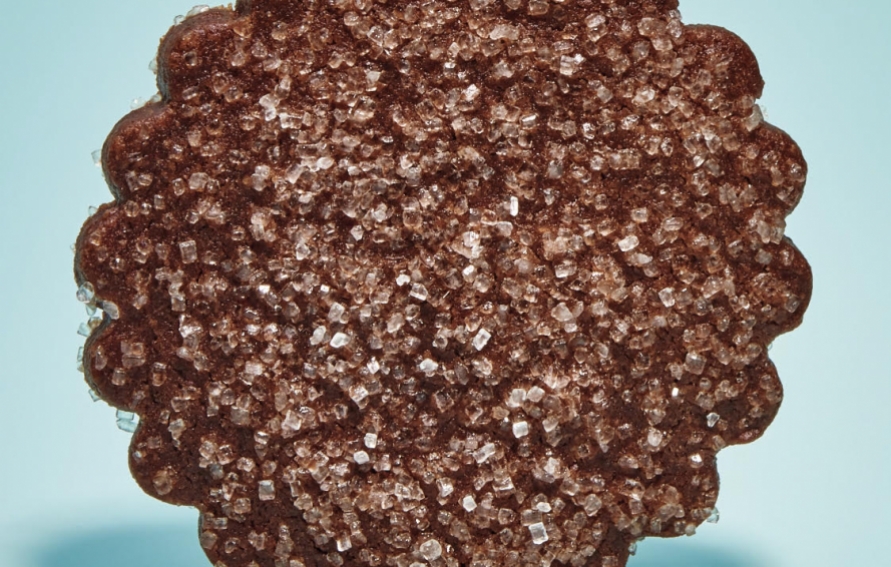
Melody Cookies

Melody Cookies

Melody Cookies


2 1/4 C. all-purpose flour

1/3 C. unsweetened cocoa powder

1/4 tsp. baking soda

2 sticks unsalted butter, cut into chunks, at room temperature

3/4 C. sugar

3/4 tsp. fine sea salt

1 tsp. pure vanilla extract

1 large egg white

sanding or granulated sugar, for sprinkling


Sift the flour, cocoa and baking soda together. Working with a stand mixer fitted with the paddle attachment, or in a large bowl with a hand mixer, beat the butter, sugar and salt together on medium speed until smooth and creamy, about 3 minutes; scrape down the bowl as needed. Reduce the mixer speed to low and blend in the vanilla, followed by the egg white, and beat for 1 to 2 minutes. The white might curdle the dough and make it slippery — keep going; it will smooth out when the flour goes in. Turn the mixer off, add half the flour-cocoa mixture and pulse the machine to get the blending going, then mix on low only until the dry ingredients are almost incorporated. Scrape down the bowl and repeat with the remaining flour-cocoa mixture, this time beating just until the dry ingredients disappear and the dough comes together. Scrape the dough onto a work surface, divide it in half and shape each half into a disk. Working with one piece of dough at a time, sandwich the dough between pieces of parchment paper and roll out to a thickness of 1/8 inch. Slide the dough onto a baking sheet — you can stack the slabs — and freeze for at least 1 hour, or refrigerate for at least 2 hours. Getting ready to bake: Position the racks to divide the oven into thirds and preheat it to 350 degrees F. Line two baking sheets with parchment paper or silicone baking mats. I use a 2-inch-diameter scalloped cookie cutter, but you can make the cookies smaller or larger if you’d like; the baking times will be almost the same, though the yield, of course, will change. Working with one piece of dough at a time, peel away both pieces of paper and return the dough to one piece of paper. Cut out as many cookies as you can. Place them on the lined baking sheets, leaving a generous inch between rounds; reserve the scraps. Sprinkle the cookies with sanding or granulated sugar. Gather together the scraps from both pieces of dough, re-roll them between paper until 1/8 inch thick and chill thoroughly. Bake the cookies for 15 to 17 minutes, rotating the pans front to back and top to bottom at the midway mark. The cookies are done when they feel firm to the touch around the edges and give only the least little bit when poked in the center. Remove the baking sheets from the oven and let the cookies rest on the sheets for about 2 minutes before transferring them to cooling racks with a wide spatula. Let cool completely. Cut out and bake the remaining dough, always using cool sheets.

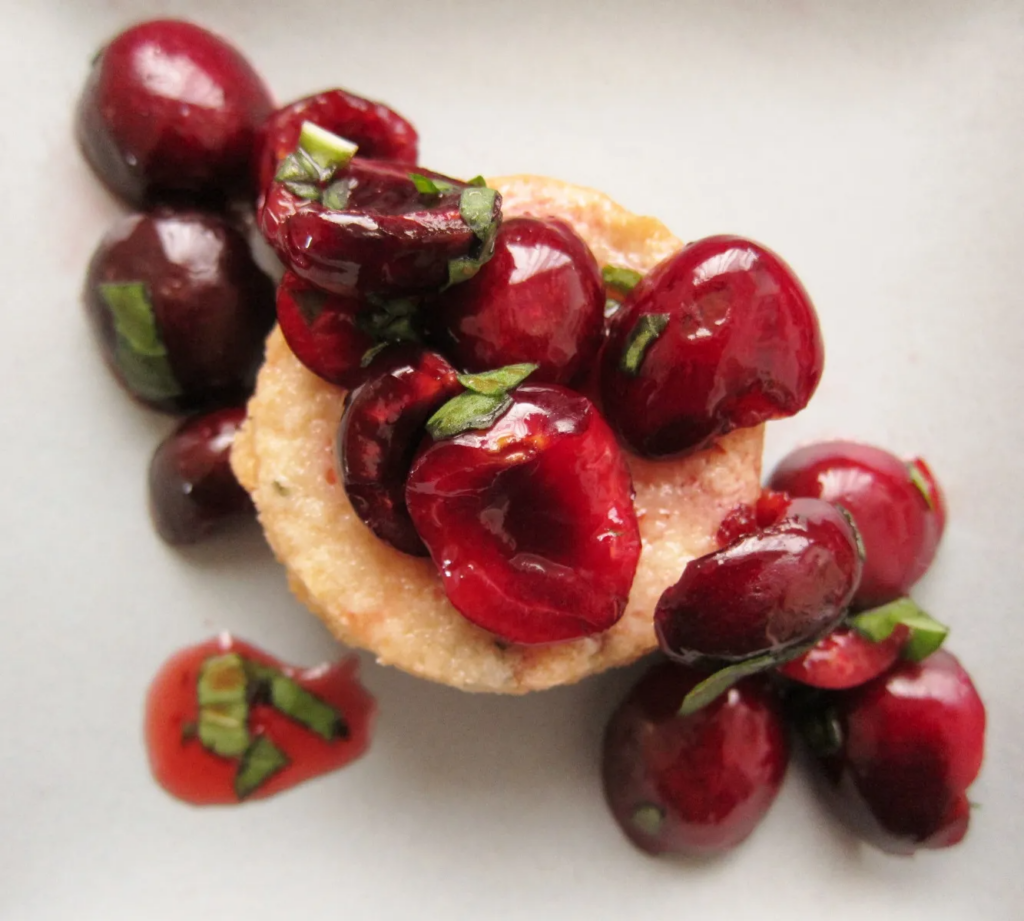
Cherry Sorrel Cakes

Cherry Sorrel Cakes

Cherry Sorrel Cakes


1 1/2 pounds fresh cherries

1 medium lemon

2 T. granulated sugar

1 1/2 ounces fresh sorrel


1 medium lemon

2 egg whites

1/2 C. granulated sugar

6 T. vegetable oil

2 tsp. pure vanilla extract

3/4 C. all-purpose flour, plus more for dusting pan

1 tsp. baking powder

1/2 tsp. baking soda

1/2 tsp. salt

Crème fraîche, sour cream or unsweetened whipped cream, for serving


To prepare the topping: Rinse and dry the cherries. Remove and discard pits, then slice cherries in half, placing cut cherries in a large bowl. Juice the lemon and discard seeds. Pour 2 T. lemon juice over the cherries. (Set aside remaining lemon juice for cake recipe.) Add 2 T. sugar to the cherries. Stir gently until sugar no longer feels noticeably grainy. Rinse and dry sorrel; remove and discard stems. Mince the leaves until you have 1/2 cup, well packed. Add 1/4 C. minced sorrel to the cherries; stir until evenly distributed. (Set aside remaining 1/4 C. minced sorrel for cake recipe.) Tightly cover and refrigerate. To make the cakes: Preheat oven to 350ºF. Generously grease and flour 12 C. of a muffin pan. Rotate pan to disperse flour, then invert and tap pan to shake off excess. Finely zest the peel of the lemon. Juice the lemon and strain to make 1/4 C. juice, using any leftover juice from topping recipe if needed. Set zest and juice aside. Using a standing mixer fitted with a whisk attachment, beat the egg whites until foamy. Slowly and gradually, add 1/4 C. of the sugar while continuing to beat. Keep beating on high until whites are opaque, firm and voluminous; set aside. In a separate large bowl, use a whisk to beat the oil with the remaining 1/4 C. sugar. Add the vanilla and mix well. Sift 3/4 C. flour with the baking powder, baking soda and salt over the oil mixture. With a spatula, begin to stir while gradually adding the 1/4 C. lemon juice. Mix until smooth, scraping bowl often. Fold in the lemon zest and the 1/4 C. minced sorrel until evenly dispersed. Add about a third of the egg whites to the batter. Delicately fold in the whites, being careful not to deflate them. Repeat with remaining egg whites, slowly folding just until batter is even in consistency. Immediately scoop batter into prepared muffin pan, filling each C. about halfway. You should have 10 to 12 filled cups. Bake for 10 to 12 minutes, or until edges of cakes are golden brown and a toothpick inserted in the center of a cake tests clean. Let cakes cool for a few minutes in pan. Just when pan is cool enough to handle, transfer cakes to a cooling rack or counter top. Let cakes cool completely. If not serving right away, cover and store at room temperature (not refrigerated). When ready to serve, place cakes on plates or in shallow bowls. Give the chilled cherry-sorrel mixture a good stir, then place a generous scoop of the fruit on top each cake. Serve with a dollop of crème fraîche, sour cream or unsweetened whipped cream. Devour immediately.

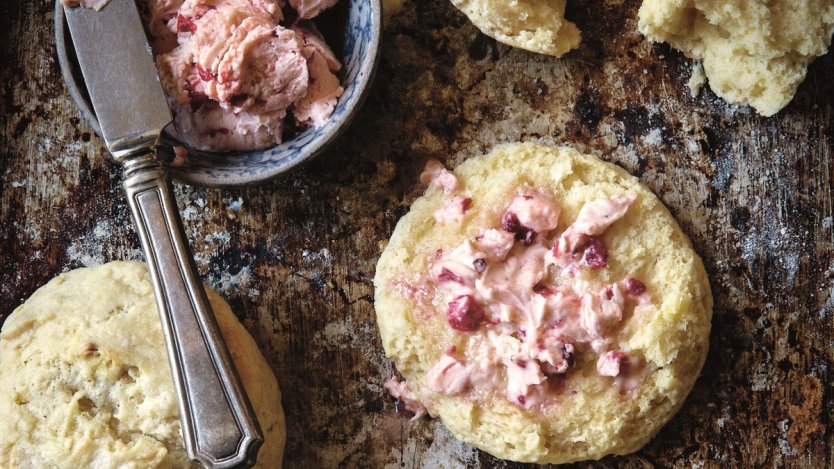
Red Fife Honey Scones with Strawberry Butter

Red Fife Honey Scones with Strawberry Butter

Red Fife Honey Scones with Strawberry Butter


3 C. Red Fife flour

2 heaping tsp. baking powder

1/4 C. granulated sugar

1/2 C. unsalted butter, chilled but not hard

1 1/4 C. buttermilk

1 egg, whisked

Strawberry butter

1 C. unsalted butter, room temperature % C. pure maple syrup

1 tsp pink peppercorns

4-5 strawberries, washed, dried, and diced


Red Fife wheat is the key to the earthy robust and nutty flavor of these scones. They are less “biscuit” and more “soda bread” in texture (although still flaky), and the nuttiness of the scone offsets the naturally sweet strawberry butter. The perfect addition to a summer afternoon tea after picking up a pint of local strawberries from the market.  Preheat the oven to 400°F. Line a baking sheet with parchment paper. To make the scones, in a medium-size bowl, whisk together the flour and baking powder. Using a pastry blender or two knives, cut in the butter until the mixture resembles coarse oatmeal. Make a well in the flour mixture and pour in the buttermilk and egg. Using a wooden spoon or spatula, mix together until fully combined, scraping up any dry bits from the bottom of the bowl. You will have a soft dough. Turn the dough out onto a well-floured work surface and roll into a large disc about 1 inch thick. Using a large glass or cookie cutter, cut 3-inch diameter circles in the dough. Transfer to the prepared baking sheet and bake for 12-15 minutes. While the scones are baking, prepare the butter. Place the butter in a bowl and, using hand-held beaters, beat it until it’s very soft and fluffy and almost doubled in volume, 3-4 minutes. Scrape down the bowl, pour in the maple syrup, and beat until combined. Gently crush the pink peppercorns, add them to the butter, and beat well. You’ll see specks of peppercorns evenly distributed throughout. Ensure the strawberries are very dry and then add them to the mixture. Beat on low speed until fully and evenly incorporated. The butter will be soft, fluffy, and beautifully pink, with some pieces of strawberries showing through. Remove the scones from the oven, transfer to a wire rack, and let cool for 3-5 minutes, just until cool enough to handle but still warm. Place on a serving platter and serve with strawberry butter on the side. The scones will keep in an airtight container in the fridge for up to 4 days. The butter will keep in an airtight container in the fridge for up to 3 days or in the freezer for up to 1 month.

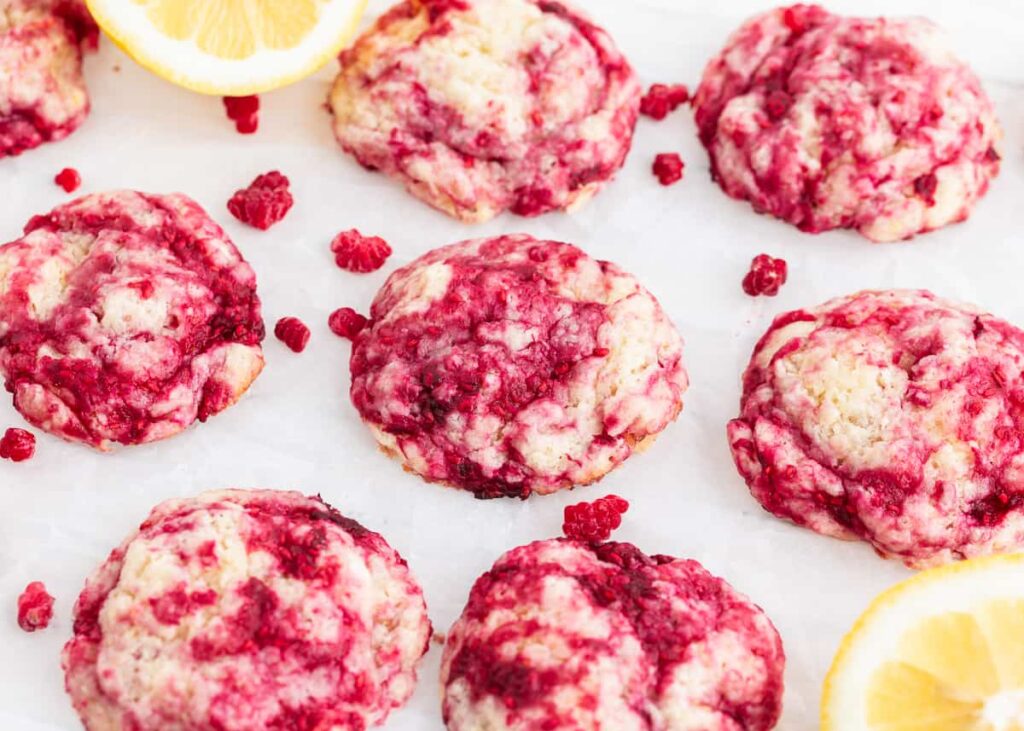
Raspberry Cookies

Raspberry Cookies

Raspberry Cookies


2 C. all-purpose flour

½ C. granulated sugar

2 tsp. baking powder

½ C. salted butter , cubed

⅔ C. heavy whipping cream , plus more as needed

½ lemon , zested and juiced

1 C. roughly chopped frozen raspberries


1 C. powdered sugar

2 T. lemon juice


Preheat the oven to 350°F. Line a baking sheet with parchment paper.  In a large bowl, whisk together the flour, sugar, and baking powder. Mix butter in with a pastry cutter, whisk, or your hands until crumbly and combined.  Stir in heavy cream, lemon zest, and lemon juice just until combined and a thick dough forms. If the dough is too dry, add 1 more T. cream. Gently fold or press in raspberries. Using a large cookie scoop, spoon dough 2 inches apart onto the baking sheet. Bake 12 to 15 minutes, or until lightly golden around the edges. Let cool 5 minutes on the baking sheet before transferring to a wire rack to cool completely.  In a medium bowl, stir together powdered sugar and lemon juice until smooth. Drizzle over cooled cookies. Enjoy!

Pistachio Lemon Cake with Strawberry + Basil Salsa

Pistachio Lemon Cake with Strawberry + Basil Salsa

Pistachio Lemon Cake with Strawberry + Basil Salsa


Makes 1 (9½-inch round) cake


2 sticks/8 ounces butter, room temperature plus more for greasing the pan

Zest of 1 lemon

1 C. sugar

3 eggs, room temperature

1 tsp. vanilla

1 ½ C. flour

1 tsp. baking powder

¼ tsp. sea salt

1 C. ground pistachios (see note)

Powdered sugar, for dusting (optional)

Strawberry + Basil Salsa (recipe follows)


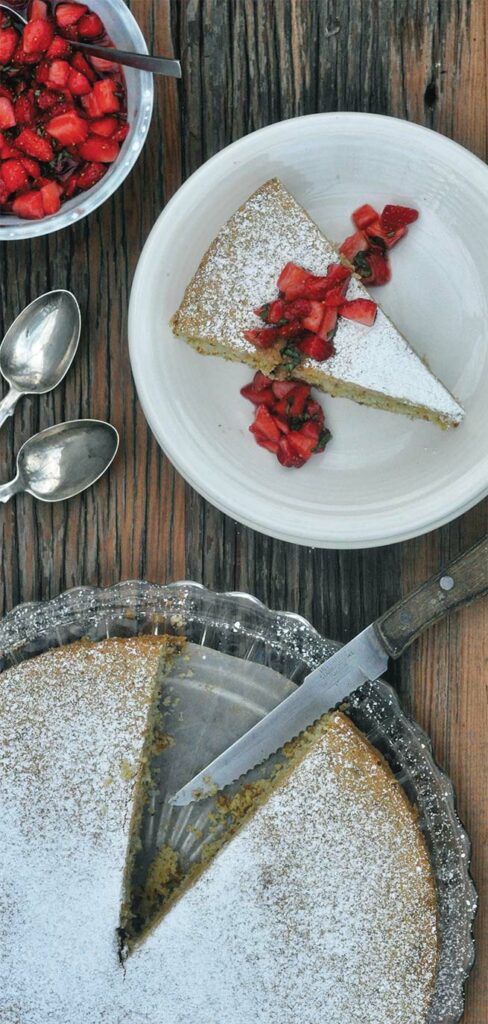
Preheat the oven to 350°F and line the bottom of a 9½-inch round pan with parchment paper. Grease the bottom and sides with butter. Cream the butter in a mixer until it’s light in color and fluffy, about 2 to 3 minutes. Rub the lemon zest into the sugar to release its oils. Add this to the butter and mix another minute. Add the eggs to the mixture one at a time, beating for 2 minutes each. Mix in the vanilla. Whisk together the flour, baking powder and salt and add this to the bowl all at once. Mix gently, being careful to not overmix. Add the ground pistachios. Pour the batter into your pan and bake for 30 to 40 minutes or until a tester comes out clean. Let cool in the pan on a rack, then turn it out to serve. Dust with powdered sugar before serving if you’d like—the cake doesn’t really need it because it’s sweet enough, but the powdered sugar makes it extra pretty. Serve with Strawberry + Basil Salsa on the side. Note: To make ground pistachios, simply put shelled, unsalted pistachios in your blender or food processor and pulse until finely ground.


Strawberry + Basil Salsa


1 pound strawberries, hulled (see note)

⅓ C. sugar (or more, depending on sweetness of your berries)

4 large basil leaves

1 T. fresh lemon juice


Slice and chop the strawberries into a ¼-inch dice and toss into a medium bowl with the sugar. Finely chop the basil and add this to the bowl along with the lemon juice. Taste and adjust as needed. Let rest for a half-hour before serving. Note: Don’t throw those strawberry tops in the trash! Put them in a pitcher of water and store in the fridge—and you’ve got strawberry water.

Kindred Farm’s Easiest Bread Ever

Kindred Farm’s Easiest Bread Ever

Kindred Farm’s Easiest Bread Ever


3 C. organic all-purpose flour, plus more for dusting

1 tsp. active dry yeast from a packet

2 tsp. sea salt or kosher salt

1 1/2 C. warm water (not hot – it can kill the yeast)

2 T. chopped fresh herbs, like rosemary and thyme, optional


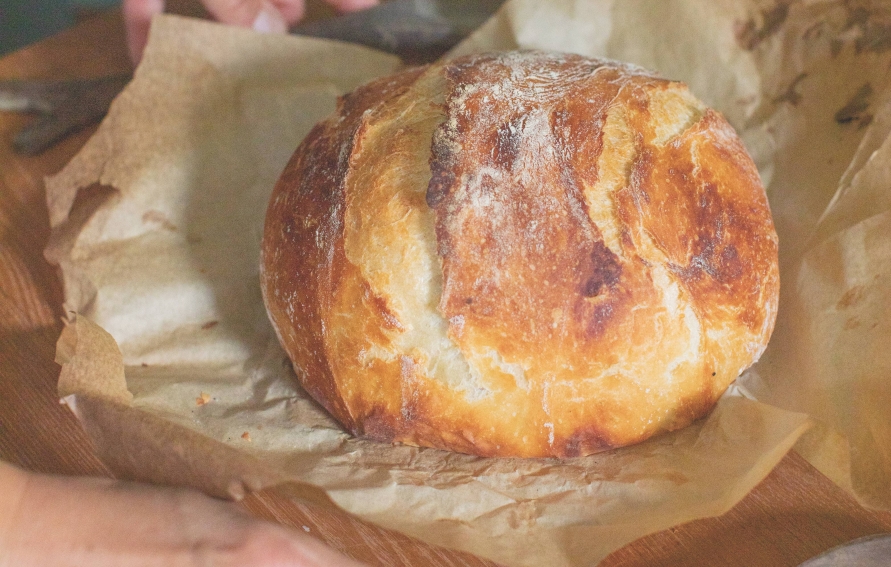
Measure each cup flour by filling the cup to overflowing then tapping the flour mound with blade of a butter knife to eliminate any air bubbles and allow flour to settle into cup. Use knife to scrape excess flour off top of C. in a straight line. Add flour to large bowl, then add yeast and salt. Add warm water to dry mixture and stir together with wooden spoon, scraping sides of bowl. (Mixture will be sticky and shaggy.) Cover bowl tightly with plastic wrap and let dough rise 6-8 hours. Letting it rise on the counter is fine, or place bowl in middle rack of turned-off oven with oven light on. (The warmth from the oven light will help it rise.) After it has risen, dough should have doubled in size and have lots of bubbles. Preheat oven to 450F. Place Dutch oven or other lidded oven-safe pot in oven to get hot. Meanwhile, sprinkle handful of flour on cutting board. Scrape dough from bowl and onto board and set bowl aside. Sprinkle flour on top of dough, take a flap of dough, and fold it over itself, almost like closing an envelope. Rotate dough and fold it over itself again and continue to repeat, sprinkling more flour as needed. Dough should feel soft and puffy and no longer sticky. Turn dough over, hiding all folds underneath.  Retrieve bowl set aside and place a piece of parchment paper inside. Set dough on top. Cover bowl lightly with clean dish towel, without letting it touch dough. Let sit 30 minutes. Carefully remove lid of hot Dutch oven. Transfer parchment paper with dough ball to Dutch oven. Place lid back on and bake 30 minutes. Remove lid and bake 15 minutes more, until there’s a gorgeous, dark-brown crust. Let bread cool a few minutes before slicing.


  • For really crispy crust, use bread flour. My favorite brand is King Arthur.
  • I prefer using active dry yeast from packets-not from a jar, which has an extra additive.
  • I’ll often make this dough right before bed and let it rise overnight, then bake it first thing in the morning. Or I’ll make the dough in the morning and let it rise all day so I can bake it before dinner.
Lemon Mousse Cheesecake with Macerated Strawberries

Lemon Mousse Cheesecake with Macerated Strawberries

Lemon Mousse Cheesecake with Macerated Strawberries


2 C. halved strawberries

1/2 C. sugar


CHEESECAKE

5 T. butter, melted

2 C. vanilla wafer or graham cracker crumbs

3 8-ounce packages cream cheese

4 eggs

1 1/3 C. sugar, divided

juice of 2 lemons, about 1/4 cup

2 T. flour

16 ounces sour cream

1 tsp. vanilla extract


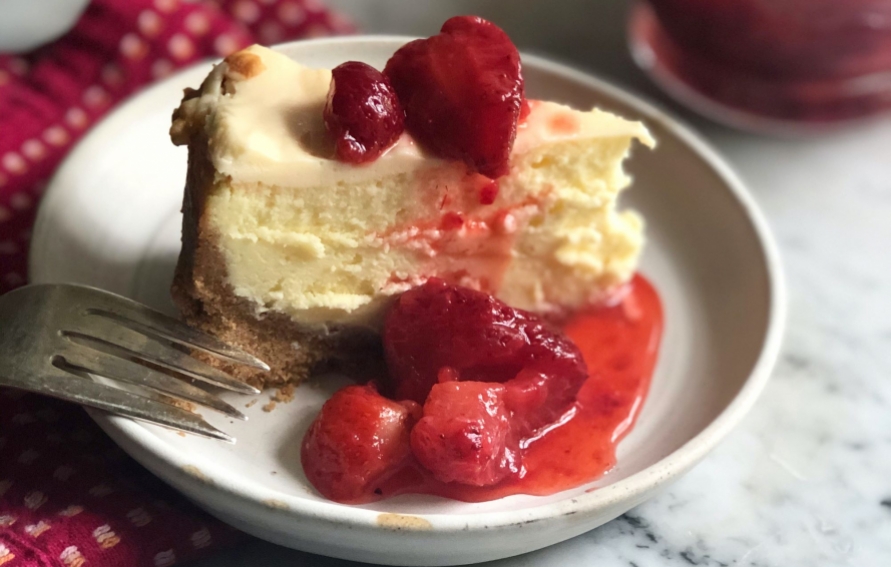
Preheat oven to 350F. To prepare macerated strawberries, combine ingredients and let stand 2 hours. Wrap a springform pan with foil (to prevent the butter from seeping out). To prepare cheesecake, combine melted butter and crumbs. Press into bottom and partially up sides of pan. Set aside. Beat cream cheese until light and fluffy, about 3 minutes. Add eggs, one at a time, beating well after each addition. Add 1 C. sugar, lemon juice, and flour. Beat well. Pour batter into prepared crust. Place springform in a 9×13-inch pan. Pour water in pan to half way up springform. Bake 35-45 minutes or until set on the sides, but partially jiggly in the center. Combine sour cream, remaining 1/3 C. sugar, and vanilla; mix well. Dollop onto edges of hot cheesecake, then gently spread over top. Place back in oven for 10 minutes and remove. Cheesecake will set as it sits. Chill 2 hours or overnight. Slice and serve with macerated berries.

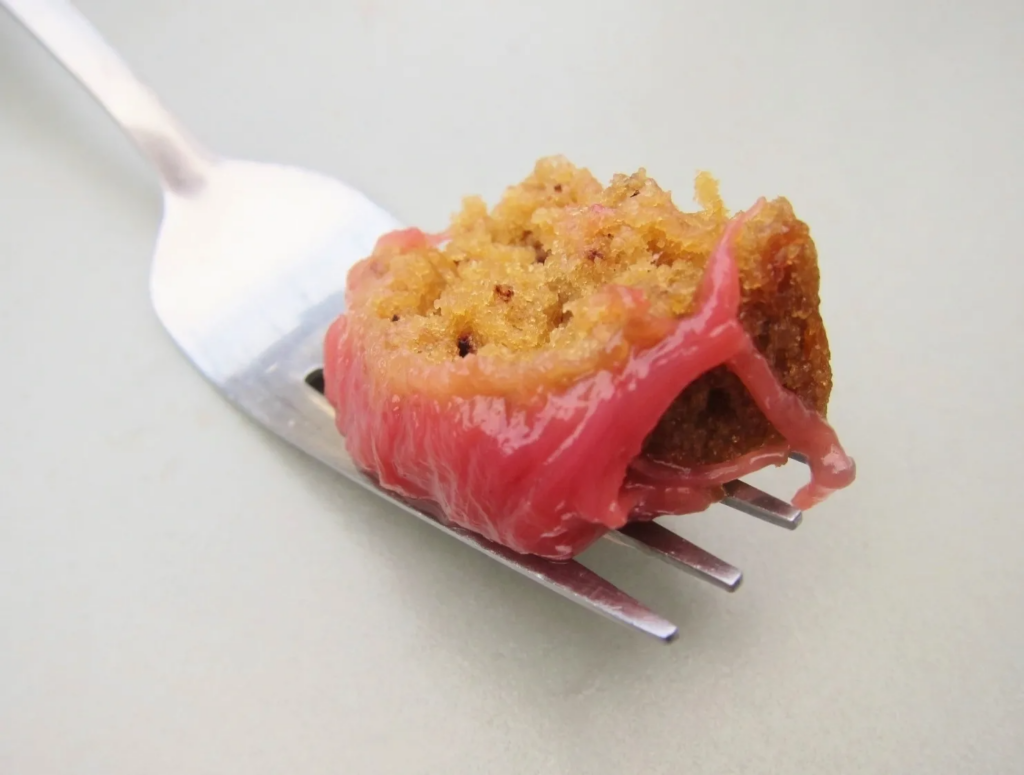
Rhubarb Skillet Cake

Rhubarb Skillet Cake

Rhubarb Skillet Cake


6 T. unsalted butter, melted, plus more butter for buttering the skillet

11/3 C. all-purpose flour

1/2 C. granulated sugar

1 tsp baking powder

1 tsp ground cinnamon

1/2 tsp ground cloves

1/2 tsp ground nutmeg

V2 tsp fine sea salt

1 large egg

2/3 C. milk

1 tsp pure vanilla extract

10-12 fresh stalks of rhubarb, trimmed


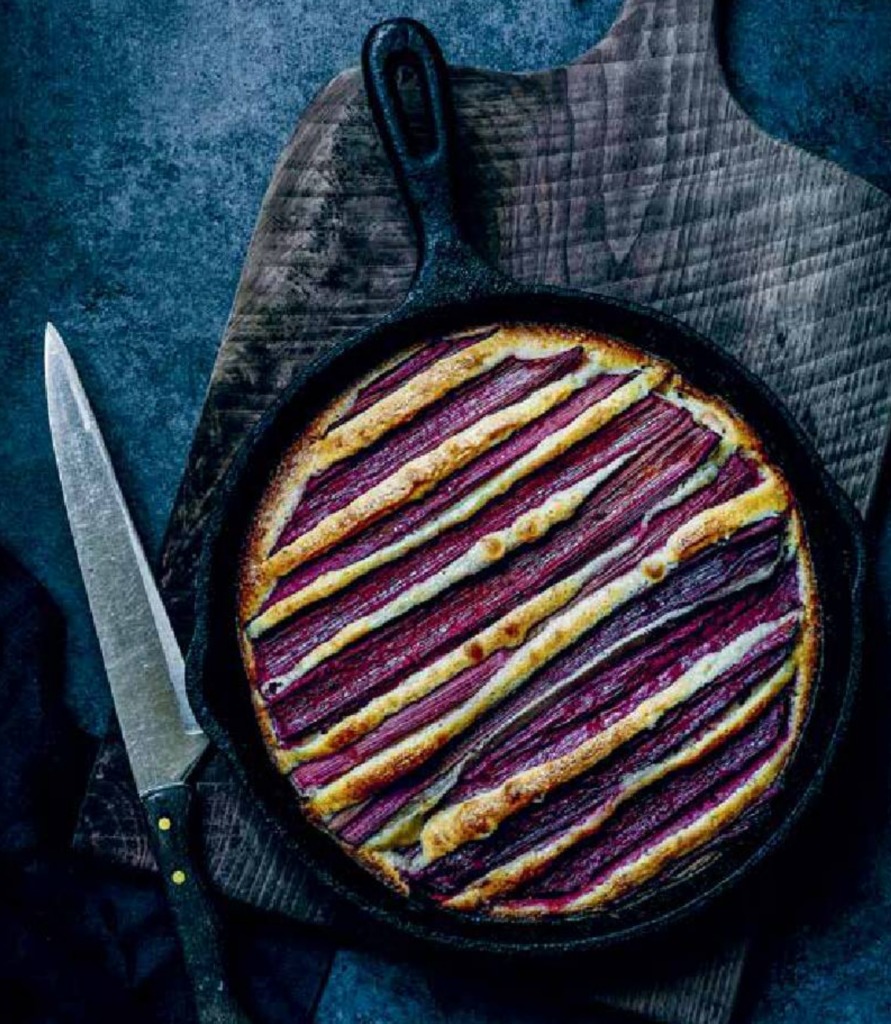
Preheat the oven to 3 75 °F. Lightly butter a 9-inch cast iron skillet. In a large mixing bowl, whisk together the flour, sugar, baking powder, cinnamon, cloves, nutmeg, and salt. Make a well in the center. In a separate bowl, whisk together the egg, milk, and vanilla. As you whisk, slowly drizzle in the melted butter to combine. Add this milk mixture to the dry ingredients and stir lightly, just to combine. Pour the batter into the prepared skillet. Cut the rhubarb stalks to fit your pan and lay them on top of the cake batter. Push down very lightly, just enough to embed them but not submerge them. Bake for 30-35 minutes, or until the cake is golden brown and a skewer inserted into the center of the cake comes out clean. Remove from the oven and let cool. Serve directly from the pan. This will keep in an airtight container in the fridge for 2-3 days.

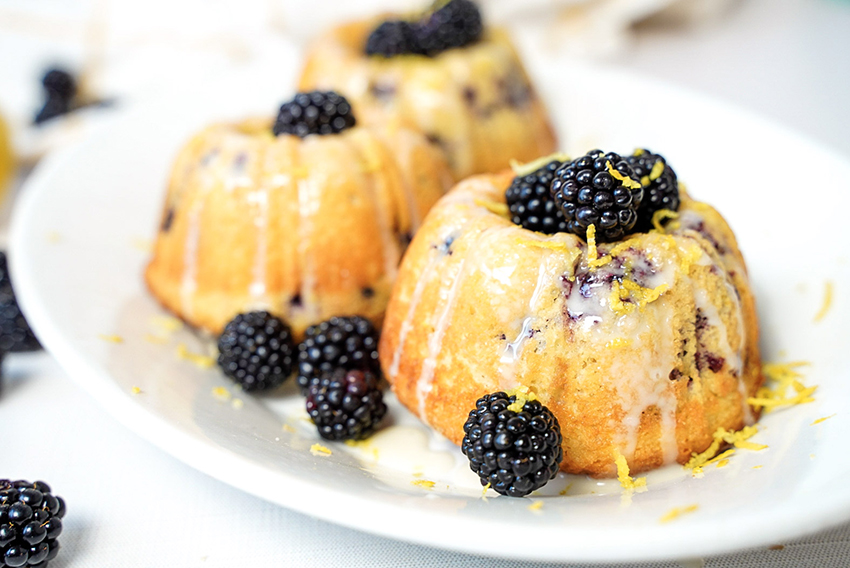
Mini Oregon Berry Bundt Cake with Lemon Glaze Recipe

Mini Oregon Berry Bundt Cake with Lemon Glaze Recipe

Mini Oregon Berry Bundt Cake with Lemon Glaze Recipe


1 cup frozen Oregon blackberries

1 ½ cup all-purpose flour

1 cup sugar

½ cup of yogurt (we used plain, but greek or coconut yogurt would work great too)

½ cup olive oil (vegetable oil also works)

3 eggs

2 tsp. baking powder

Zest of 1 ½ lemons (½ for the topping)

Pinch of salt

Lemon glaze


1 cup powdered sugar

5 tsp. lemon juice

4 tsp. milk

Oregon Berry Bundt Cake Recipe:


Preheat oven to 350°F. Spray bundt cake pans with butter. Whisk the flour, baking powder, and salt together. In a separate bowl place the sugar and lemon zest together and whisk. Whisk the yogurt in the sugar bowl. Once the yogurt is incorporated whisk the eggs in one by one. Whisk in the dry ingredients with the wet bowl until the mix is smooth. Lightly dust the blackberries in flour and fold them into the batter. Fill the mini bundt cake pans ½ full. Bake in the oven for 30-40 minutes (test with a toothpick to make sure batter doesn’t stick). Cool for 20 minutes prior to topping with lemon glaze. Lemon glaze steps: Put all ingredients in a small bowl. Whisk until smooth and you get your desired thickness

Rhubarb Banana Skillet Cake

Rhubarb Banana Skillet Cake

Rhubarb Banana Skillet Cake


1 pound fresh rhubarb stalks (see note)

2/3 cup + 1/4 cup brown sugar, firmly packed

1/3 cup + 1 T. vegetable oil

1 medium very ripe banana (see note)

1 medium orange

1.5 ounces fresh ginger root

1 T. pure vanilla extract

2 tsp. powdered ginger

1.25 cups all-purpose flour

2 tsp. baking powder

1 tsp. baking soda

1/2 tsp. salt

1/2 cup boiling water


To yield the prettiest cake possible, pick rhubarb that’s the deepest pink in color you can find, both inside and outside of the stalks if possible. For best results, use a banana that’s extremely ripe, dark and soft. This will be easier to work with and will provide the maximum moistness and pleasant sweetness in the cake. Rinse rhubarb; trim and discard tough ends. Slice stalks in half once crosswise, and then once lengthwise (unless they are already very narrow). Set aside. Using 1 T. oil, thoroughly coat the interior of a 9 to 10 inch ovenproof skillet such as cast iron. Place rhubarb in skillet in a single parallel pile, trimming ends to make it fit if needed. Top rhubarb with 1/4 cup brown sugar. Place pan over medium-low heat and cover with lid. Cook 5 minutes, remove lid, and use heatproof tongs to gently rotate top and bottom layers of rhubarb. Cover and cook another 5 minutes. Rhubarb should be very soft and juicy. Remove lid, remove pan from heat, and set aside. Preheat oven to 350 F. Peel the banana and mash it well with a fork until no longer lumpy. Measure the mashed banana; it should yield 1/3 to 1/2 cup. (If yours yields more than this, set aside extra and use for another purpose. If less, add a bit more oil to make at least 1/3 cup total.) Rinse, dry, and finely zest the orange; set zest aside. Juice the orange and measure out 1/4 cup juice, discarding any seeds. Set juice aside. Peel and finely grate a piece of fresh ginger root (see note); then measure out 2 tsp. grated ginger. Heat a kettle of water. In a large bowl, beat 2/3 cup brown sugar and 1/3 cup vegetable oil. Add the vanilla, mashed banana, and grated ginger. Mix well. Sift over the mixture: powdered ginger, flour, baking powder, baking soda, and salt. Begin to mix (batter will be thick), alternately adding the 1/4 cup orange juice and 1/2 cup boiling water. Beat well, scraping sides and bottom of bowl with spatula. Finally, fold in the orange zest until evenly distributed. Before adding batter into skillet, gently rearrange rhubarb, pulling it to edges of the pan to ensure the bottom of the cake is completely covered in a single layer of rhubarb – preferably with most of the stalks going in the same direction. Slowly pour batter over rhubarb and place skillet in oven. Bake for 25 to 30 minutes, or until a toothpick inserted in the center of the cake comes out batter-free (a few moist crumbs are OK). Carefully remove from oven. Let sit at least an hour or until pan is cool enough to grasp. Just when ready to serve, loosen edges of cake with a knife, and invert onto a plate. If cake has completely cooled or is the least bit stubborn about coming out of pan, be sure to place skillet over medium heat on stovetop for 30-60 seconds before flipping. The cake is best served the day of baking, but feel free to store it covered and refrigerated, eating within a day.

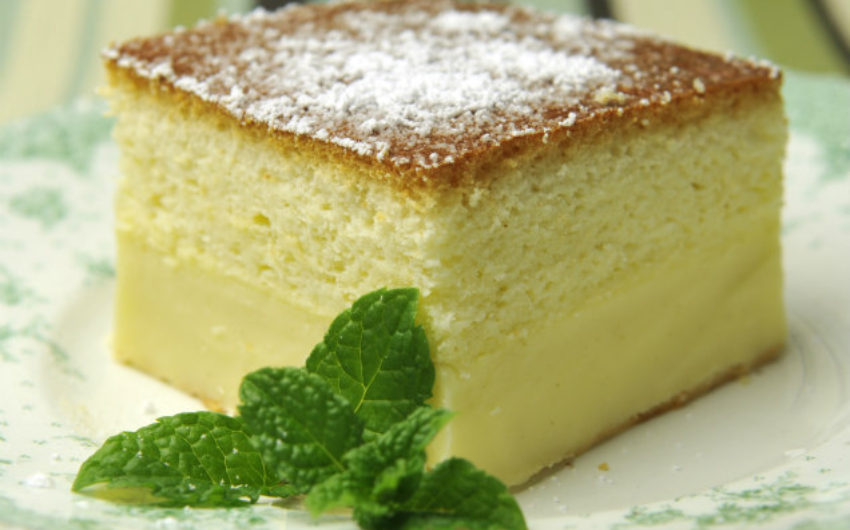
Romanian Intelligent Cake

Romanian Intelligent Cake

Romanian Intelligent Cake


2 sticks unsalted butter, melted

9 eggs at room temperature

1 tsp. lemon zest

2 cups flour, sifted

4 cups whole milk, at room temperature

Pinch of salt

1 tsp. vanilla extract

1/2 tsp. rum extract (optional)

1 3/4 cups powdered sugar


Heat the oven to 350 degrees. Line a 9-by- 13-inch glass baking dish with parchment paper, leaving the ends long enough to hang over the long edges of the dish to help with lifting the cake out of the pan later. Melt the butter and let it cool until it is warm but still melted. Separate the eggs, placing yolks and whites in separate large bowls. Using a hand or stand mixer, beat the egg yolks with the powdered sugar and lemon peel until they become pale. While beating on low speed, slowly add the melted butter, then the sifted flour, then the milk. To the bowl of egg whites, add salt, vanilla extract and rum extract (if using). Beat until they are stiff. Using only a wooden spoon or a spatula, gently fold the egg whites into the yolk mixture a large spoonful at a time. Do not overmix it. Pour the batter into the pan and bake for 1 hour. Resist the urge to open the oven. After 1 hour, test for doneness by jiggling the pan gently (the middle should be firm). If needed, bake for up to 30 minutes longer, checking every 10 minutes or so (again, try not to open the door too often). Turn off the oven and leave cake in the oven with the door closed for 20 minutes. Remove from the oven and refrigerate for 3 to 4 hours, or until the next day. To serve, run a paring knife around the outside of the cake to make sure it has not stuck to the pan anywhere, then use the overhanging parchment to lift cake out of the pan. Dust with powdered sugar, cut into 2-inch squares and arrange on a serving platter. When you cut into this custardy cake, it will have formed its own layers and have a slightly crispy top.

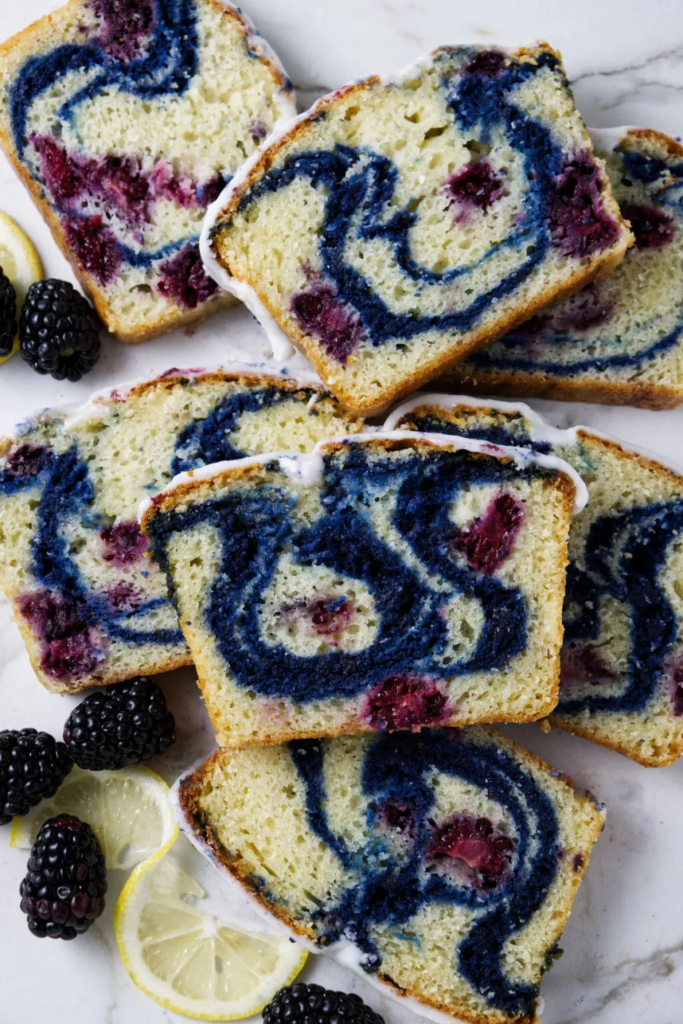
Blackberry Lemon Bread

Blackberry Lemon Bread

Blackberry Lemon Bread


1-2/3 cups all-purpose flour (200 grams)

2 teaspoons baking powder

1/4 teaspoon salt

1 cup sugar

zest of 1 lemon

1/2 cup sour cream, room temperature (or plain Greek yogurt)

3 eggs, room temperature

1/2 teaspoon vanilla extract

1/4 teaspoon lemon oil

1/2 cup flavorless cooking oil such as canola

5 tablespoons blackberry jam

Optional: 2 to 4 drops blue food coloring**

1 cup blackberries, tossed with 1 tablespoon flour

Lemon Glaze

1 cup powdered confectioners sugar

pinch of salt

2 to 3 tablespoons lemon juice


Preheat the oven to 350°F and spray an 8-1/2 x 4-1/2 inch loaf pan with cooking spray (or line the pan with parchment paper).  Combine the flour, baking powder, and salt in a small bowl. Whisk or sift to distribute the ingredients and get the lumps out.  Place the sugar and lemon zest in a mixing bowl. Rub the sugar between your fingers to infuse the lemon zest. Add the sour cream, eggs, vanilla, and lemon oil. Whisk until everything is well blended.  Use a silicone spatula to stir in half of the dry ingredients until well blended, then stir in the other half of the flour mixture.  Pour the oil into the batter gradually while stirring with a silicone spatula.  Transfer 1/2 cup of the batter into a small bowl and stir in the blackberry jam and blue food coloring if desired.  Stir the blackberries into the larger bowl of batter and pour about 2/3 of the batter into the prepared loaf pan.  Pour the blackberry jam batter into the pan, then top it with the rest of the batter in the larger bowl. Transfer the loaf pan to the oven and bake for 55 to 65 minutes or until the loaf cake starts pulling away from the pan’s edges. A toothpick inserted in the center should come out clean or with a few crumbs attached.  Let the loaf bread cool in the pan for 5 to 10 minutes, then run a knife around the edges and remove it from the pan. Let it cool completely on a wire rack.  Lemon Glaze: Add the powdered sugar and salt to a bowl. Pour in 2 tablespoons of lemon juice and whisk until smooth. If you want a thinner glaze, slowly add more lemon juice until you get the consistency you like.  Drizzle the glaze over the top of the cooled loaf bread. Let the bread sit at room temperature for about 10 minutes or until the glaze firms up.  Garnish with fresh blackberries or candied lemon slices.  You can store this cake at room temperature for 1 day or in the fridge for 4 days. Let it cool completely, then wrap it in plastic wrap to prevent it from drying out. If you don’t add the blackberries, you can store the loaf cake at room temperature for 4 days.

Artisan Seed No Knead Bread

Artisan Seed No Knead Bread

Artisan Seed No Knead Bread


3 cups bread flour

¼ tsp. dry active yeast

1 ¼ tsp. salt

2 T. sunflower kernels

2 T. pumpkin seeds

1 T. flax seeds

1 T. poppy seeds

1 T. sesame seeds

1 ⅝ cups water


For the topping: (optional)

1 T. of each kind of seeds, all mixed together


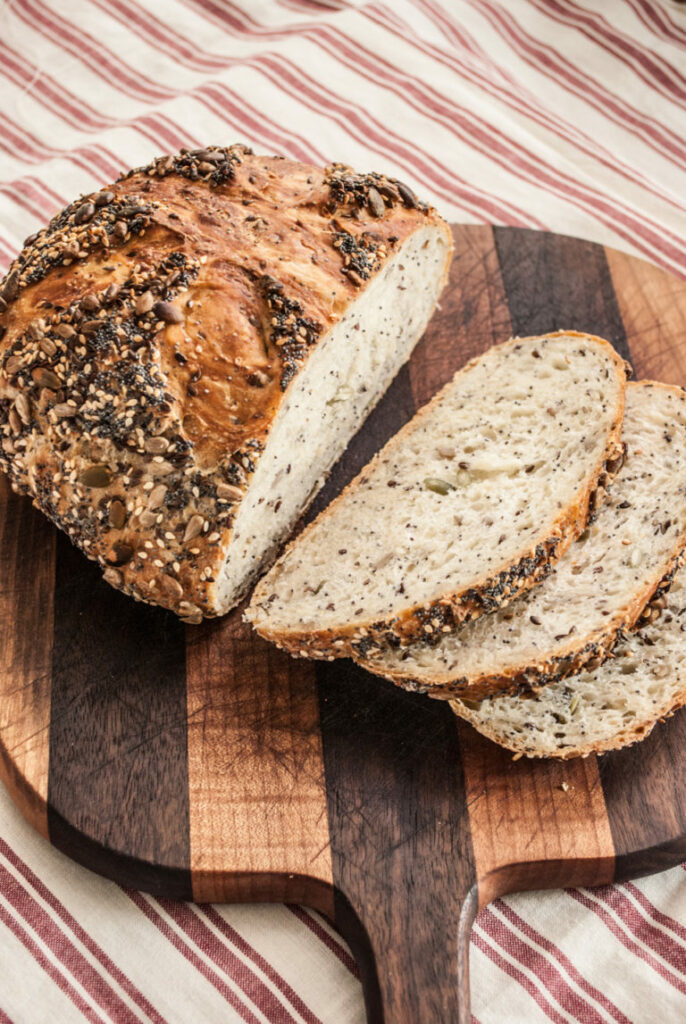
Basic Instructions: In a large bowl, mix together the flour, yeast, and salt, and all the seeds. Add the water and mix together with a wooden spoon until just combined.  You will have a sticky, shaggy ball of dough. Cover the bowl with plastic wrap and let rise at room temperature for 12-18 hours, and do not disturb!  After rising, the dough will be very sticky! Cover your hands with oil, then stretch the dough and fold it into thirds. Then turn the dough 90° and stretch it out again, and fold it into thirds.  Gently  shape the lump into a round loaf with the ends tucked under, set aside.  Pour the seed topping mixture onto a flat surface and spread it out, then roll the top and sides of the loaf in the seeds until it is well coated. Slash the top of the loaf, then allow the loaf to rest 15 minutes.  Your oven should be very hot at 450 degrees Fahrenheit, and you should have a cast irons skillet heated in the oven. Transfer your loaf to the hot pan and get ready to pop it into the oven. This next step is optional, but it will help your bread to form an amazing crust. For the best artisan style crust, you need to form steam in the oven just as the loaf goes in. Some bakers us a spray bottle of water and spray inside the oven to create this steam. I have found that the easiest way for me is to just throw a few ice cubes in right before I pop the bread in. The steam in the oven will allow your bread to expand for longer before the crust hardens, and give you bigger bubbles and a better texture! Bake 35-40 minutes.  Allow to cool before slicing!

Lemon Cardamom Sandwich Cookies

Lemon Cardamom Sandwich Cookies

Lemon Cardamom Sandwich Cookies


1 cup unsalted butter

1/4 cup heavy cream

1/2 teaspoon vanilla extract

3-1/2 cups powdered sugar


1 cup unsalted butter, melted

2-3/4 cups all-purpose flour

1/2 teaspoon baking powder

1/2 teaspoon baking soda

1/2 teaspoon kosher salt

1 tablespoon lemon zest

1 teaspoon ground cardamom

1-3/4 cups granulated sugar

1 tablespoon vanilla extract

1 medium egg

1 egg yolk


1/2 upc white chocolate chips, melted

1/4 cup candied lemon peel, finely chopped


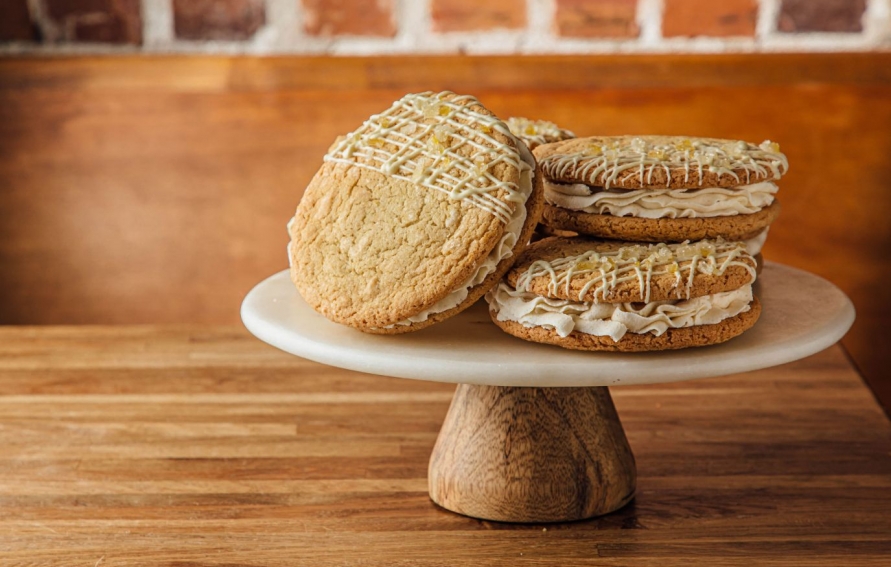
To make brown butter buttercream filling: In a medium pot or skillet, cook butter over medium heat. Stirring occasionally, cook about 10 minutes until butter reaches a golden brown. Remove from heat and allow to cool to room temperature. The butter will be somewhat solidified, but not hard (you can speed up this process by placing butter in refrigerator.) Once cooled, use a stand mixer to beat butter until light and fluffy. Add heavy cream, vanilla extract and powdered sugar. Slowly mix ingredients together until almost combined. Continue to beat mixture on high for 5-7 minutes until light and fluffy. Place buttercream into a piping bag with a piping tip of your choice. To make cookies: Preheat oven to 350°. In a medium pot or skillet, gently melt butter over low heat. Meanwhile, in a large bowl, whisk together flour, baking powder, baking soda, salt, lemon zest and ground cardamom. Set aside. Add sugar to a mixing bowl of a stand mixer. Once butter is melted, but not hot, add to sugar. Mix using paddle attachment. Add vanilla, egg and yolk to the bowl. Mix until combined. Add dry ingredients and mix until fully combined. Using a 3-ounce cookie scoop, scoop the cookie dough onto a parchment lined sheet pan. You will get approximately 13 cookies (one extra cookie to taste test, of course!) Bake cookies for about 14-16 minutes. Allow cookies to cool completely before assembling sandwiches. To assemble: Pipe a thick swirl of buttercream on 12 cookies. Top each with another cookie. Drizzle one half of the sandwich cookie with melted white chocolate. Before the white chocolate sets, top with candied lemon peel.

Chamomile & Anise Hyssop Apple Crumble

Chamomile & Anise Hyssop Apple Crumble

Chamomile & Anise Hyssop Apple Crumble


note: If you don’t have access to dried anise hyssop leaves/flowers, you can use a tsp. of ground fennel seed or ground star anise.


7-8 cups diced apples

2 T. fresh lemon juice

2 T. arrowroot

2-4 T. maple syrup

1 tsp vanilla

2 T. dried chamomile

1 T. dried anise hyssop leaves & flowers


2 cups oats, divided

1/2 tsp ground cloves

1/2 tsp ground cardamom

good pinch of salt

4 T. room temp/solid coconut oil or softened vegan butter

2-4 T. maple syrup


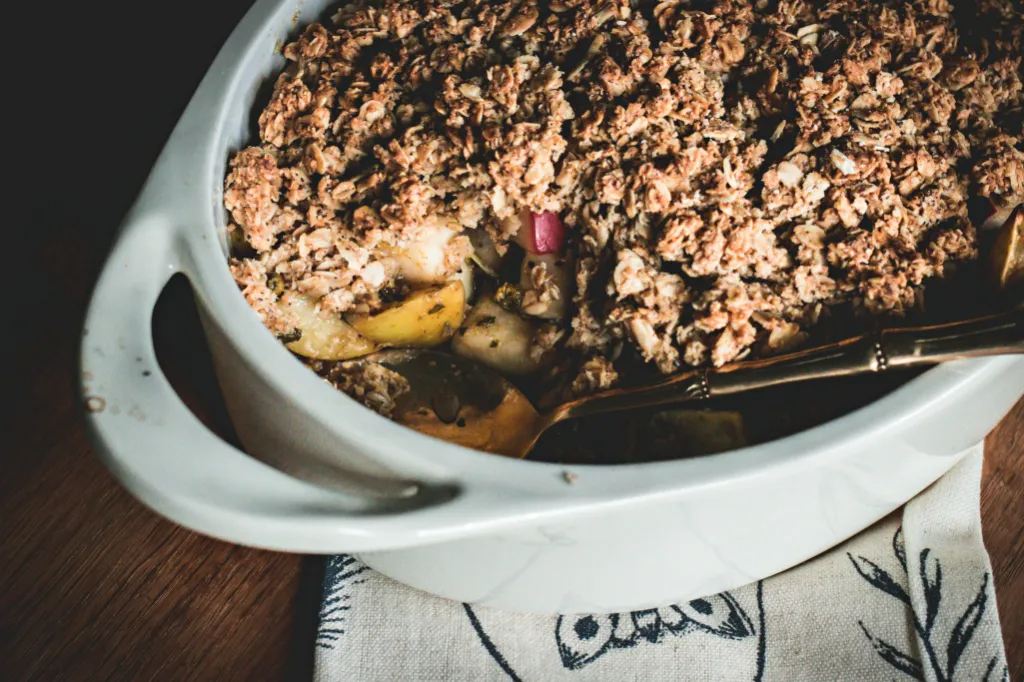
Preheat your oven to 350 degrees. Add the apples, lemon juice, arrowroot, maple syrup, vanilla, chamomile, and anise hyssop to a bowl. Toss to mix then spoon into a 2-quart baking dish. Put 1 cup of the oats into a blender or food processor and pulse until you have a coarse looking flour. Add this to a bowl along with the remaining oats, salt, and the spices. Mix, then add the coconut oil and maple syrup. Mash the coconut oil and syrup into the oat mixture until it begins to hold together in clumps and looks crumbly. Sprinkle this mixture evenly over the surface of your apples. Bake your crumble for 35 to 40 minutes or until the juices from the apples are bubbling and the oats are a deep golden color. Cool 5 minutes before serving. Feel free to serve with a drizzle of cashew butter, freshly whipped coconut cream, or vegan vanilla ice cream. Makes 6-8 servings.

Meringue Cake with Rhubarb Preserves and Elderberry Chantilly Cream

Meringue Cake with Rhubarb Preserves and Elderberry Chantilly Cream

Meringue Cake with Rhubarb Preserves and Elderberry Chantilly Cream


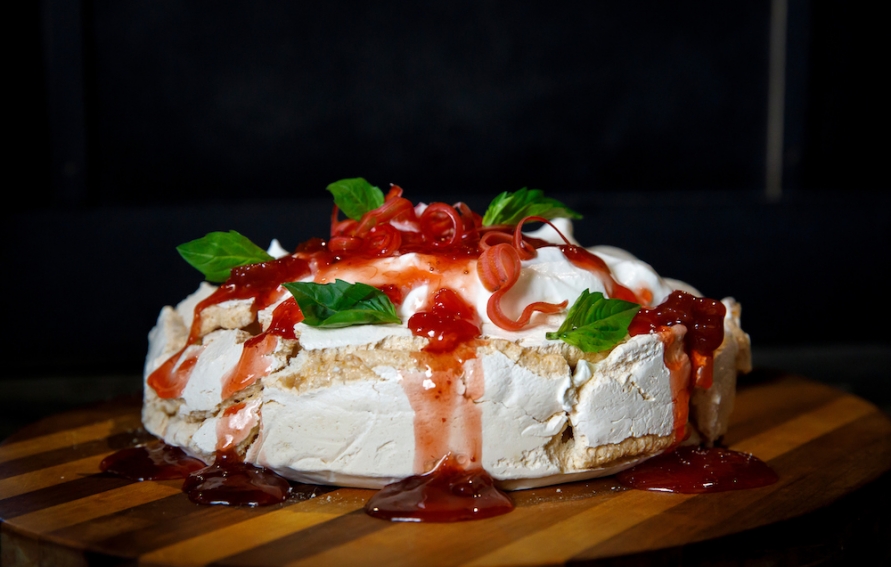
This meringue cake is like a pavlova but instead of dreading the collapse of the center, we are actually trying to achieve this effect. The result is a chewy marshmallow center and the perfect vessel for anything you fancy. This variation is filled with St-Germain–scented chantilly cream and topped with rhubarb preserves and lemon balm. (If you don’t have time to make your own rhubarb preserves, you can substitute your favorite bottled jam, heated with a tsp. of fresh lemon juice to cut the sweetness.)


5 large egg whites, room temperature

1½ C. granulated sugar

1 T. cornstarch

1 tsp. vanilla

1 tsp. rice vinegar

Finely grated zest of 2 lemons

1 tsp. kosher salt


3 C. rhubarb, washed and cut into ½-inch pieces

1 C. granulated sugar

2 T. white verjus or acidic white wine like vino verde


1½ C. very cold heavy cream

⅓ C. + 2 T. powdered sugar

½ tsp. vanilla extract

2 tsp. St-Germain elderflower liqueur

Fresh mint or lemon balm leaves for garnish (optional)


For the cake, preheat oven to 300°F. Grease an 8-inch springform pan and line bottom and sides smoothly with 2 fitted pieces of parchment paper, then grease again and dust with flour, shaking out the excess. In a stand mixer with whisk attachment, beat egg whites on medium speed until frothy. Increase speed to medium-high and add the sugar, ½ C. at a time. Continue whipping until very stiff, glossy peaks are formed. Using a rubber spatula, very gently fold in the cornstarch, vanilla, vinegar, lemon zest and salt until combined. Spoon mixture into prepared pan; level top with a rubber spatula. Place in the middle rack of the oven and bake (without peeking!) for 70 to 80 minutes. Turn the oven off and, without opening the oven door, let the cake cool inside the oven for at least 1 hour or longer. The sides should be tall and crisp and the center should be concave. For the preserves, add rhubarb, sugar and verjus to a medium saucepot, bring to a boil, then lower heat to a low simmer and cook until the rhubarb is soft and the liquid is thick, approximately 15 minutes. To make the chantilly, place cream, powdered sugar, vanilla and St-Germain in the bowl of a stand mixer with a whisk attachment. Beat until medium peaks form. To assemble the cake, release it from its springform pan carefully, as the sides will be crisp and susceptible to cracking. Place the cake on a platter. Fill the center with the chantilly cream. Spoon rhubarb preserves on top, allowing it to run down the sides, then add leaves for garnish.

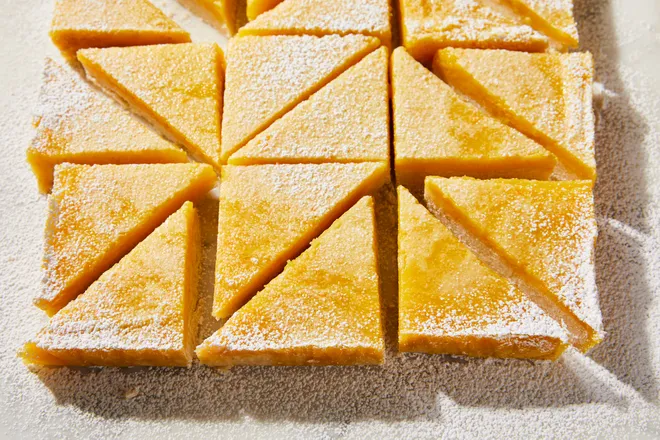
Salty-Tangy Preserved Lemon Bars

Salty-Tangy Preserved Lemon Bars

Salty-Tangy Preserved Lemon Bars


1 3/4 cups (225 grams) all-purpose flour

1/4 cup (50 grams) granulated sugar

1/4 tsp. kosher salt

10 T. (1 stick plus 2 T.) unsalted butter, cut into cubes (remove from fridge 10-20 minutes before baking)

Filling

1/4 cup (70 grams) preserved lemon paste (or 1/4 cup of seeded, puréed whole preserved lemons)

2 T. lemon zest (from about 2 lemons)

6 T. fresh lemon juice (from about 2 lemons)

2 large eggs

2 large egg yolks

3/4 cup (150 grams) granulated sugar

3 T. (25 grams) all-purpose flour

Powdered sugar, for serving (optional)

Flaky salt, for serving (optional)


Heat the oven to 325ºF and line an 8×8-inch square baking pan with parchment paper, leaving an overhang on all sides. (Save parchment paper by cutting one sheet several inches larger than the pan, cutting a slit in each corner, then pressing the paper into the pan.) In a medium bowl, use your fingers to combine the flour, sugar, and salt, then work in the butter pieces with your fingers, until it forms into a crumbly mass. It may not all stick together, but if you can press together a handful and it holds its shape, you’re good to go. Dump the dough into the prepared pan and hang onto the bowl. Firmly press the dough into the pan in an even layer. Use a fork to prick holes over the entire surface. Bake until the shortbread is lightly golden brown, 20 to 25 minutes. Meanwhile, make the filling: Place the preserved lemon paste, lemon zest and juice, whole eggs and egg yolk, sugar, and flour in the reserved bowl and whisk furiously until totally smooth. Reduce the oven temperature to 300ºF. Pull out the oven rack the crust is baking on, and carefully pour the filling over the crust. Gently push the oven rack back and bake until the filling is set and just barely jiggles in the center, about 20 minutes. Let the pan cool to room temperature, then transfer to the refrigerator to cool completely, at least 3 hours, but overnight is best for a clean cut. Pull out the bars from the pan by the parchment overhang, place on a cutting board, and slice into 16 squares (or 32 triangles). Dust with powdered sugar and sprinkle over flaky salt (if using).

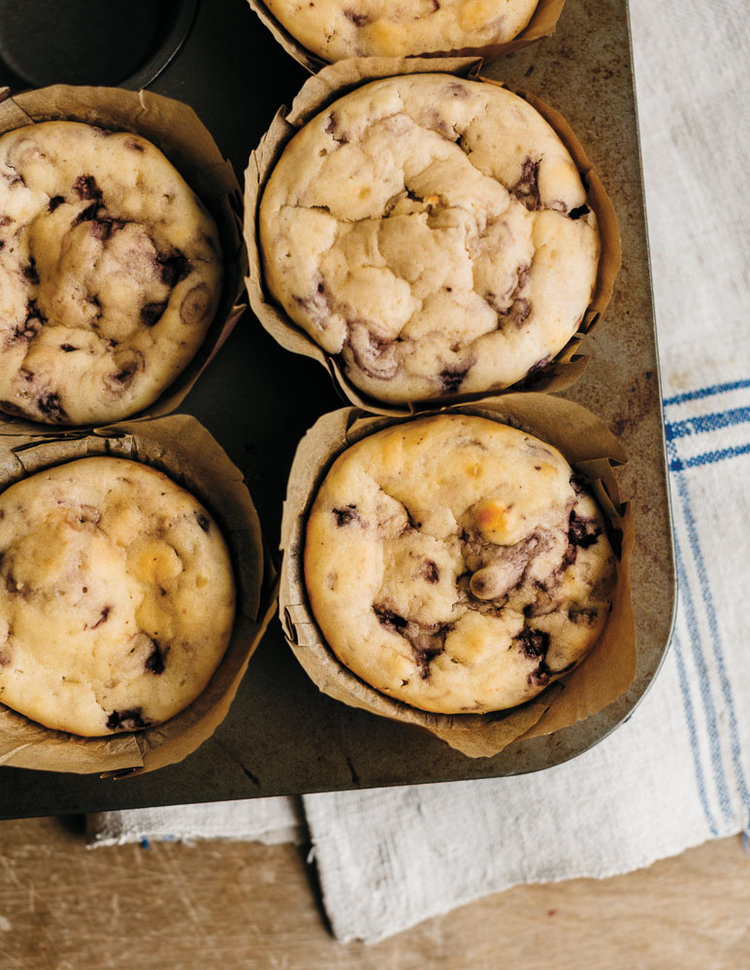
Blueberry-Ginger Muffins

Blueberry-Ginger Muffins

Blueberry-Ginger Muffins


¾ cup sugar

½ tsp. salt

4 ounces unsalted butter

2 eggs, room temperature

2¾ cups all-purpose flour

1 T. baking powder

2 cups milk


Preheat oven to 400°F (on convection setting, if you have it). In a mixer fitted with the paddle attachment, cream butter and sugar. Add eggs 1 at a time and mix until just combined. In a separate bowl, sift together all dry ingredients and then slowly add to the creamed butter followed by the milk. Stir until the mixture just comes together. Do not overmix—a few lumps are fine. Prepare a muffin tin with nonstick spray, being careful to spray the flat surface where the muffin dome will spill over. Insert fluted muffin papers if you wish, then fill each muffin cup to the top. Bake approximately 12–15 minutes for mini muffins and 20–25 minutes for large muffins. The muffins are done when the muffin tops spring back, the edges are golden brown and/or a cake tester comes out clean.  *Note: I sometimes replace 1 cup of the all-purpose flour with an equal amount of whole-wheat white flour, which won’t much affect the recipe but adds a slight nutty flavor and almost imperceptible crunch.

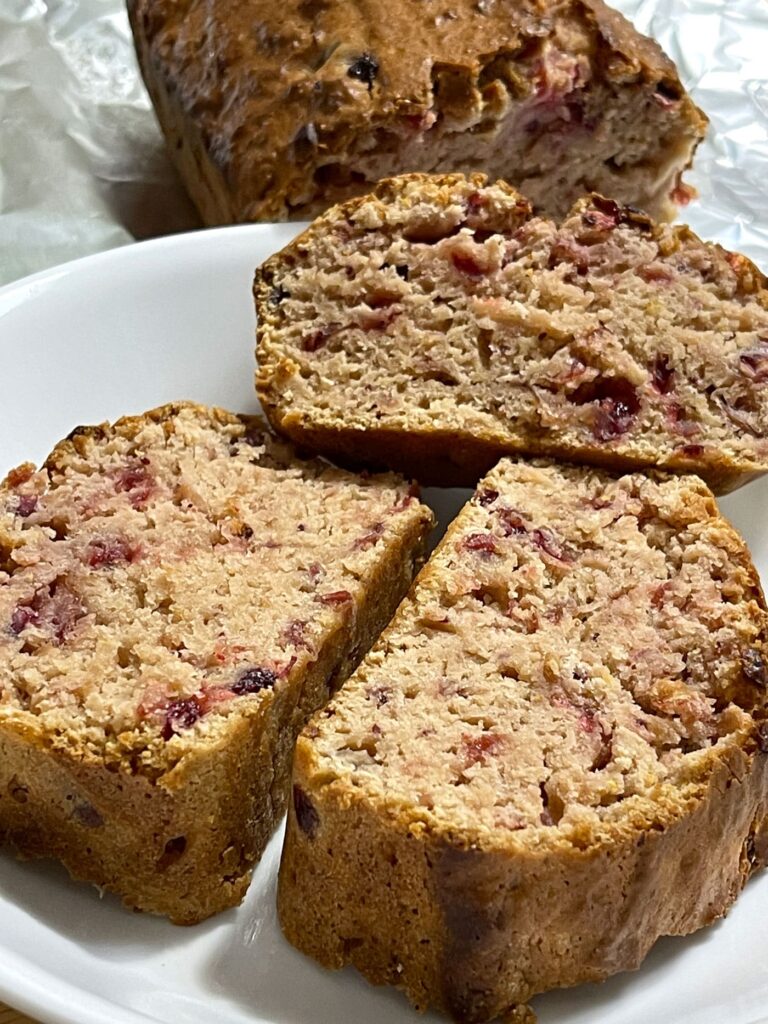
Pantry Friendly Cranberry Bread

Pantry Friendly Cranberry Bread

Pantry Friendly Cranberry Bread


2 cups all-purpose flour

⅓ cup sugar

1 ½ tsp. baking powder

½ tsp. baking soda

½ tsp. salt

One 16-ounce can whole cranberry sauce, mashed with a fork

2 eggs, lightly beaten

2 T. cooking oil


Preheat the oven to 350°F. Lightly oil or coat with nonstick spray an 8×4-inch loaf pan. In a medium-sized mixing bowl, combine the flour, sugar, baking powder, baking soda, and salt, mixing with a fork to distribute. In another medium-sized mixing bowl, mash the entire can of cranberry sauce with a fork. It should be kind of lumpy when you’re done. Stir in the eggs and oil. Add the flour mixture to the cranberry mixture and stir to combine. The batter should be a bit thick and stiff. Pour the batter into the pan. Bake for 60 to 65 minutes, or until a wooden toothpick inserted into the center of the bread comes out clean. Let it stand in the pan for 10 minutes to cool. For easier slicing, wrap the bread in plastic wrap after the initial cooling period.

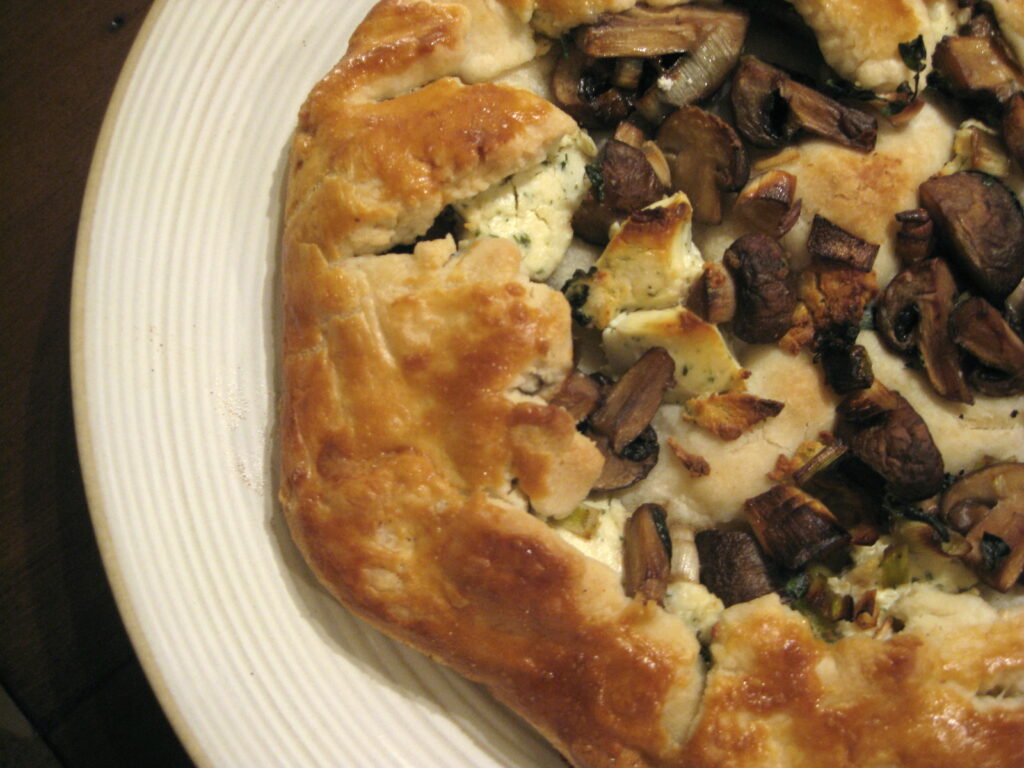
Cremini Mushroom, Goat Cheese, and Leek Crostata with Fresh Thyme

Cremini Mushroom, Goat Cheese, and Leek Crostata with Fresh Thyme

Cremini Mushroom, Goat Cheese, and Leek Crostata with Fresh Thyme


For the pastry (makes 2 crusts):

2 cups all-purpose flour

1/2 tsp. kosher salt

1/2 pound (2 sticks) cold butter, diced

6 T. ice water

1 egg


For the filling

1 T. butter

1 small leek, chopped

8 ounces quartered cremini mushrooms

Kosher salt

2 tsp. fresh thyme

4 ounces goat cheese


Place the flour and 1/2 tsp. kosher salt in the food processor. Pulse a few times to combine. Add the butter and pulse 12 to 15 times, or until the butter is the size of peas. With the motor running, add the ice water all at once through the feed tube. Keep hitting the pulse button to combine, but stop the machine just before the dough comes together. Turn the dough out onto a well-floured board, roll it into a ball, cut in half, and form into 2 flat disks. Wrap the disks in plastic and refrigerate one for at least 1 hour. The other disk of dough can be frozen for a future use. Heat the butter in a skillet over medium heat. Sauté the mushrooms for a few minutes until they’re slightly softened. Add the leeks and a pinch of salt and continue to cook for several more minutes. Stir in thyme. Preheat the oven to 450 degrees. Line a baking sheet with parchment paper. Roll the pastry into an 11-inch circle on a lightly floured surface. Transfer it to the baking sheet. Cut the goat cheese into small pieces onto the center of the crust, and top with the vegetables. Fold in the edges of the crust, and brush with a beaten egg. Bake for 20 minutes until golden brown.

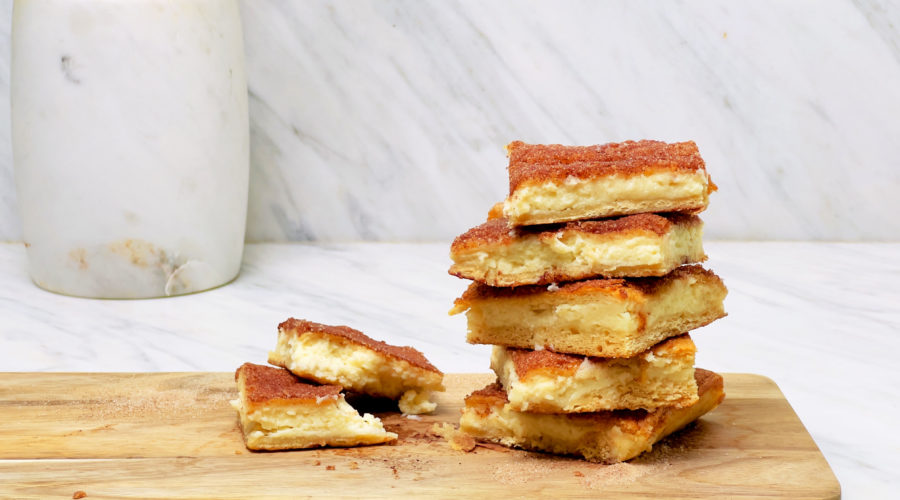
Easy Churro Cheesecake

Easy Churro Cheesecake

Easy Churro Cheesecake


1 T. cinnamon

1 ¼ cups granulated sugar

1 lb. cream cheese, softened completely to room temperature

1 egg

1 ½ tsp. vanilla extract

2 (8 oz.) crescent roll doughs, refrigerated

3 T. unsalted butter, melted


Preheat the oven to 350°F. Prepare a cinnamon-sugar mixture by mixing cinnamon and ½ cup sugar in a small bowl until combined well. In a separate medium mixing bowl, combine cream cheese, remaining sugar, egg, and vanilla, mixing until completely smooth. Spray a 9×13 baking pan with cooking spray and sprinkle 1-2 T. of the cinnamon-sugar mixture on the bottom. Open and unroll one tube of the crescent rolls. Press the seams together to form one rectangular piece. Place into the bottom of the pan, covering each end completely. Pour the cream cheese mixture over the dough in the pan, spreading across evenly. Unroll the second tube of dough and press the seams together again. Then, place it over the cream cheese mixture to cover completely. Use a brush to spread the melted butter evenly over the top layer of dough. Sprinkle the remaining cinnamon-sugar mixture over top. Bake for 25-30 minutes, until the crescent dough has puffed up and is golden brown. Place on a wire rack to cool completely and transfer to the fridge until chilled. Cut and serve.

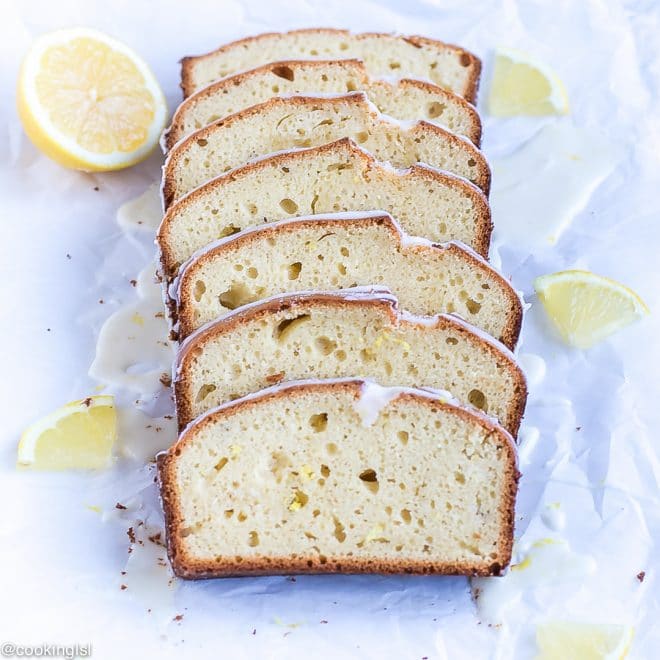
Blender Lemon Loaf

Blender Lemon Loaf

Blender Lemon Loaf


3 large Eggs

3/4 C. Cane Sugar

1 ½ C. AP Flour

1/2 C. melted Coconut Oil (not hot)

1 C. Greek Yogurt

1/4 tsp. Salt

2 tsp. Baking Powder

Zest from a Lemon

2 T. Fresh Lemon Juice

2 tsp. Vanilla Extract


1 CUP Powdered Sugar

1/4 CUP Maple Syrup

1/2 tsp. Vanilla Extract

1/2 tsp. Lemon Zest


Preheat oven to 350F. Spray a 9×5 inch loaf pan with cooking spray. In a bowl, combine flour, salt and baking powder. Add eggs, sugar, coconut oil, Greek yogurt, lemon juice, vanilla extract and lemon zest to a blender and blend until smooth. Add flour and pulse a few times to combine. Do not over mix. Pour batter into the pan and bake for 35-40 minutes until the top is golden and toothpick inserted comes out clean. Let bread cool inside the pan for 5-10 min. Then remove and transfer to a cooling rack to cool completely. Whisk ingredients for the glaze together. Drizzle over the bread. Slice and serve

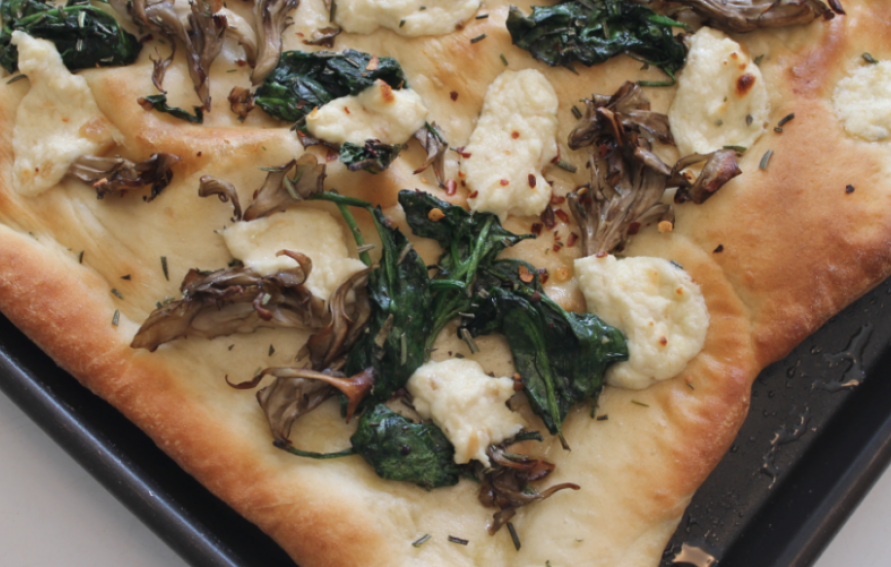
Roasted Garlic Ricotta, Ramp and Wild Mushroom Flatbread

Roasted Garlic Ricotta, Ramp and Wild Mushroom Flatbread

Roasted Garlic Ricotta, Ramp and Wild Mushroom Flatbread


1 T. honey or agave nectar

1¼ cups warm water

1 package dry yeast

Extra-virgin olive oil

Kosher or sea salt

¼ cup milk

4 cups sifted all-purpose flour, plus more for dusting


1 head garlic

Extra-virgin olive oil

Freshly ground black pepper

1 cup Narragansett Creamery ricotta


1–2 bunches ramps (or substitute escarole, spinach, dandelion greens or turnip greens)

4 cups hen of the woods or oyster mushrooms, roughly chopped

Freshly chopped rosemary (optional garnish)

Red pepper flakes (optional garnish)


In a large bowl, mix honey into warm water and add yeast. Let sit until bubbly and frothy (5–10 minutes). Stir in 1 T. olive oil, 2 tsp. salt, milk and 3 cups flour. Turn mixture out on a floured board and knead approximately 5 minutes while incorporating remaining 1 cup flour. Form dough into a ball, brush with olive oil and place in a large bowl covered with a warm, damp towel. Let rest in a warm place, approximately 1 hour. Once doubled in size, punch down and divide dough in half for two flatbreads. (Can be refrigerated overnight and brought to room temperature before baking.) While dough is rising, roast the garlic. Preheat oven to 350°. Lightly coat garlic head with olive oil and sprinkle with salt. Bake in a small dish covered with foil until cloves are soft and golden brown, approximately 1 hour. Separate cloves from skin and mash cloves to form a paste. Stir into ricotta with 1 tsp. olive oil. Season to taste. Wash ramps and separate bulbs from leaves. Sauté bulbs and mushrooms in 1 T. olive oil over medium-high heat until bulbs are slightly tender and mushrooms are browned. Remove and keep warm. In the same pan, sauté ramp leaves in 1 T. olive oil until tender and wilted. Toss with mushrooms and bulbs. Season to taste. Final Assembly: Preheat oven to 500° and preheat a pizza stone or large sheet pan until hot. On a floured surface roll out half the dough. (Lightly oil sheet pan if using.) Transfer to preheated pan and bake until just firm. Spread ramps and mushrooms on dough with spoonfuls of ricotta and optional garnish. Return to oven and bake until the ricotta is soft and slightly browned. Drizzle with olive oil. Repeat.

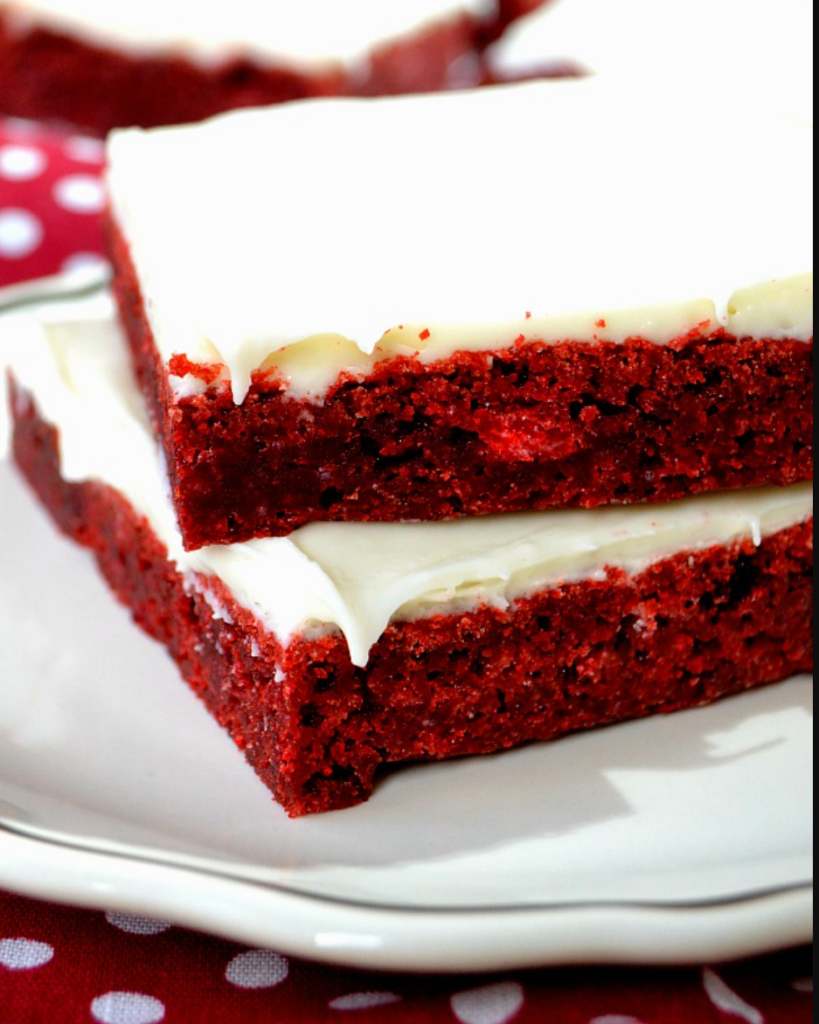
Red Velvet Brownies

Red Velvet Brownies

Red Velvet Brownies


For the frosting:

1 cup powdered sugar [120 g]

4 oz cream cheese [115 g], at room temperature

2 T. unsalted butter [30 g], at room temperature

2 tsp. vanilla extract [10 g]

1 pinch salt


For the brownies:

Butter for greasing the pan

1¼ cup flour [160 g]

3 T. cocoa powder [20 g]

½ tsp baking powder [2.5 g]

3 large eggs [150 g]

1⅔ cup sugar [335 g]

½ tsp salt [5.5 g]

⅔ cup canola oil [140 g]

2 T. liquid red food coloring* use less if gel coloring

2 tsp vanilla extract [10 g]

1 tsp white vinegar [5 g]


Make the frosting: Combine the powdered sugar, cream cheese, butter, vanilla, and salt in the bowl of a stand mixer with the whisk attachment (or a stainless-steel bowl with a hand mixer). Mix at very low speed until the powdered sugar incorporates, and then increase the speed to medium-high and beat for about 3 minutes, until there are no more lumps and it’s very light and fluffy. Chill the frosting for at least 2 hours in the refrigerator, until it’s stiff enough to hold its shape, but still very spreadable.

Bake the brownies: Preheat the oven to 350° F [180° C]. Butter or grease an 8×8-inch pan (20×20 cm), and line with parchment (all the way around if you’d like, or just the bottom). Sift together the flour, cocoa powder, and baking soda. Set aside. Combine the eggs, sugar, salt, oil, liquid food coloring, vanilla, and vinegar in a large mixing bowl. Whisk together slowly, just until it’s fully incorporated and no longer streaky. Do not incorporate air by beating it. Once combined, add the flour/cocoa mixture, and fold together until there are no large clumps of flour (don’t over-mix). Pour into the pan, smooth out the top, and bake for about 40 minutes, until a toothpick or paring knife inserted into the center comes out clean. Let it cool in the pan at room temperature for about 20 minutes, then trace around the edge with a knife to loosen it. At this point you can freeze it for about 1 hour in the pan, until the entire thing is chilled (but not frozen). This will help it slice more cleanly, but you can skip this and just let it cool to room temperature instead. Remove from the pan by gently inverting it, remove the parchment, and place right-side-up on a serving dish.**

Decorate the brownies once they’ve cooled: Dump all of the frosting into the center of the brownies. Use an offset spatula to work the frosting almost to the edges. Then make a few swoops in it with the spatula. Slice into 16 pieces.

notes

** If you let it chill for too long, it’ll stick to the pan a bit when you try to remove it. If so, just let it sit at room temperature for a few minutes until it’s easier to remove from the pan, and re-trace around the edges.
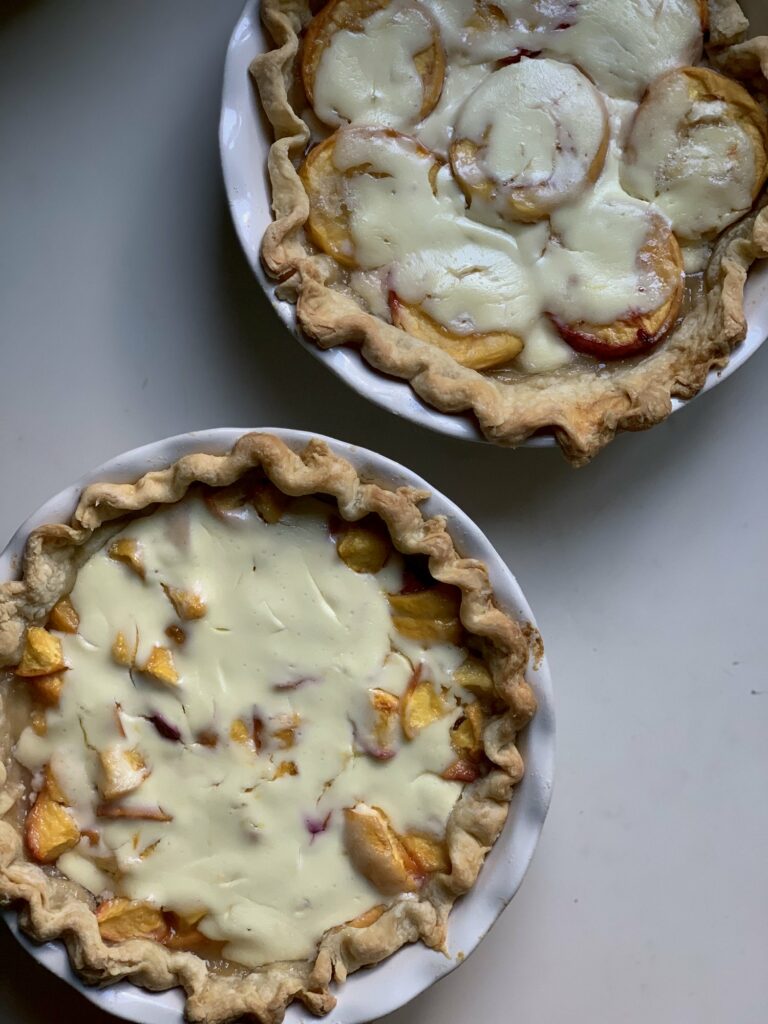
 

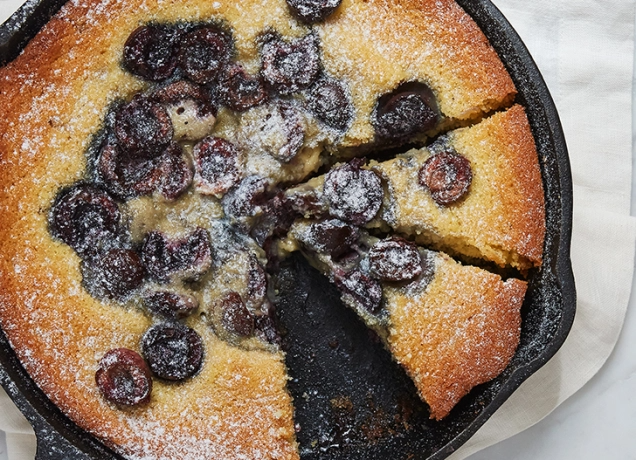
Easy Cherry Skillet Cake

Easy Cherry Skillet Cake
Easy Cherry Skillet Cake


2 T. butter, at room temperature

6 T. butter, melted

1 cup sugar, divided

1 egg

1 egg yolk

1½ tsp. pure vanilla extract

1½ cups all-purpose flour

¾ tsp. baking powder

½ tsp. baking soda

½ tsp. salt

¾ cup whole milk

1½ cups cherries, halved and pitted

Confectioners’ sugar, for serving


Preheat the oven to 375°F. Grease a 10-inch oven-safe skillet with the 2 T. of room-temperature butter. In a large bowl, whisk the melted butter with ¾ cup of the sugar to combine. Add the egg and egg yolk; mix to combine. Whisk in the vanilla extract. Add the flour, baking powder, baking soda and salt; mix to combine. Add the milk and whisk until the batter is thick and smooth. In a separate bowl, toss the remaining ¼ cup sugar with the cherries and then set aside. Pour the cake batter into the prepared pan and spread it into an even layer. Sprinkle the cherries on top. Bake the cake until it is golden brown and a toothpick inserted into the center comes out clean, 25 to 30 minutes. Let cool 15 minutes before cutting and serving. Dust the cooled cake with the confectioners’ sugar.

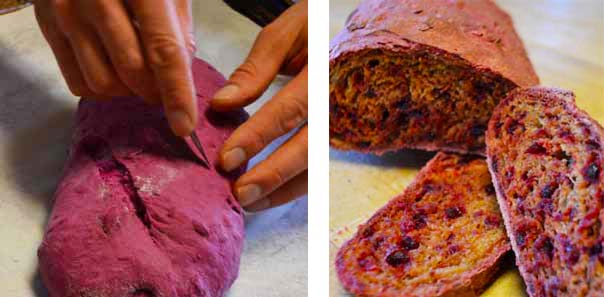
Beet Bread

Beet Bread

Beet Bread


3¼ cups bread flour or all-purpose flour

1¼ cups whole-wheat flour

2 tsp. instant yeast

2 tsp. salt

1½ cups water, 95°F

2¼ cups grated raw beets, small or medium, scrub skin, trim top and bottom

1 T. unsalted butter, melted

Vegetable oil


Preheat oven to 400°F. In a large bowl, stir together the flours, yeast and salt. Pour the water into the bowl of a stand mixer; add the beets, butter and then the dry ingredients. Use the dough hook attachment and mix on low speed for about a minute, until the ingredients come together in a shaggy mass. Mix the dough on medium speed for 3–5 minutes, until it forms a smooth but sticky ball in the center of the bowl. Place the dough into a clean, lightly oiled bowl. Cover bowl with plastic wrap and allow to rise until doubled in size, about 1 to 1½ hours in a warm, draft-free place. Turn the dough out onto a lightly floured work surface and gently fold it like a business letter. Allow it to rest, covered with plastic from bowl or dish towel, for about 10 minutes. Shape the dough into round or torpedo loaf or loaves and place on a lightly floured baking sheet, or into 2 lightly oiled loaf pans. Cover and allow to proof until doubled in size, about 45 minutes. The bread is ready to bake when an indentation made by pressing a moistened finger lightly into the dough does not spring back. Slash the dough with a very sharp knife or blade, if desired. Bake for 45 minutes, or until browned and hollow sounding when thumped underneath. Cool on a wire rack.

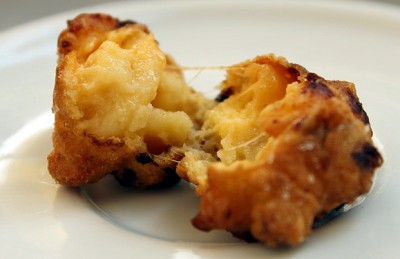
Cinco de Mayo Green Chile Cheese Puffs

Cinco de Mayo Green Chile Cheese Puffs

Cinco de Mayo Green Chile Cheese Puffs


3/4 C. whole milk

5 T. unsalted butter, cut into small pieces

1/2 tsp. salt

3/4 C. all-purpose flour

Pinch cayenne pepper

3 large eggs

1/4 C. chopped green chilies

1 C. grated Monterey Jack or Jalapeno (Pepper) Jack cheese

1/2 C. grated Parmesan cheese

1 egg, beaten with 1 tsp. water – for the egg wash


Preheat the oven to 400°F. Line 2 baking sheets with parchment paper or silicone baking mats. Combine the milk and butter in a saucepan and bring to a boil over medium heat. Combine the salt, flour and cayenne in a small bowl. As soon as it boils, remove the milk from the heat and add the flour mixture. Place the pan back on the heat and cook for about 1 minute, stirring with a wooden spoon, until the mixture thickens and pulls away from the sides. Dump the hot mixture into the bowl of a food processor fitted with the steel blade. Immediately add the eggs, jack cheese and Parmesan and pulse until the eggs are incorporated and the dough is smooth and thick. Stir in the diced chilies. Spoon the mixture into a pastry bag fitted with a large plain round tip. Pipe in mounds 1-inch wide and 1-inch high onto the baking sheets. With a wet finger, lightly press down the swirl at the top of each puff. (You can also use 2 spoons to scoop out the mixture and shape the puffs with damp fingers.) Brush the top of each puff lightly with the egg wash. Bake the puffs until golden brown, about 15 to 20 minutes. Serve immediately. Makes about 2 Dozen Cheese Puffs

Chive-Dill Batter Bread

Chive-Dill Batter Bread

Chive-Dill Batter Bread


Chives are the first herbs to come up in the garden once the snow has melted, a certain sign of spring. Young chives add mild onion flavor not only to omelets and salads but also to this batter bread.


1 pkg. or 1 scant active T. Active Dry Yeast

¼ C. Warm Water (105-115F)

2 T. Sugar

1 tsp. Salt

1 ½ dried Dill

2 T. finely chopped Fresh Chives

2 T. Butter

1 C. lower fat Cottage Cheese

1 large Egg, lightly beaten

2 C. Flour


Grease a 1½-quart casserole or soufflé dish generously and set aside. In the bowl of a stand mixer, combine the yeast, warm water, sugar, salt, chives, and dill. Set aside until the yeast begins to foam, about 5 minutes. Add the butter, cottage cheese, egg, and ½ cup of the flour. Beat on low speed until well mixed. Add the remaining 1½ cups flour and beat to make a stiff batter. Cover and let rise for 10 minutes. Transfer the batter to the casserole dish. Cover and let rise in a warm place until almost doubled in bulk, about 45 minutes. Preheat the oven to 350°F. Bake until golden and a wooden skewer inserted into the center of the loaf comes out clean and dry, 35 to 40 minutes. Remove the loaf from the casserole and place on a rack to cool.

Skillet Blackberry Cobbler

Skillet Blackberry Cobbler

Skillet Blackberry Cobbler


1 stick (1/2 cup) unsalted butter

4 cups fresh blackberries

1 cup sugar, plus extra for sprinkling on blackberries if they’re a little too tart

1 cup unbleached all-purpose flour

2 tsp. baking powder

Pinch of fine sea salt

1 cup whole milk

1 tsp. vanilla extract

Ice cream or whipped cream (optional)


Preheat oven to 350ºF. Melt the butter in a large cast iron skillet or a 9×13 inch baking dish. Takes about about 5-7 minutes. Meanwhile, using a potato masher, mash the berries in a large bowl to release some of their juices. If the berries taste too tart, sprinkle on a little bit of the sugar. In another large bowl, whisk together the flour, baking powder and salt. Add in 1 cup of the sugar, the milk and the vanilla and stir until well blended. Once the butter has melted, remove the skillet or pan from the oven and pour the melted butter into the batter. Stir to mix. Then pour the batter all at one time into the skillet and add the blackberries into the center. Do not spread out. Bake for about 1 hour until the cake is golden brown and a cake tester inserted into the cake part comes out clean. Serve immediately or let cool to room temperature. Tastes great on its own or with a scoop of vanilla ice cream or whipped cream.

Glazed Apricot Twists

Glazed Apricot Twists

Glazed Apricot Twists

1 frozen puff pastry sheet (from a 17 1/4-ounce package), thawed according to package instructions

1/2 C. apricot jam (6 ounces), melted

1/4 C. confectioners’ sugar

1 T. heavy cream or milk

2 tsp. fresh lemon juice

Special Equipment

parchment paper


Put oven rack in middle position and preheat oven to 425°F. Line a baking sheet with parchment paper. Roll out pastry on a lightly floured surface into a 12- by 10-inch rectangle, then cut in half lengthwise. Cut each half crosswise into 4 (5- by 3-inch) strips (for a total of 8 strips). Spread each strip with 1/2 T. jam, then fold strips in half lengthwise to form 1 1/2-inch-wide strips. Twist each strip 3 times and place on baking sheet. Bake until golden brown, 15 to 20 minutes. Transfer twists to a rack set over a sheet of parchment. Stir together confectioners’ sugar, cream, and lemon juice until smooth, then brush over warm twists. Serve warm.

Cheddar Ranch Buttermilk Biscuits

Cheddar Ranch Buttermilk Biscuits


2 cups self-rising flour

2 cups all-purpose flour

1 cup butter, room temperature (2 sticks)

1 1/2 T. Ranch salad dressing & seasoning mix

½ T. dried herbs, such as Thyme

1 cup shredded cheddar cheese

1 cup chopped cooked bacon

2¼ cups buttermilk

1 egg

1 T.p milk


Preheat oven to 350ºF. Line a baking pan with parchment paper. In a large bowl, combine self-rising flour, all-purpose flour, room temperature butter, Ranch seasoning, herbs, cheddar cheese and bacon. Make sure to break up any large clumps of butter. Gently mix in half of the buttermilk into the flour mixture. Add remaining buttermilk and gently combine. Knead dough until just combined. Remove from bowl and place on a floured surface. Gently knead dough a few times, adding more flour if the dough is too sticky. Fold dough over on itself 3 times, and press to 1-½ inch thickness. Cut out biscuits with a 3-inch cutter. Place biscuits on prepared pan. Press together unused dough and repeat kneading and cutting. Whisk together egg and milk. Brush over tops of biscuits. Bake for 28 to 30 minutes, rotating pan halfway through baking.

Blender Orange-Lemon Cake

Blender Orange-Lemon Cake

Blender Orange-Lemon Cake


1/2 C. oil avocado oil or any

1/2 C. sugar

2 eggs

1 tsp. pure vanilla extract

1 ½ tsp. baking powder

zest of one large orange T.

1 T. fresh lemon juice

1 C. all-purpose flour 120 grams

juice of one large orange


Pre-heat oven to 350F. Add the oil, sugar, eggs, and vanilla to a blender and blend for 30 seconds. Pour it into a bowl and mix in the orange zest, lemon juice and baking powder. Add 1/2 of your flour and mix and then the other 1/2 of the flour + the juice of one orange. Mix and pour into a loaf tin sprayed with oil spray and lined with parchment paper. Bake at 350F for 25-30 minutes (depending on the oven) or until a toothpick comes out clean. Enjoy

Cherry Sheet Cake

Cherry Sheet Cake

Cherry Sheet Cake


1 cup butter (unsalted)

1 cup sugar

1 tablespoon vanilla sugar

4 large eggs

1 tablespoon lemon zest ((zest from 1 lemon))

2 cups all-purpose flour

2 1/2 teaspoon baking powder

1/4 teaspoon salt

1 pound cherries (fresh, pitted)

powdered sugar (for dusting, optional)


Preheat oven to 350 F degrees. Spray a 10×15 or 9×13 inch baking dish with cooking spray, line it with parchment paper then spray the parchment paper as well. Set aside.  In a mixing bowl, cream the butter, sugar, and vanilla sugar together until light and fluffy. Add the eggs and beat well. Beat in the lemon zest. In a medium bowl, whisk together flour, baking powder, and salt. With mixer on low speed, add flour mixture to the egg mixture, and mix until just combined. Spread the batter evenly in the pan, using a spatula to even it out. Next, arrange the cherries evenly over the top of the cake. Do not press them down too deeply, because as the cake bakes it will rise around the cherries. Bake for 30 minutes or until light and golden brown. To check for doneness insert a toothpick in the center of the cake and if it comes out clean, the cake is done.  Let cool, then dust with powdered sugar, cut and serve.

Plum Frangipane Tart

Plum Frangipane Tart

Plum Frangipane Tart


1 2/3 cups flour

1/3 cup sugar

1/4 teaspoon fine sea salt or table salt

1/2 cup cold unsalted butter, cubed

1 large egg yolk

1/4 cup heavy cream

1 teaspoon vanilla extract


1 cup whole milk

1 cup heavy cream

1/2 vanilla bean, split lengthwise and seeds scraped out and reserved

4 large egg yolks

3/4 cup sugar, divided

3 tablespoons cornstarch

1/2 teaspoon fine sea salt or table salt

1 cup finely ground skin-on almonds

2 large eggs

3 red-fleshed plums, halved and pitted


1 tablespoon powdered sugar


Make dough: Combine flour, sugar, and salt in the bowl of a stand mixer. Add butter. Using the paddle attachment, mix on low speed until butter is smaller than pea size but not totally crumbly. Whisk egg yolk, cream, and vanilla together in a small bowl and add to flour mixture. Blend just until dough comes together and is smooth. Do not overmix–otherwise it will be tough. Form dough into a disk. Wrap in plastic wrap and chill at least 2 hours and up to 4 days. Form and bake tart shell: Preheat oven to 375°. Lightly butter an 8-in. tart pan with 2-in. sides and a removable bottom. Roll dough out on a lightly floured surface until about 1/4 in. thick. Roll dough up onto rolling pin, and then unroll over pan. Press dough flush against bottom of pan, into bottom corners, and then lastly, up the sides of the pan. Use your thumb to brush dough from inside to outside of edge to make it even. If you have any cracks or holes, you can patch with extra dough from the edges. Lay a piece of parchment into pan over dough, cutting to fit as needed. Fill parchment with baking beans or pie weights. Bake tart shell until edges are light golden brown, about 20 minutes. Carefully remove parchment with beans and transfer to a plate or a tray. Bake tart shell until center dough looks dry and is starting to turn golden brown, about 15 minutes more. Make custard: Heat milk and cream in a medium saucepan over medium-low heat until it begins to simmer. Add vanilla bean and seeds and let sit off the heat, covered, about 30 minutes to develop flavor. Rewarm milk mixture over medium-high heat until almost simmering. Meanwhile, mix yolks and 1/2 cup sugar in a medium bowl. Whisk in cornstarch and salt. Slowly whisk hot milk mixture into yolk mixture, 1/2 cup at a time. Pour mixture back into pan and cook, whisking constantly, until as thick as pudding, about 4 minutes. Pour custard through a strainer into a clean bowl (discard vanilla pod). Lay a piece of plastic wrap against surface of custard to prevent a skin from forming. Chill until cold, at least 3 hours and up to 4 days. Mix almonds, remaining 1/4 cup sugar, eggs, and custard (chilled or warm) in a medium bowl. Spread into prepared tart shell. Put one plum half, cut side up, in center of the filling and arrange remaining 5 halves around it, spacing symmetrically. Reduce oven to 350°. Bake tart on bottom rack until filling is puffed, golden brown, and firm around the center plum when pressed, 50 to 60 minutes. Let cool completely. Remove tart shell from pan by setting it on a can and letting the rim fall away. Carefully transfer shell, still resting on pan’s bottom, to a large serving plate. Dust with powdered sugar to serve.

Blender Banana Bread

Blender Banana Bread

Blender Banana Bread


Ingredients should be room temperature.

190 g (1½ C.) All purpose flour

1 tsp. Baking soda

1/2 tsp. Salt

3/4 C. Sugar

3/4 stick Melted butter or ½ C. Oil

2 Eggs

2 Large ripe bananas

1 tsp. Vanilla

5 oz. Greek yogurt

Any other mix-ins of your choice: chocolate chips, nuts etc.


Into a large blender (it’s important you use a large blender because the large volume of batter in this recipe) add in this exact order: two large bananas, yogurt, melted butter, vanilla, and two eggs. Blend on high for about 10 – 15 seconds. We’re looking for a smooth liquid batter.  Add the sugar, sifted flour, baking soda and pinch of salt and blend again, JUST for 8-10 seconds tops! If your flour mixture isn’t fully combined with the batter, unplug your blender and just take a spatula and finish mixing it by hand. If you over-blend the batter, your banana bread will have gluey streaks. It will still be fine to eat but to avoid that, finish mixing the batter by hand. Remember to scrape the bottom and sides of your blender jug.  Pour the batter into an 8 inch (20 cm) loaf pan greased and lined with parchment paper, and bake in a preheated oven at 170 °C (340 °F) for about 50 – 60 minutes. If the banana bread starts to darken too much, you can cover it with some foil (see the video). Allow the banana bread to cool for 10 minutes in the pan, then remove it from the pan using the parchment paper and allow to cool completely. Store cooled banana bread in an airtight container or zip lock bag at room temperature for about 3 days.

Apple Spice Cake

Apple Spice Cake

Apple Spice Cake


3 cups all-purpose flour

1 1/2 cups of sugar

1 1/2 tsp. baking soda

1 tsp. baking powder

¾ tsp. salt

3 tsp. cinnamon

1 tsp. nutmeg

1 tsp. ground ginger

½ tsp. cloves

1/4 tsp. allspice

1/3 cup warm milk

1 cup of melted butter (or coconut oil)

3 cups grated apples)

½ T. of vanilla

Optional: caramel sauce (recipe below)


1/4 cup maple syrup

1/4 cup honey

1/4 cup of sugar (coconut sugar works)

3/4 cups of heavy cream +2 T. divided (coconut cream works)

2 T. butter (vegan butter works)

¼ tsp. salt

1 tsp. vanilla


Preheat oven to 325°F and lightly spray and line the bottom of a 9-inch springform pan with parchment. In a medium bowl, mix together the dry ingredients. Add in the warm milk, melted butter, and vanilla. Combine. Add in this grated apple and mix until it is well combined and the apple is evenly distributed. Pour batter into the pan and smooth the top with a spatula. Add apple slices if you choose. Bake for 65-75 minutes until the center is cooked through. Allow to cool for 5 minutes and remove from springform pan and if using caramel, pour over cake while it is still warm.  Over medium heat in a medium pot, combine maple syrup, honey, sugar, ¾ cup heavy cream, salt, and butter.  Bring to a boil and reduce heat to med-low, making sure to keep it at a low boil. Watch it closely as it will boil up as it heats.  Once it reaches about 235°(softball stage and will just barely start to turn golden), remove from heat, add vanilla and 2 T. of heavy cream. Store in an airtight container for about two weeks in the refrigerator. If the sauce gets too hard in the fridge, gently warm it in the microwave 20s at a time, and it will become pouring consistency again.

“I Want Chocolate Cake” Cake

“I Want Chocolate Cake” Cake

“I Want Chocolate Cake” Cake


6 tablespoons (85 grams) unsalted butter, at room temperature

3/4 cup (145 grams) firmly packed dark brown sugar

2 tablespoons (25 grams) granulated sugar

1 large egg

1 large egg yolk

3/4 cup (175 ml) buttermilk (see Notes for other options)

1 teaspoon (5 ml) vanilla extract

1/2 cup (41 grams) Dutch cocoa powder

1 cup (125 grams) all-purpose flour

1/4 teaspoon baking soda

1/2 teaspoon baking powder

1/2 teaspoon table or fine sea salt


2 ounces (55 grams) unsweetened chocolate, melted and cooled

1 1/2 cups (180 grams) powdered sugar (sifted if lumpy)

1/2 cup (4 ounces or 115 grams) unsalted butter, at room temperature

Pinch of fine sea salt (optional)

1 tablespoons cream or whole milk

1/2 teaspoon vanilla extract


Make the cake: Heat oven to 350°F (175°c). Line the bottom of an 8-inch square cake pan with parchment paper, and either butter the parchment and exposed sides of the pan, or spray the interior with a nonstick spray. In a large bowl, use a hand or stand mixer to beat the butter and sugars until fluffy; scrape down bowl. Add the egg, yolk and vanilla and beat until combined, then the buttermilk and mix again. Scrape the bowl down well and don’t worry if the batter looks uneven. Place your flour, cocoa, baking soda, baking powder and salt in a sifter (I find this step necessary because my cocoa is very lumpy) and shake it over the batter bowl. Stir on low until just combined; scrape down bowl a final time. Scoop batter into prepared pan and smooth flat. Bake for 18 to 22 minutes (updated, based on feedback) 25 to 35 minutes, until a toothpick inserted into the center comes out clean. Let cool for 5 to 10 minutes in cake pan on cooling rack, then flip out onto rack or serving plate to completely finish cooling before frosting. Speed this up by placing it outside for 10 minutes (thanks, winter!).  Make the frosting: Place frosting ingredients in a food processor and run machine to mix. Scrape down bowl then process for another 1 to 2 minutes (updated based on feedback) just until smooth and somewhat fluffed. [Don’t have a food processor? Beat butter, powdered sugar and salt, if using, in a large bowl with an electric mixer until fluffy. Pour in chocolate, milk and vanilla, beat until combined, then one more minute to whip it further.] Scoop the frosting onto the cooled chocolate cake and swirl it around. Finish with rainbow sprinkles; don’t even fight it. Cut into squares and prepare for your family/roommates to completely freak out when they spy it on the counter. (But only share if they offer to do dishes.) Cake keeps at room temperature for a day or two, or in the fridge up to a week, or so I’ve heard but never tested out. Notes: Red wine chocolate cake, mocha chocolate cake: You could replace the buttermilk in full with yogurt or sour cream thinned with a little milk or water, with red wine or replace 1/2 cup of it with strong coffee. (Keep 1/4 cup buttermilk so you’ll have an acidic ingredient to wake up the baking soda.)

Blender White Bread

Blender White Bread

Blender White Bread


3 1/2 C. all-purpose flour, divided

1 (1/4 oz) package active dry yeast

1 C. milk

1/4 C. shortening

2 T. granulated sugar

1 tsp. salt

1 egg


Pour 1 1/2 C. flour and the yeast into a blender. Cover and pulse until thoroughly mixed. In a small saucepan over low heat combine the milk, shortening, sugar, and salt. Stir until shortening is melted. Remove from heat and cool until it is just barely warm to the touch. Pour shortening mixture into the blender along with the flour mixture. Add the egg and blend using the lowest setting until mixed. Transfer blended mixture to a large bowl and add just enough of the remaining flour to produce a reasonably stiff dough mixture. Cover bowl with towel and let dough rise for about 45 minutes or until dough is doubled in size. Punch down the dough while inside the bowl and then transfer dough to a lightly floured surface and allow the dough to rest for 5 minutes. Grease a 9 x 5-inch loaf pan. Shape dough into a loaf and transfer greased loaf pan. Sit aside and let rise for an additional 35 to 45 minutes, or until the dough has once again doubled in size. Preheat oven to 375°F and bake for 40 to 45 minutes or until the bread turns a deep, golden brown in color. Remove from oven; let cool at room temperature, then slice and enjoy.

Pimento and Cheddar Egg Pie

Pimento and Cheddar Egg Pie

Pimento and Cheddar Egg Pie


6 Eggs

1 C. small-curd Cottage Cheese

¼ C. Milk

2 T. melted Butter

¼ C. Flour

1 tsp. Baking Powder

¾ tsp. Kosher Salt

4oz. Jar diced Pimentos, drained

2/3 C. packed coarsley grated Cheddar Cheese


Preheat the oven to 35OSF. Grease an 8 8-inch pan with oil or nonstick cooking spray. Crack the eggs into a medium bowl and whisk well. Add the cottage cheese, milk, butter, flour, baking powder, and salt. Whisk again to combine. Add the pimentos and cheese, and stir to combine. Pour the egg mixture into the prepared pan and bake 30 to 3 5 minutes, until the egg is just firm to the touch at the center. Remove from the oven and allow to cool for at least 5 minutes. Cut into squares and serve.

Perfect Graham Cracker Crust

Perfect Graham Cracker Crust

Perfect Graham Cracker Crust


1 and 1/2 cups (180g) graham cracker crumbs (about 12 full sheet graham crackers)

1/4 cup (50g) granulated sugar

6 Tablespoons (85g) unsalted butter, melted


If you’re starting out with full graham crackers, use a food processor or blender to grind them into fine crumbs. You can also place them in a zip-top bag and crush them into fine crumbs with a little arm muscle and a rolling pin. Stir the graham cracker crumbs and granulated sugar together in a medium bowl, and then stir in the melted butter. The mixture will be thick, coarse, and sandy. Try to smash/break up any large chunks. Pour the mixture into an ungreased 8-inch, 9-inch, or 10-inch pie dish, cake pan, springform pan, or square pan. With medium pressure using your hand, pat the crumbs down into the bottom and up the sides to make a compact crust. Do not pack down with heavy force because that makes the crust too hard. Simply pat down until the mixture is no longer crumby/crumbly. Tip: You can use a small flat-bottomed measuring cup to help press down the bottom crust and smooth out the surface, but do not pack down too hard. If making a pie, run a spoon around the bottom “corner” where the edge and bottom meet to help make a rounded crust⁠—this helps prevent the crust from falling apart when you cut slices. For a baked dessert, pre-bake this crust per your filling recipe’s directions. I usually pre-bake for 10 minutes at 350°F (177°C). For a no-bake dessert, cool the crust completely before using, unless your filling’s recipe instructs otherwise.