Browsed by
Tag: Italian

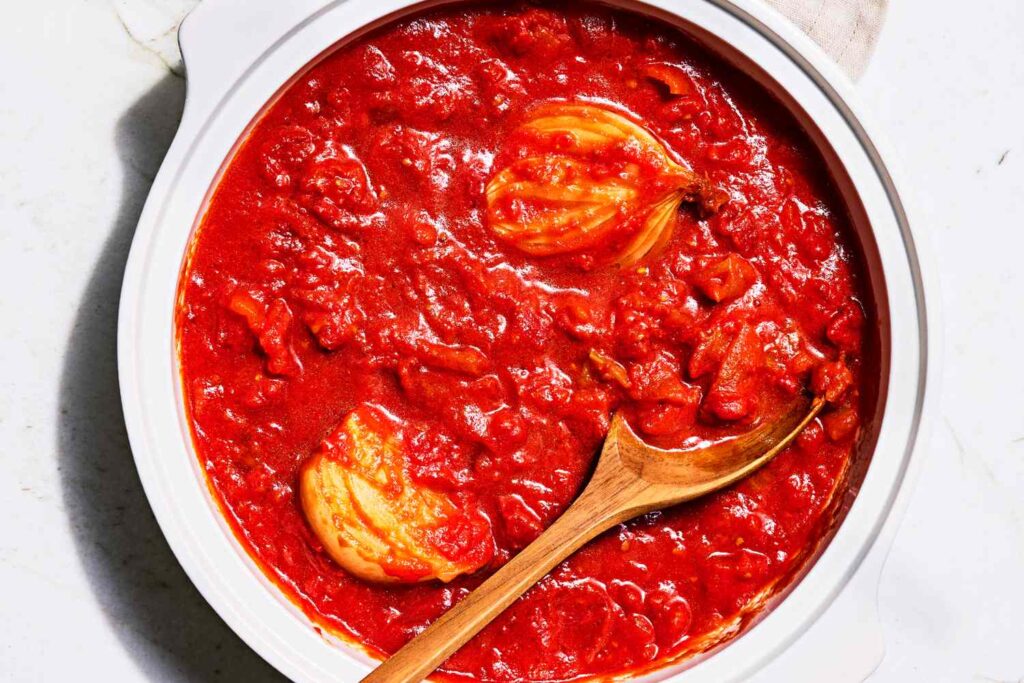
Salsa di Pomodoro della Nonna
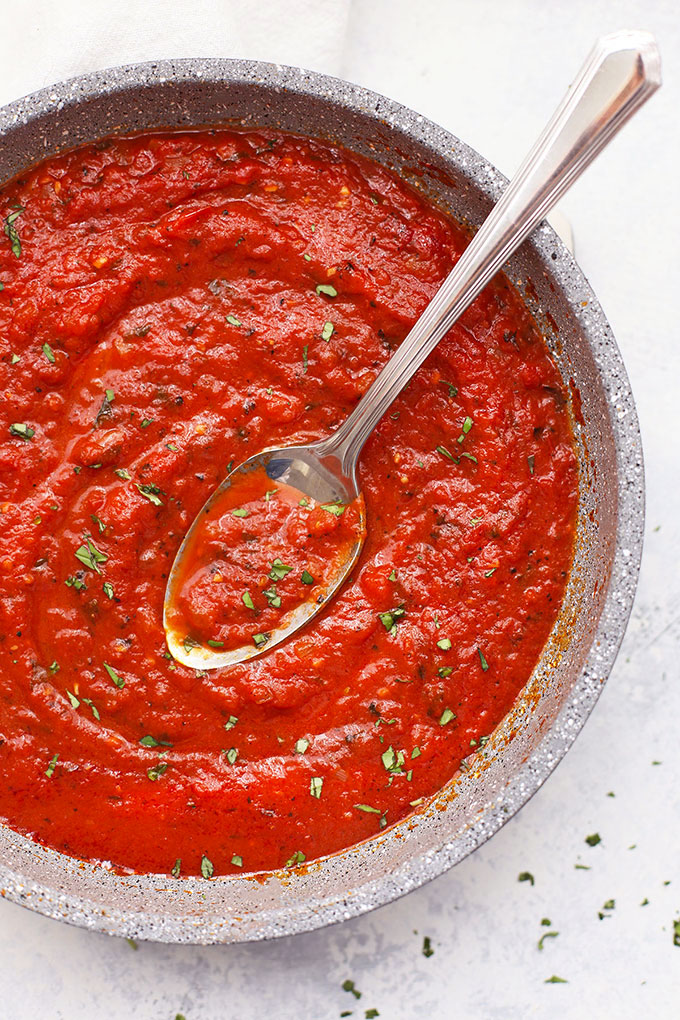
Salsa di Pomodoro della Nonna

Salsa di Pomodoro della Nonna


1/4 cup extra-virgin olive oil

One 4-pound chicken, quartered

Kosher salt and freshly ground black pepper

1/4 cup peeled and finely diced carrot

1/4 cup finely diced celery

1/2 cup finely diced yellow onion

1 teaspoon minced garlic

1 teaspoon minced fresh rosemary

1 bay leaf

1/2 cup dry red wine

Two 28-ounce cans San Marzano tomatoes, put through a food mill, with juice reserved (see Chef’s Note)

1/4 cup torn fresh basil leaves


Preheat the oven to 300 degrees F. Heat a large Dutch oven over medium-high heat and add the oil. Season the chicken with salt and pepper. Add the chicken to the pot and lightly brown on all sides, about 4 minutes per side. Using tongs, transfer the chicken to a plate.  Place the Dutch oven over medium-high heat and sauté the carrot, celery, onion, and garlic until tender, about 8 minutes. Add the rosemary, bay leaf, and red wine. Stir to scrape up the browned bits, then return the chicken to the pot. Cook to reduce the wine until the pot is almost dry. Pour in the milled tomatoes and season the sauce with salt and pepper.  Make a sweating lid to fit the pot. When the sweating lid is in place resting on top the chicken, slide the pot into the oven and cook for about 1 hour, or until chicken is cooked through. (You can use a regular pan lid if you don’t want to cut a sweating lid from parchment but allow a little more cooking time.) Using tongs, transfer the chicken pieces to a plate. You can keep the chicken warm and serve it as a second course, or let cool, wrap, and refrigerate for another use. Add the torn basil leaves to the sauce and use this in place of any marinara sauce.


CHEF’S NOTE: Tomatoes put through a food mill have the right consistency for the sauces I make. If you don’t have a food mill, you could pulse tomatoes just 3 or 4 times in a food processor (don’t overprocess them), but to get the same velvety consistency of the sauces we serve at Bottega, a food mill works much better, and is an inexpensive addition to your kitchen tool set.


Cooking under a sweating lid reduces the circulation of the air in the pot and, by holding in the steam, keeps the food moister. There are two ways to cut a sweating lid: Trace the lid for the pot you’ll be using on parchment paper and then cut the paper a little smaller, so the parchment fits inside the pot. The other way to make a sweating lid-the chef’s way-is to tear off a piece of parchment larger than the pot. Holding one point of the parchment sheet toward you, fold the parchment into a fan, starting at the left side and folding back and forth to create accordion pleats. Hold the parchment fan over the pot with the tip of it dead center, then use kitchen shears to snip off the fat end in a curve. The sweating lid will fit down inside the pot and sit right on top the bird as it cooks, keeping it moist and flavorful.
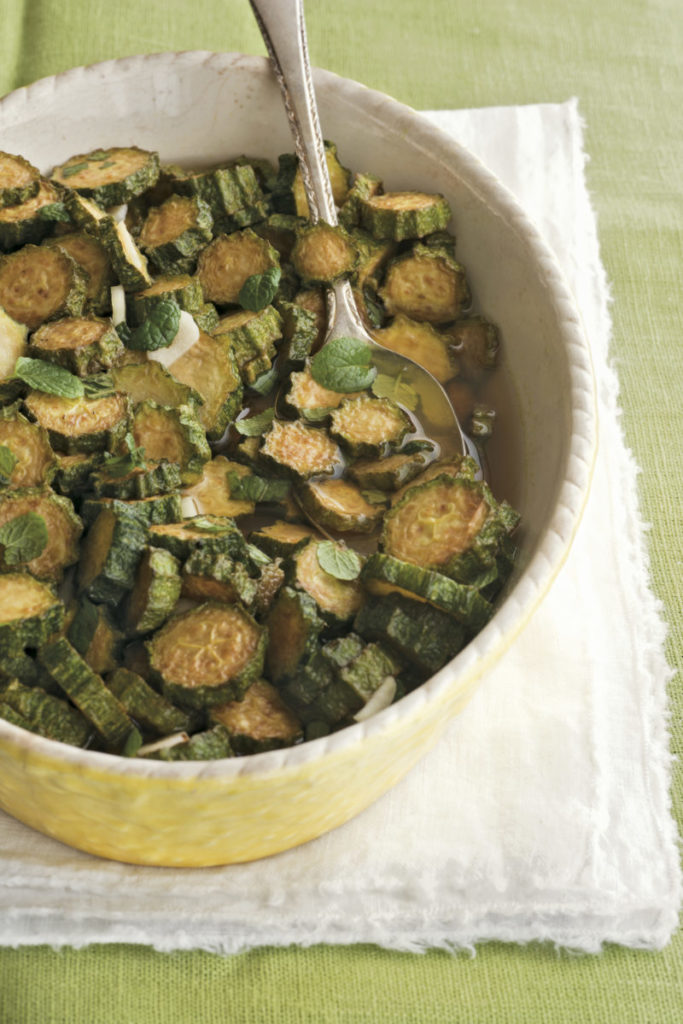
Concia (Fried and Marinated Zucchini)

Concia (Fried and Marinated Zucchini)

Concia (Fried and Marinated Zucchini)

Concia is an Italian dish from the Jewish tradition in Rome.


2 clove garlic (peeled and thinly sliced)

¼ C. finely chopped mint leaves

2/3 C. white wine vinegar

neutral oil (as needed for frying)

6–7 zucchini (cut into ½‑inch rounds)

1 tsp. kosher salt

whole mint leaves (as needed for garnish)

extra-virgin olive oil (for drizzling)


Combine garlic, mint, and vinegar in a medium bowl and set aside. Line a wire rack with paper towels. In a medium frying pan or cast-iron skillet, heat 2 inches of neutral oil to 350 degrees F. Fry the zucchini in small batches until golden brown or darker, if you wish, and transfer to rack to drain. Season with the salt. Add the zucchini to the vinegar marinade and toss to coat. Marinate in the refrigerator for at least 2 hours or overnight. Serve garnished with whole mint leaves and drizzled with olive oil, on its own as a side dish or as a sandwich filling: Slice open bread, fill with concia, and drizzle with leftover marinade.

Cheesy Baked Tortellini

Cheesy Baked Tortellini

Cheesy Baked Tortellini

Olive Oil

2 C. marinara sauce

1/3 C. mascarpone cheese

1/4 C. chopped fresh Italian parsley

2 tsp. chopped fresh thyme

1 lb purchased cheese tortellini

2 oz thinly sliced smoked mozzarella

1/4 C. parmesan


Preheat oven to 350 degrees. Lightly oil an 8×8 inch baking dish.

Whisk the sauce, mascarpone cheese, parsley and thyme in a large bowl to blend. Cook the tortellini in a large pot of boiling, salted water until just tender, about 2 minutes. Drain. Add the tortellini to the sauce and toss to coat. Transfer the tortellini mixture to the prepared baking dish. Top the mixture with the smoked mozzarella and Parmesan. Cover and bake until the sauce bubbles and the cheeses on top melt, about 30 minutes.

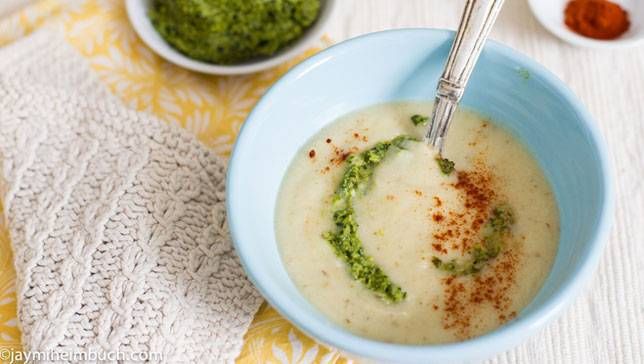
Roasted Cauliflower and Leek Soup with Dandelion Green-Hazelnut Pesto

Roasted Cauliflower and Leek Soup with Dandelion Green-Hazelnut Pesto

Roasted Cauliflower and Leek Soup with Dandelion Green-Hazelnut Pesto

1 head cauliflower, cut into florets

2 leeks, cut into rings

1 yellow onion, diced

2 cloves garlic

2 tb olive oil

1 1/2 tsp salt

1/2 tsp black pepper

1 medium russet potato, diced

3 c vegetable stock

1/2 c unsweetened coconut milk

1 tb dry thyme leaves (or 1 tsp fresh)

1 tsp paprika (optional garnish)

1/4 tsp nutmeg (optional garnish)


1/4 C. hazelnuts

1 clove garlic, minced

2 C. dandelion greens

2 T. Parmesan Cheese

1/2 tsp salt

1/3 C. olive oil


To make the pesto, place the hazelnuts in a dry skillet and toast over medium-high heat for 5 minutes, until golden. Transfer to a dry kitchen towel and rub together to remove their skins. Combine the garlic and hazelnuts in a food processor and process to a fine powder. Add the dandelion greens, Parmesan and salt and continue processing. Add the olive oil in a single stream while the machine is running until the ingredients come together into a creamy paste. The pesto may be stored in the refrigerator for up to 3 days or frozen for up to 1 month. To make the soup, preheat the oven to 375°F. Toss together the cauliflower, leek, onion, garlic, olive oil and ½ tsp. of the salt. Transfer to a baking sheet and roast for 25 minutes, until golden. Then place the roasted vegetables in a large pot. Add the potato, chicken stock, coconut milk, thyme leaves, remaining 1 tsp. salt and the pepper. Bring the liquid to a boil over medium-high heat. Reduce the heat to medium, cover and simmer for 10 minutes, until all the vegetables are tender. Purée the soup in a blender. Serve with the pesto.

One Pot Spaghetti Alla Puttanesca with Chickpeas & Artichoke Hearts

One Pot Spaghetti Alla Puttanesca with Chickpeas & Artichoke Hearts

One Pot Spaghetti Alla Puttanesca with Chickpeas & Artichoke Hearts


1 tsp. olive oil

1/2 large white or yellow onion diced

2 cloves garlic minced

12 oz spaghetti

2 oz sliced black olives (up to 4 oz. for olive lovers)

14 oz artichoke hearts rinsed and drained, and chopped

3/4 cup cooked chickpeas rinsed and drained

2 T. capers

14 oz. canned diced tomatoes

1 T. dried oregano

1 tsp. dried basil

1/2 tsp. dried thyme

1/2 tsp. red pepper flakes (reduce to 1/4 tsp. if sensitive to heat)

1/2 tsp. ground black pepper (reduce to 1/4 tsp. if freshly ground)

salt to taste (see notes)

4 cups low-sodium vegetable broth


Warm the olive oil in a large, deep, skillet and then add the onions and garlic, stirring occasionally until just starting to turn golden. Add the pasta to the skillet, breaking in half if needed (a saucepan may also work). Add the rest of the ingredients, minus the broth, to the pan on top of the pasta. Then pour the vegetable broth over everything. Cover the pan and bring to a boil. Reduce to a steady simmer (medium to medium-low heat) and, keeping covered & stirring occasionally, cook for 8-10 more minutes, or until pasta is done through to your liking.

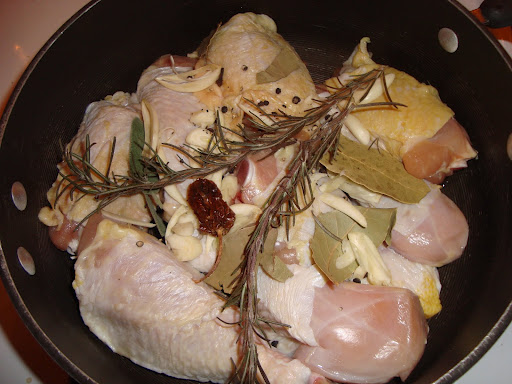
Pollo Canzanese (Chicken in Canzano Style)

Pollo Canzanese (Chicken in Canzano Style)

Pollo Canzanese (Chicken in Canzano Style)


This Canzanese recipe is anything but a peasant dish, with the prosciutto and wine—it probably descended from Spanish royalty, long-time tenants in and around Napoli .

Two 3-pound CHICKENS, cut into 8 serving pieces each


1 T. Salt

2 sprigs Rosemary

2 fresh Sage leaves

4 Bay Leaves

3 cloves Garlic, sliced

12 whole Cloves

A small handful of Black Peppercorns, crushed

1 small dried Hot Chile

Two 1/4-inch-thick slices Prosciutto di Parma , finely chopped

3/4 cup dry Red Wine

2 T. finely chopped Italian Parsley

Place the chicken in a large bowl and season with the salt. Add cold water to cover, and set aside for 30 minutes. Drain the chicken, rinse, and pat dry with paper towels. Place in a large Dutch oven and add the rosemary, sage, bay leaves, garlic, cloves, peppercorns, chile, prosciutto, and wine.

Cover, bring to a simmer, and cook, stirring occasionally, until the chicken is almost tender, about 35 minutes. Remove the lid and simmer to reduce the sauce by half, about 15 minutes longer. Remove the chile, if desired. Transfer the chicken to a warmed serving platter, garnish with the parsley, and serve

Shells with Broccoli Rabe & Pancetta

Shells with Broccoli Rabe & Pancetta

Shells with Broccoli Rabe & Pancetta

Kosher salt and freshly ground pepper

1 1/2 pounds broccoli rabe (1-2 bunches)

1 pound large pasta shells, such as Barilla

Olio Santo Extra Virgin Olive Oil

1/2 pound pancetta, 1/4-inch diced

2 garlic cloves, minced

1 tsp. crushed red pepper flakes

8-10 ounces fresh ricotta

Freshly grated Italian parmesan cheese, for serving


Bring large pot of water to a boil and add 1 T. salt. Remove and discard the bottom third of the broccoli rabe and slice the rest crosswise in 2-inch pieces. When the water boils, cook the broccoli rabe for 2-3 minutes, until just tender. With a wire skimmer, lift the broccoli rabe (don’t drain the pot!) into a large bowl and set aside. Bring the water back to a boil, add the shells, and cook al dente according to the directions on the package. Reserve 1 cup of the cooking liquid, drain the pasta and set aside. Meanwhile, heat 2 T. of Olio Santo olive oil in a large sauté pan, add the pancetta, and cook over medium heat for 8 minutes, stirring occasionally, until the pancetta is browned. Add the garlic and cook for 1 minute. Add the broccoli rabe and red pepper flakes and toss well. Add the cooked shells, 1 tsp. of salt, and 1 tsp. of black pepper and toss. Cook over medium heat for a few minutes until all the ingredients are heated through, adding enough of the reserved cooking water so the pasta isn’t dry. Serve hot in large shallow bowls with a large dollop of ricotta and drizzle with Olio Santo olive oil, and with grated Parmesan on the side.

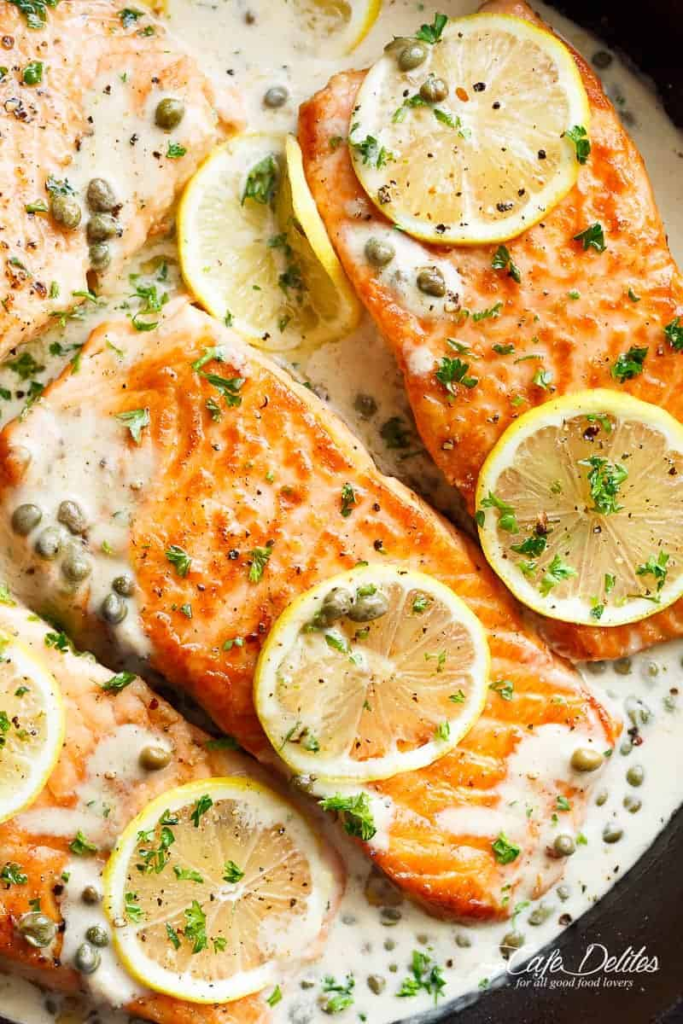
Creamy Lemon Garlic Salmon Piccata

Creamy Lemon Garlic Salmon Piccata

Creamy Lemon Garlic Salmon Piccata

4 6 oz skinless salmon fillets

Salt and pepper to taste

¼ cup flour

2 tablespoons unsalted butter

1 tablespoon olive oil

4 medium garlic cloves minced

⅓ cup dry white wine

1 cup low-sodium chicken stock/broth (fat free if you can find it)

1-2 level teaspoon cornstarch

3-4 tablespoons fresh lemon juice (adjust to your tastes)

4 tablespoons rinsed and drained capers

1/2 cup heavy cream

2-4 tablespoons coarsely chopped parsley to serve

Lemon slices to serve


Season both sides of salmon fillets evenly with salt and pepper. Add ¼ cup of the flour to a shallow dish; dredge the salmon in the flour to evenly coat. Shake off excess. Melt 1 tablespoon of butter in a large nonstick pan or skillet over medium-high heat. Add 1 tablespoon oil and swirl to mix through the butter. Add salmon; sauté 4 minutes on each side or until just cooked to your liking. Transfer salmon to a warm plate; tent with foil and set aside. Add remaining 1 tablespoon butter (or oil) to pan and melt. Add the garlic, sauté for a further minute until fragrant. Add wine; bring to a boil scraping any browned bits off the bottom of the pan. Cook until liquid almost evaporates, stirring occasionally. Add ¾ cup stock/broth to the pan along with the lemon juice; bring to a boil and cook for a further minute. Mix 1 teaspoon of cornstarch with 2 tablespoons of the reserved broth, whisking well to combine. Pour the mixture into the pan, stirring through the liquid to create a sauce. Cook for 1 minute or until slightly thickened. If it is not thick enough, mix the remaining cornstarch with the remaining broth and add to the center of the pan. Stir in the cream and remove from heat and add the capers. Place the salmon fillets back into the pan. Sprinkle with chopped parsley, pepper and add in lemon slices. Serve immediately with the sauce over rice or pasta, vegetables of choice or with a salad.


Yield: 4 servings

Calories: 459

Fat: 25g

Fiber: 0g

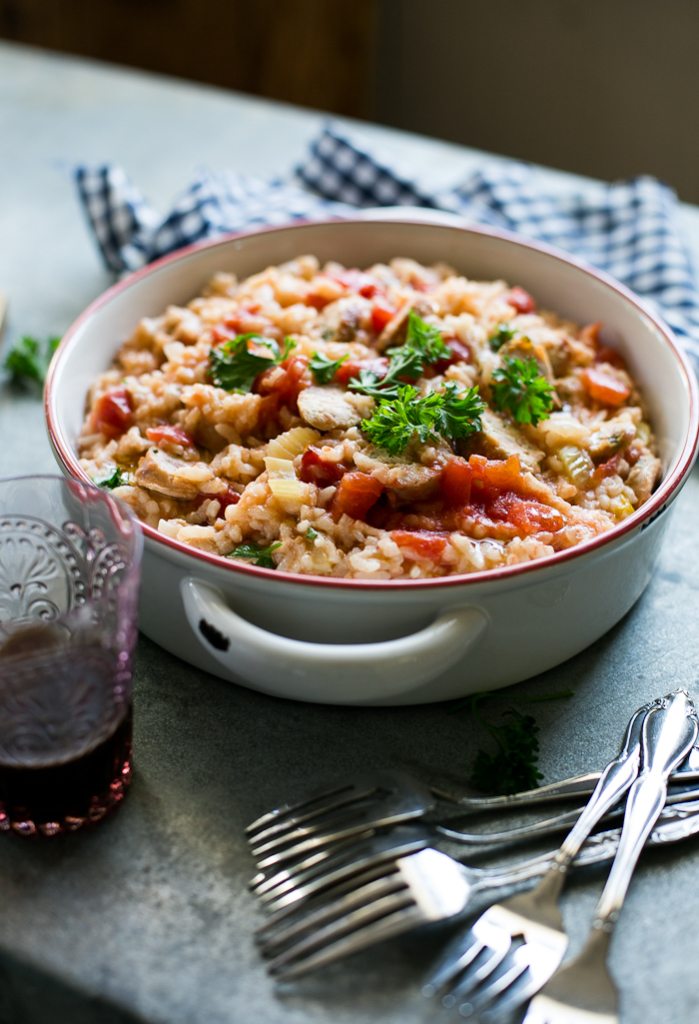
Creamy Baked Sausage Risotto

Creamy Baked Sausage Risotto

Creamy Baked Sausage Risotto


For the Chicken Sausage

1 tsp olive oil

¾ lb Italian chicken sausage

Risotto

1 T. olive oil

1 T. butter

1 medium onion, cut into ½-inch dice

1 rib of celery with leaves (if you have any), thinly sliced

1 garlic clove, thinly sliced

¾ cup Arborio rice

splash of dry white wine, such as Sauvignon Blanc

1 14 oz can of diced tomatoes

3 cups of good-quality chicken broth (or stock), plus more as needed

salt & pepper

¼ cup roughly chopped parsley (I used the curly kind)

parmesan cheese

extra olive oil, for serving


Preheat your oven to 350 F. In a 6 qt. Dutch oven, or another oven-proof pot with lid, warm the 1 tsp. of olive oil over medium heat. Add the sausage and brown on all sides, about 10-12 minutes. Transfer sausage to a cutting board. Pour out any residual oil and clean the bottom of the pot with a paper towel.

To begin the risotto, add the olive oil and butter to the Dutch oven. Sauté the onions, celery, and garlic over medium-low heat until the vegetables begin to soften, abut 5-7 minutes. Add the rice. Stir the grains to coat, 1 minute. Deglaze the pan with a splash of white wine scraping up any brown bits stuck to the bottom of the pot. Simmer for 1-2 minutes or until the wine is slightly reduced. Add the tomatoes and chicken broth, and give it a stir. Place the lid on top and transfer to the oven. Bake for 30 minutes.

Meanwhile, slice the sausage into rounds. At the 30 minute mark, add the sausage to the pot. Continue to bake for an additional 10 minutes. The risotto is ready when the grains are tender, but still have a slight bite to them. Remove the pot from the oven and peek inside; adjust consistency with more chicken broth or simply keep it the way it is. Risotto is very forgiving. Taste and season with salt and pepper. Stir in the chopped parsley. Serve warm with a drizzle of extra olive oil and plenty of parmesan cheese.

Saffron Clam Chowder with Gnocchi

Saffron Clam Chowder with Gnocchi

Saffron Clam Chowder with Gnocchi


2 lbs Manila clams, cleaned and purged

½ cup dry white wine

2 sprigs fresh thyme

1 clove garlic, whole

½ cup diced celery

1 cup diced onion

1 tablespoon unsalted butter

6-8 threads saffron (use whole threads, not ground)

2 cups heavy cream

Salt and pepper to taste

1 bay leaf

1 package frozen gnocchi

1 tablespoon unsalted butter for the gnocchi

½ cup cold water


In a large stainless-steel stock pot, placed washed clams with the white wine, thyme and garlic. Cover the pot and turn the heat on high. Let the clams steam about ten minutes, until they open and are easy to remove from their shells. Remove the clams from the liquid. Strain the liquid into a deep clear container (clear measuring cup works well) and save! Remove the clam meat from the shells and discard shells. In a large stock pot, melt the butter. Add the onions and celery. Cook until translucent. Carefully pour in the reserved clam juice, making sure to not pour in any sediment. Add the saffron, bay leaf, clams and cream. Bring to a boil and reduce slightly. Season with salt and pepper to taste. To serve, in a 10-inch sauté pan, heat the butter reserved for the gnocchi. Add the frozen gnocchi (do not thaw) and brown evenly. Add the cold water and cook until it is evaporated. The gnocchi should be heated through by then. Place six pieces of gnocchi in a warm bowl. Ladle the chowder over and serve immediately.

Chicken Casalinga

Chicken Casalinga

Chicken Casalinga


1 dozen littleneck clams, scrubbed

21/2 lb. frying chicken, cut into 8 pieces

salt and pepper

paprika

1/2 cup flour

1/3 cup oil

1 garlic clove

1 medium-sized onion, chopped

1 cup chicken stock

1/2 tsp. dried marjoram leaves

1 bay leaf, crumbled

½ green pepper, seeded and cut into strips

½ sweet red pepper, seeded and cut into strips

4 tomatoes, quartered

1/2 lb. large fresh mushrooms sliced


Sprinkle the chicken pieces with salt, pepper and paprika and dredge them with flour. In a skillet, heat the oil, add the garlic clove and brown the chicken pieces. When the chicken is brown, remove it and the garlic. Set the chicken aside in a warm place. In the same skillet, cook the onion until soft. Add the stock, marjoram, bay leaf, 1/2 tsp. salt and1/4 tsp. pepper. Scrape the skillet with a spatula until this sauce is well blended. Layer the chicken, green and red pepper strips, tomato quarters and sliced mushrooms in a 2-quart casserole. Pour in the sauce, cover the casserole and bake it in a preheated 350″ F. oven for 45 minutes. Add the clams and bake the casserole for an additional 10 minutes, or until the clams open. Serve over buttered rice or noodles.

Italian Lemon Herb Pork Chops

Italian Lemon Herb Pork Chops

Italian Lemon Herb Pork Chops


4 bone-in rib pork chops

2 T. butter

1 C. flour

2 eggs beaten


1 C. plain breadcrumbs

1 C. panko breadcrumbs

2 T. dried parsley -OR- 4 T. FRESH chopped parsley

2 tsp. garlic powder

1 tsp. onion powder

1/4 tsp. oregano

1 tsp. salt

1/2 tsp. pepper

1/2 C. grated Parmesan or Romano cheese


2 T. butter

3 cloves garlic minced

1/2 C. chicken stock/broth

1 C. heavy cream

2 T. lemon juice

2 T. dried parsley -OR- 4 T. FRESH chopped parsley

1/4 tsp. oregano

1/2 C. shredded mozzarella cheese

2 T. shredded Asiago cheese

Salt to taste

Pepper to taste


Mix all seasoned bread crumb ingredients in a large bowl. Preheat oven to 350 degrees F. Melt 1 T. of butter in a skillet over medium-high heat. Dredge the pork chops in the flour, then dip in the beaten egg and the seasoned bread crumb mixture. Brown chops on both sides (I could only brown 2 at a time); remove from pan and place on a rack inserted in a baking sheet. Melt remaining 1 T. butter and repeat. Bake chops in preheated oven for 20 minutes; meanwhile make sauce. In a small saucepan, melt the 2 T. of butter over medium heat. Add the garlic and sauté for about 5 minutes. Stir in the stock, lemon juice, oregano and the cream. Heat until it begins to bubble. Add the cheeses and stir until they are melted. If the salt/pepper is needed, add it now. Add the parsley and continue cooking until sauce is reduced about 25% (It should be the consistency of a thinner gravy). Sauce may be poured over the cooked chops or served on the side like a gravy.

Carciofi Fritti (Tuscan Fried Baby Artichokes

Carciofi Fritti (Tuscan Fried Baby Artichokes

Carciofi Fritti (Tuscan Fried Baby Artichokes)

small baby artichokes, peeled and trimmed as in video

1 extra large egg

1/4-1/2 cup flour

salt

oil for frying

Prepare the artichokes as seen in the video, tearing off the tough outer leaves. Cut off the tough top of the leaves. Trim off the bottom stem and the bottom of the heart. Place in water with lemon juice or white wine vinegar. Drain the artichokes and cut into smaller pieces, 1/2’s or 1/4’s if they are larger. Place in a bowl. Add one whole egg, and mix to blend well with the artichokes and a pinch of salt. Add enough flour to create a rough “Batter” which will stick on the artichokes. There should be no extra liquid. It will probably not seem like a lot of batter. Fry in hot oil, not touching each other, until golden. Salt when done.


Gnocchetti with Savoy Cabbage and Candied Cherry Tomatoes (Gnocchetti con Cavolo Cappuccio e Pomodorini Canditi)

Gnocchetti with Savoy Cabbage and Candied Cherry Tomatoes (Gnocchetti con Cavolo Cappuccio e Pomodorini Canditi)

Gnocchetti with Savoy Cabbage and Candied Cherry Tomatoes (Gnocchetti con Cavolo Cappuccio e Pomodorini Canditi)


2 lb. (900 g) russet potatoes

Kosher salt

2/3 C. (310 g) all-purpose flour

1 large egg

2 14-ounce cans (400 g) cherry tomatoes, strained

1/4 C. (59 ml) extra-virgin olive oil

1 tsp. granulated sugar

2 whole cloves

2 sprigs thyme

1 3-inch cinnamon stick

1 1-inch strip orange zest

1 1-inch strip lemon zest

1 sprig rosemary

1/4 tsp. whole black peppercorns

1 small head savoy cabbage, shredded


Put the potatoes in a large pot and cover with cold water. Bring to a boil over medium heat, salt liberally, and cook at a gentle simmer until the potatoes are extremely tender, 35 to 40 minutes. Drain the potatoes and peel them while they’re still warm. Pass through a ricer onto a clean work surface. Sprinkle the flour evenly over the potatoes and form into a well. Crack the egg into the well and gently beat with a fork. Gradually incorporate the egg into the flour. Knead the dough until smooth. Cut the dough into four even pieces. Roll each piece out into a !4-inch-thick rope, and then cut each rope with a pastry cutter or knife into !4-inch pieces. Place the gnocchetti on sheet pans lightly dusted with flour, cover, and refrigerate until ready to use. Position a rack in the center of the oven and heat the oven to 325°F (170°C). In a large bowl, toss the tomatoes with 2 T. of the oil, 1 tsp. salt, and the sugar; toss well to combine. Arrange the tomatoes in a single layer in an 8 x 8-inch baking dish. Make a bundle out of cheesecloth with the cloves, thyme, cinnamon stick, orange zest, lemon zest, rosemary, and peppercorns. Add this bundle to the pan and roast in the oven until the tomatoes are tender and beginning to caramelize, about 1 Vi hours. Remove from the oven and discard the bundle. In a 12-inch skillet heat the remaining 2 T. oil over medium heat. Add the cabbage and a generous pinch of salt and cook, stirring often, until the cabbage wilts, about 5 minutes. Add the tomatoes and 1/4 C. of water, cover, and reduce the heat. Cook, stirring often, until the cabbage is meltingly tender, 35 to 40 minutes. Season to taste with salt. Bring a large pot of well-salted water to a boil. Drop the gnocchetti into the water and cook until they begin to rise to the surface, about 3 minutes. Transfer the gnocchetti to the cabbage with a slotted spoon or spider and toss to combine. Serve the gnocchetti in individual shallow bowls.

Chicken Parmesan Pasta Skillet

Chicken Parmesan Pasta Skillet

Chicken Parmesan Pasta Skillet

1-1/4 lb boneless, skinless chicken thighs, cut into bite sized pieces

1 tablespoon olive oil

salt and pepper to taste

1/2 medium sweet onion, finely diced

2 cloves garlic, minced

12 oz short pasta (penne, rotini, ziti)

1/2 cup red wine

1-1/2 cups chicken broth

1 (28 oz) can crushed tomatoes

2 teaspoons dried basil

1 teaspoon dried oregano

1/2 teaspoon crushed red pepper flakes

1 cup shredded mozzarella cheese

1/2 cup grated Parmesan cheese

1/2 cup bread crumbs

1/4 cup chopped fresh parsley


In a large skillet or dutch oven heat the oil over medium heat. Add the chicken and onion; season with salt and pepper. Cook and brown for 8 to 10 minutes or until onion is soft and chicken is nearly cooked through. Add the garlic and cook for another minute. Add the pasta, wine, broth, tomatoes, basil, oregano, and red pepper flakes and stir to combine. Cover and simmer for about 15 minutes, stirring occasionally, until pasta is tender. Meanwhile, in a small bowl combine the Parmesan cheese and the bread crumbs; set aside. When the pasta is tender, sprinkle with mozzarella cheese and then the parmesan and bread crumb mixture. Broil for 3-4 minutes or until golden and crispy. Remove from oven and sprinkle parsley on top. Serve.

Vegetarian Grilled Vegetable Sandwich with Olive Tapenade

Vegetarian Grilled Vegetable Sandwich with Olive Tapenade

Vegetarian Grilled Vegetable Sandwich with Olive Tapenade


1 carrot, thinly sliced

1 zucchini, thinly sliced

1 red bell pepper, cored, seeded and cut into large pieces

6 scallions, trim off bottom root and top (6-inch slice)

1 Japanese eggplant, thinly sliced

1 head Belgian endive, slice root off, keep leaves whole

2 whole wheat rolls


Tapenade:

10 calamata olives, pitted

½ shallot, peeled and sliced

1 tsp. capers

½ tsp. olive oil


Sandwich: Grill carrots, zucchini, bell peppers, eggplant and scallions until soft and caramelized. Tapenade: In a food processor, chop all ingredients into a fine paste. Cut rolls in half and toast until light golden brown. Spread tapenade on both sides of rolls and build a great vegetarian sandwich with all of the grilled vegetables.

Prosciutto & Genoa Panzanella

Prosciutto & Genoa Panzanella

Prosciutto & Genoa Panzanella

1 cup loosely packed fresh basil

1 1/2 tablespoons chopped shallot

2 tablespoons balsamic vinegar

3/4 teaspoon salt

1/4 teaspoon black pepper

2 tablespoons mayonnaise

6 tablespoons extra-virgin olive oil

parmesan cheese


2-3 slices Prosciutto, ripped

2-3 slices Genoa Salami, sliced and cubed

1 Roma Tomato, sliced and cubed

3-5 Cherry Tomatoes, sliced

a handful of Spinach

A little Romaine

Thinly sliced Parmesan Cheese

Cubed French Bread

Basil Dressing


First, take all of the Basil Dressing ingredients and blend in blender or food processor. Refrigerate until ready to use. Then, preheat oven to 350 degrees. Cube French bread and add to baking sheet. Sprinkle bread with olive oil and garlic salt. LIGHTLY TOAST the bread. Be careful not to let the bread become too crispy. The bread should barely, if not at all, brown (3-5 minutes). Add the remainder of the Salad Ingredients to a large dinner bowl or plate. Mix Salad Ingredients with the basil dressing. Enjoy!

Skillet Chicken Parmesan

Skillet Chicken Parmesan

Skillet Chicken Parmesan

2 tablespoons olive oil

4 small boneless, skinless chicken breasts (about 1½ pounds total), patted dry

Salt and pepper to taste

2 garlic cloves, minced

Large pinch of crushed red pepper flakes

½ teaspoon dried oregano

1 (28 ounce) can (785-g) can crushed tomatoes

2 cups (8 ounces) shredded packaged mozzarella or sliced fresh mozzarella, patted dry

Freshly grated Parmesan or Pecorino cheese (optional)

Handful of fresh basil leaves (optional)


Preheat the oven to 400°F (205°C), with a rack in the middle position. In a large high-sided sauté pan, heat the oil over medium-high heat until it shimmers. Season the chicken generously with salt and pepper; add to the pan and cook until lightly golden, about 2 minutes. Flip the pieces over and cook 1 minute more. Sprinkle the garlic around the chicken, followed by the pepper flakes and oregano. Pour the tomatoes evenly over the chicken, season with salt and pepper, then gently shake the pan to distribute the sauce (you can also do this with a small spoon). Top the chicken with the mozzarella and Parmesan (if using) to taste. Bake until the sauce is bubbling and the chicken is just cooked through, 12 to 14 minutes. (Brown it under the broiler, if you like.) Off the heat, top with the basil leaves (if using), tearing any large ones. Let the Parm rest for about 5 minutes before serving, and keep the pan’s handle covered with an oven mitt; it’s easy to forget it’s hot. Serve with more Parmesan cheese, if you like. Tips: Small chicken breasts work best here in terms of timing and the ratio of meat thickness to cheese and sauce. If you need to use larger ones, pound them between pieces of plastic wrap with a meat mallet or a small skillet to about ½-inch (12-mm) thickness. For Staggered Serving: Serve hot or warm. We often keep the Parm at the back of the stove alongside a pot of spaghetti so plates can be made up as needed, but it will also keep, covered, in a 200°F (90°C) oven, for about 1 hour.

Sweet Basil Gnocchi with a Shrimp & Chardonnay Cream Sauce

Sweet Basil Gnocchi with a Shrimp & Chardonnay Cream Sauce

For Gnocchi:
2 lb. baked potatoes
½ C. basil, finely chopped
Salt to taste
1 large egg
1 ½ tsp. unsalted butter, melted
1 ½ C. all purpose flour
2 tsp. olive oil

For Sauce:
2 tsp. olive oil
1 tsp. garlic, chopped
1 tsp. shallots, chopped
1 pound medium-sized shrimp (or substitute shrimp for two 6-oz. chicken breasts, cooked and diced)
1 C. sweet peas
1 C. chardonnay
1 C. cream
1 tsp. unsalted butter
1 2-oz. block of parmesan cheese

Peel and dice potatoes, then place in a large sauce pot with cold water to cover. Add salt and bring water to a boil over high heat. Lower heat and simmer for about 30 minutes or until the potatoes are cooked. Drain and mash. Place a stock pot on the stove with two quarts of water, a tsp. olive oil and a pinch of salt, and bring to a boil. Place the mashed potatoes into a bowl. Add flour a little at time. Add the egg and the butter, blend well. Add the basil and salt & pepper, mix well. Continue to add flour slowly, blending well after each addition. The amount of flour will vary depending upon the moisture in the potatoes. You should add sufficient flour to make dough that is smooth and elastic enough to form into gnocchi easily. Place ½ C. flour in a small bowl. Break off a workable amount, roll into tube shape and cut into desired size. Next, dust the gnocchi in the flour bowl and place onto a cookie sheet lined with wax paper until sauce is made.. Once all gnocchi is ready to cook, drop into boiling water for 5 minutes or until gnocchi floats to the top. Remove with a slotted spoon and set aside in a bowl with a tsp. olive oil until all is cooked. Then add to the sauce when ready.

Wash and clean shrimp or chicken breast and set aside. If you using shrimp make sure they are peeled and deveined; tail may or may not be left on according to preference. Sauté shrimp or chicken until almost cooked through. Set aside and dice when cooled. Place a medium-sized sauté pan onto the stove with a tsp. olive oil over medium high heat. Add garlic, shallots and sauté for 1 minute. Next, add shrimp or diced chicken breast turning over once the shrimp start to get pink and adding white wine and cream. Simmer until slightly thickened. Add salt and pepper to taste. Add sweet peas and gnocchi, mix well. With a vegetable peeler shave parmesan cheese into pan with sauce. Simmer about 5 minutes, while blending in cheese.. Add butter to the sauce and stir. Serve and top off with a little chopped parsley for garnish.

Marcella Hazan’s Tomato Sauce

Marcella Hazan’s Tomato Sauce

2 C. tomatoes, in addition to their juices (for example, a 28-oz. can of San Marzano whole peeled tomatoes)
5 tsp. butter
1 onion, peeled and cut in half
Salt

Combine the tomatoes, their juices, the butter and the onion halves in a saucepan. Add a pinch or two of salt. Place over medium heat and bring to a simmer. Cook, uncovered, for about 45 minutes. Stir occasionally, mashing any large pieces of tomato with a spoon. Add salt as needed. Discard the onion before tossing the sauce with pasta. This recipe makes enough sauce for a pound of pasta.

Cubed Steaks Parmigiana

Cubed Steaks Parmigiana

3 T. all-purpose flour
1/2 tsp. salt
1/4 tsp. pepper
2 eggs
3 T. water
1/3 C. finely crushed saltines
1/3 C. grated Parmesan cheese
1/2 tsp. dried basil
4 beef cubed steaks (4 oz. each)
3 T. canola oil
1-1/4 C. tomato sauce
2-1/4 tsp. sugar
1/2 tsp. dried oregano, divided
1/4 tsp. garlic powder
4 slices part-skim mozzarella cheese
1/3 C. shredded Parmesan cheese

In a shallow bowl, combine the flour, salt and pepper. In another bowl, beat eggs and water. Place cracker crumbs, grated Parmesan cheese and basil in a third bowl. Coat steaks with flour mixture, then dip in egg mixture and coat with crumb mixture. In a large skillet, brown steaks in oil for 2-3 minutes on each side. Arrange steaks in a greased 13-in. x 9-in. baking dish. Bake, uncovered, at 375° for 25 minutes or until meat thermometer reads 160°. Combine the tomato sauce, sugar, 1/4 tsp. oregano and garlic powder; spoon over steaks. Bake 10 minutes longer. Top each steak with mozzarella cheese; sprinkle with shredded Parmesan cheese and remaining oregano. Bake 2-3 minutes longer or until cheese is melted

Rigatoni alla Castellana

Rigatoni alla Castellana

Rigatoni alla Castellana½ C. stemmed dried shiitake mushrooms
1 C. hot water
12 ounces rigatoni pasta
1 T. olive oil
4 slices thick bacon, cut crosswise into 1/4 inch pieces
4 ounces thinly sliced cooked pork (from leftover pork chops or tenderloin)
¼ C. minced shallots
2 cloves garlic, minced
1/4 C. brandy
1 ½ C. heavy cream
1 tsp. chopped fresh thyme
½ tsp. salt
¼ tsp. freshly ground black pepper
3 ounces fresh baby spinach
½ C. grated Parmigiano-Reggiano cheese

Place the dried mushrooms in a medium bowl, cover with the hot water, and let sit until reconstituted and soft, about 15 minutes. Drain the mushrooms and their liquid through a fine mesh strainer into a clean bowl, squeezing the mushrooms to extract as much liquid as possible. Reserve ½ C. of the liquid and roughly chop the mushrooms. Set aside. Bring a large pot of salted water to a boil. Add the rigatoni and cook until al dente, 10-12 minutes (or according to package directions). Meanwhile, heat the oil in a large skillet over medium heat. Add the bacon and sauté until browned and just slightly crisp, but still chewy. Remove the bacon from the pan with a slotted spoon onto a paper towel and set aside. Add the shallots to the pan and sauté until soft and fragrant, about 2 minutes. Add the garlic and cook, stirring, until fragrant, 30 seconds. Add the chopped mushrooms, and cook, stirring, for 2 minutes. Add the ½ C. reserved mushroom liquid, and ¼ C. brandy, and bring to a boil, and cook, stirring occasionally, until the liquid is nearly all evaporated. Add the cream, thyme, salt, and pepper and return to a simmer. Cook, stirring occasionally, until the cream is reduced and thick, 4 to 5 minutes. Add the half of the cheese and stir to incorporate. Add the bacon, sliced pork and spinach and heat just until the pork is warmed through and the spinach is slightly wilted. Drain the pasta and add to the pan with the sauce, tossing well to coat. Divide the pasta between four serving bowls, garnish each with the remaining cheese, and serve immediately.

Tagliata with Artichoke Salad

Tagliata with Artichoke Salad

tagliata with artichoke salad8 Baby Artichokes
3 T. EVOO
Salt & Pepper
1 boneless Strip Steak, 3 inches thick (about 2 pounds)
4 cloves Garlic, halved
4 4” springs each of Rosemary & Thyme
Shaved Parmesan, for garnish

Pluck and discard the outer leaves of the artichokes, revealing yellow-green core. Using a serrated knife, trim off the top third. Cut each into quarters. Bring medium saucepan of water to a boil. Add artichokes and cook 2 minutes. Drain and pat dry. Transfer to a bowl and toss with 2 T. oil. Season with salt and pepper to taste. Preheat oven to 400 and preheat a cast iron skillet until very hot. If your fire alarm is as sensitive as mine, get that oven vent on high! Season steak with salt and pepper. Add remaining 1 T. oil to pan and add steak, garlic and herbs. Cook over high heat until steak is brown and crusty on bottom and sides, about 10 minutes. Flip and set garlic and herbs on top. Add artichokes to skillet around the meat. Place in oven and roast until steak reaches 135 in the center, about 20 minutes. Transfer to cutting board and let rest 10 minutes. Strip rosemary and thyme leaves from stems, discard stems and add leaves to artichokes. Thinly slice steak and arrange on platter, surround with the artichokes and garnish with shaved parmesan.

Rosemary Focaccia

Rosemary Focaccia

3/4 cup, plus 1 T. unbleached all-purpose flourfocacciafinal
1/2 tsp. instant yeast
1/2 tsp. sugar
1/2 tsp. salt
1/3 C. room temperature or warm water
4 tsp. olive oil
1 scant T. fresh rosemary needles
1 large garlic clove, coarsely chopped
flaky sea salt
black pepper

Mix the dough: In a small bowl, whisk together the flour, yeast, and sugar. Then whisk in the salt (this keeps the yeast from coming into direct contact with the salt, which would kill it). Make a well in the center and pour in the water. Using a rubber spatula or a wooden spoon, gradually stir the flour into the water until all the flour is moistened and a dough just begins to form, about 20 seconds. It should come away from the bowl but still stick to it a little, and be a little rough looking, not silky smooth. Do not overmix, as this will cause the dough to become stickier. Let the dough rise: Pour the oil into a small bowl or 2-C. measuring cup. With oiled fingers or an oiled spatula, place the dough in the bowl or C. and turn it over to coat on all sides with the oil. Cover it tightly and allow it to sit at room temperature for 1 to 1 1/2 hours, or until doubled. Preheat the oven to 475 degrees F 30 minutes before baking: Have an oven shelf at the lowest level and place baking stone or heavy baking sheet on it before preheating. Shape the focaccia and let it rise: With oiled fingers, lift the dough out of the bowl or cup. Holding the dough in one hand, pour a little of the oil left in the bowl or C. onto a baking sheet and spread it all over the sheet with your fingers. Set the dough on top and press it down with your fingers to deflate it gently. Shape it into a smooth round by tucking under the edges. If there are any holes, knead very lightly until smooth. Let the dough rest for 15 minutes, covered, to relax it. Using your fingertips, press the dough from the center to the outer edge to stretch it into a rectangle about 9 inches by 6 inches and 1/4 inch high. If the dough resists, cover it with plastic wrap and continue pressing on it with your fingers. Brush the top of the dough with any oil remaining in the bowl or measuring C. and cover it with plastic wrap. Let the dough rise for 20-30 minutes more, or until light and spongy looking. Bake the focaccia: Using your fingertips, press deep dimples at 1-inch intervals all over the dough. Sprinkle it with the rosemary, salt, and pepper. Place baking sheet with the focaccia on the preheated hot stone or hot baking sheet and bake for 5 minutes. Add the garlic, slide a pancake turner underneath the dough to loosen it, and slip it directly onto the stone or heavy baking sheet (this means you will be removing the oiled baking sheet upon which the focaccia spent the first 5 minutes baking). Continue baking for another 5 minutes or until the top begins to brown around the edges.

Artichoke Bruschetta

Artichoke Bruschetta

Toasty baguette slices are topped with a creamy artichoke spread and then broiled until bubbly in this easy appetizer that’s fancy enough for a party…or for a more casual variation, bake it up as a hot dip instead!

1 (8-ounce) package of cream cheese, softened Artichoke-Bruschetta-by-Five-Heart-Home-for-Love-Grows-Wild_700pxHoriz
1 cup mayonnaise
1 (14-ounce) can of artichoke hearts (whole, halves, or quarters), drained & chopped
1 cup grated Parmesan cheese
1 cup grated mozzarella cheese
1 teaspoon garlic salt
French baguette loaf of bread, cut at an angle into 1/3-inch slices
Fresh chopped parsley or paprika, for garnish

In a large bowl, use an electric mixer to beat cream cheese until smooth. Blend in mayonnaise and chopped artichoke hearts. Mix in Parmesan, mozzarella, and garlic salt and beat at high speed until mixture is smooth. Preheat broiler to high. Dollop a generous amount of artichoke mixture on each baguette slice and spread all the way to the edges (which will prevent them from burning). Arrange bruschetta on a baking sheet. Broil for 2 to 3 minutes or until topping is bubbly and starting to turn golden brown. Garnish with chopped parsley or a light sprinkling of paprika, if desired. Serve hot. Alternatively, the artichoke mixture may be spread in a pie plate or similar baking dish and baked at 350°F for 25 to 30 minutes, until hot and bubbly (you may broil for a couple additional minutes to brown the top). Serve as a dip with baguette slices, assorted crackers, or tortilla chips.

Pressed Coppa Sandwiches with Broccoli Rabe Pesto

Pressed Coppa Sandwiches with Broccoli Rabe Pesto

1 po51154940und broccoli rabe (rapini)
Kosher salt
6 garlic cloves, smashed
1/4 C. olive oil
1 tsp. crushed red pepper flakes
1/2 C. finely grated Pecorino
2 tsp. honey
8 slices country-style bread
8 ounces thinly sliced provolone cheese
4 ounces thinly sliced sweet coppa or prosciutto
Olive oil (for skillet)

Cook broccoli rabe in a large pot of boiling salted water until bright green, about 30 seconds; drain; transfer to a bowl of ice water to cool. Drain; squeeze out water; cut into 1-inch pieces. Combine broccoli rabe, garlic, oil, and red pepper flakes a large skillet. Cook over low heat, stirring often, until broccoli rabe is very soft, 40-50 minutes. Let pesto cool slightly. Mix in Pecorino and honey. Build sandwiches with bread, provolone, coppa, and broccoli rabe pesto. Brush a large skillet with oil and heat over medium-low heat. Working in batches and brushing skillet with oil as needed, add sandwiches to pan, cover with foil, and place a heavy skillet on top. Cook until bread is toasted and cheese melts, 4-5 minutes per side (you can also use a lightly oiled panini press).

Italian Herb Baked Spinach Chips

Italian Herb Baked Spinach Chips

IMG_9342_22 cups fresh spinach (choose the big, healthy-looking leaves)
Few drop of extra virgin olive oil
McCormicks Italian Blend Seasoning
Salt

Preheat oven to 325. Place spinach in a large bowl. Add a few drops of olive oil and mix with your hands until each leaf is lightly coated in oil. Be careful not to use too much oil or the spinach will not crisp up in the oven. Sprinkle the spinach with Italian herb seasoning and salt. Taste one of the leaves to make sure you are using enough seasoning. (You won’t need a lot of seasoning). Arrange the spinach in a single layer (don’t let them overlap) on a baking sheet lined with parchment paper or lightly oil nonstick foil. Bake for 8 minutes. Watch them carefully after the 8 minute mark if they are not done. Let sit on the baking sheet for about 2-3 minutes. Remove from baking sheet and enjoy! TIPS: Be SUPER careful not to use too much olive oil. Only a few drops. Spinach will shrink A LOT in the oven so don’t be alarmed.

Butternut Squash Risotto with Balsamic Roasted Cauliflower and Brussels Sprouts

Butternut Squash Risotto with Balsamic Roasted Cauliflower and Brussels Sprouts

bnq1 head of cauliflower
2 pints of brussels sprouts
4 T. balsamic vinegar
1 T. olive oil
salt and pepper

4 1/2 cups chicken or vegetable broth
1 medium butternut squash, chopped into cubes
2 T. olive oil
3 T. butter (cut in two pieces)
3 cloves of garlic, minced
1 large yellow onion, chopped
1 1/2 cups arborio rice
1 cup dry white wine
Salt and pepper
1 cup grated Parmesan cheese

Preheat the oven to 400 degrees. Cut cauliflower into bite sized florets and cut trimmed brussels sprouts in half. In a mixing bowl, toss the cauliflower and brussels sprouts with the balsamic vinegar, olive oil, salt and pepper. Roast on a foil-lined sheet pan for 20 minutes, stir the mixture, and then roast for another 10 minutes. While vegetables are roasting, bring 2 cups of broth to a boil in a large sauce pan. When boiling, put a steamer basket in the bottom and layer in the butternut squash cubes, cover and steam until fork tender, about five minutes. Mash or puree the butternut squash (I mashed this time and left some bite sized pieces but decided I prefer the smoother texture when I pureed the squash in the past). To the saucepan with the steaming liquid, add the remaining 2 1/2 cups of broth and squash. Simmer to warm on low heat. Meanwhile, in a large dutch oven or pot, heat olive oil and melt in half of the butter. When butter is melted, sauté chopped onion and garlic, until the onions are translucent. Add the rice and stir until rice is translucent. Add the white wine and stir until evaporated. One cup at a time, add warm stock to rice pot. Deep stir until most recent cup of stock is absorbed, follow up with another ladleful until the rice is tender. Stir in remaining butter and half of the parmesan cheese before enjoying.

Bread Dipping Spices

Bread Dipping Spices

Bread Dipping Sauce1 T. chopped Italian flat leaf parsley
1 T. minced garlic
1 tsp. dried thyme
1 tsp. dried oregano
1 T. fresh Basil
1/8 tsp. dried rosemary (or 1/2 tsp. fresh)
1 tsp ground black pepper
1/2 tsp. kosher salt
1/8 tsp. ground red pepper (or 1/4 tsp. red pepper flakes)
1/2 tsp. extra virgin olive oil
1/8 tsp. fresh lemon juice

Place all ingredients except olive oil & lemon in a blender or food processor and chop until all ingredients are similar in size. Stir in the olive oil & lemon juice. In a small dish, place 1 1/2 tsp. spice mixture. Pour 3-4 T. extra virgin olive oil over top of the spice mixture. Serve with French bread for dipping.

Mario Batali’s Ragu Bolognese

Mario Batali’s Ragu Bolognese

ragu-bolognese_recipe_1000x400_14217119235265 tablespoons extra-virgin olive oil
3 tablespoons butter
3 medium carrots, finely diced
1 medium onion, diced
3 ribs celery, finely diced
4 cloves garlic, sliced
3/4 pound veal, ground
3/4 pound pork, ground
3/4 pound beef, ground (ground chuck)
6 ounces tomato paste
1 cup milk
1 cup dry white wine
Kosher salt and freshly ground black pepper
Cooked pasta
Parmigiano-Reggiano, for grating

In a 6 to 8-quart, heavy-bottomed saucepan, heat the olive oil and butter over medium heat. Add the onions, celery, carrot and garlic and sweat over medium heat until the vegetables are translucent and soft, but not browned, about 15 minutes. Add the veal, pork, and beef and stir into the vegetables. Lower the heat slightly and cook, Continue cooking, stirring occasionally to keep the meat from sticking together, until well-browned and all the fat has cooked off, about 45 minutes to 1 hour. Add the tomato paste, stir to incorporate, and cook slowly for about 30 minutes. Add the milk, stir and scrape up any browned bits off the bottom of the pan, and allow to simmer another 45 minutes. Add the wine, simmer about 10 minutes until reduced, decrease the heat to low, cover, and simmer for another hour. Season with salt and pepper, to taste, and remove from the heat. When ready to serve, transfer the pasta directly out of the boiling water into the saucepan with the appropriate amount of the hot ragu bolognese, and toss so that the pasta is evenly coated. Serve with freshly grated Parmigiano-Reggiano.

Hot Italian Sausage and Tomato Pasta

Hot Italian Sausage and Tomato Pasta

hot-italian-sausage_3001 lb fettuccine
3 T olive oil
1 medium red onion, sliced
1 clove garlic, smashed
4 hot Italian sausages, casings removed
1 pint cherry tomatoes
2 T red wine vinegar
3/4 t kosher salt
1/4 t black pepper
1/2 cup fresh basil leaves, torn
1 cup baby spinach
1/4 cup Parmesan

Cook the fettuccine according to package directions, Drain and set aside. Meanwhile, heat the oil in a large saucepan over medium-high heat. Add the onion and garlic and cook until the onion softens, 2-3 minutes. Add the sausage and cook about 5 minutes, crumbling as it cooks. Add the tomatoes and cook until the skins burst, about 8 minutes. Stir in the vinegar, salt and pepper. Add the cooked fettuccine, basil and spinach and toss gently to combine. Top with the Parmesan.

Baked Sausage Rigatoni with Spinach

Baked Sausage Rigatoni with Spinach

rigatoni1 pound rigatoni noodles
a few handfuls of baby spinach (about 3 cups)
1/4 cup olive oil
1 medium yellow onion, diced
6 cloves garlic, minced
5 Italian sausage links, casings removed (one package, I used turkey sausage)
2 cans whole tomatoes (28 oz. each)
1 T. dried basil
1 T. dried oregano
1 tsp. kosher salt
a few grinds of pepper
For the cheese mix
15 ounces ricotta cheese
1 large egg
1/2 cup grated parmesan
2 tsp. dried basil
2 cups shredded Italian cheese blend

Boil the rigatoni for 7-8 minutes, until al dente. Add the spinach and boil with the pasta until just wilted. Drain and set aside. Meanwhile, make the tomato sausage sauce by simmering the onions and garlic in the olive oil. Add the sausage and cook until the meat is completely cooked. Dump the tomatoes and spices in and simmer for twenty minutes to get the flavors to meld. While the tomato sausage sauce is simmering, make the ricotta cheese mix by folding in the ricotta, egg, parmesan and basil. Stir until completely combined. *Don’t add the shredded Italian cheese yet, we’ll put that in between the pasta layers. To assemble the rigatoni, ladle a cup of sauce into the bottom of a greased 9 x 13 pan. Put half of the pasta/spinach mix over the sauce and ladle another cup or two of sauce onto it. Spoon half of the ricotta mix in dollops over the sauce and sprinkle with half of the shredded cheese. Repeat the previous steps, ending with a layer of shredded cheese. I sprinkled some more grated Parmesan on top to help get it all nice and golden brown. Cover pan with foil and bake for 45 minutes at 350 degrees. Uncover and turn the oven up to 400. Bake for another 15 minutes, until the cheese on top is golden and bubbly. Enjoy!

Prosciutto, Tomato, and Olive Spaghetti

Prosciutto, Tomato, and Olive Spaghetti

c3102281f88237e7a2515099d2e6651f1 pound dried spaghetti
8 cups cold water
2 teaspoons sea salt
3 tablespoons extra virgin olive oil
5 garlic cloves, finely minced
2 shallots, finely minced
1 cup black olives, pitted (I used Taggiasca from Italy)
3 to 4 tomatoes, diced
½ cup dry white wine
2 tablespoons tomato paste or concentrate
3 tablespoons unsalted butter, cut up
Reserved pasta water (optional)
2.5 oz. Parmesan cheese, finely grated
A handful of flat-leaf parsley, finely chopped
About ½ lb. prosciutto, preferably Parma or San Daniele, at room temperature

In a large pot, bring 1.8 L (8 cups) of cold water to a boil. When it boils, add salt and pasta. Cook according to package instructions, stirring often to loosen up the sticky strands. Drain the cooked spaghetti, but save about 1 cup of the pasta water. Set aside. Wipe clean the same pot and set over medium heat with olive oil. When oil is hot, lower heat to medium-low and sauté garlic and shallots until fragrant, about 1 minute. Increase heat to medium again, add olives, and cook for 1 minute. Add the diced tomatoes and cook until soft, about 1 to 2 minutes. Add the wine and stir until the alcohol has evaporated, about 2 to 3 minutes. Stir in tomato paste and butter until dissolved. Put the pasta back in the pot and gently mix until each strand is coated in the sauce. Add reserved pasta water if the sauce seems too dry. Toss with Parmesan cheese and sprinkle with chopped parsley. Serve on warmed plates and garnish with prosciutto slices.

Sweet and Sour Roasted Peppers with Capers

Sweet and Sour Roasted Peppers with Capers

3 lb. Ripe Bell Peppers
2 tsp. small Capers
2 tsp. finely chopped fresh Flat Leaf Parsley
1 C. White Wine Vinegar
1 C. Water
¼ C. Sugar
1 ½ tsp. Fine Sea salt
2 cloves Garlic, sliced paper thin
EVOO

2 sterilized 1 pint jars and their lids

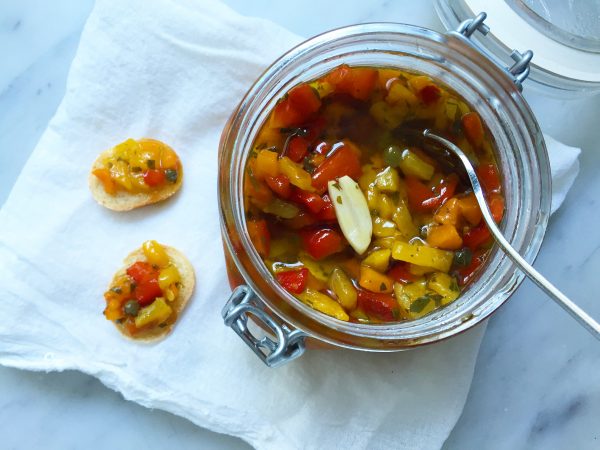
Arrange an oven rack 4 inches below the broiler and preheat the broiler. Place the peppers on a baking sheet and broil, turning every couple of minutes with tongs, until they are blistered and somewhat blackened on all sides. (Alternatively, you can char the peppers on a grill.) Transfer to a bowl, cover with plastic wrap, and let steam for about 10 minutes. Lay a pepper on a cutting board near the sink and slice or gently pull off the stem. Let any juice from the pepper drain into the sink. Cut the pepper in half and scrape off the charred skins, seeds, and innards. Cut the halves lengthwise into thin strips, about 1/4 inch thick. Clean and slice the remaining peppers and transfer them to a heatproof bowl. Stir in the capers and parsley. Bring the vinegar, water, sugar, salt, and garlic to a boil in a saucepan set over medium-high heat. Boil the brine for 2 minutes to dissolve the sugar and salt, and then pour it over the peppers. Let steep for 1 hour. Drain the peppers, reserving a little of the brine. Pack the peppers tightly into the sterilized jars. Spoon l T. brine over the peppers; then fill each jar with enough oil to cover the peppers completely. Cover tightly and let sit at cool room temperature for 24 hours. Check to make sure the peppers are still submerged; if not, add more oil. Let the peppers cure for at least 2 days before using, then store in the refrigerator for up to 3 months. To serve, remove from the jar only as much as you plan to use and let it come to room temperature. Top off the jar with more oil as necessary to keep the remaining peppers submerged.

Try toasting some crostini, top with fresh mozzarella, these peppers, and drizzle with pepper oil and salt.

Cheesy Sausage Skillet Lasagna

Cheesy Sausage Skillet Lasagna

2f80fd6c0502f95022d4c2d07e1b2cc2b tablespoons extra virgin olive oil
1 1/2 cups white onions, finely chopped
1 pound ground Italian Sausage
26 ounces pasta sauce
9 strips oven ready lasagna noodles
15 ounces Ricotta cheese
1/2 cup shredded Parmesan Cheese
1/4 teaspoon kosher salt
1/4 teaspoon freshly ground black pepper
1 cup freshly grated Parmesan Cheese
2 cups shredded mozzarella cheese

Heat oil in large skillet over medium heat. Add onions, sautéing until softened. Add sausage, cooking until browned. Add pasta sauce, stirring to combine. Reduce heat to a simmer. Boil broken lasagna noodles for 5 minutes to soften slightly. Drain and set aside. In a large mixing bowl, combine ricotta cheese, parmesan, salt and pepper. Spoon about 1 cup of meat sauce into the bottom of a 12 inch cast iron skillet. Layer evenly with broken pieces of semi-cooked lasagna noodles. Spoon about 8 mounds of ricotta cheese over noodle layer then sprinkle with additional Parmesan and shredded mozzarella cheese. Top with 1 1/2 cups of meat sauce. Continue this layering until you reach the top of the skillet. Top layer should be a layer of noodles, sauce then shredded mozzarella cheese. Bake skillet lasagna for 20-30 minutes, until cheese is melted and sauce is bubbly around edges. Remove and let cool 10 minutes before serving.

Fried Polenta

Fried Polenta

FJIHTJ7HH2VWC9E_LARGE6 C water
2 tsp salt
1 3/4 C yellow cornmeal
3 T. unsalted butter, cut into pieces
1 tsp plus 1/2 C olive oil
1/4 C freshly grated Parmesan cheese
2 tsp salt
1 C marinara sauce

In a large, heavy saucepan, bring the water to a boil. Add the salt, then gradually whisk in the cornmeal. Reduce the heat to low and cook, stirring often, until the mixture thickens and the cornmeal is tender, about 15 minutes. Remove from the heat and stir in the butter. Coat an 11×7″ baking dish with 1 tsp. of oil. Transfer the hot polenta to the prepared baking dish, spreading evenly to 3/4″ thick. Cover and refrigerate until cold and firm, about 2 hours. Preheat the oven to 250. Cut the polenta into 2×1″ pieces. In a large, heavy skillet, heat the remaining olive oil over a medium-high flame. Working in batches, fry the polenta pieces until golden brown on all sides, about 3 minutes per side. Using tongs, transfer the polenta pieces to paper towels and drain. Place the polenta pieces on a baking sheet and keep warm in the oven while cooking the remaining batches. Transfer the polenta pieces to a serving platter. Sprinkle with Parmesan cheese and salt, and serve, with marinara sauce alongside.

Pan-Fried Pork Wrapped in Prosciutto

Pan-Fried Pork Wrapped in Prosciutto

IMG_3364One 1½-pound pork tenderloin, cut crosswise into 4 equal pieces
Salt and freshly ground black pepper
4 thin slices prosciutto di Parma
3 tablespoons olive oil
12 fresh sage leaves
2 tablespoons drained capers
1 tablespoon butter
1 lemon
6 ounces baby spinach leaves, washed, stems removed

Place each piece of pork cut side down between sheets of plastic wrap. Using a meat mallet or heavy rolling pin, gently pound the pieces of pork until they are flattened into 1/2-inch/1.5-cm-thick escalopes. Sprinkle the pork with salt and pepper. Wrap one slice of prosciutto around the center of each pork escalope. Place a large nonstick sauté pan over a high heat. Once hot, drizzle 1 tablespoon of olive oil in the pan and add 2 prosciutto-wrapped pork escalopes. Cook for 2 minutes on each side or until the pork is golden brown and cooked through. Transfer the pork to a plate and repeat with the remaining pork . Do not wipe out the pan. Immediately add the remaining 1 tablespoon of oil and the sage leaves to the same pan. Cook for 1 minute. Remove the pan from the heat. Add the capers and butter. Grate the lemon zest over the capers. Swirl the pan to melt the butter and combine the flavors. Cut the lemon in half and squeeze the juice into the caper mixture. Stir into the caper mixture any juices that have accumulated on the plate of pork. Season the sauce to taste with salt and pepper. Meanwhile heat the remaining 1 tablespoon of olive oil in a separate large sauté pan over a moderate to high heat. Add the spinach and sprinkle with salt and pepper. Sauté for 2 minutes or until the spinach wilts. Squeeze the excess moisture out of the spinach, if necessary, and divide the spinach among 4 serving plates. Place one pork escalope over each mound of spinach. Pour the caper sauce over the pork escalopes and serve.

Chickpea Soup with Greens and Pasta (Zuppa di Ceci & Verdure)

Chickpea Soup with Greens and Pasta (Zuppa di Ceci & Verdure)

1 lb. Dry Chickpeas, soaked in water overnight
2 cloves Garlic, cracked and peeled, left whole
1/3 cup Extra Virgin Olive Oil
8 oz. Pancetta or Pepper Bacon, chopped
2 medium Yellow Onions, peeled, trimmed and finely chopped, about 3 cups
2 tsp. finely chopped Garlic
½ tsp. Red Chili Flakes, optional
4 cups roughly chopped Escarole or Chard, stems removed
4 cups Vegetable or Chicken Stock/Broth
8 oz. Small Pasta Shells, Cocciolette, cooked and cooled
2 to 4 Tbs. Red Wine Vinegar
Kosher Salt, to taste
Black Pepper, freshly ground, to taste
¾ cup grated good quality Parmesan Cheese

Drain the beans, rinse them and place them in a large pot with the garlic cloves, cover with water, bring to a boil, turn down to a simmer and cook until tender. Drain the beans, reserving 2/3 of the cooking with the beans. Heat the olive oil over medium high heat in a large soup pot, brown the pancetta or pepper bacon, then add the onions and sauté until they smell sweet and are translucent. Add the garlic and chili peppers, if you are using them, sauté for 3 to 5 minutes, then add the escarole, or chard, and continue cooking until wilted. Add the stock/broth and chickpeas; bring to a boil, and then turn down to a simmer for 20 minutes. Add the vinegar and adjust the salt and pepper. When you are ready to serve the soup, heat the soup to very hot, drop the pasta into boiling water for 1 minute, then drain and add to the soup. Garnish with Parmesan cheese.

Pasta Fagioli (Pasta Fazool)

Pasta Fagioli (Pasta Fazool)

pasta-fagioli1 cup dried white beans, such as cannellini or Great Northern, soaked overnight
4 T. olive oil, plus more for serving
1/2 medium onion, coarsely chopped
1/2 medium carrot, peeled and coarsely chopped
1/2 celery rib, coarsely chopped
1 – 2 garlic cloves to taste, minced
1/2 cup finely chopped ripe plum tomatoes or canned whole plum tomatoes, drained
1 fresh rosemary sprig, finely chopped
About 3 1/2 cups boiling water
1/3 package (lb.) fusilli, small pasta shells, small ziti, or other small pasta
Salt and freshly ground black pepper to taste
1/4 cup minced flat-leaf parsley
Freshly grated Parmigiano cheese for garnish

Drain the beans and set aside. Heat the oil in a large heavy saucepan over medium heat and gently sauté the onion, carrots, celery, and garlic until the vegetables are soft but not brown, about 10 minutes. Add the beans to the vegetables along with the tomatoes, rosemary, and about 3 cups boiling water. Bring back to a boil, reduce the heat, and simmer, covered, until the beans are tender – 1 to 1 1/2 hours, depending on the age and size of the beans. ADD more boiling water from time to time as necessary: the beans should always be covered with simmering liquid. When the beans are very tender, transfer about 2 cups beans and their liquid to a food processor and process to a thick puree. Or put them through the medium disk of a food mill. STIR the puree back into the beans. Add the pasta and another cup of boiling water to the beans in the pot. Cook, stirring constantly, until the pasta is tender, about 10 minutes. Remove from the heat. Taste and add salt and lots of black pepper. Serve in a warm soup tureen or in individual warm bowls, garnished with a drizzle of olive oil, a sprinkle of parsley, and some Parmigiano. Pass more cheese and olive oil with the soup.

Pane Fritto Con Acciuda

Pane Fritto Con Acciuda

23 oz. anchovies
3 cups flour
1 teaspoon granulated sugar
Pinch of salt
1/4 oz. dry yeast
1 egg
2 cups water
1 tablespoon olive oil
3 cups corn oil

Drain the anchovies and cut each fish into thirds. Set aside. Combine flour, sugar, salt, and yeast in a bowl. Beat egg and combine with water and 1 tablespoon of oil. Add the egg mixture to the flour and mix until blended. Dough should be soft and runny. Place in a bowl, cover, and let rise for one to one and a half hours. When the dough is double the original size, remove it from the bowl and set it on a pastry board. Pinch off 1 teaspoon, flatten it in the palm of your hand, place an anchovy in the center and seal it inside by rolling the dough into a ball. If the dough is too soft to handle, allow it to remain in the bowl. Keep a little extra flour on hand. Take a teaspoon, dip into the dough, and pull up enough dough to fill the spoon. With flour on your fingers, trim off any hanging dough. Place the anchovy in the center of the dough and fold the dough over it. Do not place it on a board, but drop it directly into hot oil, coaxing it from the spoon with a floured finger. Place a two quart pot over medium-high heat. Heat to hot. Add oil. Allow to heat. Drop anchovy balls into the hot oil one at a time. They will puff immediately. Allow to brown. Turn. Remove and drain. Eat warm. Anchovy Puffs are best eaten immediately. You can make a sweet version by omitting the stuffing with anchovies, frying, and then coating with sugar or honey.