Browsed by
Category: Vegetables

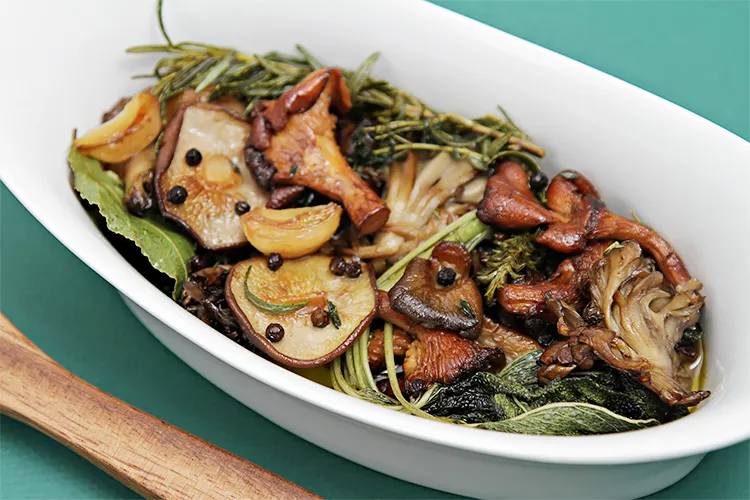
Wild Mushroom Confit with Garlic and fresh herbs

Wild Mushroom Confit with Garlic and fresh herbs

Wild Mushroom Confit with Garlic and fresh herbs


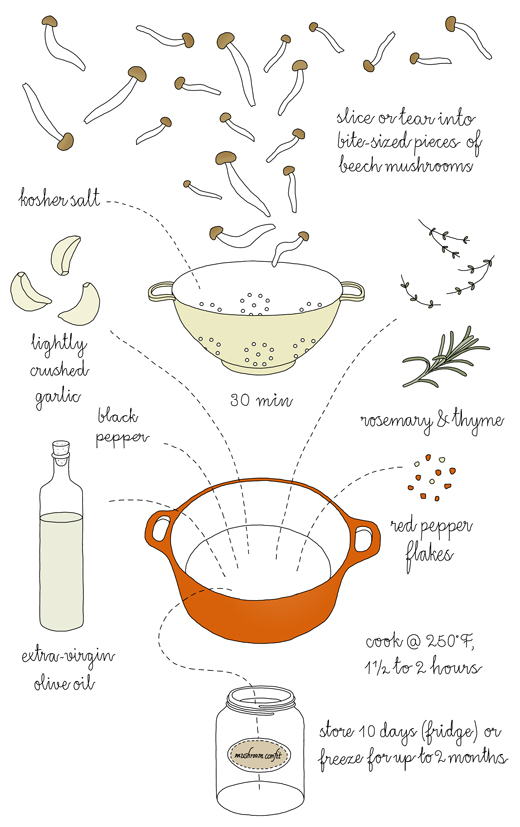
1 lb (455 g) assorted wild mushrooms (shiitake, oyster, Chanterelles, morels, black trumpet…) – medium in size

2 C. extra virgin olive oil

8 large garlic cloves – peeled and halved

12 large sage leaves

4 rosemary sprigs

6 thyme sprigs

8 winter savory sprigs

2 fresh bay leaves

2 tsp. whole black Tellicherry peppercorns

1 tsp. sea salt

1 1/2 T. aged sherry wine vinegar


Brush the mushrooms clean and trim the stems, but keep the mushrooms whole. Set aside. Heat a large non-stick skillet over medium-high heat. (I recommend a 12″ skillet.) Add 1/3 cup of oil and the mushrooms, toss carefully, and sauté undisturbed for 2 minutes until the mushrooms begin to brown. Toss again and continue to sauté until the mushrooms are golden-brown, about 4 to 5 minutes, tossing only from time to time. Add the garlic pieces and sauté for 1 minute, until the garlic is golden but not brown. Reduce heat to medium, add the balance of the oil and the herbs and peppercorns, and gently heat until the oil reaches 170ºF (80ºC) (use a thermometer). Once the oil has reached the desired temperature, continue poaching the mushrooms for 6 to 7 minutes, maintaining the temperature at 170ºF (80ºC), until the herbs are crisp and have turned a shade darker. Transfer the mushrooms, herbs and oil into a large bowl. Stir in the salt and vinegar and allow to cool to room temperature. To serve, scoop out the mushrooms with a slotted spoon and place in a serving bowl. Cook’s note: Once cooled, the mushrooms can be refrigerated in their cooking oil for up to 1 week. (Make sure they are covered with the oil.) Bring to room temperature before serving. To serve as a side dish, gently heat the mushrooms in their oil, drain, remove the herbs and peppercorns and serve warm.


Tip: Once you’ve consumed all these amazingly delicious mushrooms, don’t throw the oil away. Strain it through a fine sieve and use it to make another batch of the mushroom confit; or use it to make vinaigrettes, to drizzle over roasted or grilled vegetables, to sauté vegetables or to make sauces. It’ll bring beautiful aromas and flavors to anything you cook with it. Refrigerate the strained oil for up to 1 month.

Quickles

Quickles

Quickles


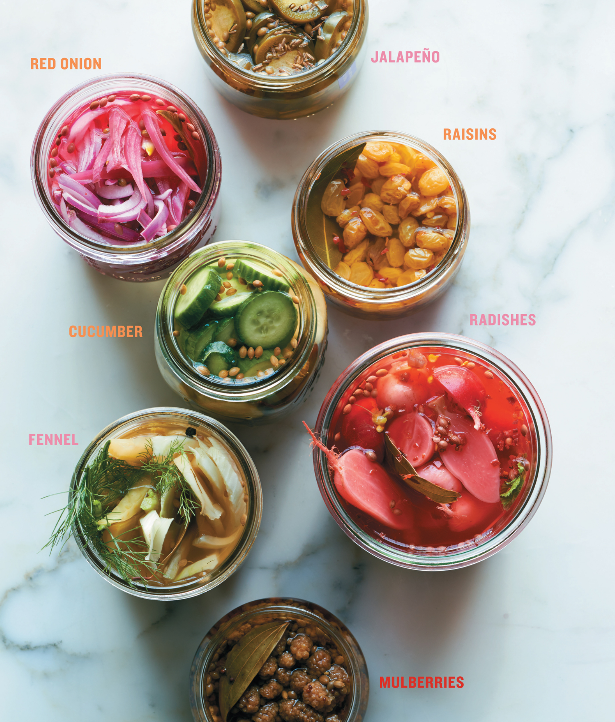
Choose any one of the following (the quantity of which doesn’t matter that much, just chop or slice enough to comfortably fit in your jar with a little bit of room at the top):


4 to 6 celery stalks, cut to fit the size of your jar

1 English cucumber or 3 Persian cucumbers, thinly sliced or cut into spears that fit your jar

1 red onion, beet, or fennel bulb, thinly sliced

1 bunch radishes, thinly sliced

4 to 6 fresh chilies, sliced

1 1/2 C. raisins or other dried fruit


1 cup cider, white wine, or rice vinegar

1 T. kosher salt

1 T. mustard, coriander, or cumin seeds

1 T. sugar

1/2 tsp. crushed red pepper flakes, optional

Freshly ground black pepper


Place the vegetables, chilies, or dried fruit in a large resealable container (preferably glass). Combine the vinegar, salt, seeds, sugar, crushed red pepper flakes, if using, and several grinds of black pepper in a small saucepan and bring to a simmer. Give the pan a swirl or two to help the sugar and salt dissolve, then pour the mixture over the vegetables. Add water to cover and let cool to room temperature. Cover tightly and refrigerate up to a month. You can mix your vegetables when you pickle them if you like. Just remember that if you add chilies everything will be spicy; if you add a beet everything will be red, etc.

Slow-Roasted Summer Garden Tomatoes

Slow-Roasted Summer Garden Tomatoes

Slow-Roasted Summer Garden Tomatoes


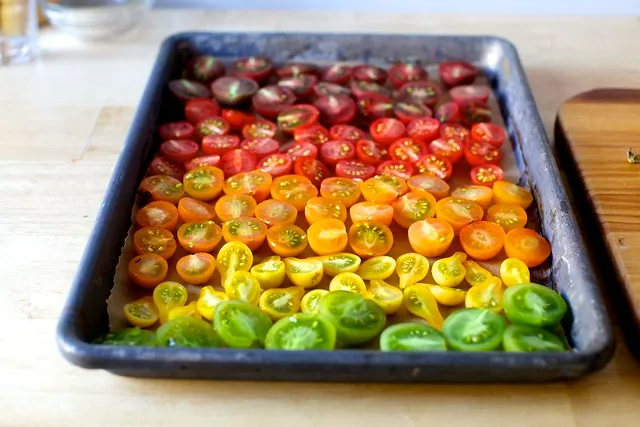
Cherry, grape or small Roma tomatoes

Whole cloves of garlic, unpeeled

Olive oil

Herbs such as thyme or rosemary (optional)


Preheat oven to 225°F. Halve each cherry or grape tomato crosswise, or Roma tomato lengthwise and arrange on a parchment-lined baking sheet along with the cloves of garlic. Drizzle with olive oil, just enough to make the tomatoes glisten. Sprinkle herbs on, if you are using them, and salt and pepper, though go easily on these because the finished product will be so flavorful you’ll need very little to help it along. Bake the tomatoes in the oven for about 3 hours. You want the tomatoes to be shriveled and dry, but with a little juice left inside–this could take more or less time depending on the size of your tomatoes. Either use them right away or let them cool, cover them with some extra olive oil and keep them in the fridge for the best summer condiment, ever. And for snacking.

Healthy Carrot Cucumber Rolls

Healthy Carrot Cucumber Rolls

Healthy Carrot Cucumber Rolls


2 medium cucumbers

1 large carrot

100 grams (3,5 oz) cream cheese

¼ teaspoon seasoning (Curry Powder, Celery Powder, etc.)


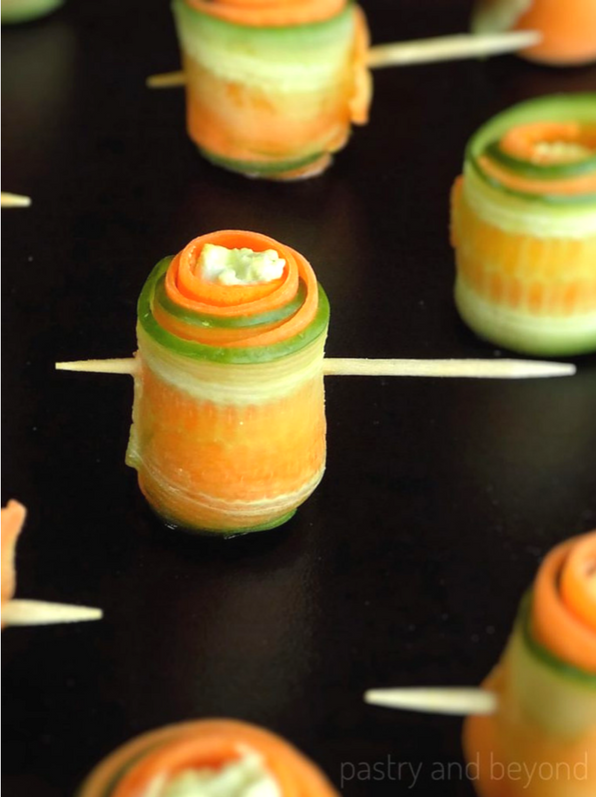
Wash and dry the carrot and cucumbers.  Gently peel the cucumbers into strips with a vegetable peeler. Leave the skin aside and continue peeling. If you have a hard time peeling because of the seeds, turn over the other side and start peeling from there. Set aside the cucumber strips.  Peel the carrot with a vegetable peeler.  Set aside.  Combine cream cheese and curry powder in a small bowl with a spoon.  Center carrot strip over cucumber strip.  Take one teaspoon of curry cream cheese and using a knife,  lay it as much as you need on wide end of the carrot.  Roll the carrot cucumber strips tightly and secure with a toothpick.

Air Fryer Butternut Squash

Air Fryer Butternut Squash

Air Fryer Butternut Squash


1 1/2 teaspoons onion powder

1 1/2 teaspoons garlic powder

1/2 teaspoon sweet paprika

1/8 teaspoon cayenne pepper

1/2 teaspoon kosher salt

1 teaspoon brown sugar, optional

4 heaping cups peeled and diced butternut squash, 1 –inch cubes, 24 ounces

1 tablespoon olive oil


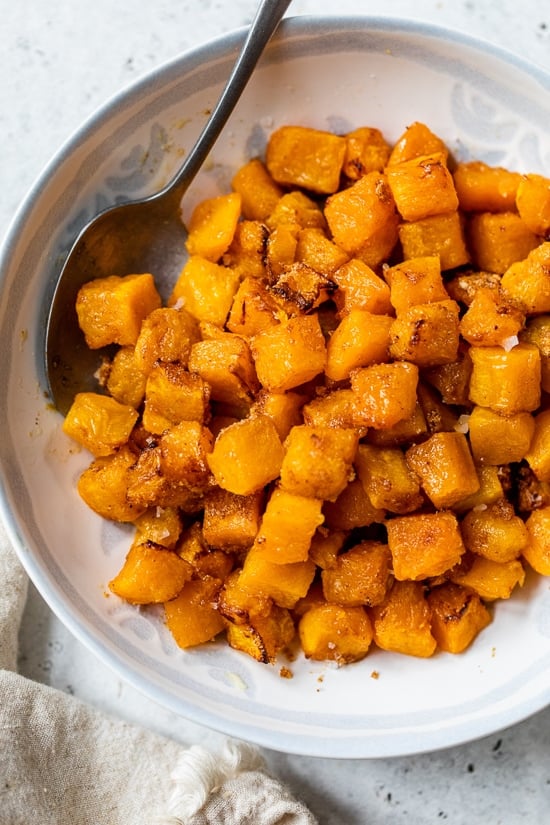
Place butternut squash in the air fryer basket and spray with olive oil spray. Air fry 340F 20 to 23 minutes*, shaking the air fryer basket a few times until the squash is fork tender and golden. Meanwhile, in a small bowl, combine the onion powder, garlic powder, sweet paprika, cayenne, salt and brown sugar, if using. When the squash is tender, drizzle and toss the squash with olive oil. Add the spice mixture and toss gently to coat; cook 3 to 4 more minutes. Serve hot.

Summer Squash Fritters with Garlic Dipping Sauce

Summer Squash Fritters with Garlic Dipping Sauce

Summer Squash Fritters with Garlic Dipping Sauce


20 garlic cloves, peeled (about 2 heads)

Extra-virgin olive oil

1 cup mayonnaise

3 tablespoons lemon juice

1 teaspoon kosher salt

¼ teaspoon ground black pepper

¼ cup chives, minced


1¼ cups all-purpose flour

¾ cup shredded white Cheddar

1 teaspoon kosher salt

1 teaspoon ground black pepper

1 teaspoon garlic powder

2 large eggs

¾ cup cold beer

1 cup grated zucchini (about one 6- to 7-ounce zucchini), drained on paper towels 15 minutes

1 cup grated yellow squash (about one 6-to 7-ounce squash), drained on paper towels 15 minutes

1 small yellow onion, halved and thinly sliced

½ cup canola oil, for frying


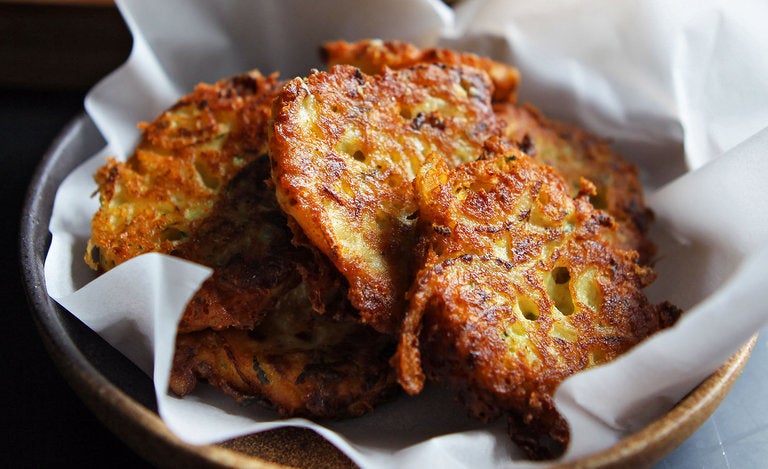
Heat oven to 375 degrees, put garlic cloves in a small baking dish and add enough olive oil to cover. Roast until garlic is soft and golden, about 30 minutes. Cool. Drain garlic, reserving oil. Transfer to a food processor, add 1 tablespoon reserved oil and the mayonnaise, lemon juice, salt and pepper and purée. Transfer to a bowl and stir in chives. Use remaining oil for another purpose. Combine flour, Cheddar, salt, pepper and garlic powder in a large bowl. In a separate bowl, gently whisk eggs with beer. Pour egg mixture into flour mixture and stir until combined. Stir in zucchini, yellow squash and onion. Heat canola oil in a large heavy-bottomed skillet over medium-high heat. Drop about 1 tablespoon of batter into the oil per fritter and fry 6 fritters at a time until golden-brown, 2 to 3 minutes a side. Remove to paper towels to drain. Serve hot, with the sauce on the side.

Garlicky Zucchini Spears

Garlicky Zucchini Spears

Garlicky Zucchini Spears

3 large zucchini, quartered lengthwise into spears

2 T. olive oil

1 T. minced garlic

½ tsp. salt

½ tsp. pepper

Preheat oven to 450°F. Toss together zucchini, oil, garlic, salt, and pepper on a rimmed baking sheet. Bake 10 to 12 minutes or until lightly browned and tender, turning once during last 2 minutes of cooking.

Roasted Broccoli with Garlic and Chili Pepper

Roasted Broccoli with Garlic and Chili Pepper

Roasted Broccoli with Garlic and Chili Pepper


2 big heads of broccoli

Extra-virgin olive oil

Sea salt

Freshly ground black pepper

3 cloves of garlic

1 fresh red-hot chili pepper; or a good pinch of crushed chili flakes

A lemon for squeezing; or red wine vinegar


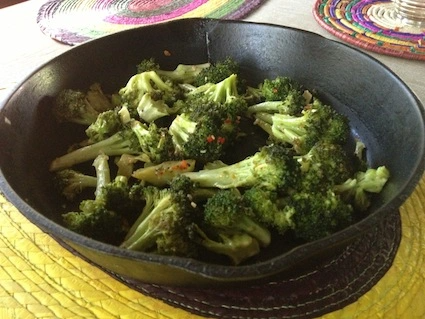
Preheat oven to 375. Cut the broccoli florets into more-or-less bite-sized pieces, and add to a bowl large enough to comfortably accommodate them. You’ll have plenty of stem left over—and the stem has good flavor. So thinly slice a bit of the stem, starting from the floret side (see picture), and add it to the bowl with the florets. About an inch’s worth of sliced stem from each broccoli head will do. Add a couple of glugs of olive oil to the bowl, and then a good pinch of sea salt and several grinds of black pepper. Using your hands, toss the broccoli pieces well, making sure they’re evenly coated with the olive oil and seasonings. Add the seasoned broccoli to a roasting pan or oven-proof skillet large enough to accommodate them in a single layer. Place it in the preheated oven and roast for 10-15 minutes. Meanwhile, finely mince the garlic and (if using) the fresh chili pepper. When the florets have just begun to brown, remove the pan from the oven and add add the minced garlic and chili pepper (or dried chili flakes). Toss well with a spatula, and return pan to the oven for another couple of minutes. The broccoli pieces are done when the florets are browned in spots but still slightly crunchy. Finish with a few dashes of vinegar or freshly squeezed lemon juice, and taste for salt. This dish can be made ahead several hours and is just fine served room temperature.

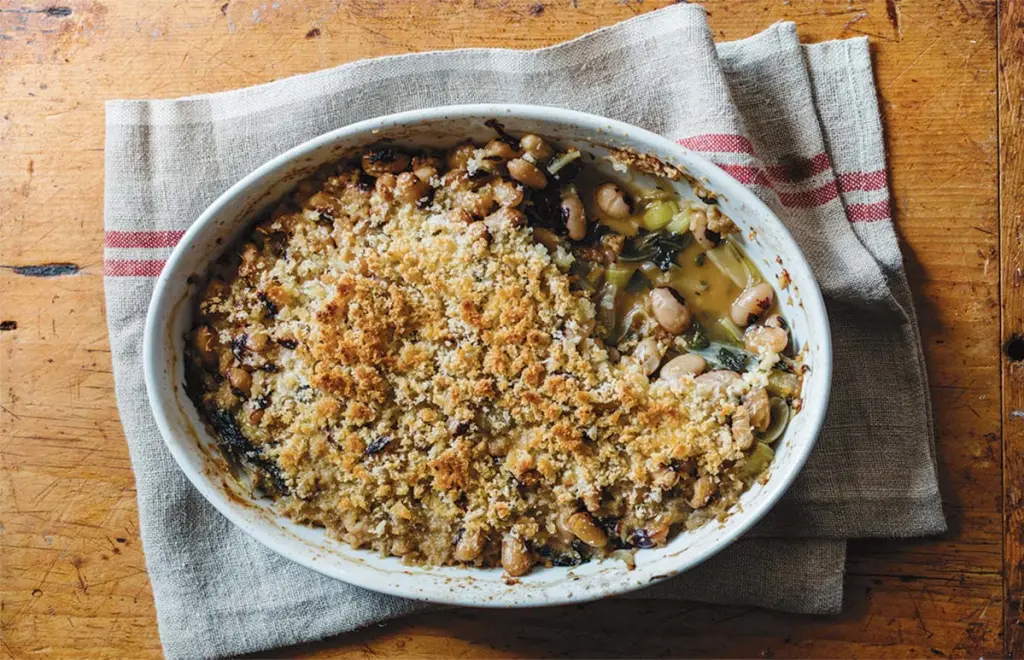
Beans and Greens Gratin

Beans and Greens Gratin

Beans and Greens Gratin


Extra virgin olive oil

½ stick unsalted butter

2 onions, sliced

3 cloves garlic, minced

1 fat leek, cleaned and sliced into rounds

kosher salt and freshly ground black pepper

pinch chili flakes

1 large bunch white-stemmed Swiss chard

2 T. fresh thyme leaves

1 T. chopped fresh rosemary

1 tsp. white wine vinegar

2 cups cooked white or brown beans with some of the cooking broth

1 cup grated hard sheep’s milk cheese, like Pecorino

2 cups fresh breadcrumbs (pulse a couple of slices of good bread in the food processor to make coarse crumbs)


Preheat oven to 400°F. In a heavy-bottomed pan heat 2 T. olive oil and 2 T. butter, then add the onions, garlic and leeks. Season with salt and pepper and add the chili flakes. Sauté slowly until onions are softened and caramelized, about 15-20 minutes but as long as 30; you want them to turn a deep golden brown. While the onions cook, strip the leaves of the Swiss chard; chop the stems and slice the leaves, keeping them separate. When the onions are about halfway to brown, add the Swiss chard stems to the pan, stirring to combine. Once everything is a nice golden brown, add the sliced chard leaves, the herbs, and the vinegar, tossing to wilt. Butter the bottom of a ceramic oval baker or casserole dish and spread the onion and chard mixture at the bottom. Layer on the cooked beans and pour in enough liquid to come about halfway up the casserole (this helps the beans not to dry out in the oven). Sprinkle the grated cheese over the beans and then spread the breadcrumbs on top. Dot with the remaining butter, season again with salt and pepper, and bake in the oven for 45-50 minutes, or until bubbly and golden brown on top.

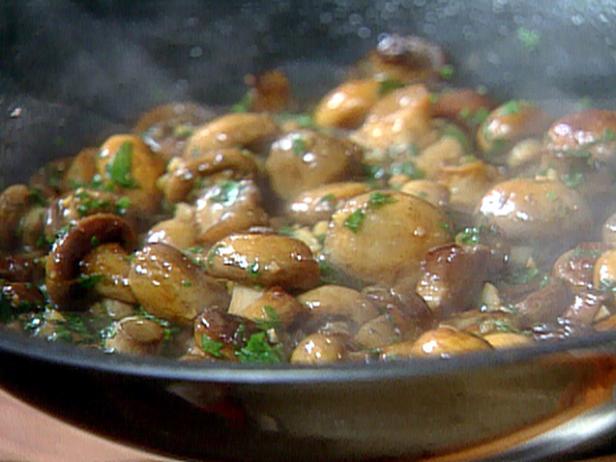
Confit Mushrooms

Confit Mushrooms

Confit Mushrooms


1 ½ lb mushrooms (of your choice)

2 T. minced shallots

1 T. fresh thyme leaves

2 C. neutral olive oil or grapeseed oil

Salt, to taste


Clean the mushrooms by wiping them with a damp paper towel. If the stems are edible, simply trim the ends; otherwise, separate the caps from the stems and reserve the stems to make a mushroom broth. In a saucepan, combine the minced shallots, thyme leaves, cleaned mushrooms, and oil. Heat gently for about 40 minutes; you do not want the oil to bubble or the shallots to burn. Remove from heat and cool completely. Season with salt to taste and transfer to a cool, sterilized jar. Store in the fridge for up to 2 weeks.

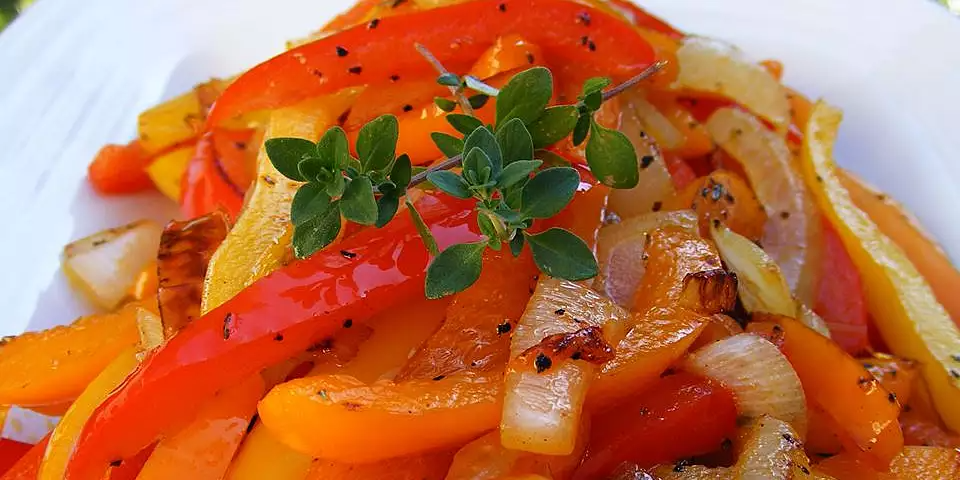
Caramelized Red Bell Peppers and Onions

Caramelized Red Bell Peppers and Onions

Caramelized Red Bell Peppers and Onions


2 red bell pepper, cut into strips

2 red onions, cut into strips

1 T. olive oil

1 tsp. butter

¼ cup red wine (Optional)

1 pinch salt

1 pinch ground black pepper

1 pinch dried basil


Variation: Add some golden raisins


In a hot saucepan over a medium heat, combine red peppers, onion, oil and butter; sauté for 2 minutes. Reduce heat to medium-low and continue cooking, stirring occasionally, until the onions and peppers soften. If desired, stir red wine into the vegetables and cook until the wine evaporates; approximately 30 minutes. Season with salt, pepper, and basil.

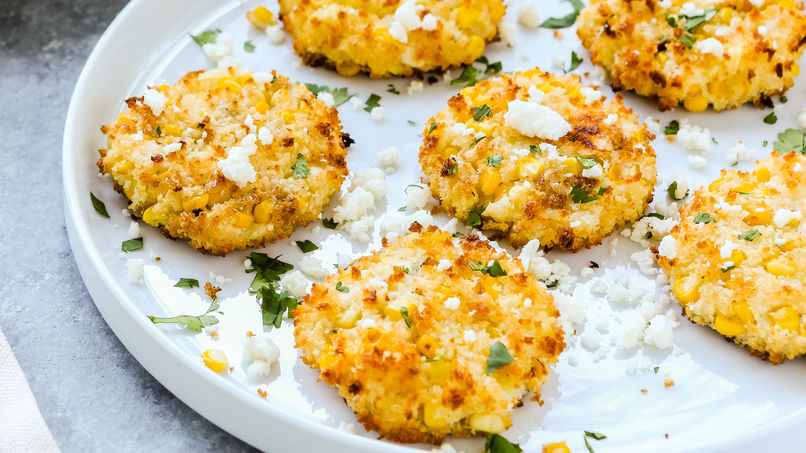
Corn Bites

Corn Bites

Corn Bites


2 T. butter

2 T. of all-purpose flour

1 cup milk

Salt and pepper to taste

2 cups corn kernels

1 egg

1/2 cup Cotija cheese, grated

1 ½ cup breadcrumbs (panko)

Oil in spray


Melt the butter in a medium-sized pan over medium heat. Add the flour and mix until combined; cook for 1-2 minutes. Add milk and constantly mix to avoid forming lumps. Continue cooking until the mixture thickens. Season with salt and pepper to taste. Add the corn kernels; mix until they combine. Remove from the heat and add the eggs and cheese; continue mixing for 2 minutes. The residual heat will cook the egg. Let it cool down and then place in the fridge for 1-2 hours until it is completely cold and compact. Heat the oven to 450° F. Cover an oven tray with parchment paper. Using your hands, form the bites into disks. Cover with panko on all sides and place in a previously prepared tray. Spray with oil. Place in the oven for 10-15 minutes or until the bites are golden. Garnish with more Cotija cheese and minced cilantro, if you want. Serve immediately.

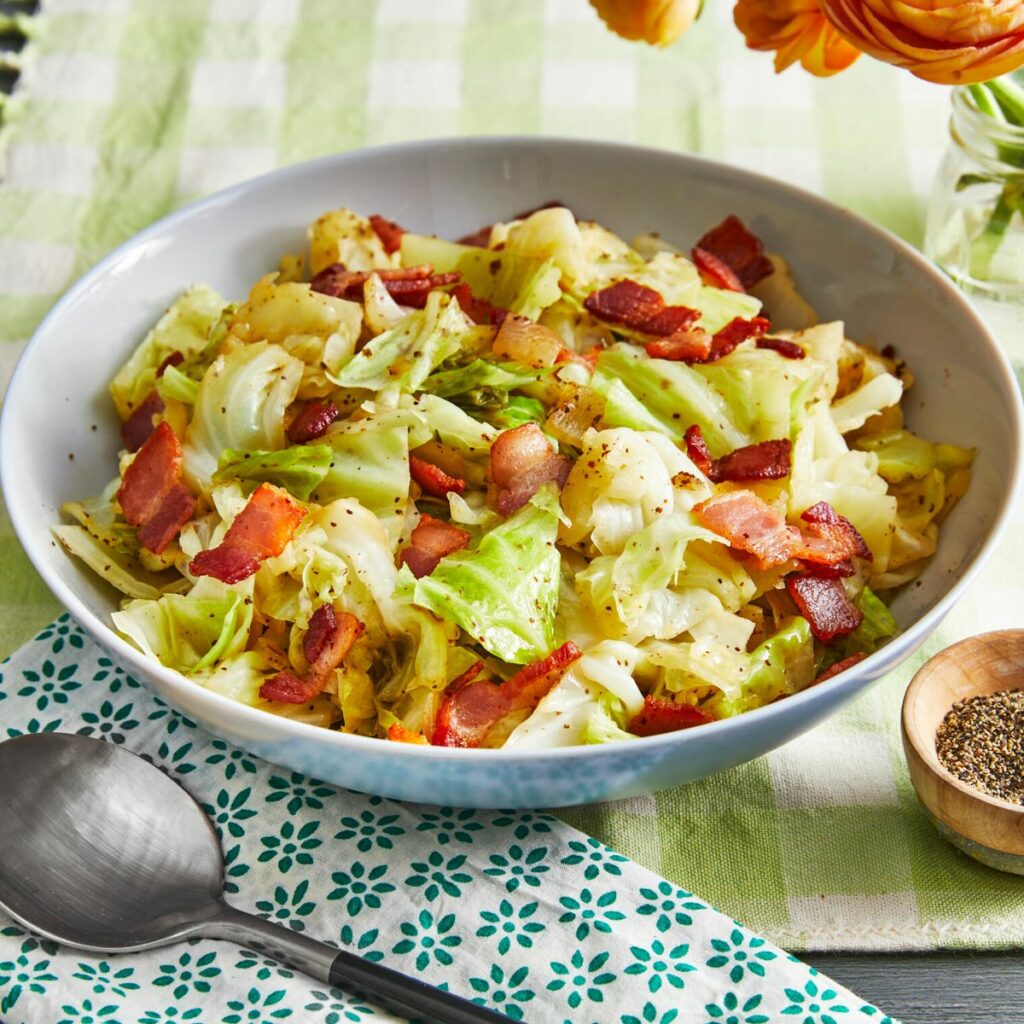
Fried Cabbage and Bacon

Fried Cabbage and Bacon

Fried Cabbage and Bacon


4 slices thick-cut bacon, chopped

1 small head green cabbage, cored and cut into about 1-inch pieces

1 yellow onion, chopped

2 tsp. kosher salt

1 tsp. celery seed

1/2 tsp. black pepper

1 T. apple cider vinegar


Place bacon in a medium Dutch oven over medium heat. Cook, stirring occasionally, until crisp and rendered, 10 to 12 minutes. Remove from heat. Using a slotted spoon, transfer the bacon to a paper towel-lined plate, leaving bacon drippings in the Dutch oven. Return the Dutch oven to medium heat. Add the onion and cook, stirring often, until softened, about 6 minutes. Add the cabbage, 2 T. water, salt, celery seed, and black pepper. Toss well to evenly coat the cabbage. Cover and cook, stirring occasionally until the cabbage is tender, 8 to 12 minutes.  Remove the cabbage from the heat and stir in the vinegar and bacon. Serve hot.

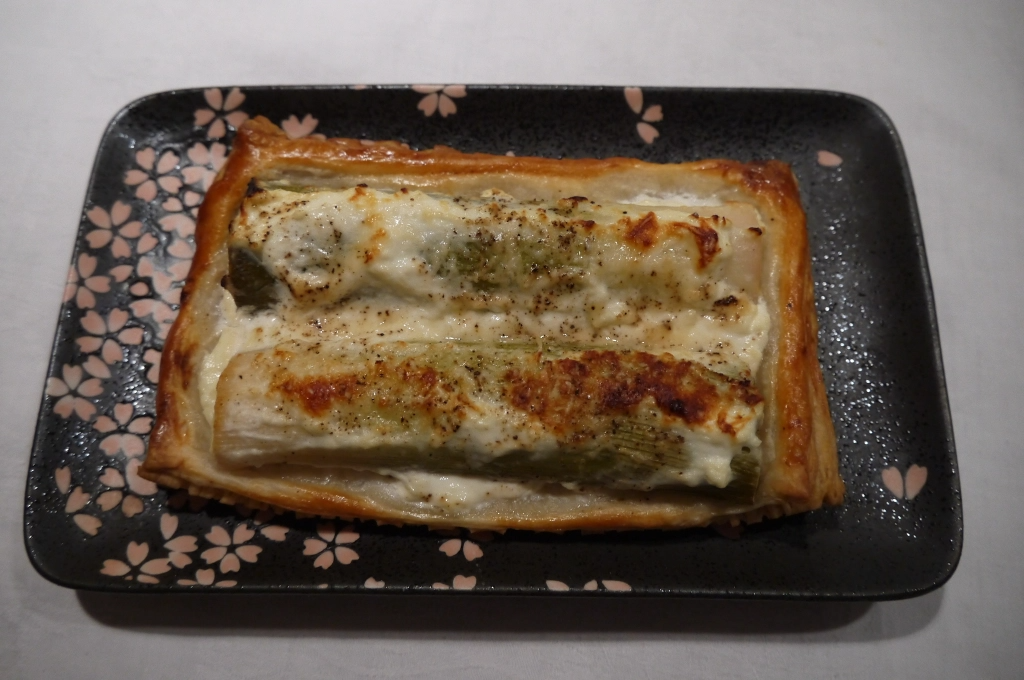
Long Leek Pie

Long Leek Pie

Long Leek Pie


4 sheets all-butter puff pastry

3 leeks

¾ cup white wine

butter

a few thyme sprigs

Salt and freshly ground pepper

½ cup aged goat cheese, grated or crumbled, or 1/2 cup crème fraîche

1 egg white, loosely beaten


Cut the leeks into three sections, removing the bottom and the dark green leaves. Wash the leeks, then simmer in the white wine, butter, thyme, salt, and pepper for about 20 minutes. Remove the leeks from the simmering liquid and pat them dry. While the leeks are simmering, stack the puff pastry and roll it out lengthwise. Use the back of the knife to score a rectangle just a few centimeters inside the edge; this will form a border. Place the leeks next to each other inside the border of the puff pastry. Top the leeks with goat cheese or crème fraîche, and brush the outer edges with lightly beaten egg white. (I put a little bit of freshly grated parmesan on top of the crème fraîche). Bake for about 25 minutes at 400°F. The edge will rise and become browned.

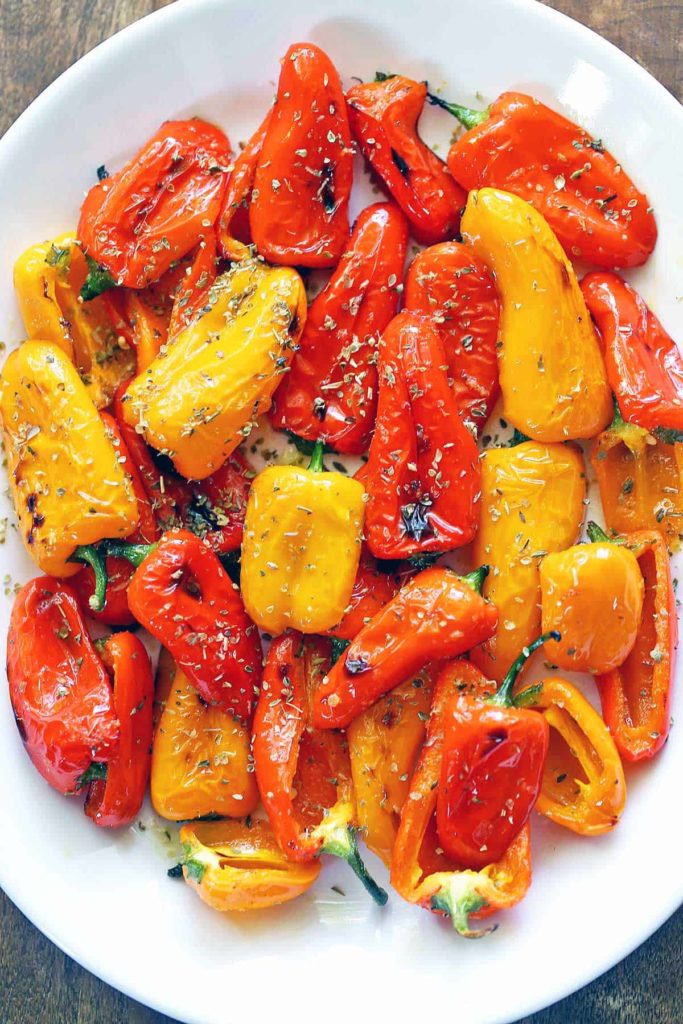
Roasted Mini Sweet Peppers

Roasted Mini Sweet Peppers

Roasted Mini Sweet Peppers


1 pint mini peppers (8 oz)

2 tablespoons olive oil

½ teaspoon Diamond Crystal kosher salt

¼ teaspoon black pepper

½ teaspoon garlic powder

½ teaspoon dried oregano

2 tablespoons Parmesan dry-grated


Preheat your oven to 400 degrees F. Line a large rimmed baking sheet with foil. Cut the mini peppers in half lengthwise. I usually leave the stem as I think it’s pretty – but you can cut it off if you wish. The larger mini peppers might have some seeds and membranes – remove those with your fingers or with a paring knife.  Place the peppers in a large bowl. Toss them with the olive oil, salt, pepper, garlic powder, oregano, and Parmesan. Arrange the seasoned mini peppers in a single layer on the prepared baking sheet.

Bake them until tender, about 20 minutes. Serve immediately.

Roasted Pepper Salad

Roasted Pepper Salad

Roasted Pepper Salad

4 assorted bell peppers (preferably red, yellow, and orange)


2 tsp. balsamic vinegar

2 tsp. chopped fresh thyme

1 T. drained bottled capers, coarsely chopped

1 bunch arugula (1/4 lb), tough stems discarded


Preheat broiler. Put bell peppers on rack of broiler pan about 5 inches from heat and broil, turning occasionally with tongs, until skins are blackened, about 15 minutes. Transfer to a bowl and let stand, covered, until cool enough to handle. Peel peppers over bowl (to catch any liquid) and discard stems and seeds. Cut peppers lengthwise into 1-inch-thick strips and add to liquid in bowl with vinegar, thyme, and capers. Add salt and pepper to taste and toss. Divide arugula among 4 plates. Top with peppers and drizzle with any remaining dressing. Serve at room temperature or chilled.

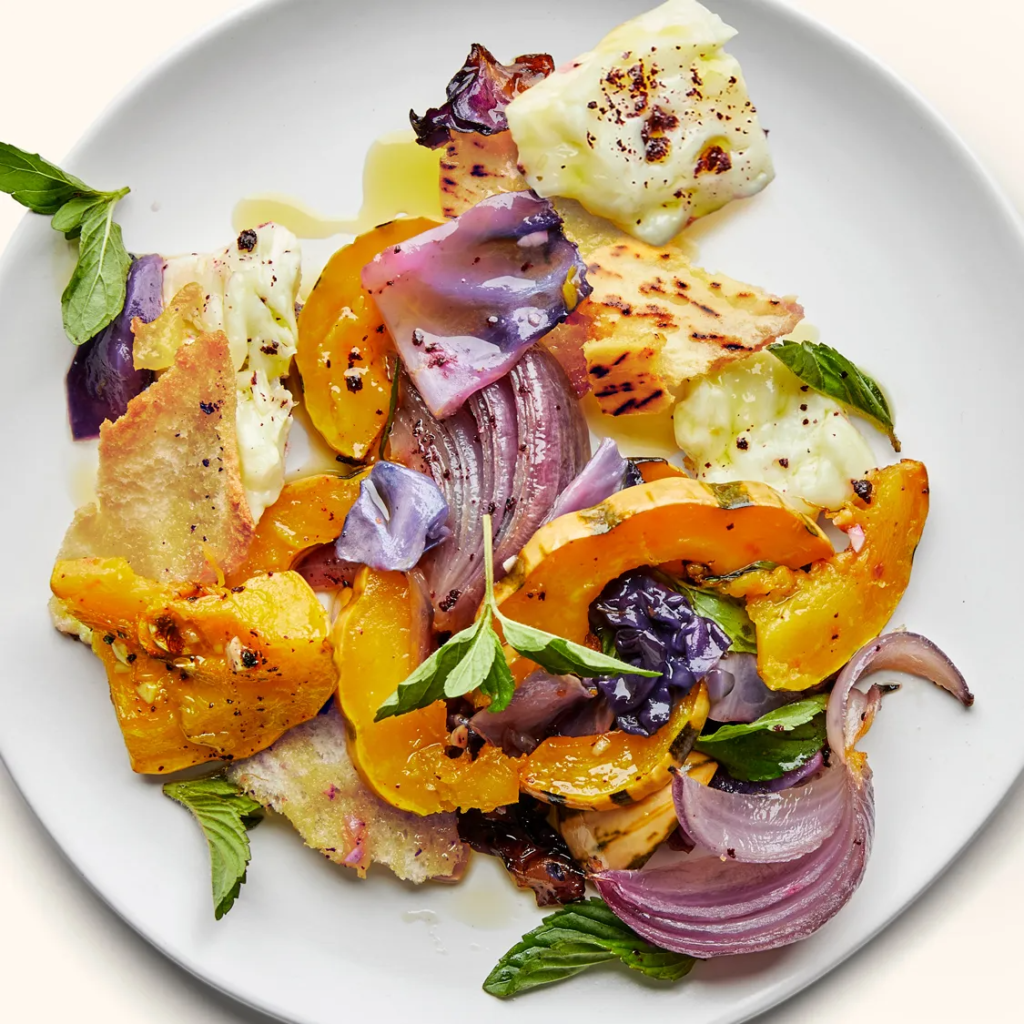
Warm Winter Vegetable Salad with Halloumi (Sheet Pan)

Warm Winter Vegetable Salad with Halloumi (Sheet Pan)

Warm Winter Vegetable Salad with Halloumi


5 T. extra-virgin olive oil, divided

2 garlic cloves, finely chopped

1½ tsp. kosher salt

1 tsp. Aleppo-style pepper

½ small head of red cabbage (about 10 oz.), cut into 1″ pieces

1 medium red onion, cut into 8 wedges through root end

1½ lb. winter squash, preferably delicata, halved, seeds removed, sliced crosswise ½” thick

1 large pita bread, split into 2 layers, cut or torn into 1½”–2″ pieces

8 oz. Halloumi cheese, cut into 1″ pieces

2 T. apple cider vinegar

1½ tsp. ground sumac

Mint sprigs (for serving)


Preheat oven to 425°. Coat a rimmed baking sheet with 1 Tbsp. oil. Mix garlic, salt, Aleppo-style pepper, and 3 Tbsp. oil in a large bowl. Add cabbage, onion, and squash and toss to coat. Spread out on prepared baking sheet (keep bowl handy) and roast until squash is browned underneath, 25–30 minutes. Toss pita, Halloumi, and remaining 1 Tbsp. oil in reserved bowl. Scatter over vegetables, then turn vegetables over with a large spatula. Roast until squash is fork-tender and cabbage, onion, pita, and Halloumi are browned in spots (cheese should be soft inside), 15–20 minutes. Remove from oven and drizzle with vinegar. Top with sumac and mint.

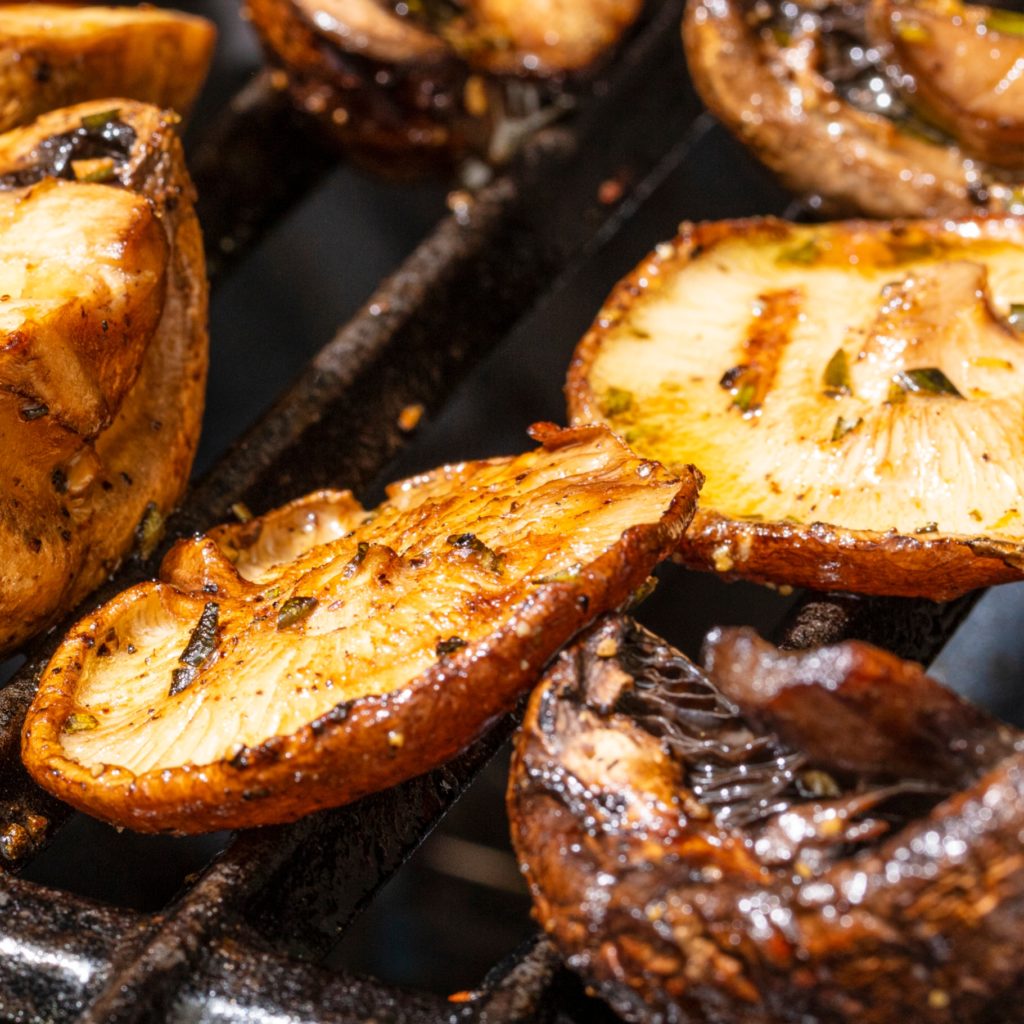
Grilled Mushrooms with Rosemary-Lemon Basting Butter & Variations

Grilled Mushrooms with Rosemary-Lemon Basting Butter & Variations

Grilled Mushrooms with Rosemary-Lemon Basting Butter & Variations


4 tablespoons unsalted butter

1 tablespoon soy sauce

2 teaspoons minced fresh rosemary

1 teaspoon minced garlic

1 teaspoon grated lemon zest

1 teaspoon pepper, divided

1 pound white, cremini, shiitake, portobello, oyster, maitake, and/or king oyster mushrooms, at least 2 inches wide

½ teaspoon vegetable oil

¼ teaspoon table salt


Use any mix of mushrooms you like, as long as the caps measure at least 2 inches in diameter. A grill basket is helpful here but not essential. These mushrooms make a great accompaniment to other grilled foods. The parcooked mushrooms can be refrigerated for up to 24 hours.


Melt butter in small saucepan over medium heat. Add soy sauce, rosemary, garlic, lemon zest, and ½ teaspoon pepper and cook, stirring frequently, until mixture is simmering and fragrant, 1 to 2 minutes. Remove from heat. Cover to keep warm until ready to use. Trim tough ends of stems on white and cremini mushrooms and cut in half. Remove stems from shiitake mushrooms. Remove stems from portobello mushrooms and halve caps if smaller than 4 inches; quarter if larger. Trim oyster and maitake mushrooms and tear into 2- to 2½-inch pieces. Trim stems on king oyster mushrooms and slice crosswise ¾ inch thick. Combine mushrooms and ½ cup water in bowl. Cover and microwave for 1 minute. Stir well; re-cover; and microwave until mushrooms have reduced in size by about one-third and liquid has increased to almost 1 cup, about 2 minutes. Remove from microwave and let rest, covered, for 5 minutes to finish cooking. Drain well. Dry bowl and return mushrooms to bowl. Let stand at room temperature while preparing grill. FOR A CHARCOAL GRILL: Open bottom vent completely. Light large chimney starter three-quarters filled with charcoal briquettes (about 4½ quarts). When top coals are partially covered with ash, pour evenly over half of grill. Set cooking grate in place, cover, and open lid vent completely. Heat grill until hot, about 5 minutes. FOR A GAS GRILL: Turn all burners to high; cover; and heat grill until hot, about 15 minutes. Leave primary burner on high and turn off other burner(s). Clean and oil cooking grate. Toss mushrooms with oil, salt, and remaining ½ teaspoon pepper. Arrange mushrooms on hotter side of grill. Cook (covered if using gas), flipping mushrooms every 2 minutes, until well browned on all sides, 4 to 6 minutes. Carefully brush mushrooms with half of basting butter and continue to cook until butter is sizzling and fragrant, 1 to 2 minutes longer. Transfer to bowl with remaining basting butter and toss to combine. Season with salt and pepper to taste, and serve.


Garlic-Parsley Basting Butter


4 tablespoons unsalted butter

1 tablespoon Worcestershire sauce

1 tablespoon chopped fresh parsley

1 teaspoon minced garlic

1/2 teaspoon pepper


Melt butter in small saucepan over medium heat. Add Worcestershire, parsley, garlic, and pepper and cook, stirring frequently, until mixture is simmering and fragrant, 1 to 2 minutes. Remove from heat. Cover to keep warm until ready to use.
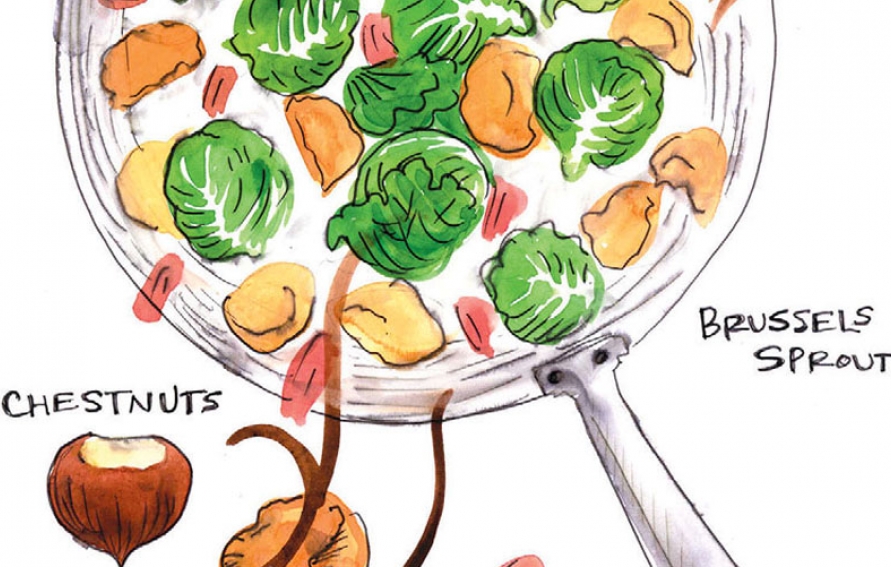


Ginger-Miso Basting Butter


4 tablespoons unsalted butter

1 tablespoon white miso

1 tablespoon soy sauce

2 teaspoons grated fresh ginger

1/2 teaspoon pepper


Melt butter in small saucepan over medium heat. Add miso, soy sauce, ginger, and pepper and cook, stirring frequently, until mixture is simmering and fragrant, 1 to 2 minutes. Remove from heat. Cover to keep warm until ready to use.

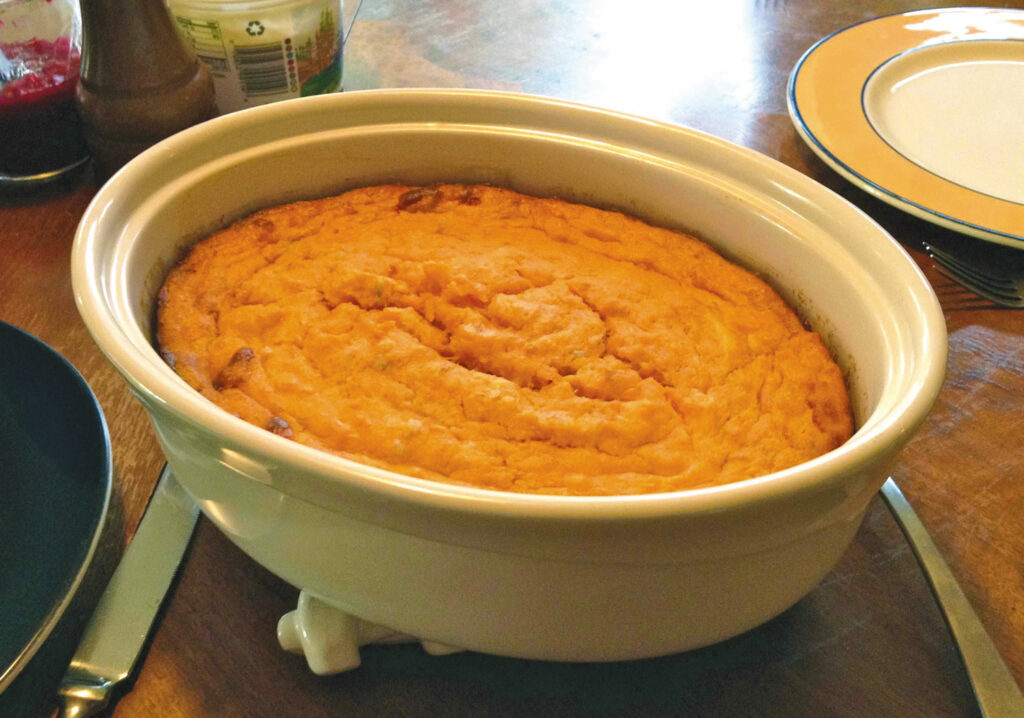
Budín de Zanahoria (Mexican Carrot Custard)
Budín de Zanahoria (Mexican Carrot Custard)

Budín de Zanahoria (Mexican Carrot Custard)

With its sweet, savory, and tangy flavors plus a wonderfully creamy texture that kids love, it’s a great comfort food for any season. The concept works with many different vegetables, so you might want to make budín de camote (sweet potato), budín de maíz (fresh corn), or budín de calabaza (squash or pumpkin), depending on what you have handy.

2 pounds fresh carrots

1 stick unsalted butter, melted

1/3 cup finely chopped piloncillo (This is a Mexican raw sugar, but you can substitute brown sugar, Sucanat, rapadura, granulated palm sugar, or maple syrup)

3 eggs

1/2 cup sour cream (plus extra for garnish)

3/4 cup rice flour (can substitute white flour)

1 teaspoon fine salt

1 1/2 teaspoons baking powder

1/4 pound Monterey Jack cheese, grated

1 pinch freshly grated nutmeg


Preheat oven to 375ºF. Cut carrots into big chunks and steam until completely tender, almost falling apart. Transfer into another pot or bowl and mash with a potato masher, fork, or whisk. Combine melted butter and sugar in a large bowl and beat until sugar is dissolved or incorporated (I recommend using an electric hand mixer if you have one. You could also use a food processor or a whisk). Add the eggs and beat until thoroughly incorporated. Mix in the sour cream. Add in the steamed mashed carrots and beat until completely incorporated. Mix or sift together the flour, salt, and baking powder, then add to the carrot mixture. Beat for another minute or two until everything is completely incorporated. Stir in the cheese and the nutmeg. Pour custard into a buttered baking dish, then bake until set, about 45 minutes. Serve hot with sour cream on the side.

Cauliflower Wedge

Cauliflower Wedge

Cauliflower Wedge


2 small, compact-looking heads cauliflower (1  1/4 to 1  1/2 pounds each)

3 Tablespoons (45 ml) olive oil, plus more for frying capers

Coarse or kosher salt and freshly ground black pepper

1/3 cup (35 grams) finely grated Parmesan

Juice of 1/2 lemon

1 1/2 tablespoons (25 ml) white wine vinegar

2 tablespoons (20 grams) currants

2 tablespoons (25 grams) capers, brined variety

1 scallion, thinly sliced

1 tablespoon chopped fresh flat-leaf parsley


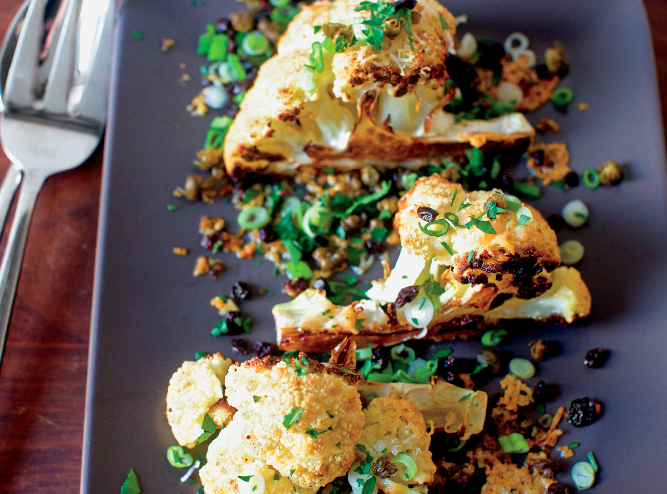
Heat the oven to 450 degrees. Trim the outer leaves from the cauliflower, then slice the heads in quarters through the stem. Coat a large foil-lined baking sheet with 1 to 2 tablespoons olive oil. Arrange the cauliflower wedges with the cut side down. Drizzle another tablespoon of olive oil over the top of the cauliflower. Season it generously with salt and pepper. Roast on one cut side until nicely browned underneath (15 to 20 minutes), then flip each piece onto its other cut side, sprinkle with more salt and pepper and half of the Parmesan (don’t worry if some lands on the tray) and return to the oven to roast for another 10 minutes, until browned. Sprinkle with the remaining Parmesan and return the baking tray to the oven for another 3 to 5 minutes, until the top layer of cheese is fricoed.  While the cauliflower is roasting, place the lemon juice, vinegar, and V4 teaspoon salt in a small bowl. Add the currants; set aside and let them soak while you prepare the other ingredients.  Drain the capers and spread them on paper towels until most of their moisture has wicked out, about 5 minutes. Pour 1/2 inch of olive oil, or another oil that you prefer to fry in, in your tiniest skillet or saucepan. Heat it over medium-high heat. When it’s hot enough so a droplet of water makes the oil hiss, carefully add the capers and take a step back! They’re going to sputter a bit for the first 10 seconds. Once it’s safe to get closer, give them a stir. Depending on how dry the capers were at the start, it can take 1 to 2 minutes for them to get first lightly golden at the edges, and then crispy. Remove the capers from the oil with a slotted spoon. Drain them on paper towels, and set aside. Arrange the cauliflower wedges, any loose cauliflower rubble, and any fricoed bits of Parmesan from the roasting pan on a platter. Sprinkle with the scallions, then the currants with their lemon-vinegar mixture, then the capers and parsley. Eat with a fork and knife while standing at the kitchen counter, and order takeout for your family; I won’t tell if you don’t.

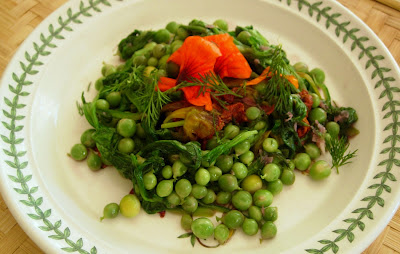
Peas with Nasturtium Blossoms and Mache Lettuce
Peas with Nasturtium Blossoms and Mache Lettuce

Peas with Nasturtium Blossoms and Mache Lettuce


1 clove Garlic, sliced in fine slivers

1 teaspoon Olive Oil

1 tablespoon fresh Dill, torn from stems

1/3 cup shelled peas

1-2 cups Mache lettuce

6 to 8 Nasturtium blossoms


In a medium skillet, heat olive oil.  Add garlic, dill and peas, sauté for 2 minutes. Toss in the Mache lettuce, sauté just until wilted.  Add Nasturtium blossoms and stir for about 10 seconds. Sprinkle with a bit of sea salt and serve immediately.

Pickled Kohlrabi

Pickled Kohlrabi

Pickled Kohlrabi


Pickling Mixture

3/4 c white vinegar

1 1/4 c water

3 Tablespoons sugar

1 teaspoon salt

1/2 teaspoon dill seed

1 teaspoon mustard seed

1/4 teaspoon red chili flakes


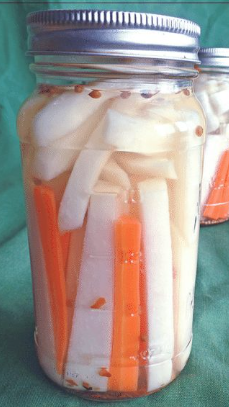
Peel and slice 3 kohlrabi, 1/4 inch thick. Peel one carrot and slice into thin sticks. Parboil the carrot briefly (should yield to a fork but not be soft). Place raw kohlrabi, carrot, 2 crushed garlic cloves, 1 bay leaf, and a sprig of fresh dill into a quart canning jar. Heat pickling mixture to boiling and pour over the vegetable mixture in the jar, filling the jar completely. Let cool, then refrigerate for 3-4 days before use. Will keep for several weeks in the refrigerator.

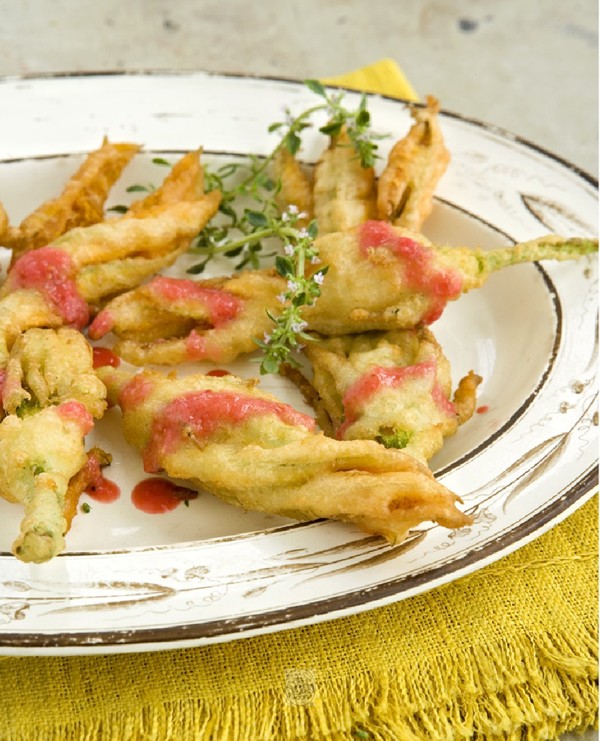
Mascarpone-Stuffed Squash Blossoms with Raspberry Vinaigrette

Mascarpone-Stuffed Squash Blossoms with Raspberry Vinaigrette
Mascarpone-Stuffed Squash Blossoms with Raspberry Vinaigrette


¹⁄³ cup fresh raspberries

¹⁄³ cup chopped shallots

¼ cup raspberry vinegar

½ cup olive oil

Salt and freshly ground black pepper

¹⁄³ cup mascarpone cheese

1 tsp. minced canned chipotle chiles in adobo sauce

½ tsp. minced fresh thyme

12 fresh squash blossoms, pistils removed

Vegetable oil, for frying

½ cup all-purpose flour


Beer Batter

1 cup all-purpose flour

1 tsp. salt

1/2 tsp. freshly ground black pepper

1 cup dark Mexican beer


Combine the raspberries, shallots, and vinegar in a blender or food processor, and process to form a coarse puree. With the machine running, gradually add the olive oil. Season the vinaigrette with salt and black pepper to taste. Set aside.  Mix the mascarpone, chipotle chiles and sauce, and thyme in a small bowl. Season the filling to taste with salt and pepper. Place the filling in a pastry bag fitted with a 1/4-inch tip. Pipe the filling into each squash blossom and twist the blossom at the top to enclose it. Place a medium-size heavy saucepan over medium-high heat and add enough vegetable oil to reach one third of the way up the sides of the pan. Heat the oil to 350°F. Dust the squash blossoms in the flour and then dip them into the beer batter. Working in batches, fry the squash blossoms for 3 minutes, or until they are golden brown. Transfer them to paper towels to drain. Arrange the squash blossoms on a platter, drizzle with the raspberry vinaigrette, and serve. Prep Beer Batter: Mix the flour, salt, and pepper in a medium bowl. Gradually add the beer while whisking. Set the batter aside and let it rest for 15 minutes before using. Tip: No pastry bag? No worries. Put the filling in a plastic bag and cut a 1/4-inch hole in one of the corners.

Roasted Fennel & Peppers

Roasted Fennel & Peppers
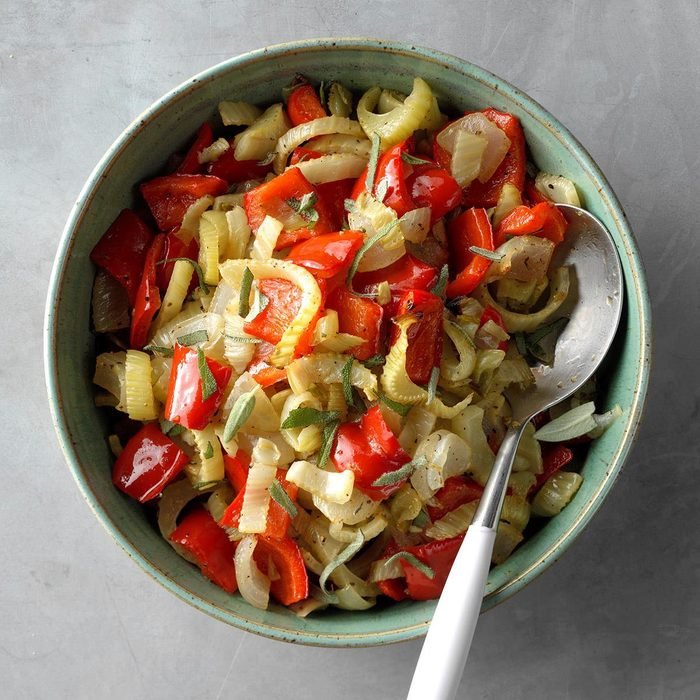
Roasted Fennel & Peppers


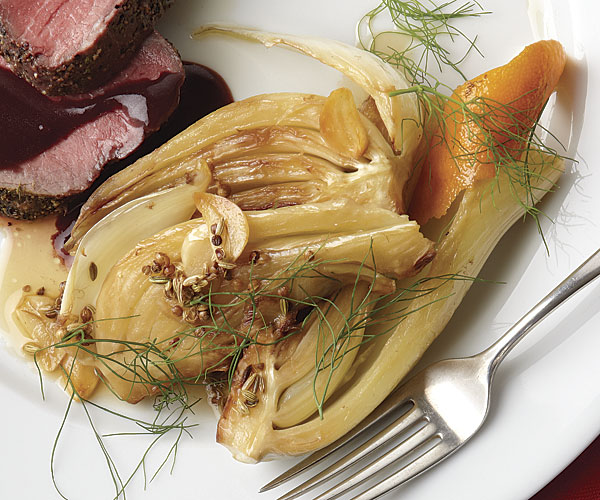
2 fennel bulbs, halved and sliced

2 medium sweet red peppers, cut into 1-inch pieces

1 medium onion, cut into 1-inch pieces

3 garlic cloves, minced

1 tablespoon olive oil

1/2 teaspoon salt

1/2 teaspoon pepper

1/2 teaspoon rubbed sage

Fresh sage leaves, thinly sliced, optional

Place the fennel, peppers, onion and garlic in a 15x10x1-in. baking pan coated with cooking spray. Drizzle with oil; sprinkle with salt, pepper and rubbed sage. Toss to coat. Bake, uncovered, at 425° until tender, 20-25 minutes, stirring twice. Garnish with fresh sage if desired.


Yield: 6 servings; 2/3 cup each

Calories: 67

Fat: 3g fat

Fiber: 4g

Artichokes with Bay Leaves and Lime

Artichokes with Bay Leaves and Lime
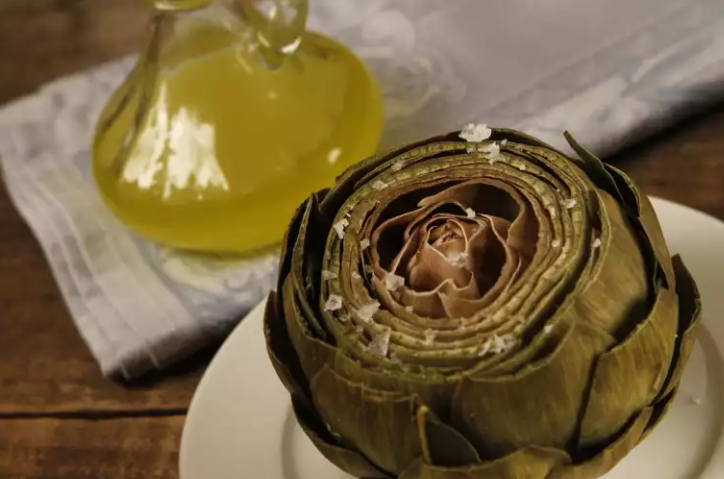
Artichokes with Bay Leaves and Lime


4 medium artichokes with tightly packed leaves

12 large fresh (not dried) bay leaves

6 to 8 T. olive oil

Juice of 1 lime

Fleur de sel or salt of your choice


Trim back the stocks of the artichokes, snip the outer edges of the leaves and trim the top. Cut the bay leaves in half lengthwise. Tuck the bay leaves into the artichoke leaves, distributing them evenly and hiding them well. Wrap each artichoke in several rounds of plastic wrap. Fill a stockpot or deep saucepan half-full with unsalted water and bring it to a boil. Have ready a saucepan lid that is slightly smaller than the stockpot and a weight, such as a small, heavy saucepan. Lower the artichokes into the boiling water. Submerge them with the saucepan lid held in place by the weight. Simmer the artichokes until tender enough that a small sharp knife easily pierces the base, about 30 minutes. Remove the artichokes from the water with a slotted spoon and leave them to cool in their plastic wrap for 1 hour. Meanwhile, make a vinaigrette by mixing the olive oil and the lime juice. Put this in a sauceboat and set aside. To serve, unwrap the artichokes and arrange them on 4 small plates, adding a small mound of good sea salt beside each. Pass the vinaigrette for people to use as they wish.

Fireweed Pickles

Fireweed Pickles

Fireweed Pickles


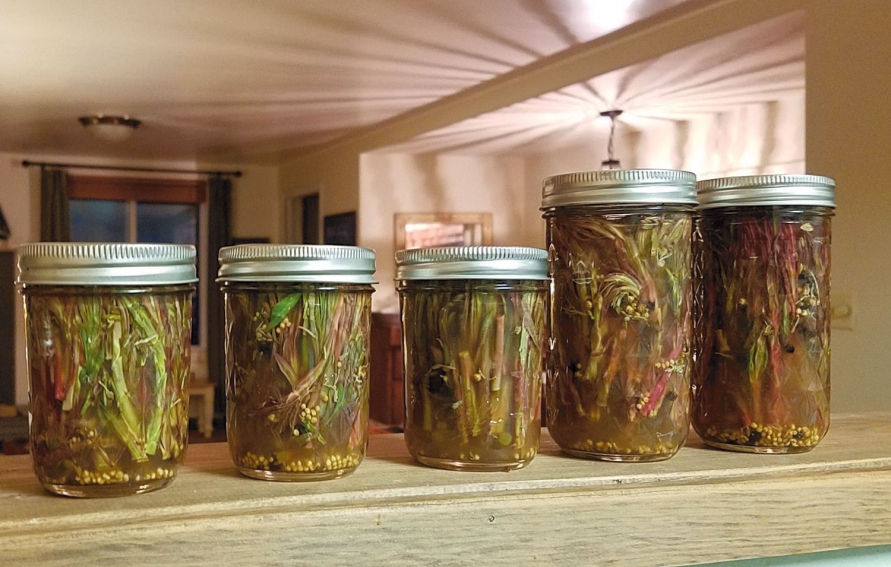
1 lb. fresh fireweed shoots

FOR THE BRINE:

1 T. mustard seeds

1 tsp. peppercorns

3/4 cup water

3/4 cup apple cider vinegar

1/4 cup sugar

2 T. sea salt (or canning and pickling salt)


In a saucepan, combine all brine ingredients and bring to a boil. Then remove from heat. Rinse the fireweed shoots well. Sterilize your jars, either one quart, two pint jars, or four half-pint jars. Pack your jars tightly with the fireweed shoots and cover with the brine to 1/2 inch from top of jar. As you add the brine, you might be able to fit in more fireweed. Cover and cool in the refrigerator. Serve pickles with cheese and crackers, or salmon and cream cheese, or add to a spring omelet. Store jars in the refrigerator, and use within one month for best quality.

Chive Corn Pudding

Chive Corn Pudding

Chive Corn Pudding


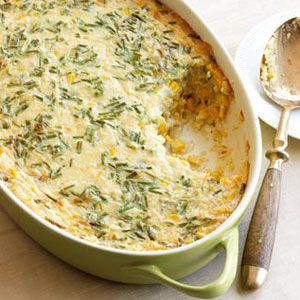
2 ears corn, husks and silks removed; or 2 cups frozen corn thawed

2 cups 1-percent milk

2 T. low-fat sour cream

2 eggs

2 T. flour

1 T. sugar

2 T. minced chives

1/2 cup low-fat cheddar cheese


Preheat the oven to 350 degrees F. If using fresh corn, use a sharp knife to scrape the corn from the cob.  Combine the corn with the remaining ingredients in a food processor or blender.  Spray a casserole dish with nonstick spray. Pour the corn pudding into the casserole dish.  Bake uncovered for 35-40 minutes until pudding is set and tester put in the center comes out clean.

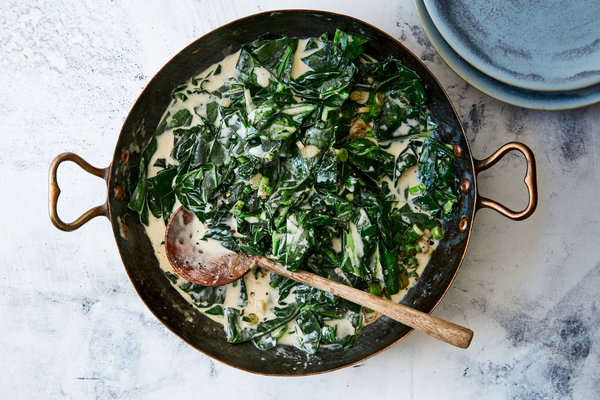
Collard Greens in Coconut Milk

Collard Greens in Coconut Milk

Collard Greens in Coconut Milk


1 14-ounce can coconut milk

1 medium onion, peeled and chopped

6 garlic cloves, minced

2 T. peeled, minced fresh ginger

½ tsp. crushed red pepper

2 bunches collard greens, washed, stems removed, and torn

½ tsp. salt, or to taste

½ tsp. freshly ground pepper, or to taste


Pour a quarter cup of the coconut milk into a large, heavy skillet, and place over medium heat until it simmers. Add the onion, garlic, ginger, and crushed red pepper; sauté for 3 minutes. Add the greens and pour in the remaining coconut milk, stirring to coat the greens. Cover and simmer until the greens are tender, about 10 minutes. Stir in salt and pepper.

Fennel And Jicama Salad

Fennel And Jicama Salad

Fennel And Jicama Salad


1/4 cup sun-dried tomatoes (not packed in oil)

3 T. extra-virgin olive oil

1/4 cup fresh lemon juice

3/4 tsp. flaky sea salt, or to taste

1 tsp. pink peppercorns, lightly crushed with your fingers, plus more for garnish

1 large fennel bulb, halved, cored and thinly sliced, fronds reserved

1 small jicama (about 1 1/4 pounds), peeled, halved and cut into thin matchsticks

1 small cucumber, peeled and chopped

1/3 cup black olives, pitted and sliced

1 ounce Feta cheese, crumbled

coarsely cracked black pepper


Place the sun-dried tomatoes in a small bowl and add hot water to cover. Set aside for about 20 minutes, then drain and thinly slice them. Meanwhile, in a small, lidded jar, combine the oil, lemon juice, salt, and pink peppercorns. Cover and shake until emulsified. Finely chop the fennel fronds to make ¼ cup and set aside. In a large bowl, combine the fennel, jicama, cucumber, olives, and sun-dried tomatoes. Add the dressing and toss to coat. Stir in the fennel fronds and cheese, finish with a little salt, a couple of grinds of pepper, and a sprinkling of pink peppercorns lightly crushed between your fingers. Spoon into bowls and serve.

Offbeat Eats Hearts of Palm Salad

Offbeat Eats Hearts of Palm Salad

Offbeat Eats Hearts of Palm Salad


2 C. hearts of palm, drained

2 plum tomatoes, seeded and diced

2 slightly firm avocados

½ C. thinly sliced Scallions, optional

3 T. extra virgin olive oil

2 T. distilled white vinegar or fresh lime juice

1 tsp. kosher salt

1½ tsp. freshly ground black pepper

1 T. finely chopped fresh cilantro leaves, for garnish


Slice the hearts of palm into ½-inch pieces if not precut. Place them in a small mixing bowl and add the tomatoes.  Carefully spoon out the insides of the avocados, discarding the pits. Dice the avocado flesh and add it to the bowl. Add the scallions, if using.  Combine the olive oil, vinegar or lime juice, salt, and pepper in a small mixing bowl and whisk together to form a vinaigrette. Pour the vinaigrette over the salad and fold in gently until the vegetables are thoroughly coated. Serve immediately, garnished with the cilantro.

Charred Asparagus End Pesto

Charred Asparagus End Pesto

Charred Asparagus End Pesto


1/4 C. plus 1 T. extra virgin olive oil

1-to 2-inch ends cut from the bottom of 1 bunch of asparagus

1 C. loosely packed fresh shiso or basil leaves

1/1 C. pine nuts, toasted

1 garlic clove, minced

1/j C. finely grated pecorino Romano cheese

1 T. freshly squeezed lemon juice


This recipe is for the ends of middle-of-the-road asparagus: If the ends are extremely woody, they’re best saved for stock. And if the ends don’t seem very woody at all, you might just want to peel the ends of your stalks instead and save those peelings for tempura)! This is a thick pesto, meant for tossing with hot pasta or smearing on sandwiches. I also think it would make an excellent dip (maybe mixed with softened cream cheese). Thin it out with additional olive oil to use it as dressing. Shiso is a Japanese herb in the mint family; I think of it as basil’s Asian cousin (basil is also the best substitute should you not be able to find shiso). Look for shiso in the produce section of Asian grocery stores or at your local farmers market. Since it can sometimes be hard to find, I opt to grow my own supply. If you can find shiso leaves,. they’ll quickly grow roots when their stems are placed in a glass of water on a windowsill. After they do, plant them. I’ve also grown shiso from seeds procured online and from small plants found at my local farmers market – both options work well.  In a medium-size heavy skillet, heat 1 T. of the oil over medium-high heat. Add the asparagus ends to the hot pan, and let them cook, undisturbed, until the side touching the pan chars, 3 to 5 minutes. Move them around a bit to expose another side to the heat, and let them cook, undisturbed, until they are charred on all sides and can be easily pierced with a knife, another 3 to 5 minutes. Remove from the pan and let cool slightly. Using a knife, finely chop the asparagus ends. This is important: If you try to skip this step, the food processor will shred the cooked ends and you’ll have stringy pesto. Add the chopped asparagus ends, shiso, pine nuts, and garlic to a mini food processor and pulse to process all ingredients, scraping down the bowl a couple of times as needed. Then add the cheese and lemon juice and pulse a few more times. Finally, add the rest of the olive oil and process again until smooth. The pesto is at its best when used immediately, so the basil doesn’t discolor, but can be stored in an airtight container in the refrigerator or freezer.

Stir-fried Dandelion Greens with Duck Fat and Garlic

Stir-fried Dandelion Greens with Duck Fat and Garlic

Stir-fried Dandelion Greens with Duck Fat and Garlic

If you’ve cooked with duck fat before, you can jump into this simple recipe with gusto because you’ve experienced duck fat as the culinary gem that it is. Its unctuous and rich flavor is worth going that little bit out of your way for. Believe it or not, it’s close to olive oil on the health meter. You can buy containers of duck fat at fine grocers, or you can buy a duck, render the trimmed fat, and have a lovely duck ready to roast another night.


For the Duck-Fat-Roasted Garlic

1 cup rendered duck fat

12 garlic cloves, tough stem ends removed

Place the duck fat and garlic in a small heavy-bottomed sauté pan over low heat. Slowly bring the mixture to a simmer. The garlic will burn quickly, so keep an eye on it. If it cooks too much, it will taste bitter and unpleasant. Cook until the garlic is just turning light golden brown. Turn off the heat and let the garlic cool in the duck fat, about 30 minutes. The cloves will continue to brown as they sit in the fat.  Remove the garlic cloves from the duck fat. Store the garlic and duck fat separately in the refrigerator in covered containers for up to 1 week. Let stand at room temperature about 1 hour before using.


2 bunches dandelion greens (about 1 pound)

2 T. rendered duck fat

1/2 tsp. kosher salt

1/4 tsp. freshly ground black pepper

12 cloves duck-fat-roasted garlic (above)

Trim the tough ends from the dandelion greens and discard. Wash the greens thoroughly and drain.


Bring a large pot of salted water to a boil. Drop the greens into the boiling water and cook for 1 minute. Drain in a colander. When the greens are cool enough to handle, place them on a cutting board and cut into 2-inch ribbons. (young tender greens need not be blanched).  Heat the duck fat in a large sauté pan or cast iron skillet over medium-high heat. When the fat is hot, add the greens, stirring to coat with the fat. Add the salt, pepper, and garlic cloves. Cook, stirring frequently, until the greens are just tender, 2 to 3 minutes. Serve immediately.

Hunan Bean Sprout Salad

Hunan Bean Sprout Salad

Hunan Bean Sprout Salad


2 T. Sesame seeds

1 pound Fresh bean sprouts thoroughly washed and drained

3 md Garlic cloves peeled and minced

2 md Scallions −− trimmed & minced

1 1″ cube ginger peeled and minced

2 T. Oriental sesame oil

1/3 cup Soy sauce

2 T. Cider vinegar

1 T. Mirin (sweet rice wine)

2 tsp. Light brown sugar

1 tsp. Spicy sesame oil or Chinese chili oil


Fresh bean sprouts are a must for this recipe from China’s Hunan province. The canned variety don’t have the requisite crispness. Keep a close eye on the toasting sesame seeds so they don’t burn.  PREHEAT OVEN TO 300F. Toast the sesame seeds by spreading them over the bottom of a pie tin. Roast for 12−to−16 minutes, stirring often, until they are golden. The seeds can be toasted in advance and stored in an airtight container. Place the bean sprouts in a large heatproof bowl and set it aside. In a medium−size skillet set over moderately low heat, stir−fry the garlic, scallions and ginger in the oil for 2 to 3 minutes, until they are limp. Add all the remaining ingredients, increase the heat to moderate, then boil the mixture, uncovered, for 1 minute to slightly reduce the liquid. Pour the boiling dressing over the bean sprouts, toss well, then cover the bowl and chill the salad for several hours. Toss again before serving.

Asian Coleslaw

Asian Coleslaw

Asian Coleslaw


1 medium head green cabbage

1 medium head red cabbage

3 T. sea salt

3 large carrots

1/4 cup minced scallions

1 T. toasted sesame seeds


2/3 cup unseasoned rice vinegar

1/4 cup light brown sugar

1 1/2 T. dark-roasted sesame oil


Discard the outer leaves of cabbages. Cut heads in quarters; remove and discard cores. Slice cabbage thinly or shred in a food processor. Layer the cabbage in a large bowl with the sea salt. Toss to distribute salt evenly and let cabbage sit for 1 hour to soften.  Meanwhile, peel the carrots and grate them into thin shreds.  Drain off any liquid produced by the cabbage and rinse the cabbage well in several changes of cold water to remove excess salt. Taste the cabbage; if it is still too salty, rinse it again.  Add carrots to the cabbage and mix well.  Whisk the rice vinegar, brown sugar and sesame oil together in a small bowl.  Pour the dressing over the cabbage and mix well. Let chill. Garnish with minced scallions and toasted sesame seeds before serving.

Fried Squash Blossoms with Mint and Goat Cheese

Fried Squash Blossoms with Mint and Goat Cheese

Fried Squash Blossoms with Mint and Goat Cheese


For the blossoms:


14 to 16 large zucchini squash blossoms

3/4 cup/6 ounces fresh soft goat cheese or whole-milk ricotta

1/2 cup/4 ounces mascarpone or crème fraîche

1/2 cup grated Parmesan cheese, divided

1 to 2 T. fresh chopped mint and basil, plus more for garnish

Sea salt and fresh ground black pepper, to taste


For the Batter and Frying:


1/2 cup all-purpose flour

1/2 cup cornstarch

1 tsp. baking powder

1/4 tsp. salt

1 egg, lightly beaten

About 1/2 cup chilled seltzer or other unflavored sparkling water

About 3/4 cup vegetable oil, for frying

Optional: fresh tomato sauce, for serving


Carefully open each blossom and remove stamen; set aside. Combine goat cheese (or ricotta) with mascarpone (or crème fraîche) and 1/4 cup of the Parmesan. Stir in mint and basil and season with salt and pepper. Gently stuff blossoms with cheese-herb mixture, twisting end of blossom to close. NOTE: You might have some cheese mixture leftover; if so, stir into a pasta sauce or spread on toast and eat with tomatoes. Make batter by combining flour, cornstarch, and baking powder with remaining 1/4 cup Parmesan cheese. Whisk in beaten egg and sparkling water, adding a bit at a time, until batter is well-combined and is the consistency of heavy cream or a loose pancake batter. Pour oil to about a half inch into a large (10-inch) heavy skillet and heat to about 365° (or until oil begins to shimmer but not smoke; add a bit of batter to test oil. The batter should bubble and float). Fry blossoms, in two batches, if necessary, turning over once until golden, about 2 minutes total time. Place on a paper-towel-lined cooling rack or plate. Sprinkle while hot with a bit of Parmesan or salt, such as Maldon or other finishing salt. If serving with sauce, spoon some fresh tomato sauce on bottom of plate and top with squash blossoms. Eat at once.  Notes: To prepare blossoms, gently open the blossom (they might tear, but that’s OK) and pull out stamen. Rinse gently and place in a paper towel-lined colander. Pat dry.

Spring Ragout of Artichoke Hearts, Fava Beans, Peas and Baby Turnips

Spring Ragout of Artichoke Hearts, Fava Beans, Peas and Baby Turnips

Spring Ragout of Artichoke Hearts, Fava Beans, Peas and Baby Turnips

A ragout is basically a well-seasoned stew. This one takes its flavor from the tarragon, which brings out the best in the array of seasonal vegetables.


8 cloves garlic, whole and unpeeled

2 pounds fresh fava beans in pods, shelled

Ice cubes

4 T. nonhydrogenated margarine (divided)

4 trimmed and cooked artichoke hearts, halved or quartered, depending on size (see note)

12 baby turnips, peeled

1 cup vegetable broth

1 pound English peas in pods, shelled (or 1 cup frozen, thawed)

2 tsp. coarsely chopped fresh tarragon

1 T. finely chopped Italian (flat-leaf) parsley

Salt and freshly ground black pepper (to taste)


Put the garlic in a saucepan and cover with water. Bring slowly to a boil over low-medium heat, then drain. Slip the skins off each clove and set aside in a bowl. Refill the saucepan with water and return to a boil over high heat. Drop the fava beans into the boiling water for 1 minute. Immediately drain in a colander and transfer to a bowl of ice-cold water. Then peel the beans. Reserve until needed. Melt half of the margarine in a sauté pan over a medium heat. Once it starts to froth, add the artichoke pieces, turnips and peeled garlic, and sauté until the artichoke pieces become flecked with golden-brown color. Add the vegetable broth and peas, then cook, covered, for 5 minutes. Uncover, scatter with the beans and herbs, and shake gently to mix; there should be very little liquid remaining in the pan. If it still looks too wet, increase the heat to high and continue to shake the pan. Add the reserved margarine to form a small amount of sauce. Taste for seasoning, adding salt and freshly ground pepper as needed. Serve at once.

Note: To prepare artichoke hearts, cut off and discard all but 1 inch of the stem. Peel remaining stem, rubbing cut artichoke flesh with lemon to avoid discoloring. Remove tough outer leaves (discard, or reserve for steaming and eating separately) until you get to the tender, slightly yellow leaves. Pull off the soft leaves to reveal the fuzzy choke. Using a spoon, scoop out the choke and discard, rubbing exposed flesh with more lemon. Use a paring knife to cut off any tough, dark green parts clinging to the outside of the heart. In a stainless steel or enamel-coated cast-iron Dutch oven filled with a couple of inches of water and lined with a steamer insert, steam artichoke hearts until tender, 15 to 20 minutes.

Herb-Filled Peppers on Warm Crusty Bread

Herb-Filled Peppers on Warm Crusty Bread

Herb-Filled Peppers on Warm Crusty Bread


2 large Bell Peppers, cut in half, seeds and membrane removed

5oz. Broad Beans in pods, shelled

40g Butter

2 cloves of garlic, minced

60g onion, minced

2 handfuls of Sorrel, finely chopped

½ bunch Cilantro

30g chervil

30g basil

30g chives

2 T. Olive Oil

Baguette

Parmesan

Fluer de Sel


To skin the broad beans, plunge them into lightly salted boiling water for 3 minutes, then refresh in cold water, and drain. Remove and discard the skins. Chop the beans finely and set aside. To assemble the filling, melt the butter in a sauté pan over low heat. When the butter starts to foam, add the garlic and onion and. after a few minutes the broad beans. When these ingredients have softened slightly, add the sorrel, the coriander, chervil, basil and chives, and stir to distribute the ingredients evenly. Season to taste with salt, then set aside to cool on a plate. To make the peppers easy to peel, blister their skins evenly beneath a hot grill, turning them with a skewer. Wrap them briefly in a cold damp kitchen towel, then peel them. Spoon the filling into the peppers and transfer them to a shallow roasting pan smeared with the olive oil. Bake in a preheated 200’C (400°F, Gas Mark 6) oven. When – after about 20 minutes the filling is cooked, remove the peppers from the oven and turn it off.  Cut the bread in half lengthways, then across, to make 4 rectangles about 13cm (5inches) long. Put the peppers on top and return them, in the roasting pan. to the warm oven for 30 minutes, leaving the door of the oven wide open. Just before serving, adjust the seasoning and scalier with shavings of Parmesan. Offer the peppers with a mesclun salad

Fritto Misto of Fiddleheads, Ramps and Asparagus with Meyer Lemon Aioli

Fritto Misto of Fiddleheads, Ramps and Asparagus with Meyer Lemon Aioli

Fritto Misto of Fiddleheads, Ramps and Asparagus with Meyer Lemon Aioli


1 large or 2 small garlic cloves

1 tsp. kosher salt

1 large egg

1 large egg yolk

1 cup extra-virgin olive oil

Finely grated zest of 1 Meyer lemon

2 T. fresh Meyer lemon juice

4 quarts peanut or vegetable oil

3 C. unbleached all-purpose flour

1 cup cake flour

1 large egg

2 C. buttermilk

1/2 tsp. kosher salt, plus more to taste

1/4 tsp. freshly ground black pepper

1 1/2 to 2 pounds mixed fiddleheads, ramps (or green onions) and asparagus, cleaned and patted dry


Place the oil in a 6- to 8-quart pot and heat it to 375°F. Sift together the all-purpose and cake flours and place them in a wide bowl or on a platter. Whisk together the egg, buttermilk, salt, and pepper in a large shallow bowl. While the oil is healing, prepare the vegetables, making sure that they are dry before coating. To avoid gluey fingers, use one hand for wet dipping and the other for dry. Working with a few pieces of the vegetables at a time, dip them into the buttermilk mixture, coating them well. Lift them out, letting the excess buttermilk drip off, then drop them into the flour mixture, working quickly to coat them evenly with the flour. Shake off any excess flour and lay the vegetables in a single layer on a large parchment paper-lined baking sheet. Continue until all die vegetables are coated. When the oil is hot, carefully add the vegetables to the pot but do not overcrowd. Fry until golden brown, 2 to 3 minutes. Give the vegetables a stir as they fry, turning any that are browning unevenly. Using a slotted spoon or flat strainer, remove the vegetables and place on a paper towel-lined baking sheet. Sprinkle with salt. Hold in a warm place while frying the rest of the vegetables. Be sure to bring the oil back up to temperature before adding the next batch. Serve warm with the Meyer Lemon Aioli.   Note: Coating 20-25 minutes ahead of time makes the coating adhere better when frying.


Meyer Lemon Aioli


½ C. EVOO

½ C. Olive Oil

1 lg. Garlic Clove

1 tsp. Salt

1 Egg

1 Egg Yolk

Zest from Meyer Lemon

2 T. fresh Meyer Lemon Juice


Combine the extra virgin olive oil and the pure olive oil in a measuring cup with a spout. Place the garlic and salt in the bowl of a food processor. Process until the garlic is finely minced and beginning to liquefy. Add the whole egg and egg yolk. Process for 30 seconds. With the machine running, slowly begin to drizzle in the oil. As the mixture thickens, the oil can be added a little more quickly. Add the lemon zest and lemon juice and process briefly to mix in. Taste for seasoning and adjust as needed. If the aioli is too stiff, add water in ½ tsp. increments to thin.