Japanese Grill Party
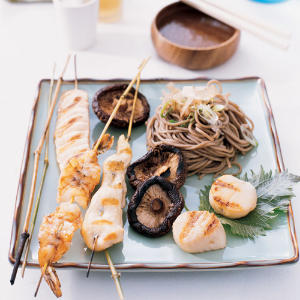 Robata-yaki, or Japanese barbecue, is perfect for warm-weather entertaining ― it’s simple, fresh, and meant to be shared with friends along with sake and cold beer. “Robata-yaki originated in seaside villages in Japan, when fishermen would grill the catch of the day on the boat,” says Vernon Cardenas, executive chef at Katana in Los Angeles, a restaurant specializing in Japanese barbecue. Cardenas grills meat, seafood, and vegetable skewers served with flavorful dipping sauces. Our flexible robata-yaki menu accompanies three of Katana’s sauces. Serve ponzu with skewers of seafood, ginger sauce with vegetables, and mustard sauce with chicken, or let guests mix and match. Round out the menu with edamame and spinach and noodle salads. Mochi ice-cream balls ― scoops of ice cream thinly covered with chewy pounded-rice dough ― make a perfect handheld dessert.
Boiled Edamame
Grilled Seafood or Chicken Skewers
Grilled Vegetable Skewers
Dipping Sauces
Cold Soba Noodle Salad
Sesame Spinach Salad
Mochi Ice Cream Balls
Sake
Choosing Sake
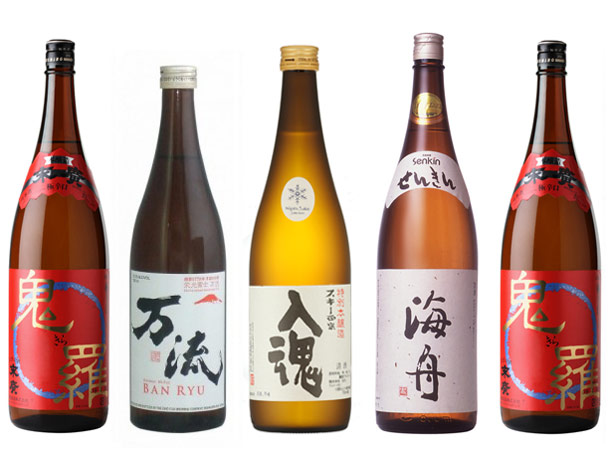
Premium Sake is served chilled, never warmed, to allow its subtle flavors to be appreciated. Sake is brewed in many styles from light and fragrant to smoky and full bodied. All premium sake can only contain rice, water, special kÅji mould (used in food fermentation in Asia) and sake yeast. In some instances, a small amount of distilled alcohol is added at the end of the brewing process, just before sake is pressed and stored for maturation. Imported, top of the line sake will be graded as DaiGinjo (Junmai Daginjo) or Ginjo (Junmai Ginjo) – these are the top 10% of all sake. The next type premium sake is graded as Honjozo (alcohol added) or Junmai (no alcohol added). This type may sometimes be warmed. Table sake, the lowest grade, is labeled as Futsuu-shu
é…’ – shu – a suffix indicating “sake†or “alcoholâ€. It often follows the grade or type.
大åŸé†¸ – DaiginjÅ
åŸé†¸ – GinjÅ
純米 – Junmai
æœ¬é†¸é€ â€“ HonjÅzÅ
In addition to the Grade of Sake, they may have another label as well.
Nigori– “Cloudy sakeâ€. Some of the fermented solids “kasu†are allowed back in during sake pressing, giving the sake cloudy-white appearance. Nigori sake will be sweeter and milder, and could be a good option when you feel like drinking something different or when you need a sake to go with very spicy food.
Nama (Namazake) – unpasteurised sake. Has a certain “zing†due to all the living enzymes that still remain. Many people have a strong preference for Nama sake, as it can feel more effervescent, zingy, sparkly. Before choosing to drink Nama, however, make sure that it had been properly stored. It must always be refrigerated.
Genshu – undiluted sake. Sake is naturally 20% alcohol, but most of it is diluted with filtered water to bring the alcohol content down to 15-17%, to enhance the experience of flavours. More often than not, genshu sake will only be sold at the brewery door, as a souvenir. In some rare instances, however, the highly skilled brewer will manipulate the fermentation process to reach the peak alcohol content of only about 16-17%, and deliver a very special sake.
Muroka – unfiltered (most sake is filtered with charcoal powder to remove colours and off flavours). Muroka sake will be darker colour, more flavour. Some people seek out this type as they believe it is sake in its natural state. Worth trying at least once!
KÅshu – aged sake. Honey-like flavours, darker colour. Almost brandy-like. 99.9% of sake is never matured. The sake that has been matured on purpose and called kÅshu is rare, and can be a very interesting drinking experience.
Yamahai, kimoto – sake types where the yeast starter is prepared with naturally occurring lactic acid. (Brewers now add lactic acid to keep the stray bacteria away from the yeast starter). It is gamier, earthier, higher acidity and sweetness. Basically, these are the types for which the fermentation process is started using old, traditional methods. They are slowly becoming popular again. Do expect stronger flavour than in most sake.
The irony is, you could select the most expensive, most technically promising sake, and still be disappointed. All that craft that went into making the sake would be futile if the sake is not stored and handled properly. Sake, like wine, is alive. It matures in a bottle. Most sake is made to be drunk fresh, within a year of bottling. Sake should be kept in a cool and dark space, just like wine. Exposure to bright lights and high temperatures is disastrous to sake. Ideally, you will find sake in a fridge. Ask the shop about the bottling date. In Japan, by law, all sake should carry the bottling date. There is one exception – sake intended for export doesn’t have that requirement. This is a pity! You can still ask the shop about how long they have had that sake. Secondly, look at how it has been displayed. How long has it stayed on the shelf under the bright fluorescent lights? Is it in a box or fully exposed to light? Is it wrapped in paper? Even after pasteurization, some light-sensitive particles remain in sake, and will degrade over time. Good liquor stores will keep sake refrigerated. This is the safest method for keeping sake
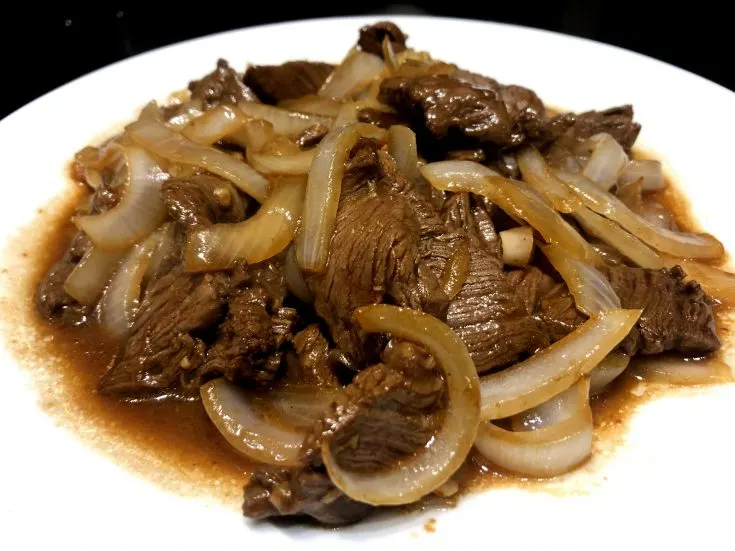 Beef & Onion Stir Fry
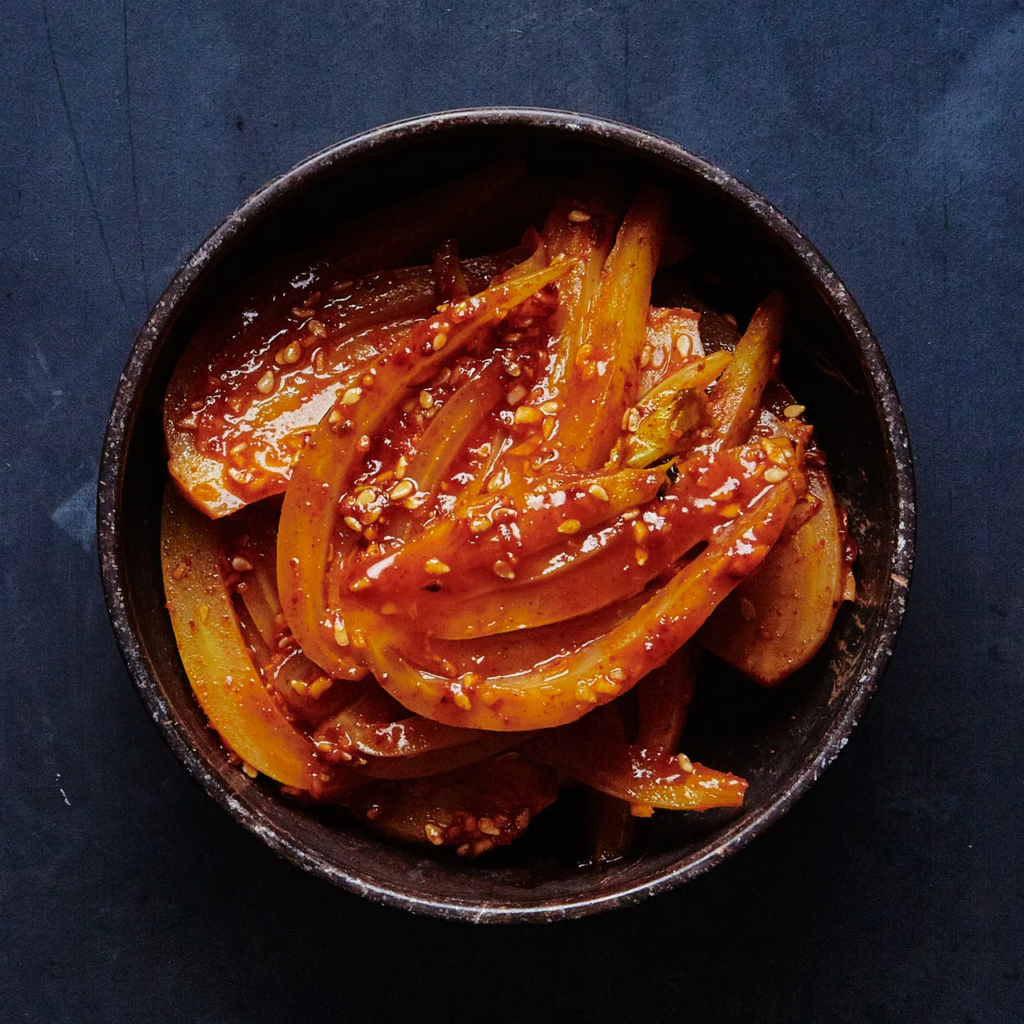 Crunchy Gochujang Fennel
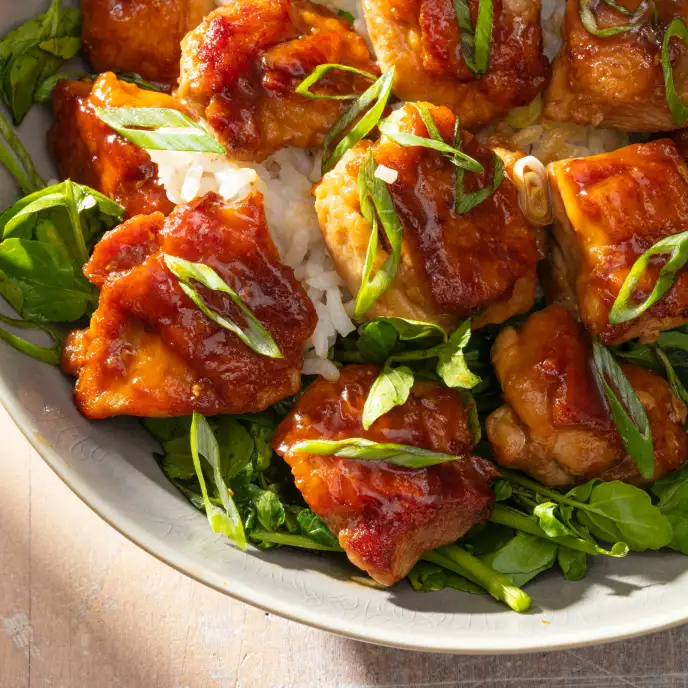 ATK Chicken Teriyaki