Browsed by
Category: Beef

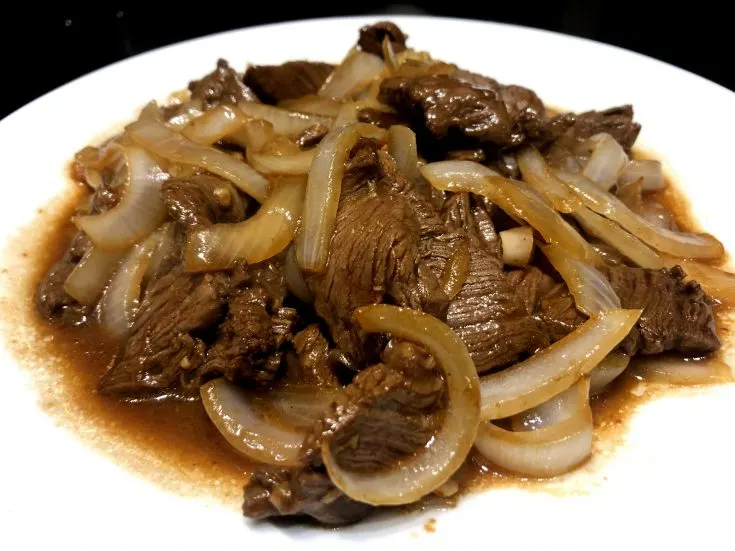
Beef & Onion Stir Fry

Beef & Onion Stir Fry

Beef & Onion Stir Fry


1 pound beef

1 T. soy sauce

1 T. oyster sauce

1 T. rice vinegar

1 T. sesame oil

1 T. cornstarch

1/2 tsp. sugar

1 T. cooking oil

1 medium onion


Slice beef and onions. Combine soy sauce, oyster sauce, rice vinegar, sesame oil, cornstarch, salt, and sugar in a large bowl or zip lock bag. If you are about to cook it, let it marinade at the very least 15-30 minutes. If you are making this ahead, cover and refrigerate for 30 minutes before cooking. In a large nonstick skillet, add 1 T. of oil over medium-high heat. Add the beef, and stir fry until mostly browned, and then add the sliced onions. Stir fry for about 4 minutes or until onions soften.

Red-Braised Oxtail

Red-Braised Oxtail

Red-Braised Oxtail


3 lb. of oxtail (about 5 pieces, a mix of large and small)

5 cloves of garlic, minced

2-inch piece of ginger, sliced

6 star anise

3 dried red pepper

1 bay leaf

5 T. of soy sauce

1/2 C. of rice wine

1 T. of brown sugar

salt to taste

oil as needed

water as needed

1/2 turnip, cut into chunks

green onions for garnish


Heat oil up in a pan, and brown all sides of the oxtail for about 7 – 10 minutes; set aside. In the same pan, on medium-low heat, put in all of the dry ingredients: garlic, ginger, star anise, dried red pepper, and bay leaf; stir fry until fragrant. Then add the wet ingredients: soy sauce and rice wine; then add the sugar and salt to taste. After stirring the mixture a little, add the oxtails back into the pan and turn up the heat.

Wait for the mixture to boil, then pour in more water to cover about halfway. At this point, turn the heat to low and simmer 2-3 hours. About 30 minutes before serving, add in the turnip. As the turnip cooks with the rest of the dish, you can uncover or cover the pan. If you cover it, you will have more sauce/soup and if you decide to uncover, the dish will taste more flavorful. Garnish with chopped green onions.

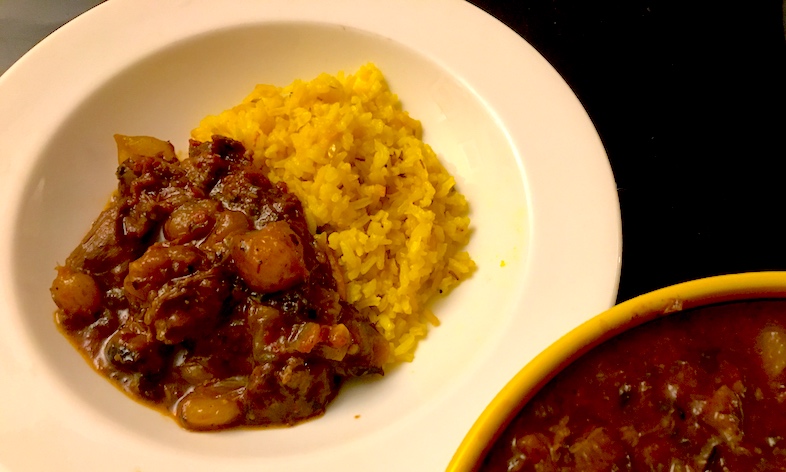
Stifatho (Greek Beef Stew)

Stifatho (Greek Beef Stew)

Stifatho (Greek Beef Stew)


3 T. olive oil
3 lbs. beef chuck, cut in 1 1/2″ cubes
1/2-1 c. flour
3 lbs. pearl onions (approx. 3 14-oz. packages frozen) or 3 large yellow onions, cut in 1/2″ dice
2 c. canned or roasted tomatoes
1/2 c. red wine vinegar
5 cloves garlic, minced
1 T. oregano
3 bay leaves
1 T. fish sauce
1 stick cinnamon (optional)
2 T. brown sugar or to taste
Salt and pepper


Preheat oven to 350°. Heat oil in large Dutch oven over medium-high heat. Put flour in a 1 gallon zip-lock bag with a generous amount of salt and pepper and shake to combine. Add 8-10 cubes meat to the bag and shake to cover them with flour, working in batches to do all of the meat. You only want a dusting on each piece, so shake them off to make sure they’re not clumped with flour. Heat oil in a large Dutch oven. When oil is hot, add floured cubes to the pan, making sure not to crowd them. Brown them well on at least two sides. This will require several batches, so as they brown remove them to a plate or bowl. When all the cubes are browned, put them back in the Dutch oven and add onions, tomatoes, vinegar, garlic, oregano and bay leaves. Place in oven for 90 minutes. Remove from oven. At this point you can either serve it later or finish seasoning the stew. If you’re making it ahead you can cool it and either keep it in the refrigerator or transfer it to containers and freeze it. When you’re ready to heat it for serving, thaw it or pull it out of the refrigerator and remove the fat that has solidified and proceed as below. To finish the stew, stir in the fish sauce and cinnamon stick and heat on the stovetop. Taste, adding salt as needed, and when you can just detect the cinnamon flavor, remove the stick or it will dominate the stew. If it’s overly vinegary for you, start adding brown sugar a T. at a time, stirring it in and letting the stew sit for a few minutes before tasting again, since the vinegar flavor will get milder as it rests. The thing you want to avoid is a baked-bean sweetness, so add a splash of additional vinegar if that happens.

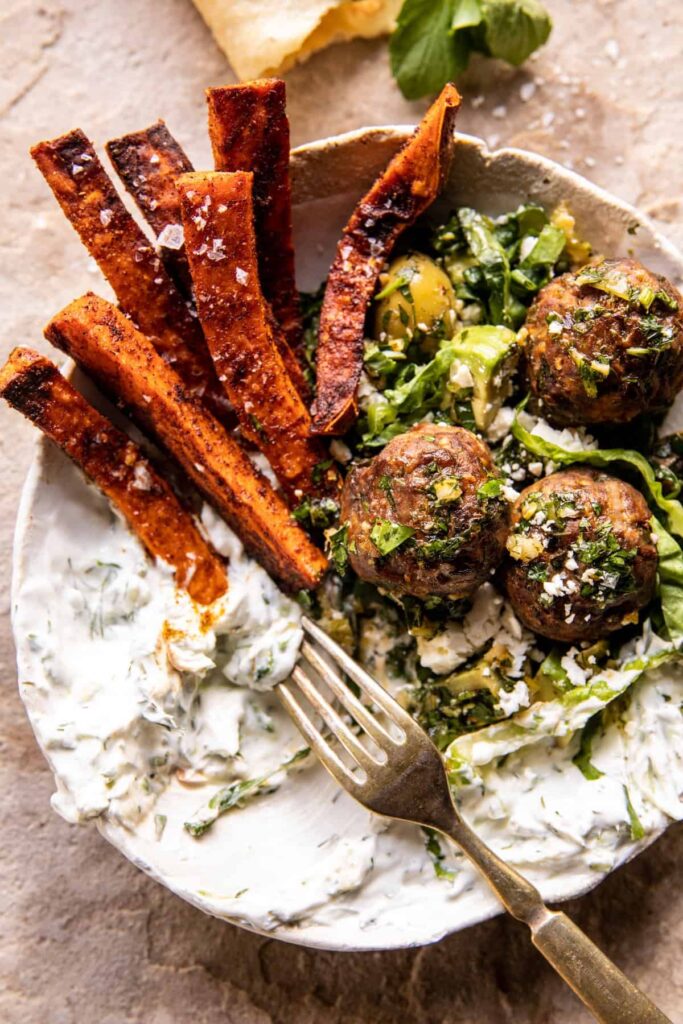
Sheet Pan Greek Meatballs and Tzatziki

Sheet Pan Greek Meatballs and Tzatziki

Sheet Pan Greek Meatballs and Tzatziki


1 1/2 pounds ground lamb, beef, or chicken

2 shallots, chopped

1/2 C. fresh parsley, chopped

1/4 C. fresh oregano, chopped

2 tsp. sweet or regular paprika

1 T. dijon mustard

kosher salt and black pepper

chili flakes

2 T. extra virgin olive oil

2 medium sweet potatoes, cut into matchsticks

1-2 C. Tzatziki sauce

lettuce, tomato, avocado and pitas for serving


1/2 lemon, halved

4 cloves garlic cloves, smashed

1/3 C. extra virgin olive oil

2 T. red wine vinegar

2 C. mixed fresh herbs, parsley, dill, and or mint, chopped

3/4 C. pitted Greek olives, torn

2 T. chopped pepperoncini

3/4 C. crumbled feta


Preheat the oven to 425° F. Line a baking sheet with parchment. Combine the lamb, shallots, parsley, oregano, paprika, dijon, salt, pepper, and chili flakes in a bowl. Coat your hands with a bit of olive oil, and roll the meat into 3 T. size balls, placing them on the prepared baking sheet. Add the lemon wedges and garlic (for the dressing) to the baking sheet. Bake for 15-20 minutes, until the meatballs are crisp and cooked through on the inside. During the same time, toss together the sweet potatoes with 2 T. olive oil and a pinch of salt and pepper on another baking sheet. Bake 25 minutes, until the potatoes are crispy. Meanwhile, make the dressing. Whisk together the olive oil, red wine vinegar, herbs, olives, and pepperoncini. Grab the meatballs from the oven, remove the lemons and garlic. Juice the lemons into the dressing. Chop the garlic and mix into the dressing. Add the feta. To assemble, add Tzakiki and lettuce to a bowl. Top with meatballs and spoon the dressing over the meatballs. Add the potatoes and any other desired toppings. Serve with additional Tzakiki (of course!).

All About Steaks

All About Steaks

All About Steaks


The Best Cuts


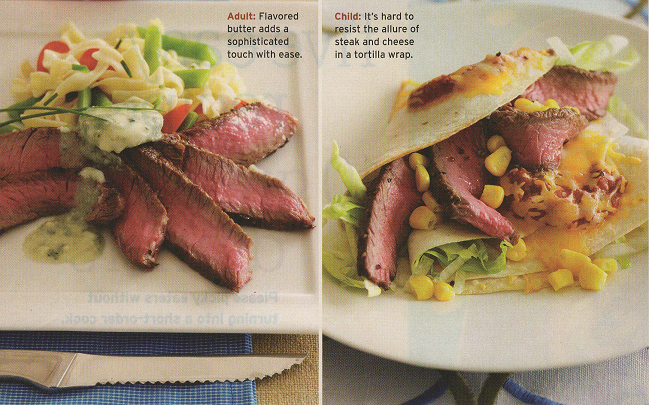
For grilling, broiling, and pan frying, the best cuts of meat are rib eye steaks, strip or shell steaks, and tsp. bone, which contains both the strip and tenderloin steaks. Sirloin and round steaks are generally going to be tough and dry. Flank steaks are good when quickly cooked and sliced across the grain, as described above.


For roasting, top sirloin, tenderloin, standing rib roasts, and top rump roast are good candidates.


For stir frying, flank, top round, and sirloin steak are good. These cuts are best cooked quickly, and since elastin is broken because the meat is cubed, they are more tender.


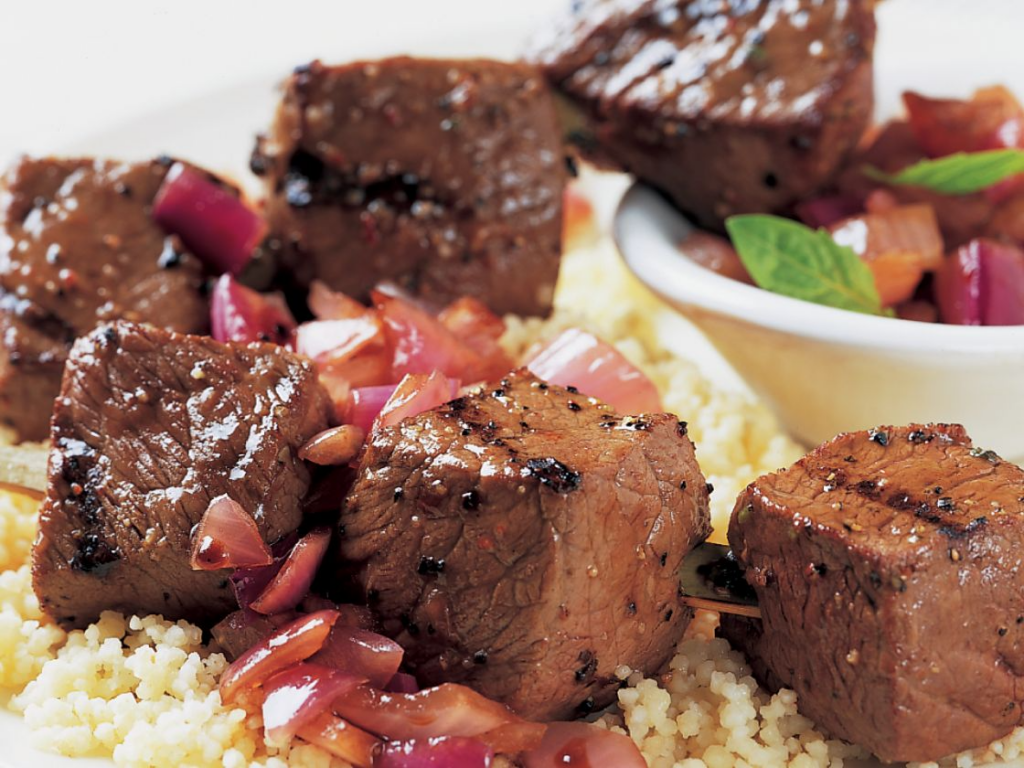
For kebabs, tenderloin is the best bet. This mild cut absorbs flavors easily and it is very tender.


For pot roasting and braising, chuck and rump are the best cuts. These cuts have more collagen and need long, slow cooking in a wet environment to reach their optimum tenderness. Chuck has the most flavor and is the most tender.


For ground beef, chuck is the way to go. It has optimal amounts of fat and is tenderized mechanically by the grinding action. Most lean ground beef is chuck, but if you’re not sure, ask!


How to Buy Steak

Before you begin cooking, pick the cut of meat that best suits your dinner plan. Tender, less lean cuts are perfect for the grill and are delicious plain or dressed up with sauces. Leaner, chewier cuts become more tender and delicious when marinated, thinly sliced, and grilled quickly or braised.

For any cut of steak, look for red meat with white fat that is marbled evenly across the grain.

Prime grade meat (the highest grade) is tender and highly marbled. Unfortunately, prime grade is expensive and difficult to find. The average supermarket carries choice grade meat as well as the less flavorful, and less tender, select grade. The best steak you can buy is dry-aged in special meat coolers to develop the flavor and tenderize the meat. Most beef, however, is wet-aged, if aged at all, in vacuum-packed bags for one to four weeks. This process improves the tenderness of the beef, but does not improve the flavor.


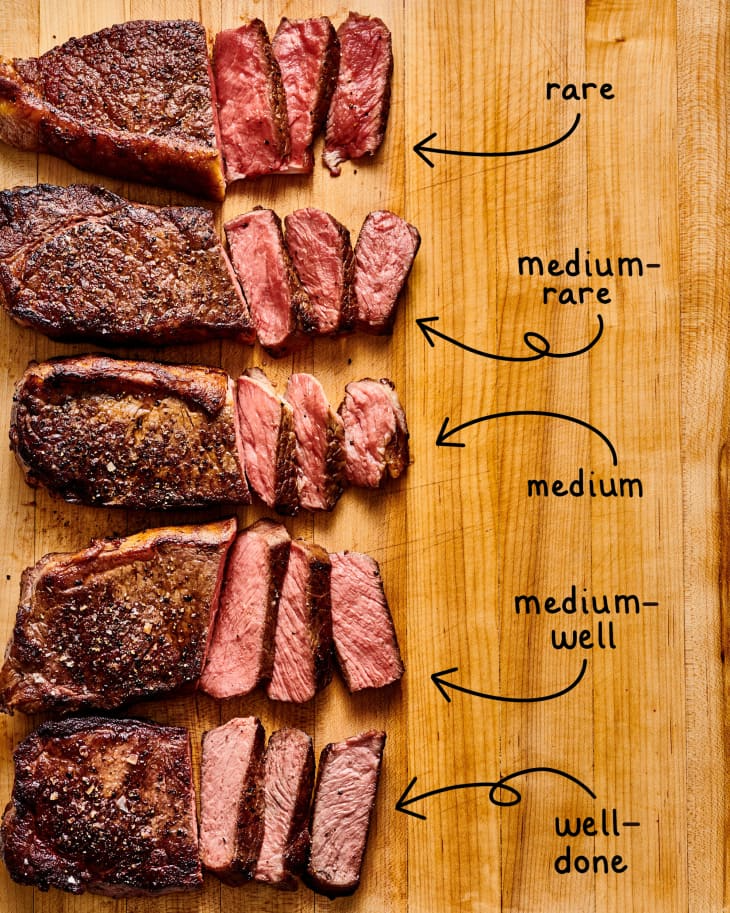
Testing for Doneness

The best way to tell if a steak is done is to (carefully!) touch or squeeze the meat itself.

Rare meat feels a bit like the texture of the flesh between your thumb and index finger; medium meat has a slight spring to it; well-done meat is firm.

You also can check by cutting a small slice into your meat with a thin knife.

If you have an instant-read thermometer, the internal temperature for rare steak is 125 to 130 degrees, medium-rare is 130 to 140 degrees, medium is 140 to 150 degrees, and well done is 165 degrees.
One Pan Lasagna

One Pan Lasagna

One Pan Lasagna


2 T. extra-virgin olive oil

1 pound lean ground grass-fed beef

1 can (28 ounces) whole peeled tomatoes, preferably San Marzano

4 baby carrots, scrubbed

1 small yellow onion, cut into wedges

1 garlic clove, thinly sliced

1 C. organic chicken stock

1/2 C. part-skim ricotta cheese

3 ounces fresh spinach leaves, stems removed and coarsely chopped

4 lasagna noodles, broken into 1/2-inch pieces

4 ounces fresh mozzarella, cubed


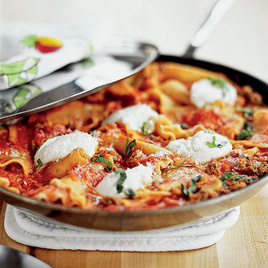
Preheat the oven to 400°F. In a large ovenproof skillet, heat the oil over medium heat until shimmering. Add the beef and cook, breaking up with a wooden spatula, until the meat has browned, 5 to 7 minutes. Meanwhile, combine the tomatoes, carrots, onion, and garlic in a food processor and chop until coarsely ground but not completely smooth. When the meat is browned, pour off any accumulated fat. Add the tomato mixture, stock, ricotta, and spinach and combine thoroughly. Bury the lasagna noodles in the sauce, and sprinkle the mozzarella evenly over all. Bake the lasagna uncovered until the cheese is melted and bubbling, 10 to 15 minutes. Remove the pan from the oven and let stand uncovered for 10 minutes. Serve warm.

Mini Lulu Kebabs on Lemongrass Sticks

Mini Lulu Kebabs on Lemongrass Sticks
Mini Lulu Kebabs on Lemongrass Sticks


1 ½ pound ground beef

1 T. minced garlic

¼ C. minced fresh cilantro

2 T. grated peeled ginger

2 T. soy sauce

½ tsp. kosher salt

½ tsp. freshly ground black pepper

4 stalks lemongrass, cut into twelve 4-inch sticks


Preheat the broiler. Lightly mix the ground beef, garlic, cilantro, ginger, and soy sauce in a large bowl and season with salt and pepper. Dampen your hands. Form the meat into 12 balls. Thread a piece of lemongrass halfway through each ball; press the meat mixture down the stalk to form a sausage-like shape, leaving some of the stalk uncovered for the handle. Put the pops on a foil-lined broiler pan and broil until golden brown, 3 to 4 minutes per side.

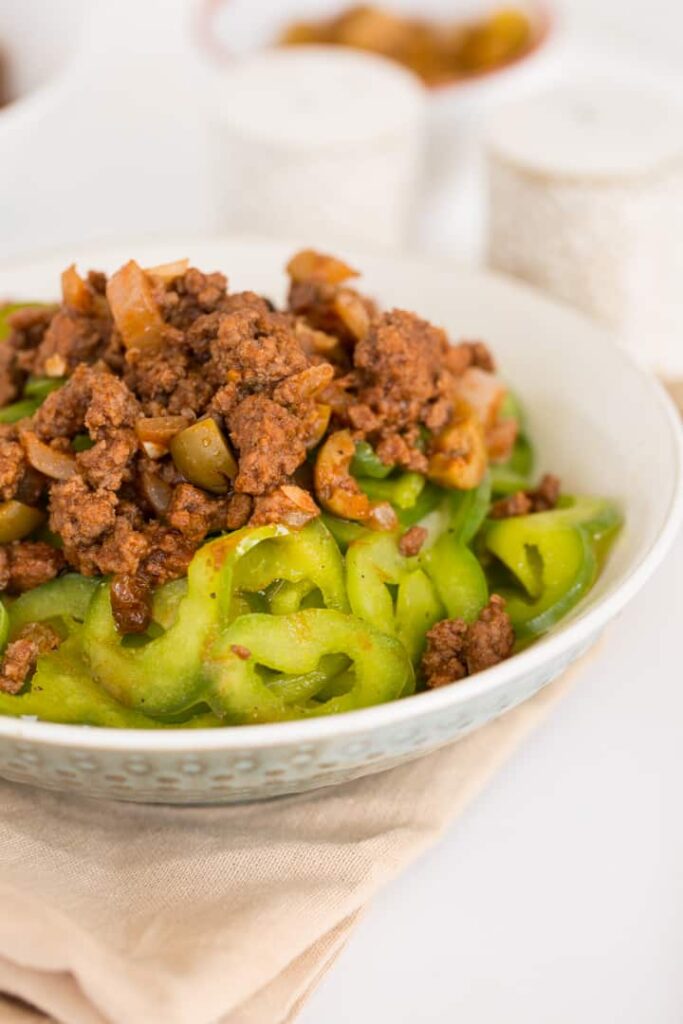
Picadillo with Bell Pepper Noodles

Picadillo with Bell Pepper Noodles

Picadillo with Bell Pepper Noodles


1 T. extra virgin olive oil

2 bell peppers (Spiralized with Blade A)

3/4 pound ground beef lean

1/2 cup chopped white onions

2 cloves of garlic minced

1/2 cup canned tomato sauce

1/4 tsp. ground cinnamon

1/2 tsp. ground cumin

1/2 tsp. dried oregano

salt and pepper to taste

3 T. golden raisins

1/4 cup quartered pitted green olives


Place a large skillet over medium-high heat and add in the olive oil. Once heated, add the bell peppers and season with salt and pepper. Cook for 5 minutes or until al dente (cook longer if you want them softer.) Remove the peppers from the skillet with tongs and transfer to a bowl and set aside. Immediately place in the onions and garlic to the skillet and cook for 5 minutes or until onions soften. Add in the ground beef and cook for 10 minutes or until it browns, crumbling the meat with a wooden spoon. Add in the tomato sauce, cinnamon, cumin, and oregano, season with salt and pepper and stir to combine. Lower the heat, cover and let the mixture simmer for about 5 minutes. Uncover the pan and fold in the raisins and olives, cover and cook for another 5 minutes. Divide the bell pepper noodles into bowls and top with picadillo.